Company profile for Bayer AG

PharmaCompass
Related CompaniesRelated Companies

About

For over a century, Bayer has stood for improving everyday health and wellness for millions of consumers worldwide. People everywhere make Bayer a trusted part of their daily lives. This deep connection with consumers has fueled the growth and innovation of our product portfolio and we believe that our brands will continue to play a critical role in the health and welfare of people worldwide. Our rich history began in 1897 with the synthesis of a stable form of acetylsalicylic acid (ASA), which was introduced to the market as Aspirin™ in 1899. In 1969, Aspirin made it to the moon aboard the Apollo 11 and by the mid-1980’s.

CONTACT DETAILS

Click the arrow to open the dropdown
Country
Country
Germany
Address
Address
Mullerstr. 178, 13353 Berlin
Telephone
Telephone
+49 30 468 1111
Linkedin
Linkedin
youtube
YouTube
Twitter
Twitter
Contact Info
Others

Events

Webinars & Exhibitions

PEGS Boston Summit

PEGS Boston Summit

Not Confirmed

envelop Contact Supplier

PEGS Boston Summit

Post an Enquiry

Meeting

Digital content read-more

Explore the latest content creation from this company

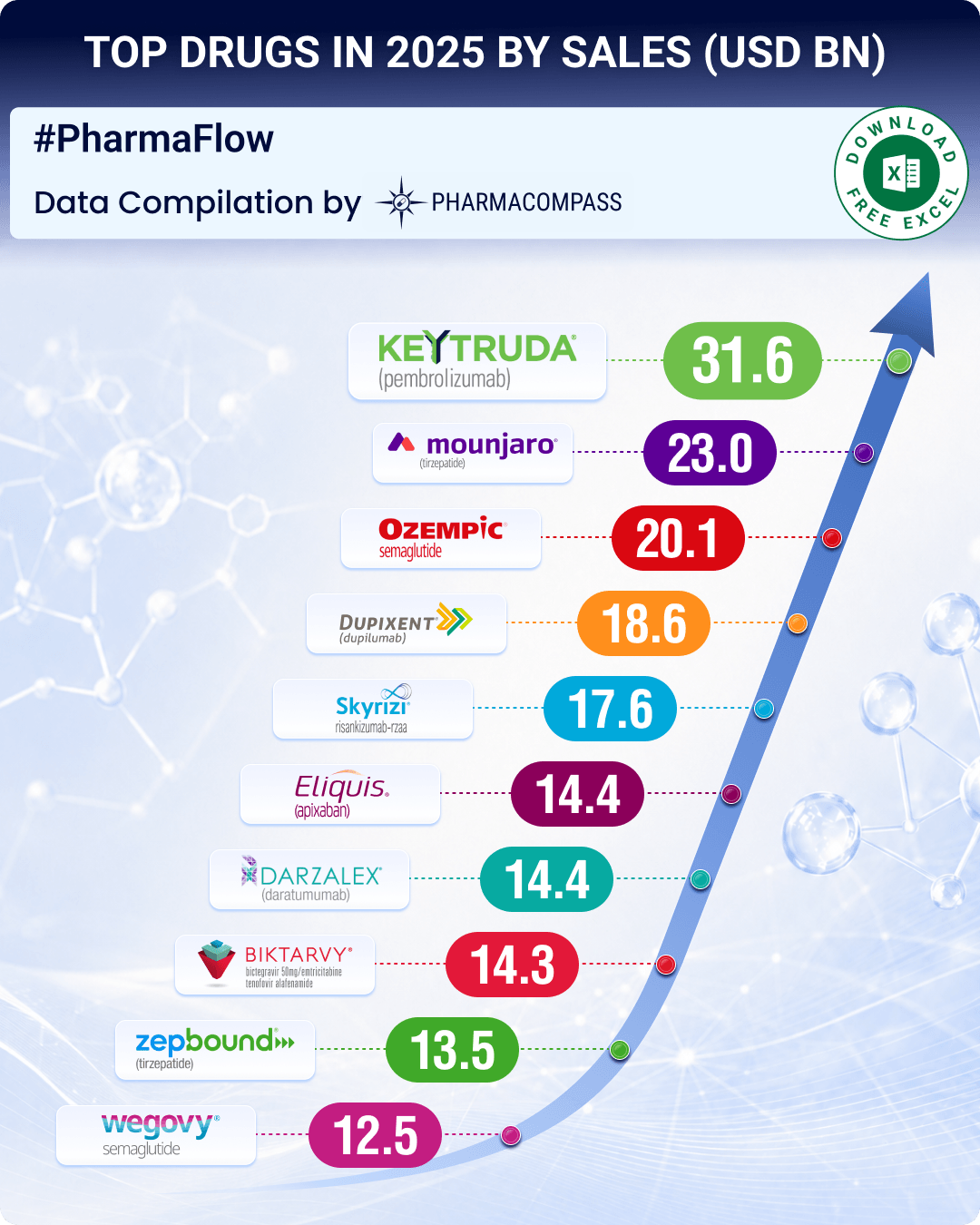
DATA COMPILATION #PharmaFlow
read-more
read-more
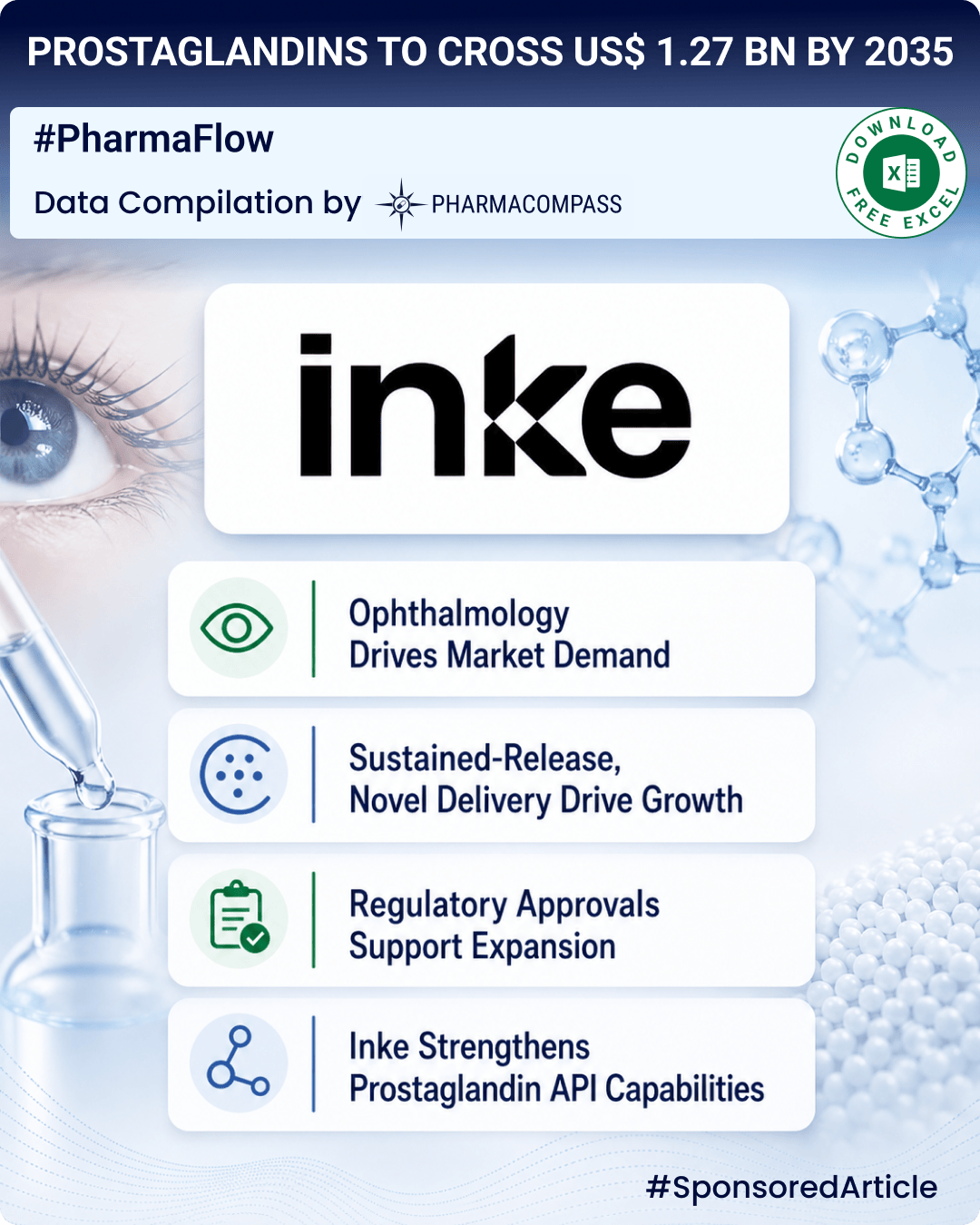
Prostaglandin market to cross US$ 1.27 bn by 2035; Liquidia’s Yutrepia okayed for pulmonary hypertension
Prostaglandins are natural fatty acid compounds produced by the human body. They are made from a type of fat known as arachidonic acid and act like messengers, controlling many functions such as inflammation, blood flow, muscle contraction, and fluid drainage in the eye. Prostaglandin APIs are synthetic (lab-made) versions of natural prostaglandins that are used to create medicines. Prostaglandin-based medicines are used in obstetrics and gynecology, gastroenterology, urology, and cosmetics, and their use is also being explored in certain cardiovascular and respiratory conditions. One of the largest and most important uses of prostaglandin APIs is in ophthalmology (eye care), where they are used as first-line therapy for open-angle glaucoma (a chronic, progressive eye disease) and ocular hypertension (a condition where pressure inside the eye is consistently higher than normal). In ophthalmic applications, these drugs usually serve as prodrugs – inactive in the formulation but converted into their active form after entering the eye.According to estimates, the global prostaglandin market is valued at US$ 0.63 billion in 2025 and is poised to grow from US$ 0.68 billion in 2026 to US$ 1.27 billion by 2035, growing at a CAGR of 7.1 percent between 2026 and 2035.Prostaglandin API manufacturing is a highly specialised field, with only a few experienced manufacturers. Companies such as EUROAPI, Cayman Pharma, Chirogate International, Kyowa Pharma Chemical, Everlight Chemical, and Yonsung Fine Chemicals are key players with strong capabilities in complex chemistry.FDA allows Glaukos’ iDose TR to be re-administered for treating eye diseases; approves Liquidia’s Yutrepia The prostaglandin market continues to see steady regulatory activity and innovations. In ophthalmology, Glaukos Corporation’s iDose TR received a labelling supplement from the US Food and Drug Administration (FDA) that allows for re-administration of the medication indicated for the reduction of intraocular pressure (IOP) in patients with open-angle glaucoma (OAG) or ocular hypertension (OHT). The intracameral implant was originally approved in December 2023 for single use. This update was supported by long-term safety data demonstrating good tolerability in patients with OAG and OHT. Similarly, Santen Pharmaceutical secured manufacturing and marketing approval in Japan for Setaneo (sepetaprost) ophthalmic solution 0.002% in August 2025 for the treatment of glaucoma and OHT. In April 2025, Santen also received approval in China for Tapcom (tafluprost + timolol maleate), a preservative-free fixed-dose combination therapy that lowers intraocular pressure (IOP) in patients with OAG and OHT.Beyond ophthalmology, prostaglandin APIs are also driving advancements in respiratory care. Liquidia Corporation received FDA approval in May 2025 for Yutrepia (treprostinil) inhalation powder for pulmonary arterial hypertension (PAH) and pulmonary hypertension associated with interstitial lung disease (PH-ILD). While PAH is a serious and progressive disease where blood pressure in the lung arteries rises, causing them to narrow and harden, PH-ILD is a serious complication in which high blood pressure develops in the lung arteries due to lung scarring. Yutrepia is the first and only prostacyclin dry-powder formulation enabled by Liquidia’s proprietary technology.  Access the Interactive Dashboard on Prostaglandin Developments (Free Excel Available)Nicox’s drug scores phase 3 win in glaucoma, OHT; United seeks expanded approval for Tyvaso to treat pulmonary fibrosisInnovation in prostaglandins is increasingly focused on enhanced efficacy and sustained drug delivery. French ophthalmology company Nicox has reported positive phase 3 results for its ophthalmic solution NCX 470, demonstrating consistent lowering of intraocular pressure in OAG and OHT. Nicox is likely to submit a new drug application for NCX 470 sometime soon, with a potential approval and launch expected in 2027.Meanwhile, US-based SpyGlass Pharma is advancing sustained-release innovation through intraocular lens (IOL)-based and ring-based drug delivery systems. Its Bimatoprost Drug Pad–Intraocular Lens (BIM-IOL) system (currently in phase 3 trials) integrates drug delivery with cataract surgery to enable sustained therapy for up to three years. The company is also developing a preclinical Bimatoprost Drug Ring System (BIM-DRS) designed for similarly extended drug release. In respiratory indications, Insmedis progressing treprostinil palmitil inhalation powder through phase 3 trials for PH-ILD, as well as for idiopathic pulmonary fibrosis and PAH.Additionally, United Therapeutics is expanding the clinical scope of Tyvaso DPI (treprostinil). Following its global approval in 2022 for PAH, the therapy is now under regulatory review in the US and Canada for progressive pulmonary fibrosis and idiopathic pulmonary fibrosis.  Access the Interactive Dashboard on Prostaglandin Developments (Free Excel Available)Glaukos sets up new R&D facility in Alabama, Inke acquires Pharmanoid to strengthen presence in prostaglandins Several players are expanding capacities due to rising demand across ophthalmology. Glaukos Corporation is setting up a new research, development, and manufacturing facility in Huntsville, Alabama. The planned 200,000 square-foot site, to be built on a 25-acre campus in Cummings Research Park, envisages an investment of over US$ 80 million. Expected to be completed by 2030, the facility is designed to augment the company’s existing infrastructure and support long-term growth, particularly in ophthalmic therapies including sustained-release drug delivery systems.EUROAPIis undertaking a significant capacity expansion at its Budapest site. The company has committed €50 million (US$ 54.8 million) to install a new state-of-the-art production plant focused on prostaglandins. The project aims to debottleneck existing operations and introduce new multi-purpose manufacturing equipment, ultimately more than doubling the site’s prostaglandin production capacity by 2027. The expansion will also strengthen EUROAPI’s highly potent API (HPAPI) capabilities.Alongside capacity additions by established players, the market is also witnessing consolidation and capability expansion through acquisitions. For instance, Essential Pharma acquired Ventavis (iloprost trometamol) from Bayer AG, including rights to the accompanying Breelib nebuliser delivery technology. Ventavis, a prostacyclin analogue, is a well-established treatment for adult patients with primary pulmonary hypertension.Inke strengthened its presence in ophthalmology-focused high-potency APIs (HPAPIs), including prostaglandins, through the acquisition of Pharmanoid in December 2025. Backed by regulatory approvals across 25+ countries, Pharmanoid enhances Inke’s capabilities in complex API production and supports its ambition to build a leading European platform for advanced API development and manufacturing. The Barcelona facility is capable of producing and handling APIs across all potency levels while adhering to SafeBridge Scale OEB4 (Occupational Exposure Band 4) containment protocols, a classification for high-potency substances requiring strict controls to limit occupational exposure.With more than two decades of experience, Inke is recognized for innovating and manufacturing high-quality APIs, delivering expertise, safety, and excellence across inhalation, CNS, and ophthalmic therapies, while supporting pharmaceutical companies worldwide. The ophthalmic API commercial portfolio includes bimatoprost, latanoprost, tafluprost, and travoprost, while the next-generation prostaglandin analog pipeline includes bimatoprost grenod and latanoprostene bunod.  Access the Interactive Dashboard on Prostaglandin Developments (Free Excel Available)Our viewInnovation is guiding the prostaglandins market towards long-acting, sustained-release formulations and novel delivery systems. These innovations are driving steady growth in prostaglandins, while capacity expansions are strengthening capabilities in complex and highly potent APIs. Overall, this remains a niche but important market to watch. 

Impressions: 2624

https://www.pharmacompass.com/radio-compass-blog/prostaglandin-market-to-cross-us-1-27-bn-by-2035-liquidia-s-yutrepia-okayed-for-pulmonary-hypertension

#PharmaFlow by PHARMACOMPASS
14 May 2026
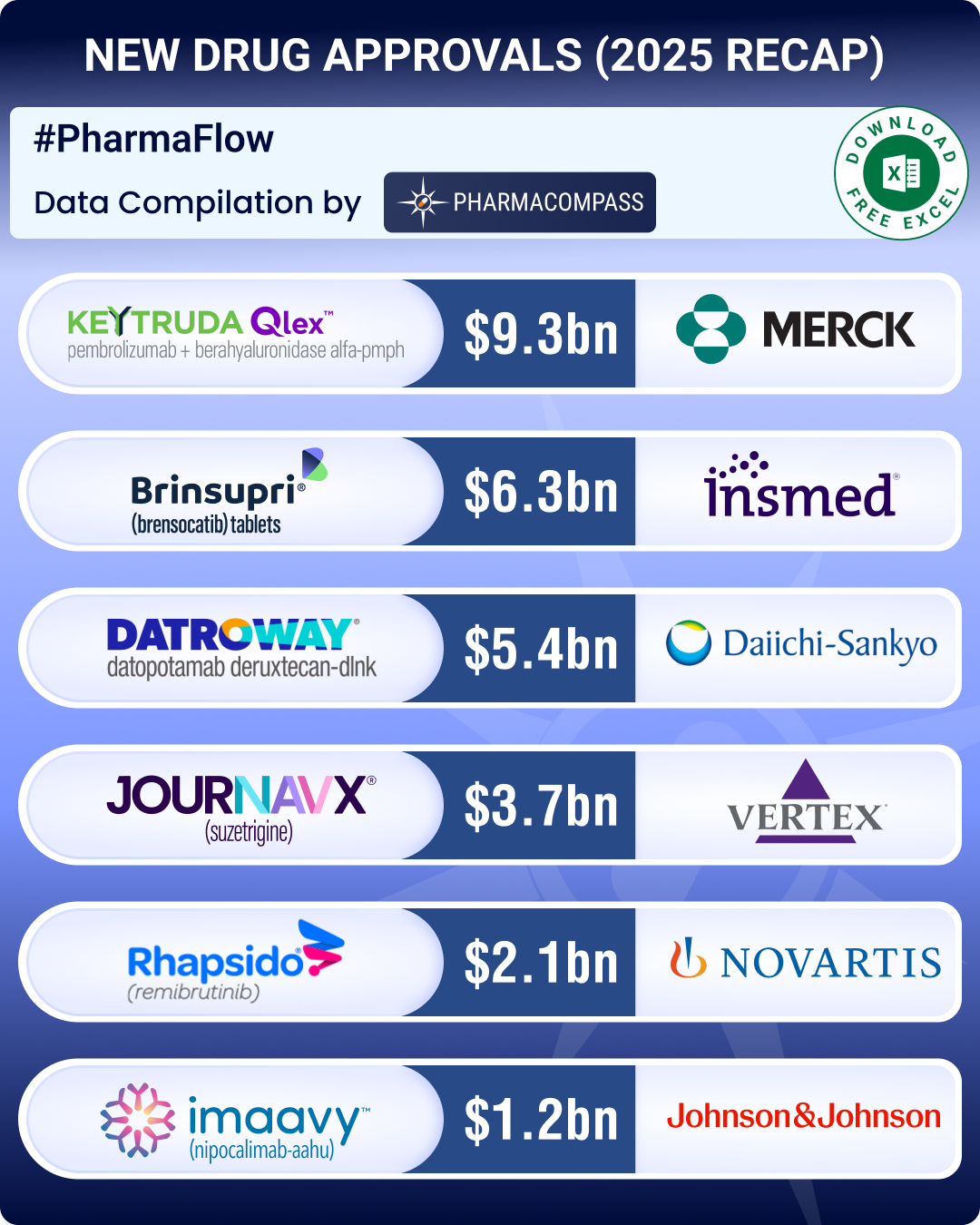
FDA approvals drop 8% in 2025, with fewer blockbusters; Brinsupri, Rhapsido make it to first-in-class list
Our update for new drug approvals by the US Food and Drug Administration (FDA) in the first half (H1) of 2025 had pointed out how upheavals at the agency had impacted its functioning, with drug approvals dropping by 24 percent.While the turbulence didn’t subside, approvals picked up considerably in the second half (H2) of 2025. FDA’s Center for Drug Evaluation and Research (CDER) approved 30 new drugs in H2 (as against 16 in H1), taking the total number of approvals for 2025 up to 46. This is an 8 percent drop compared with 50 approvals CDER had granted in 2024.During the year, CDER saw four new chiefs come and go — Jacqueline Corrigan-Curay (Jan-July 2025), George Tidmarsh (July-Nov 2025), Richard Pazdur (Nov-December 2025) and Tracy Beth Høeg (December 2025-present). In addition, the agency endured thousands of retrenchments. The US Department of Health and Human Services (HHS), under Health Secretary Robert F. Kennedy Jr., enforced funding cuts and changes in approval processes, especially for vaccines.Overall, we have been witnessing a steady drop in drug approvals by CDER — it approved 55 new drugs in 2023, 50 in 2024 and, 46 in 2025.Of the 46 new approvals in 2025, 20 were classified as first-in-class (therapies that use a new and unique mechanism of action), out of which 13 were approved in H2 2025. Overall, CDER approved 32 chemical entities and 14 biologics in 2025.In comparison, approvals by Health Canada and authorizations by the European Medicines Agency (EMA) rose in 2025. The EMA authorized 69 new therapies, up from 64 in 2024. Health Canada approved 46 new therapies in 2025, as compared with 28 in 2024.FDA’s Center for Biologics Evaluation and Research (CBER) approved 21 biologics in 2025, compared with 13 in 2024, of which eight were notable new drugs.Interestingly, both CDER and CBER rejected more drugs last year — 43 applications were rejected, including those for new drugs, supplemental filings, generics and biosimilars, as opposed to 29 in 2024. View New Drug Approvals in 2025 with Estimated Sales (Free Excel Available)Blockbuster drug approvals drop by 60%, European drugmakers score more FDA nods It wasn’t a year of blockbuster drug approvals — the agency approved a lower number of drugs that are expected to deliver sales of at least US$ 1 billion by 2030. While there were nearly 20 such drugs approved in 2024, the number dropped to just eight in 2025.Interestingly, European companies won many more approvals for new products than their counterparts in the US. GSK and Novartis achieved three approvals each, while Merck, Boehringer Ingelheim and Bayer AG won two approvals each.The first-in-class drugs approved in H2 are: Insmed's Brinsupri (brensocatib), Ionis's Dawnzera (donidalorsen), Stealth Bio's Forzinity (elamipretide), Boehringer's Jascayd (nerandomilast), UCB's Kygevvi (doxecitine and doxribtimine), Bayer's Lynkuet (elinzanetant), Chimerix's Modeyso (dordaviprone), Innoviva's Nuzolvence (zoliflodacin), Arrowhead's Redemplo (plozasiran), Novartis' Rhapsido (remibrutinib), Otsuka's Voyxact (sibeprenlimab-szsi), Sanofi's Wayrilz (rilzabrutinib) and Omeros' Yartemlea (narsoplimab-wuug). View New Drug Approvals in 2025 with Estimated Sales (Free Excel Available)Insmed’s Brinsupri approved for chronic lung disease; Novartis’ Rhapsido okayed for urticariaAs has been the trend, the field of oncology saw the maximum drug approvals (15), followed by rare diseases and disorders (7) and immunology (4). Three categories — infections and infectious diseases, respiratory diseases and cardiology/vascular diseases — saw three drug approvals each.Among the first-in-class approvals was Insmed’s Brinsupri (brensocatib), the first treatment for non-cystic fibrosis bronchiectasis, a chronic lung disease. Nature has estimated peak sales of US$ 6.3 billion for this treatment. Brinsupri was approved by the EMA in November.Another notable approval was granted to Novartis’ Rhapsido (remibrutinib), approved to treat the skin condition chronic spontaneous urticaria in adults who remain symptomatic despite treatment with antihistamines. Rhapsido is the first oral alternative to injectable treatments and has 2030 sales forecasts of US$ 2.1 billion. Novartis is also testing the drug for other immune conditions.A new drug that is estimated to bring in the maximum sales is Merck’s Keytruda Qlex, a subcutaneous formulation of pembrolizumab plus berahyaluronidase alfa approved for various solid tumors. While top-selling cancer drug Keytruda (pembrolizumab) was first approved in 2014, this is the first approval for an engineered variant of the hyaluronidase enzyme (berahyaluronidase alfa). Therefore, this combination counts as a novel approval. View New Drug Approvals in 2025 with Estimated Sales (Free Excel Available)Fondazion’s CGT okayed for Wiskott-Aldrich syndrome; three drugs approved for hereditary angioedema After a record nine new cell and gene therapy (CGT) approvals in 2024, only five CGTs were approved in 2025 (the lowest since 2022). With the exception of Novartis’ Itvisma (onasemnogene abeparvovec-brve), all other CGT approvals went to relatively lesser known companies such as Abeona, Precigen, Neurotech and Fondazione Telethon (an Italian firm that became the first nonprofit to get a CGT approval from the FDA).Fondazione Telethon’s Waskyra (etuvetidigene autotemcel) became the first gene therapy for Wiskott-Aldrich syndrome (WAS), a rare immune disorder that causes frequent infections, bleeding issues, and eczema. The one-time treatment uses patients’ own blood stem cells that are modified to restore the faulty WAS gene. Abeona’s Zevaskyntm (prademagene zamikeracel) became the first and only autologous cell sheet-based gene therapy indicated for the treatment of wounds in adult and pediatric patients with recessive dystrophic epidermolysis bullosa (a rare, genetic skin disorder).Patients with hereditary angioedema (or HAE, a genetic disorder characterized by recurrent episodes of severe swelling) gained access to three new drugs, including two first-in-class drugs — CSL Behring’s Andembry (garadacimab) and Ionis Pharma’s Dawnzera (donidalorsen). The third drug approved to treat HAE is KalVista Pharma’s Ekterly (sebetralstat). View New Drug Approvals in 2025 with Estimated Sales (Free Excel Available)Our viewThe FDA has been bringing about considerable changes to its processes. In June, it launched the Commissioner’s National Priority Vouchers (CNPV) program to cut review timelines from the usual 10 to 12 months to two months. But the recent rejection of Disc Medicine’s application for bitopertin as a treatment for a rare blood disorder under the program took four months to materialize. Not only did the rejection come in late, it was based on information already known to the FDA at the time of granting the coveted voucher, raising controversy around the program.The agency is going to bring about more changes soon. It has proposed a plausible mechanism pathway for rare and ultra-rare diseases where randomized controlled trials are not feasible. And in April, it announced plans to phase out animal toxicity testing in the development of monoclonal antibody therapies and other drugs. The agency is increasingly relying on AI, and recently  announced the deployment of agentic AI capabilities for all employees. It will be interesting to see how these changes impact drug approvals in 2026.

Impressions: 2187

https://www.pharmacompass.com/radio-compass-blog/fda-approvals-drop-8-in-2025-with-fewer-blockbusters-brinsupri-rhapsido-make-it-to-first-in-class-list

#PharmaFlow by PHARMACOMPASS
26 Feb 2026
FDA approvals drop 24% in H1 2025; GSK’s UTI med, Vertex’s non-opioid painkiller lead pack of first-in-class meds
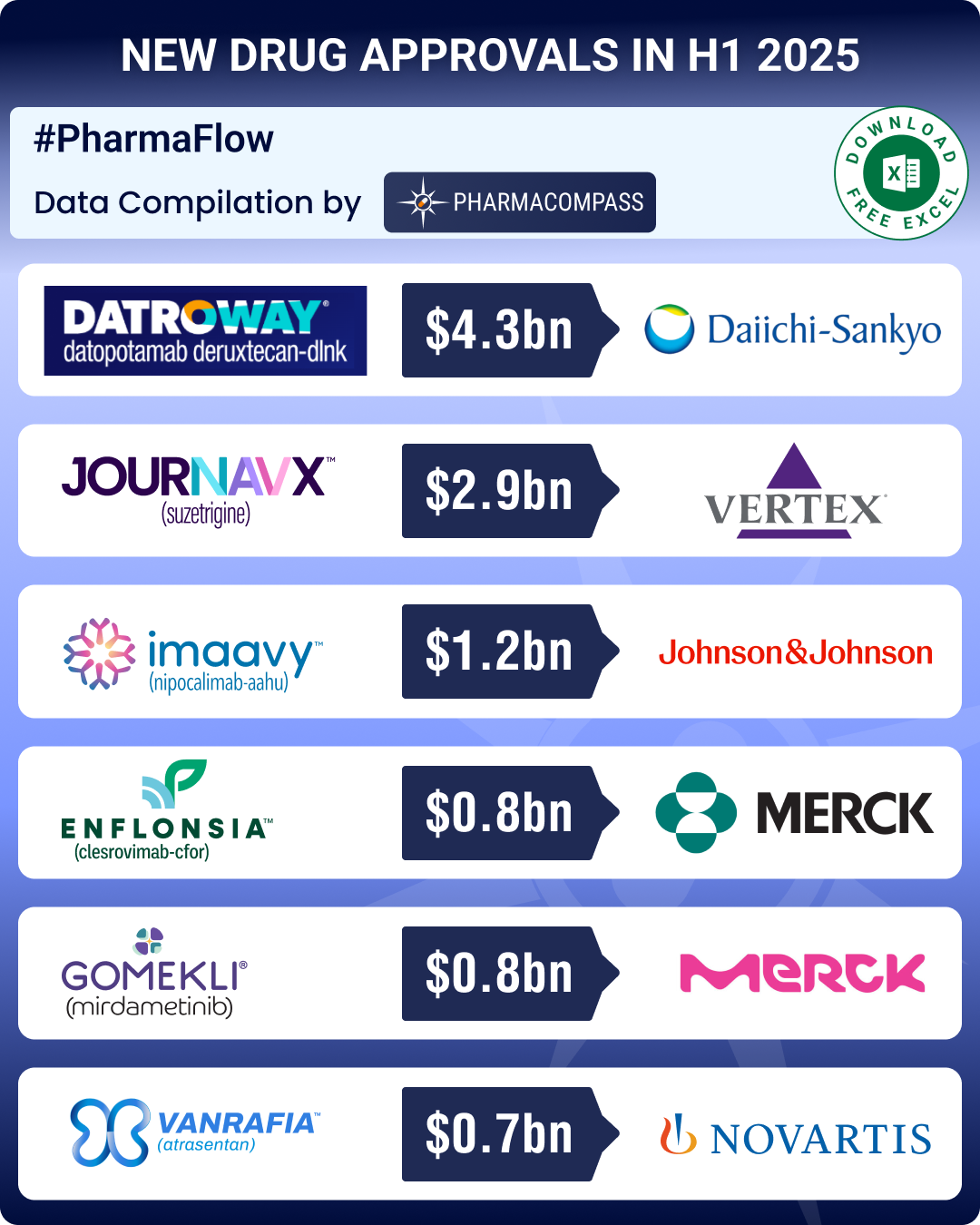
It has been a turbulent year for the US Food and Drug Administration (FDA), marked by reductions in both staff and budget, shake-ups at the top and a reduction in inspections. This upheaval has clearly impacted the functioning of the agency, with reports of missed deadlines and reduced responsiveness. This disruption resulted in a slowdown in new drug approvals in the first half of 2025 (H1 2025), as opposed to the same period last year. Incidentally, drug approvals in H1 2024 were also down by 19 percent compared to H1 2023. FDA’s Center for Drug Evaluation and Research (CDER) approved 16 novel drugs in H1 2025, down from 21 in H1 2024, a decline of nearly 24 percent. Of these, nine were small molecules and seven were biologics. The period saw eight first-in-class therapies get CDER’s approval, as opposed to 17 in H1 2024. FDA’s Center for Biologics Evaluation and Research (CBER) approved seven biologics in H1 2025, compared to eight in the same period last year. In comparison, both Health Canada and the European Medicines Agency (EMA) reported a strong rebound in approvals and authorizations, respectively. Health Canada approved 20 drugs in H1 2025, as opposed to 10 in H1 2024. Similarly, EMA authorized 19 new therapies in H1 2025, compared to 15 in H1 2024. Notably, EMA’s pending decisions increased to 25 in H1 2025, from 14 in the same period last year, while conditional authorizations remained static at five. This underscores EMA’s active regulatory pipeline, suggesting that more drugs could be approved in Europe soon.   View New Drug Approvals in H1 2025 with Estimated Sales (Free Excel Available) Vertex’s non-opioid painkiller, GSK’s antibiotic for UTI, Merck’s RSV antibody bag FDA nods Oncology remained the single largest category in H1 2025 with seven new drugs being approved by the FDA, followed by four rare diseases and disorders and as many infections and infective diseases.  The eight drugs that were designated first-in-class in H1 2025 are: Journavx (Suzetrigine), Imaavy (nipocalimab), Emrelis (telisotuzumab vedotin), Blujepa (gepotidacin mesylate), Qfitlia (fitusiran), Avmapki Fakzynja Co-Pack (avutometinib potassium/defactinib hydrochloride), Tryptyr (acoltremon), and Andembry (garadacimab). In January, a new class of non-opioid pain therapy made a debut — FDA approved Vertex Pharmaceuticals’ Journavx (suzetrigine). This first-in-class oral analgesic could bring in US$ 2.9 billion in sales for Vertex by 2030. The half year also saw a new oral antibiotic — GSK’s Blujepa (gepotidacin) — for treating uncomplicated urinary tract infections (uUTIs) bag FDA approval. This is the first new antibiotic for uUTIs in nearly three decades. It treats infections caused by resistant pathogens such as E. coli and K. pneumoniae. In June, Merck’s Enflonsia (clesrovimab), a long-acting monoclonal antibody, won FDA approval to prevent respiratory syncytial virus (RSV) lower respiratory tract disease in neonates and infants entering their first RSV season. A single 105 mg dose provides protection for about five months, the length of a typical RSV season. Enflonsia could bring in US$844 million in annual sales by 2030.   View New Drug Approvals in H1 2025 with Estimated Sales (Free Excel Available)  FDA approves four meds for rare diseases, including SpringWorks’ Gomekli, Novartis’ Vanrafia In H1 2024, rare genetic diseases had witnessed some significant approvals. The trend continued in H1 2025. In February, Gomekli (mirdametinib), developed by SpringWorks Therapeutics, became the first approved therapy for neurofibromatosis type 1 (a genetic disorder that causes tumors to grow on nerve tissues) in adult and pediatric patients who have symptomatic plexiform neurofibromas (benign, complex nerve tumors) not amenable to complete resection. Analysts expect peak sales of around US$ 0.8 billion by 2030. Post this approval, SpringWorks got acquired by Merck KGaA for approximately US$ 3.9 billion. The same month, Ono Pharma-owned Deciphera’s Romvimza (vimseltinib) became the first oral therapy approved for another rare disease known as symptomatic tenosynovial giant cell tumor. This is a benign but aggressive growth that can be painful. This new drug offers patients an option beyond surgery. In March, Sanofi’s Qfitlia (fitusiran) was approved for routine prophylaxis in hemophilia A or B, with or without inhibitors. And in April, Novartis’ Vanrafia (atrasentan) was granted accelerated approval for IgA nephropathy (a chronic autoimmune kidney disease), which is at the risk of rapid progression. Vanrafia could bring in sales of over US$ 735 million by 2030. Johnson & Johnson secured approval for Imaavy (nipocalimab-aahu) for generalized myasthenia gravis (a chronic autoimmune disease that causes muscle weakness) in adults and adolescents. Imaavy’s sales could cross US$1.17 billion by 2030. Rare diseases continue to attract regulatory attention, with the trend carrying into the current quarter. July witnessed two noteworthy rare-disease approvals — Ekterly (garadacimab), CSL’s once-monthly prophylactic treatment for hereditary angioedema (a genetic disorder that causes recurrent episodes of swellings), and Sephience (pegvaliase-abcx), BioMarin’s new therapy for phenylketonuria (a rare metabolic disorder).   View New Drug Approvals in H1 2025 with Estimated Sales (Free Excel Available)  FDA greenlights new oncology therapies, including Astra’s Datroway, AbbVie’s Emrelis The field of oncology saw some notable new drug approvals. In January, Datroway (datopotamab deruxtecan), an antibody-drug conjugate (ADC) developed by AstraZeneca and Daiichi Sankyo, was granted approval for adults with unresectable or metastatic, hormone receptor-positive, HER2-negative breast cancer. Later, in June, the FDA granted accelerated approval  to AstraZeneca;s Datroway for adults with locally advanced or metastatic, EGFR-mutated non-small cell lung cancer. The drug’s peak annual sales are projected at about US$ 4.2 billion by 2030. In May, Emrelis (telisotuzumab vedotin-tllv), AbbVie’s ADC was granted FDA’s accelerated approval. Emrelis treats locally advanced or metastatic non-squamous non-small cell lung cancer (NSCLC) characterized by significantly increased levels of the c-Met protein in cancer cells. FDA also approved a companion diagnostic test — Roche's Ventana — in May to determine the c-Met protein biomarker status in order to identify patients eligible for Emrelis.  The same month, FDA also granted accelerated approval to Verastem’s Avmapki Fakzynja Co-pack, a dual oral therapy for adults with KRAS‑mutated recurrent low‑grade serous ovarian cancer (LGSOC). This novel regimen combines two inhibitors — avutometinib and defactinib — to disrupt critical signaling pathways that fuel tumor growth. In ophthalmology, Alcon re-entered the prescription pharmaceutical market with Tryptry (acoltremon), a first-in-class TRPM8 agonist for dry eye disease, which stimulates corneal nerves to increase tear production.   View New Drug Approvals in H1 2025 with Estimated Sales (Free Excel Available)  Our view The changes in the FDA are clearly having a far-reaching impact on the global pharmaceutical industry. There have been reports of drugmakers losing confidence in the FDA, which has been a gold standard for drug regulation. Some American biotechs are shifting early trials outside of the US. With EMA and Health Canada authorizing/approving a larger number of drugs in H1 2025, we do see some changes underway that may eventually reshape drug development.  

Impressions: 7739

https://www.pharmacompass.com/radio-compass-blog/fda-approvals-drop-24-in-h1-2025-gsk-s-uti-med-vertex-s-non-opioid-painkiller-lead-pack-of-first-in-class-meds

#PharmaFlow by PHARMACOMPASS
28 Aug 2025
US drug shortages reduce 16% YoY in Q1 2025; CNS drugs, antimicrobials face highest scarcities
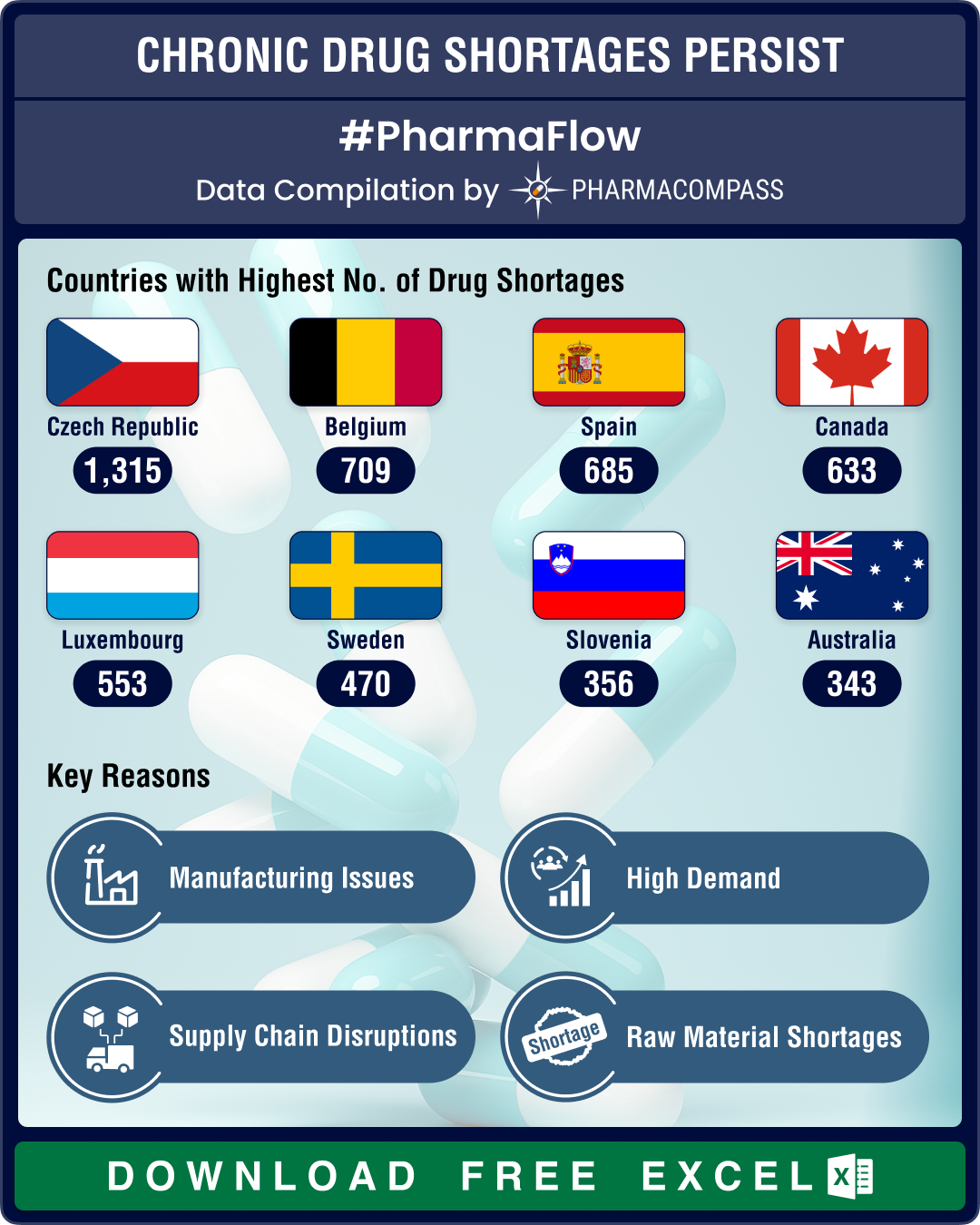
The pharmaceutical industry in the United States continued to grapple with drug shortages during the first quarter (Q1) of 2025. According to the American Society of Health‑System Pharmacists (ASHP), the total number of active shortages stood at 270 as of March 31, 2025 — only slightly below the 277 reported in September 2024, but down 16.4 percent from an all‑time high of 323 reported in Q1 2024.These numbers imply that while dramatic surges in drug shortages may have subsided, underlying vulnerabilities in manufacturing, supply chains, and raw‑material sourcing continue to frustrate efforts towards a durable resolution.A deeper analysis of these drug scarcities reveals that 41 percent of the 270 active shortages first emerged in 2022 or earlier. This implies that many of the current disruptions have become chronic in nature and are exerting pressure on pharmacy operations. View Our Interactive Dashboard on Drug Shortages So Far in 2025 (Free Excel Available)CNS drugs dominate with 49 meds in short supply; antimicrobials face shortage of 39 drugsClass‑specific analysis reveals that central nervous system (CNS) agents remained the most disrupted category, with 49 distinct CNS drugs having faced scarcities during Q1. This group spans anxiolytics (anti-anxiety drugs) such as clonazepam and flurazepam, sedatives like lorazepam and midazolam, and stimulants such as methylphenidate and lisdexamfetamine. These shortages pose two challenges — controlling seizures and managing sedation in acute care settings. After CNS agents, antimicrobials was the second‑largest category, with shortages affecting 39 drugs. Key antibacterial and anti-fungal agents such as cefotaxime sodium powder for injection, clindamycin phosphate, rifampin, and metronidazole find themselves on ASHP’s active‑shortage roster, threatening both routine hospital protocols and emergency sepsis management.Fluids and electrolytes occupied the third spot, with 29 items facing shortage in Q1 2025. Hormone agents, including insulin analogs, ranked fourth with 24 drugs in short supply.Chemotherapy medications rounded out the top five categories, with 23 antineoplastic agents (a broad class of medications used to treat cancer) flagged as actively constrained in Q1 2025. Notable shortages included azacitidine, carboplatin, methotrexate, and streptozocin. View Our Interactive Dashboard on Drug Shortages So Far in 2025 (Free Excel Available) US faces 26 new shortages; Pharmacopeia list warns of 100 vulnerable medicationsThe first quarter saw the emergence of 26 new shortage declarations, emphasizing that even drugs previously deemed reliably sourced can fall into scarcity. The US has been facing a shortage of attention deficit hyperactivity disorder (ADHD) drugs since 2022. The new shortages included ADHD transdermal patch methylphenidate, peginterferon alfa‑2a (Pegasys) used in chronic hepatitis B and C, and bacitracin ophthalmic ointment.The fragility of the pharmaceutical supply chains has been particularly evident in the aftermath of natural disasters. Hurricane Helene’s flooding at Baxter’s Marion, North Carolina, facility deeply affected IV‑solution supply lines. Baxter supplies roughly 60 percent of the US’ IV fluids and the ASHP report listed “hurricane” as the reason behind nine percent of drug shortages, as of January 2025.Regulatory and policy interventions continue to evolve. The US Pharmacopeia’s inaugural Vulnerable Medicines List, launched in 2025, identifies 100 drugs at the highest risk of future shortages, with a particular focus on injectables (comprising 71 percent of the list) and essential hospital care.Antibiotics, medications for pain management and oncology are the other drugs on the list. Although 61 percent of these vulnerable medicines were not in active shortage at the time of listing, their inclusion is intended to galvanize manufacturers and purchasing organizations to bolster inventories.Meanwhile, the Government Accountability Office in the US has called on the Department of Health and Human Services (HHS) to establish a formal coordination mechanism, warning that elimination of the HHS supply‑chain coordinator role in May 2025 risks fragmenting federal response efforts. View Our Interactive Dashboard on Drug Shortages So Far in 2025 (Free Excel Available) Global shortages mirror US patterns; Europe launches monitoring platform Globally, we notice comparable trends. For instance, Europe has rolled out the European Shortages Monitoring Platform (ESMP) this year in order to centralize shortage reporting across member states. Critical‑medicine shortages in the EU — in areas such as oncology, ADHD, and critical care analgesics — mirror US patterns. The European Medicines Agency’s shortage list currently holds 37 human drugs.According to Health Canada’s May 12, 2025 update, its Tier 3 list had 18 drug shortages that are considered to have the greatest impact on Canada’s drug supply and health‑care system. Tier 3 designation is based on medical necessity and minimal availability of alternatives.In hematology and oncology, scarcity of essential drugs like Oncaspar for acute lymphoblastic leukemia, idarubicin and lomustine for leukemias and brain tumors, anagrelide for thrombocythemia, and preservative‑free methotrexate for various malignancies underscore the impact these drug shortages can have on treatment. View Our Interactive Dashboard on Drug Shortages So Far in 2025 (Free Excel Available) Our viewThe global pharma supply chain is dealing with a fresh wave of uncertainties, especially with the likelihood of tariffs on drugs imported into the US. Analysts warn that the proposed pharmaceutical tariffs could exacerbate supply issues.Over 50 percent of drugs used in the US are manufactured abroad. Generic sterile injectable drugs — like chemotherapy medications and IV saline — are particularly vulnerable due to their complex manufacturing processes and low profit margins. Generic drugs (which account for 90 percent of prescriptions filled in the US) could face increased pressure, as many rely on raw materials from China and India. This could result in more severe drug shortages in the future. 

Impressions: 5347

https://www.pharmacompass.com/radio-compass-blog/us-drug-shortages-reduce-16-yoy-in-q1-2025-cns-drugs-antimicrobials-face-highest-scarcities

#PharmaFlow by PHARMACOMPASS
22 May 2025
BMS, J&J, Bayer lead 25,000+ pharma layoffs in 2024; Amylyx, FibroGen, Kronos Bio hit by trial failures, cash crunch
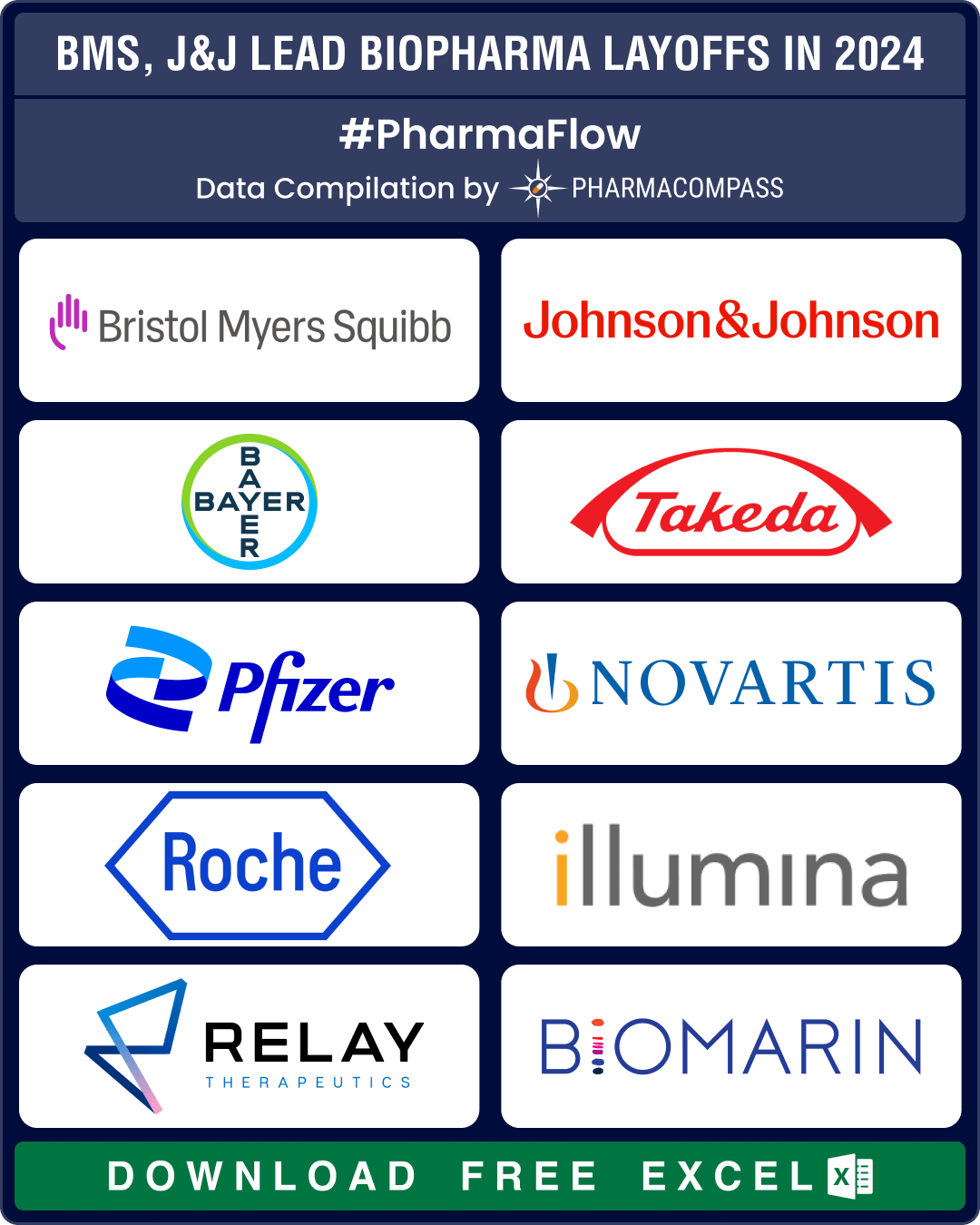
Since 2022, there has been a significant surge in layoffs by pharmaceutical and biotech companies. While this trend continued into 2024, the industry showed signs of stabilization in the last four months of the year with the pace of layoffs slowing down. Nonetheless, 2024 was a challenging year. Data compiled by PharmaCompass indicates that over 25,000 layoffs were announced in 2024, driven by economic pressures, failed clinical trials, and strategic pivots. Bristol Myers Squibb and Johnson & Johnson led the layoffs with about 2,300 job cuts each. Bayer announced elimination of 1,800 positions.  View Our Interactive Dashboard on Biopharma Layoffs in 2024 (Free Excel Available) US, Europe, China bear brunt of job cuts; Big Pharma hands pink slips to 10,000 Over 190 biopharma companies announced layoffs in 2024. The year began on a grim note — 27 firms announced significant job cuts in January 2024. By the yearend, Big Pharma alone had contributed more than 10,000 layoffs to the year’s total of over 25,000. Novartis announced over 1,200 job cuts in 2024. It eliminated 330 jobs after it acquired German biotech MorphoSys through the closure of sites in Munich and Boston. Similarly, Bayer announced significant reductions at its US and Swiss facilities.  North America saw increased retrenchments, especially at biotech hubs such as Boston, San Diego, and New Jersey. Massachusetts, with Boston and Cambridge as the epicenter of US biotechnology, saw around 4,000 layoffs, with companies like Relay Therapeutics, Editas Medicine, and Takeda driving the numbers. In San Diego, workforce reductions by Takeda, and Bavarian Nordic collectively resulted in over 900 job losses, significantly impacting the local biotech ecosystem. New Jersey was subject to broader restructuring efforts with BMS and Bayer contributing nearly 1,500 layoffs. The impact in Europe was equally severe. Germany, home to some of the world’s largest pharmaceutical companies, saw over 2,500 layoffs as Bayer and Boehringer Ingelheim scaled back operations. Novartis’ decision to shut down its Munich site added hundreds more to the tally. In Switzerland, Idorsia eliminated 270 positions. Dutch biotech UniQure reduced its workforce by 65 percent (around 300 jobs). That included the sale of a Massachusetts manufacturing facility to Genezen. Denmark also felt the strain, with Leo Pharma cutting 250 roles as part of a strategic revamp. China emerged as another focal point of workforce reductions in 2024. Global pharmaceutical giants, such as Merck and Johnson & Johnson, restructured their operations in response to market complexities in the region. Local companies such as Connect Biopharma, which is transitioning to a US-focused company, also scaled back their presence in the country.  View Our Interactive Dashboard on Biopharma Layoffs in 2024 (Free Excel Available)  Amylyx, FibroGen, Lyra, Athira drastically reduce staff over setbacks in clinical trials Clinical trial failures were one of the most significant drivers of layoffs in 2024. For instance, Amylyx Pharmaceuticals faced a devastating blow when its amyotrophic lateral sclerosis (ALS) therapy, Relyvrio, failed a confirmatory trial. This led to a 70 percent reduction in its workforce, leaving only 100 employees from the 384 full-time staff reported at the end of 2023. The company’s decision to pull the therapy from the market compounded the layoffs. BioMarin Pharmaceutical had to reduce its workforce, as it streamlined its pipeline in response to trial challenges. In August, the company announced a reduction of 225 employees, citing “organizational redesign efforts”. These layoffs followed 170 redundancies announced earlier in May. FibroGen, once considered a leader in oncology drug development, was among the most heavily impacted. The high-profile failure of its anti-CTGF antibody in two late-stage cancer trials led to the discontinuation of its lead candidate, resulting in a 75 percent reduction in its US workforce. Lyra Therapeutics also implemented a 75 percent workforce reduction, affecting 87 employees, after its chronic rhinosinusitis program struggled. Similarly, Athira Pharma cut 70 percent of its team after its Alzheimer’s candidate failed a phase 2/3 trial.  View Our Interactive Dashboard on Biopharma Layoffs in 2024 (Free Excel Available)  Cash crunch, mergers compel Kronos Bio, Editas, Vincerx, Gilead to downsize In addition to clinical failures, funding constraints played a pivotal role in reshaping the biotech landscape. Kronos Bio stood out as one of the hardest-hit firms, cutting 21 percent and 83 percent of its existing workforce in March and November, respectively, as it sought to divest assets and conserve cash. Editas Medicine’s inability to secure partnerships for its sickle cell program forced the company to revert to preclinical research, resulting in a 65 percent workforce reduction. The trend of scaling back R&D pipelines was particularly evident among biotechs struggling to advance preclinical programs to clinical trials. Boundless Bio and Senti Bio exemplified this, choosing to focus on a handful of promising candidates, while reducing discovery efforts. Consolidation often results in overlapping roles, leading to inevitable workforce reductions. Apart from the MorphoSys layoffs by Novartis, Vincerx Pharma faced job losses after it got acquired by Oqory (a clinical-stage ADC company). Vincerx had to cut its workforce by 55 percent.  Amid ongoing reorganization efforts, Gilead closed its Seattle, Washington (US), office and laid off 72 employees of its subsidiary Kite Pharma. Gilead also announced that its Kite facility in Philadelphia, Pennsylvania (US), would close by mid-2025. That was followed by 104 additional layoffs at its California headquarters. In April, it had cut 58 jobs in California. Gilead also announced that its Kite facility in Philadelphia would close by mid-2025. Vir Biotechnology reduced its workforce by 25 percent (i.e. 140 layoffs) to focus on its hepatitis program, and GlycoMimetics let go of 80 percent of its workforce after the FDA demanded an additional clinical trial for its leukemia treatment. Meanwhile, Lexicon Pharmaceuticals reduced its workforce by 60 percent after it stopped commercial operations and transitioned back to being a clinical stage company.  View Our Interactive Dashboard on Biopharma Layoffs in 2024 (Free Excel Available)  Our view It takes decades to build innovation ecosystems. The concentration of layoffs in major biotech hubs has raised concerns about the potential long-term impact on these ecosystems. In 2025, the key challenge will be to maintain the momentum of innovation, as organizations operate with a leaner workforce and a more focused pipeline.  

Impressions: 8845

https://www.pharmacompass.com/radio-compass-blog/bms-j-j-bayer-lead-25-000-pharma-layoffs-in-2024-amylyx-fibrogen-kronos-bio-hit-by-trial-failures-cash-crunch

#PharmaFlow by PHARMACOMPASS
16 Jan 2025
BMS, Bayer, Takeda, Pfizer downsize to combat cost pressures, meet restructuring plans
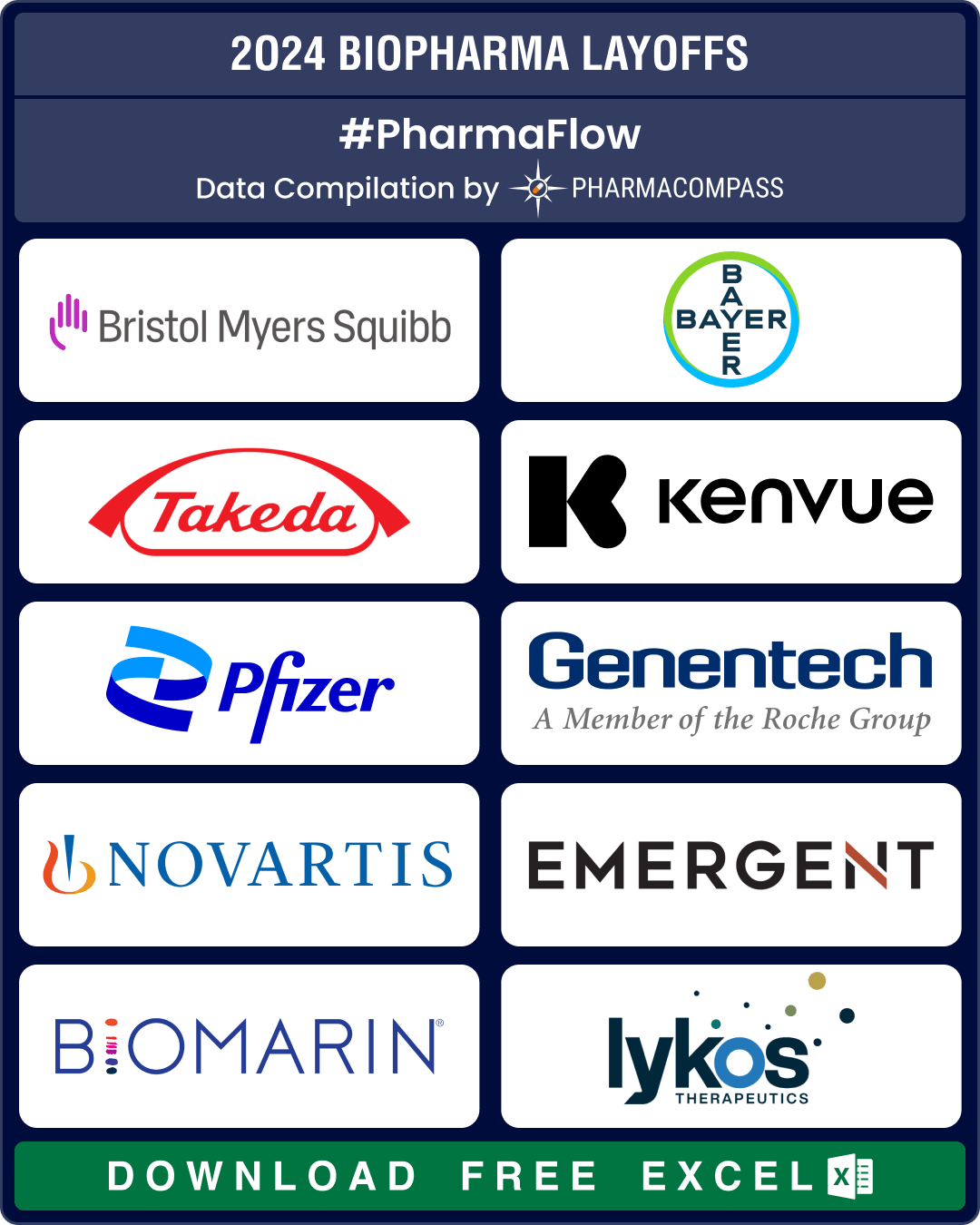
Over the last two years, there has been a significant surge in layoffs by pharmaceutical and biotech companies. The trend spilled over to 2024. Data compiled by PharmaCompass indicates that between January and early-September, around 150 companies had implemented layoffs. Bristol Myers Squibb (BMS) tops the list of companies that downsized, with a staggering 2,284 job cuts. Bayer stood second at 1,816 retrenchments, followed by Takeda Pharmaceuticals at 1,155. Johnson & Johnson’s spin-off Kenvue is slashing over 1,000 jobs this year, while Roche subsidiary Genentech is cutting 529 positions, and Novartis is going ahead with its multi-year restructuring, and cutting another 770 jobs. One of the primary drivers of layoffs has been the need for companies to streamline operations and reduce costs. Many firms have faced financial pressures due to reasons such as declining revenues, increased competition, and the high costs associated with drug development. The current wave of layoffs has encompassed geographies – from traditional pharma strongholds like New Jersey, biotech hubs in Massachusetts and California, to Europe (particularly Germany and Switzerland). This is not to suggest that job cuts are a norm. Certain segments have been experiencing substantial growth and job creation. This includes companies like Eli Lilly and Novo Nordisk that have experienced remarkable growth due to the efficacy of their glucagon-like peptide-1 (GLP-1) receptor agonists, a class of drugs that treats type 2 diabetes and obesity.  View Our Interactive Dashboard on Biopharma Layoffs in 2024 as of Sept. 7 (Free Excel Available) BMS cuts 2,284 jobs to meet cost targets, Bayer hands pink slips to 1,816 employees Several large drugmakers have announced job cuts this year in order to meet their cost cutting goals, or as part of their restructuring exercise. BMS’ revenue had declined from US$ 46.2 billion in 2022 to US$ 45 billion in 2023. The financial pressure has compelled it to cut 2,284 jobs so far in this year, a move that sent shockwaves through the industry. Overall, BMS hopes to save approximately US$ 1.5 billion in costs by 2025 through this “strategic productivity initiative”. In Europe, Swiss-based companies like Novartis and Roche have announced substantial job cuts, while Bayer is reducing its workforce globally.  Bayer is laying off 1,816 employees worldwide, including 150 in Basel, Switzerland. A majority of these are management roles as the German drugmaker seeks to target € 500 million (US$ 557 million) in cost savings in 2024 and € 2 billion (US$ 2.23 billion) in 2026. Japanese drugmaker Takeda plans to eliminate 1,155 positions, including 324 jobs in San Diego and 641 in Massachusetts. Takeda is also winding down production and R&D operations in Austria, resulting in 190 job losses. Starting next month, Genentech, a Roche subsidiary, will lay off 93 employees in San Francisco. Earlier this year, Genentech trimmed roughly 3 percent of its workforce across several departments, impacting 436 employees. Roche also laid off around 340 employees in its product development team. Novartis has been undergoing a significant restructuring exercise since 2022, when it announced 8,000 job cuts in its global workforce. This year, it announced an additional 770 job cuts in its product development organization, separate from the previous reductions. Once again, it was workforces in Switzerland (440 job cuts) and US (269 job cuts) that bore the brunt. Tylenol and Band-Aid maker Kenvue, which spun off from J&J last year, announced plans to cut 920 jobs, representing about 4 percent of its global workforce. Additionally, the company will lay off 51 employees in New Jersey and 84 in California. These layoffs are part of Kenvue’s efforts to adjust its cost structure and become more competitive.  View Our Interactive Dashboard on Biopharma Layoffs in 2024 as of Sept. 7 (Free Excel Available)  Perrigo, Emergent Bio, Catalent, BioMarin trim workforces amid strategic shifts Several mid-size companies too are under tremendous cost pressures, with some of them feeling the need to reinvent themselves for the future. In February this year, Perrigo had embarked on ‘Project Energize’, a three-year initiative aimed at boosting organizational agility and achieving long-term success. As part of this project, Perrigo is cutting costs and laying off 6 percent of its staff, which translates into nearly 550 employees. CDMO-turned-biopharma Emergent BioSolutions plans to reduce its workforce by about 300 employees. The Maryland-based multinational is closing its Baltimore-Bayview drug substance manufacturing facility and its Rockville drug product facility in the state. Rare disease biotech BioMarin laid off 395 employees globally, about 12 percent of its workforce, as part of “organizational redesign efforts” to prioritize its new strategy with its hemophilia A gene therapy Roctavian and to preserve cash. Drug-delivery specialist Catalent has also been significantly impacted by restructuring efforts ever since it announced 1,100 layoffs in December. It had then attributed its fall in revenue to declining Covid-related sales, but had also noted that future GLP-1 manufacturing revenues could help stabilize its finances. True enough — it subsequently announced that it is in the process of being acquired by Novo Nordisk’s parent company for US$ 16.5 billion. However, Catalent reported reducing its headcount by an additional 300 in the fourth quarter of 2023.  View Our Interactive Dashboard on Biopharma Layoffs in 2024 as of Sept. 7 (Free Excel Available)  Pfizer job cuts continue to trickle in; Lykos, Lyra downsize after pipeline setbacks Clinical trial failures and financial constraints have also played a significant role in this year’s wave of layoffs. At Pfizer, job cuts continued to trickle in, with some estimates putting the number at 1,500 employees in 2024. These include 285 at its vaccine R&D site in New York, and 52 in San Francisco. The Comirnaty maker also pulled the plug on a long-anticipated, near-complete Seagen drug manufacturing plant in Everett, Washington. About 120 employees at the site were let go.  It has been a tumultuous time for Lykos Therapeutics, following the US Food and Drug Administration’s rejection of its MDMA-assisted therapy for post-traumatic stress disorder. Lykos announced laying off 75 percent of its staff (i.e. 75 employees). Its founder, who had spent 38 years working on the therapy, left the company and so did its CEO. However, Lykos has not given up and has roped in a Janssen veteran as senior medical advisor to get the therapy past the finish line. Similarly, Lyra Therapeutics is laying off 75 percent of its workforce (i.e. 87 employees) following disappointing late-stage results for its implant to treat chronic rhino-sinusitis. The retrenchments include its chief technology officer.  View Our Interactive Dashboard on Biopharma Layoffs in 2024 as of Sept. 7 (Free Excel Available)  Our view Technology, regulatory and pricing pressures are shaping strategies of pharmaceutical companies. The drive to do more with less could accelerate the adoption of artificial intelligence, machine learning, and automation in drug discovery and development processes. The employment landscape is certainly evolving. We foresee significant changes in the skills required for pharmaceutical and biotech careers, with a growing emphasis on data science and computational biology.

Impressions: 5453

https://www.pharmacompass.com/radio-compass-blog/bms-bayer-takeda-pfizer-downsize-to-combat-cost-pressures-meet-restructuring-plans

#PharmaFlow by PHARMACOMPASS
19 Sep 2024
Big Pharma bets big on AI’s US$ 148 bn potential to revolutionize healthcare industry
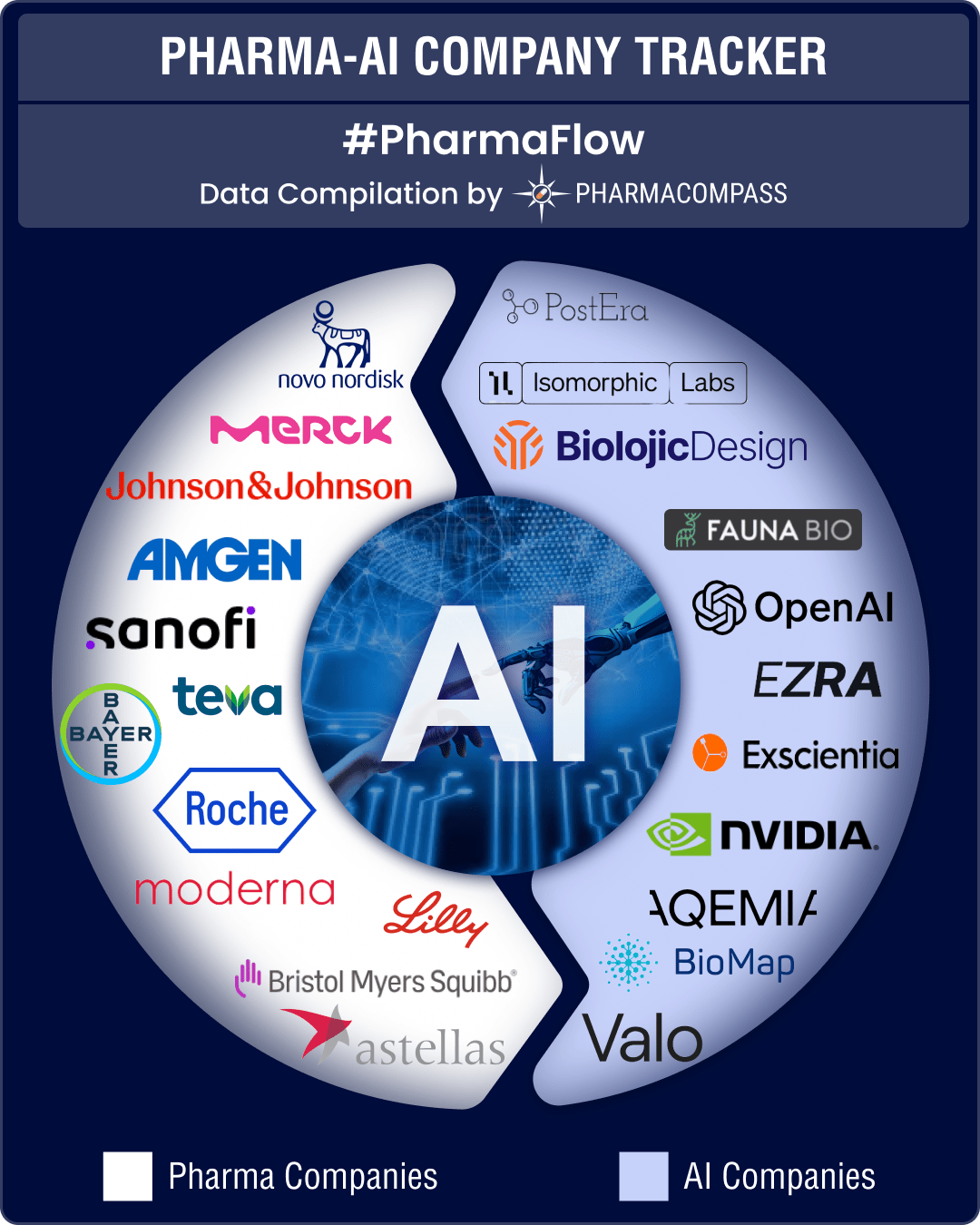
Artificial intelligence (AI) is changing the world and bringing efficiencies across all industries. Pharmaceuticals is one of them. AI can accelerate drug discovery, streamline clinical trials, and personalize medicine. It holds the potential to revolutionize the pharma industry.It takes anywhere between 10 to 15 years and around US$ 3 billion to take a new drug from its discovery phase to the market. AI can drastically cut both the timespan and costs and bring life-saving yet affordable treatments to the market at a faster pace. The global AI market in healthcare was estimated to be about US$ 21 billion in 2024 and is expected to grow to over US$ 148 billion by 2029, compounding at an annual growth rate of 48.1 percent.Drugmakers are eager to ride the AI wave. Players like Bayer, Merck KGaA, Moderna, BMS, Roche, Astellas, Amgen, Eli Lilly, Sanofi, Novo Nordisk and Johnson & Johnson have announced collaborations, signed deals and entered into partnerships in the AI space. Many others, such as Exscientia, Insilico, Berg, Nimbus, Recursion, and Pharos iBio, are a step ahead and are holding clinical trials on drugs developed using AI.On its part, the US Food and Drug Administration (FDA) has recognized the increased use of AI and machine learning (ML) and has reiterated its commitment to ensure the safety and efficacy of drugs “while facilitating innovations in their development.” To this end, the US agency published a paper in March that lists out its approach towards the use of AI.Novo, Lilly turn to AI for drug discovery; AI-based firms sign multiple dealsWith increased adoption of wearable devices, e-health services and other technology-driven offerings in medicine and healthcare, there is valuable data out there that drugmakers can analyze to get more accurate predictions of a drug’s effects on the human body. Such an analysis speeds up drug development and reduces side effects of therapies. Ergo, several large drugmakers have signed crucial AI deals. For example, Novo Nordisk has inked a potential US$ 2.7 billion deal with Valo Health to discover and develop novel treatments for cardio-metabolic diseases. The collaboration between the two organizations will leverage the capabilities of Valo’s Opal Computational Platform, including access to real-world patient data, AI-enabled small molecule discovery and Biowire human tissue modeling platform designed to speed up the discovery and development process.Similarly, Eli Lilly has entered into a US$ 494 million deal with Fauna Bio to use the latter’s AI platform — Convergence — for preclinical drug discovery efforts in obesity. Convergence analyzes genomic data from 452 mammal species and various tissue types to create a comprehensive dataset. By integrating human data and information from animals with natural disease resistance, the platform can identify potential drug targets.AI-based pharma firms like Isomorphic Labs and Biolojic are also landing multiple deals. Isomorphic is owned by Google’s parent Alphabet. Along with Google DeepMind, it has created a new AI model that can accurately predict 76 percent of protein interactions with small molecules. In January, Isomorphic inked deals with Novartis and Lilly for a combined value of nearly US$ 3 billion.Biolojic Design uses computational biology and AI to transform antibodies into programmable, intelligent medicines. Earlier this month, it announced a multi-target drug discovery collaboration with Merck KGaA, which includes antibody-drug conjugates. Biolojic has also inked deals with Teva and Nektar recently.Amgen harnesses generative biology for protein-based drugs; Sanofi ties up with OpenAIFinding a good protein drug candidate is like finding a needle in a haystack. Drug developers typically start by looking at proteins in nature and then go through the painstaking process of shaping them into safe and effective drugs.Generative biology is a revolutionary approach to drug discovery and development that leverages ML and AI to design novel protein therapeutics. Amgen is using generative biology to innovate new protein-based drugs that have desired structures and properties based on existing protein data inputs. In fact, the California-based multinational has said it is “integrating AI across all operational levels.” It has collaborated with PostEra to advance up to five small molecule programs.Amgen is building AI models trained to analyze one of the world’s largest human datasets on an NVIDIA full-stack data center platform, known as DGX SuperPOD, that will be installed at Amgen’s deCODE genetics’ headquarters in Reykjavik, Iceland. This system will be used to build a human diversity atlas for drug target and disease-specific biomarker discovery, providing vital diagnostics for monitoring disease progression and regression.AI can analyze individual data like genetic makeup, lifestyle and medical history to come up with personalized therapies. Amgen is working on AI-driven precision medicines, and potentially individualized therapies, at its Iceland facility.Sanofi too has signed multiple deals in recent months. In May, the French drugmaker signed a collaboration with ChatGPT maker OpenAI and Formation Bio to build AI-powered software to accelerate drug development. Sanofi is also collaborating with BioMap in a deal that could be worth up to US$ 1 billion. The deal is expected to enable superior prediction from limited data in a range of therapeutic areas, including immunology, neurology, oncology, and rare diseases.AI tools can create control arms, digital twins and slash failure rate in clinical trialsTraditional ways of drug development are fraught with challenges, and 90 percent of drug candidates in clinical trials tend to fail. Major reasons behind this are poor patient cohort selection and recruiting mechanisms, and the inability to monitor patients effectively during trials. AI tools like Trial Pathfinder study real data obtained from patients’ electronic health records and simulate clinical trials for the drug with different eligibility criteria. Trial Pathfinder also calculates trial hazard ratios, a scientific term that compares the survival rates of those given and not given the drug.AI and synthetic data can also be used to create control arms in clinical trials, which can help speed up the process, reduce costs, and improve the quality of data. For example, FDA has supported the use of a Medidata Synthetic Control Arm in a phase 3 trial of Medicenna’s MDNA55 in recurrent glioblastoma.In addition to observing real-time patient data, researchers can also create digital twins, virtual replicas of cells, organs, or people, which they can use to simulate and predict various clinical outcomes during a trial.Our viewThe pharmaceutical industry is on the cusp of a revolution. In the coming years, we hope to see some tangible results of the efforts being put in by drugmakers, AI developers and regulatory agencies. The CPhI Annual Report 2023 has predicted that in 2030, over half of FDA-approved drugs will involve AI in their development and/or manufacturing. The winner, in our view, will be the end-user who will have cheaper, safer and more effective treatments, delivered at a faster pace.

Impressions: 3342

https://www.pharmacompass.com/radio-compass-blog/big-pharma-bets-big-on-ai-s-us-148-bn-potential-to-revolutionize-healthcare-industry

#Phispers by PHARMACOMPASS
13 Jun 2024
FDA approvals rise 49% in 2023; CRISPR’s gene editing therapy sees light of day
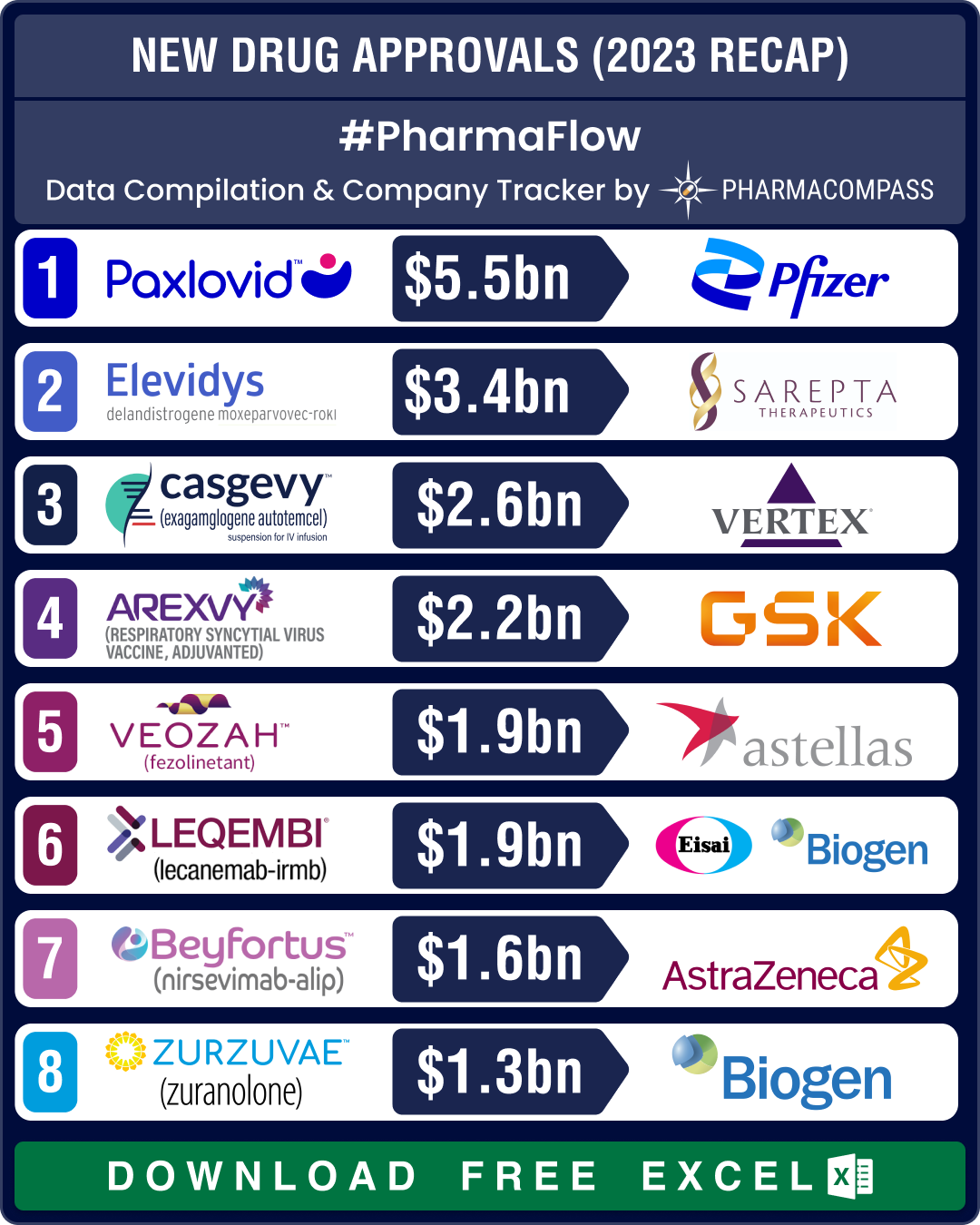
In 2022, when the US Food and Drug Administration (FDA) was reeling under the impact of the pandemic, new drug approvals by the agency dropped by 26 percent. But last year, FDA’s new drug approvals rebounded by an impressive 49 percent, with the Center for Drug Evaluation and Research (CDER) approving 55 new drugs in 2023. Of them, 36 percent were considered first-in-class, while small molecules made up for 62 percent of the total drugs approved (i.e. 34). FDA’s Center for Biologics Evaluation and Research (CBER) okayed 19 biologics in 2023 compared to eight in the previous year.The first half of 2023 saw the debut of vaccines for the all-too-common respiratory syncytial virus (RSV). Among the other notable approvals in H1 was Biogen and Eisai’s Alzheimer’s drug Leqembi (lecanemab). Out of the total 55 drug approvals, 29 came in H2 2023. This includes Vertex Pharmaceuticals and CRISPR Therapeutics’ Casgevy that relies on the Nobel Prize-winning CRISPR gene-editing technology. Casgevy has been approved as a treatment for sickle-cell disease (SCD) and β-thalassemia.While FDA witnessed a sharp rise in approvals in 2023, many other drug regulators didn’t. The European Medicines Agency (EMA) granted marketing authorization to 32 novel drugs in 2023, a fall from 33 in 2022. Similarly, Health Canada’s approvals in 2023 decreased to 38, compared to 45 in the previous year.As usual, oncology topped the list of drug approvals by therapeutic area, at 39 (as opposed to 35 in 2022). Rare diseases was the second most popular therapeutic area for drug approvals. With drugmakers clearly paying heed to the unmet needs of patients suffering from rare diseases, this therapeutic area sprinted from a 9 percent share and the fourth position among new approvals in 2022 to an impressive 34 percent share in 2023. A quarter of the new drug approvals were in infectious diseases, followed by immunology (19 percent) and neurology (7 percent).View New Drug Approvals in 2023 with Estimated Sales (Free Excel Available) Casgevy, postpartum depression drug Zurzuvae emerge as potential blockbustersGene therapy Casgevy, postpartum depression (PPD) med Zurzuvae, blood cancer med Elrexfio and ulcerative colitis drug Velsipity were some of the prominent approvals of 2023.Britain’s Medicines and Healthcare products Regulatory Agency was the first to okay Casgevy in November as a cure for SCD and β-thalassemia. Soon, the FDA approved it for SCD. In January this year, the American agency also approved it for transfusion-dependent β-thalassemia (TDT). Analysts estimate Casgevy to generate US$ 2.6 billion in peak sales, says Nature. Biogen and Sage’s PPD therapy Zurzuvae became the first and only FDA-approved pill for the condition that can be life-threatening for both the mother and the child. Global sales of Zurzuvae are forecast to hit US$ 1.28 billion by 2028.In August, Pfizer’s Elrexfio (elranatamab) became the first “off-the-shelf” (ready-to-use) therapy in the US for multiple myeloma. The drug provides an option for patients with hard to treat or relapsed blood cancer and is estimated to bring in US$ 861 million in peak sales by 2028, says Nature.Pfizer also bagged another significant approval in October — its drug Velsipity (etrasimod) was greenlit by the FDA to treat adults with ulcerative colitis, an inflammatory bowel disease. Peak revenue for Velsipity is expected to come in at US$ 825 million, as per Evaluate.View New Drug Approvals in 2023 with Estimated Sales (Free Excel Available) Astra’s Truqap, GSK’s Ojjaara among top cancer therapies given FDA nod in H2In November, FDA approved AstraZeneca’s Truqap (capivasertib) in combination with the Anglo-Swedish drugmaker’s Faslodex (fulvestrant) for treating adult patients with hormone receptor (HR)-positive, HER2-negative locally advanced or metastatic breast cancer with one or more biomarker alterations. Evaluate Pharma forecasts peak Truqap sales to come in at about US$ 690 million.In September, FDA approved GSK’s Ojjaara (momelotinib) as the first and only treatment for myelofibrosis with anemia. Nearly all myelofibrosis patients are estimated to develop anemia over the course of the disease. Ojjaara is taken orally once a day.Other notable oncology treatments okayed by FDA in H2 2023 include Daiichi’s Vanflyta (quizartinib) in July to treat an aggressive blood cancer known as acute myeloid leukemia (AML). In August, FDA approved Janssen’s bispecific antibody Talvey (talquetamab-tgvs) for difficult-to-treat blood cancer. The agency approved two cancer therapies in November — BMS’ Augtyro (repotrectinib) for ROS1-positive non-small cell lung cancer (NSCLC) and Takeda’s targeted oral therapy Fruzaqla (fruquintinib) for adult patients with metastatic colorectal cancer (mCRC).View New Drug Approvals in 2023 with Estimated Sales (Free Excel Available) Rare disease drugs Santhera-Catalyst’s Agamree, Novo’s Rivfloza bag approval in H2In October, FDA approved Santhera Pharmaceuticals and Catalyst Pharma’s Agamree (vamorolone), an oral suspension treatment for Duchenne muscular dystrophy (DMD) in patients two years of age and older. This makes it the first drug fully approved in both the US and Europe for the muscle degeneration disorder. Agamree acts in a manner similar to other steroids, which are the standard of care for the inherited rare disease. However, it causes fewer side effects.FDA also okayed Novo Nordisk’s once-a-month injection Rivfloza (nedosiran) in October to treat a rare genetic condition — primary hyperoxaluria type 1 (PH1) — that causes recurring kidney stones.In November, the agency approved Takeda’s Adzynma (ADAMTS13, recombinant-krhn) as the first treatment for both adult and pediatric patients with congenital thrombotic thrombocytopenic purpura (cTTP), a rare genetic blood disorder. Other noteworthy FDA approvals in H2 2023 for rare blood diseases include Novartis’ Fabhalta and bluebird bio's Lyfgenia. Fabhalta is the first oral monotherapy for the treatment of adults with paroxysmal nocturnal hemoglobinuria, a rare disease that causes symptoms such as hemolytic anemia, hemoglobinuria (excretion of hemoglobin in the urine), fatigue, shortness of breath etc. Lyfgenia is the first cell-based gene therapy for the treatment of SCD in patients 12 years and older. Similarly, another rare disease drug — Regeneron’s Veopoz —  bagged FDA approval in August last. Veopoz treats CHAPLE disease, an ultra-rare disease in which patients have severe gastrointestinal problems.View New Drug Approvals in 2023 with Estimated Sales (Free Excel Available) Our viewAfter a lull in 2022, new drug approvals have finally gathered momentum. The good news is that this year, several pathbreaking drugs are coming up for approval, such as Madrigal Pharmaceuticals’ resmetirom (the first treatment for NASH with liver fibrosis), Merck’s sotatercept (a treatment for pulmonary arterial hypertension), Lilly’s donanemab for Alzheimer’s disease and Karuna Therapeutics’ drug to treat schizophrenia. Let’s hope 2024 turns out to be an even bigger year for new drug approvals.

Impressions: 4994

https://www.pharmacompass.com/radio-compass-blog/fda-approvals-rise-49-in-2023-crispr-s-gene-editing-therapy-sees-light-of-day

#PharmaFlow by PHARMACOMPASS
01 Feb 2024
Pfizer’s buyout of Seagen, drugmakers suing US govt, obesity drugs make it to top 10 Phispers of 2023
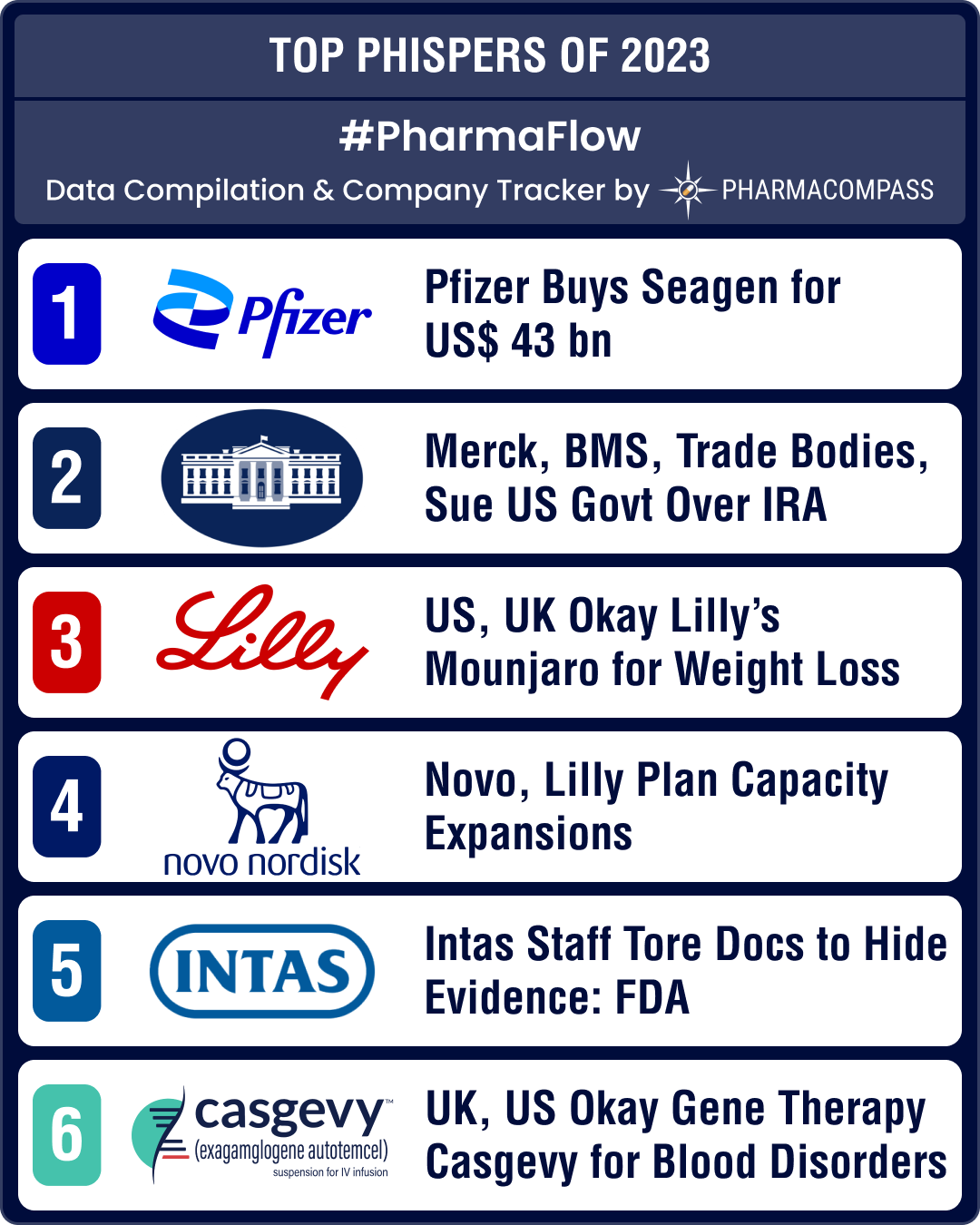
Every week, PharmaCompass compiles important developments in the world of pharmaceuticals and brings a compilation to you in the form of Phispers. Of the hundreds of stories we carried in 2023, here are the top 10 stories, including some trends and updates.I. Pfizer buys Seagen for US$ 43 billion to bolster its oncology portfolioIn March, Pfizer said it is acquiring cancer treatment specialist Seagen for US$ 43 billion. Seagen is a pioneer in antibody-drug conjugates (ADCs), or drugs that work like “guided missiles” to destroy cancer cells while sparing healthy cells. Another important deal in the field of ADCs took place in December when AbbVie picked up ImmunoGen for US$ 10.1 billion, giving it access to Elahere (mirvetuximab soravtansine-gynx), an ADC approved for platinum-resistant ovarian cancer. Elahere is expected to achieve blockbuster status by 2030. II. Merck, BMS, trade bodies, sue US government over IRA negotiationsIn June, Merck filed a lawsuit against the US government seeking to block Medicare from negotiating lower prescription drug prices under the Inflation Reduction Act (IRA). Days later, the US Chamber of Commerce, one of the most influential trade groups in the US, filed a separate lawsuit, arguing that the negotiations violated drugmakers’ constitutional rights and granted excessive control over prices to the government. They were joined by Bristol Myers Squibb (BMS) and lobby group PhRMA. Drugmakers and the Biden administration appeared to be at each other’s throats. In December, the White House identified 48 drugs whose prices spiked faster than inflation in Q4. These drugs may be subject to rebates starting January 2024. Biden Administration also announced it is setting a new “march-in” policy that allows the government to seize medicine patents held by drugmakers for therapies whose development was taxpayer-funded, if it believes they are not “reasonably available and affordable.”III. US, UK approve Lilly’s Mounjaro for weight management; to be sold as ZepboundIn November, drug regulators in the US and the United Kingdom approved Eli Lilly's Mounjaro (tirzepatide) for weight management, to be sold under the brand name Zepbound. The drug will pose strong competition to Novo Nordisk’s Wegovy in a market that's expected to reach US$ 100 billion by the end of the decade.IV. Novo, Lilly plan capacity expansions for weight loss drugsBoth Novo Nordisk and Eli Lilly announced expanding their manufacturing capacities in order to capitalize on the burgeoning market for weight loss drugs. Novo is investing over DKK 42 billion (US$ 6 billion) in Kalundborg (Denmark), US$ 2.3 billion to expand its site in Chartres (France) and over € 2 billion (US$ 2.18 billion) in Dublin (Ireland) to boost production of its blockbuster diabetes and weight-loss drugs, including Ozempic and Wegovy (both semaglutide). Similarly, Eli Lilly had announced a US$ 2.5 billion manufacturing facility in Germany in November to address the demand for its new obesity and diabetes therapies.V. FDA finds violations at Global Pharma’s eye drops plant in India; issues Form 483In April, FDA found several violations in manufacturing processes and sterilization methods used by India-based Global Pharma for its EzriCare Artificial Tears Eye Drop, which has been linked to 68 cases of eye infection in the US, including eight cases of vision loss and three deaths.VI. ‘Intas India staff tore documents, threw acid to destroy evidence’, notes FDAIn January, FDA issued a Form 483 with 11 observations to Intas Pharma’s drug manufacturing facility in Ahmedabad (Gujarat, India). A team of three FDA drug regulators conducted an inspection of the manufacturing facility from November 22 to December 2, 2022. The 36-page report issued by the FDA has alleged that employees at the facility had destroyed documents related to manufacturing practices by tearing them into pieces and disposing them inside the quality control lab and scrap areas. Acid was used to destroy evidence, notes FDA.VII. GSK overtakes Pfizer in bagging first FDA approval for RSV vaccineIn May, FDA approved GSK’s respiratory syncytial virus (RSV) vaccine for people aged 60 and above. Arexvy is the first RSV vaccine to be approved in the US for the common condition that can be fatal for the elderly. Later that month, Pfizer’s RSV vaccine Abrysvo also got approved. In July, Sanofi-AstraZeneca’s RSV antibody therapy, Beyfortus (nirsevimab-alip), received approval from the FDA. It is a long-acting treatment that can be given once per season. The approval is specifically developed for newborns and infants.VIII. UK authorizes gene therapy Casgevy for blood disorders, US follows suit In November, Britain’s Medicines and Healthcare products Regulatory Agency was first off the block in authorizing CRISPR Therapeutics and Vertex Pharmaceuticals’ Casgevy, a therapy that seeks to cure two blood disorders — sickle-cell disease (SCD) and β-thalassemia. The therapy is based on gene editing technology that had won its scientists the Nobel Prize in Chemistry in 2020.Less than a month later, FDA not only approved Casgevy (exagamglogene autotemcel) for SCD, but also approved bluebird bio’s Lyfgenia (lovotibeglogene autotemcel) for the treatment of SCD in patients aged 12 and older who have a history of vaso-occlusive events (when tissues become deprived of oxygen).IX. Leqembi becomes first med to bag full approval to treat Alzheimer’sEisai and Biogen’s Alzheimer’s drug Leqembi (lecanemab) had won FDA’s accelerated approval in January. It treats patients who are in the earliest stages of the neurodegenerative disease. In July, it became the first treatment to receive full FDA approval to treat the condition.X. Bayer’s experimental anticoagulant fails late-stage trialOne of the biggest disappointments from clinical trials came when a major late-stage trial for Bayer’s experimental anticoagulant asundexian had to be discontinued due to its inadequate effectiveness. Bayer had expectations in excess of € 5 billion (US$ 5.5 billion) from this drug.  

Impressions: 3338

https://www.pharmacompass.com/radio-compass-blog/pfizer-s-buyout-of-seagen-drugmakers-suing-us-govt-obesity-drugs-make-it-to-top-10-phispers-of-2023

#Phispers by PHARMACOMPASS
18 Jan 2024
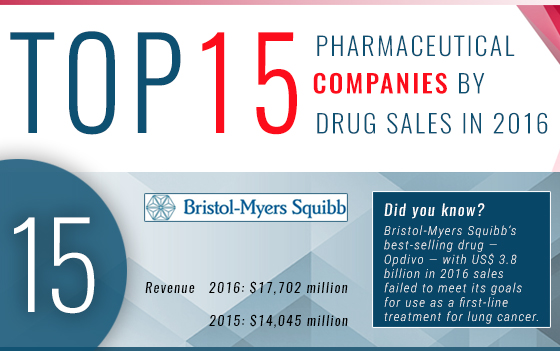
Top 15 Pharmaceutical Companies by Drug Sales in 2016
In 2016, M&A deals fell drastically in both numbers and value. One key reason was the falling through of the Pfizer-Allergan mega merger due to America’s crack down on inversion deals.   The year 2015 went down in history as a record year for mergers and acquisitions (M&As) in the pharmaceutical and biotech space, when deals worth US $ 300 billion were announced. The highlight of 2015 was the mega-merger announced between US drugmaker Pfizer and Ireland-based Allergan – the biggest-ever pharma transaction that was worth more than US$ 160 billion.  2016 saw Pfizer and Allergan walk away from their US$ 160 billion merger when the new US Treasury rules cracked down on inversion deals that were encouraging US companies to move overseas to cut taxes. The merger would have allowed New York-based Pfizer to cut its tax bill by an estimated US$ 1 billion annually by domiciling in Ireland, where tax rates are lower. M&A deals dip by 20 percent in 2016   Although the Pfizer-Allergan mega-merger did not go through, The Pharma Letter tracked transactions through the year and noted that although “worldwide merger and acquisition activity in the pharmaceutical and biotechnology sector in 2016 was plentiful”, the numbers and values were “well down” on those seen in the previous two years. The number of transactions announced in 2016 was 130, compared to 166 M&A deals in 2015 – which was a record year – and 137 in 2014, says The Pharma Letter. Values of the top 10 deals drop to a third   The other crucial fact about M&A deals in 2016 was that transactions that exceeded the US$ 1 billion mark were down to just 23 in 2016, as against 30 in 2015 and 26 in 2014. The Pharma Letter quotes a KPMG report published earlier this year which notes that the total value of the top 10 completed deals in the first half of 2016 amounted to US $ 67.2 billion as opposed to US $190.4 billion in first-half 2015. Sanofi-Actelion — the deal that wasn’t   Sanofi made headlines, not for the acquisitions it made, but for the ones it wasn’t able to close.  Late last year, the French pharma giant was widely identified as the big player that managed to push Johnson & Johnson away from negotiations with Actelion only to lose its US$ 30 billion bid to J&J even though it would have delivered “approximately equivalent value to Actelion’s shareholders”.  The Actelion loss came after Sanofi was out bid by Pfizer for Medivation. Pfizer agreed to buy the US cancer drug company for US$ 14 billion in cash, adding its blockbuster prostate cancer drug Xtandi to the company's growing oncology roster. Additionally, Pfizer acquired Anacor for US$ 5.2 billion to add an eczema gel to its portfolio. Bayer’s US$ 66 billion takeover   The biggest deal announced in 2016 was Bayer’s US$ 66 billion takeover of the US seeds company Monsanto after months of wrangling. It was the German drug and crop-chemical company’s third offer that clinched the deal, which is also known to be the largest all-cash deal on record. This signature deal has disrupted the agribusiness sector, which in recent years has been involved in a consolidation race largely triggered by factors such as shifting weather patterns, intense competition in grain exports and a souring global farm economy. Top pharma companies by sales   Bayer’s acquisition of Monsanto makes the ranking of top pharmaceutical companies consistently complicated since Bayer will generate more sales from its crop science and high-tech polymer division than from the sale of prescription drugs. Should divisions like diagnostics, animal health, vaccines, consumer health be counted while determining the size of a pharmaceutical company? In a volatile global world, where wild exchange rate fluctuations play their own major role in determining the size of organizations, this week PharmaCompass shares the revenues, as presented in the 2016 annual reports of top 15 companies, so that you can draw your own conclusions on the top drug companies of the world.   Company Name Currency Pharma Consumer Health Medical Devices/ Diagnostics Vaccines Animal Health Other Revenues Total Sales 1 Pfizer USD 41,600 3,407   6,071   1,746 52,824 2 Novartis USD 48,518           48,518 3 Roche CHF 41,047   11,589       52,636 4 Merck & Co. USD 29,360     5,791 3,478 1,178 39,807 5 GlaxoSmithKline GBP 16,104 7,193   4,592     27,889 6 Johnson & Johnson USD 33,464 13,307 25,119       71,890 7 Sanofi EUR 22,932 3,330   4,577 2,708 274 33,821 8 Gilead USD 29,953         437 30,390 9 Abbvie USD 25,560         78 25,638 10 Bayer EUR 16,420 6,037     1,523 22,789 46,769 11 Amgen USD 21,892         1,099 22,991 12 Astrazeneca USD 21,319         1,683 23,002 13 Teva USD 20,664         1,239 21,903 14 Eli Lilly USD 18,064       3,158   21,222 15 Bristol-Myers Squibb USD 17,702         1,725 19,427 Sales figures are reported in millions. Currency exchange rate used CHF: 0.99 USD/ EUR: 1.06 USD / GBP: 1.25 USD Ranking methodology   When it came to ranking companies, based on their total sales, we at PharmaCompass did not face any challenges while including the sales of prescription drugs along with those of vaccines. But matters got a little complicated when we got down to ranking consumer health divisions. For instance, while we have included consumer health divisions of companies like Sanofi, GSK and Bayer, which primarily sell OTC drug products (such as brands like Allegra, Voltaren and Aleve), we have excluded those of companies like Johnson & Johnson, given their focus on baby and beauty products. Such a demarcation — based on the focus of the company — will always be a matter of debate. Similarly, revenue generated from the sale of medical devices/diagnostics as well as revenues of animal health divisions were not included in our rankings. In the case of companies like Bayer, whose Covestro’s division has over US$ 10 billion in sales from customer industries such as automotive, construction, electrical and electronics, and furniture, such sales were accounted for in ‘other revenues’. Our table highlights the sales revenue of various divisions of companies in order to bring more clarity into the figures which were included in our rankings.  

Impressions: 14798

https://www.pharmacompass.com/radio-compass-blog/top-15-pharmaceutical-companies-by-drug-sales-in-2016

#Phispers by PHARMACOMPASS
02 Mar 2017

NEWS #PharmaBuzz

read-more
read-more

https://www.businesswire.com/news/home/20260608078501/en/Bayer-Announces-Global-Consumer-Health-Leadership-Changes-to-Accelerate-Growth

BUSINESSWIRE
08 Jun 2026

https://www.bayer.com/media/en-us/bayers-finerenone-significantly-reduced-kidney-function-decline-and-a-composite-of-cardiovascular-kidney-outcomes-versus-placebo-in-patients-with-non-diabetic-chronic-kidney-disease/

PRESS RELEASE
05 Jun 2026

https://www.bayer.com/media/en-us/finerenone-significantly-reduced-the-risk-of-kidney-disease-progression-and-cardiovascular-outcomes-in-broad-patient-populations-with-ckd/

PRESS RELEASE
05 Jun 2026

https://www.businesswire.com/news/home/20260602507254/en/Bayer-to-Present-First-Full-FIND-CKD-Results-Investigating-KERENDIA-finerenone-in-Non-Diabetic-Chronic-Kidney-Disease-at-ERA-2026

BUSINESSWIRE
02 Jun 2026

https://www.businesswire.com/news/home/20260529645249/en/ASCO-2026-Bayer-Shares-New-Findings-for-NUBEQA-darolutamide-Regarding-Cognitive-Decline-in-Men-with-Advanced-Prostate-Cancer-Compared-to-Enzalutamide-in-Phase-II-ARACOG-Head-to-Head-Trial

BUSINESSWIRE
30 May 2026

https://www.reuters.com/business/healthcare-pharmaceuticals/bayer-sued-allegedly-monopolizing-us-market-gmo-corn-seeds-2026-05-27/

REUTERS
27 May 2026

KEY PRODUCTS

read-more
read-more

TOP RANKED SUPPLIER FOR:

Sponsored Ads.
full-view
Sponsored Ads.full-view

Excipients

Discover the DDS // excipients from this company

Inspections and registrations

Check the inspections & registration from this company
Bayer

ABOUT THIS PAGE

Contact Bayer Pharma AG and get a quotation

Bayer Pharma AG is a supplier offers 56 products (APIs, Excipients or Intermediates).

Find Ethinyl Estradiol bulk with DMF, CEP, JDMF offered by Bayer Pharma AG

Find Norethisterone bulk with DMF, CEP, JDMF offered by Bayer Pharma AG

Find Acarbose bulk with DMF, CEP offered by Bayer Pharma AG

Find CAS 50-28-2 bulk with DMF, JDMF offered by Bayer Pharma AG

Find Ciprofloxacin bulk with DMF, CEP offered by Bayer Pharma AG

Find Ciprofloxacin Hydrochloride bulk with DMF, CEP offered by Bayer Pharma AG

Find Drospirenone bulk with DMF, CEP offered by Bayer Pharma AG

Find Estradiol bulk with DMF, CEP offered by Bayer Pharma AG

Find Gadobutrol bulk with DMF, CEP offered by Bayer Pharma AG

Find Iopromide bulk with DMF, CEP offered by Bayer Pharma AG

Find Levonorgestrel bulk with DMF, CEP offered by Bayer Pharma AG

Find Medroxyprogesterone Acetate bulk with DMF, CEP offered by Bayer Pharma AG

Find Norethisterone Acetate bulk with DMF, CEP offered by Bayer Pharma AG

Find Rivaroxaban bulk with DMF, CEP offered by Bayer Pharma AG

Find Testosterone bulk with DMF, CEP offered by Bayer Pharma AG

Find Testosterone Enanthate bulk with DMF, CEP offered by Bayer Pharma AG

Find Alpha-Cyclodextrin bulk with DMF offered by Bayer Pharma AG

Find Aspirin bulk with CEP offered by Bayer Pharma AG

Find Azelaic Acid bulk with DMF offered by Bayer Pharma AG

Find Ciprofloxacin bulk with DMF offered by Bayer Pharma AG

Find Clotrimazole bulk with CEP offered by Bayer Pharma AG

Find Cyproterone Acetate bulk with CEP offered by Bayer Pharma AG

Find Dienogest bulk with DMF offered by Bayer Pharma AG

Find Estradiol Valerate bulk with CEP offered by Bayer Pharma AG

Find Estriol bulk with CEP offered by Bayer Pharma AG

Find Etofenamate bulk with CEP offered by Bayer Pharma AG

Find Gadolinium Ethoxybenzyl Dtpa bulk with DMF offered by Bayer Pharma AG

Find Gestodene bulk with CEP offered by Bayer Pharma AG

Find Hydrocortisone bulk with CEP offered by Bayer Pharma AG

Find Iloprost bulk with DMF offered by Bayer Pharma AG

Find Iopromide bulk with CEP offered by Bayer Pharma AG

Find Levonorgestrel bulk with DMF offered by Bayer Pharma AG

Find Mesalazine bulk with JDMF offered by Bayer Pharma AG

Find Molidustat bulk with DMF offered by Bayer Pharma AG

Find Moxifloxacin Hydrochloride bulk with CEP offered by Bayer Pharma AG

Find Nifedipine bulk with CEP offered by Bayer Pharma AG

Find Norethisterone bulk with CEP offered by Bayer Pharma AG

Find Rivaroxaban bulk with DMF offered by Bayer Pharma AG

Find Testosterone bulk with CEP offered by Bayer Pharma AG

Find Testosterone Undecanoate bulk with DMF offered by Bayer Pharma AG

Find Nisoldipine bulk offered by Bayer Pharma AG

Find Ciprofloxacin Hydrochloride bulk offered by Bayer Pharma AG

Find Enrofloxacin bulk offered by Bayer Pharma AG

Find Estradiol bulk offered by Bayer Pharma AG

Find Estradiol Benzoate bulk offered by Bayer Pharma AG

Find Estradiol Valerate bulk offered by Bayer Pharma AG

Find Ethinyl Estradiol bulk offered by Bayer Pharma AG

Find Finerenone bulk offered by Bayer Pharma AG

Find Methylprednisolone Aceponate bulk offered by Bayer Pharma AG

Find Moxifloxacin bulk offered by Bayer Pharma AG

Find Nifedipine bulk offered by Bayer Pharma AG

Find Pentetic Acid bulk offered by Bayer Pharma AG

Find Pradofloxacin bulk offered by Bayer Pharma AG

Find Regorafenib bulk offered by Bayer Pharma AG

Find Sorafenib bulk offered by Bayer Pharma AG

Find Berrysiguat bulk offered by Bayer Pharma AG

Ask Us for Pharmaceutical Supplier and Partner
Ask Us, Find A Supplier / Partner
No Commissions, No Strings Attached, Get Connected for FREE

What are you looking for?

How can we help you?

The request can't be empty

Please read our Privacy Policy carefully

You must agree to the privacy policy

The name can't be empty
The company can't be empty.
The email can't be empty Please enter a valid email.
The mobile can't be empty