Please Wait
Applying Filters...
Menu
Xls

Digital Content read-more

Create Content with PharmaCompass, ask us

DATA COMPILATION #PharmaFlow

read-more
read-more
CEP Q1 2026 Update: CEP 2.0, EDQM’s new guidelines strengthen ecosystem; Indian firms top list of CEPs issued
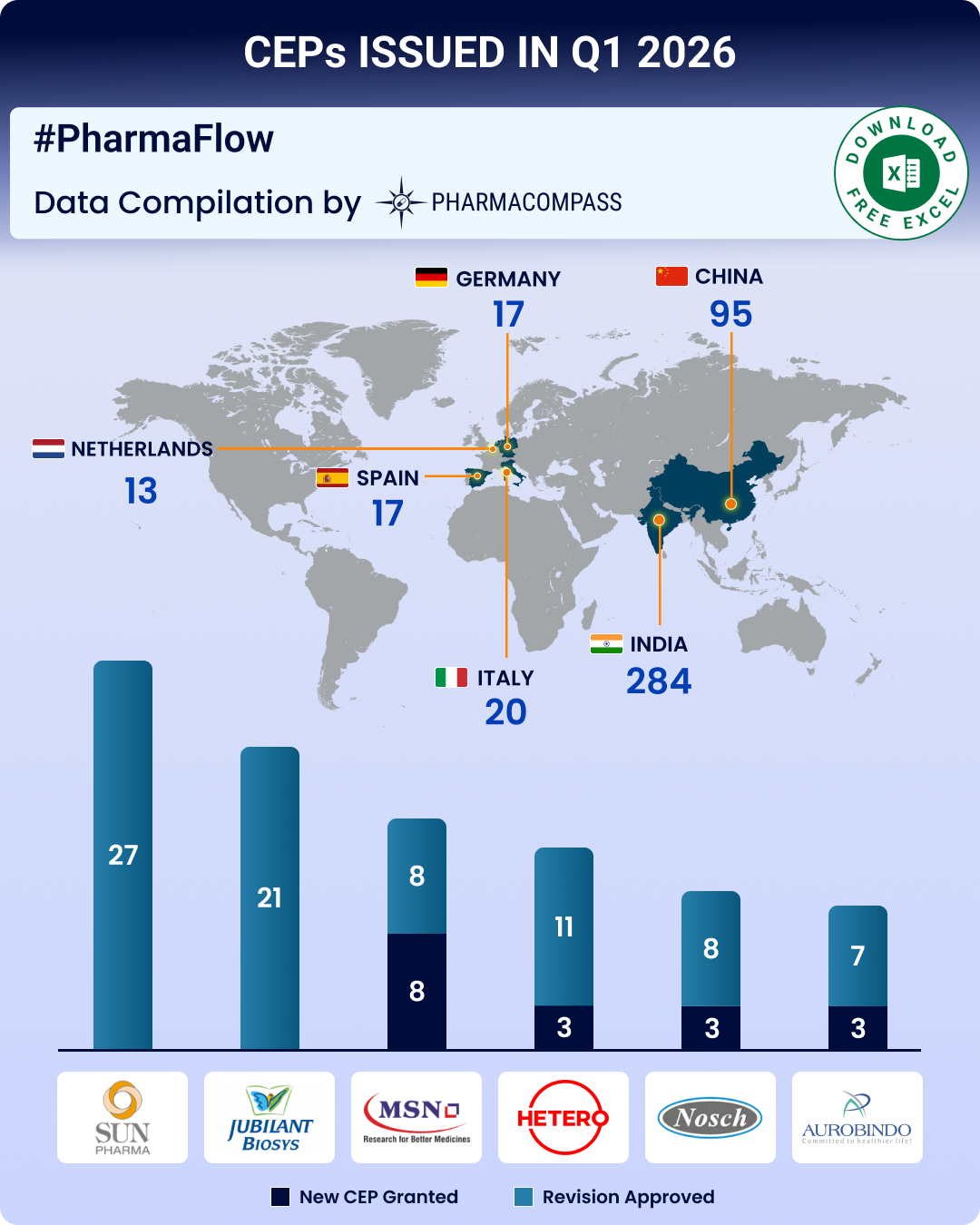
PharmaCompass is introducing a new regulatory update that tracks developments in Certificates of Suitability to the Monographs of the European Pharmacopoeia, referred to as CEPs. These certificates are a critical regulatory instrument in the global pharmaceutical supply chain.Also known as a Certification of Suitability (COS), CEPs are issued by the European Directorate for the Quality of Medicines and HealthCare (EDQM), with or without inspection of the manufacturing site. A CEP must be renewed every five years from its original issue date to remain valid, regardless of any revisions made during the interim period. However, a CEP does not replace Good Manufacturing Practice certification.CEPs are recognized as a trusted reference for API quality, thereby simplifying global registration strategies. Apart from Europe, the CEP system is widely used by many regulatory authorities, including those in Canada, Australia, Brazil, Singapore and South Africa. View CEPs Issued in Q1 2026 (Power BI Dashboard, Free Excel Available)CEP 2.0 enhances regulatory clarity, brings efficiency, global interoperability There are several types of CEPs, depending on the nature of the substance and evaluation. The most common type is the Chemical CEP, which confirms that a chemically synthesized API meets standards for purity and impurity control. Then there are Herbal CEPs for herbal substances and preparations.Another key category is the TSE CEP, which addresses risks associated with transmissible spongiform encephalopathies in animal-derived materials. In addition, there are Combined CEPs that may cover multiple aspects, such as chemical quality, TSE risk, and sterility. However, biological products such as vaccines and blood products fall outside the scope of the CEP framework.In 2023, the CEP system underwent a major transformation with the introduction of CEP 2.0, which marks a shift from a largely document-based system to a more structured, transparent, and digitally aligned model. This makes it easier for companies to manage compliance while improving trust among global regulators.While increasing data and compliance requirements for API manufacturers, CEP 2.0 enables better regulatory clarity, streamlined dossier integration, and stronger global acceptance. Overall, CEP 2.0 is designed to enhance regulatory clarity while making the system more efficient and globally interoperable. View CEPs Issued in Q1 2026 (Power BI Dashboard, Free Excel Available)Indian firms issued maximum CEPs; Sun Pharma and its subsidiaries, Jubilant Biosys top listIndia topped the charts for CEPs issued, both in terms of new CEPs and revisions in the first quarter (Q1) of 2026. Indian companies were issued 81 new CEPs in Q1 2026 (as against 40 in Q1 2025) and 203 revisions (as against 129 in Q1 2025). In comparison, Chinese companies were issued 42 new CEPs in Q1 2026 (against 25 in Q1 2025) and 53 revisions (against 67 in Q1 2025). Italy came a distant third, followed by Germany and Spain.India’s Sun Pharmaceuticals and its subsidiaries topped the list of companies with the maximum number of CEPs issued— while no new CEP was issued, 27 CEPs were revised in Q1 2026. At second place was Jubilant Biosys — 21 CEPs were revised in Q1 2026.In terms of products, the maximum CEPs were issued for amlodipine besylate (a calcium channel blocker used for treating hypertension), followed by sitagliptin phosphate (a type 2 diabetes medicine) and pregabalin (a drug used to treat neuropathic pain, fibromyalgia, seizures, and generalized anxiety disorder). Both amlodipine besylate and sitagliptin phosphate had not been issued new CEPs or revisions in Q1 2025. View CEPs Issued in Q1 2026 (Power BI Dashboard, Free Excel Available)EDQM introduces new guidelines to accelerate CEP assessments The EDQM charges fees for various services related to CEPs that depend on the type of request or regulatory activity involved. In general, fees apply to handling CEP applications, revisions or renewals and for offering technical advice (where applicants seek scientific or regulatory guidance).In March 2026, the EDQM introduced two new guidelines aimed at accelerating CEP assessments. The first is a reliance-based assessment pathway, which allows regulators to leverage prior approvals from trusted authorities, such as those in the EU, UK, Australia, Canada, and the WHO pre-qualification program. The second is a fast-track assessment route designed to expedite reviews in situations such as medicine shortages and to support initiatives like the EU Critical Medicines Act.Timelines have been significantly compressed under these new pathways. Initial evaluations are completed within 46 working days, compared to up to 115 days under the standard procedure. Applicants are given 30 calendar days to respond to queries, after which regulators complete the final assessment within 23 working days.Another important regulatory update relates to electronic submissions. From April 1, 2026, the EDQM will reject non-compliant CEP applications at the point of submission. All applications must include a validated electronic Common Technical Document (eCTD) dossier along with a proper validation report, submitted in line with the updated Common European Submission Portal (CESP) guidelines. Taken together, these developments signal a more rigorous yet efficient CEP ecosystem. View CEPs Issued in Q1 2026 (Power BI Dashboard, Free Excel Available)Our viewThe shift to CEP 2.0 signals a move toward greater transparency, digitalization, and global regulatory alignment. Though enhanced disclosure and stricter e-submission requirements may increase the compliance burden, especially for smaller manufacturers, the long-term gains are expected to be significant. Going forward, companies that invest in data quality and regulatory readiness stand to gain from these changes.

Impressions: 2739

https://www.pharmacompass.com/radio-compass-blog/cep-q1-2026-update-cep-2-0-edqm-s-new-guidelines-strengthen-ecosystem-indian-firms-top-list-of-ceps-issued

#PharmaFlow by PHARMACOMPASS
09 Apr 2026

STOCK RECAP #PipelineProspector

read-more
read-more
Pipeline Prospector March 2026 highlights: Lilly to acquire Centessa for US$ 7.8 bn; Merck buys Terns Pharma for US$ 6.7 bn
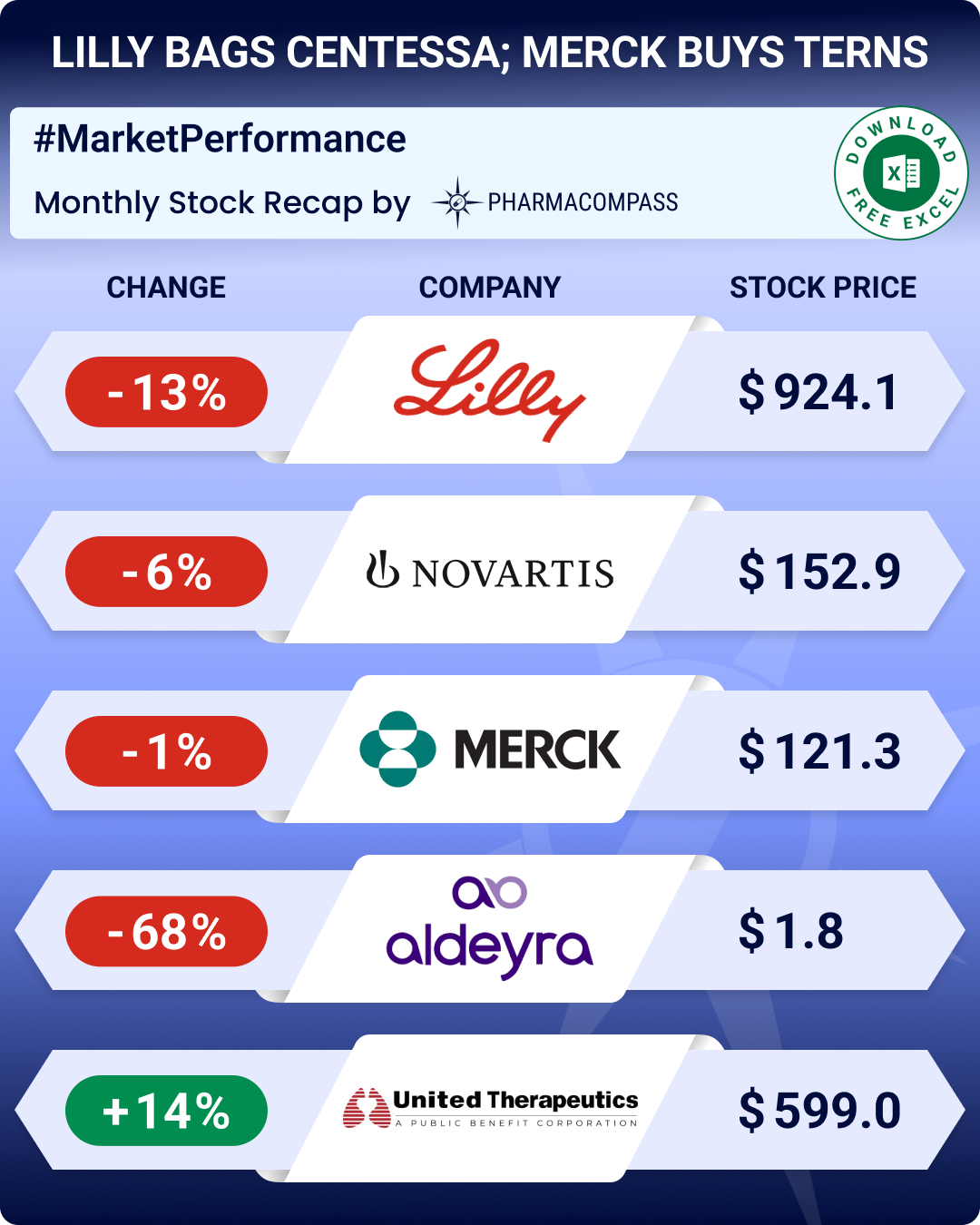
The raging war in the Middle East has disrupted global pharmaceutical supply chains, which are dependent on both sea and air routes. Major airports, such as Dubai, Abu Dhabi and Doha, are operating far below capacity due to strikes by Iran in response to attacks by the US and Israel. This has impacted the flow of critical medicines to the region. The closure of the Strait of Hormuz is pushing up crude oil prices.Given the geopolitical turbulence, the industry displayed grit, with March witnessing a flurry of high-value acquisitions.However, the war impacted pharma indices, which had been rising steadily since June 2025. The Nasdaq Biotechnology Index (NBI) fell by 2.12 percent in March, moving from 5,965.89 to 5,839.40. The SPDR S&P Biotech ETF (XBI) rose by 2.49 percent, from 124.63 to 127.73, and the S&P Biotechnology Select Industry Index (SPSIBI) inched up by 0.23 percent — from 9,954.55 to 9,977.73. In comparison, the S&P 500 fell by 4.34 percent — from 6,824.36 to 6,528.52. Access the Pipeline Prospector Dashboard for March 2026 Newsmakers (Free Excel)Lilly acquires Centessa for its sleep disorder treatments; Merck buys Terns Pharma to strengthen oncology pipeline On the last day of the month, Eli Lilly announced the acquisition of British drugmaker Centessa Pharmaceuticals in a deal worth up to US$ 7.8 billion. Centessa is developing a new class of treatments designed to target orexin, a molecule in the brain that regulates the sleep-wake cycle.On the same day, Biogen announced the acquisition of Apellis Pharmaceuticals for about US$ 5.6 billion in cash, adding approved immunology medicines Empaveli and Syfovre (both pegcetacoplan) to its portfolio.Meanwhile, Merck announced a US$ 6.7 billion acquisition of American biotech Terns Pharmaceuticals. The biotech is developing treatments for rare blood and bone cancers, and is expected to strengthen Merck’s oncology pipeline, as its blockbuster Keytruda (pembrolizumab) faces a patent cliff.Novartis made a significant move by acquiring Pikavation Therapeutics, a subsidiary of US biotech firm Synnovation Therapeutics, and its portfolio, which includes an experimental breast cancer drug candidate — SNV4818 — for up ‌to US$ 3 billion. Novartis also deepened its focus on immunology through the up to US$ 2 billion acquisition of Excellergy, a private biotech company developing next-generation anti-IgE therapies.French pharmaceutical group Servier announced the acquisition of Day One Biopharmaceuticals for ‌about US$ 2.5 billion. This buyout gives Servier access to FDA-approved Ojemda (tovorafenib), a monotherapy for pediatric low-grade glioma, the most common form of brain tumor in children.Gilead Sciences is acquiring Ouro Medicines for up to US$ 2.18 billion to expand its presence in autoimmune diseases. Luxembourg-based CVC Capital Partners made a €10.9 billion (US$ 12.6 billion) offer to acquire Italian drugmaker Recordati, where it already holds a 47 percent stake.In other deals, Insilico Medicine entered into a US$ 2.75 billion global licensing and research collaboration with Eli Lilly to leverage generative AI to accelerate R&D and improve pipeline efficiency. And Tenaya Therapeutics tied up with Alnylam Pharmaceuticals to work on disease-modifying treatments for cardiovascular diseases in a deal worth up to US$ 1.14 billion. Access the Pipeline Prospector Dashboard for March 2026 Newsmakers (Free Excel)Biogen’s Spinraza approved for spinal muscular atrophy; J&J’s pill okayed for plaque psoriasisThe month witnessed multiple FDA approvals and label expansions. Biogen secured FDA approval for a higher-dose regimen of Spinraza (nusinersen) for spinal muscular atrophy (SMA), a genetic disorder that causes muscle weakness.The agency also approved Johnson & Johnson’s oral pill Icotyde (icotrokinra) for the treatment of moderate-to-severe plaque psoriasis in adults and pediatric patients 12 years of age and older.Besides these, FDA granted accelerated approval to Denali Therapeutics’ Avlayah (tividenofusp alfa), which was approved for the treatment of children with Hunter syndrome, ‌a rare genetic disorder. And it expanded the labels of Bristol Myers Squibb’s Sotyktu (deucravacitinib), Novo Nordisk’s Sogroya and GSK’s RSV vaccine Arexvy. Access the Pipeline Prospector Dashboard for March 2026 Newsmakers (Free Excel)Merck’s drug cuts LDL cholesterol by 64.6%; Xenon’s epilepsy med meets main goal in late-stage trialMerck reported that its oral cholesterol drug enlicitide decanoate reduced low-density lipoprotein (LDL) cholesterol by approximately 64.6 percent in a head-to-head late-stage trial, outperforming non-statin therapies.Xenon Pharmaceuticals’ experimental epilepsy drug azetukalner met its main goal by significantly reducing seizure frequency, while United Therapeutics’ ralinepag reduced disease progression risk by 55 percent in pulmonary arterial hypertension.Bristol Myers Squibb’s mezigdomide demonstrated improved survival outcomes in relapsed or refractory multiple myeloma when used in combination with Amgen’s Kyprolis (carfilzomib) and dexamethasone.Another therapy that posted a trial win was Pfizer and Astellas’ Padcev (enfortumab vedotin) when used in combination with Keytruda. In a phase 3 trial, it significantly improved outcomes in patients with muscle-invasive bladder cancer eligible for cisplatin-based chemotherapy.Roche reported positive phase 3 data for its multiple sclerosis drug fenebrutinib, though safety concerns (including patient deaths during trials) could complicate regulatory review. Eli Lilly’s atopic dermatitis drug Ebglyss (lebrikizumab) achieved both primary and secondary endpoints in a phase 3 trial in children aged six months to 18 years. The drug is already approved for people over 12 years with eczema who weigh over 40 kg. Access the Pipeline Prospector Dashboard for March 2026 Newsmakers (Free Excel)FDA lifts hold on Intellia’s gene therapy, hands Aldeyra’s dry eye disease med its third rejection FDA lifted the clinical hold placed on Intellia Therapeutics’ gene therapy for transthyretin amyloidosis with cardiomyopathy, a fatal heart condition. The clinical holds on two trials of the therapy were imposed in October after a patient developed severe liver complications.Some drugmakers faced setbacks. For instance, FDA asked for additional data for uniQure’s Huntington’s disease gene therapy (a fatal, inherited neurodegenerative disorder). Similarly, the agency handed Aldeyra’s reproxalap a third rejection. The drug was being developed to treat dry eye disease, a chronic condition characterized by insufficient tear production.Australian biotech Immutep discontinued a crucial phase 3 trial for Efti (eftilagimod alfa), which is administered along with Keytruda and was being developed as a first-line treatment for advanced non-small cell lung cancer (NSCLC). And Roche said its breast ‌cancer pill, giredestrant, failed to meaningfully help newly diagnosed patients with breast cancer in a phase 3 trial. Access the Pipeline Prospector Dashboard for March 2026 Newsmakers (Free Excel)Our viewWhile geopolitical disruptions have exposed vulnerabilities in global supply chains, they have not dented the industry’s appetite for growth and innovation. That said, a prolonged conflict could alter this trajectory, forcing pharma leaders to reassess strategic priorities.

Impressions: 2286

https://www.pharmacompass.com/pipeline-prospector-blog/pipeline-prospector-march-2026-highlights-lilly-to-acquire-centessa-for-us-7-8-bn-merck-buys-terns-pharma-for-us-6-7-bn

#PharmaFlow by PHARMACOMPASS
02 Apr 2026

WEEKLY NEWS RECAP #Phispers

read-more
read-more
Innovent, Takeda ink up to US$ 11.4 bn oncology deal; FDA clears Novo’s Rybelsus to reduce heart risk in diabetics
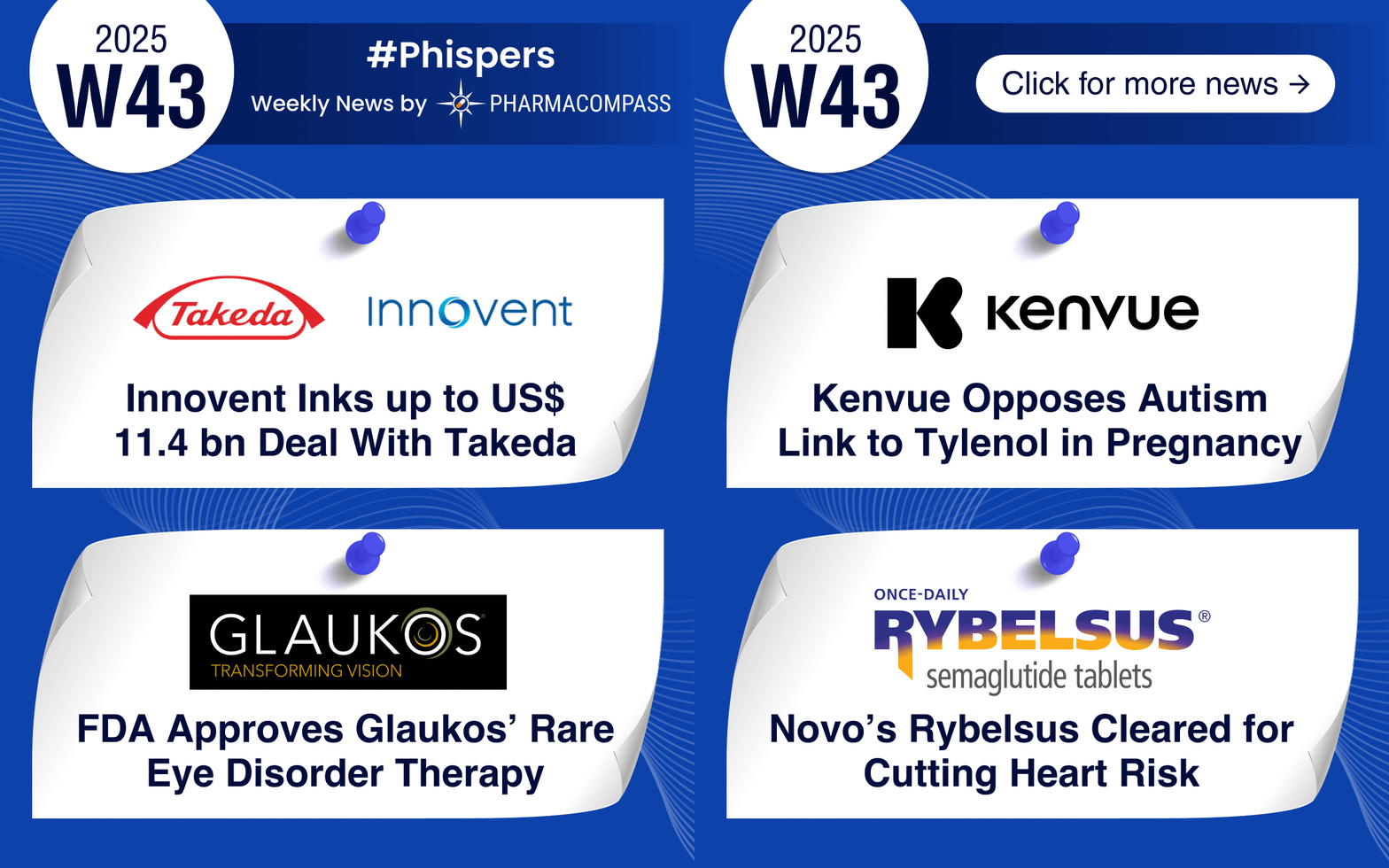
In this week’s Phispers, China’s Innovent Biologics signed one of the largest cross-border biotech deals in Asia. Under this up to US$ 11.4 billion deal, Innovent will co-develop immuno-oncology and antibody-drug conjugate (ADC) therapies along with Japan’s Takeda. In the US, Merck broke ground on a US$ 3 billion manufacturing facility in Virginia. And French drugmaker Ipsen announced the acquisition of ImCheck Therapeutics for up to €1 billion (US$ 1.16 billion) to strengthen its oncology pipeline.In drug approvals, the US Food and Drug Administration (FDA) cleared Novo Nordisk’s Rybelsus (oral semaglutide) to reduce cardiovascular risk in adults with type 2 diabetes. The agency also approved Glaukos’ Epioxa for treating keratoconus, a progressive eye disorder. It expanded the approvals of Roche’s blood cancer drug Gazyva to treat active lupus nephritis (a severe kidney complication) and Amgen-AstraZeneca’s Tezpire as an add-on maintenance treatment for chronic rhinosinusitis with nasal polyps.In clinical trials, Novartis’ intravenous (IV) therapy delayed disease progression in early-stage metastatic prostate cancer. Similarly, the combination of Pfizer-Astellas’ Padcev and Merck’s Keytruda cut the risk of death by 50 percent in muscle-invasive bladder cancer. And AstraZeneca-Daiichi’s Datroway extended survival in patients with triple-negative breast cancer.In other news, the Novo Nordisk Foundation has moved to take control of Novo Nordisk’s board. And Kenvue has urged US regulators to reject a petition seeking an autism warning on Tylenol’s label for use during pregnancy, citing insufficient scientific evidence.China’s Innovent inks up to US$ 11.4 bn cancer drug deal with Japan’s TakedaInnovent Biologics has signed an up to US$ 11.4 billion deal with Takeda Pharmaceutical to co-develop next-generation cancer therapies. Under the agreement, China’s Innovent Biologics will receive US$ 1.2 billion upfront and up to US$ 10.2 billion in milestone payments from Takeda to co-develop immuno-oncology and ADC therapies. The deal covers late-stage drugs for non-small cell lung cancer and colorectal cancer, with Takeda taking rights outside the US and Greater China, and Innovent co-commercializing in the US.Ipsen to acquire ImCheck Therapeutics: French drugmaker Ipsen is acquiring ImCheck Therapeutics for up to €1 billion (US$ 1.16 billion) to strengthen its oncology pipeline. The deal centers on ICT01, a potential first-in-class monoclonal antibody being tested in acute myeloid leukemia.Merck breaks ground on drug plant in US: Merck has broken ground on a US$ 3 billion pharmaceutical manufacturing facility at its Elkton, Virginia, campus, which is part of a broader US$ 70 billion US investment in manufacturing, R&D, and capital projects.FDA approves Novo’s Rybelsus to reduce risk of adverse heart events in diabeticsFDA has approved Novo Nordisk’s Rybelsus (oral semaglutide), making it the first and only oral GLP-1 therapy to reduce the risk of major adverse cardiovascular events (MACE) — including heart attack, stroke, and cardiovascular death — in adults with type 2 diabetes who are at high cardiovascular risk, regardless of whether they have had a prior event. It is approved for both primary and secondary prevention in this population. Rybelsus was first approved in 2019 to improve glycemic control in adults with type 2 diabetes.Foundation seizes board control: Novo Nordisk’s majority shareholder, the Novo Nordisk Foundation, is taking control of the company’s board after a disagreement between the board and the foundation over its future governance. Following the disagreement, the chairman and six other independent board members resigned. The move comes as sales of weight-loss drug Wegovy and diabetes drug Ozempic (both semaglutide) have fallen due to competition from Eli Lilly and US pricing pressures. The foundation wants a sharper focus on the US market and backs incumbent CEO Mike Doustdar’s restructuring efforts, including 9,000 job cuts, to restore growth.FDA approves Glaukos’ Epioxa to treat keratoconus, a rare, eye-disorderFDA has approved Glaukos’ Epioxa (riboflavin 5'-phosphate) for treating keratoconus, a rare, progressive eye disorder that thins and bulges the cornea, causing distorted vision and increasing the risk of blindness. Epioxa provides an incision-free alternative to surgery.Roche’s Gazyva approved for lupus nephritis: FDA has approved Gazyva (obinutuzumab), developed by Roche’s Genentech, for adults with active lupus nephritis (a severe kidney complication), marking the drug’s first non-cancer indication. Gazyva is approved for certain blood cancers.Expands use of Amgen-Astra’s Tezpire: FDA has approved Amgen and AstraZeneca’s Tezspire (tezepelumab) as an add-on maintenance treatment for adults and children aged 12 and older with inadequately controlled chronic rhinosinusitis with nasal polyps. This condition causes long-term sinus inflammation and noncancerous growths, leading to congestion, facial pain, and loss of smell. Tezspire is already approved for severe asthma.Novartis’ Pluvicto shows benefit in metastatic prostate cancerNovartis’ Pluvicto (lutetium (177Lu) vipivotide tetraxetan), an intravenous therapy that delivers targeted radiation directly to prostate cancer cells, significantly delayed disease progression in patients with metastatic hormone-sensitive prostate cancer. In the phase 3 trial, combining Pluvicto with standard hormone therapy reduced the risk of progression or death by 28 percent.Padcev-Keytruda combo shows benefit in bladder cancer: Pfizer and Astellas’ Padcev (enfortumab vedotin-ejfv), combined with Merck’s Keytruda (pembrolizumab), significantly improved outcomes in patients with muscle-invasive bladder cancer who cannot take cisplatin (intravenous route) chemotherapy. In a late-stage trial, the combination reduced the risk of cancer recurrence, progression, or death by 60 percent and cut the risk of death by 50 percent compared with surgery alone.Datroway extends survival in metastatic breast cancer: AstraZeneca and Daiichi Sankyo’s drug Datroway (datopotamab deruxtecan) significantly improved survival in patients with metastatic triple-negative breast cancer compared to chemotherapy in a late-stage trial.GSK’s oral antibiotic drug matches intravenous treatment for complicated UTIsGSK and Spero’s experimental oral antibiotic tebipenem HBr proved as effective as intravenous treatment in a phase 3 trial for complicated urinary tract infections, including drug-resistant cases.Moderna halts birth defect vaccine program: Moderna said it will discontinue the development of its experimental vaccine — mRNA-1647 — to prevent cytomegalovirus (a virus that can cause birth defects) after the shot failed to meet the main goal in a phase 3 trial.Kenvue seeks rejection of ‘autism warning’ request on Tylenol labelKenvue, maker of Tylenol (acetaminophen), has asked US regulators to reject a request to add an autism warning to its painkiller’s label for use during pregnancy. The petition cites studies suggesting a link between acetaminophen and neurodevelopmental disorders. Kenvue and the FDA, however, note that no causal relationship has been proven. 

Impressions: 1566

https://www.pharmacompass.com/radio-compass-phisper/innovent-takeda-ink-up-to-us-11-4-bn-oncology-deal-fda-clears-novo-s-rybelsus-to-reduce-heart-risk-in-diabetics

#Phispers by PHARMACOMPASS
23 Oct 2025

NEWS #PharmaBuzz

read-more
read-more

https://economictimes.indiatimes.com/industry/healthcare/biotech/pharmaceuticals/cancer-drug-prices-raised-50-as-nppa-acts-on-shortage-concerns/articleshow/131663737.cms

ECONOMICTIMES
15 Jun 2026

https://www.prnewswire.com/news-releases/promising-first-in-patient-results-for-acou085-inn-bimokalner-in-cisplatin-induced-ototoxicity-302798031.html

PR NEWSWIRE
12 Jun 2026

https://www.business-standard.com/industry/news/govt-approves-price-hike-for-cancer-drugs-amid-nationwide-shortage-126061001013_1.html

BUSINESS STD
10 Jun 2026

https://health.economictimes.indiatimes.com/news/pharma/pharma-industry/chemo-drug-supply-crisis-hits-cancer-care/131519357

ET HEALTH
05 Jun 2026

https://www.pharmabiz.com/NewsDetails.aspx?aid=185828&sid=1

PHARMABIZ
11 May 2026

https://www.prnewswire.com/news-releases/us-fda-grants-priority-review-to-sbla-for-padcev--keytruda-as-perioperative-treatment-for-muscle-invasive-bladder-cancer-regardless-of-cisplatin-eligibility-302746360.html

PR NEWSWIRE
20 Apr 2026