Find Progesterone manufacturers, exporters & distributors on PharmaCompass

PharmaCompass

Synopsis

Chemistry

Click the arrow to open the dropdown
read-moreClick the button for full data set
Also known as: 57-83-0, Pregn-4-ene-3,20-dione, Agolutin, Luteohormone, Crinone, 4-pregnene-3,20-dione
Molecular Formula
C21H30O2
Molecular Weight
314.5  g/mol
InChI Key
RJKFOVLPORLFTN-LEKSSAKUSA-N
FDA UNII
4G7DS2Q64Y

Progesterone
The major progestational steroid that is secreted primarily by the CORPUS LUTEUM and the PLACENTA. Progesterone acts on the UTERUS, the MAMMARY GLANDS and the BRAIN. It is required in EMBRYO IMPLANTATION; PREGNANCY maintenance, and the development of mammary tissue for MILK production. Progesterone, converted from PREGNENOLONE, also serves as an intermediate in the biosynthesis of GONADAL STEROID HORMONES and adrenal CORTICOSTEROIDS.
Progesterone is a Progesterone.
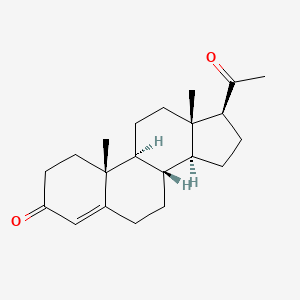
1 2D Structure

Progesterone

2 Identification
2.1 Computed Descriptors
2.1.1 IUPAC Name
(8S,9S,10R,13S,14S,17S)-17-acetyl-10,13-dimethyl-1,2,6,7,8,9,11,12,14,15,16,17-dodecahydrocyclopenta[a]phenanthren-3-one
2.1.2 InChI
InChI=1S/C21H30O2/c1-13(22)17-6-7-18-16-5-4-14-12-15(23)8-10-20(14,2)19(16)9-11-21(17,18)3/h12,16-19H,4-11H2,1-3H3/t16-,17+,18-,19-,20-,21+/m0/s1
2.1.3 InChI Key
RJKFOVLPORLFTN-LEKSSAKUSA-N
2.1.4 Canonical SMILES
CC(=O)C1CCC2C1(CCC3C2CCC4=CC(=O)CCC34C)C
2.1.5 Isomeric SMILES
CC(=O)[C@H]1CC[C@@H]2[C@@]1(CC[C@H]3[C@H]2CCC4=CC(=O)CC[C@]34C)C
2.2 Other Identifiers
2.2.1 UNII
4G7DS2Q64Y
2.3 Synonyms
2.3.1 MeSH Synonyms

1. Pregnenedione

2. Progesterone, (13 Alpha,17 Alpha)-(+-)-isomer

3. Progesterone, (17 Alpha)-isomer

4. Progesterone, (9 Beta,10 Alpha)-isomer

2.3.2 Depositor-Supplied Synonyms

1. 57-83-0

2. Pregn-4-ene-3,20-dione

3. Agolutin

4. Luteohormone

5. Crinone

6. 4-pregnene-3,20-dione

7. Utrogestan

8. Corpus Luteum Hormone

9. Progestin

10. Prometrium

11. Syngesterone

12. Luteol

13. Glanducorpin

14. Pregnenedione

15. Progestasert

16. Progesterol

17. Progesteronum

18. Corlutin

19. Cyclogest

20. Gesterol

21. Gestone

22. Gestormone

23. Progestone

24. Progestron

25. Hormoflaveine

26. Methylpregnone

27. Progestronol

28. Corlutina

29. Corluvite

30. Corporin

31. Flavolutan

32. Fologenon

33. Gynlutin

34. Gynolutone

35. Hormoluton

36. Lingusorbs

37. Lucorteum

38. Luteodyn

39. Luteogan

40. Luteopur

41. Luteosan

42. Luteostab

43. Luteovis

44. Lutociclina

45. Lutocyclin

46. Lutocylin

47. Lutoform

48. Lutromone

49. Membrettes

50. Nalutron

51. Piaponon

52. Primolut

53. Progekan

54. Progestosol

55. Prolidon

56. Proluton

57. Protormone

58. Syngestrets

59. Syntolutan

60. Gestron

61. Lutidon

62. Lutogyl

63. Lutren

64. Prolets

65. Lutex

66. Luteal Hormone

67. Lucorteum Sol

68. Bio-luton

69. Lutocyclin M

70. Lipo-lutin

71. Luteocrin Normale

72. Luteinique

73. Prochieve

74. Prolutone

75. Lutin

76. 17alpha-progesterone

77. Synovex S

78. Projestaject

79. Gynoluton

80. Gesterol 50

81. Percutacrine Luteinique

82. Gesterol 100

83. Cyclogesterin

84. Akrolutin

85. Endometrin

86. Prolutin

87. Pregnene-3,20-dione

88. (s)-progesterone

89. Colprosterone

90. Progesteron

91. Progestogel

92. Progeston

93. 3,20-pregnene-4

94. Gelbkoerperhormon

95. Crinone Progesterone Gel

96. Gestiron

97. Lugesteron

98. Progestol

99. Luteol (van)

100. Lutocuclin M

101. Nsc-9704

102. .beta.-progesterone

103. Percutacrine

104. (s)-4-pregnene-3,20-dione

105. Progeffik

106. Utrogest

107. Vitarrine

108. Luteum

109. Progesteronum [inn-latin]

110. Delta(4)-pregnene-3,20-dione

111. Progesterona [inn-spanish]

112. (s)-pregn-4-en-3,20-dione

113. Delta(sup 4)-pregnene-3,20-dione

114. Ccris 533

115. Prontogest

116. Estima

117. 17.alpha.-progesterone

118. Hsdb 3389

119. Progesterone [progestins]

120. Ai3-51682

121. Prometrium (tn)

122. Pregn-4-en-3,20-dione

123. Crinone (tn)

124. 6alpha-methylpregn-4-en-17alpha-ol-3,20-dione

125. Chebi:17026

126. .delta.4-pregnene-3,20-dione

127. 17alpha-hydroxy-6alpha-methylpregn-4-ene-3,20-dione

128. Progesterone, Micronized

129. Pregn-4-ene-3,20-dione, 17alpha-hydroxy-6alpha-methyl-

130. Component Of Cyclogesterin

131. Nsc-64377

132. 4-pregnen-3,20-dione

133. .delta.(sup4)-pregnene-3,20-dione

134. Chembl103

135. D4-pregnene-3,20-dione

136. Mls000028517

137. 4g7ds2q64y

138. (8s,9s,10r,13s,14s,17s)-17-acetyl-10,13-dimethyl-1,2,6,7,8,9,11,12,14,15,16,17-dodecahydrocyclopenta[a]phenanthren-3-one

139. Nsc9704

140. U 3672

141. Nsc64377

142. Ncgc00015785-04

143. Smr000058345

144. Dsstox_cid_2370

145. Dsstox_rid_76562

146. Dsstox_gsid_22370

147. (8s,9s,10r,13s,14s,17s)-17-acetyl-10,13-dimethyl-1,2,6,7,8,9,10,11,12,13,14,15,16,17-tetradecahydro-3h-cyclopenta[a]phenanthren-3-one

148. 6.alpha.-methylpregn-4-en-17.alpha.-ol-3,20-dione

149. 17.alpha.-hydroxy-6.alpha.-methylpregn-4-ene-3,20-dione

150. Progesterona

151. Progestan

152. Pregn-4-ene-3,20-dione, 17.alpha.-hydroxy-6.alpha.-methyl-

153. (8s,9s,10r,13s,14s,17s)-17-acetyl-10,13-dimethyl-6,7,8,9,10,11,12,13,14,15,16,17-dodecahydro-1h-cyclopenta[a]phenanthren-3(2h)-one

154. Smr000653542

155. Progesterone (prometrium)

156. Wln: L E5 B666 Ov Mutj A1 E1 Fv1

157. Sr-01000000088

158. Sr-01000076054

159. Nsc 9704

160. Einecs 200-350-6

161. Nsc 64377

162. Pregn-4-ene-3, 17.alpha.-hydroxy-6.alpha.-methyl-

163. Bhr-100

164. Unii-4g7ds2q64y

165. Duraprogen

166. Progestrel

167. Lipolutin

168. Lutinus

169. Lutogynon

170. Progesterone??

171. Beta-progesterone

172. 1dbb

173. 17a-progesterone

174. Cas-57-83-0

175. Delta(sup4)-pregnene-3,20-dione

176. Progesterone [usp:inn:ban:jan]

177. Racemic Progesterone

178. Prestwick_411

179. Mfcd00003658

180. Cidr

181. Milprosa

182. Mpp22

183. 2aa6

184. 4bb2

185. Opera_id_292

186. Progesterone, >=99%

187. Prestwick0_000477

188. Prestwick1_000477

189. Prestwick2_000477

190. Prestwick3_000477

191. Spectrum5_002053

192. Progesterone [mi]

193. Cyclogesterin (salt/mix)

194. Progesterone [inn]

195. Progesterone [jan]

196. Bmse000482

197. Epitope Id:116051

198. Ec 200-350-6

199. Progesterone [hsdb]

200. Progesterone [inci]

201. Pregn-4-ne-3,20-ione

202. Schembl7671

203. Progesterone [vandf]

204. Bidd:pxr0094

205. Lopac0_000895

206. Bspbio_000614

207. Progesterone [mart.]

208. Mls000758277

209. Mls001074187

210. Mls001423982

211. Mls002222367

212. Bidd:er0547

213. P0130_sigma

214. Progesterone [usp-rs]

215. Progesterone [who-dd]

216. Progesterone [who-ip]

217. Spbio_002553

218. .delta.-pregnene-3,20-dione

219. Bdbm8903

220. Bpbio1_000676

221. Gtpl2377

222. Hydroxyprogesterone Caproic Acid

223. Dtxsid3022370

224. Progesterone (jp17/usp/inn)

225. Bhr-310

226. Eti-411

227. Progesterone [green Book]

228. 1a28

229. 1h60

230. Hms1569o16

231. Hms2051o05

232. Hms2090j07

233. Hms2096o16

234. Hms2230f23

235. Hms2233p11

236. Hms3262d12

237. Hms3713o16

238. Pregnene, 3,20-dione-delta^4-

239. Progesterone [orange Book]

240. Progesterone [ep Monograph]

241. Bcp22000

242. Bijuva Component Progesterone

243. Hy-n0437

244. Zinc4428529

245. Progesterone [usp Monograph]

246. Tox21_113157

247. Tox21_201792

248. Tox21_300307

249. Tox21_500895

250. Ac-700

251. Cmc_13406

252. Lmst02030159

253. Progesteronum [who-ip Latin]

254. S1705

255. Akos015894908

256. Progesterone; 4-pregnene-3,20-dione

257. Ccg-100766

258. Cs-1937

259. Db00396

260. Dr-2011

261. Fd12045

262. Lp00895

263. Nc00016

264. Progesterone Component Of Bijuva

265. Sdccgsbi-0050870.p002

266. Progesterone 1.0 Mg/ml In Acetonitrile

267. Progesterone 100 Microg/ml In Methanol

268. Ncgc00022185-03

269. Ncgc00022185-04

270. Ncgc00022185-05

271. Ncgc00022185-06

272. Ncgc00022185-07

273. Ncgc00022185-08

274. Ncgc00022185-09

275. Ncgc00022185-10

276. Ncgc00022185-11

277. Ncgc00022185-12

278. Ncgc00022185-14

279. Ncgc00022185-21

280. Ncgc00090798-01

281. Ncgc00090798-02

282. Ncgc00254120-01

283. Ncgc00259341-01

284. Ncgc00261580-01

285. (1s,10s,11s,14s,15s,2r)-14-acetyl-2,15-dimethyl-5-oxotetracyclo[8.7.0.0<2,7>.0 <11,15>]heptadec-6-ene

286. As-12660

287. Cpd000058345

288. Nci60_042166

289. Progesterone 1000 Microg/ml In Methanol

290. Fe-999913

291. Eu-0100895

292. P0478

293. (14beta,17alpha)-pregn-4-ene-3,20-dione

294. Progesterone, Meets Usp Testing Specifications

295. Progesterone, Vetec(tm) Reagent Grade, 98%

296. C00410

297. D00066

298. P 0130

299. Q26963

300. S00293

301. Progesterone, Vetranal(tm), Analytical Standard

302. Q-201624

303. Sr-01000000088-5

304. Sr-01000000088-6

305. Sr-01000076054-1

306. Sr-01000076054-4

307. Brd-k64994968-001-03-6

308. 32104fb6-bf81-4f6e-83c2-024deeaeb272

309. Progesterone, British Pharmacopoeia (bp) Reference Standard

310. Progesterone, Powder, Bioreagent, Suitable For Cell Culture

311. Progesterone, European Pharmacopoeia (ep) Reference Standard

312. Progesterone, Gamma-irradiated, Bioxtra, Suitable For Cell Culture

313. Progesterone, United States Pharmacopeia (usp) Reference Standard

314. Progesterone-water Soluble, Powder, Bioreagent, Suitable For Cell Culture

315. Progesterone For Peak Identification, European Pharmacopoeia (ep) Reference Standard

316. Progesterone For System Suitability, European Pharmacopoeia (ep) Reference Standard

317. Progesterone, Pharmaceutical Secondary Standard; Certified Reference Material

318. (1s,2r,10s,11s,14s,15s)-14-acetyl-2,15-dimethyltetracyclo[8.7.0.0;{2,7}.0;{11,15}]heptadec-6-en-5-one

319. 137940-28-4

320. 753497-20-0

321. Progesterone Solution, 1.0 Mg/ml In Acetonitrile, Ampule Of 1 Ml, Certified Reference Material

2.4 Create Date
2004-09-16
3 Chemical and Physical Properties
Molecular Weight 314.5 g/mol
Molecular Formula C21H30O2
XLogP33.9
Hydrogen Bond Donor Count0
Hydrogen Bond Acceptor Count2
Rotatable Bond Count1
Exact Mass314.224580195 g/mol
Monoisotopic Mass314.224580195 g/mol
Topological Polar Surface Area34.1 Ų
Heavy Atom Count23
Formal Charge0
Complexity589
Isotope Atom Count0
Defined Atom Stereocenter Count6
Undefined Atom Stereocenter Count0
Defined Bond Stereocenter Count0
Undefined Bond Stereocenter Count0
Covalently Bonded Unit Count1
4 Drug and Medication Information
4.1 Drug Information
1 of 8  
Drug NameCrinone
PubMed HealthProgesterone
Drug ClassesEndocrine-Metabolic Agent, Endometrial Hyperplasia Agent, Female Reproductive Agent
Active IngredientProgesterone
Dosage FormGel
Routevaginal; Vaginal
Strength8%; 4%
Market StatusPrescription
CompanyWatson Labs; Columbia Res Labs

2 of 8  
Drug NameEndometrin
PubMed HealthProgesterone
Drug ClassesEndocrine-Metabolic Agent, Endometrial Hyperplasia Agent, Female Reproductive Agent
Drug LabelEndometrin (progesterone) Vaginal Insert contains micronized progesterone. Endometrin is supplied with polyethylene vaginal applicators.The active ingredient, progesterone, is present in 100 mg amount along with other excipients. The chemical name fo...
Active IngredientProgesterone
Dosage FormInsert
RouteVaginal
Strength100mg
Market StatusPrescription
CompanyFerring

3 of 8  
Drug NameProgesterone
PubMed HealthProgesterone
Drug ClassesEndocrine-Metabolic Agent, Endometrial Hyperplasia Agent, Female Reproductive Agent
Drug LabelPROMETRIUM (progesterone, USP) Capsules contain micronized progesterone for oral administration. Progesterone has a molecular weight of 314.47 and a molecular formula of C21H30O2. Progesterone (pregn-4-ene-3, 20-dione) is a white or creamy white, odo...
Active IngredientProgesterone
Dosage FormCapsule; Injectable
RouteInjection; Oral
Strength200mg; 50mg/ml; 100mg
Market StatusPrescription
CompanySofgen Pharms; Hikma Farmaceutica; Watson Labs (utah); Banner Pharmacaps; Teva Pharms; Fresenius Kabi Usa; Luitpold

4 of 8  
Drug NamePrometrium
PubMed HealthProgesterone (By mouth)
Drug ClassesEndocrine-Metabolic Agent, Endometrial Hyperplasia Agent, Female Reproductive Agent
Drug LabelPROMETRIUM (progesterone, USP) Capsules contain micronized progesterone for oral administration. Progesterone has a molecular weight of 314.47 and a molecular formula of C21H30O2. Progesterone (pregn-4-ene-3, 20-dione) is a white or creamy white, odo...
Active IngredientProgesterone
Dosage FormCapsule
Routeoral; Oral
Strength200mg; 300mg; 100mg
Market StatusPrescription
CompanyAbbvie

5 of 8  
Drug NameCrinone
PubMed HealthProgesterone
Drug ClassesEndocrine-Metabolic Agent, Endometrial Hyperplasia Agent, Female Reproductive Agent
Active IngredientProgesterone
Dosage FormGel
Routevaginal; Vaginal
Strength8%; 4%
Market StatusPrescription
CompanyWatson Labs; Columbia Res Labs

6 of 8  
Drug NameEndometrin
PubMed HealthProgesterone
Drug ClassesEndocrine-Metabolic Agent, Endometrial Hyperplasia Agent, Female Reproductive Agent
Drug LabelEndometrin (progesterone) Vaginal Insert contains micronized progesterone. Endometrin is supplied with polyethylene vaginal applicators.The active ingredient, progesterone, is present in 100 mg amount along with other excipients. The chemical name fo...
Active IngredientProgesterone
Dosage FormInsert
RouteVaginal
Strength100mg
Market StatusPrescription
CompanyFerring

7 of 8  
Drug NameProgesterone
PubMed HealthProgesterone
Drug ClassesEndocrine-Metabolic Agent, Endometrial Hyperplasia Agent, Female Reproductive Agent
Drug LabelPROMETRIUM (progesterone, USP) Capsules contain micronized progesterone for oral administration. Progesterone has a molecular weight of 314.47 and a molecular formula of C21H30O2. Progesterone (pregn-4-ene-3, 20-dione) is a white or creamy white, odo...
Active IngredientProgesterone
Dosage FormCapsule; Injectable
RouteInjection; Oral
Strength200mg; 50mg/ml; 100mg
Market StatusPrescription
CompanySofgen Pharms; Hikma Farmaceutica; Watson Labs (utah); Banner Pharmacaps; Teva Pharms; Fresenius Kabi Usa; Luitpold

8 of 8  
Drug NamePrometrium
PubMed HealthProgesterone (By mouth)
Drug ClassesEndocrine-Metabolic Agent, Endometrial Hyperplasia Agent, Female Reproductive Agent
Drug LabelPROMETRIUM (progesterone, USP) Capsules contain micronized progesterone for oral administration. Progesterone has a molecular weight of 314.47 and a molecular formula of C21H30O2. Progesterone (pregn-4-ene-3, 20-dione) is a white or creamy white, odo...
Active IngredientProgesterone
Dosage FormCapsule
Routeoral; Oral
Strength200mg; 300mg; 100mg
Market StatusPrescription
CompanyAbbvie

4.2 Therapeutic Uses

Progestins

National Library of Medicine's Medical Subject Headings online file (MeSH, 2009)


Prochieve 4% is indicated for the treatment of secondary amenorrhea. Prochieve 8% is indicated for use in women who have failed to respond to treatment with Prochieve 4%. /Included in US product label/

US Natl Inst Health; DailyMed. Current Medication Information for PROCHIEVE (progesterone) gel (November 2009). Available from, as of March 1, 2011: https://dailymed.nlm.nih.gov/dailymed/drugInfo.cfm?id=13486


Prochieve 8% is indicated for progesterone supplementation or replacement as part of an Assisted Reproductive Technology ("ART") treatment for infertile women with progesterone deficiency. /Included in US product label/

US Natl Inst Health; DailyMed. Current Medication Information for PROCHIEVE (progesterone) gel (November 2009). Available from, as of March 1, 2011: https://dailymed.nlm.nih.gov/dailymed/drugInfo.cfm?id=13486


Progesterone is used orally or intravaginally for the management of secondary amenorrhea.

American Society of Health System Pharmacists; AHFS Drug Information 2010. Bethesda, MD. (2010), p. 3279


For more Therapeutic Uses (Complete) data for PROGESTERONE (9 total), please visit the HSDB record page.


4.3 Drug Warning

/BOXED WARNING/ WARNING: CARDIOVASCULAR DISORDERS, BREAST CANCER and PROBABLE DEMENTIA FOR ESTROGEN PLUS PROGESTIN THERAPY. Cardiovascular Disorders and Probable Dementia: Estrogens plus progestin therapy should not be used for the prevention of cardiovascular disease or dementia. The Women's Health Initiative (WHI) estrogen plus progestin substudy reported increased risks of deep vein thrombosis, pulmonary embolism, stroke and myocardial infarction in postmenopausal women (50 to 79 years of age) during 5.6 years of treatment with daily oral conjugated estrogens (CE) (0.625 mg) combined with medroxyprogesterone acetate (MPA) (2.5 mg), relative to placebo. The WHI Memory Study (WHIMS) estrogen plus progestin ancillary study of the WHI reported an increased risk of developing probable dementia in postmenopausal women 65 years of age or older during 4 years of treatment with daily CE (0.625 mg) combined with MPA (2.5 mg), relative to placebo. It is unknown whether this finding applies to younger postmenopausal women. Breast Cancer: The WHI estrogen plus progestin substudy also demonstrated an increased risk of invasive breast cancer. In the absence of comparable data, these risks should be assumed to be similar for other doses of CE and MPA, and other combinations and dosage forms of estrogens and progestins. Progestins with estrogens should be prescribed at the lowest effective doses and for the shortest duration consistent with treatment goals and risks for the individual woman.

US Natl Inst Health; DailyMed. Current Medication Information for Prometrium (progesterone) capsule (Updated September 2013). Available from, as of April 24, 2015: https://dailymed.nlm.nih.gov/dailymed/drugInfo.cfm?setid=0224b5a6-25a3-44c9-b94f-90e2e064c164


Other doses of oral conjugated estrogens with medroxyprogesterone and other combinations and dosage forms of estrogens and progestins were not studied in the WHI clinical trials. In the absence of comparable data and product-specific studies, the relevance of the WHI findings to other products has not been established. Therefore, the risks should be assumed to be similar for all estrogen and progestin products. Because of these risks, estrogens with or without progestins should be prescribed at the lowest effective doses and for the shortest duration consistent with treatment goals and risks for the individual woman.

US Natl Inst Health; DailyMed. Current Medication Information for Prometrium (progesterone) capsule (March 2008). Available from, as of February 23, 2011: https://dailymed.nlm.nih.gov/dailymed/drugInfo.cfm?id=6971


Adverse effects reported in patients receiving oral progesterone include dizziness, breast pain, headache, abdominal pain, fatigue, viral infection, abdominal distention, musculoskeletal pain, emotional lability, irritability, and upper respiratory tract infection. Extreme dizziness and/or drowsiness, blurred vision, slurred speech, difficulty walking, loss of consciousness, vertigo, confusion, disorientation, and shortness of breath have been reported in a few women receiving the drug. Hypotension and syncope have occurred rarely in women receiving progesterone capsules.

American Society of Health System Pharmacists; AHFS Drug Information 2010. Bethesda, MD. (2010), p. 3279


Adverse effects reported in patients receiving progesterone vaginal gel include breast pain/enlargement, somnolence, constipation, nausea, headache, and perineal pain.

American Society of Health System Pharmacists; AHFS Drug Information 2010. Bethesda, MD. (2010), p. 3279


For more Drug Warnings (Complete) data for PROGESTERONE (19 total), please visit the HSDB record page.


4.4 Drug Indication

**Gelatinized capsules** The gelatinized capsules are indicated for use in the prevention of endometrial hyperplasia in non-hysterectomized postmenopausal women who are receiving conjugated estrogens tablets. They are also indicated for use in secondary amenorrhea. **Vaginal gel** Progesterone gel (8%) is indicated as progesterone supplementation or replacement as part of an Assisted Reproductive Technology (ART) treatment for infertile women with progesterone deficiency. The lower concentration progesterone gel (4%) is used in the treatment of secondary amenorrhea, with the use of the 8% concentration if there is no therapeutic response to the 4% gel. **Vaginal insert** This form is indicated to support embryo implantation and early pregnancy by supplementation of corpus luteal function as part of an Assisted Reproductive Technology (ART) treatment program for infertile women. **Injection (intramuscular)** This drug is indicated in amenorrhea and abnormal uterine bleeding due to hormonal imbalance in the absence of organic pathology, such as submucous fibroids or uterine cancer. **Tablets, contraceptive** The tablet form of progesterone in contraceptive formulations is indicated for the prevention of pregnancy.


FDA Label


Treatment of female infertility


Treatment of female infertility, Prevention of recurrent spontaneous abortion


5 Pharmacology and Biochemistry
5.1 Pharmacology

Progesterone, depending on concentration and dosage form, and timing of exposure may have several pharmacodynamic effects. These actions, according, to various preparations, are listed below: General effects Progesterone is the main hormone of the corpus luteum and the placenta. It acts on the uterus by changing the proliferative phase to the secretory phase of the endometrium (inner mucous lining of the uterus). This hormone, stimulated by a hormone called _luteinizing hormone_ (LH) is the main hormone during the secretory phase to prepare the corpus luteum and the endometrium for implantation of a fertilized ovum. As the luteal phase concludes, the progesterone hormone sends negative feedback to the anterior pituitary gland in the brain to decrease FSH (follicle stimulating hormone) and LH (luteinizing hormone) levels. This prevents ovulation and maturation of oocytes (immature egg cells). The endometrium then prepares for pregnancy by increasing its vascularity (blood vessels) and stimulating mucous secretion. This process occurs by progesterone stimulating the endometrium to decrease endometrial proliferation, leading to a decreased uterine lining thickness, developing more complex uterine glands, collecting energy in the form of glycogen, and providing more uterine blood vessel surface area suitable for supporting a growing embryo. As opposed to cervical mucous changes observed during the proliferative phase and ovulation, progesterone decreases and thickens the cervical mucus, rendering it less elastic. This change occurs because the fertilization time period has passed, and a specific consistency of mucous amenable to sperm entry is no longer required. **Gelatinized capsules** Progesterone capsules are an oral dosage form of micronized progesterone which, chemically identical to progesterone of ovarian origin. Progesterone capsules have all the properties of endogenous progesterone with induction of a secretory phase endometrium with gestagenic, antiestrogenic, slightly antiandrogenic and anti-aldosterone effects. Progesterone opposes the effects of estrogen on the uterus, and is beneficial in women with unopposed estrogen exposure, which carries an increased risk of malignancy. **Vaginal gel and vaginal insert** The gel preparation mimics the effects of naturally occurring progesterone. In the presence of adequate levels of estrogen, progesterone converts a proliferative endometrium into secretory endometrium. This means that the endometrium changes from a growing and thickening stage into a subsequent preparation stage for pregnancy, which involves further preparatory changes. Progesterone is necessary for the development of decidual tissue (specialized tissue amenable to supporting a possible pregnancy). Progesterone is required to increase endometrial receptivity for the implantation of a fertilized embryo. Once an embryo is implanted, progesterone helps to maintain the pregnancy. **Injection (intramuscular)** Intramuscularly injected progesterone increases serum progesterone and aids in the prevention of endometrial tissue overgrowth due to unopposed estrogen (which leads to abnormal uterine bleeding and sometimes uterine cancer),. In the absence or deficiency of progesterone, the endometrium continually proliferates, eventually outgrowing its limited blood supply, shedding incompletely, and leading to abnormal and/or profuse bleeding as well as malignancy. **Tablets, contraceptive** Progesterone-only contraceptive tablets prevent conception by suppressing ovulation in about half of users, causing a thickening of cervical mucus to inhibit sperm movement, lowering the midcycle LH and FSH hormone peaks, slowing the movement of the ovum through the fallopian tubes, and causing secretory changes in the endometrium as described above.


5.2 MeSH Pharmacological Classification

Progestins

Compounds that interact with PROGESTERONE RECEPTORS in target tissues to bring about the effects similar to those of PROGESTERONE. Primary actions of progestins, including natural and synthetic steroids, are on the UTERUS and the MAMMARY GLAND in preparation for and in maintenance of PREGNANCY. (See all compounds classified as Progestins.)


5.3 FDA Pharmacological Classification
5.3.1 Active Moiety
PROGESTERONE
5.3.2 FDA UNII
4G7DS2Q64Y
5.3.3 Pharmacological Classes
Progesterone [EPC]; Progesterone [CS]
5.4 ATC Code

G03DA04

S76 | LUXPHARMA | Pharmaceuticals Marketed in Luxembourg | Pharmaceuticals marketed in Luxembourg, as published by d'Gesondheetskeess (CNS, la caisse nationale de sante, www.cns.lu), mapped by name to structures using CompTox by R. Singh et al. (in prep.). List downloaded from https://cns.public.lu/en/legislations/textes-coordonnes/liste-med-comm.html. Dataset DOI:10.5281/zenodo.4587355


G - Genito urinary system and sex hormones

G03 - Sex hormones and modulators of the genital system

G03D - Progestogens

G03DA - Pregnen (4) derivatives

G03DA04 - Progesterone


5.5 Absorption, Distribution and Excretion

Absorption

**Oral micronized capsules** Following oral administration of progesterone in the micronized soft-gelatin capsule formulation, peak serum concentration was achieved in the first 3 hours. The absolute bioavailability of micronized progesterone is unknown at this time. In postmenopausal women, serum progesterone concentration increased in a dose-proportional and linear fashion after multiple doses of progesterone capsules, ranging from 100 mg/day to 300 mg/day. **IM administration** After intramuscular (IM) administration of 10 mg of progesterone in oil, the maximum plasma concentrations were achieved in about 8 hours post-injection and plasma concentrations stayed above baseline for approximately 24 hours post-injection. Injections of 10, 25, and 50 mg lead to geometric mean values for maximum plasma concentration (CMAX) of 7, 28, and 50 ng/mL, respectively. Progesterone administered by the intramuscular (IM) route avoids significant first-pass hepatic metabolism. As a result, endometrial tissue concentrations of progesterone achieved with IM administration are higher when compared with oral administration. Despite this, the highest concentrations of progesterone in endometrial tissue are reached with vaginal administration. **Note on oral contraceptive tablet absorption** Serum progestin levels peak about 2 hours after oral administration of progesterone-only contraceptive tablets, followed by rapid distribution and elimination. By 24 hours after drug administration, serum levels remain near the baseline, making efficacy dependent upon strict adherence to the dosing schedule. Large variations in serum progesterone levels occur among individuals. Progestin-only administration leads to lower steady-state serum progestin levels and a shorter elimination half-life than concurrent administration with estrogens.


Route of Elimination

Progesterone metabolites are excreted mainly by the kidneys. Urinary elimination is observed for 95% of patients in the form of glycuroconjugated metabolites, primarily 3 a, 5 pregnanediol (_pregnandiol_). The glucuronide and sulfate conjugates of pregnanediol and pregnanolone are excreted in the urine and bile. Progesterone metabolites, excreted in the bile, may undergo enterohepatic recycling or may be found excreted in the feces.


Volume of Distribution

When administered vaginally, progesterone is well absorbed by uterine endometrial tissue, and a small percentage is distributed into the systemic circulation. The amount of progesterone in the systemic circulation appears to be of minimal importance, especially when implantation, pregnancy, and live birth outcomes appear similar for intramuscular and vaginal administration of progesterone.


Clearance

**Apparent clearance** 1367 348 (50mg of progesterone administered by vaginal insert once daily). 106 15 L/h (50mg/mL IM injection once daily).


PROMETRIUM Capsules are an oral dosage form of micronized progesterone which is chemically identical to progesterone of ovarian origin. The oral bioavailability of progesterone is increased through micronization.

US Natl Inst Health; DailyMed. Current Medication Information for Prometrium (progesterone) capsule (March 2008). Available from, as of February 23, 2011: https://dailymed.nlm.nih.gov/dailymed/drugInfo.cfm?id=6971


After oral administration of progesterone as a micronized soft-gelatin capsule formulation, maximum serum concentrations were attained within 3 hours. The absolute bioavailability of micronized progesterone is not known.

US Natl Inst Health; DailyMed. Current Medication Information for Prometrium (progesterone) capsule (March 2008). Available from, as of February 23, 2011: https://dailymed.nlm.nih.gov/dailymed/drugInfo.cfm?id=6971


Serum progesterone concentrations appeared linear and dose proportional following multiple dose administration of PROMETRIUM Capsules 100 mg over the dose range 100 mg/day to 300 mg/day in postmenopausal women.

US Natl Inst Health; DailyMed. Current Medication Information for Prometrium (progesterone) capsule (March 2008). Available from, as of February 23, 2011: https://dailymed.nlm.nih.gov/dailymed/drugInfo.cfm?id=6971


Although doses greater than 300 mg/day were not studied in females, serum concentrations from a study in male volunteers appeared linear and dose proportional between 100 mg/day and 400 mg/day. The pharmacokinetic parameters in male volunteers were generally consistent with those seen in postmenopausal women.

US Natl Inst Health; DailyMed. Current Medication Information for Prometrium (progesterone) capsule (March 2008). Available from, as of February 23, 2011: https://dailymed.nlm.nih.gov/dailymed/drugInfo.cfm?id=6971


For more Absorption, Distribution and Excretion (Complete) data for PROGESTERONE (12 total), please visit the HSDB record page.


5.6 Metabolism/Metabolites

Progesterone is mainly metabolized by the liver. After oral administration, the major plasma metabolites found are 20 a hydroxy-4 a-prenolone and 5 a-dihydroprogesterone. Some progesterone metabolites are found excreted in the bile and these metabolites may be deconjugated and subsequently metabolized in the gut by reduction, dehydroxylation, and epimerization. The major plasma and urinary metabolites are comparable to those found during the physiological progesterone secretion of the corpus luteum.


Progesterone undergoes both biliary and renal elimination. Following an injection of labeled progesterone, 50-60% of the excretion of progesterone metabolites occurs via the kidney; approximately 10% occurs via the bile and feces, the second major excretory pathway.

US Natl Inst Health; DailyMed. Current Medication Information for PROCHIEVE (progesterone) gel (November 2009). Available from, as of March 1, 2011: https://dailymed.nlm.nih.gov/dailymed/drugInfo.cfm?id=13486


Progesterone is metabolized primarily by the liver largely to pregnanediols and pregnanolones. Pregnanediols and pregnanolones are conjugated in the liver to glucuronide and sulfate metabolites. Progesterone metabolites which are excreted in the bile may be deconjugated and may be further metabolized in the gut via reduction, dehydroxylation, and epimerization.

US Natl Inst Health; DailyMed. Current Medication Information for Prometrium (progesterone) capsule (March 2008). Available from, as of February 23, 2011: https://dailymed.nlm.nih.gov/dailymed/drugInfo.cfm?id=6971


The major urinary metabolite of oral progesterone is 5beta-pregnan-3alpha, 20alpha-diol glucuronide which is present in plasma in the conjugated form only. Plasma metabolites also include 5beta-pregnan-3alpha-ol-20-one (5beta-pregnanolone) and 5alpha-pregnan-3alpha-ol-20-one (5beta-pregnanolone).

US Natl Inst Health; DailyMed. Current Medication Information for PROCHIEVE (progesterone) gel (November 2009). Available from, as of March 1, 2011: https://dailymed.nlm.nih.gov/dailymed/drugInfo.cfm?id=13486


The hormone is reduced to pregnanediol in the liver and conjugated with glucuronic acid, and then excreted mainly in urine.

American Society of Health System Pharmacists; AHFS Drug Information 2010. Bethesda, MD. (2010), p. 3280


For more Metabolism/Metabolites (Complete) data for PROGESTERONE (9 total), please visit the HSDB record page.


Progesterone has known human metabolites that include 16beta-hydroxy-progesterone, 17alpha-hydroxy-progesterone, 21-hydroxy-progesterone, 2beta-hydroxy-progesterone, and 6beta-hydroxy-progesterone.

S73 | METXBIODB | Metabolite Reaction Database from BioTransformer | DOI:10.5281/zenodo.4056560


5.7 Biological Half-Life

Absorption half-life is approximately 25-50 hours and an elimination half-life of 5-20 minutes (progesterone gel). Progesterone, administered orally, has a short serum half-life (approximately 5 minutes). It is rapidly metabolized to _17-hydroxyprogesterone_ during its first pass through the liver.


Due to the sustained release properties of Prochieve, progesterone absorption is prolonged with an absorption half-life of approximately 25-50 hours, and an elimination half-life of 5-20 minutes. Therefore, the pharmacokinetics of Prochieve are rate-limited by absorption rather than by elimination.

US Natl Inst Health; DailyMed. Current Medication Information for PROCHIEVE (progesterone) gel (November 2009). Available from, as of March 1, 2011: https://dailymed.nlm.nih.gov/dailymed/drugInfo.cfm?id=13486


The elimination half life of progesterone is approximately 5 minutes ...

Hardman, J.G., L.E. Limbird, P.B. Molinoff, R.W. Ruddon, A.G. Goodman (eds.). Goodman and Gilman's The Pharmacological Basis of Therapeutics. 9th ed. New York, NY: McGraw-Hill, 1996., p. 1429


Progesterone has a short plasma half-life of several minutes.

American Society of Health System Pharmacists; AHFS Drug Information 2010. Bethesda, MD. (2010), p. 3280


5.8 Mechanism of Action

Progesterone binds and activates its nuclear receptor, _PR_, which plays an important part in the signaling of stimuli that maintain the endometrium during its preparation for pregnancy. Progesterone receptor (PR) is a member of the nuclear/steroid hormone receptor (SHR) family of ligand-dependent transcription factors that is expressed primarily in female reproductive tissue as well as the central nervous system. As a result of its binding its associated steroid hormone, progesterone, the progesterone receptor (PR) modulates the expression of genes that regulate the development, differentiation, and proliferation of target tissues. In humans, PR is found to be highly expressed in the stromal (connective tissue) cells during the secretory phase and during pregnancy. Progesterone may prevent pregnancy by changing the consistency of cervical mucus to be unfavorable for sperm penetration, and by inhibiting follicle-stimulating hormone (FSH), which normally causes ovulation. With perfect use, the first-year failure rate for progestin-only oral contraceptives is approximately 0.5%. The typical failure rate, however, is estimated to be approximately 5%, due to late or missed pills.


Progesterone is a progestinic hormone secreted mainly from the corpus luteum of the ovary during the latter half of the menstrual cycle. Progesterone is formed from steroid precursors in the ovary, testis, adrenal cortex, and placenta. Luteinizing hormone (LH) stimulates the synthesis and secretion of progesterone from the corpus luteum. Progesterone is necessary for nidation (implantation) of the ovum and for maintenance of pregnancy. Although the hormone is secreted mainly during the luteal phase of the menstrual cycle, small amounts of progesterone are also secreted during the follicular phase. High concentrations of the hormone are secreted during the latter part of pregnancy. Amounts comparable to those secreted in women during the follicular phase have been shown to be secreted in males.

American Society of Health System Pharmacists; AHFS Drug Information 2010. Bethesda, MD. (2010), p. 3280


Progesterone shares the pharmacologic actions of the progestins. In women with adequate endogenous estrogen, progesterone transforms a proliferative endometrium into a secretory one. The abrupt decline in the secretion of progesterone at the end of the menstrual cycle is principally responsible for the onset of menstruation. Progesterone also stimulates the growth of mammary alveolar tissue and relaxes uterine smooth muscle. Progesterone has minimal estrogenic and androgenic activity.

American Society of Health System Pharmacists; AHFS Drug Information 2010. Bethesda, MD. (2010), p. 3280


Progesterone released during the luteal phase of the cycle decreases estrogen driven endometrial proliferation and leads to the development of a secretory endometrium ... . The abrupt decline in the release of progesterone from the corpus luteum at the end of the cycle is the main determinant of the onset of menstruation. If the duration of the luteal phase is artificially lengthened, either by sustaining luteal function or by treatment with progesterone, decidual changes in the endometrial stroma similar to those seen in early pregnancy can be induced. Under normal circumstances, estrogen antecedes and accompanies progesterone in its action upon the endometrium and is essential to the development of the normal menstrual pattern.

Hardman, J.G., L.E. Limbird, P.B. Molinoff, R.W. Ruddon, A.G. Goodman (eds.). Goodman and Gilman's The Pharmacological Basis of Therapeutics. 9th ed. New York, NY: McGraw-Hill, 1996., p. 1428


Progesterone also increases the ventilatory response of the respiratory centers to carbon dioxide and leads to reduced arterial and alveolar PC02 in the luteal phase of the menstrual cycle and during pregnancy. Progesterone also may have depressant and hypnotic actions in the CNS, which may account for reports of drowsiness after hormone administration.

Hardman, J.G., L.E. Limbird, P.B. Molinoff, R.W. Ruddon, A.G. Goodman (eds.). Goodman and Gilman's The Pharmacological Basis of Therapeutics. 9th ed. New York, NY: McGraw-Hill, 1996., p. 1428


For more Mechanism of Action (Complete) data for PROGESTERONE (12 total), please visit the HSDB record page.


DRUG PRODUCT COMPOSITIONS

Do you need Business Intel? Ask us

DOSAGE - CAPSULE;ORAL - 100MG

USFDA APPLICATION NUMBER - 19781

read-more

DOSAGE - CAPSULE;ORAL - 200MG

USFDA APPLICATION NUMBER - 19781

read-more

DOSAGE - GEL;VAGINAL - 4%

USFDA APPLICATION NUMBER - 20701

read-more

DOSAGE - GEL;VAGINAL - 8%

USFDA APPLICATION NUMBER - 20701

read-more

DOSAGE - CAPSULE;ORAL - 0.5MG;100MG

USFDA APPLICATION NUMBER - 210132

read-more

DOSAGE - CAPSULE;ORAL - 1MG;100MG

USFDA APPLICATION NUMBER - 210132

read-more

Related Excipient Companies

Upload your portfolio for free, ask us

Excipients by Applications

Click here to find the perfect excipient manufacturers by their capabilities

Fillers, Diluents & Binders

read-more
read-more

Granulation

read-more
read-more

Topical

read-more
read-more

Lubricants & Glidants

read-more
read-more

Direct Compression

read-more
read-more

Parenteral

read-more
read-more

Disintegrants & Superdisintegrants

read-more
read-more

Empty Capsules

read-more
read-more

Thickeners and Stabilizers

read-more
read-more

API Stability Enhancers

read-more
read-more

Taste Masking

read-more
read-more

Coating Systems & Additives

read-more
read-more

Co-Processed Excipients

read-more
read-more

Film Formers & Plasticizers

read-more
read-more

Emulsifying Agents

read-more
read-more

Solubilizers

read-more
read-more

Rheology Modifiers

read-more
read-more

Controlled & Modified Release

read-more
read-more

Chewable & Orodispersible Aids

read-more
read-more

Surfactant & Foaming Agents

read-more
read-more

Digital Content read-more

Create Content with PharmaCompass, ask us

DATA COMPILATION #PharmaFlow

read-more
read-more

NEWS #PharmaBuzz

read-more
read-more

Global Sales Information

Do you need Business Intel? Ask us

Market Place

Do you need sourcing support? Ask us

Patents & EXCLUSIVITIES

Check the patents & exclusivity for this product

REF. STANDARDS & IMPURITIES

Upload your portfolio for free, ask us

ABOUT THIS PAGE

Looking for 57-83-0 / Progesterone API manufacturers, exporters & distributors?

Progesterone manufacturers, exporters & distributors 1

49

PharmaCompass offers a list of Progesterone API manufacturers, exporters & distributors, which can be sorted by GMP, USDMF, JDMF, KDMF, CEP (COS), WC, Price,and more, enabling you to easily find the right Progesterone manufacturer or Progesterone supplier for your needs.

Send us enquiries for free, and we will assist you in establishing a direct connection with your preferred Progesterone manufacturer or Progesterone supplier.

PharmaCompass also assists you with knowing the Progesterone API Price utilized in the formulation of products. Progesterone API Price is not always fixed or binding as the Progesterone Price is obtained through a variety of data sources. The Progesterone Price can also vary due to multiple factors, including market conditions, regulatory modifications, or negotiated pricing deals.

API | Excipient name

Progesterone

Synonyms

57-83-0, Pregn-4-ene-3,20-dione, Agolutin, Luteohormone, Crinone, 4-pregnene-3,20-dione

Cas Number

57-83-0

Unique Ingredient Identifier (UNII)

4G7DS2Q64Y

About Progesterone

The major progestational steroid that is secreted primarily by the CORPUS LUTEUM and the PLACENTA. Progesterone acts on the UTERUS, the MAMMARY GLANDS and the BRAIN. It is required in EMBRYO IMPLANTATION; PREGNANCY maintenance, and the development of mammary tissue for MILK production. Progesterone, converted from PREGNENOLONE, also serves as an intermediate in the biosynthesis of GONADAL STEROID HORMONES and adrenal CORTICOSTEROIDS.

Progestan Manufacturers

A Progestan manufacturer is defined as any person or entity involved in the manufacture, preparation, processing, compounding or propagation of Progestan, including repackagers and relabelers. The FDA regulates Progestan manufacturers to ensure that their products comply with relevant laws and regulations and are safe and effective to use. Progestan API Manufacturers are required to adhere to Good Manufacturing Practices (GMP) to ensure that their products are consistently manufactured to meet established quality criteria.

click here to find a list of Progestan manufacturers with USDMF, JDMF, KDMF, CEP, GMP, COA and API Price related information on PhamaCompass.

Progestan Suppliers

A Progestan supplier is an individual or a company that provides Progestan active pharmaceutical ingredient (API) or Progestan finished formulations upon request. The Progestan suppliers may include Progestan API manufacturers, exporters, distributors and traders.

click here to find a list of Progestan suppliers with USDMF, JDMF, KDMF, CEP, GMP, COA and API Price related information on PharmaCompass.

Progestan USDMF

A Progestan DMF (Drug Master File) is a document detailing the whole manufacturing process of Progestan active pharmaceutical ingredient (API) in detail. Different forms of Progestan DMFs exist exist since differing nations have different regulations, such as Progestan USDMF, ASMF (EDMF), JDMF, CDMF, etc.

A Progestan DMF submitted to regulatory agencies in the US is known as a USDMF. Progestan USDMF includes data on Progestan's chemical properties, information on the facilities and procedures used, and details about packaging and storage. The Progestan USDMF is kept confidential to protect the manufacturer’s intellectual property.

click here to find a list of Progestan suppliers with USDMF on PharmaCompass.

Progestan JDMF

The Pharmaceuticals and Medical Devices Agency (PMDA) established the Japan Drug Master File (JDMF), also known as the Master File (MF), to permit Japanese and foreign manufacturers of drug substances, intermediates, excipients, raw materials, and packaging materials (‘Products’) to voluntarily register confidential information about the production and management of their products in Japan.

The Progestan Drug Master File in Japan (Progestan JDMF) empowers Progestan API manufacturers to present comprehensive information (e.g., production methods, data, etc.) to the review authority, i.e., PMDA (Pharmaceuticals & Medical Devices Agency).

PMDA reviews the Progestan JDMF during the approval evaluation for pharmaceutical products. At the time of Progestan JDMF registration, PMDA checks if the format is accurate, if the necessary items have been included (application), and if data has been attached.

click here to find a list of Progestan suppliers with JDMF on PharmaCompass.

Progestan KDMF

In Korea, the Ministry of Food and Drug Safety (MFDS) is in charge of regulating pharmaceutical products and services.

Pharmaceutical companies submit a Progestan Drug Master File in Korea (Progestan KDMF) to the MFDS, which includes comprehensive information about the production, processing, facilities, materials, packaging, and testing of Progestan. The MFDS reviews the Progestan KDMF as part of the drug registration process and uses the information provided in the Progestan KDMF to evaluate the safety and efficacy of the drug.

After submitting a Progestan KDMF to the MFDS, the registered manufacturer can provide importers or distributors with the registration number without revealing confidential information to Korean business partners. Applicants seeking to register their Progestan API can apply through the Korea Drug Master File (KDMF).

click here to find a list of Progestan suppliers with KDMF on PharmaCompass.

Progestan CEP

A Progestan CEP of the European Pharmacopoeia monograph is often referred to as a Progestan Certificate of Suitability (COS). The purpose of a Progestan CEP is to show that the European Pharmacopoeia monograph adequately controls the purity of Progestan EP produced by a given manufacturer. Suppliers of raw materials can prove the suitability of Progestan to their clients by showing that a Progestan CEP has been issued for it. The manufacturer submits a Progestan CEP (COS) as part of the market authorization procedure, and it takes on the role of a Progestan CEP holder for the record. Additionally, the data presented in the Progestan CEP (COS) is managed confidentially and offers a centralized system acknowledged by numerous nations, exactly like the Progestan DMF.

A Progestan CEP (COS) is recognised by all 36 nations that make up the European Pharmacopoeia Convention. Progestan CEPs may be accepted in nations that are not members of the Ph. Eur. at the discretion of the authorities there.

click here to find a list of Progestan suppliers with CEP (COS) on PharmaCompass.

Progestan WC

A Progestan written confirmation (Progestan WC) is an official document issued by a regulatory agency to a Progestan manufacturer, verifying that the manufacturing facility of a Progestan active pharmaceutical ingredient (API) adheres to the Good Manufacturing Practices (GMP) regulations of the importing country. When exporting Progestan APIs or Progestan finished pharmaceutical products to another nation, regulatory agencies frequently require a Progestan WC (written confirmation) as part of the regulatory process.

click here to find a list of Progestan suppliers with Written Confirmation (WC) on PharmaCompass.

Progestan NDC

National Drug Code is a comprehensive database maintained by the FDA that contains information on all drugs marketed in the US. This directory includes information about finished drug products, unfinished drug products, and compounded drug products, including those containing Progestan as an active pharmaceutical ingredient (API).

Finished drug products

The FDA updates the NDC directory daily. The NDC numbers for Progestan API and other APIs are published in this directory by the FDA.

Unfinished drugs

The NDC unfinished drugs database includes product listing information submitted for all unfinished drugs, such as active pharmaceutical ingredients (APIs), drugs intended for further processing and bulk drug substances for compounding.

Pharmaceutical companies that manufacture Progestan as an active pharmaceutical ingredient (API) must furnish the FDA with an updated record of all drugs that they produce, prepare, propagate, compound, or process for commercial distribution in the US at their facilities.

Compounded drug products

The NDC directory also contains data on finished compounded human drug products that contain Progestan and are produced by outsourcing facilities. While these outsourcing facilities are not mandated to assign a Progestan NDC to their finished compounded human drug products, they may choose to do so.

click here to find a list of Progestan suppliers with NDC on PharmaCompass.

Progestan GMP

Progestan Active pharmaceutical ingredient (API) is produced in GMP-certified manufacturing facility.

GMP stands for Good Manufacturing Practices, which is a system used in the pharmaceutical industry to make sure that goods are regularly produced and monitored in accordance with quality standards. The FDA’s current Good Manufacturing Practices requirements are referred to as cGMP or current GMP which indicates that the company follows the most recent GMP specifications. The World Health Organization (WHO) has its own set of GMP guidelines, called the WHO GMP. Different countries can also set their own guidelines for GMP like China (Chinese GMP) or the EU (EU GMP).

PharmaCompass offers a list of Progestan GMP manufacturers, exporters & distributors, which can be sorted by USDMF, JDMF, KDMF, CEP (COS), WC, API price, and more, enabling you to easily find the right Progestan GMP manufacturer or Progestan GMP API supplier for your needs.

Progestan CoA

A Progestan CoA (Certificate of Analysis) is a formal document that attests to Progestan's compliance with Progestan specifications and serves as a tool for batch-level quality control.

Progestan CoA mostly includes findings from lab analyses of a specific batch. For each Progestan CoA document that a company creates, the USFDA specifies specific requirements, such as supplier information, material identification, transportation data, evidence of conformity and signature data.

Progestan may be tested according to a variety of international standards, such as European Pharmacopoeia (Progestan EP), Progestan JP (Japanese Pharmacopeia) and the US Pharmacopoeia (Progestan USP).


Inform the supplier about your product requirements, specifying if you need a product with particular monograph like EP (Ph. Eur.), USP, JP, BP, or any other quality. In addition, clarify whether you need hydrochloride (HCl), anhydricum, base, micronisatum or a specific level of purity. To find reputable suppliers, utilize the filters and select those certified by GMP, FDA, or any other certification as per your requirement.
For your convenience, we have listed synonyms and CAS numbers to help you find the best supplier. The use of synonyms and CAS numbers can be helpful in identifying potential suppliers, but it is crucial to note that they might not always indicate the exact same product. It is important to confirm the product details with the supplier before making a purchase to ensure that it meets your requirements.
Ask Us for Pharmaceutical Supplier and Partner
Ask Us, Find A Supplier / Partner
No Commissions, No Strings Attached, Get Connected for FREE

What are you looking for?

How can we help you?

The request can't be empty

Please read our Privacy Policy carefully

You must agree to the privacy policy

The name can't be empty
The company can't be empty.
The email can't be empty Please enter a valid email.
The mobile can't be empty