

BLOG
MARKET INTEL by PharmaCompass
CONTENT by Suppliers
- Interview #SpeakPharma
- Video #SupplierSpotlight
- Vlog #PharmaReel
- Company Bio #AboutSupplier
- Services Bio #AboutCapabilities
News

Create content with us, ask us
PharmaCompass
2026-02-13
Impressions: 2775
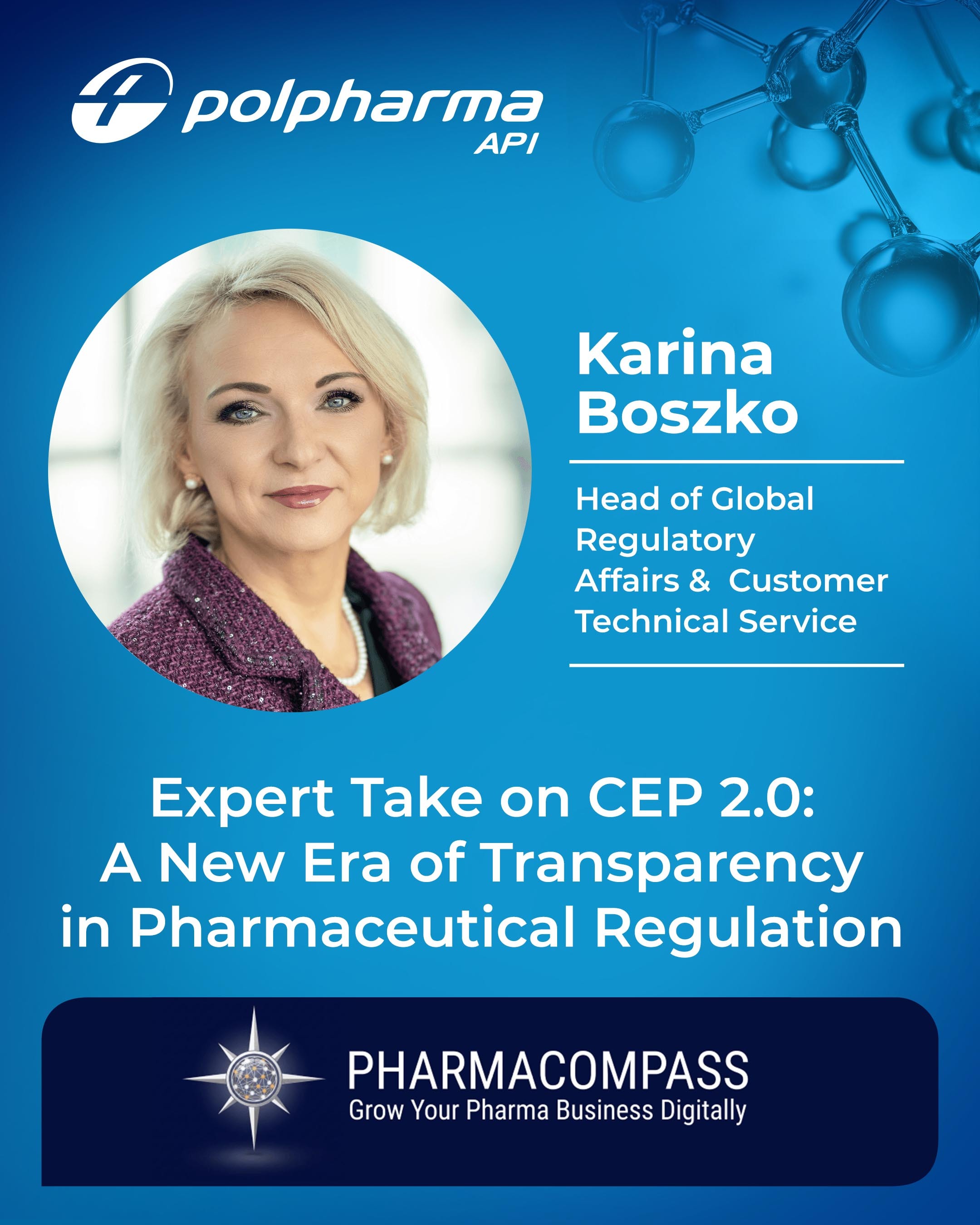
At the recent EDQM conference “Certified for Success: Using the CEP Procedure to Elevate Quality and Drive Trust,” regulatory leaders gathered to discuss one of the most significant shifts in European pharmaceutical oversight recently– the transition to CEP 2.0. In the following article, Karina Boszko, Head of Global Regulatory Affairs and Customer Technical Service at Polpharma API, shares her perspective on the new framework and its impact on transforming regulatory strategies for manufacturers worldwide.
A strategic shift beyond just compliance.
CEP 2.0 is more than a routine update. It represents a fundamental change in how pharmaceutical companies approach transparency, lifecycle management, and international expansion. Rather than focusing solely on documentation, the framework encourages organizations to treat regulatory excellence as a strategic differentiator, shifting the mindset from static compliance to continuous lifecycle oversight.
Regulatory alignment thus becomes a living process that evolves with the product, data, and technology. Embedding this approach across teams will foster a culture of iterative improvement, innovation, and stronger organizational resilience. For many manufacturers, however, this will require introducing significant internal changes, from documentation practices to cross-functional collaboration.
CEP 2.0 means faster timelines and higher predictability. But only if your team is ready.
One of the most anticipated benefits of CEP 2.0 is more predictable review timelines and consistent submissions. However, leveraging these advantages depends heavily on industry readiness. Regulatory teams must adapt to more streamlined, data-driven processes and ensure that digital tools, training, and workflows support accelerated operations.
Organizations that modernize will see multiple operational benefits early, including faster project completion, reduced rework, and quicker access to key markets as standardized documentation and cohesive global expectations will make previously complex or "slow” markets more accessible. For companies pursuing international expansion, CEP 2.0 provides a clearer path to global approvals, cross-market consistency, and enhanced competitiveness.
Balancing challenges with opportunity.
Despite its promise, the transition to CEP 2.0 is not without challenges. Data privacy, operational costs, supply chain complexity, and pressure on low-margin APIs remain key industry concerns that require striking a balance between stringent compliance and long-term sustainability. Still, companies that efficiently integrate regulatory requirements into scalable operations will not only demonstrate the maturity of their quality systems but also build trust externally, strengthening their reputation and differentiating their business in an increasingly competitive market.
Looking ahead to a more collaborative future.
CEP 2.0 positions the pharmaceutical sector for a future where regulatory excellence drives global competitiveness. Transparency, harmonization, and a lifecycle approach will increasingly define market leaders. The framework’s success, however, requires ongoing dialogue with regulators. Clear, practical guidance from the EDQM, combined with active feedback from manufacturers, is essential. The more open the collaboration, the more effectively CEP 2.0 will support innovation, quality, and patient safety.
The question for every organization is how to approach this moment: as a compliance burden, or as a strategic opportunity to elevate quality, accelerate growth, and build long-term trust.
Connect with Polpharma API: Your Partner in Pharma Advancement
For more information on how Polpharma API can be your strategic ally in drug substance development and manufacturing, contact us at api@polpharma.com
Let's embark on a journey of innovation and excellence together.