


NEWS
- Pharma & Biotech News #PharmaBuzz
- Weekly News Recap #Phispers
- Recent Product Approvals #GreenLight
- Quality Compliance Alerts #Warning!
- All News #Library
DRUGS & DEVELOPMENTS
MARKET INTEL by PharmaCompass

Create content with us, ask us

Phispers On Air
Click & Listen
By PharmaCompass
2026-06-11
Impressions: 529 Article || 4 Video
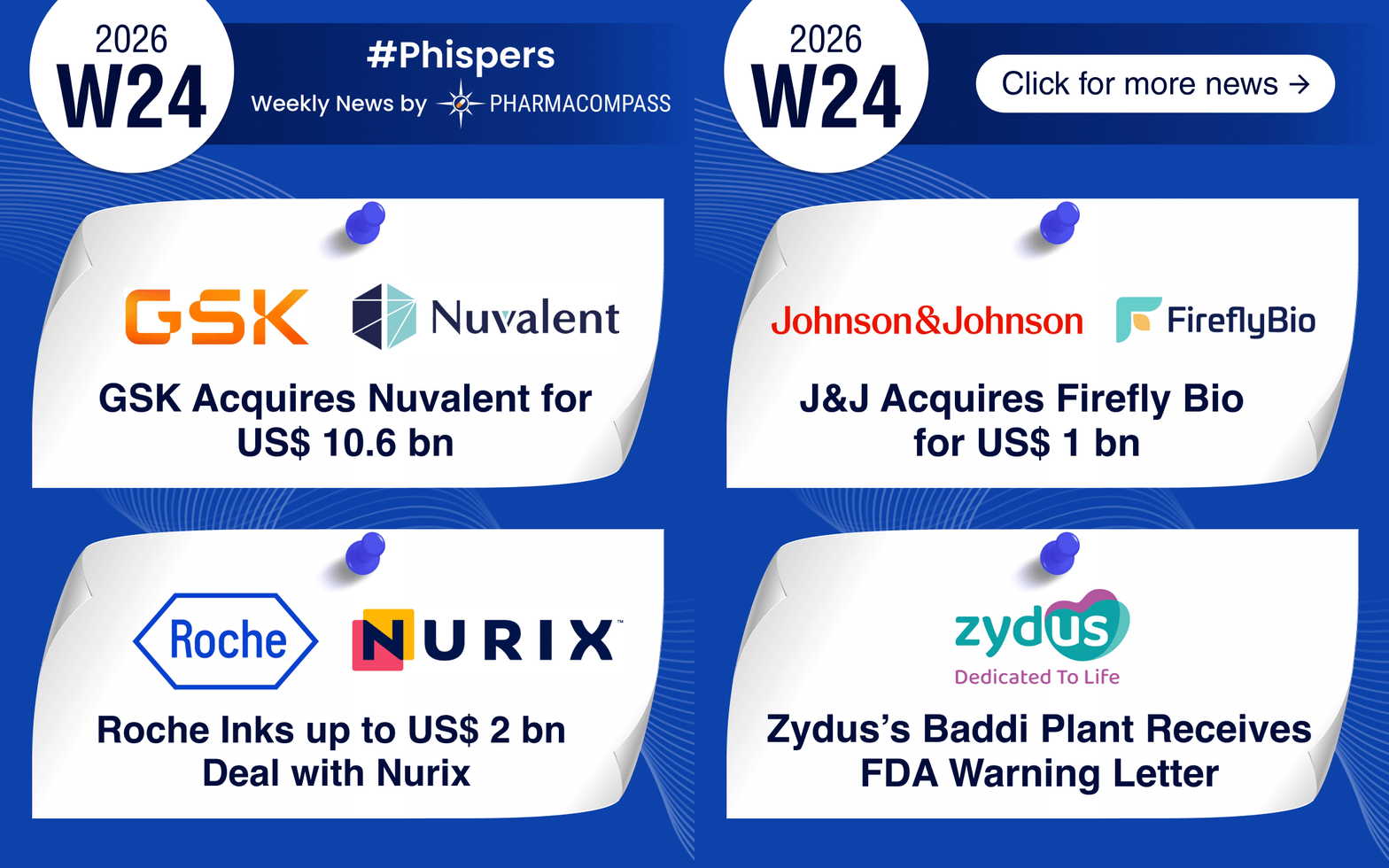
This week, Phispers brings you several developments in the field of oncology. One, GSK acquired a Boston-based clinical-stage biopharma, Nuvalent, for US$ 10.6 billion to bolster its targeted oncology pipeline. Two, Roche entered into an exclusive licensing and collaboration agreement with Nurix Therapeutics worth up to US$ 2.3 billion, focusing on a blood cancer drug that works by degrading targeted proteins. Three, American biotech Incyte is close to signing a deal worth up to US$ 2 billion to acquire Vega Therapeutics, a subsidiary of blood disorder drug developer Star Therapeutics. And four, Johnson & Johnson acquired Firefly Bio for US$ 1 billion in cash to gain access to its novel platform for delivering protein degraders directly to tumor cells.
Meanwhile, Eli Lilly struck a deal worth over US$ 1 billion with Swedish biotech AlzeCure Pharma for global rights to an experimental Alzheimer’s disease.
In drug approvals, FDA expanded the approval of Pfizer’s Hympavzi (marstacimab-hncq) to prevent or reduce the frequency of bleeding episodes in pediatric patients and adolescents with hemophilia.
FDA issued a warning letter to Indian drugmaker Zydus Lifesciences for its drug manufacturing facility in Baddi, Himachal Pradesh, over serious lapses in testing talc.
In trials, Otsuka Pharmaceutical posted positive phase 3 data on Voyxact (sibeprenlimab) on patients with a type of autoimmune disease that damages the kidney.
Gilead and Merck have said a combination of their drugs — lenacapavir and islatravir — succeeded in two large phase 3 trials in HIV patients. And Tango Therapeutics’ experimental drug, vopimetostat, in combination with Revolution Medicines’ daraxonrasib has shown strong results in a small, early-stage trial involving patients with advanced pancreatic cancer.
GSK acquires Nuvalent for US$ 10.6 billion to bolster its oncology pipeline
GSK has entered an agreement to acquire Nuvalent, a Boston-based clinical-stage biopharmaceutical company focused on developing targeted oncology therapies, for US$ 10.6 billion. With this deal, GSK has increased its focus on oncology. According to analysts, the Nuvalent deal makes strategic sense as it adds late-stage cancer assets in an area where GSK already operates. The deal marks a strategic shift under new CEO Luke Miels, who replaced Emma Walmsley in September 2025.
J&J pays US$ 1 bn for Firefly Bio: Johnson & Johnson has entered into a definitive agreement to acquire biotech Firefly Bio for US$ 1 billion in cash. The acquisition gives J&J access to Firefly’s degrader-antibody conjugate (DAC) platform — a novel approach that sits at the intersection of antibody-drug conjugates (ADCs) and targeted protein degraders (TPDs).
Roche inks up to US$ 2.3 bn licensing deal with Nurix for its blood cancer drug
Roche has entered into an exclusive licensing and collaboration agreement with Nurix Therapeutics worth up to US$ 2.3 billion. Under the deal, the two companies will co-develop and co-commercialize bexobrutideg, a blood cancer drug that works by degrading targeted proteins. The agreement includes an upfront payment of US$ 700 million, with the remainder tied to development, regulatory, and sales milestones. Bexobrutideg is likely to enter a phase 3 clinical trial for chronic lymphocytic leukaemia soon.
Lilly bets up to US$ 1 billion on Swedish biotech developing Alzheimer’s drug
The world’s top-selling drugmaker — Eli Lilly — is doubling down on Alzheimer’s research. It has struck a collaboration and out-licensing deal worth over US$ 1 billion with Swedish biotech AlzeCure Pharma for global rights to an experimental drug — ACD680. AlzeCure gets US$ 10 million upfront, plus further payments tied to development and sales milestones, and royalties if the drug reaches market. ACD680 works by reducing the build-up of a toxic protein — amyloid-beta — in the brain, which is widely believed to drive Alzheimer’s disease.
Incyte to buy Vega for US$ 2 bn: American biotech Incyte is close to signing a deal for up to US$ 2 billion to acquire Vega Therapeutics, a subsidiary of blood disorder drug developer Star Therapeutics. According to a Financial Times report, Incyte is likely to pay US$ 1.25 billion upfront in cash to Star’s venture capital backers and US$ 750 million in milestone payments.
Otsuka posts encouraging phase 3 data on its kidney drug Voyxact
Otsuka Pharmaceutical has posted positive phase 3 data on Voyxact (sibeprenlimab), a drug that bagged FDA approval in November 2025 to reduce proteinuria in patients with primary immunoglobulin A nephropathy, a condition that causes inflammation in kidneys and can eventually lead to kidney failure. Otsuka has said Voyxact preserved kidney function compared to placebo over 12 months. In the study involving 320 participants, those who received the drug showed an increase in kidney function.
Drug combo for pancreatic cancer: Pancreatic cancer has long been one of medicine’s most stubborn foes, with few effective treatments and grim survival rates. However, Tango Therapeutics’ experimental drug combination — vopimetostat, in combination with Revolution Medicines' daraxonrasib — has shown strong results in a small, early-stage trial on patients with advanced pancreatic cancer.
Merck, Gilead’s HIV pill: Gilead and Merck have said a combination of their drugs — lenacapavir and islatravir — succeeded in two large phase 3 trials. The combo is poised to become the first long-acting oral HIV treatment that can be taken once a week. The companies plan to submit the data to regulatory authorities globally. The drug is not approved as yet.
FDA expands approval of Pfizer’s Hympavzi to cover children with hemophilia
FDA has expanded the approval of Pfizer’s Hympavzi (marstacimab-hncq) to prevent or reduce the frequency of bleeding episodes in children and adolescents with hemophilia (a rare condition in which the blood doesn’t clot properly). Hympavzi is already approved for patients aged 12 years and older. It is administered under the skin through an auto-injector pen.
Zydus Lifesciences receives FDA’s warning letter for facility in north India
FDA has issued a warning letter to Indian drugmaker Zydus Lifesciences for its drug manufacturing facility in Baddi, Himachal Pradesh (situated in north India) over serious lapses in testing talc — a common ingredient in some medicines — for asbestos contamination. Asbestos is a potential contaminant in talc and is a known human carcinogen when inhaled.
Zydus has been asked to immediately conduct independent testing of all affected batches. Despite the regulatory action, the company has said its current operations and supplies remain unaffected. “The communication references technical observations regarding the use of purified talc that did not meet the current United States Pharmacopeia (USP) requirements,” the company said in a stock exchange filing. The manufacturing facility was inspected by the FDA in August 2025.
The PharmaCompass Newsletter – Sign Up, Stay Ahead
Feedback, help us to improve. Click here
Image Credit : Phispers Infographic by PharmaCompass license under CC BY 2.0
“ The article is based on the information available in public and which the author believes to be true. The author is not disseminating any information, which the author believes or knows, is confidential or in conflict with the privacy of any person. The views expressed or information supplied through this article is mere opinion and observation of the author. The author does not intend to defame, insult or, cause loss or damage to anyone, in any manner, through this article.”