Please Wait
Applying Filters...
Menu
Xls

Digital Content read-more

Create Content with PharmaCompass, ask us

DATA COMPILATION #PharmaFlow

read-more
read-more
US drug shortages hit record high in Q1 2024, impacts cancer, ADHD drugs; Lilly, Novo ramp up production
Drug shortages are threatening healthcare systems the world over. Be it the US, Canada, Europe or Africa, drug scarcities are straining healthcare systems and costing lives.In the US, the first quarter (Q1) of 2024 saw a staggering 323 drug shortages, the highest number recorded since the American Society of Health-System Pharmacists (ASHP) began tracking such data in 2001. However, Q2 2024 saw active drug shortages reduce to 300 drugs.While the shortages span a wide range of medications, five categories have been severely impacted in the US — central nervous system drugs, antimicrobials, hormone agents, injectable fluids and electrolytes, and chemotherapy drugs. Other critical medications in short supply include drugs to treat attention deficit hyperactivity disorder (ADHD).View Our Interactive Dashboard on Drug Shortages So Far in 2024 (Free Excel Available)Chemo scarcities spark concerns; vaccine shortage hampers mpox response in AfricaIn the US, shortage of at least 21 chemotherapy drugs has impacted cancer treatments. A survey undertaken by the National Comprehensive Cancer Network found 89 percent of participating centers reporting shortages of at least one critical systemic anticancer therapy. These included drugs like vinblastine, etoposide and topotecan. Since early 2023, supply issues have led to what’s now known as the “carboplatin shortage”, a key platinum-based chemo drug that is impacting cancer treatment. Carboplatin is crucial for treating various cancers, including ovarian, lung, and breast cancer.The good news is that there has been a reduction in shortages of platinum-based chemo drugs such as carboplatin and cisplatin. In fact, the FDA website now mentions the shortage of cisplatin as resolved. However, the shortage of carboplatin persists.Meanwhile, Africa is facing an acute shortage of diagnostic kits, treatments and vaccines to fight the outbreak of monkeypox (mpox). The Africa Centers for Disease Control and Prevention estimates it would need 10 million vaccines to stop the outbreak. Bavarian Nordic’s Jynneos is currently the only widely approved mpox vaccine, and countries like the US, Spain, France and Germany have pledged doses of Jynneos to help Africa fight the outbreak.View Our Interactive Dashboard on Drug Shortages So Far in 2024 (Free Excel Available) Drug shortages impacts ADHD patients in US; Canada implements tiered systemThe US Food and Drug Administration (FDA) first reported a shortage of Adderall, a common ADHD treatment, in October 2022. Since then, the shortage has spread to other crucial medications like Ritalin, Vyvanse, and Focalin. This is a significant issue for the roughly 10 million adults and six million children in the US who rely on such drugs to manage their ADHD symptoms.An already concerning shortage of ADHD medications in the US has the potential to worsen due to some recent events. The Centers for Disease Control and Prevention (CDC) issued a health advisory in June, warning that the arrest of two telehealth executives from Done Global, a digital health company, could exacerbate the ADHD medication shortage. Done Global was accused of illegally distributing Adderall online. The arrests could disrupt care not only for Done Global patients but also for those who use other telehealth services.Meanwhile, Canada has implemented a tiered system for addressing drug shortages, with tier 3 shortages being those with the greatest potential impact on the country’s drug supply and healthcare system. Currently, there are 20 drugs listed under tier 3.View Our Interactive Dashboard on Drug Shortages So Far in 2024 (Free Excel Available) GLP-1 drug shortages create US$ 1 bn shadow industry; Lilly, Novo expand capacitiesThe shortage of glucagon-like peptide-1 (GLP-1) receptor agonists, such as Ozempic, Saxenda, Trulicity, Victoza, Mounjaro, and Zepbound, has been grabbing headlines. These drugs are used in the treatment of diabetes and in weight management.The shortage of these drugs has led to a surge in demand for compounded versions of these medications, creating both opportunities and significant risks. While the FDA’s Food, Drug, and Cosmetic Act allows it to turn a blind eye to pharmacists producing and selling non-approved compounded versions under certain circumstances, this practice has led to a billion-dollar shadow industry of compounded GLP-1 drugs.Eli Lilly has discovered compounded drugs advertised as tirzepatide (Mounjaro and Zepbound) with significant safety, sterility, and efficacy issues. In response to the safety risks, Lilly has taken legal action against several wellness centers, medical spas, and other sellers in the US.To address the supply issues, Lilly has announced its largest manufacturing investment yet, investing an additional US$ 5.3 billion at its Indiana site. Similarly, Novo Nordisk’s parent company is acquiring Catalent for US$ 16.5 billion to increase Wegovy production. Novo is also investing US$ 4.1 billion to develop a new manufacturing facility in Clayton, North Carolina (US).The FDA website continues to list Novo and Lilly’s GLP-1 drugs as “Currently in Shortage”, even though the drugmakers say otherwise. The EMA website says the shortage of Novo’s Wegovy has been resolved but Lilly’s Trulicity and Novo’s Saxenda continue to be in shortage.View Our Interactive Dashboard on Drug Shortages So Far in 2024 (Free Excel Available) FDA works closely with cancer drugmakers; France introduces roadmap to address drug shortagesApart from pharma companies, health authorities and governments are also taking steps to reduce drug shortages. FDA is working closely with five cancer drug manufacturers to increase production capacities. It has also facilitated the re-entry of a previously discontinued cisplatin product into the market.On the legislative front, the US Senate Finance Committee has proposed a draft of a policy that would incentivize generic drug manufacturers to prioritize production of essential medications. These incentives include minimum three-year contracts with stable pricing, contingency contracts with alternate manufacturers, transparency in quality control issues, and modifications to the Medicaid Drug Rebate Program. France, like most European nations, is also facing shortages of medicines like insulin and anti-cancer drugs. But most problematic are its shortages of antibiotics, paracetamol and corticoids. The French government has introduced a new three-year "roadmap" (from 2024 to 2027) to address these shortages. A significant step in this direction is the planned opening of the first European paracetamol factory in Toulouse in 2025, which will help reduce Europe’s dependence on China, India, and the US for this widely used medication.View Our Interactive Dashboard on Drug Shortages So Far in 2024 (Free Excel Available) Our viewThe global drug shortages underscore the fragility of pharmaceutical supply chains and the urgent need for reform. Longstanding drug shortages, particularly those affecting cancer treatments, antibiotics, and essential medications often stem from the low profitability of generic drugs.While investments in manufacturing capacity and regulatory measures are steps in the right direction, a more comprehensive, concerted global approach is needed to resolve the deep-seated systemic issues in the pharmaceutical industry.  

Impressions: 5991

https://www.pharmacompass.com/radio-compass-blog/us-drug-shortages-hit-record-high-in-q1-2024-impacts-cancer-adhd-drugs-lilly-novo-ramp-up-production

#PharmaFlow by PHARMACOMPASS
29 Aug 2024

WEEKLY NEWS RECAP #Phispers

read-more
read-more
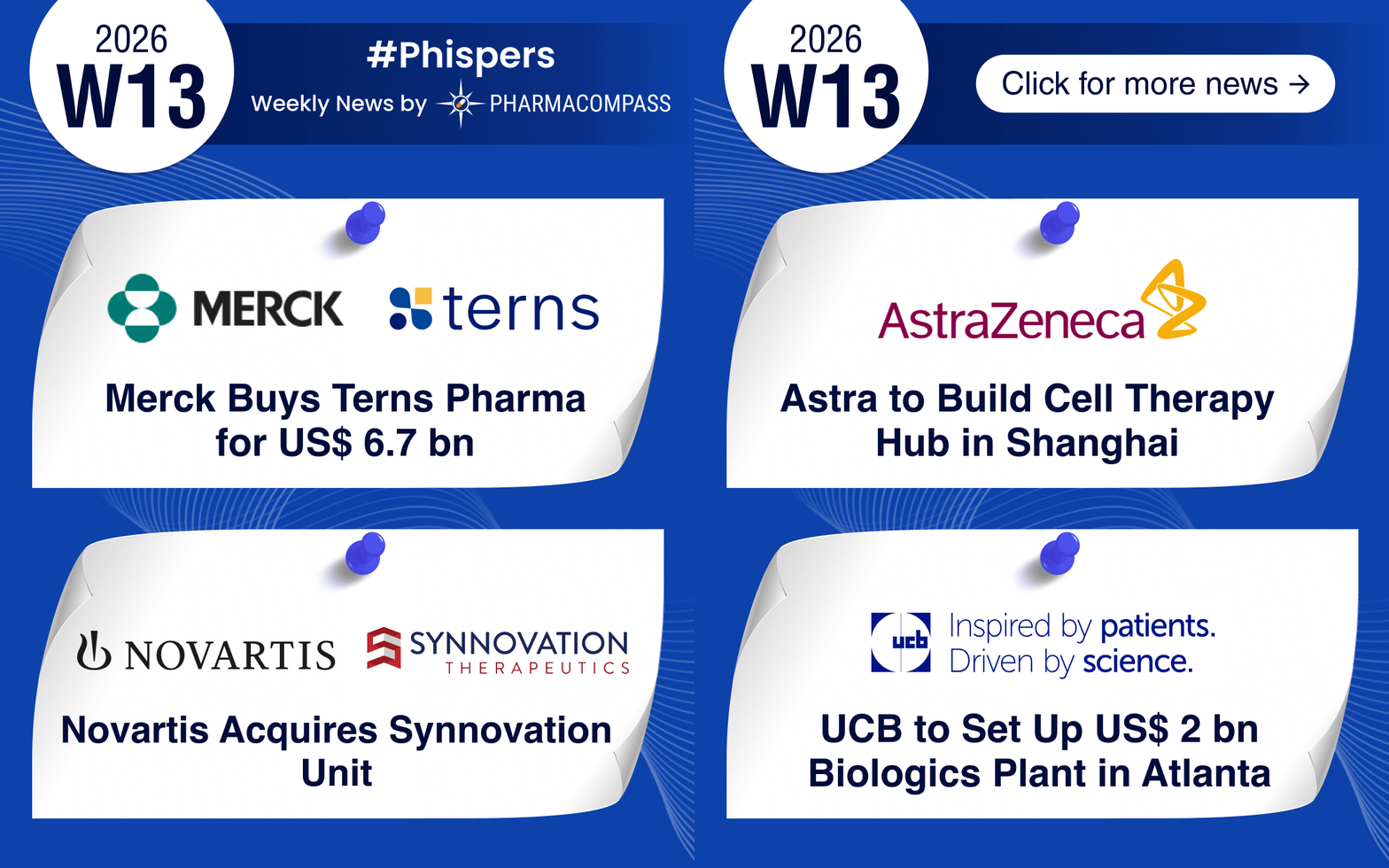
Merck buys Terns Pharma for US$ 6.7 bn to boost cancer portfolio; Novartis acquires Synnovation unit for up to US$ 3bn
This week’s Phispers is packed with news of drug approvals and M&As. Merck is preparing for its future post-Keytruda patent cliff. It made its third multi-billion-dollar acquisition in recent months by acquiring Terns Pharma for US$ 6.7 billion to bolster its cancer portfolio. Novartis has acquired Pikavation, a subsidiary of US biotech firm Synnovation Therapeutics, along with its portfolio of PI3Kα inhibitor programs. Sanofi has entered into a licensing agreement with biotech Kali Therapeutics to develop its experimental treatment for multiple autoimmune diseases. Gilead, meanwhile, has acquired privately held Ouro Medicines to expand its pipeline of autoimmune therapies.In drug approvals, the US Food and Drug Administration (FDA) has approved Bristol Myers Squibb’s Opdivo (nivolumab) for two new classical Hodgkin lymphoma indications in the US and Europe. Denali Therapeutics has secured its first FDA accelerated approval for a therapy targeting Hunter syndrome, a rare genetic disorder. The agency also approved GSK’s Lynavoy (linerixibat) for cholestatic pruritus, a severe itching condition associated with primary biliary cholangitis (PBC). FDA has also expanded the use of Rhythm Pharmaceuticals’ Imcivree (setmelanotide) to treat acquired hypothalamic obesity.In investments, AstraZeneca has said it plans to establish a cell therapy manufacturing and supply base, along with an innovation centre, in Shanghai. And UCB is setting up a new biologics manufacturing facility in Atlanta.Meanwhile, FDA has asked manufacturers of certain Parkinson’s disease treatments — levodopa and carbidopa — to update prescribing information with a new warning about a potential risk of seizures.Merck snaps up Terns Pharma for US$ 6.7 billion to boost cancer portfolioMerck is acquiring American biotech Terns Pharmaceuticals for US$ 6.7 billion. The clinical-stage biopharma is developing treatments for a rare form of blood and bone cancer. The deal is likely to close in the second quarter of this year and is expected to bolster Merck’s cancer pipeline ahead of the patent expiry of its blockbuster cancer drug Keytruda (pembrolizumab) later this ‌decade. This is the third multi-billion-dollar acquisition for Merck in recent months. Novartis buys Synnovation subsidiary and its oncology programs for up to US$ 3 bnNovartis has acquired Pikavation Therapeutics, a subsidiary of US biotech firm Synnovation Therapeutics, and its portfolio of PI3Kα inhibitor programs, including an experimental breast cancer drug candidate — SNV4818 — for up ‌to US$ 3 billion. The company will pay Synnovation US$ 2 billion upfront and up to US$ 1 billion contingent on further development achievements.Sanofi in licensing deal with Kali Therapeutics: Sanofi has entered into a licensing agreement with biotech Kali Therapeutics to develop the firm’s experimental treatment for autoimmune diseases. Under the deal, Sanofi will obtain global rights to KT501, a tri-specific antibody, which is currently being tested in rheumatoid arthritis. Kali Therapeutics will receive US$ 180 million in upfront and near-term payments and is eligible for up to US$ 1.05 billion in development and commercial milestone payments.Gilead to buy Ouro Medicines: Gilead Sciences is acquiring Ouro Medicines, a privately held biotechnology company, for US$ 2.18 billion to expand its pipeline of therapies for autoimmune diseases. Gilead will pay US$ 1.68 billion in cash upfront to buy Ouro, and an additional US$ 500 million upon meeting certain milestones. Ouro’s experimental antibody drug, OM336, is in early-stage trials to treat autoimmune conditions, including hemolytic anemia and Sjogren’s disease.US, Europe okay BMS’ Opdivo combo to treat two Hodgkin’s lymphoma indicationsBristol Myers Squibb’s Opdivo (nivolumab) has received approval for two new classical Hodgkin lymphoma indications in the US and Europe. In the US, FDA has approved Opdivo in combination with doxorubicin, vinblastine and dacarbazine as treatment for adults and adolescents aged 12 and older ‌with previously untreated stage 3 or 4 classical Hodgkin’s lymphoma, the most common cancer diagnosed in adolescents aged 15 to 19, the company said.Additionally, the European Commission has approved Opdivo, in combination with brentuximab vedotin, for the treatment of children five years of age and older, adolescents, and adults up to 30 years of age with relapsed or refractory Hodgkin’s lymphoma after one prior line of therapy.Opdivo is already approved to treat various advanced or metastatic cancers, including melanoma, non-small cell lung cancer, and kidney cancer.Denali’s therapy for Hunter syndrome okayed: Denali Therapeutics has received its first FDA approval. Its therapy Avlayah (tividenofusp alfa-eknm) was granted an accelerated approved to treat children with Hunter syndrome, ‌a rare genetic disorder caused by the buildup of certain sugar molecules in the brain and body. It leads to developmental delays, cognitive decline and behavioral abnormalities. However, the agency has asked for a confirmatory trial for continuation of the approval.Rhythm’s therapy to treat hypothalamic obesity: FDA has expanded the use of Rhythm Pharmaceuticals’ Imcivree (setmelanotide) to treat patients living with acquired hypothalamic obesity (HO), a rare disease characterized by accelerated and sustained weight gain caused by an injury to the hypothalamus.FDA approves GSK’s drug for treating liver disease-related itchingFDA has approved GSK’s Lynavoy (linerixibat) for cholestatic pruritus, or severe itching experienced by patients living with a liver disease known as primary biliary cholangitis (PBC). Lynavoy is the first medicine approved in the US for this condition. Earlier this month, GSK had announced it has struck a licensing agreement under which Alfasigma will acquire worldwide exclusive rights to develop, manufacture, and commercialize linerixibat.Flags seizure risk with certain Parkinson’s drugs: FDA has notified manufacturers of certain Parkinson’s disease treatments — levodopa and carbidopa — to update their prescribing information with a new warning about ‌a potential risk of seizures. These drugs should state that they can cause vitamin B6 deficiency and seizures associated with it.Astra to build cell therapy base, innovation centre in Shanghai; UCB invests US$ 2 bn in AtlantaAstraZeneca announced it will build a cell therapy manufacturing and supply base and an innovation centre ‌in Shanghai. This will make AstraZeneca the first global drugmaker with end-to-end cell therapy capabilities in China. The facility will make and supply CAR‑T cell therapies for China and other Asian markets, and is part of the US$ 15 billion investment pledge made by AstraZeneca earlier this year.UCB’s biologics plant: Belgian pharmaceutical company UCB has selected Gwinnett County, Georgia as the location for setting up its new US biologics manufacturing facility. It will be built on an investment of US$ 2 billion. 

Impressions: 1016

https://www.pharmacompass.com/radio-compass-phisper/merck-buys-terns-pharma-for-us-6-7-bn-to-boost-cancer-portfolio-novartis-acquires-synnovation-unit-for-up-to-us-3bn

#Phispers by PHARMACOMPASS
26 Mar 2026

NEWS #PharmaBuzz

read-more
read-more

https://www.temad.com/%d8%b8%d8%b1%d9%81%db%8c%d8%aa-%da%af%db%8c%d8%a7%d9%87%d8%a7%d9%86-%d8%af%d8%a7%d8%b1%d9%88%db%8c%db%8c-%d8%af%d8%b1-%d8%b5%d9%86%d8%b9%d8%aa-%d8%af%d8%a7%d8%b1%d9%88%d9%87%d8%a7%db%8c-%d8%b6%d8%af/

PRESS RELEASE
13 Jan 2024

https://www.businesswire.com/news/home/20220203005330/en

BUSINESSWIRE
03 Feb 2022

https://www.reuters.com/article/us-iran-nuclear-drugs/u-s-sanctions-on-iran-threaten-access-to-certain-medicines-report-idUSKBN1X82IM?feedType=RSS&feedName=healthNews

P. Aripaka REUTERS
30 Oct 2019

http://www.pharmabiz.com/NewsDetails.aspx?aid=106519&sid=2

PHARMABIZ
04 Jan 2018
Will subgroup stumbles for Adcetris hurt its sales potential?

12 Dec 2017

// Carly Helfand FIERCE PHARMA

https://www.fiercepharma.com/marketing/ash-subgroup-stumbles-for-seattle-genetics-adcetris-could-hurt-its-sales-potential

Carly Helfand FIERCE PHARMA
12 Dec 2017

http://www.mountsinai.org/about-us/newsroom/press-releases/study-identifies-53-approved-drugs-that-may-block-ebola-infection

PRESS RELEASE PRESS RELEASE
17 Dec 2014