Prostaglandins are natural fatty acid compounds
produced by the human body. They are made from a type of fat known as arachidonic acid
and act like messengers, controlling many functions such as inflammation, blood
flow, muscle contraction, and fluid drainage in the eye. Prostaglandin APIs are synthetic (lab-made) versions of
natural prostaglandins that are used to create medicines. Prostaglandin-based
medicines are used in obstetrics and
gynecology, gastroenterology, urology, and cosmetics, and their use is also being explored in certain cardiovascular and respiratory conditions. One of the largest and most important uses of prostaglandin APIs is in
ophthalmology (eye care), where they are used as first-line therapy for open-angle glaucoma (a chronic, progressive eye disease) and ocular hypertension (a condition where pressure inside the eye is consistently higher than normal). In ophthalmic applications, these drugs usually serve as prodrugs – inactive in the formulation but converted into their active form after entering the eye.According to estimates, the global
prostaglandin market is valued
at US$ 0.63 billion in 2025 and is poised to grow from US$ 0.68 billion in 2026
to US$ 1.27 billion by 2035, growing at a CAGR of 7.1 percent between 2026 and
2035.Prostaglandin API manufacturing
is a highly specialised
field, with only a few experienced
manufacturers. Companies such as EUROAPI,
Cayman Pharma, Chirogate International, Kyowa Pharma
Chemical, Everlight Chemical, and Yonsung Fine
Chemicals are key players with strong capabilities
in complex chemistry.FDA allows Glaukos’ iDose TR to be re-administered for treating eye diseases; approves Liquidia’s Yutrepia The prostaglandin market continues to see steady regulatory activity and innovations. In ophthalmology, Glaukos Corporation’s iDose TR received a labelling supplement from the US Food and Drug
Administration (FDA) that allows for re-administration of the medication
indicated for the reduction of intraocular pressure (IOP) in patients with
open-angle glaucoma (OAG) or ocular hypertension (OHT). The intracameral
implant was originally approved in December 2023 for single use. This update was
supported by long-term safety data demonstrating good tolerability in patients
with OAG and OHT. Similarly,
Santen Pharmaceutical secured manufacturing and marketing approval in Japan for Setaneo (sepetaprost) ophthalmic solution 0.002% in August 2025 for the treatment of glaucoma and OHT. In
April 2025, Santen also received approval in China for Tapcom (tafluprost + timolol maleate), a preservative-free fixed-dose combination therapy that
lowers intraocular pressure (IOP) in patients with OAG and OHT.Beyond
ophthalmology, prostaglandin APIs are also driving advancements in respiratory
care. Liquidia Corporation received FDA approval in May 2025 for Yutrepia (treprostinil) inhalation powder for pulmonary arterial hypertension
(PAH) and pulmonary hypertension associated with interstitial lung disease
(PH-ILD). While PAH is a serious and progressive disease where blood pressure
in the lung arteries rises, causing them to narrow and harden, PH-ILD is a
serious complication in which high blood pressure develops in the lung arteries
due to lung scarring. Yutrepia is the first and only prostacyclin dry-powder formulation enabled by Liquidia’s proprietary technology. Access the Interactive Dashboard on Prostaglandin Developments (Free Excel Available)Nicox’s drug scores phase 3 win in glaucoma, OHT; United seeks expanded approval for Tyvaso to treat pulmonary fibrosisInnovation
in prostaglandins is increasingly focused on enhanced efficacy and sustained
drug delivery. French ophthalmology company Nicox has reported positive phase 3 results for its ophthalmic solution NCX 470, demonstrating
consistent lowering of intraocular pressure in OAG and OHT. Nicox is likely to submit a new drug application for NCX 470
sometime soon, with a potential approval and launch expected in 2027.Meanwhile,
US-based SpyGlass Pharma is advancing sustained-release
innovation through
intraocular lens (IOL)-based and ring-based drug delivery systems. Its Bimatoprost Drug Pad–Intraocular Lens (BIM-IOL) system (currently in phase 3 trials) integrates drug delivery with cataract surgery to enable sustained therapy for up to three years. The company is also developing a preclinical Bimatoprost Drug
Ring System
(BIM-DRS) designed for similarly extended drug release. In respiratory indications, Insmedis progressing treprostinil palmitil inhalation powder through phase 3 trials for PH-ILD, as well as for idiopathic pulmonary fibrosis
and PAH.Additionally,
United Therapeutics is expanding the clinical scope of Tyvaso DPI (treprostinil). Following its global approval in 2022 for PAH, the therapy is now under regulatory review in the US and Canada for progressive pulmonary fibrosis and idiopathic pulmonary fibrosis. Access the Interactive Dashboard on Prostaglandin Developments (Free Excel Available)Glaukos sets up new R&D facility in Alabama, Inke acquires Pharmanoid to strengthen presence in prostaglandins Several players are expanding capacities due to rising demand across ophthalmology. Glaukos Corporation is setting up a new research, development, and manufacturing facility in Huntsville, Alabama. The planned 200,000 square-foot site, to be built on a 25-acre campus in Cummings Research Park, envisages an investment of over US$ 80 million. Expected to be completed by 2030, the facility is designed to augment the company’s existing infrastructure and support long-term growth, particularly in ophthalmic therapies including sustained-release drug delivery systems.EUROAPIis undertaking a significant capacity expansion at its Budapest site. The company has committed €50 million (US$ 54.8 million) to install a new state-of-the-art production plant focused on prostaglandins. The project aims to debottleneck existing operations and introduce new multi-purpose manufacturing equipment, ultimately more than doubling the site’s prostaglandin production capacity by 2027. The expansion will also strengthen EUROAPI’s highly potent API (HPAPI) capabilities.Alongside capacity additions by established players, the
market is also witnessing consolidation and capability expansion through
acquisitions. For instance, Essential Pharma acquired Ventavis (iloprost trometamol) from Bayer AG, including rights to the accompanying Breelib nebuliser delivery technology.
Ventavis, a prostacyclin analogue, is a well-established treatment for adult patients with primary
pulmonary hypertension.Inke strengthened its presence in ophthalmology-focused high-potency
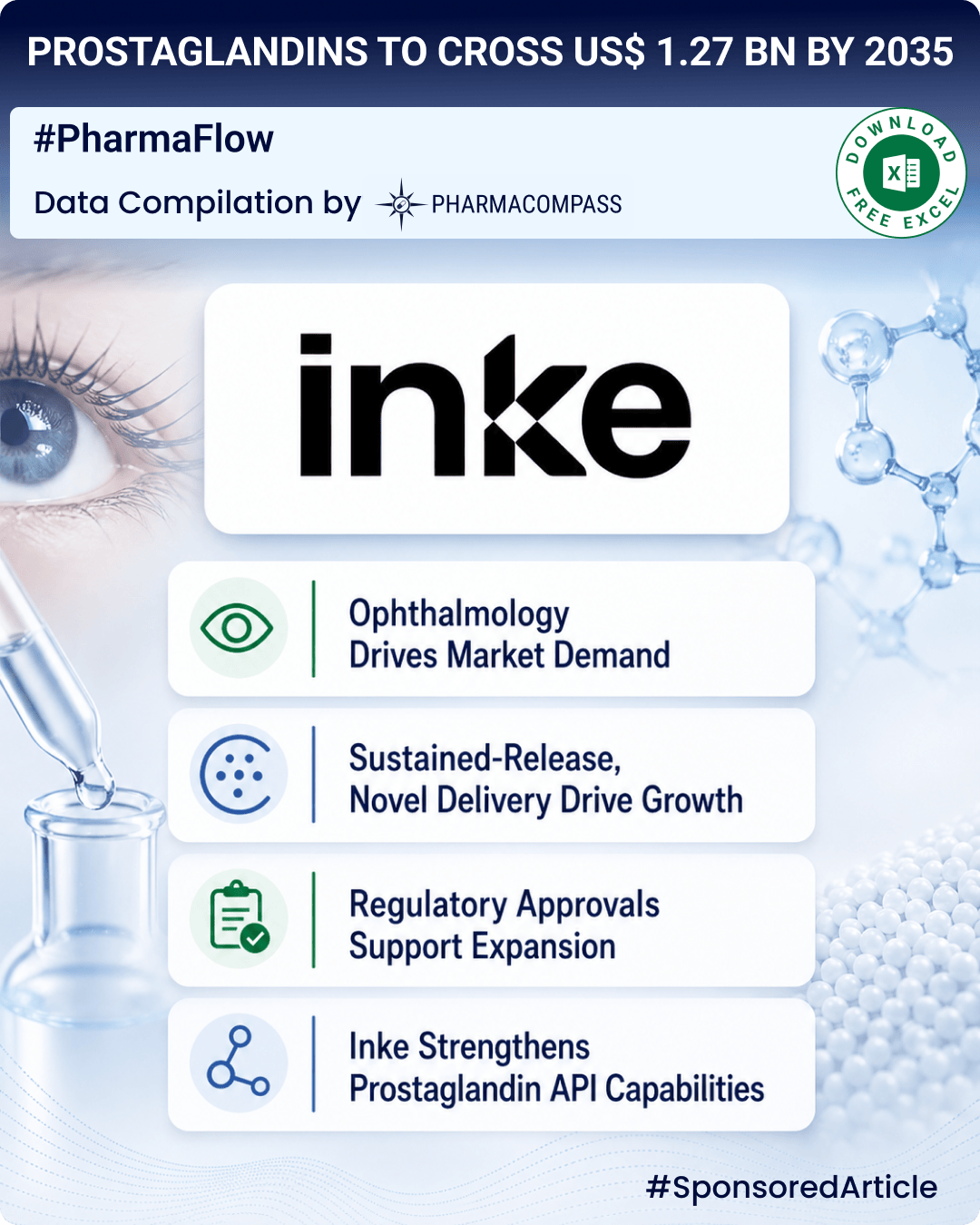
APIs (HPAPIs), including prostaglandins, through the acquisition of Pharmanoid in December 2025. Backed by regulatory approvals across 25+ countries, Pharmanoid enhances Inke’s capabilities in complex API production and supports its ambition to build a leading European platform for advanced API development and manufacturing. The Barcelona facility is capable of producing and handling APIs across all potency levels while adhering to SafeBridge Scale OEB4 (Occupational Exposure Band 4) containment protocols, a classification for high-potency substances requiring strict controls to limit occupational exposure.With more than two decades of experience, Inke
is recognized for innovating and manufacturing high-quality APIs, delivering expertise, safety,
and excellence across inhalation, CNS, and ophthalmic therapies, while
supporting pharmaceutical companies worldwide. The ophthalmic API commercial portfolio includes bimatoprost, latanoprost, tafluprost, and travoprost, while the next-generation prostaglandin analog pipeline includes bimatoprost grenod and latanoprostene bunod. Access the Interactive Dashboard on Prostaglandin Developments (Free Excel Available)Our viewInnovation is guiding the
prostaglandins market towards long-acting, sustained-release formulations and
novel delivery systems. These innovations are driving steady growth in
prostaglandins, while capacity expansions are strengthening capabilities in complex
and highly potent APIs. Overall, this remains a niche but important market to
watch.

















 Share
Share