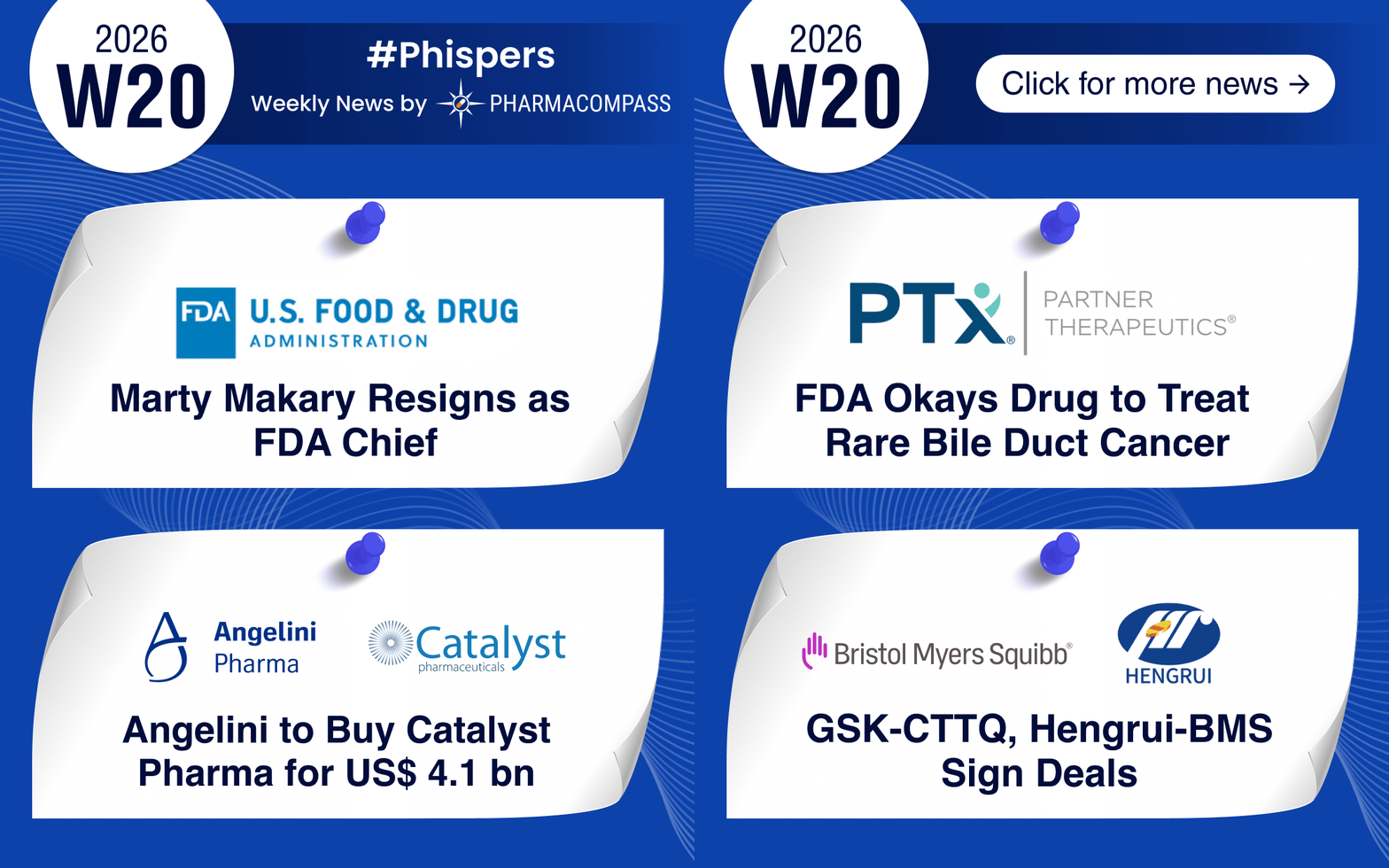
The US Food and Drug Administration (FDA) has seen several high profile exits under the Trump Administration. The most high profile exit was that of the FDA commissioner Marty Makary this week. Deputy commissioner for food Kyle Diamantas will lead the agency in an acting capacity.In approvals, the FDA okayed
the use of Partner Therapeutics’ Bizengri (zenocutuzumab-zbco) to treat patients with an ultra-rare bile duct cancer under the Commissioners National Priority Voucher program (CNPV). FDA also granted accelerated approval to BeOne Medicines' Beqalzi (sonrotoclax) for treating a type of blood cancer.Italy’s Angelini Pharma is acquiring American rare-disease drug maker Catalyst Pharmaceuticals for €3.5 billion (US$ 4.1 billion).Of late, several big drugmakers are showing a renewed interest in China. This week, GSK enter into a strategic collaboration with Sino Biopharmaceutical’s subsidiary Chia Tai Tianqing Pharmaceutical Group (CTTQ) to accelerate the development of a potential treatment for chronic hepatitis B. And China’s Jiangsu Hengrui Pharmaceuticals
has struck a global collaboration and licensing deals with Bristol Myers Squibb that include an upfront
payment of US$ 600 million
and potential milestone payments of up to US$ 15.2 billion.FDA is seeking inputs
on repurposing
approved drugs for potential new uses across a range of diseases and conditions. Meanwhile, the European Union has reached a
provisional deal to strengthen its supply of essential medicines.Isomorphic Labs, an AI-driven
drug discovery company, has raised US$ 2.1 billion in its latest funding round led by existing investor Thrive Capital.
And Takeda Pharmaceutical said it plans to cut about 4,500 jobs in fiscal year 2026 as part of a restructuring to centralize corporate functions and reduce costs.FDA chief Makary resigns after rocky tenure; Diamantas is acting
commissionerUS
President Donald Trump announced that FDA Commissioner Marty Makary has resigned. Makary had a rocky, 13 month tenure
marked by controversies, including his opposition to authorizing flavored vapes and tightening restrictions on abortion pills. FDA’s deputy commissioner for food
Kyle Diamantas will lead the agency in an acting capacity, Trump said. Earlier
this month, The Wall Street Journal had reported that Trump was planning to fire Makary.FDA reverses course on cell therapy: After rejecting Pierre Fabre Pharmaceuticals and Atara Biotherapeutics’ Ebvallo (tabelecleucel or tab-cel) for a
second time in January, the FDA has agreed to reconsider the T-cell therapy, based on the same single-arm trial that the agency had previously found problematic.
Pierre Fabre and Atara are aiming to get Ebvallo approved for a rare, high
mortality condition known as relapsed or refractory Epstein-Barr virus-positive
post-transplant lymphoproliferative disease.Italy’s Angelini to buy rare-disease drugmaker Catalyst Pharma for US$ 4.1 billionRome-based
Angelini Pharma is acquiring American rare-disease drug maker Catalyst Pharmaceuticals for €3.5 billion (US$ 4.1 billion) deal. This marks Angelini Pharma’s entry into the lucrative US pharmaceutical market. The deal will establish Angelini as a “relevant global player in neurological rare diseases.” The transaction has been unanimously approved by the boards of both companies and is expected to close in the third quarter of 2026.GSK ties up with Sino Biopharma’s unit for its chronic hepatitis B drugGSK has entered into an exclusive strategic collaboration with Sino Biopharmaceutical through its subsidiary Chia Tai Tianqing
Pharmaceutical Group (CTTQ) to accelerate the development of a potential treatment for chronic hepatitis B. GSK’s bepirovirsen is a first-in-class treatment that is under priority regulatory review in China. Under the agreement, CTTQ will purchase bepirovirsen for supply for an initial term of five-and-a-half years, while GSK will book the drug’s sales.China’s Hengrui inks up to US$ 15.2 bn in collaboration, licensing deals with BMSChina’s Jiangsu Hengrui Pharmaceuticals has struck a global collaboration and licensing deals with Bristol Myers Squibb that include upfront payment of US$ 600 million and potential milestone payments of up to US$ 15.2
billion. The deal covers four cancer and blood-disease drug candidates from Hengrui, four
immunology candidates from BMS and five additional projects the companies will
work on together.FDA approves Partner’s drug for rare bile duct cancer under voucher programFDA has approved the use of Partner Therapeutics’ Bizengri (zenocutuzumab-zbco) to treat patients with an ultra-rare, aggressive cancer
that forms in the bile duct. The decision came just days after the drug was awarded a
priority voucher under the CNPV program. Bizengri had received approval in
December 2024 for certain adults with non-small cell lung cancer (NSCLC).Okays BeOne’s drug for a type of blood cancer: FDA has granted accelerated approval to BeOne Medicines’ Beqalzi (sonrotoclax) for adults with relapsed or refractory mantle cell
lymphoma (MCL) who have received at least two prior lines of
therapy, including a BTK inhibitor.Google-backed Isomorphic raises US$ 2.1 billion to scale up
AI-driven drug discoveryIsomorphic Labs, an AI-driven drug
discovery company has raised US$ 2.1 billion in its latest funding round led by an existing investor Thrive Capital. The funding round also included other existing investors, Google Ventures and Alphabet, along with new backers — MGX, Temasek and CapitalG. The London-based AI drug discovery firm was founded by Google’s parent company Alphabet in 2021 with a mission to develop a number of AI models.Takeda to cut 4500 jobs: Japanese drugmaker Takeda Pharmaceutical plans to cut about 4,500 jobs in fiscal year 2026 as part of a restructuring to centralize
corporate functions and reduce costs. The move is expected to generate approximately 100
billion yen (US$ 633 million) in gross savings for 2026, with annualized
savings exceeding 200 billion yen (US$ 1.26 billion) projected by 2028.FDA seeks inputs on repurposing approved drugs for new users
across diseasesFDA
is seeking public inputs on repurposing approved drugs for potential new uses across a range of diseases and conditions. Identifying potential new uses for FDA-approved drugs can help “accelerate the availability of treatments by using existing knowledge about the drugs, including a drug’s safety profile,” an FDA statement said.EU reaches provisional deal on essential meds: The European Union has reached a provisional deal on strengthening its supply of essential medicines. The agreement marks a step forward for the Critical Medicines Act, proposed by the European Commission last year, that targets supply-chain vulnerabilities for about 270 critical medicines.
















 Share
Share