Please Wait
Applying Filters...
Menu
Xls

Digital Content read-more

Create Content with PharmaCompass, ask us

DATA COMPILATION #PharmaFlow

read-more
read-more
CEP Q1 2026 Update: CEP 2.0, EDQM’s new guidelines strengthen ecosystem; Indian firms top list of CEPs issued
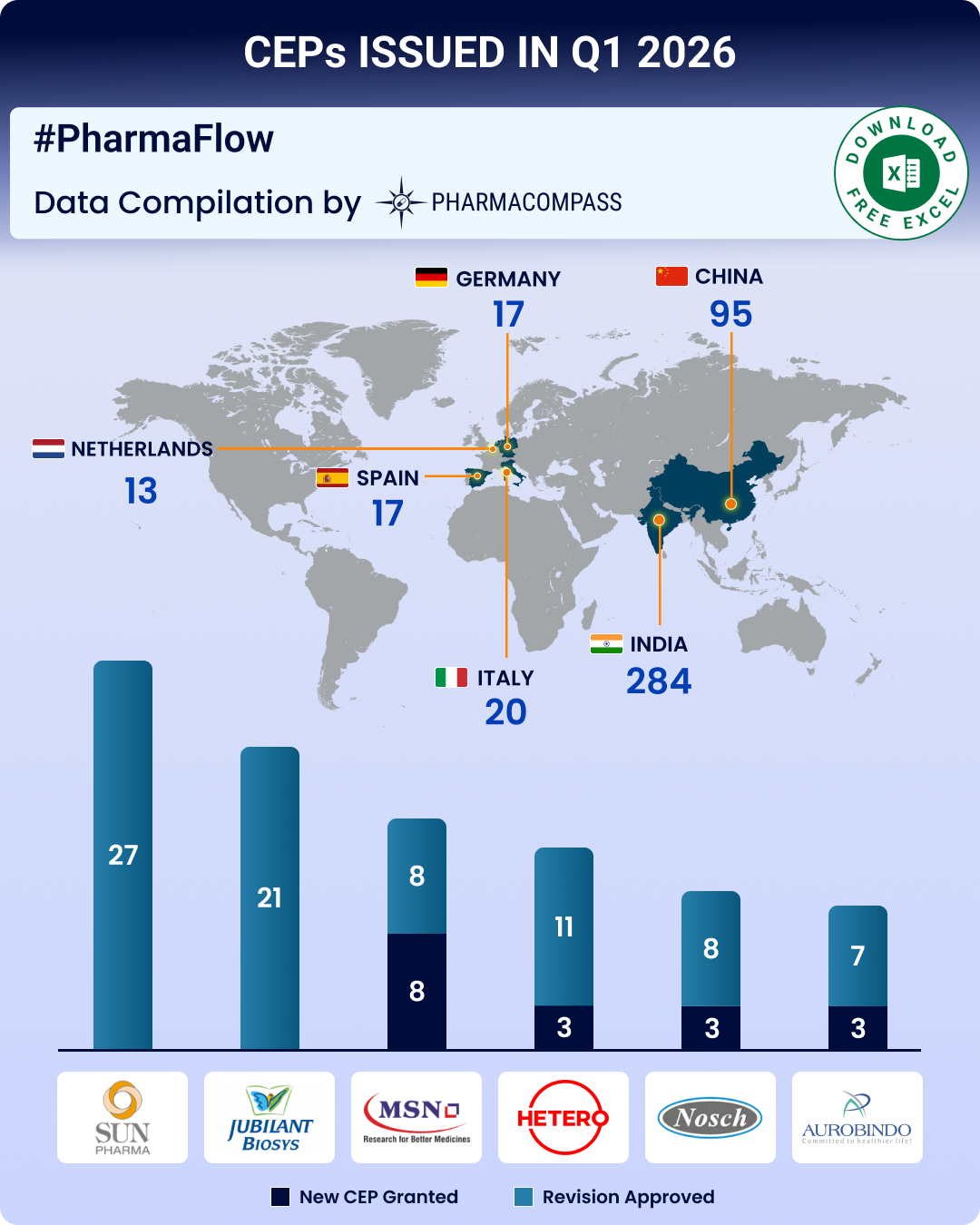
PharmaCompass is introducing a new regulatory update that tracks developments in Certificates of Suitability to the Monographs of the European Pharmacopoeia, referred to as CEPs. These certificates are a critical regulatory instrument in the global pharmaceutical supply chain.Also known as a Certification of Suitability (COS), CEPs are issued by the European Directorate for the Quality of Medicines and HealthCare (EDQM), with or without inspection of the manufacturing site. A CEP must be renewed every five years from its original issue date to remain valid, regardless of any revisions made during the interim period. However, a CEP does not replace Good Manufacturing Practice certification.CEPs are recognized as a trusted reference for API quality, thereby simplifying global registration strategies. Apart from Europe, the CEP system is widely used by many regulatory authorities, including those in Canada, Australia, Brazil, Singapore and South Africa. View CEPs Issued in Q1 2026 (Power BI Dashboard, Free Excel Available)CEP 2.0 enhances regulatory clarity, brings efficiency, global interoperability There are several types of CEPs, depending on the nature of the substance and evaluation. The most common type is the Chemical CEP, which confirms that a chemically synthesized API meets standards for purity and impurity control. Then there are Herbal CEPs for herbal substances and preparations.Another key category is the TSE CEP, which addresses risks associated with transmissible spongiform encephalopathies in animal-derived materials. In addition, there are Combined CEPs that may cover multiple aspects, such as chemical quality, TSE risk, and sterility. However, biological products such as vaccines and blood products fall outside the scope of the CEP framework.In 2023, the CEP system underwent a major transformation with the introduction of CEP 2.0, which marks a shift from a largely document-based system to a more structured, transparent, and digitally aligned model. This makes it easier for companies to manage compliance while improving trust among global regulators.While increasing data and compliance requirements for API manufacturers, CEP 2.0 enables better regulatory clarity, streamlined dossier integration, and stronger global acceptance. Overall, CEP 2.0 is designed to enhance regulatory clarity while making the system more efficient and globally interoperable. View CEPs Issued in Q1 2026 (Power BI Dashboard, Free Excel Available)Indian firms issued maximum CEPs; Sun Pharma and its subsidiaries, Jubilant Biosys top listIndia topped the charts for CEPs issued, both in terms of new CEPs and revisions in the first quarter (Q1) of 2026. Indian companies were issued 81 new CEPs in Q1 2026 (as against 40 in Q1 2025) and 203 revisions (as against 129 in Q1 2025). In comparison, Chinese companies were issued 42 new CEPs in Q1 2026 (against 25 in Q1 2025) and 53 revisions (against 67 in Q1 2025). Italy came a distant third, followed by Germany and Spain.India’s Sun Pharmaceuticals and its subsidiaries topped the list of companies with the maximum number of CEPs issued— while no new CEP was issued, 27 CEPs were revised in Q1 2026. At second place was Jubilant Biosys — 21 CEPs were revised in Q1 2026.In terms of products, the maximum CEPs were issued for amlodipine besylate (a calcium channel blocker used for treating hypertension), followed by sitagliptin phosphate (a type 2 diabetes medicine) and pregabalin (a drug used to treat neuropathic pain, fibromyalgia, seizures, and generalized anxiety disorder). Both amlodipine besylate and sitagliptin phosphate had not been issued new CEPs or revisions in Q1 2025. View CEPs Issued in Q1 2026 (Power BI Dashboard, Free Excel Available)EDQM introduces new guidelines to accelerate CEP assessments The EDQM charges fees for various services related to CEPs that depend on the type of request or regulatory activity involved. In general, fees apply to handling CEP applications, revisions or renewals and for offering technical advice (where applicants seek scientific or regulatory guidance).In March 2026, the EDQM introduced two new guidelines aimed at accelerating CEP assessments. The first is a reliance-based assessment pathway, which allows regulators to leverage prior approvals from trusted authorities, such as those in the EU, UK, Australia, Canada, and the WHO pre-qualification program. The second is a fast-track assessment route designed to expedite reviews in situations such as medicine shortages and to support initiatives like the EU Critical Medicines Act.Timelines have been significantly compressed under these new pathways. Initial evaluations are completed within 46 working days, compared to up to 115 days under the standard procedure. Applicants are given 30 calendar days to respond to queries, after which regulators complete the final assessment within 23 working days.Another important regulatory update relates to electronic submissions. From April 1, 2026, the EDQM will reject non-compliant CEP applications at the point of submission. All applications must include a validated electronic Common Technical Document (eCTD) dossier along with a proper validation report, submitted in line with the updated Common European Submission Portal (CESP) guidelines. Taken together, these developments signal a more rigorous yet efficient CEP ecosystem. View CEPs Issued in Q1 2026 (Power BI Dashboard, Free Excel Available)Our viewThe shift to CEP 2.0 signals a move toward greater transparency, digitalization, and global regulatory alignment. Though enhanced disclosure and stricter e-submission requirements may increase the compliance burden, especially for smaller manufacturers, the long-term gains are expected to be significant. Going forward, companies that invest in data quality and regulatory readiness stand to gain from these changes.

Impressions: 2593

https://www.pharmacompass.com/radio-compass-blog/cep-q1-2026-update-cep-2-0-edqm-s-new-guidelines-strengthen-ecosystem-indian-firms-top-list-of-ceps-issued

#PharmaFlow by PHARMACOMPASS
09 Apr 2026

STOCK RECAP #PipelineProspector

read-more
read-more
Pipeline Prospector Jan 2025: J&J’s US$ 14.6 bn Intra-Cellular buyout kicks off deal frenzy; Ozempic clinches FDA nod for CKD
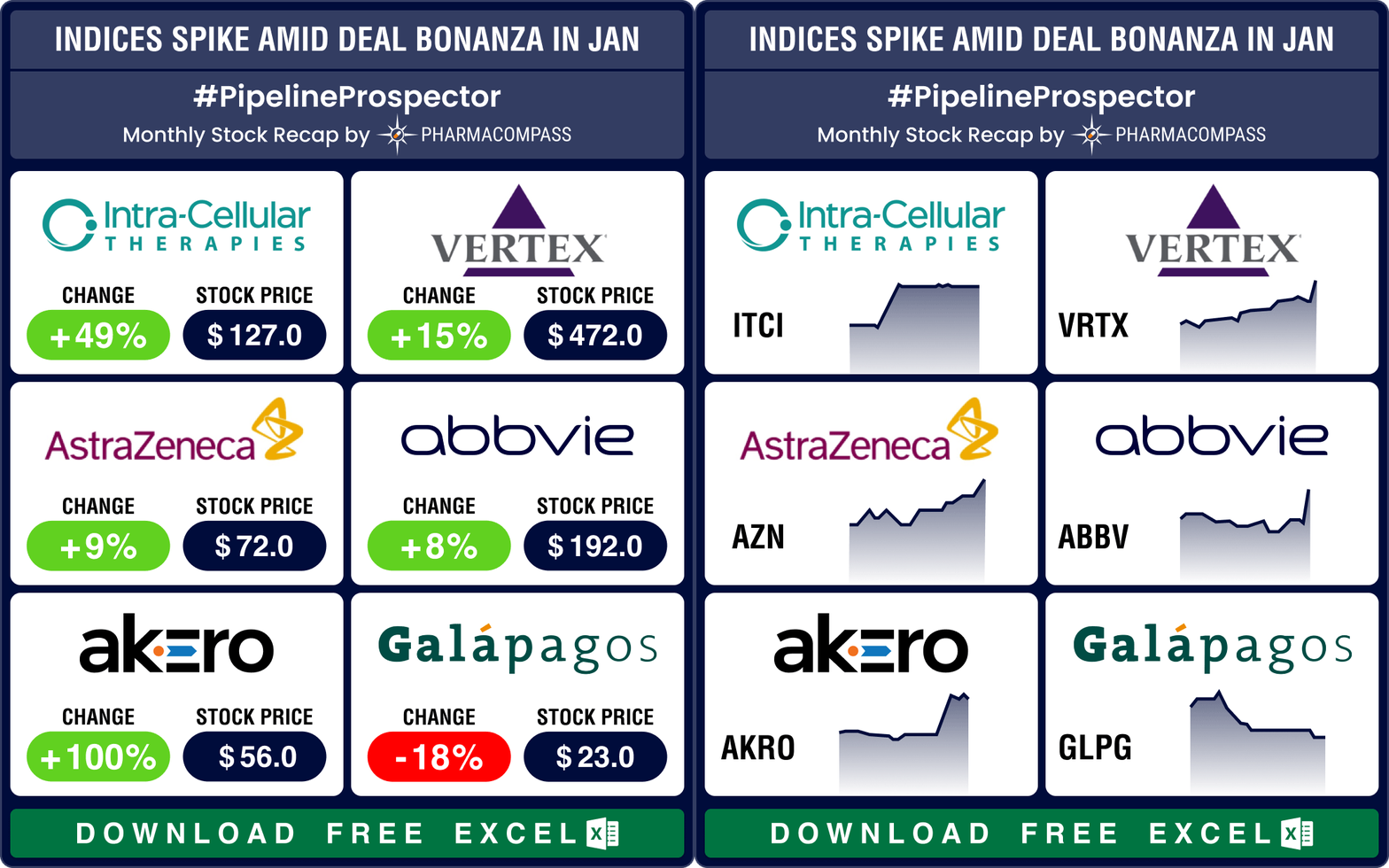
January was a busy month that saw several deals being announced at the JP Morgan Healthcare Conference. In all, deals worth over US$ 19.3 billion were signed at the annual event. The month also saw several key drugs getting approved by the US Food and Drug Administration (FDA). This got reflected in the indices — while the Nasdaq Biotechnology Index (NBI) rebounded 4.42 percent to reach 4,532.75, the SPDR S&P Biotech ETF (XBI) and S&P Biotechnology Select Industry Index (SPSIBI) posted gains of 1.89 percent and 2.84 percent respectively.   Access the Pipeline Prospector Dashboard for January 2025 Newsmakers (Free Excel)    J&J buys Intra-Cellular for US$ 14.6 bn, Lilly strikes US$ 2.5 bn cancer deal with Scorpion Johnson & Johnson (stock up 5 percent) announced the biggest biotech buyout since March 2023 with its acquisition of Intra-Cellular Therapies (stock up 49 percent), a neuroscience-focused biopharmaceutical company, for US$ 14.6 billion. Intra-Cellular’s lead drug, Caplyta (lumateperone), approved for bipolar depression, is undergoing FDA review for major depressive disorder (MDD).  Eli Lilly (stock up 5 percent) announced a US$ 2.5 billion deal to acquire Scorpion Therapeutics’ experimental cancer therapy, STX-478. This therapy targets specific mutations in breast cancer and other solid tumors. Lilly also partnered with UK-based Alchemab Therapeutics to develop up to five new antibodies targeting amyotrophic lateral sclerosis (ALS). Gilead Sciences (stock up 5 percent) and LEO Pharma teamed up in a deal worth up to US$ 1.7 billion to develop oral STAT6 inhibitors for inflammatory diseases. These inhibitors will target key pathways in conditions like atopic dermatitis, asthma, and COPD, offering a potential oral alternative to injectable biologics. GSK (stock up 6 percent) agreed to acquire IDRx, a Massachusetts-based developer of rare cancer therapies, for up to US$ 1.15 billion. IDRx focuses on treatments for gastrointestinal stromal tumors (GIST), rare cancers that develop in the digestive tract.   Access the Pipeline Prospector Dashboard for January 2025 Newsmakers (Free Excel)   Ozempic becomes first GLP-1 to treat CKD in diabetes patients; Novo puts another US$ 4.6 bn in deal with Valo FDA approved Novo Nordisk’s Ozempic (semaglutide) to reduce the risk of kidney disease progression, kidney failure, and cardiovascular death in adults with type 2 diabetes and chronic kidney disease (CKD). This approval makes Ozempic the first glucagon-like peptide 1 (GLP-1) receptor agonist indicated for this patient population. This most broadly indicated GLP-1 drug is already approved for cardiovascular events. Novo also announced expansion of its collaboration with Valo Health to discover and develop novel treatments for obesity, type 2 diabetes, and cardiovascular diseases. This partnership leverages Valo’s extensive human datasets and artificial intelligence capabilities.  The expanded agreement is potentially worth US$ 4.6 billion for up to 20 drug programs. Akero Therapeutics’ stock jumped 100 percent after data from its mid-stage trial showed that 39 percent of patients treated with a 50 mg dose of efruxifermin experienced reversal of cirrhosis with no worsening of metabolic dysfunction-associated steatohepatitis (MASH) after 96 weeks, compared to 15 percent in the placebo group. Meanwhile, FDA expanded the use of Eli Lilly’s Omvoh (mirikizumab)to include treatment for moderate-to-severe Crohn’s disease, bolstering the company’s immunology portfolio beyond its focus on obesity treatments.   Access the Pipeline Prospector Dashboard for January 2025 Newsmakers (Free Excel)  AbbVie in US$ 1.64 bn molecular glue degraders deal with Neomorph; Galapagos splits into two AbbVie (stock up 8 percent) and Neomorph entered into a US$ 1.64 billion collaboration to develop molecular glue degraders targeting previously “undruggable” proteins in oncology and immunology. AbbVie also acquired an option to license Simcere Zaiming’s SIM0500, a novel trispecific antibody candidate for multiple myeloma, in a deal valued at up to US$ 1.06 billion. SIM0500 is currently in early-stage clinical trials in both China and the US. Boehringer Ingelheim has expanded its oncology pipeline with two licensing deals. First, the company partnered Synaffix in a deal worth up to US$ 1.3 billion to advance antibody-drug conjugates (ADCs). Second, it exercised the option to gain rights to a fourth novel cancer target from an ongoing discovery collaboration with Oxford BioTherapeutics, which began in 2013. Sanofi (stock up 10 percent) announced plans to buy back € 5 billion (US$ 5.21 billion) in shares in 2025, signaling potential increases in acquisition activities following the sale of its Opella consumer health unit. This divestment marks Sanofi’s shift to focusing exclusively on drugs and vaccines. Galapagos (stock down 18 percent) announced plans to split into two distinct publicly traded entities. The entity that retains the Galapagos name will focus on advancing its cell therapy programs in oncology, while the other one will focus on developing a pipeline of innovative medicines through strategic transactions. It will be capitalized with approximately € 2.45 billion (US$ 2.53 billion) from Galapagos’ current cash reserves.   Access the Pipeline Prospector Dashboard for January 2025 Newsmakers (Free Excel)  J&J’s Spravato approved for depression by FDA; another Astra-Daiichi ADC sees light of day The psychedelic medicine frontier showed promise with J&J’s Spravato (esketamine) achieving a breakthrough as FDA approved it for treatment-resistant depression (standalone treatment). The nasal spray demonstrated impressive efficacy, with 22.5 percent of patients achieving remission by week four.  Atai Life Sciences also announced encouraging results from a mid-phase study evaluating BPL-003, an intranasal formulation of 5-MeO-DMT benzoate in patients with moderate to severe alcohol use disorder (AUD). In oncology, AstraZeneca (stock up 9 percent) and Daiichi Sankyo (stock up 3 percent) secured US approval for Datroway (datopotamab deruxtecan) for treating unresectable or metastatic hormone receptor-positive, HER2-negative breast cancer. Meanwhile, Amgen’s combination therapy of Lumakras (sotorasib) with Vectibix (panitumumab) received FDA approval for KRAS G12C-mutated metastatic colorectal cancer. Amgen’s stock gained 9 percent. FDA approved Vertex Pharmaceuticals’ Journavx (suzetrigine), a first-in-class non-opioid oral pain signal inhibitor. This approval marks the first new class of pain medicine in over 20 years, offering an effective alternative without addictive potential. The US agency also approved Axsome Therapeutics’ rapid-acting Symbravo (meloxicam and rizatriptan) for the acute treatment of migraine.   Access the Pipeline Prospector Dashboard for January 2025 Newsmakers (Free Excel)  Our view If 2024 ended with a spate of drug approvals, 2025 began with both increased dealmaking and approvals. However, post January 20, the world is a different place. Trump administration’s tariff policies have spurred a trade war, and China has retaliated with tariffs of US coal and gas. At present, there is little certainty on what the tariffs mean for different pharma companies, especially those who don’t manufacture in the US. While some drugmakers are hopeful that Trump will crack down on the pharmacy benefit managers, others are more concerned on what higher tariffs on EU and Indian drugmakers would mean for generic drug prices. We expect volatility for at least some months.  Access the Pipeline Prospector Dashboard for January 2025 Newsmakers (Free Excel)  

Impressions: 5258

https://www.pharmacompass.com/pipeline-prospector-blog/pipeline-prospector-jan-2025-j-j-s-us-14-6-bn-intra-cellular-buyout-kicks-off-deal-frenzy-ozempic-clinches-fda-nod-for-ckd

#PharmaFlow by PHARMACOMPASS
06 Feb 2025

WEEKLY NEWS RECAP #Phispers

read-more
read-more
FDA okays Vertex’s non-opioid painkiller, Supernus’ wearable device for Parkinson’s; Sanofi, GSK plan share buybacks

While the healthcare sector in the US was embroiled in political uncertainties over tariffs and key appointments, the country’s Food and Drug Administration (FDA) focused on approving new classes of drugs and drug-device combinations.Vertex Pharmaceuticals made headlines with the FDA approval of Journavx, a groundbreaking non-opioid painkiller that offers a safer alternative to traditional opioids. After setbacks, Axsome Therapeutics’ dual-action migraine treatment, Symbravo, finally received an FDA approval.In the realm of Parkinson’s disease treatment, Supernus Pharmaceuticals received FDA approval for Onapgo, a wearable drug-device combination designed to improve motor control. Roche also expanded the use of its Susvimo eye implant to treat diabetic macular edema, offering a continuous delivery system that reduces treatment burden.Meanwhile, Sanofi announced a US$ 5.21 billion share buyback program following the announcement of the € 15.5 billion (US$ 16.1 billion) sale of its consumer healthcare unit, Opella, likely to go through in the second quarter of 2025. GSK also launched a US$ 2.5 billion share buyback and raised its long-term sales target to nearly US$ 50 billion by 2031.AbbVie, on the other hand, appears to have smoothly navigated the decline in Humira sales, raising its long-term outlook for its immunology duo, Skyrizi and Rinvoq, with combined sales projected to exceed US$ 31 billion by 2027. However, Merck announced a halt in Gardasil vaccine shipments to China amid weak demand, impacting its financial guidance and long-term sales targets. And Alvogen issued a nationwide recall for some of its fentanyl patches due to a packaging defect that poses a major overdose risk.FDA approves Vertex’s non-opioid painkiller that blocks pain at sourceFDA has approved Vertex Pharmaceuticals’ non-opioid painkiller, Journavx (suzetrigine), for the treatment of moderate-to-severe acute pain in adults. This approval marks the first new class of pain medication in over two decades offering an alternative to opioid analgesics. Journavx functions by blocking pain signals at their source before they reach the brain. It works without affecting the brain’s reward centers. This mechanism reduces the risk of addiction associated with traditional opioids. Analysts estimate that the drug could generate approximately US$ 3.7 billion in US sales by 2030.Axsome’s migraine treatment okayed: Axsome Therapeutics has finally received FDA’s greenlight for its migraine treatment, Symbravo. This multi‐mechanistic medication combines meloxicam and rizatriptan with the aim to provide rapid pain relief and sustained efficacy by targeting multiple migraine pathways. Clinical studies demonstrated that a single oral dose of the novel drug helped patients return to normal functioning within two hours. It was a hard-fought win for Axsome after the agency declined to approve the drug in 2022 over issues regarding quality control processes that were unresolved.Sanofi signals M&A push, plans US$ 5.21 bn share buyback after US$ 16.11 bn sale of OpellaSanofi plans to repurchase € 5 billion (US$ 5.21 billion) worth of its shares in 2025, following the anticipated sale of its Opella consumer healthcare unit to private equity firm Clayton, Dubilier & Rice (CD&R) for € 15.5 billion (US$ 16.11 billion). The move signals a strategic shift towards focusing on innovative medicines and vaccines. Sanofi will retain a 50 percent stake in Opella, with plans to divest this holding in the future. The French giant also indicated it could be “a bit more” active with mergers and acquisitions in the near future. As part of Sanofi’s share buyback program, L’Oréal has agreed to sell a € 3 billion (US$ 3.11 billion) stake in Sanofi back to the drugmaker.GSK launches US$ 2.5 bn share buyback: GSK has launched a £ 2 billion (US$ 2.5 billion) share buyback and raised its long-term sales target to nearly US$ 50 billion by 2031, largely driven by robust growth in its specialty medicines such as HIV and cancer treatments. Despite vaccine sales falling in 2024 by 4 percent due to Arexvy losing 51 percent in sales, the British drugmaker’s oncology section saw a 98 percent increase in sales. Its antibody-drug conjugate (ADC) portfolio will be key, the company said, highlighting its recent IDRx acquisition and the launch of its multiple myeloma drug Blenrep (belantamab mafodotin).FDA approves Supernus’ wearable drug‐device combination for Parkinson’s diseaseSupernus Pharmaceuticals has received FDA approval for its drug‐device combination, Onapgo, for the treatment of motor fluctuations in adults with advanced Parkinson’s disease. This marks the culmination of a years‐long effort after previous rejections in 2022 and 2024 due to concerns over product quality. Onapgo is a wearable device that continuously delivers apomorphine hydrochloride under the skin throughout the waking day.Roche’s Susvimo expanded to treat diabetic macular edema: Roche has gained FDA approval for a label expansion of its Susvimo eye implant to include the treatment of diabetic macular edema (DME), a leading cause of vision loss in adults with diabetes. This approval builds on the implant’s initial indication for treating neovascular (wet) age-related macular degeneration (nAMD). Susvimo (ranibizumab injection) is the first and only continuous delivery treatment approved by the FDA for DME.AbbVie raises sales outlook for Skyrizi, Rinvoq; Merck halts Gardasil shipments to ChinaAbbVie has raised its long-term outlook by US$ 4 billion for its two leading immunology drugs, Skyrizi (risankizumab) and Rinvoq (upadacitinib), now forecasting their combined 2027 sales to exceed US$ 31 billion. The updated projection expects Skyrizi to generate more than US$ 20 billion in revenue, while Rinvoq is anticipated to contribute over US$ 11 billion by 2027. Skyrizi currently holds 40 percent of the total prescription share of the biologics psoriasis market, the company noted.Gardasil shipments to China: Merck announced it would halt shipments of its flagship Gardasil vaccine to China at least until mid-year. This decision comes amid economic challenges, weak demand and an anti-corruption campaign led by the government in China. The move has directly impacted Merck’s guidance for the full year 2025. Gardasil, the vaccine designed to prevent cancers caused by human papillomavirus (HPV), has experienced declining sales in China.Alvogen recalls fentanyl patches after report of serious adverse eventAlvogen has issued a voluntary nationwide recall for one lot of its fentanyl transdermal system 25 mcg/h patches due to a potential packaging defect. According to the FDA recall notice, the defect involves the risk that patches could be inadvertently stacked (i.e. multi-stacked) within a single product pouch. This stacking error could result in a significantly higher dose than intended, thereby posing a risk of serious, life-threatening, or even fatal respiratory depression. 

Impressions: 922

https://www.pharmacompass.com/radio-compass-phisper/fda-okays-vertex-s-non-opioid-painkiller-supernus-wearable-device-for-parkinson-s-sanofi-gsk-plan-share-buybacks

#Phispers by PHARMACOMPASS
06 Feb 2025

NEWS #PharmaBuzz

read-more
read-more

https://www.globenewswire.com/news-release/2026/06/04/3306621/33090/en/axsome-therapeutics-presents-new-symbravo-data-at-the-americal-headache-society-ahs-68th-annual-scientific-meeting.html

GLOBENEWSWIRE
04 Jun 2026

https://www.prnewswire.com/news-releases/us-fda-accepts-viatris-new-drug-application-for-fast-acting-meloxicam-for-the-treatment-of-moderate-to-severe-acute-pain-302774276.html

PR NEWSWIRE
18 May 2026

https://www.pharmacompass.com/pdf/news/enforcement-report-week-of-march-11-2026-53225.pdf

FDA
11 Mar 2026

https://www.fda.gov/safety/recalls-market-withdrawals-safety-alerts/anthony-trinh-123herbals-llc-123herbalscom-issues-nationwide-recall-silintan-capsules-due-presence

FDA
09 Jan 2026

https://www.pharmacompass.com/pdf/news/fda-confirms-para-iv-patent-litigation-for-symbravo-78945.pdf

FDA
27 Aug 2025

https://www.prnewswire.com/news-releases/viatris-announces-five-data-presentations-on-novel-fast-acting-meloxicam-mr-107a-02-at-painweek-2025-conference-302519653.html

PR NEWSWIRE
01 Aug 2025