Please Wait
Applying Filters...
Menu
Xls

Digital Content read-more

Create Content with PharmaCompass, ask us

DATA COMPILATION #PharmaFlow

read-more
read-more
FDA approves record eight biosimilars in H1 2024; okays first interchangeable biosimilars for Eylea
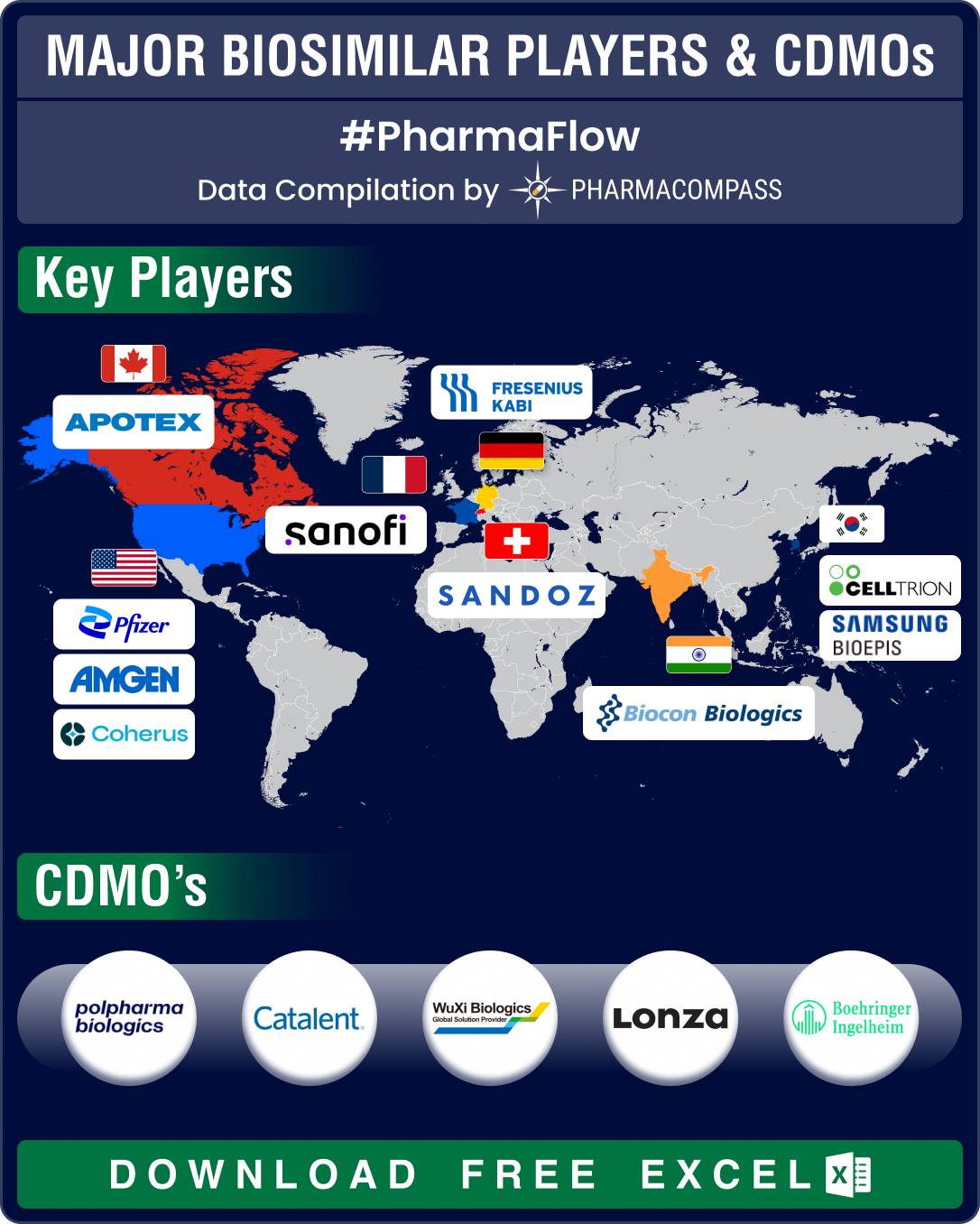
Biologics, or complex drugs that are derived from living organisms, have revolutionized treatment of various conditions such as cancer, autoimmune diseases, and chronic illnesses. In 2023, eight out of 10 of the world’s top-selling drugs were biologics, including Merck’s Keytruda, AbbVie’s Humira, and Sanofi’s Dupixent.Due to their high costs, accessibility of biologics has been a challenge. That’s why biosimilars, or game-changing copycats of biologics that provide highly similar yet more affordable alternatives to established biologics, are becoming popular.The first biosimilar — Sandoz’ Zarxio — was approved by the US Food and Drug Administration (FDA) in 2015. Its reference biologic was Amgen’s Neupogen (filgrastim).  Since then, the global market for biosimilars has been growing at an impressive pace — between 2015 and 2020, it grew at a whopping compounded annual growth rate (CAGR) of 78 percent, touching US$ 17.9 billion in size. It is expected to continue growing at a CAGR of 15 percent and reach a size of about US$ 75 billion by 2030.Major biosimilar players include Amgen, Sandoz, Samsung Bioepis, Pfizer, Biocon Biologics, Celltrion, Stada Arzneimittel, Accord Healthcare, Fresenius Kabi, Coherus Biosciences, Apotex, and Sanofi. The increasing demand for biosimilars has propelled growth in contract manufacturing. Some of the leading contract manufacturing organizations (CMOs) and contract development and manufacturing organizations (CDMOs) that manufacture biosimilars are Polpharma Biologics, Catalent, Pfizer CentreOne, Lonza, Boehringer Ingelheim BioXcellence, Thermo Fisher Scientific, WuXi Biologics, and FUJIFILM Diosynth Biotechnologies.Access the Interactive Dashboard for Biosimilar Developments (Free Excel)Amgen, Sandoz top list of ‘approved biosimilars’; FDA okays 8 copycats in H1 2024Over the recent years, regulatory agencies like the FDA and the European Medicines Agency (EMA) have established rigorous approval pathways for biosimilars.Since 2015,  FDA has approved 53 biosimilars, while the EMA has approved 86 biosimilars. Among the US, European and Canadian markets, Amgen and Sandoz are tied in the first place with 13 approved biosimilars each. Samsung Biologics has nine approved biosimilars, followed by Pfizer with eight and Biocon Biologics with seven. In the first half of this year, FDA set a record by approving eight biosimilars — the highest for H1 of any year. EMA has okayed six biosimilars so far in 2024.In 2023, five biosimilars were approved by the FDA with just one being okayed in the first half. The year marked the end of exclusivity for Humira after 20 years, in which it netted a total of US$ 200 billion in sales. AbbVie’s flagship autoimmune drug has a record 10 biosimilars.Johnson & Johnson’s Stelara also lost exclusivity in 2023 and as many as 11 drugmakers hope to bring its biosimilars to the market. Amgen’s Wezlana was the first biosimilar to Stelara, and it was approved as interchangeable by FDA in October last year.Access the Interactive Dashboard for Biosimilar Developments (Free Excel) FDA approves first interchangeable biosimilar for Eylea, cuts regulatory feeDeveloping a biosimilar costs both money and time. According to Pfizer, developing a biosimilar can take five to nine years and cost over US$ 100 million, not including regulatory fees.In October 2023, FDA slashed its fees with the program fee at US$ 177,397, down from US$ 304,162. The application fees for products that require clinical data has been set at US$ 1,018,753, down from US$ 1,746,745. The application fee for products that don’t require clinical data has been set lower — at US$ 509,377 —  down from US$ 873,373 set earlier. This reduction in application fee has propelled demand for contract manufacturing of biosimilars.There has also been a rise in approvals of interchangeable biosimilars this year. Interchangeable biosimilars meet additional requirements and may be substituted for its reference product by a pharmacist without consulting the prescriber. This year saw FDA approve the first interchangeable biosimilars for bone cancer drug denosumab (Prolia and Xgeva) in Jubbonti and Wyost as well as for eculizumab (Soliris) in Bkemv.In May, FDA approved the first interchangeable biosimilars for eye drug aflibercept (Eylea) in Opuviz and Yesafili. Other biosimilars approved in 2024 include Simlandi for adalimumab (Humira), Tyenne for tocilizumab (Actemra), Selarsdi for ustekinumab (Stelara), and Hercessi for trastuzumab (Herceptin).Access the Interactive Dashboard for Biosimilar Developments (Free Excel) Merck’s Keytruda, BMS’ Opdivo, Novartis’ Cosentyx brace for biosimilar competitionHealthcare spending in the US is projected to rise from US$ 4.5 trillion in 2022 to US$ 6 trillion by 2027. While biologics involve just two percent of prescriptions, they account for 46 percent of all pharmaceutical spending. In 2022, US$ 252 billion was spent on biologics.Biosimilar-related savings in 2023 were estimated to be US$ 9.4 billion in the US and € 10 billion (US$ 10.68 billion) in Europe. With expensive and widely used drugs like AbbVie’s Humira, J&J’s Stelara, and Regeneron’s Eylea coming under competition, US savings are projected to reach US$ 181 billion through 2027. Between 2026 and 2032, about 39 blockbusters are set to lose exclusivity in the US and Europe. Merck’s Keytruda (pembrolizumab) was the world’s top-selling drug last year, generating US$ 25 billion in sales. Its patent is set to expire in 2028 with sales expected to drop 19 percent to US$ 27.4 billion in 2029 from US$ 33.7 billion the previous year. Samsung Bioepis and Amgen initiated phase 3 trials of pembrolizumab in April and May of this year, respectively.Opdivo (nivolumab), belonging to the same class of drugs, competes with Keytruda and is also set to lose patent protection in 2028. It hauled in US$ 10 billion in total global sales in 2023 for Bristol Myers Squibb. The key patents of Novartis’ Cosentyx (secukinumab) are set to expire between 2025 and 2026. Cosentyx saw sales of US$ 5 billion in 2023. Taizhou Mabtech Pharmaceutical and Bio-Thera Solutions are conducting phase 3 trials of secukinumab.Access the Interactive Dashboard for Biosimilar Developments (Free Excel) Our viewWith over 2 billion people worldwide unable to access life-saving medicines, biosimilars hold the key to healthcare accessibility. In 2023, a record 13 biosimilars were launched in the market — the highest for a single year. And this included nine much-anticipated biosimilars to AbbVie’s Humira.  In April this year, FDA announced a Biosimilars Action Plan to streamline the development of biosimilars. With a sharp focus on biosimilars, we expect more records to be broken in the near term. New launches of biosimilars to drugs like J&J’s Stelara, Regeneron’s Eylea and Merck’s Keytruda will surely help in creating new records.

Impressions: 4508

https://www.pharmacompass.com/radio-compass-blog/fda-approves-record-eight-biosimilars-in-h1-2024-okays-first-interchangeable-biosimilars-for-eylea

#PharmaFlow by PHARMACOMPASS
27 Jun 2024

WEEKLY NEWS RECAP #Phispers

read-more
read-more
Lilly’s Zepbound becomes first FDA-approved therapy for sleep apnea; Novo wins nod for daily hemophilia shot

This week’s Phispers is a double bill with news from the last two weeks. Through much of December, the US Food and Drug Administration (FDA) has been approving drugs at a renewed pace. The momentum picked up further as the year drew to a close.Eli Lilly’s Zepbound broke new ground as the first FDA-approved treatment for obstructive sleep apnea (OSA) in adults with obesity. In the US, OSA affects around 39 million people, with obesity being a major contributing factor.Novo Nordisk celebrated a hard-fought victory with the approval of Alhemo, a once-daily subcutaneous injection that significantly reduces bleeding episodes in hemophilia patients. FDA also approved Ionis Pharmaceuticals’ Tryngolza, the first treatment for familial chylomicronemia syndrome, a rare genetic disorder. This approval also signifies Ionis’ transition to a commercial-stage company.Vertex Pharmaceuticals’ triple combination therapy for cystic fibrosis, a rare and progressive genetic disease, also received FDA’s nod. Bristol Myers Squibb won approval for Opdivo Qvantig, an injectable form of its blockbuster cancer drug, promising greater convenience to patients. Meanwhile, Merck announced positive results from two pivotal trials for its investigational HIV-1 treatment.In negative news, Zealand Pharma faced a setback as the FDA declined to approve its bowel disease drug, glepaglutide, calling for an additional trial. And Viatris had to contend with FDA’s import restrictions on 11 products from its Indian facility due to significant violations of current good manufacturing practices (cGMPs).Lilly’s weight-loss drug Zepbound breaks ground as first sleep apnea treatmentEli Lilly’s weight-loss drug, Zepbound (tirzepatide), has received FDA approval as the first and only prescription medication for treating moderate-to-severe obstructive sleep apnea (OSA) in adults with obesity. This approval marks a significant milestone in the management of OSA, a condition that is often overlooked and misdiagnosed as mere snoring. During OSA, blocked upper airways cut off breathing, jolting people awake gasping for air. Excess weight can narrow the airway. In a late-stage study, patients on Zepbound experienced up to 25 fewer breathing interruptions per hour compared to those on placebo. Additionally, nearly half of the trial participants no longer exhibited symptoms of OSA after one year of treatment.FDA approves Novo’s under-the-skin treatment to prevent hemophilia bleedingFDA has granted approval to Novo Nordisk’s Alhemo (concizumab-mtci) injection, a once-daily prophylactic treatment designed to prevent or reduce the frequency of bleeding episodes in patients aged 12 and older with hemophilia A or B with inhibitors. This renders it the only subcutaneous option for patients who have developed antibodies against the clotting factor replacement treatments. It was a hard-fought win for Novo after FDA rejected the drug in 2023.Merck’s HIV treatment succeeds in late-stage studies: Merck has announced positive results from two pivotal phase 3 trials for its investigational HIV-1 treatment regimen doravirine/islatravir. This is a two drug, once daily, single tablet regimen for adults with HIV-1 infection that is virologically suppressed on different antiretroviral therapy regimens.First treatment for rare genetic disorder approved, marking Ionis’ commercial debutFDA has approved Ionis Pharmaceuticals’ Tryngolza (olezarsen) as the first-ever treatment for adults with familial chylomicronemia syndrome (FCS), a rare genetic disorder that prevents the body from breaking down fats. Tryngolza is the company’s first wholly-owned drug to receive FDA approval. FCS is characterized by extremely high levels of triglycerides, which can lead to severe complications such as pancreatitis.Tryngolza works by reducing triglyceride levels, thereby helping in the management of symptoms and risks associated with the disorder. This new treatment option is expected to significantly improve the quality of life for patients with FCS, who currently rely on strict dietary restrictions to manage their condition. Ionis plans to commercialize Tryngolza independently, marking a new era for the company as it transitions to a commercial-stage entity.Vertex’s triple combo med for cystic fibrosis okayed:  FDA has approved Vertex Pharmaceuticals’ med for cystic fibrosis, a rare and progressive genetic disease. This next-generation treatment is a once-daily triple combination therapy, branded Alyftrek (vanzacaftor/tezacaftor/deutivacaftor). It has been approved to treat patients aged six years and older.FDA clears injectable version of BMS’ blockbuster cancer drug OpdivoFDA has approved an injectable version of Bristol Myers Squibb’s cancer drug, Opdivo (nivolumab), co-formulated with hyaluronidase (Opdivo Qvantig), for subcutaneous use. This new formulation is designed to treat most previously approved adult solid tumor indications, either as monotherapy, maintenance therapy following combination treatment with Yervoy (ipilimumab), or in combination with chemotherapy.Previously, Opdivo was administered through intravenous infusions, akin to other PD-1 inhibitors such as Merck’s Keytruda (pembrolizumab). This necessitated visits to a healthcare facility for treatment. The subcutaneous form of Opdivo is not inferior to the intravenous version in terms of efficacy and safety, a trial found. The new injectable form is anticipated to offer greater convenience to patients and may help protect the company from sales declines once the patent for the intravenous version expires later this decade.FDA declines to approve Zealand’s bowel disease drug, calls for new trialFDA has declined to approve Zealand Pharma’s glepaglutide to treat short bowel syndrome (SBS) with intestinal failure. The decision was communicated through a complete response letter (CRL), which indicated that the submitted data did not fully meet the requirements for demonstrating the drug’s efficacy and safety. SBS is a rare disorder that occurs when the small intestines are damaged or shortened.The CRL recommended that Zealand conduct an additional clinical trial to provide further evidence supporting glepaglutide’s effectiveness and safety at the intended dose. The company plans to initiate a phase 3 trial this year, which will also support marketing authorization applications in other regions and provide additional confirmatory evidence for a regulatory resubmission in the US.FDA restricts imports of 11 Viatris products over significant cGMP violationsFDA has issued a warning letter to Viatris regarding its manufacturing facility in Indore, India, resulting in the restriction of imports on 11 products made at the site. The inspection, conducted from June 14 to 26, 2024, identified significant violations of cGMP regulations. Key issues included inadequate written procedures for the quality control unit and unreliable quality control data.However, due to potential shortages, the agency has made conditional exceptions for four products. Viatris has implemented a comprehensive remediation plan, including corrective and preventive actions, and has engaged independent third-party experts to support these efforts. 

Impressions: 1464

https://www.pharmacompass.com/radio-compass-phisper/lilly-s-zepbound-becomes-first-fda-approved-therapy-for-sleep-apnea-novo-wins-nod-for-daily-hemophilia-shot

#Phispers by PHARMACOMPASS
02 Jan 2025

NEWS #PharmaBuzz

read-more
read-more

https://www.globenewswire.com/news-release/2026/05/12/3292647/0/en/medicenna-and-fondazione-melanoma-onlus-announce-first-patient-dosed-in-the-neo-cyt-study-of-mdna11-in-neoadjuvant-melanoma.html

GLOBENEWSWIRE
12 May 2026

https://www.globenewswire.com/news-release/2026/04/30/3284740/0/en/medicenna-and-fondazione-melanoma-onlus-announce-presentation-on-neocyt-trial-at-asco-2026.html

GLOBENEWSWIRE
30 Apr 2026

https://www.globenewswire.com/news-release/2026/04/28/3282221/0/en/scancell-receives-fda-fast-track-designation-for-iscib1-in-advanced-melanoma-and-provides-data-update-from-its-scope-phase-2-study.html

GLOBENEWSWIRE
28 Apr 2026

https://www.globenewswire.com/news-release/2026/03/10/3252455/0/en/Press-Release-Biocartis-NV-Biocartis-Receives-European-IVDR-Certification-for-the-Idylla-CDx-MSI-Test.html

GLOBENEWSWIRE
10 Mar 2026

https://www.businesswire.com/news/home/20260303038931/en/Delcath-Systems-Announces-Publication-of-CHOPIN-Clinical-Trial-Results-in-The-Lancet-Oncology

BUSINESSWIRE
03 Mar 2026

https://www.globenewswire.com/news-release/2026/02/13/3238090/0/en/Medicenna-Therapeutics-Reports-Third-Quarter-Fiscal-2026-Financial-Results-and-Provides-a-Corporate-Update.html

GLOBENEWSWIRE
13 Feb 2026