Please Wait
Applying Filters...
Menu
Xls

Digital Content read-more

Create Content with PharmaCompass, ask us

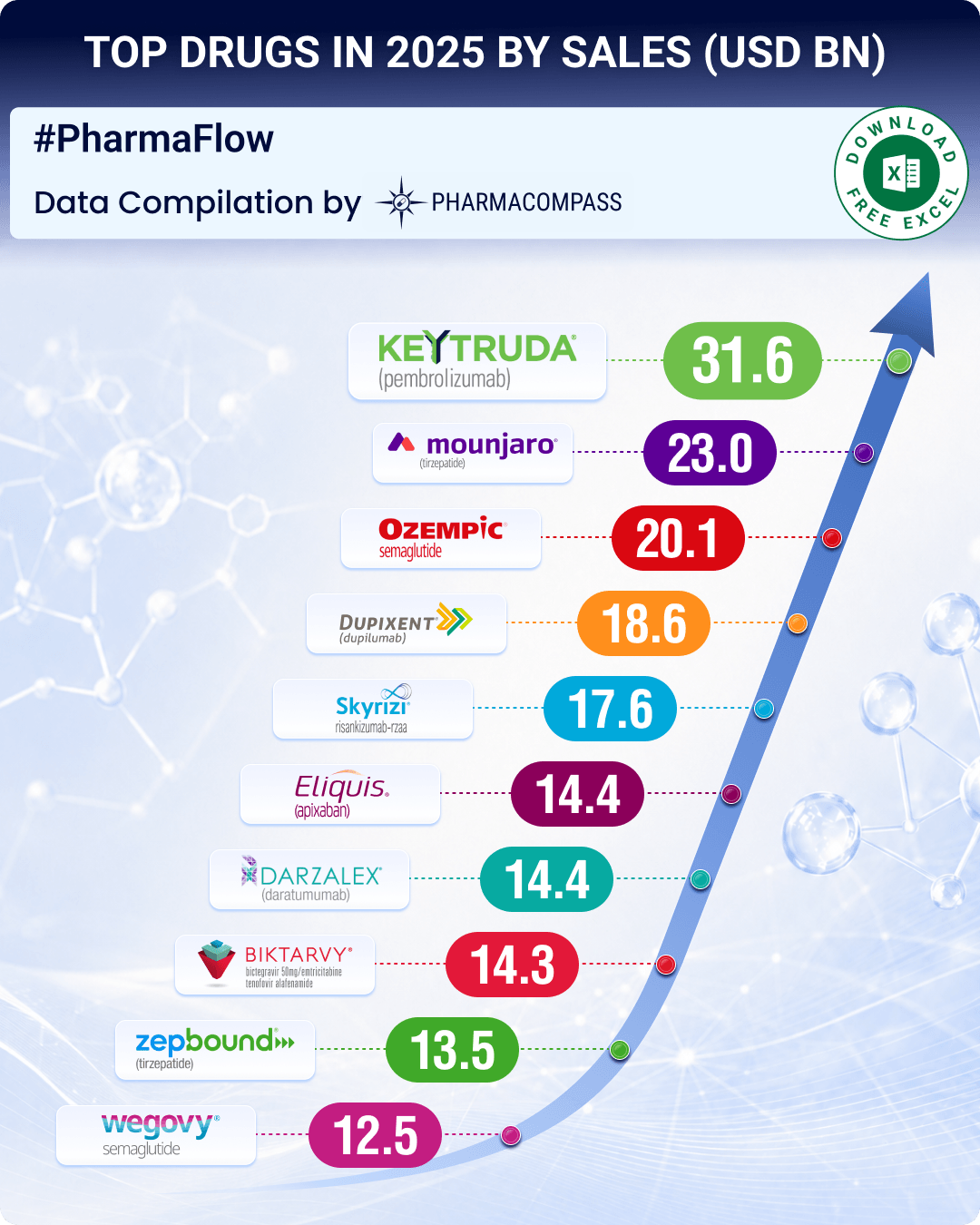
DATA COMPILATION #PharmaFlow

read-more
read-more
FDA’s December 2025 OPOE list features 784 prescription drugs, 73 OTC drugs
This week, PharmaCompass brings you key highlights of the US Food and Drug Administration’s December 2025 list of Off-Patent, Off-Exclusivity Drugs (OPOE) without an approved generic. The OPOE list gets updated every six months.This list highlights drug products that have lost patent protection and regulatory exclusivity, but remain without approved generic competition in the US market. With this list, the FDA hopes to bolster competitiveness in the generics market, improve transparency and encourage the development and submission of abbreviated new drug applications (ANDAs) in markets with little competition.Since December 2021, FDA has been publishing two versions of the OPOE list — one for prescription (Rx) drug products and the other for over-the-counter (OTC) drug products that are approved and marketed under a new drug approval (NDA).  Access the Interactive Dashboard on FDA's December 2025 List of OPOE Drugs (Free Excel)Injectables continue to dominate FDA’s OPOE Rx list; 73 OTC drugs figure in Dec listFDA’s December 2025 OPOE Rx list includes 784 drug products that currently have no approved generics. Out of these, 296 are injectables and 126 are oral solid dosage forms (such as tablets, capsules and modified release forms). In June 2025, the OPOE Rx list had 765 drug products without an approved generic, out of which 304 were injectables, while 109 were oral solid drug forms. The increase in drug products from 765 to 784 from June 2025 to December 2025 was due to the inclusion of additional dosage strengths in the OPOE Rx list. Otherwise, no new drugs were added to the December 2025 OPOE Rx list.The December 2025 OPOE list has 73 OTC drugs, slightly higher than the 69 drugs in the June 2025 list. Among the 73, 21 are oral solid dosage forms.Among the OTC drugs on the December 2025 OPOE list are ibuprofen and ibuprofen sodium (for pain and inflammation), pseudoephedrine hydrochloride and phenylephrine hydrochloride (nasal decongestants), nizatidine and famotidine (for gastroesophageal reflux disease), loratadine, cetirizine hydrochloride and chlorpheniramine maleate (for allergy relief), loperamide hydrochloride (anti-diarrheal), and orlistat (for weight management). Access the Interactive Dashboard on FDA's December 2025 List of OPOE Drugs (Free Excel)FDA fast-tracks initiatives to accelerate market entry of generics, biosimilarsFDA has launched several regulatory initiatives designed to accelerate the market entry of generics and biosimilars. In October 2025, the agency announced a new pilot prioritization program for the review of ANDAs that aims to encourage and reward investment in drug manufacturing, research and development and strengthen the pharmaceutical supply chain in the United States.Separately, FDA has also come out with a new draft guidance that seeks to simplify biosimilarity studies and reduce unnecessary clinical testing. Through a separate initiative, the agency also plans to make it easier for biosimilars to be developed as interchangeable with brand-name biologics, thereby helping patients and pharmacists choose lower-cost options. Access the Interactive Dashboard on FDA's December 2025 List of OPOE Drugs (Free Excel) Our viewThe global generic drugs market was valued at US$ 445.62 billion in 2024 and is projected to reach US$ 728.64 billion by 2034, growing at a compound annual growth rate of 5.04 percent from 2025 to 2034. With several diabetes, immunology, oncology and cardiology drugs slated to face patent expirations this year, and continued pressure on drugmakers to improve affordability, we believe the generic market could grow at an even faster rate in the near term.

Impressions: 3335

https://www.pharmacompass.com/radio-compass-blog/fda-s-december-2025-opoe-list-features-784-prescription-drugs-73-otc-drugs

#PharmaFlow by PHARMACOMPASS
22 Jan 2026

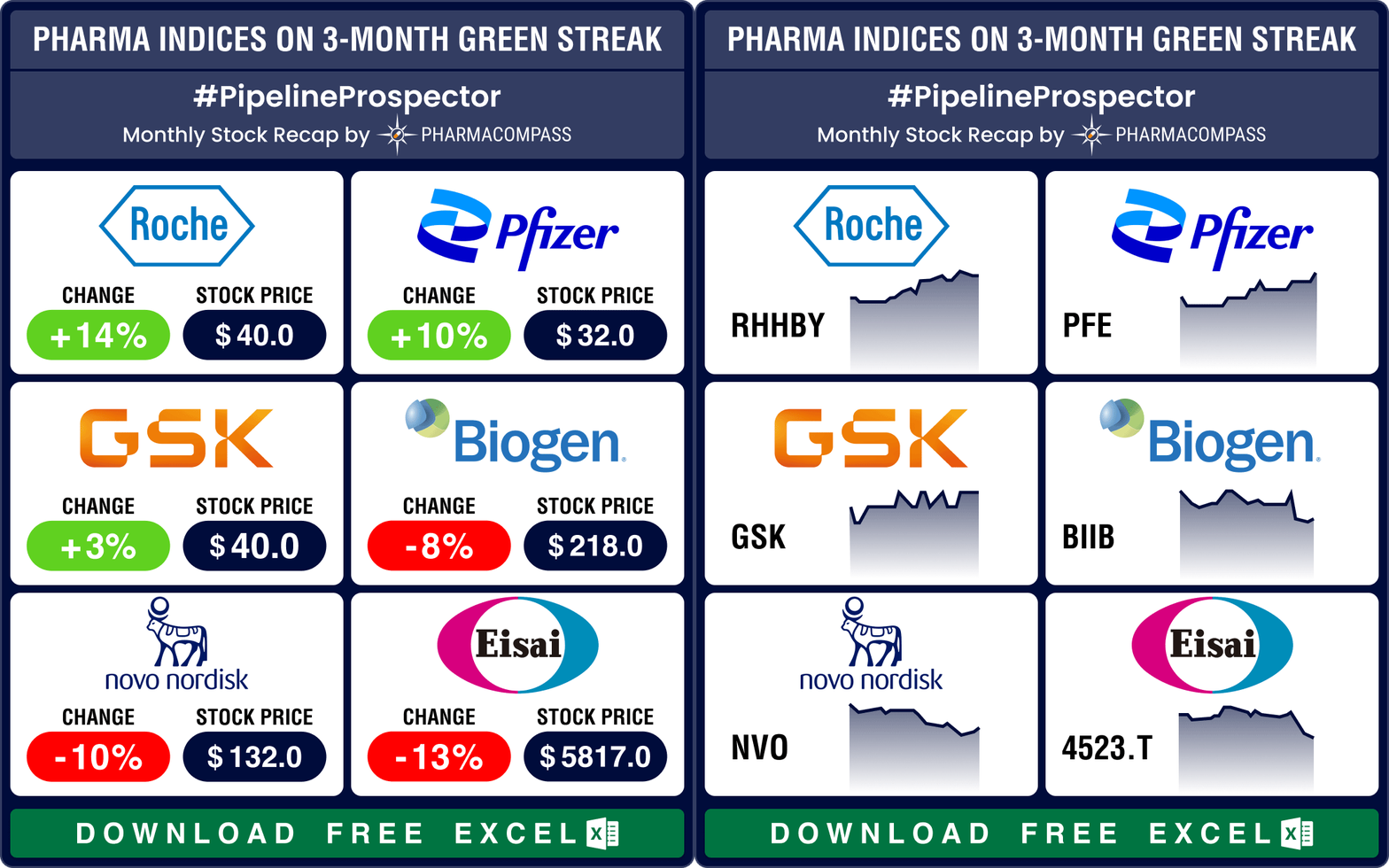
STOCK RECAP #PipelineProspector

read-more
read-more
Pipeline Prospector July 2024: Indices continue to climb; Lilly buys Morphic for US$ 3.2 bn, Kisunla bags FDA nod
The biotechnology sector ended in the green for the third month in a row in July, significantly outperforming the broader market. The Nasdaq Biotechnology Index (NBI) climbed by a robust 6.6 percent, closing at 4,843.6, up from a close of 4,545.28 in June. Similarly, the SPDR S&P Biotech ETF (XBI) index surged by 6.8 percent, reaching 99.06, up from June’s closing of 92.71. The S&P Biotechnology Select Industry Index (SPSIBI) followed suit, jumping 6.8 percent to 7,716.95 compared to a 4.25 percent rise in June, when it closed at 7,225.07.The month saw a few significant deals. Eli Lilly announced the acquisition of Massachusetts-based Morphic Holding for approximately US$ 3.2 billion in cash, bolstering its presence in the US$ 26.65 billion inflammatory bowel disease (IBD) market. Lilly also signed a strategic deal with radiopharmaceutical company Radionetics Oncology for US$ 140 million, with an option to purchase the entire company for US$ 1 billion. As the month drew to a close, Boehringer Ingelheim said it is acquiring Nerio Therapeutics for up to US$ 1.3 billion, in order to expand its immuno-oncology portfolio. Access the Pipeline Prospector Dashboard for July 2024 Newsmakers (Free Excel)Lilly’s donanemab finally gets approved; Dupixent okayed as add-on therapy for COPDWith the Alzheimer's Association International Conference (AAIC) taking place in Philadelphia (in the US), the spotlight was firmly on Alzheimer’s disease. In the last week of July, the US Food and Drug Administration (FDA) approved Alpha Cognition’s Zunveyl (benzgalantamine) to treat mild-to-moderate Alzheimer’s disease. In early July, and weeks prior to the conference, the FDA had granted a long-awaited approval to Eli Lilly’s donanemab, to be marketed as Kisunla, for the treatment of early symptomatic Alzheimer’s disease.In other approvals, European regulators became the first in the world to approve Sanofi and Regeneron’s Dupixent as an add-on therapy for chronic obstructive pulmonary disease (COPD) patients with high levels of certain white blood cells.In May, FDA had extended its target action date of its priority review of Dupixent as an add-on maintenance treatment for COPD by three months. The revised target action date is now September 27, 2024. Access the Pipeline Prospector Dashboard for July 2024 Newsmakers (Free Excel)Merck’s RSV jab shows efficacy in infants; GSK’s Dovato measures up to Gilead’s BiktarvyMerck said its monoclonal antibody jab to protect infants against RSV-related infections has met the main goals of a mid-to-late-stage trial. Clesrovimab reduced medically attended lower respiratory infections caused by RSV through day 150. Merck plans to submit the data to global regulators. Currently, Sanofi and Astra’s Beyfortus is approved by the FDA to prevent RSV in children up to 24 months.In the largest study of its kind, GSK’s HIV drug Dovato was found to be non-inferior to Gilead Sciences’ Biktarvy, which is seen as the benchmark for HIV treatment. Significantly, Dovato did so with lesser weight gain in a 48-week head-to-head study of virologically suppressed HIV-1 patients. Both Dovato and Biktarvy are single pill treatments for HIV given once a day. Biktarvy raked in US$ 11.9 billion in 2023.Pfizer’s gene therapy for hemophilia A, giroctocogene fitelparvovec, showed promising results in a late-stage trial by significantly reducing the number of annual bleeding episodes. This brings Pfizer closer to securing FDA approval, competing with BioMarin’s Roctavian. Pfizer also said it is moving ahead to mid-stage trials with a once-daily version of its glucagon-like peptide 1 (GLP-1) drug danuglipron for weight loss. In December, Pfizer had discontinued a twice-daily version of danuglipron on account of side effects. Pfizer’s stock also benefited from its healthy second quarter (Q2) results.Swiss drugmaker Roche is reintroducing Susvimo in the US after voluntarily recalling it in October 2022. The implant used to treat patients with neovascular age-related macular degeneration (wet AMD) requires a one-time surgery to be inserted into the eye.Roche also revealed that a second drug candidate from its up to US$ 3.1 billion buyout of Carmot Therapeutics — an obesity drug —  has delivered promising results in an early-stage trial. This once-daily weight-loss pill CT-996 reduced on average 6.1 percent of participants’ starting weight after four weeks. CT-996 works in a similar manner as other blockbuster weight loss drugs, such as Wegovy and Zepbound. Access the Pipeline Prospector Dashboard for July 2024 Newsmakers (Free Excel)Biogen-Sage’s essential tremor drug rejected; Novo’s weekly insulin hit with FDA’s CRL Several drugmakers faced setbacks last month. Novo Nordisk received a complete response letter (CRL) from the FDA, declining approval for its weekly insulin Awiqli. The agency requested additional information related to the manufacturing process, as well as on the type 1 diabetes indication. In May, an FDA panel had voted seven to four against the benefits of Awiqli outweighing its risks. Sage and Biogen’s partnership experienced another setback after the failure of their drug SAGE-324 in a phase 2 trial for essential tremor, a disorder that causes uncontrollable shaking of hands, arms and other parts of the body. This follows the previous failure of Zurzuvae to secure an FDA approval for clinical depression.Meanwhile, Eisai and Biogen’s Alzheimer’s drug Leqembi, faced a setback in Europe when the EU drugs regulator rejected its approval. The European Medicines Agency said the drug’s meager benefit on slowing cognitive decline in early Alzheimer’s did not outweigh the risk it brings of serious brain swelling. Leqembi is approved in the US market, where it has a new competitor — Lilly’s Kisunla.Also, BMS walked away from its rights to the ADC farletuzumab ecteribulin after having paid Japanese drugmaker Eisai US$ 650 million. As part of its portfolio reprioritization, BMS decided to end the co-development agreement. Access the Pipeline Prospector Dashboard for July 2024 Newsmakers (Free Excel) Our viewAs July drew to a close, several pharma majors announced their second quarter (Q2) earnings, including Pfizer, Merck, AbbVie and, AstraZeneca. Most of these drugmakers ended up beating Wall Street expectations. For instance, Pfizer saw revenue growth in Q2 after shrinking for five quarters. It posted revenues of US$ 13.3 billion in the second quarter of 2024, compared to US$ 13 billion in the corresponding quarter last year. It has subsequently raised its 2024 guidance by US$ 1 billion. This means it’s not just the indices and share prices, but even the brass tacks — the top line and the bottomline of drugmakers — are looking up. And that may bring more cheer to the markets in August. Access the Pipeline Prospector Dashboard for July 2024 Newsmakers (Free Excel) 

Impressions: 3310

https://www.pharmacompass.com/pipeline-prospector-blog/indices-continue-to-climb-lilly-buys-morphic-for-us-3-2-bn-its-alzheimer-s-drug-finally-bags-fda-nod

#PharmaFlow by PHARMACOMPASS
01 Aug 2024

WEEKLY NEWS RECAP #Phispers

read-more
read-more
US exits WHO; Moderna to stop investing in new late-stage vaccine trials due to increased opposition to immunizations
Public health suffered several setbacks over the last week. First, the United States formally exited the World Health Organization (WHO). It used to be one of the biggest sources of funding for the agency. Second, Moderna CEO Stephane Bancel said the company does not plan to invest in new late-stage vaccine trials due to growing opposition to immunizations from US officials. Additionally, Kirk Milhoan, chair of the CDC’s Advisory Committee on Immunization Practices (ACIP), questioned broad vaccine recommendations in a podcast interview. The American Medical Association said it was “deeply alarmed” by his comments.Amid rising geopolitical tensions, the European Union and India agreed to a free trade deal that should promote trade in pharmaceuticals through tariff reductions.In drug approvals, the US Food and Drug Administration (FDA) has approved Johnson & Johnson’s Darzalex Faspro as part of a four-drug treatment regimen for adults with newly diagnosed multiple myeloma who are ineligible for an autologous stem cell transplant.In deals, Boehringer Ingelheim licensed a preclinical inflammatory bowel disease (IBD) drug from China’s Simcere in a pact worth up to US$ 1.25 billion.Meanwhile, India granted regulatory approval to Sun Pharma and  Zydus Lifesciences to manufacture and sell generic semaglutide in India, the active ingredient in Novo Nordisk’s Wegovy and Ozempic.US formally exits WHO, cuts all ties with organization it helped shapeThe US has officially withdrawn from the WHO, ending its long-standing membership that began in 1948, when the UN health agency was founded. The US, which used to be one of the biggest sources of funding for the WHO, has cut all ties with the organization it helped shape. The move follows an executive order signed by President Donald Trump a year ago, triggering the mandatory one-year withdrawal process. According to WHO officials, the US still owes over US$260 million in unpaid dues for 2024 and 2025. The US government said the decision was driven by concerns over the WHO’s handling of the Covid-19 pandemic, a lack of reforms, and what it called political influence from member states. Moderna won’t invest in new vaccine trials due to immunization pushback in USModerna CEO Stephane Bancel said the company does not plan to invest in new late-stage vaccine trials because of growing opposition to immunizations from US officials. Speaking to Bloomberg TV at the World Economic Forum in Davos, Bancel said regulatory delays and limited government support have reduced the market size and made it difficult to generate a return on investment without access to the US market. Over the last year, the US Health Secretary Robert F Kennedy Jr has taken steps to change the vaccination policy, including dropping recommendations for Covid-19 shots for pregnant women and children.CDC’s ACIP head questions childhood vaccine recommendations: Kirk Milhoan, chair of the CDC’s ACIP, questioned broad vaccine recommendations for diseases such as polio and measles in a podcast interview. He said the panel aims to prioritize individual autonomy over public health and that vaccine decisions should be made by patients and doctors rather than through mandates. The American Medical Association said it was “deeply alarmed” by Milhoan’s comments. EU, India ink free trade deal; India to eliminate 11% tax on European drugsThe European Union and India have agreed to a free trade agreement after years of negotiations. The agreement is expected to mostly eliminate India’s 11 percent tariff on EU pharmaceuticals. This is likely to be done over five to seven years. The European Commission said Europe exported about €1.1 billion (US$ 1.3 billion) worth of pharmaceuticals to India in 2024, and the total annual EU-India trade exceeds €180 billion (US$ 214.6 billion). The Commission must still move the deal through European lawmakers before it can take effect.Next 15 drugs for Medicare price negotiations: The US Centers for Medicare & Medicaid Services (CMS) announced the next 15 high-spend medicines selected for Medicare price negotiations under the Inflation Reduction Act. The list includes first-time negotiations for drugs such as GSK’s Anoro Ellipta (umeclidinium/vilanterol), Gilead’s Biktarvy (bictegravir/emtricitabine/tenofovir alafenamide), AbbVie’s Botox and Botox Cosmetic, Takeda’s Entyvio (vedolizumab), and Johnson & Johnson’s Erleada (apalutamide).FDA okays J&J’s Darzalex Faspro four-drug combo for newly diagnosed multiple myelomaJohnson & Johnson said the FDA has approved Darzalex Faspro (daratumumab and hyaluronidase-fihj) as part of a four-drug treatment regimen for adults with newly diagnosed multiple myeloma who are ineligible for an autologous stem cell transplant. The newly approved combination includes Darzalex Faspro with Velcade (bortezomib),Revlimid (lenalidomide) and dexamethasone. Darzalex Faspro is the subcutaneous version of Darzalex. The approval also marks Darzalex Faspro’s 12th indication overall and its fifth in the newly diagnosed setting. In 2025, the Darzalex franchise brought in sales worth US$ 14.4 billion.Boehringer licenses Chinese drugmaker Simcere’s preclinical IBD drugBoehringer Ingelheim will license SIM0709, an experimental IBD treatment from China’s Simcere Pharmaceutical Group. Boehringer will pay €42 million (US$ 50 million) upfront and up to €1.016 billion (US$ 1.211 billion) more if development, regulatory, and sales milestones are achieved, for a total potential value of about €1.05 billion (US$ 1.25 billion).  Sun Pharma, Zydus bag approval for generic versions of Wegovy, Ozempic in IndiaSun Pharmaceutical Industries and Zydus Lifesciences have received approval from India’s regulator to manufacture and sell generic versions of semaglutide, the active ingredient in Novo Nordisk’s Wegovy and Ozempic. Semaglutide is set to face patent expiry in March 2026. Dr Reddy’s has also received approval to sell a generic version of Ozempic. FDA lifts clinical hold on Intellia’s gene therapy trial, but heart study remains pausedIntellia Therapeutics said FDA has allowed it to restart a late-stage study of its gene-editing treatment for a rare nerve disease known as ATTRv-PN. FDA had paused two related studies in October after a patient developed severe liver-related side effects. However, a separate trial testing the same therapy in patients with cardiomyopathy remains on hold.Places Regenxbio’s gene therapy trials on clinical hold: Regenxbio said FDA has placed a clinical hold on two of its experimental gene therapy programs — RGX-111 and RGX-121 — for rare childhood diseases. RGX-111 was put on hold after a brain tumor was found in one trial participant during a routine brain scan, the company said. The patient was a five-year-old child suffering from Hurler syndrome (an inherited lysosomal disorder). RGX-121 is being developed for a similar condition known as Hunter Syndrome. It was put on clinical hold owing to similarities and potential shared risks between the two programs.

Impressions: 1995

https://www.pharmacompass.com/radio-compass-phisper/us-exits-who-moderna-to-stop-investing-in-new-late-stage-vaccine-trials-due-to-increased-opposition-to-immunizations

#Phispers by PHARMACOMPASS
29 Jan 2026

NEWS #PharmaBuzz

read-more
read-more

https://www.accessdata.fda.gov/scripts/cder/daf/index.cfm?event=overview.process&ApplNo=214216

FDA
07 Apr 2026

https://www.fiercebiotech.com/biotech/gilead-cancels-midstage-hiv-trial-fdas-clinical-hold-remains-intact

FIERCE BIOTECH
01 Apr 2026

https://www.accessdata.fda.gov/scripts/cder/daf/index.cfm?event=overview.process&ApplNo=220232

FDA
04 Mar 2026

https://www.accessdata.fda.gov/scripts/cder/daf/index.cfm?event=overview.process&ApplNo=218575

FDA
09 Feb 2026

http://www.accessdata.fda.gov/scripts/cder/daf/index.cfm?event=overview.process&varApplNo=214095

FDA
30 Jan 2026

https://www.pharmiweb.com/press-release/2025-10-15/merck-announces-new-data-from-phase-3-trials-evaluating-the-investigational-once-daily-oral-two-d

PHARMIWEB
15 Oct 2025