Find Sodium Benzoate manufacturers, exporters & distributors on PharmaCompass

PharmaCompass

Synopsis

Synopsis

0INTERMEDIATES

REF. STANDARDS OR IMPURITIES

0

EDQM

0

USP

0

JP

FINISHED DOSAGE FORMULATIONS

0

Canada

Canada

0

Australia

Australia

0

South Africa

South Africa

FDF Dossiers

DRUG PRODUCT COMPOSITIONS

6RELATED EXCIPIENT COMPANIES

10EXCIPIENTS BY APPLICATIONS

PATENTS & EXCLUSIVITIES

0

US Patents

0

US Exclusivities

0

Health Canada Patents

API REF. PRICE (USD/KG)

GLOBAL SALES INFORMATION

US Medicaid

NA

Annual Reports

NA

Regulatory FDF Prices

NA

API/FDF Prices: Book a Demo to
explore the features and consider
upgrading later

MARKET PLACE

DIGITAL CONTENT

0

Stock Recap #PipelineProspector

0

Weekly News Recap #Phispers
Chemistry

Click the arrow to open the dropdown
read-moreClick the button for full data set
Also known as: 532-32-1, Antimol, Sobenate, Benzoic acid, sodium salt, Benzoic acid sodium salt, Sodium;benzoate
Molecular Formula
C7H5NaO2
Molecular Weight
144.10  g/mol
InChI Key
WXMKPNITSTVMEF-UHFFFAOYSA-M
FDA UNII
OJ245FE5EU

Sodium Benzoate
The sodium salt of BENZOIC ACID. It is used as an antifungal preservative in pharmaceutical preparations and foods. It may also be used as a test for liver function.
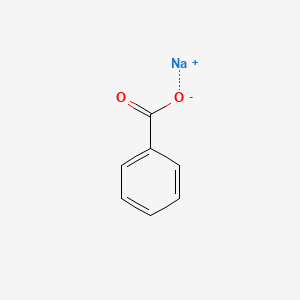
1 2D Structure

Sodium Benzoate

2 Identification
2.1 Computed Descriptors
2.1.1 IUPAC Name
sodium;benzoate
2.1.2 InChI
InChI=1S/C7H6O2.Na/c8-7(9)6-4-2-1-3-5-6;/h1-5H,(H,8,9);/q;+1/p-1
2.1.3 InChI Key
WXMKPNITSTVMEF-UHFFFAOYSA-M
2.1.4 Canonical SMILES
C1=CC=C(C=C1)C(=O)[O-].[Na+]
2.2 Other Identifiers
2.2.1 UNII
OJ245FE5EU
2.3 Synonyms
2.3.1 MeSH Synonyms

1. Benzoate, Sodium

2.3.2 Depositor-Supplied Synonyms

1. 532-32-1

2. Antimol

3. Sobenate

4. Benzoic Acid, Sodium Salt

5. Benzoic Acid Sodium Salt

6. Sodium;benzoate

7. Benzoate Of Soda

8. Benzoate, Sodium

9. Sodiumbenzoate

10. Fema No. 3025

11. Purox S

12. Fuminaru

13. Microcare Sb

14. Benzoic Acid Sodium

15. Benzoate Sodium

16. Oj245fe5eu

17. E211

18. Ins No.211

19. Ins-211

20. E-211

21. Natrium Benzoicum

22. Caswell No. 746

23. Benzoan Sodny [czech]

24. Benzoan Sodny

25. Fema Number 3025

26. Ccris 3921

27. Hsdb 696

28. Benzoesaeure (na-salz) [german]

29. Benzoesaeure (na-salz)

30. Sodium Benzoate Solution

31. Einecs 208-534-8

32. Mfcd00012463

33. Unii-oj245fe5eu

34. Epa Pesticide Chemical Code 009103

35. Ai3-07835

36. Bzona

37. Sodium Benzoate [usan:jan:nf]

38. Sodium Benzoate Usp

39. Sodium Benzoate,(s)

40. Sodium Benzoate (tn)

41. Dsstox_cid_140

42. Schembl823

43. Ec 208-534-8

44. Chembl1356

45. Dsstox_rid_75393

46. Dsstox_gsid_20140

47. Sodium Benzoate [ii]

48. Sodium Benzoate [mi]

49. Sodium Benzoate (jp17/nf)

50. Sodium Benzoate [fcc]

51. Sodium Benzoate [jan]

52. Sodium Benzoate [fhfi]

53. Sodium Benzoate [hsdb]

54. Sodium Benzoate [inci]

55. Sodium Benzoate [usan]

56. Sodium Benzoate [vandf]

57. Dtxsid1020140

58. Sodium Benzoate [mart.]

59. Sodium Benzoate [usp-rs]

60. Sodium Benzoate [who-dd]

61. Chebi:113455

62. Sodium Benzoate (fragrance Grade)

63. Benzoic Acid, Sodium Salt (1:1)

64. Tox21_300125

65. Sodium Benzoate [orange Book]

66. Akos003053000

67. Akos015890021

68. Sodium Benzoate [ep Monograph]

69. Ccg-266169

70. Ammonul Component Sodium Benzoate

71. Ucephan Component Sodium Benzoate

72. Ncgc00254072-01

73. Cas-532-32-1

74. Sodium Benzoate Component Of Ammonul

75. Sodium Benzoate Component Of Ucephan

76. Ft-0645126

77. S0593

78. Benzoic Acid Sodium 100 Microg/ml In Methanol

79. D02277

80. A829462

81. Q423971

82. J-519752

2.4 Create Date
2005-03-27
3 Chemical and Physical Properties
Molecular Weight 144.10 g/mol
Molecular Formula C7H5NaO2
Hydrogen Bond Donor Count0
Hydrogen Bond Acceptor Count2
Rotatable Bond Count1
Exact Mass144.01872368 g/mol
Monoisotopic Mass144.01872368 g/mol
Topological Polar Surface Area40.1 Ų
Heavy Atom Count10
Formal Charge0
Complexity108
Isotope Atom Count0
Defined Atom Stereocenter Count0
Undefined Atom Stereocenter Count0
Defined Bond Stereocenter Count0
Undefined Bond Stereocenter Count0
Covalently Bonded Unit Count2
4 Drug and Medication Information
4.1 Therapeutic Uses

Antifungal Agents; Food Preservatives

National Library of Medicine's Medical Subject Headings. Sodium Benzoate. Online file (MeSH, 2016). Available from, as of April 27, 2016: https://www.nlm.nih.gov/mesh/2016/mesh_browser/MBrowser.html


Sodium phenylacetate and sodium benzoate is used as adjunctive therapy for the treatment of acute hyperammonemia and associated encephalopathy in patients with disorders (i.e., deficiencies in enzymes) of the urea cycle. Sodium phenylacetate and sodium benzoate is designated an orphan drug by the US Food and Drug Administration (FDA) for this use.

American Society of Health-System Pharmacists 2016; Drug Information 2016. Bethesda, MD. 2016


/EXPL THER/ In addition to dopaminergic hyperactivity, hypofunction of the N-methyl-d-aspartate receptor (NMDAR) has an important role in the pathophysiology of schizophrenia. Enhancing NMDAR-mediated neurotransmission is considered a novel treatment approach. To date, several trials on adjuvant NMDA-enhancing agents have revealed beneficial, but limited, efficacy for positive and negative symptoms and cognition. Another method to enhance NMDA function is to raise the levels of d-amino acids by blocking their metabolism. Sodium benzoate is a d-amino acid oxidase inhibitor. /The objective of this study was/ to examine the clinical and cognitive efficacy and safety of add-on treatment of sodium benzoate for schizophrenia. /The study consisted of/ a randomized, double-blind, placebo-controlled trial in 2 major medical centers in Taiwan composed of 52 patients with chronic schizophrenia who had been stabilized with antipsychotic medications for 3 months or longer. /Interventions included/ six weeks of add-on treatment of 1 g/d of sodium benzoate or placebo. The primary outcome measure was the Positive and Negative Syndrome Scale (PANSS) total score. Clinical efficacy and adverse effects were assessed biweekly. Cognitive functions were measured before and after the add-on treatment. Benzoate produced a 21% improvement in PANSS total score and large effect sizes (range, 1.16-1.69) in the PANSS total and subscales, Scales for the Assessment of Negative Symptoms-20 items, Global Assessment of Function, Quality of Life Scale and Clinical Global Impression and improvement in the neurocognition subtests as recommended by the National Institute of Mental Health's Measurement and Treatment Research to Improve Cognition in Schizophrenia initiative, including the domains of processing speed and visual learning. Benzoate was well tolerated without significant adverse effects. Benzoate adjunctive therapy significantly improved a variety of symptom domains and neurocognition in patients with chronic schizophrenia. The preliminary results show promise for d-amino acid oxidase inhibition as a novel approach for new drug development for schizophrenia.

PMID:24089054 Lane HY et al; JAMA Psychiatry 70 (12): 1267-75 (2013)


/EXPL THER/ N-methyl-D-aspartate receptor (NMDAR)-mediated neurotransmission is vital for learning and memory. Hypofunction of NMDAR has been reported to play a role in the pathophysiology of Alzheimer disease (AD), particularly in the early phase. Enhancing NMDAR activation might be a novel treatment approach. One of the methods to enhance NMDAR activity is to raise the levels of NMDA coagonists by blocking their metabolism. This study examined the efficacy and safety of sodium benzoate, a D-amino acid oxidase inhibitor, for the treatment of amnestic mild cognitive impairment and mild AD. We conducted a randomized, double-blind, placebo-controlled trial in four major medical centers in Taiwan. Sixty patients with amnestic mild cognitive impairment or mild AD were treated with 250-750 mg/day of sodium benzoate or placebo for 24 weeks. Alzheimer's Disease Assessment Scale-cognitive subscale (the primary outcome) and global function (assessed by Clinician Interview Based Impression of Change plus Caregiver Input) were measured every 8 weeks. Additional cognition composite was measured at baseline and endpoint. Sodium benzoate produced a better improvement than placebo in Alzheimer's Disease Assessment Scale-cognitive subscale (p = .0021, .0116, and .0031 at week 16, week 24, and endpoint, respectively), additional cognition composite (p = .007 at endpoint) and Clinician Interview Based Impression of Change plus Caregiver Input (p = .015, .016, and .012 at week 16, week 24, and endpoint, respectively). Sodium benzoate was well-tolerated without evident side-effects. Sodium benzoate substantially improved cognitive and overall functions in patients with early-phase AD. The preliminary results show promise for D-amino acid oxidase inhibition as a novel approach for early dementing processes.

Lin CH et al; Biol Psychiatry 75 (9): 678-85 (2014) 24074637


/EXPL THER/ A recent clinical study demonstrated that sodium benzoate (SB), a prototype competitive d-amino acid oxidase inhibitor, was effective in the treatment of several symptoms, such as positive and negative symptoms, and cognitive impairment in medicated patients with schizophrenia. The objective of the study was to examine the effects of SB on behavioral abnormalities such as pre-pulse inhibition (PPI) deficits and hyperlocomotion in mice after a single administration of the N-methyl-D-aspartate (NMDA) receptor antagonist, phencyclidine (PCP). The effects of SB on behavioral abnormalities (PPI deficits and hyperlocomotion) in mice after PCP administration were examined. Furthermore, effects of SB on tissue levels of amino acids were also examined. A single oral dose of SB (100, 300, or 1000 mg/kg) attenuated PPI deficits in mice after administration of PCP (3.0 mg/kg, s.c.) in a dose-dependent manner. In contrast, L-701,324 (10 mg/kg), an antagonist at the glycine site of the NMDA receptor, did not affect the effect of SB (1000 mg/kg) on PCP-induced PPI deficits. Furthermore, a single oral dose of SB (1000 mg/kg) significantly attenuated the hyperlocomotion in mice after administration of PCP (3.0 mg/kg, s.c.). However, a single oral dose of SB (1000 mg/kg) caused no changes to D-serine levels in plasma or in the frontal cortex, hippocampus, and striatum of these animals. This study suggests that SB induced antipsychotic effects in the PCP model of schizophrenia, although it did not increase D-serine levels in the brain.

PMID:25648314 Matsuura A et al; Acta Neuropsychiatr 27 (3): 159-67 (2015)


4.2 Drug Warning

At /the therapeutic/ dose level, clinical signs of toxicity are rare and in most cases limited to anorexia and vomiting, especially after intravenous bolus infusions.

International Programme on Chemical Safety's Concise International Chemical Assessment Documents. Number 26: Benzoic Acid and Sodium Benzoate (2000). Available from, as of April 27, 2016: https://www.inchem.org/pages/cicads.html


5 Pharmacology and Biochemistry
5.1 MeSH Pharmacological Classification

Antifungal Agents

Substances that destroy fungi by suppressing their ability to grow or reproduce. They differ from FUNGICIDES, INDUSTRIAL because they defend against fungi present in human or animal tissues. (See all compounds classified as Antifungal Agents.)


Food Preservatives

Substances capable of inhibiting, retarding or arresting the process of fermentation, acidification or other deterioration of foods. (See all compounds classified as Food Preservatives.)


5.2 FDA Pharmacological Classification
5.2.1 Pharmacological Classes
Nitrogen Binding Agent [EPC]; Ammonium Ion Binding Activity [MoA]
5.3 ATC Code

A - Alimentary tract and metabolism

A16 - Other alimentary tract and metabolism products

A16A - Other alimentary tract and metabolism products

A16AX - Various alimentary tract and metabolism products

A16AX11 - Sodium benzoate


5.4 Absorption, Distribution and Excretion

Overall there are signs of systemic absorption via oral and dermal exposures, no evidence of target organs or of excretion. After oral ingestion and dermal absorption, the test substance will be metabolised to hippuric acid. Despite the low log Pow value, results of the 28-day study in rats and the predicted metabolism do not indicate a potential for the substance to bioaccumulate.

European Chemicals Agency (ECHA); Registered Substances, Sodium benzoate (CAS Number: 532-32-1) (EC Number: 208-534-8) (Last updated: March 18, 2016). Available from, as of April 27, 2016: https://echa.europa.eu/


After oral ingestion of benzoic acid and sodium benzoate, there is a rapid absorption (of undissociated benzoic acid) from the gastrointestinal tract in experimental animals or humans. ... 100% absorption can be assumed. In humans, the peak plasma concentration is reached within 1-2 hr.

International Programme on Chemical Safety's Concise International Chemical Assessment Documents. Number 26: Benzoic Acid and Sodium Benzoate (2000). Available from, as of April 27, 2016: https://www.inchem.org/pages/cicads.html


Hippuric acid is rapidly excreted in urine. In humans, after oral doses of up to 160 mg/kg body weight, 75-100% of the applied dose is excreted as hippuric acid within 6 hr after administration, and the rest within 2-3 days.

International Programme on Chemical Safety's Concise International Chemical Assessment Documents. Number 26: Benzoic Acid and Sodium Benzoate (2000). Available from, as of April 27, 2016: https://www.inchem.org/pages/cicads.html


Experiments on the distribution and elimination of (14)C-benzoate in the rat have shown no accumulation of sodium benzoate or benzoic acid in the body.

International Programme on Chemical Safety's Concise International Chemical Assessment Documents. Number 26: Benzoic Acid and Sodium Benzoate (2000). Available from, as of April 27, 2016: https://www.inchem.org/pages/cicads.html


For more Absorption, Distribution and Excretion (Complete) data for SODIUM BENZOATE (6 total), please visit the HSDB record page.


5.5 Metabolism/Metabolites

After oral and dermal uptake, benzoate is metabolized in the liver by conjugation with glycine, resulting in the formation of hippuric acid. The rate of biotransformation in humans is high: after oral doses of 40, 80 or 160 mg sodium benzoate/kg body weight, the transformation to hippuric acid was independent of the dose - about 17-29 mg/kg body weight per hour, corresponding to about 500 mg/kg body weight per day. Other /studies/ obtained higher values of 0.8-2 g/kg body weight per day.

International Programme on Chemical Safety's Concise International Chemical Assessment Documents. Number 26: Benzoic Acid and Sodium Benzoate (2000). Available from, as of April 27, 2016: https://www.inchem.org/pages/cicads.html


Another metabolite of benzoate is the benzoyl glucuronide.

International Programme on Chemical Safety's Concise International Chemical Assessment Documents. Number 26: Benzoic Acid and Sodium Benzoate (2000). Available from, as of April 27, 2016: https://www.inchem.org/pages/cicads.html


The metabolism of the benzoates depletes glycine concentrations and can therefore alter the glycine-dependent metabolism of other compounds. /A study/ demonstrated that ... sodium benzoate successfully competed with aspirin for glycine, resulting in increased concentration and persistence of salicyclic acid in the body.

Cosmetic Ingredient Review; International Journal of Toxicology 20 (Suppl. 3): 23-50 (2001). Available from, as of April 27, 2016: https://www.beauty-review.nl/wp-content/uploads/2014/06/Final-report-on-the-safety-assessment-of-Benzyl-Alcohol-Benzoic-Acid-and-Sodium-Benzoate.pdf


This study underlines the importance of cinnamon, a widely-used food spice and flavoring material, and its metabolite sodium benzoate (NaB), a widely-used food preservative and a FDA-approved drug against urea cycle disorders in humans, in increasing the levels of neurotrophic factors [e.g., brain-derived neurotrophic factor (BDNF) and neurotrophin-3 (NT-3)] in the CNS. NaB, but not sodium formate (NaFO), dose-dependently induced the expression of BDNF and NT-3 in primary human neurons and astrocytes. Interestingly, oral administration of ground cinnamon increased the level of NaB in serum and brain and upregulated the levels of these neurotrophic factors in vivo in mouse CNS. Accordingly, oral feeding of NaB, but not NaFO, also increased the level of these neurotrophic factors in vivo in the CNS of mice. NaB induced the activation of protein kinase A (PKA), but not protein kinase C (PKC), and H-89, an inhibitor of PKA, abrogated NaB-induced increase in neurotrophic factors. Furthermore, activation of cAMP response element binding (CREB) protein, but not NF-kappaB, by NaB, abrogation of NaB-induced expression of neurotrophic factors by siRNA knockdown of CREB and the recruitment of CREB and CREB-binding protein to the BDNF promoter by NaB suggest that NaB exerts its neurotrophic effect through the activation of CREB. Accordingly, cinnamon feeding also increased the activity of PKA and the level of phospho-CREB in vivo in the CNS. These results highlight a novel neutrophic property of cinnamon and its metabolite NaB via PKA - CREB pathway, which may be of benefit for various neurodegenerative disorders.

PMID:23475543 Full text: https://www.ncbi.nlm.nih.gov/pmc/articles/PMC3663914 Jana A et al; J Neuroimmune Pharmacol 8 (3): 739-55 (2013)


5.6 Mechanism of Action

DJ-1 (PARK7) is a neuroprotective protein that protects cells from oxidative stress. Accordingly, loss-of-function DJ-1 mutations have been linked with a familial form of early onset Parkinson disease. Mechanisms by which DJ-1 level could be enriched in the CNS are poorly understood. Recently we have discovered anti-inflammatory activity of sodium benzoate (NaB), a metabolite of cinnamon and a widely-used food additive. Here we delineate that NaB is also capable of increasing the level of DJ-1 in primary mouse and human astrocytes and human neurons highlighting another novel neuroprotective effect of this compound. Reversal of DJ-1-inducing effect of NaB by mevalonate, farnesyl phosphate, but not cholesterol and ubiquinone, suggests that depletion of intermediates, but not end products, of the mevalonate pathway is involved in the induction of DJ-1 by NaB. Accordingly, either an inhibitor of p21(ras) farnesyl protein transferase (FPTI) or a dominant-negative mutant of p21(ras) alone was also able to increase the expression of DJ-1 in astrocytes suggesting an involvement of p21(ras) in DJ-1 expression. However, an inhibitor of geranyl geranyl transferase (GGTI) and a dominant-negative mutant of p21(rac) had no effect on the expression of DJ-1, indicating the specificity of the effect. Similarly lipopolysaccharide (LPS), an activator of small G proteins, also inhibited the expression of DJ-1, and NaB and FPTI, but not GGTI, abrogated LPS-mediated inhibition. Together, these results suggest that NaB upregulates DJ-1 via modulation of mevalonate metabolites and that p21(ras), but not p21(rac), is involved in the regulation of DJ-1.

PMID:21701815 Full text: https://www.ncbi.nlm.nih.gov/pmc/articles/PMC3189510 Khasnavis S, Pahan K; J Neuroimmune Pharmacol 7 (2): 424-35 (2012)


This study underlines the importance of cinnamon, a widely-used food spice and flavoring material, and its metabolite sodium benzoate (NaB), a widely-used food preservative and a FDA-approved drug against urea cycle disorders in humans, in increasing the levels of neurotrophic factors [e.g., brain-derived neurotrophic factor (BDNF) and neurotrophin-3 (NT-3)] in the CNS. NaB, but not sodium formate (NaFO), dose-dependently induced the expression of BDNF and NT-3 in primary human neurons and astrocytes. Interestingly, oral administration of ground cinnamon increased the level of NaB in serum and brain and upregulated the levels of these neurotrophic factors in vivo in mouse CNS. Accordingly, oral feeding of NaB, but not NaFO, also increased the level of these neurotrophic factors in vivo in the CNS of mice. NaB induced the activation of protein kinase A (PKA), but not protein kinase C (PKC), and H-89, an inhibitor of PKA, abrogated NaB-induced increase in neurotrophic factors. Furthermore, activation of cAMP response element binding (CREB) protein, but not NF-kappaB, by NaB, abrogation of NaB-induced expression of neurotrophic factors by siRNA knockdown of CREB and the recruitment of CREB and CREB-binding protein to the BDNF promoter by NaB suggest that NaB exerts its neurotrophic effect through the activation of CREB. Accordingly, cinnamon feeding also increased the activity of PKA and the level of phospho-CREB in vivo in the CNS. These results highlight a novel neutrophic property of cinnamon and its metabolite NaB via PKA - CREB pathway, which may be of benefit for various neurodegenerative disorders.

PMID:23475543 Full text: https://www.ncbi.nlm.nih.gov/pmc/articles/PMC3663914 Jana A et al; J Neuroimmune Pharmacol 8 (3): 739-55 (2013)


Related Excipient Companies

Upload your portfolio for free, ask us

Excipients by Applications

Click here to find the perfect excipient manufacturers by their capabilities

Parenteral

read-more
read-more

Thickeners and Stabilizers

read-more
read-more

Coating Systems & Additives

read-more
read-more

Taste Masking

read-more
read-more

Digital Content read-more

Create Content with PharmaCompass, ask us

DATA COMPILATION #PharmaFlow

read-more
read-more

NEWS #PharmaBuzz

read-more
read-more

Market Place

Do you need sourcing support? Ask us

REF. STANDARDS & IMPURITIES

Upload your portfolio for free, ask us

ABOUT THIS PAGE

Looking for 532-32-1 / Sodium Benzoate API manufacturers, exporters & distributors?

Sodium Benzoate manufacturers, exporters & distributors 1

72

PharmaCompass offers a list of Sodium Benzoate API manufacturers, exporters & distributors, which can be sorted by GMP, USDMF, JDMF, KDMF, CEP (COS), WC, Price,and more, enabling you to easily find the right Sodium Benzoate manufacturer or Sodium Benzoate supplier for your needs.

Send us enquiries for free, and we will assist you in establishing a direct connection with your preferred Sodium Benzoate manufacturer or Sodium Benzoate supplier.

PharmaCompass also assists you with knowing the Sodium Benzoate API Price utilized in the formulation of products. Sodium Benzoate API Price is not always fixed or binding as the Sodium Benzoate Price is obtained through a variety of data sources. The Sodium Benzoate Price can also vary due to multiple factors, including market conditions, regulatory modifications, or negotiated pricing deals.

API | Excipient name

Sodium Benzoate

Synonyms

532-32-1, Antimol, Sobenate, Benzoic acid, sodium salt, Benzoic acid sodium salt, Sodium;benzoate

Cas Number

532-32-1

Unique Ingredient Identifier (UNII)

OJ245FE5EU

About Sodium Benzoate

The sodium salt of BENZOIC ACID. It is used as an antifungal preservative in pharmaceutical preparations and foods. It may also be used as a test for liver function.

PUROX S Manufacturers

A PUROX S manufacturer is defined as any person or entity involved in the manufacture, preparation, processing, compounding or propagation of PUROX S, including repackagers and relabelers. The FDA regulates PUROX S manufacturers to ensure that their products comply with relevant laws and regulations and are safe and effective to use. PUROX S API Manufacturers are required to adhere to Good Manufacturing Practices (GMP) to ensure that their products are consistently manufactured to meet established quality criteria.

click here to find a list of PUROX S manufacturers with USDMF, JDMF, KDMF, CEP, GMP, COA and API Price related information on PhamaCompass.

PUROX S Suppliers

A PUROX S supplier is an individual or a company that provides PUROX S active pharmaceutical ingredient (API) or PUROX S finished formulations upon request. The PUROX S suppliers may include PUROX S API manufacturers, exporters, distributors and traders.

click here to find a list of PUROX S suppliers with USDMF, JDMF, KDMF, CEP, GMP, COA and API Price related information on PharmaCompass.

PUROX S USDMF

A PUROX S DMF (Drug Master File) is a document detailing the whole manufacturing process of PUROX S active pharmaceutical ingredient (API) in detail. Different forms of PUROX S DMFs exist exist since differing nations have different regulations, such as PUROX S USDMF, ASMF (EDMF), JDMF, CDMF, etc.

A PUROX S DMF submitted to regulatory agencies in the US is known as a USDMF. PUROX S USDMF includes data on PUROX S's chemical properties, information on the facilities and procedures used, and details about packaging and storage. The PUROX S USDMF is kept confidential to protect the manufacturer’s intellectual property.

click here to find a list of PUROX S suppliers with USDMF on PharmaCompass.

PUROX S CEP

A PUROX S CEP of the European Pharmacopoeia monograph is often referred to as a PUROX S Certificate of Suitability (COS). The purpose of a PUROX S CEP is to show that the European Pharmacopoeia monograph adequately controls the purity of PUROX S EP produced by a given manufacturer. Suppliers of raw materials can prove the suitability of PUROX S to their clients by showing that a PUROX S CEP has been issued for it. The manufacturer submits a PUROX S CEP (COS) as part of the market authorization procedure, and it takes on the role of a PUROX S CEP holder for the record. Additionally, the data presented in the PUROX S CEP (COS) is managed confidentially and offers a centralized system acknowledged by numerous nations, exactly like the PUROX S DMF.

A PUROX S CEP (COS) is recognised by all 36 nations that make up the European Pharmacopoeia Convention. PUROX S CEPs may be accepted in nations that are not members of the Ph. Eur. at the discretion of the authorities there.

click here to find a list of PUROX S suppliers with CEP (COS) on PharmaCompass.

PUROX S WC

A PUROX S written confirmation (PUROX S WC) is an official document issued by a regulatory agency to a PUROX S manufacturer, verifying that the manufacturing facility of a PUROX S active pharmaceutical ingredient (API) adheres to the Good Manufacturing Practices (GMP) regulations of the importing country. When exporting PUROX S APIs or PUROX S finished pharmaceutical products to another nation, regulatory agencies frequently require a PUROX S WC (written confirmation) as part of the regulatory process.

click here to find a list of PUROX S suppliers with Written Confirmation (WC) on PharmaCompass.

PUROX S NDC

National Drug Code is a comprehensive database maintained by the FDA that contains information on all drugs marketed in the US. This directory includes information about finished drug products, unfinished drug products, and compounded drug products, including those containing PUROX S as an active pharmaceutical ingredient (API).

Finished drug products

The FDA updates the NDC directory daily. The NDC numbers for PUROX S API and other APIs are published in this directory by the FDA.

Unfinished drugs

The NDC unfinished drugs database includes product listing information submitted for all unfinished drugs, such as active pharmaceutical ingredients (APIs), drugs intended for further processing and bulk drug substances for compounding.

Pharmaceutical companies that manufacture PUROX S as an active pharmaceutical ingredient (API) must furnish the FDA with an updated record of all drugs that they produce, prepare, propagate, compound, or process for commercial distribution in the US at their facilities.

Compounded drug products

The NDC directory also contains data on finished compounded human drug products that contain PUROX S and are produced by outsourcing facilities. While these outsourcing facilities are not mandated to assign a PUROX S NDC to their finished compounded human drug products, they may choose to do so.

click here to find a list of PUROX S suppliers with NDC on PharmaCompass.

PUROX S GMP

PUROX S Active pharmaceutical ingredient (API) is produced in GMP-certified manufacturing facility.

GMP stands for Good Manufacturing Practices, which is a system used in the pharmaceutical industry to make sure that goods are regularly produced and monitored in accordance with quality standards. The FDA’s current Good Manufacturing Practices requirements are referred to as cGMP or current GMP which indicates that the company follows the most recent GMP specifications. The World Health Organization (WHO) has its own set of GMP guidelines, called the WHO GMP. Different countries can also set their own guidelines for GMP like China (Chinese GMP) or the EU (EU GMP).

PharmaCompass offers a list of PUROX S GMP manufacturers, exporters & distributors, which can be sorted by USDMF, JDMF, KDMF, CEP (COS), WC, API price, and more, enabling you to easily find the right PUROX S GMP manufacturer or PUROX S GMP API supplier for your needs.

PUROX S CoA

A PUROX S CoA (Certificate of Analysis) is a formal document that attests to PUROX S's compliance with PUROX S specifications and serves as a tool for batch-level quality control.

PUROX S CoA mostly includes findings from lab analyses of a specific batch. For each PUROX S CoA document that a company creates, the USFDA specifies specific requirements, such as supplier information, material identification, transportation data, evidence of conformity and signature data.

PUROX S may be tested according to a variety of international standards, such as European Pharmacopoeia (PUROX S EP), PUROX S JP (Japanese Pharmacopeia) and the US Pharmacopoeia (PUROX S USP).

Inform the supplier about your product requirements, specifying if you need a product with particular monograph like EP (Ph. Eur.), USP, JP, BP, or any other quality. In addition, clarify whether you need hydrochloride (HCl), anhydricum, base, micronisatum or a specific level of purity. To find reputable suppliers, utilize the filters and select those certified by GMP, FDA, or any other certification as per your requirement.
For your convenience, we have listed synonyms and CAS numbers to help you find the best supplier. The use of synonyms and CAS numbers can be helpful in identifying potential suppliers, but it is crucial to note that they might not always indicate the exact same product. It is important to confirm the product details with the supplier before making a purchase to ensure that it meets your requirements.
Ask Us for Pharmaceutical Supplier and Partner
Ask Us, Find A Supplier / Partner
No Commissions, No Strings Attached, Get Connected for FREE

What are you looking for?

How can we help you?

The request can't be empty

Please read our Privacy Policy carefully

You must agree to the privacy policy

The name can't be empty
The company can't be empty.
The email can't be empty Please enter a valid email.
The mobile can't be empty