
Synopsis
0
USDMF
0
CEP/COS
0
JDMF
0
EU WC
0
NDC API
0
VMF
0
FDF Dossiers
0
FDA Orange Book
0
Europe
0
Canada
0
Australia
0
South Africa
0
Listed Dossiers

DRUG PRODUCT COMPOSITIONS
0
US Patents
0
US Exclusivities
0
Health Canada Patents
US Medicaid
NA
Annual Reports
NA
Regulatory FDF Prices
NA
0
API
0
FDF
0
Data Compilation #PharmaFlow
0
Stock Recap #PipelineProspector
0
Weekly News Recap #Phispers
1. 1 Butanol
2. Alcohol, Butyl
3. Alcohol, N-butyl
4. Butyl Alcohol
5. N Butanol
6. N Butyl Alcohol
7. N-butanol
8. N-butyl Alcohol
1. Butanol
2. Butan-1-ol
3. N-butanol
4. Butyl Alcohol
5. 71-36-3
6. N-butyl Alcohol
7. 1-hydroxybutane
8. Propylcarbinol
9. Butyl Hydroxide
10. Methylolpropane
11. Propylmethanol
12. Hemostyp
13. Butyric Alcohol
14. N-butan-1-ol
15. 1-butyl Alcohol
16. Butanolo
17. Propyl Carbinol
18. Alcool Butylique
19. Butylowy Alkohol
20. Buoh
21. Butanolen
22. Normal Primary Butyl Alcohol
23. Rcra Waste Number U031
24. Ccs 203
25. N-buoh
26. Fema No. 2178
27. Butyric Or Normal Primary Butyl Alcohol
28. N-butylalkohol
29. Butanol-1
30. N-propyl Carbinol
31. 35296-72-1
32. Nsc 62782
33. Butyl Alcohol (nf)
34. Butyl Alcohol [nf]
35. Mfcd00002964
36. Chembl14245
37. 8pj61p6ts3
38. Chebi:28885
39. Nsc-62782
40. Ncgc00090961-02
41. Butanols
42. Dsstox_cid_1740
43. Butanol [french]
44. Dsstox_rid_76300
45. Dsstox_gsid_21740
46. Butanolen [dutch]
47. Butanolo [italian]
48. 1-butanol, Analytical Standard
49. Butyl Alcohol (natural)
50. Fema Number 2178
51. Alcohol, Butyl
52. Alcool Butylique [french]
53. Butylowy Alkohol [polish]
54. 1 Butanol
55. 1-butanol, Acs Reagent, >=99.4%
56. Cas-71-36-3
57. 1bo
58. Hsdb 48
59. Butanol, 1-
60. Ccris 4321
61. Einecs 200-751-6
62. Rcra Waste No. U031
63. Unii-wb09ny83ya
64. Butaneol
65. Butylalcohol
66. Unii-8pj61p6ts3
67. Butyl-alcohol
68. N-butylalcohol
69. Normal Butanol
70. 1-butylalcohol
71. Ai3-00405
72. N-butanolbutanolen
73. Nbuoh
74. 1 -butanol
75. 1- Butanol
76. 1-n-butanol
77. 1-butanol, Anhydrous
78. Alcohol,butyl
79. N-butyl Alcohol,(s)
80. 1-butanol, For Hplc
81. N-butanol, Hplc Grade
82. 1-butanol, 99%
83. 1-butanol, Hplc Grade
84. N-c4h9oh
85. Bmse000447
86. Na 1120 (related)
87. 1-butanol, 99.9%
88. Ec 200-751-6
89. Butyl Alcohol [ii]
90. Butyl Alcohol [fcc]
91. Wb09ny83ya
92. Butyl Alcohol [fhfi]
93. Butyl Alcohol [hsdb]
94. Wln: Q4
95. 1-butanol [usp-rs]
96. Alcohol,butyl [vandf]
97. Bidd:er0611
98. N-butyl Alcohol [mi]
99. Nat. Butanol (butyl Alcohol)
100. Aqualine™ Standard 5.1
101. Butyl Alcohol [mart.]
102. N-butyl Alcohol [inci]
103. 1-butanol, Lr, >=99%
104. Aqualine™ Standard 10.1
105. Dtxsid1021740
106. Bdbm36173
107. Butyl Alcohol (fragrance Grade)
108. Butyl Alcohol Reagent Grade Acs
109. 1-butanol, Anhydrous, 99.8%
110. Butyl Alcohol (industrial Grade)
111. N-butanol, Acs, 99.4+%
112. N-butyl Alcohol [who-dd]
113. 1-butanol, Ar, >=99.5%
114. 1-butanol, For Hplc, 99.8%
115. Butyl Alcohol, >=99.9%, Fcc
116. Nsc62782
117. Zinc1530354
118. Tox21_111046
119. Tox21_200741
120. Lmfa05000109
121. Stl264186
122. Akos000249218
123. Zinc100492542
124. 1-butanol 100 Microg/ml In Methanol
125. 1-butanol 500 Microg/ml In Methanol
126. 1-butanol, For Hplc, >=99.7%
127. Db02145
128. 1-butanol 1000 Microg/ml In Methanol
129. Butyl Alcohol, >=99.9%, Fcc, Fg
130. Ncgc00090961-01
131. Ncgc00090961-03
132. Ncgc00258295-01
133. 1-butanol 100 Microg/ml In Acetonitrile
134. Bp-30034
135. 1-butanol, Saj First Grade, >=99.0%
136. 1-butanol, For Molecular Biology, >=99%
137. 1-butanol, Jis Special Grade, >=99.0%
138. 1-butanol, P.a., Acs Reagent, 99.4%
139. 1-butanol, For Hplc, >=99.8% (gc)
140. 1-butanol, Spectrophotometric Grade, 99.5%
141. 1-butanol, Uv Hplc Spectroscopic, 99.5%
142. B0228
143. B0704
144. B0944
145. Ft-0607555
146. Ft-0623296
147. Ft-0774976
148. 1-butanol, Anhydrous, Zero2(tm), 99.8%
149. 1-butanol, Ultrapure, Spectrophotometric Grade
150. Butyl Alcohol, Natural, >=99.5%, Fcc, Fg
151. C06142
152. D03200
153. Q16391
154. Tributyl Acetylcitrate Impurity D [ep Impurity]
155. F0001-1830
156. Z966690700
157. 1-butanol, Puriss. P.a., Acs Reagent, >=99.5% (gc)
158. Bdbc6468-886d-4f6c-8746-734f2b63e6ce
159. 1-butanol, Acs Reagent, Reag. Iso, Reag. Ph. Eur., 99.5%
160. 1-butanol, United States Pharmacopeia (usp) Reference Standard
161. 1-butanol, Pharmaceutical Secondary Standard; Certified Reference Material
162. 1-butanol, Puriss. P.a., Acs Reagent, Reag. Iso, Reag. Ph. Eur., >=99.5% (gc)
| Molecular Weight | 74.12 g/mol |
|---|---|
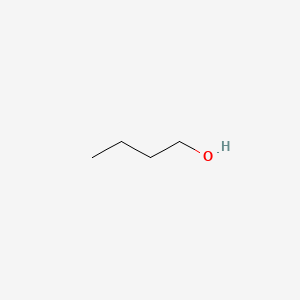
| Molecular Formula | C4H10O |
| XLogP3 | 0.9 |
| Hydrogen Bond Donor Count | 1 |
| Hydrogen Bond Acceptor Count | 1 |
| Rotatable Bond Count | 2 |
| Exact Mass | 74.073164938 g/mol |
| Monoisotopic Mass | 74.073164938 g/mol |
| Topological Polar Surface Area | 20.2 Ų |
| Heavy Atom Count | 5 |
| Formal Charge | 0 |
| Complexity | 13.1 |
| Isotope Atom Count | 0 |
| Defined Atom Stereocenter Count | 0 |
| Undefined Atom Stereocenter Count | 0 |
| Defined Bond Stereocenter Count | 0 |
| Undefined Bond Stereocenter Count | 0 |
| Covalently Bonded Unit Count | 1 |
As extrapolated from rat data ... 3 to 7 oz represents reasonable est of single oral mean lethal dose of any butyl alcohol in man. /Alcohols, higher/
Gosselin, R.E., R.P. Smith, H.C. Hodge. Clinical Toxicology of Commercial Products. 5th ed. Baltimore: Williams and Wilkins, 1984., p. III-13
Butanol is absorbed through the lung, the GI tract and skin.
Snyder, R. (ed.). Ethel Browning's Toxicity and Metabolism of Industrial Solvents. Second Edition. Volume 3 Alcohols and Esters. New York, NY: Elsevier, 1992., p. 39
Twelve subjects were exposed to 300 or 600 mg/cu M of n-butyl alcohol in inspired air during rest and during exercise on a bicycle ergometer. Exposure lasted 2 hr. The results were puzzling in view of the high blood/air partition coefficient for butyl alcohol. The arterial blood concentration was low. The concentration in the last part of the expired air, i.e., the ""alveolar'' concentration, was low. The quotient of ""alveolar'' concentration X 100/inspired concentration was low in relation to the low percentage uptake. However the high solubility of butyl alcohol in water may explain the results. Butyl alcohol was probably partially taken up in the water of the dead space mucous membranes during inspiration. It was then partially released from the membranes. Therefore the concentration of butyl alcohol in the last part of expiration was probably not the same as the concentration in the alveolar air.
PMID:973129 Astrand I et al; Scand J Work Environ Health 2 (3): 165-75 (1976)
Volunteers exposed to n-butanol for 2 hr at air concn of 100 and 200 ppm developed blood concn that never exceeded 1.0 mg/L, whether at rest or during excercise. Exposure to an air concn of 50 ppm for 2 hr resulted in blood levels less than 0.08 mg/l.
Baselt, R.C. Biological Monitoring Methods for Industrial Chemicals. 2nd ed. Littleton, MA: PSG Publishing Co., Inc. 1988., p. 51
In rats, n-butanol is extensively metabolized; within 24 hr of a single oral dose, 83% had been converted to carbon dioxide, 4% excreted in the urine and 12% remained in the body.
Baselt, R.C. Biological Monitoring Methods for Industrial Chemicals. 2nd ed. Littleton, MA: PSG Publishing Co., Inc. 1988., p. 51
For more Absorption, Distribution and Excretion (Complete) data for N-BUTYL ALCOHOL (6 total), please visit the HSDB record page.
Cytochrome p450 isozyme 3a, isolated from hepatic microsomes of rabbits treated chronically with ethyl alcohol, had a unique substrate specificity when compared with isozymes 2, 3b, 3c, and 4. Form 3a has unusually high activity in the p-hydroxylation of aniline and in the oxidation of alcohols to aldehydes. Isozyme 3a catalyzes the oxidation of methyl alcohol, propyl alcohol, and butanol as well as ethyl alcohol.
PMID:7142188 Morgan ET et al; J Biol Chem 257 (23): 13951-7 (1982)
n-Butyl Alcohol may be formed by hydrolysis of butyl acetate in the blood, but is rapidly oxidized.
PMID:18830864 McLain VC. Int J Toxicol. 27 Suppl 2:53-69 (2008).
BA is readily absorbed through the skin, intestinal tract, and lungs and is eliminated after metabolism primarily by alcohol and aldehyde dehydrogenases. ...
OECD; Screening Information Data Set (SIDS) Inital Assessment Report for SIDS Initial Assessment Meeting (SIAM) 13, n-Butyl Alcohol (CAS 71-36-3) p.12 (June 2004). Available from, as of September 25, 2014: https://www.inchem.org/pages/sids.html
In rats, n-butanol is extensively metabolized; within 24 hr of a single oral dose, 83% had been converted to carbon dioxide.
Baselt, R.C. Biological Monitoring Methods for Industrial Chemicals. 2nd ed. Littleton, MA: PSG Publishing Co., Inc. 1988., p. 51
For more Metabolism/Metabolites (Complete) data for N-BUTYL ALCOHOL (6 total), please visit the HSDB record page.
Butanol has known human metabolites that include (2S,3S,4S,5R)-6-Butoxy-3,4,5-trihydroxyoxane-2-carboxylic acid.
S73 | METXBIODB | Metabolite Reaction Database from BioTransformer | DOI:10.5281/zenodo.4056560
Alcohols are widely used as industrial solvents and chemical intermediates but can cause serious damage to human health. Nevertheless, few studies have addressed the molecular mechanisms underlying the cytotoxicity of industrial alcohols, with the notable exception of ethanol. The goal of our current study is to elucidate the molecular mechanism of cytotoxicity caused by primary alcohols containing longer carbon chains than ethanol. /The study/ find that 1-butanol induces morphological changes in H9c2 cardiomyoblastoma including nuclear condensation and membrane blebbing, both of which are features of apoptotic response. Moreover, a decrease in the mitochondrial membrane potential, the cytosolic release of cytochrome c, and the activation of caspase 9 and 3 was observed, thus revealing the activation of the mitochondrial apoptotic pathway by 1-butanol. The addition of Y-27632, a specific inhibitor of Rho-associated kinase (ROCK), suppressed the membrane blebbing and mitochondrial apoptotic pathway. In comparison z-VAD-fmk, a pan-caspase inhibitor, did not inhibit membrane blebbing but did prevent cell death following exposure to 1-butanol. These results indicate that mitochondrial pathway of apoptosis and membrane blebbing are parallel phenomena that occur downstream of ROCK. This kinase thus plays an essential role in 1-butanol cytotoxicity and subsequent cell death in H9c2 cells.
PMID:22564901 Noritake K et al; Toxicol In Vitro. 26(6):849-55 (2012).
n-Butanol has been proposed as an alternative biofuel to ethanol, and several industrially used microbes, including Escherichia coli, have been engineered to produce it. Unfortunately, n-butanol is more toxic than ethanol to these organisms. To understand the basis for its toxicity, cell-wide studies were conducted at the transcript, protein, and metabolite levels to obtain a global view of the n-butanol stress response. Analysis of the data indicates that n-butanol stress has components common to other stress responses, including perturbation of respiratory functions (nuo and cyo operons), oxidative stress (sodA, sodC, and yqhD), heat shock and cell envelope stress (rpoE, clpB, htpG, cpxR, and cpxP), and metabolite transport and biosynthesis (malE and opp operon). Assays using fluorescent dyes indicated a large increase in reactive oxygen species during n-butanol stress, confirming observations from the microarray and proteomics measurements. Mutant strains with mutations in several genes whose products changed most dramatically during n-butanol stress were examined for increased sensitivity to n-butanol. Results from these analyses allowed identification of key genes that were recruited to alleviate oxidative stress, protein misfolding, and other causes of growth defects. Cellular engineering based on these cues may assist in developing a high-titer, n-butanol-producing host.
PMID:20118358 Full text: https://www.ncbi.nlm.nih.gov/pmc/articles/PMC2838030 Rutherford BJ et al; Appl Environ Microbiol. 76(6):1935-45 (2010).
The effects of n-butyl and t-butyl alcohol on the respiration of electrically stimulated and unstimulated slices of rat brain cortical tissue were studied. n-Butyl alcohol, at a concn of 9 mM, and t-butyl alcohol, at a concn of 41 mM, reduced the respiration of stimulated tissue by about 11.5%, and depressed respiration of unstimulated tissue. It is concluded that the alcohols ... act primarily by interfering with mechanisms closely related to the excitation cycle in conducting membranes.
Lindbohm R, Wallgren H; Acta Pharmacol et Toxicol 19 (1): 53-8 (1962)
Digital Content 

NEWS #PharmaBuzz
Market Place
REF. STANDARDS & IMPURITIES
ABOUT THIS PAGE
98
PharmaCompass offers a list of butanol API manufacturers, exporters & distributors, which can be sorted by GMP, USDMF, JDMF, KDMF, CEP (COS), WC, and more, enabling you to easily find the right butanol manufacturer or butanol supplier for your needs.
Send us enquiries for free, and we will assist you in establishing a direct connection with your preferred butanol manufacturer or butanol supplier.
A 1 Butanol manufacturer is defined as any person or entity involved in the manufacture, preparation, processing, compounding or propagation of 1 Butanol, including repackagers and relabelers. The FDA regulates 1 Butanol manufacturers to ensure that their products comply with relevant laws and regulations and are safe and effective to use. 1 Butanol API Manufacturers are required to adhere to Good Manufacturing Practices (GMP) to ensure that their products are consistently manufactured to meet established quality criteria.
click here to find a list of 1 Butanol manufacturers with USDMF, JDMF, KDMF, CEP, GMP, and COA related information on PhamaCompass.
A 1 Butanol supplier is an individual or a company that provides 1 Butanol active pharmaceutical ingredient (API) or 1 Butanol finished formulations upon request. The 1 Butanol suppliers may include 1 Butanol API manufacturers, exporters, distributors and traders.
click here to find a list of 1 Butanol suppliers with USDMF, JDMF, KDMF, CEP, GMP, and COA related information on PharmaCompass.
In Korea, the Ministry of Food and Drug Safety (MFDS) is in charge of regulating pharmaceutical products and services.
Pharmaceutical companies submit a 1 Butanol Drug Master File in Korea (1 Butanol KDMF) to the MFDS, which includes comprehensive information about the production, processing, facilities, materials, packaging, and testing of 1 Butanol. The MFDS reviews the 1 Butanol KDMF as part of the drug registration process and uses the information provided in the 1 Butanol KDMF to evaluate the safety and efficacy of the drug.
After submitting a 1 Butanol KDMF to the MFDS, the registered manufacturer can provide importers or distributors with the registration number without revealing confidential information to Korean business partners. Applicants seeking to register their 1 Butanol API can apply through the Korea Drug Master File (KDMF).
click here to find a list of 1 Butanol suppliers with KDMF on PharmaCompass.
1 Butanol Active pharmaceutical ingredient (API) is produced in GMP-certified manufacturing facility.
GMP stands for Good Manufacturing Practices, which is a system used in the pharmaceutical industry to make sure that goods are regularly produced and monitored in accordance with quality standards. The FDA’s current Good Manufacturing Practices requirements are referred to as cGMP or current GMP which indicates that the company follows the most recent GMP specifications. The World Health Organization (WHO) has its own set of GMP guidelines, called the WHO GMP. Different countries can also set their own guidelines for GMP like China (Chinese GMP) or the EU (EU GMP).
PharmaCompass offers a list of 1 Butanol GMP manufacturers, exporters & distributors, which can be sorted by USDMF, JDMF, KDMF, CEP (COS), WC, and more, enabling you to easily find the right 1 Butanol GMP manufacturer or 1 Butanol GMP API supplier for your needs.
A 1 Butanol CoA (Certificate of Analysis) is a formal document that attests to 1 Butanol's compliance with 1 Butanol specifications and serves as a tool for batch-level quality control.
1 Butanol CoA mostly includes findings from lab analyses of a specific batch. For each 1 Butanol CoA document that a company creates, the USFDA specifies specific requirements, such as supplier information, material identification, transportation data, evidence of conformity and signature data.
1 Butanol may be tested according to a variety of international standards, such as European Pharmacopoeia (1 Butanol EP), 1 Butanol JP (Japanese Pharmacopeia) and the US Pharmacopoeia (1 Butanol USP).