Find Nitrogen manufacturers, exporters & distributors on PharmaCompass

PharmaCompass

Synopsis

ACTIVE PHARMA INGREDIENTS

0

USDMF

0

JDMF

0

EU WC

0

KDMF

0

NDC API

0

VMF

0

Listed Suppliers

0INTERMEDIATES

REF. STANDARDS OR IMPURITIES

0

EDQM

0

USP

0

JP

0

Others

FINISHED DOSAGE FORMULATIONS

0

Australia

0

Listed Dossiers

FDF Dossiers

DRUG PRODUCT COMPOSITIONS

0RELATED EXCIPIENT COMPANIES

0EXCIPIENTS BY APPLICATIONS

PATENTS & EXCLUSIVITIES

0

US Patents

0

US Exclusivities

0

Health Canada Patents

API/FDF Prices: Book a Demo

API REF. PRICE (USD/KG)

GLOBAL SALES INFORMATION

US Medicaid

NA

Annual Reports

NA

Regulatory FDF Prices

NA

MARKET PLACE

0

API

0

FDF

DIGITAL CONTENT

0

Data Compilation #PharmaFlow

0

Stock Recap #PipelineProspector
0

Weekly News Recap #Phispers

Chemistry

Click the arrow to open the dropdown
read-moreClick the button for full data set
Also known as: 7727-37-9, N, Nitrogen gas, Molecular nitrogen, Dinitrogen, Nitrogen-14
Molecular Formula
N2
Molecular Weight
28.014  g/mol
InChI Key
IJGRMHOSHXDMSA-UHFFFAOYSA-N
FDA UNII
N762921K75

Nitrogen
An element with the atomic symbol N, atomic number 7, and atomic weight [14.00643; 14.00728]. Nitrogen exists as a diatomic gas and makes up about 78% of the earth's atmosphere by volume. It is a constituent of proteins and nucleic acids and found in all living cells.
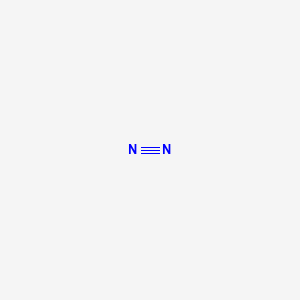
1 2D Structure

Nitrogen

2 Identification
2.1 Computed Descriptors
2.1.1 IUPAC Name
molecular nitrogen
2.1.2 InChI
InChI=1S/N2/c1-2
2.1.3 InChI Key
IJGRMHOSHXDMSA-UHFFFAOYSA-N
2.1.4 Canonical SMILES
N#N
2.2 Other Identifiers
2.2.1 UNII
N762921K75
2.3 Synonyms
2.3.1 Depositor-Supplied Synonyms

1. 7727-37-9

2. N

3. Nitrogen Gas

4. Molecular Nitrogen

5. Dinitrogen

6. Nitrogen-14

7. Nitrogen Molecule

8. Diatomic Nitrogen

9. Nitrogen, Liquid

10. Nitrogen (n2)

11. N2

12. Ins No.941

13. Chebi:17997

14. Ins-941

15. E-941

16. N762921k75

17. Mol Nitrogen

18. Azote [french]

19. Nitrogeno [spanish]

20. Nitrogeno

21. Nitrogen [nf]

22. Nitrogen (liquified)

23. Hsdb 5060

24. Einecs 231-783-9

25. Un1066

26. Un1977

27. Unii-n762921k75

28. Nitrogen (tn)

29. Nitrogen, Elemental

30. Nitrogen, Compressed

31. Nitrogen [hsdb]

32. Nitrogen [inci]

33. Nitrogen [fcc]

34. Nitrogen [jan]

35. Nitrogen [ii]

36. Nitrogen [mi]

37. Nitrogen (jp17/nf)

38. Nitrogen [vandf]

39. Nitrogen [mart.]

40. Nitrogen [who-dd]

41. Nitrogen [green Book]

42. Nitrogen, >=99.998%

43. Nitrogen, >=99.999%

44. Chembl142438

45. Nitrogen [ep Monograph]

46. Dtxsid4036304

47. Db09152

48. Un 1066

49. Un 1977

50. E941

51. Nitrogen, Messer(r) Cangas, 99.999%

52. C00697

53. D00083

54. Nitrogen, Refrigerated Liquid (cryogenic Liquid)

55. Nitrogen, Compressed [un1066] [nonflammable Gas]

56. Q2370426

57. Nitrogen, Refrigerated Liquid (cryogenic Liquid) [un1977] [nonflammable Gas]

58. N#n

2.4 Create Date
2004-09-16
3 Chemical and Physical Properties
Molecular Weight 28.014 g/mol
Molecular Formula N2
XLogP30.1
Hydrogen Bond Donor Count0
Hydrogen Bond Acceptor Count2
Rotatable Bond Count0
Exact Mass28.006148008 g/mol
Monoisotopic Mass28.006148008 g/mol
Topological Polar Surface Area47.6 Ų
Heavy Atom Count2
Formal Charge0
Complexity8
Isotope Atom Count0
Defined Atom Stereocenter Count0
Undefined Atom Stereocenter Count0
Defined Bond Stereocenter Count0
Undefined Bond Stereocenter Count0
Covalently Bonded Unit Count1
4 Drug and Medication Information
4.1 Therapeutic Uses

EXP THER Liquid nitrogen in the treatment of acne vulgaris, as compared to several other topical regimens, was evaluated in 12 male and 13 female patients. During each visit bilateral counts of the various types of acne lesions were conducted. Eight of the 25 patients continued with their prior topical regimens unilaterally, plus antibiotics. All 25 patients received liquid nitrogen therapy unilaterally in a roll-on fashion. Fourteen (56%) of the 25 patients had predominantly comedopapular acne, whereas 11 (44%) had mostly papulopustular acne. There was no substantial difference in the 2 treatment regimens in managing patients with predominant comedopapular acne. Patients with predominantly pustulopapular acne, however, frequently demonstrated marked decreases in lesion counts and improved appearance after liquid nitrogen therapy. Papules remained mostly resistant to liquid nitrogen. Liquid nitrogen may be a useful adjunct in the treatment of pustular acne, but appears ineffective in comedo and papular acne.

Goette DK; South Med. J.; 66: 1131-1132 (1973)


Medication (Vet): Nitrogen has been used to euthanize dogs, rabbits, and mink.

Booth, N.H., L.E. McDonald (eds.). Veterinary Pharmacology and Therapeutics. 5th ed. Ames, Iowa: Iowa State University Press, 1982., p. 1061


4.2 Drug Indication

Liquid nitrogen is used mainly as a cryogenic agent for the treatment of various benign and malignant skin lesions.


5 Pharmacology and Biochemistry
5.1 ATC Code

V - Various

V03 - All other therapeutic products

V03A - All other therapeutic products

V03AN - Medical gases

V03AN04 - Nitrogen


5.2 Absorption, Distribution and Excretion

Absorption

For local use only, no systemic absorption.


Route of Elimination

For local use only.


Volume of Distribution

For local use only.


Clearance

For local use only.


The principal route of exposure to nitrogen is via the inhalation route. The concentration of nitrogen between inhaled and exhaled human breath is not significantly different. Also, nitrogen is only sparingly soluble in water. Therefore an insignificant amount of nitrogen is absorbed into the human body.

European Union Biocide Assessment Report: Nitrogen Product-type 18 (Insecticides) Appendix II Chap. 3, (November, 2008). Available from, as of June 8, 2010: https://ecb.jrc.ec.europa.eu/documents/Biocides/ANNEX_I/ASSESSMENT_REPORTS/AnnexI_AR_7727-37-9_PT18_en.pdf


The substance can be absorbed into the body by inhalation.

International Program on Chemical Safety/Commission of the European Communities; International Chemical Safety Card on Nitrogen (compressed gas) (March 1999). Available from, as of May 20, 2010: https://www.inchem.org/pages/icsc.html


Gases and vapors known to be absorbed (or excreted) by the skin include ... Nitrogen ...

Hayes, W.J., Jr., E.R. Laws Jr., (eds.). Handbook of Pesticide Toxicology Volume 1. General Principles. New York, NY: Academic Press, Inc., 1991., p. 139


Normally, the blood is in equilibrium with alveolar air, which contains close to 80% nitrogen. As a result, several liters ... are in solution in body fluids and are present in body cavities.

Gilman, A. G., L. S. Goodman, and A. Gilman. (eds.). Goodman and Gilman's The Pharmacological Basis of Therapeutics. 6th ed. New York: Macmillan Publishing Co., Inc. 1980., p. 325


A study was performed to obtain quantitative measures of nitrogen exchange rates in human knees using the short lived isotope nitrogen-13 (N-13) as a tracer. Nine male volunteers rebreathed a normoxic gas mixture with N-13 for 30 minutes and room air for a 1.5 hour washout period. Eight subjects were experienced deep sea divers, and one subject was a smoker. Positron detectors were used to monitor the N-13 in the knee. Data were corrected for background and decay. All but two subjects showed a marked rise in N-13 activity after the end of N-13 breathing; this rise relatively long after the end of radioactive gas inspiration was unexpected. In most cases the concentration continued to rise for at least 30 minutes after the end of exposure. Mechanisms for the observed rise of knee N-13 were considered. Nitrogen sinks in some knee structure or nearby structure could be physical, chemical, or physiological. The authors conclude that these unexpected results of a very marked delay in knee gas excretion 30 minutes into the pulmonary washout period suggests that a gas exchange model consistent with these data is needed to avoid decompression sickness.

Weathersby PK et al; Journal of Applied Physiology 61 (4): 1534-1545 (1986)


5.3 Metabolism/Metabolites

For local use only.


5.4 Biological Half-Life

For local use only.


5.5 Mechanism of Action

In cryotherapy, mechanism of action could be classified into three stages: 1. heat transfer, 2. cell injury and 3. inflammation. Boiling point of liquid nitrogen is -196C, which is the responsible for creating the initial stage which is heat transfer. The second stage is cell injury which is induced during thawing conditions of the cells. The last step in the cryotherapy is the inflammation stage which is characterized by edema and erythema. Inflammation occurs as a result of cellular death and it helps in local cell destruction.


... Nitrogen also has a direct toxic action of its own, affecting brain functions and inducing a stupor or euphoria. Nitrogen narcosis ("rapture of the deep" or "the martini effect") results from a direct toxic effect of high nitrogen pressure on nerve conduction and produces effects similar to alcohol intoxication. Complex reasoning, decision-making ability, motor function, and manual dexerity decrease. Individuals vary in this response widely, but it typically can be noticed among divers at depths exceeding 100 ft (30 m). For example, certain individuals experience no effect at depths of < or = 130 ft, whereas others feel some effect at around 80 ft. Nonetheless, the narcotic effect increases with increasing depth so that each additional 50 ft incrementally produces the effect of "another martini".

Bingham, E.; Cohrssen, B.; Powell, C.H.; Patty's Toxicology Volumes 1-9 5th ed. John Wiley & Sons. New York, N.Y. (2001)., p. 635


A simple asphyxiant, nitrogen's main toxicty arises from its ability to displace O2 and generate an atmosphere that does not support the chemical reactions needed for maintenance of life. The displacement of O2 can be complete or incomplete, leading to varying degrees of hypoxia.

Bingham, E.; Cohrssen, B.; Powell, C.H.; Patty's Toxicology Volumes 1-9 5th ed. John Wiley & Sons. New York, N.Y. (2001)., p. 634


Nitrogen is an inert substance and does not exert a direct toxicological effect. Nitrogen acts by the physiological effect of simple asphyxia on the target species within a Controlled Atmosphere Treatment (CAT) bubble. The biocide action of nitrogen is due to its displacement of oxygen from an atmospheric oxygen level of 20.8% to levels < 0.2% v/v in the CAT bubble. The level of oxygen is the critical factor. Victims exposed to atmospheres deficient in oxygen, i.e. < 19%, will begin to display signs and symptoms of oxygen-deficient exposure of air due to an increase in nitrogen.

European Union Biocide Assessment Report: Nitrogen Product-type 18 (Insecticides) 2.2.1.1, (November, 2008). Available from, as of June 8, 2010: https://ecb.jrc.ec.europa.eu/documents/Biocides/ANNEX_I/ASSESSMENT_REPORTS/AnnexI_AR_7727-37-9_PT18_en.pdf


Digital Content read-more

Create Content with PharmaCompass, ask us

NEWS #PharmaBuzz

read-more
read-more

ABOUT THIS PAGE

Looking for 7727-37-9 / Nitrogen API manufacturers, exporters & distributors?

Nitrogen manufacturers, exporters & distributors 1

98

PharmaCompass offers a list of Nitrogen API manufacturers, exporters & distributors, which can be sorted by GMP, USDMF, JDMF, KDMF, CEP (COS), WC, Price,and more, enabling you to easily find the right Nitrogen manufacturer or Nitrogen supplier for your needs.

Send us enquiries for free, and we will assist you in establishing a direct connection with your preferred Nitrogen manufacturer or Nitrogen supplier.

PharmaCompass also assists you with knowing the Nitrogen API Price utilized in the formulation of products. Nitrogen API Price is not always fixed or binding as the Nitrogen Price is obtained through a variety of data sources. The Nitrogen Price can also vary due to multiple factors, including market conditions, regulatory modifications, or negotiated pricing deals.

API | Excipient name

Nitrogen

Synonyms

7727-37-9, N, Nitrogen gas, Molecular nitrogen, Dinitrogen, Nitrogen-14

Cas Number

7727-37-9

Unique Ingredient Identifier (UNII)

N762921K75

About Nitrogen

An element with the atomic symbol N, atomic number 7, and atomic weight [14.00643; 14.00728]. Nitrogen exists as a diatomic gas and makes up about 78% of the earth's atmosphere by volume. It is a constituent of proteins and nucleic acids and found in all living cells.

Nitrogen Manufacturers

A Nitrogen manufacturer is defined as any person or entity involved in the manufacture, preparation, processing, compounding or propagation of Nitrogen, including repackagers and relabelers. The FDA regulates Nitrogen manufacturers to ensure that their products comply with relevant laws and regulations and are safe and effective to use. Nitrogen API Manufacturers are required to adhere to Good Manufacturing Practices (GMP) to ensure that their products are consistently manufactured to meet established quality criteria.

Nitrogen Suppliers

A Nitrogen supplier is an individual or a company that provides Nitrogen active pharmaceutical ingredient (API) or Nitrogen finished formulations upon request. The Nitrogen suppliers may include Nitrogen API manufacturers, exporters, distributors and traders.

click here to find a list of Nitrogen suppliers with USDMF, JDMF, KDMF, CEP, GMP, COA and API Price related information on PharmaCompass.

Nitrogen CEP

A Nitrogen CEP of the European Pharmacopoeia monograph is often referred to as a Nitrogen Certificate of Suitability (COS). The purpose of a Nitrogen CEP is to show that the European Pharmacopoeia monograph adequately controls the purity of Nitrogen EP produced by a given manufacturer. Suppliers of raw materials can prove the suitability of Nitrogen to their clients by showing that a Nitrogen CEP has been issued for it. The manufacturer submits a Nitrogen CEP (COS) as part of the market authorization procedure, and it takes on the role of a Nitrogen CEP holder for the record. Additionally, the data presented in the Nitrogen CEP (COS) is managed confidentially and offers a centralized system acknowledged by numerous nations, exactly like the Nitrogen DMF.

A Nitrogen CEP (COS) is recognised by all 36 nations that make up the European Pharmacopoeia Convention. Nitrogen CEPs may be accepted in nations that are not members of the Ph. Eur. at the discretion of the authorities there.

click here to find a list of Nitrogen suppliers with CEP (COS) on PharmaCompass.

Nitrogen GMP

Nitrogen Active pharmaceutical ingredient (API) is produced in GMP-certified manufacturing facility.

GMP stands for Good Manufacturing Practices, which is a system used in the pharmaceutical industry to make sure that goods are regularly produced and monitored in accordance with quality standards. The FDA’s current Good Manufacturing Practices requirements are referred to as cGMP or current GMP which indicates that the company follows the most recent GMP specifications. The World Health Organization (WHO) has its own set of GMP guidelines, called the WHO GMP. Different countries can also set their own guidelines for GMP like China (Chinese GMP) or the EU (EU GMP).

PharmaCompass offers a list of Nitrogen GMP manufacturers, exporters & distributors, which can be sorted by USDMF, JDMF, KDMF, CEP (COS), WC, API price, and more, enabling you to easily find the right Nitrogen GMP manufacturer or Nitrogen GMP API supplier for your needs.

Nitrogen CoA

A Nitrogen CoA (Certificate of Analysis) is a formal document that attests to Nitrogen's compliance with Nitrogen specifications and serves as a tool for batch-level quality control.

Nitrogen CoA mostly includes findings from lab analyses of a specific batch. For each Nitrogen CoA document that a company creates, the USFDA specifies specific requirements, such as supplier information, material identification, transportation data, evidence of conformity and signature data.

Nitrogen may be tested according to a variety of international standards, such as European Pharmacopoeia (Nitrogen EP), Nitrogen JP (Japanese Pharmacopeia) and the US Pharmacopoeia (Nitrogen USP).


Inform the supplier about your product requirements, specifying if you need a product with particular monograph like EP (Ph. Eur.), USP, JP, BP, or any other quality. In addition, clarify whether you need hydrochloride (HCl), anhydricum, base, micronisatum or a specific level of purity. To find reputable suppliers, utilize the filters and select those certified by GMP, FDA, or any other certification as per your requirement.
For your convenience, we have listed synonyms and CAS numbers to help you find the best supplier. The use of synonyms and CAS numbers can be helpful in identifying potential suppliers, but it is crucial to note that they might not always indicate the exact same product. It is important to confirm the product details with the supplier before making a purchase to ensure that it meets your requirements.
Ask Us for Pharmaceutical Supplier and Partner
Ask Us, Find A Supplier / Partner
No Commissions, No Strings Attached, Get Connected for FREE

What are you looking for?

How can we help you?

The request can't be empty

Please read our Privacy Policy carefully

You must agree to the privacy policy

The name can't be empty
The company can't be empty.
The email can't be empty Please enter a valid email.
The mobile can't be empty