

Synopsis
0
USDMF
0
CEP/COS
0
JDMF
0
EU WC
0
KDMF
0
VMF
0
EDQM
0
USP
0
JP
0
Others
0
FDF Dossiers
0
FDA Orange Book
0
Europe
0
Canada
0
Australia
0
South Africa
0
Listed Dossiers

DRUG PRODUCT COMPOSITIONS
0
US Patents
0
US Exclusivities
0
Health Canada Patents
US Medicaid
NA
Annual Reports
NA
Regulatory FDF Prices
NA
0
API
0
FDF
0
Data Compilation #PharmaFlow
0
Stock Recap #PipelineProspector
0
Weekly News Recap #Phispers
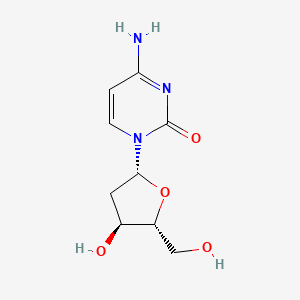
1. Cytosine Deoxyribonucleoside
2. Cytosine Deoxyriboside
1. 2'-deoxycytidine
2. 951-77-9
3. Cytidine, 2'-deoxy-
4. Dcyd
5. Deoxyribose Cytidine
6. Cytosine Deoxyriboside
7. Desoxycytidin
8. Doxecitine
9. Cytosine, Deoxyribonucleoside
10. 4-amino-1-[(2r,4s,5r)-4-hydroxy-5-(hydroxymethyl)oxolan-2-yl]pyrimidin-2-one
11. 0w860991d6
12. Chebi:15698
13. Dtxsid70883620
14. Mt-1621 Component 2'-deoxycytidine
15. 4-amino-1-[(2r,4s,5r)-4-hydroxy-5-(hydroxymethyl)oxolan-2-yl]-1,2-dihydropyrimidin-2-one
16. 4-amino-1-((2r,4s,5r)-4-hydroxy-5-(hydroxymethyl)oxolan-2-yl)-1,2-dihydropyrimidin-2-one
17. 4-amino-1-((2r,4s,5r)-4-hydroxy-5-(hydroxymethyl)oxolan-2-yl)pyrimidin-2-one
18. Deoxyriboside, Cytosine
19. Refchem:585745
20. Deoxyribonucleoside, Cytosine
21. Dtxcid901023131
22. 213-454-1
23. 4-amino-1-((2r,4s,5r)-4-hydroxy-5-(hydroxymethyl)tetrahydrofuran-2-yl)pyrimidin-2(1h)-one
24. 207121-53-7
25. 2-deoxycytidine
26. Mfcd00006547
27. Desoxycytidin [german]
28. D-cytidine
29. 1beta-2'-deoxyribofuranosylcytosine, D-
30. 1-(2-deoxy-beta-d-ribofuranosyl)cytosine
31. 56905-41-0
32. Dc
33. Desoxycytidine
34. Deoxycytidine;cytosine Deoxyriboside;deoxyribose Cytidine
35. 4-amino-1-(2-deoxy-beta-d-erythro-pentofuranosyl)-2(1h)-pyrimidinone
36. 2(1h)-pyrimidinone, 4-amino-1-(2-deoxy-beta-d-erythro-pentofuranosyl)-
37. 2'-deoxy-cytidine
38. Einecs 213-454-1
39. Brn 0087567
40. 2 Inverted Exclamation Marka-deoxycytidine
41. Deoxy-cytidine
42. 2' Deoxycytidine
43. 2-deoxy-cytidine
44. Unii-0w860991d6
45. 4-amino-1-[(2r,4s,5r)-4-hydroxy-5-(hydroxymethyl)tetrahydrofuran-2-yl]pyrimidin-2(1h)-one
46. 2a(2)-deoxycytidine
47. 2'-deoxy-d-cytidine
48. 2 Inverted Exclamation Mark -deoxycytidine
49. Cytidine, 2'-deoxy-, Labeled With Tritium
50. Doxecitine [inn]
51. Doxecitine (usan/inn)
52. Doxecitine [usan]
53. 2'-deoxycytidine(2'-dc)
54. Schembl23178
55. 4-25-00-03662 (beilstein Handbook Reference)
56. 2'-dc
57. Chembl66115
58. Orb1302587
59. Orb3026064
60. Schembl3693586
61. Schembl28042927
62. Msk6803
63. Mt1621 (dc)
64. Kygevvi Component Doxecitine
65. Hy-d0184
66. Bdbm50367094
67. Ebc-48109
68. Hg1097
69. 2'-deoxycytidine, >=99% (hplc)
70. Akos015896791
71. Msk6803-1000w
72. Ac-8210
73. Db02594
74. Nd06286
75. 1-(2-deoxy-b-d-ribofuranosyl)cytosine
76. 4-amino-1-[(2r,4s,5r)-4-hydroxy-5-(hydroxymethyl)tetrahydrofuran-2-yl]pyrimidin-2-one
77. Ncgc00142493-01
78. As-14313
79. Bp-58643
80. Sy066621
81. 1-(2-deoxy-.beta.-d-ribofuranosyl)cytosine
82. Cs-0010105
83. D3583
84. Ns00120718
85. 1-(2-deoxy-beta-delta-ribofuranosyl)cytosine
86. C00881
87. D12465
88. 2'-deoxycytidine Solution In Water, 1000ug/ml
89. En300-6477283
90. F211296
91. Q422504
92. 1-(2-deoxy-beta-d-erythro-pentofuranosyl)-cytosine
93. Brd-k91822704-001-01-9
94. Brd-k91822704-003-07-2
95. 1-(2-deoxy-beta-delta-erythro-pentofuranosyl)-cytosine
96. Z3072884208
97. 4-amino-1-(2-deoxy-b-d-erythro-pentofuranosyl)-2(1h)-pyrimidinone
98. 1-(2-deoxy-?-d-erythro-pentofuranosyl)-4-imino-1,4-dihydro-2-pyrimidinol
99. 4-amino-1-(2-deoxy-.beta.-d-erythro-pentofuranosyl)-2(1h)-pyrimidinone
100. 4-amino-1-(2-deoxy-beta-delta-erythro-pentofuranosyl)-2(1h)-pyrimidinone
101. 1-((2r,4s,5r)-4-hydroxy-5-(hydroxymethyl)tetrahydrofuran-2-yl)-4-imino-1,4-dihydropyrimidin-2-ol
| Molecular Weight | 227.22 g/mol |
|---|---|
| Molecular Formula | C9H13N3O4 |
| XLogP3 | -1.8 |
| Hydrogen Bond Donor Count | 3 |
| Hydrogen Bond Acceptor Count | 4 |
| Rotatable Bond Count | 2 |
| Exact Mass | Da |
| Monoisotopic Mass | Da |
| Topological Polar Surface Area | 108 |
| Heavy Atom Count | 16 |
| Formal Charge | 0 |
| Complexity | 355 |
| Isotope Atom Count | 0 |
| Defined Atom Stereocenter Count | 3 |
| Undefined Atom Stereocenter Count | 0 |
| Defined Bond Stereocenter Count | 0 |
| Undefined Bond Stereocenter Count | 0 |
| Covalently Bonded Unit Count | 1 |
In combination with [thymidine], doxecitine is indicated for the treatment of thymidine kinase 2 deficiency (TK2d) in adults and pediatric patients with an age of symptom onset on or before 12 years.
Absorption
Doxecitine is administered orally, with rapid absorption and plasma concentrations returning to near baseline within 8 to 12 hours. The absolute bioavailability of doxecitine following oral administration has not been determined. The median time to peak plasma concentration (Tmax) was approximately two hours for doxecitine.
Route of Elimination
Urinary excretion of intact doxecitine and doxribtimine was <1% of the dose in healthy subjects following an oral administration of doxecitine and doxribtimine.
Doxecitine is primarily degraded by cytidine deaminase to its nucleobases and the 2-deoxy--D-ribose 1-phosphate moiety. Intermediate products of doxecitine catabolism are deoxyuridine, uracil, and dihydrouracil with the end products -alanine, ammonia, and carbon dioxide (CO2).
The mean half-life was approximately 1 hour for doxecitine following a single oral administration of 133 mg/kg doxecitine under fed conditions in healthy adult subjects.
The progressive, often fatal myopathy seen in Thymidine Kinase 2 deficiency (TK2d) is caused by mutations in the nuclear TK2 gene, leading to a dysfunctional or deficient mitochondrial TK2 enzyme. This enzyme is essential for phosphorylating the pyrimidine nucleosides doxecitine (dC) and thymidine (dT) into dCMP and dTMP, which are precursors for the deoxyribonucleotide triphosphates (dNTPs) required for mitochondrial DNA (mtDNA) maintenance and replication. The resulting metabolic block causes severe mtDNA depletion and dysfunction of the mitochondrial respiratory chain.[] Doxecitine, in combination with doxribtimine, functions as a nucleoside substrate enhancement therapy that successfully bypasses the defective mitochondrial pathway. The high concentrations of exogenous dC and dT are primarily phosphorylated by intact cytosolic salvage enzymes, specifically Deoxycytidine Kinase (dCK) and Thymidine Kinase 1 (TK1). The nucleosides are actively transported into cells and across the blood-brain barrier via equilibrative nucleoside transporters. The resulting phosphorylated dNTP precursors are then made available to the mitochondria. This replenishes the critically depleted dNTP pools, which facilitates the replication of mtDNA by the mitochondrial DNA Polymerase gamma.
API SUPPLIERS

 FULL SCREEN VIEW Click here to open all results in a new tab [this preview display 10 results]
Drugs in Development
FULL SCREEN VIEW Click here to open all results in a new tab [this preview display 10 results]Digital Content

NEWS #PharmaBuzz
ABOUT THIS PAGE