Please Wait
Applying Filters...
Menu
Xls

Digital Content read-more

Create Content with PharmaCompass, ask us

DATA COMPILATION #PharmaFlow

read-more
read-more
FDA approvals drop 24% in H1 2025; GSK’s UTI med, Vertex’s non-opioid painkiller lead pack of first-in-class meds
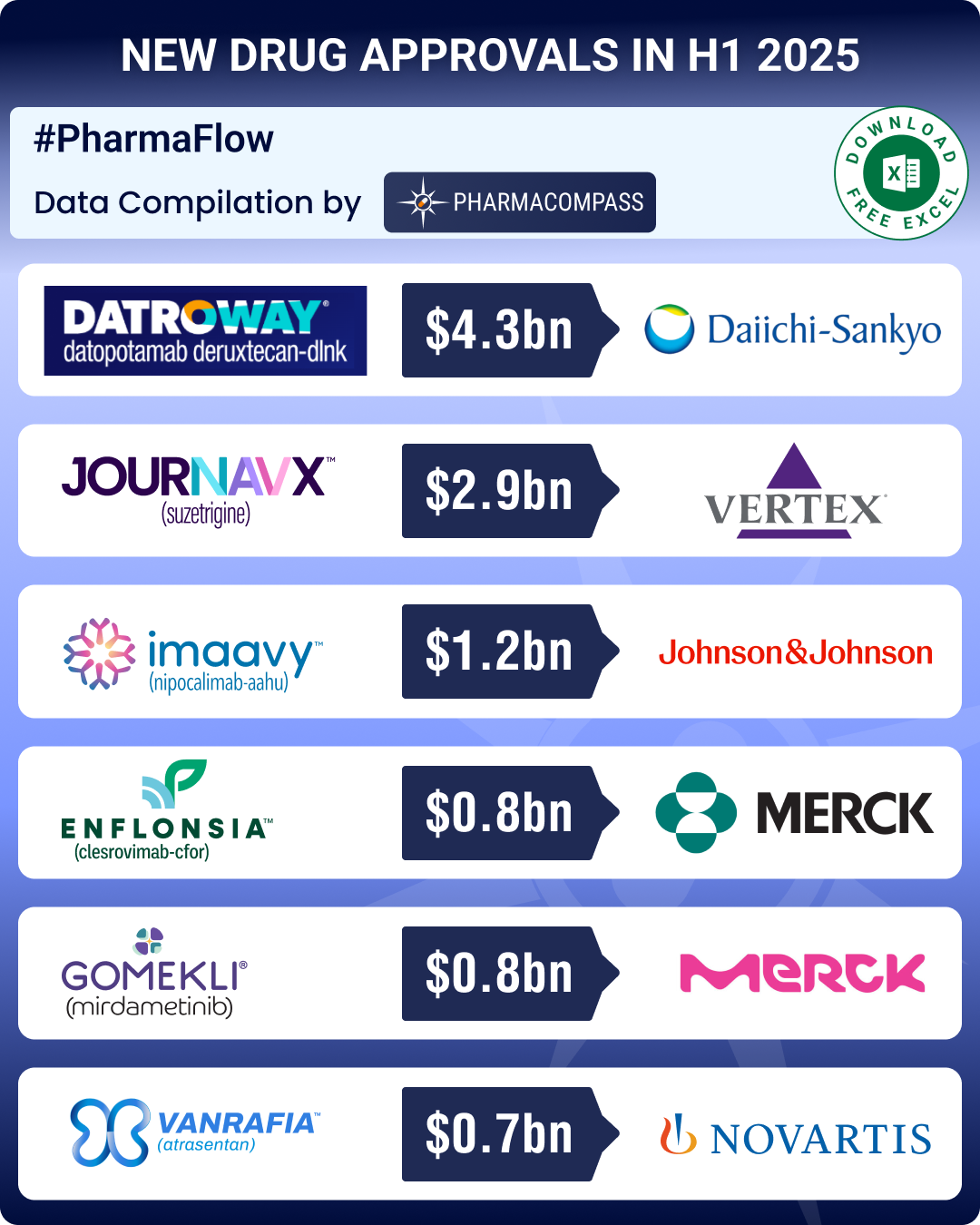
It has been a turbulent year for the US Food and Drug Administration (FDA), marked by reductions in both staff and budget, shake-ups at the top and a reduction in inspections. This upheaval has clearly impacted the functioning of the agency, with reports of missed deadlines and reduced responsiveness. This disruption resulted in a slowdown in new drug approvals in the first half of 2025 (H1 2025), as opposed to the same period last year. Incidentally, drug approvals in H1 2024 were also down by 19 percent compared to H1 2023. FDA’s Center for Drug Evaluation and Research (CDER) approved 16 novel drugs in H1 2025, down from 21 in H1 2024, a decline of nearly 24 percent. Of these, nine were small molecules and seven were biologics. The period saw eight first-in-class therapies get CDER’s approval, as opposed to 17 in H1 2024. FDA’s Center for Biologics Evaluation and Research (CBER) approved seven biologics in H1 2025, compared to eight in the same period last year. In comparison, both Health Canada and the European Medicines Agency (EMA) reported a strong rebound in approvals and authorizations, respectively. Health Canada approved 20 drugs in H1 2025, as opposed to 10 in H1 2024. Similarly, EMA authorized 19 new therapies in H1 2025, compared to 15 in H1 2024. Notably, EMA’s pending decisions increased to 25 in H1 2025, from 14 in the same period last year, while conditional authorizations remained static at five. This underscores EMA’s active regulatory pipeline, suggesting that more drugs could be approved in Europe soon.   View New Drug Approvals in H1 2025 with Estimated Sales (Free Excel Available) Vertex’s non-opioid painkiller, GSK’s antibiotic for UTI, Merck’s RSV antibody bag FDA nods Oncology remained the single largest category in H1 2025 with seven new drugs being approved by the FDA, followed by four rare diseases and disorders and as many infections and infective diseases.  The eight drugs that were designated first-in-class in H1 2025 are: Journavx (Suzetrigine), Imaavy (nipocalimab), Emrelis (telisotuzumab vedotin), Blujepa (gepotidacin mesylate), Qfitlia (fitusiran), Avmapki Fakzynja Co-Pack (avutometinib potassium/defactinib hydrochloride), Tryptyr (acoltremon), and Andembry (garadacimab). In January, a new class of non-opioid pain therapy made a debut — FDA approved Vertex Pharmaceuticals’ Journavx (suzetrigine). This first-in-class oral analgesic could bring in US$ 2.9 billion in sales for Vertex by 2030. The half year also saw a new oral antibiotic — GSK’s Blujepa (gepotidacin) — for treating uncomplicated urinary tract infections (uUTIs) bag FDA approval. This is the first new antibiotic for uUTIs in nearly three decades. It treats infections caused by resistant pathogens such as E. coli and K. pneumoniae. In June, Merck’s Enflonsia (clesrovimab), a long-acting monoclonal antibody, won FDA approval to prevent respiratory syncytial virus (RSV) lower respiratory tract disease in neonates and infants entering their first RSV season. A single 105 mg dose provides protection for about five months, the length of a typical RSV season. Enflonsia could bring in US$844 million in annual sales by 2030.   View New Drug Approvals in H1 2025 with Estimated Sales (Free Excel Available)  FDA approves four meds for rare diseases, including SpringWorks’ Gomekli, Novartis’ Vanrafia In H1 2024, rare genetic diseases had witnessed some significant approvals. The trend continued in H1 2025. In February, Gomekli (mirdametinib), developed by SpringWorks Therapeutics, became the first approved therapy for neurofibromatosis type 1 (a genetic disorder that causes tumors to grow on nerve tissues) in adult and pediatric patients who have symptomatic plexiform neurofibromas (benign, complex nerve tumors) not amenable to complete resection. Analysts expect peak sales of around US$ 0.8 billion by 2030. Post this approval, SpringWorks got acquired by Merck KGaA for approximately US$ 3.9 billion. The same month, Ono Pharma-owned Deciphera’s Romvimza (vimseltinib) became the first oral therapy approved for another rare disease known as symptomatic tenosynovial giant cell tumor. This is a benign but aggressive growth that can be painful. This new drug offers patients an option beyond surgery. In March, Sanofi’s Qfitlia (fitusiran) was approved for routine prophylaxis in hemophilia A or B, with or without inhibitors. And in April, Novartis’ Vanrafia (atrasentan) was granted accelerated approval for IgA nephropathy (a chronic autoimmune kidney disease), which is at the risk of rapid progression. Vanrafia could bring in sales of over US$ 735 million by 2030. Johnson & Johnson secured approval for Imaavy (nipocalimab-aahu) for generalized myasthenia gravis (a chronic autoimmune disease that causes muscle weakness) in adults and adolescents. Imaavy’s sales could cross US$1.17 billion by 2030. Rare diseases continue to attract regulatory attention, with the trend carrying into the current quarter. July witnessed two noteworthy rare-disease approvals — Ekterly (garadacimab), CSL’s once-monthly prophylactic treatment for hereditary angioedema (a genetic disorder that causes recurrent episodes of swellings), and Sephience (pegvaliase-abcx), BioMarin’s new therapy for phenylketonuria (a rare metabolic disorder).   View New Drug Approvals in H1 2025 with Estimated Sales (Free Excel Available)  FDA greenlights new oncology therapies, including Astra’s Datroway, AbbVie’s Emrelis The field of oncology saw some notable new drug approvals. In January, Datroway (datopotamab deruxtecan), an antibody-drug conjugate (ADC) developed by AstraZeneca and Daiichi Sankyo, was granted approval for adults with unresectable or metastatic, hormone receptor-positive, HER2-negative breast cancer. Later, in June, the FDA granted accelerated approval  to AstraZeneca;s Datroway for adults with locally advanced or metastatic, EGFR-mutated non-small cell lung cancer. The drug’s peak annual sales are projected at about US$ 4.2 billion by 2030. In May, Emrelis (telisotuzumab vedotin-tllv), AbbVie’s ADC was granted FDA’s accelerated approval. Emrelis treats locally advanced or metastatic non-squamous non-small cell lung cancer (NSCLC) characterized by significantly increased levels of the c-Met protein in cancer cells. FDA also approved a companion diagnostic test — Roche's Ventana — in May to determine the c-Met protein biomarker status in order to identify patients eligible for Emrelis.  The same month, FDA also granted accelerated approval to Verastem’s Avmapki Fakzynja Co-pack, a dual oral therapy for adults with KRAS‑mutated recurrent low‑grade serous ovarian cancer (LGSOC). This novel regimen combines two inhibitors — avutometinib and defactinib — to disrupt critical signaling pathways that fuel tumor growth. In ophthalmology, Alcon re-entered the prescription pharmaceutical market with Tryptry (acoltremon), a first-in-class TRPM8 agonist for dry eye disease, which stimulates corneal nerves to increase tear production.   View New Drug Approvals in H1 2025 with Estimated Sales (Free Excel Available)  Our view The changes in the FDA are clearly having a far-reaching impact on the global pharmaceutical industry. There have been reports of drugmakers losing confidence in the FDA, which has been a gold standard for drug regulation. Some American biotechs are shifting early trials outside of the US. With EMA and Health Canada authorizing/approving a larger number of drugs in H1 2025, we do see some changes underway that may eventually reshape drug development.  

Impressions: 7740

https://www.pharmacompass.com/radio-compass-blog/fda-approvals-drop-24-in-h1-2025-gsk-s-uti-med-vertex-s-non-opioid-painkiller-lead-pack-of-first-in-class-meds

#PharmaFlow by PHARMACOMPASS
28 Aug 2025

STOCK RECAP #PipelineProspector

read-more
read-more
Pipeline Prospector June 2024: FDA approves Merck’s next-gen pneumococcal vaccine, Verona’s COPD therapy
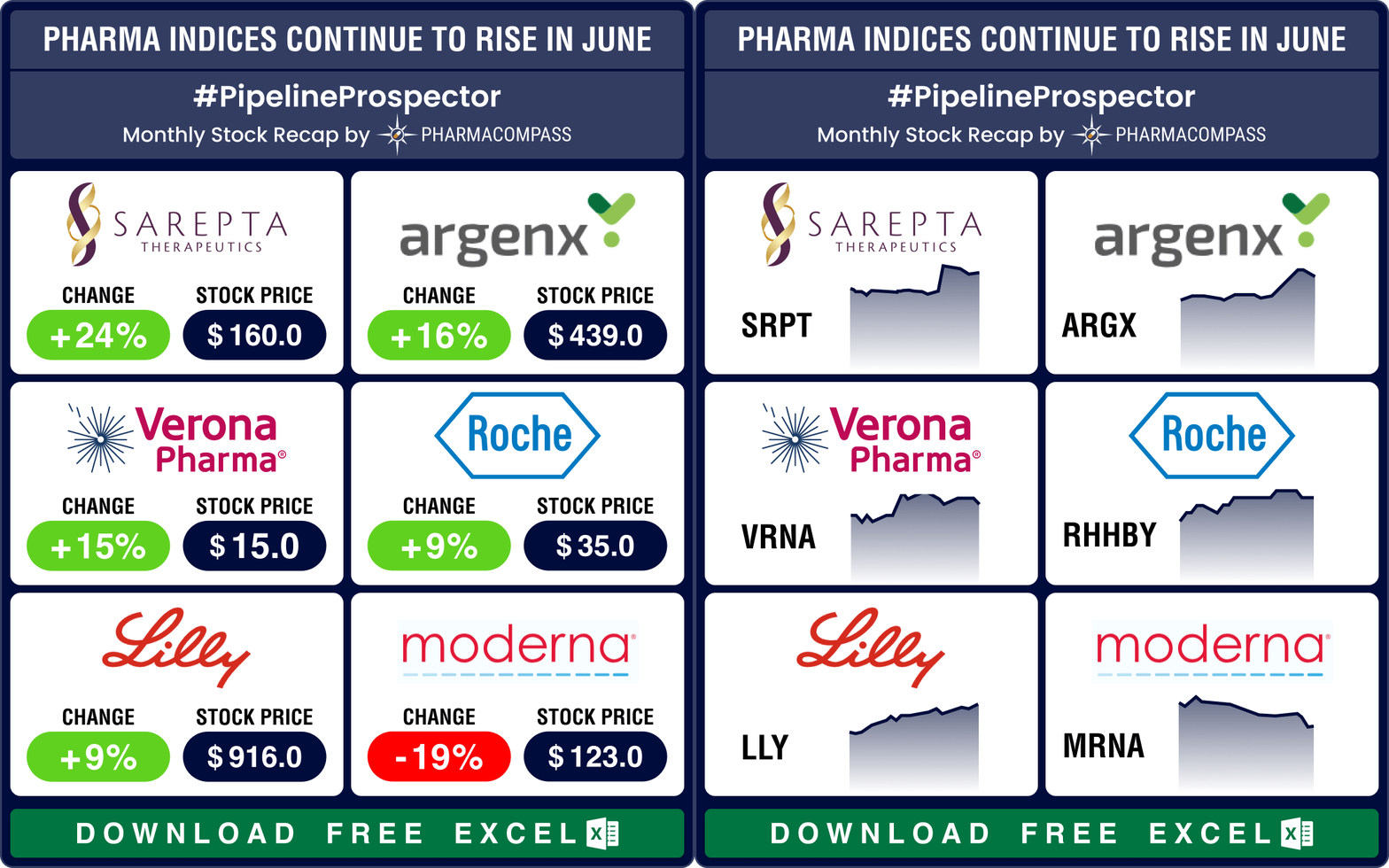
The pharma indices were back in the black in May, and the good streak continued through June with the Nasdaq Biotechnology Index (NBI) gaining 3 percent, the SPDR S&P Biotech ETF (XBI) index up over 3.1 percent and the S&P Biotechnology Select Industry Index (SPSIBI) rising 4.25 percent.The two summer months were similar in more ways than one. In May, Eli Lilly had announced an investment of US$ 5.3 billion to boost the supply of Zepbound and Mounjaro. In June, Novo Nordisk followed suit, investing US$ 4.1 billion to develop a new manufacturing facility to boost the supply of Ozempic and Wegovy.Similarly, the US Food and Drug Administration (FDA) continued to grant vaccine approvals in June after okaying Moderna’s mRNA respiratory syncytial virus (RSV) vaccine in May. Last month, Merck’s next-generation pneumococcal vaccine won an FDA nod, and the agency expanded the use of GSK’s respiratory syncytial virus (RSV) vaccine to include adults aged 50 to 59.However, June was a lackluster month for mergers and acquisitions. The month had to be content with some tie-ups. For instance, Roche signed an up to US$ 1.8 billion deal with Boston-based startup Ascidian Therapeutics to discover and develop novel gene therapies for difficult-to-treat neurological diseases. AbbVie inked a US$ 1.7 billion agreement with China’s FutureGen to bring the latter’s next-generation treatment (FG-M701) for inflammatory bowel disease to market. Takeda signed an option agreement with China’s Ascentage Pharma for an exclusive license to a promising drug for chronic myeloid leukemia and other blood cancers. And Day One Biopharmaceuticals struck a licensing deal with MabCare for a novel antibody drug conjugate (ADC) to treat multiple cancers. The deal’s potential value is US$ 1.2 billion.Access the Pipeline Prospector Dashboard for June 2024 Newsmakers (Free Excel)Merck’s pneumococcal jab wins FDA nod; Moderna’s combo vaccine scores trial winVaccines took centerstage in June. FDA approved Merck’s Capvaxive, a next-generation pneumococcal vaccine designed to protect adults from a broader range of pneumococcus bacteria strains that cause serious illnesses and pneumonia. Capvaxive targets 21 bacterial variations responsible for about 85 percent of invasive pneumococcal disease cases in older adults. Similarly, GSK secured FDA approval for its RSV vaccine for adults aged 50 to 59 years. This makes Arexvy the only RSV shot endorsed for that age group.In a late-stage trial, Moderna’s mRNA-1083, an investigational combination vaccine against influenza and Covid, elicited a higher immune response compared to separate shots in people aged 50 and over. The combo jab generated more antibodies than currently marketed flu vaccines and Moderna’s Spikevax. And the world’s first personalized mRNA cancer vaccine from Moderna has raised hopes for patients with skin cancer, as three-year data from a mid-stage trial showed some benefits on patients who took the vaccine in combination with Merck’s Keytruda.Despite these developments, Moderna’s stock dropped 19 percent in June after it said the efficacy of its RSV vaccine mRESVIA had vaned substantially to 50 percent after 18 months.Access the Pipeline Prospector Dashboard for June 2024 Newsmakers (Free Excel) Verona, Geron score maiden FDA approvals; BMS’ Augtyro bags tumor-agnostic nodTwo companies obtained their first FDA approvals last month. The first one was Verona Pharma (stock up 15 percent) — it received its maiden FDA approval for Ohtuvayre for treating chronic obstructive pulmonary disease (COPD). This is also the first inhaled COPD treatment with a novel mechanism of action.The second company to get its maiden FDA approval was Geron, a commercial-stage biopharmaceutical company. FDA signed off on Geron’s Rytelo for treating transfusion-dependent anemia in patients with low- to intermediate-risk myelodysplastic syndromes (MDS), a group of blood cancers.In June, FDA granted accelerated approvals to at least three drugs. BMS’ Augtyro was granted FDA’s accelerated approval for treating adult and pediatric patients (over 12 years) with solid tumors that have a neurotrophic tyrosine receptor kinase (NTRK) gene fusion, regardless of where they occur in the body.Ipsen received FDA’s accelerated approval for Iqirvo, a first-in-class, once-daily oral medication for treating primary biliary cholangitis (PBC), a progressive liver disease affecting mostly women.Sarepta Therapeutics’ (stock up 24 percent) Elevidys received accelerated approval for Duchenne muscular dystrophy (DMD) despite failing its primary endpoint in a late-stage trial.Amongst other approvals, Argenx’s Vyvgart Hytrulo was approved to treat chronic inflammatory demyelinating polyneuropathy (CIDP). This is a novel treatment option for this rare and debilitating neuromuscular disorder. And BMS’ Krazati got its second approval for treating colorectal cancer with a specific KRAS mutation.Access the Pipeline Prospector Dashboard for June 2024 Newsmakers (Free Excel) GSK’s failed cancer drug posts trial win; Gilead’s HIV prophylaxis shows efficacyIn late-stage trials, GSK’s multiple myeloma therapy Blenrep cut the risk of disease progression or death by almost half compared to standard-of-care treatments. The once-failed ADC was pulled from the lucrative US market in 2022, but the results could signal a comeback for Blenrep.Intra-Cellular’s antipsychotic drug Caplyta scored another remarkable late-stage win for treating major depressive disorder (MDD). In another late-stage trial, Gilead’s (stock up 6 percent) long-acting injection proved to be more effective in preventing HIV infection in women compared to the daily pill Truvada. This is the first time that an HIV pre-exposure prophylaxis (PrEP) has shown zero infections in a phase 3 trial, the drugmaker said. Dosed just twice a year, Sunlenca could be a game-changer in HIV prevention. Analysts estimate that PrEP-related sales could be over US$ 1.7 billion.In a blow to millions affected by long Covid, Pfizer’s Paxlovid did not appear to improve the symptoms as was hoped. Pfizer’s stock fell 7 percent in June.Access the Pipeline Prospector Dashboard for June 2024 Newsmakers (Free Excel) Our view This was the second month when pharma indices showed an upward trend. It’s been a good first half for the US stock markets. But there are mixed reports on how markets will perform in the second half, given the uncertainties around interest rate cuts and the outcome of the presidential elections in the US slated to be held in November. Though for those tracking biopharma news, there are enough interesting developments to fret over the markets.Access the Pipeline Prospector Dashboard for June 2024 Newsmakers (Free Excel) 

Impressions: 3805

https://www.pharmacompass.com/pipeline-prospector-blog/pipeline-prospector-june-2024-fda-approves-merck-s-next-gen-pneumococcal-vaccine-verona-s-copd-therapy

#PharmaFlow by PHARMACOMPASS
04 Jul 2024

WEEKLY NEWS RECAP #Phispers

read-more
read-more
Merck wins FDA nod for pneumococcal vaccine; Roche partners Ascidian to develop novel gene therapies
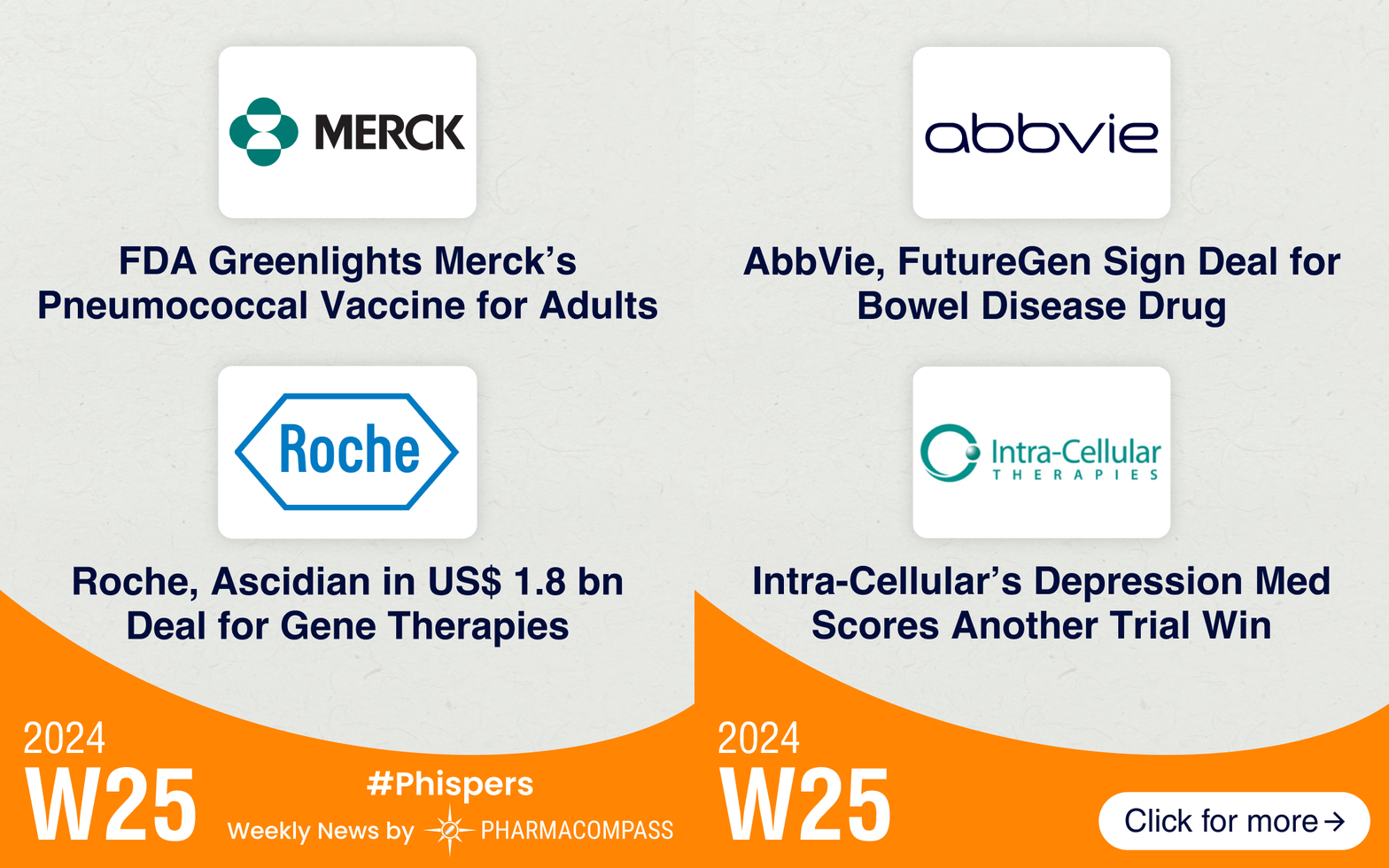
This week saw the US Food and Drug Administration (FDA) approve Merck’s next-generation pneumococcal vaccine for adults. The agency also granted accelerated approval to Bristol-Myers Squibb’s Augtyro for adult and pediatric patients with solid tumors.In deals, Roche has promised up to US$ 1.8 billion to Boston-based startup Ascidian Therapeutics to discover and develop novel gene therapies for difficult-to-treat neurological diseases. The week also saw three deals involving Chinese companies, including AbbVie’s US$ 1.7 billion deal with China’s FutureGen Biopharmaceutical to develop and commercialize a promising treatment for inflammatory bowel disease (IBD).In trials, Intra-Cellular’s Caplyta scored another remarkable late-stage win for treating major depressive disorder (MDD). And a large study conducted by Stanford Medicine found the risk of CAR-T cell therapies causing secondary cancers to be low.There were some misses too. Takeda’s seizure drug failed to meet its endpoints in back-to-back late-stage trials. And AstraZeneca’s Truqap failed to prolong the life of patients with hard-to-treat breast cancer.FDA greenlights Merck’s next-generation pneumococcal vaccine for adultsFDA has approved Merck’s next-generation vaccine designed to protect adults from pneumococcus bacteria that causes serious illnesses and pneumonia. The jab, known as Capvaxive, helped produce an immune response against all 21 variations (serotypes) of the bacteria that it targeted. These 21 strains account for about 85 percent of invasive pneumococcal disease cases in adults aged 65 and above. Pfizer’s Prevnar 20, the current market leader, targets strains that account for about 51 percent of cases in the said age group. Analysts see Capvaxive as a key growth driver for Merck.BMS’ Augtyro bags tumor-agnostic nod: FDA has granted accelerated approval to Augtyro (repotrectinib) for adult and pediatric patients (over 12 years) with solid tumors that have a neurotrophic tyrosine receptor kinase (NTRK) gene fusion, regardless of where they occur in the body. This makes BMS’ therapy the only FDA-approved treatment option for such tumors.Roche inks potential US$ 1.8 bn deal with Ascidian to develop novel gene therapiesRoche has promised up to US$ 1.8 billion to Boston-based startup Ascidian Therapeutics to discover and develop novel gene therapies for difficult-to-treat neurological diseases. Ascidian gets an initial payment of US$ 42 million. The startup’s RNA exon editing platform is designed to advance the therapeutic possibilities of RNA medicine and treat diseases not addressed by today's gene editing technologies.Sanofi, Belharra in immunology deal: Sanofi is collaborating with Belharra Therapeutics in a deal worth up to US$ 700 million including US$ 40 million in upfront and near-term payments. The collaboration will leverage Belharra’s non-covalent chemoproteomics platform to advance the discovery of novel small molecule therapeutics for immunological diseases.AbbVie to pay up to US$ 1.7 bn to China’s FutureGen for next-gen IBD therapyAbbVie has agreed to pay China’s FutureGen Biopharmaceutical up to US$ 1.56 billion, including an upfront payment of US$ 150 million, to develop and commercialize a next generation treatment for inflammatory bowel disease (IBD) — FG-M701. Currently in preclinical development, FG-M701 targets TL1A antibody (a clinically validated target in IBD).Takeda to license Ascentage’s leukemia drug: Japanese drugmaker Takeda has signed an option agreement with China’s Ascentage Pharma for an exclusive license to its promising candidate olverembatinib. This experimental drug is being developed to treat chronic myeloid leukemia (CML) and other hematological cancers. If exercised, the option would allow Takeda to license global rights to develop and commercialize olverembatinib in all territories outside of mainland China, Hong Kong, Macau, Taiwan and Russia. Takeda has paid Ascentage US$ 100 million upfront, and the Chinese drugmaker stands to receive an additional US$ 1.2 billion in milestone payments.Day One in biobucks deal with MabCare: Day One Biopharmaceuticals has entered into a licensing agreement with China-based MabCare Therapeutics for an experimental novel antibody drug conjugate — MTX-13. The biobucks deal for MTX-13 is worth up to US$ 1.2 billion, if the drug meets all milestones. The drug is being developed for multiple kinds of adult and pediatric cancers.Intra-Cellular scores late-stage win for depression drug CaplytaIntra-Cellular’s antipsychotic drug Caplyta (lumateperone) has scored another remarkable late-stage win for treating MDD. After six weeks on the 42 mg daily dose, US participants on Caplyta as an adjunctive therapy experienced a 4.5-point reduction on the Montgomery-Asberg Depression Rating Scale (MADRS) compared to the placebo. The results were notably similar to a previous study conducted worldwide.The New York City-based biopharma said it is confident lumateperone will become the “drug of choice for patients suffering from MDD who are having an inadequate response to antidepressant therapy.” If approved, Caplyta will compete with AbbVie’s blockbuster antipsychotic drug Vraylar (cariprazine). Like Vraylar, Caplyta is approved for schizophrenia and bipolar disorder, but MDD is reportedly the most lucrative indication. Analysts predict an additional US$ 1 billion in annual peak sales from MDD by 2033.Takeda’s seizure drug fails to meet main goals in back-to-back phase 3 trialsTakeda’s soticlestat being investigated in two epileptic disorders has failed in phase 3 trials, albeit “narrowly”. The drug was being tested in combination with the standard of care for adults and kids with Dravet syndrome (DS) and Lennox-Gastaut syndrome (LGS) – rare and severe types of epilepsy that cause frequent, long-lasting seizures that usually start in infancy or early childhood. Takeda paid US$ 196 million to Ovid Therapeutics for the global rights to soticlestat. It has promised an additional US$ 660 million in milestone payments.Astra’s Truqap fails trial for hard-to-treat breast cancer: AstraZeneca’s Truqap (capivasertib), in combination with the common chemotherapy paclitaxel, failed to help patients with hard-to-treat breast cancer live longer. A late-stage study was testing Truqap in volunteers with inoperable triple-negative breast cancer (TNBC) that had spread. TNBC remains among the most challenging forms of disease to treat.Study finds risk of secondary cancers after CAR-T cell therapy to be lowA large study conducted by Stanford Medicine has found the risk of CAR-T cell therapies causing secondary cancers to be low. According to results published in The New England Journal of Medicine, a 724-patient study saw about 6.5 percent of patients get secondary cancers over a median follow-up period of three years.Zentalis’ cancer drug put on partial clinical hold: FDA has placed three studies of Zentalis Pharma’s cancer drug — azenosertib — on partial clinical hold. This action was taken after deaths of two participants in a mid-stage study. Azenosertib was being tested against solid tumors in an early-stage study and in patients with a type of ovarian and uterine cancer in two mid-stage studies. 

Impressions: 1518

https://www.pharmacompass.com/radio-compass-phisper/merck-wins-fda-nod-for-pneumococcal-vaccine-roche-partners-ascidian-to-develop-novel-gene-therapies

#Phispers by PHARMACOMPASS
20 Jun 2024

NEWS #PharmaBuzz

read-more
read-more

https://firstwordpharma.com/story/7184367

FIRSTWORD PHARMA
17 Apr 2026

https://www.businesswire.com/news/home/20260106154296/en/Zai-Lab-Announces-National-Medical-Products-Administration-NMPA-Approval-of-AUGTYRO-repotrectinib-for-Patients-with-NTRK-Positive-Solid-Tumors

BUSINESSWIRE
06 Jan 2026

https://www.globenewswire.com/news-release/2025/07/07/3110933/0/en/Onco360-Has-Been-Selected-as-a-National-Specialty-Pharmacy-for-Augtyro-repotrectinib.html

GLOBENEWSWIRE
07 Jul 2025
BMS`s Augtyro Receives Approval in Canada

07 May 2025

// HEALTH CANADA

https://pdf.hres.ca/dpd_pm/00080483.PDF

HEALTH CANADA
07 May 2025

https://www.businesswire.com/news/home/20250421607809/en/Zai-Lab-Announces-Acceptance-of-Supplemental-New-Drug-Application-for-Repotrectinib-for-Patients-with-NTRK-Positive-Solid-Tumors

BUSINESSWIRE
21 Apr 2025

https://www.businesswire.com/news/home/20241127265030/en

BUSINESSWIRE
27 Nov 2024