Please Wait
Applying Filters...
Menu
Xls

Digital Content read-more

Create Content with PharmaCompass, ask us

STOCK RECAP #PipelineProspector

read-more
read-more
Pipeline Prospector 2024 highlights: Rise in new breed of biotechs with maiden approvals; GLP-1 meds show promise beyond obesity
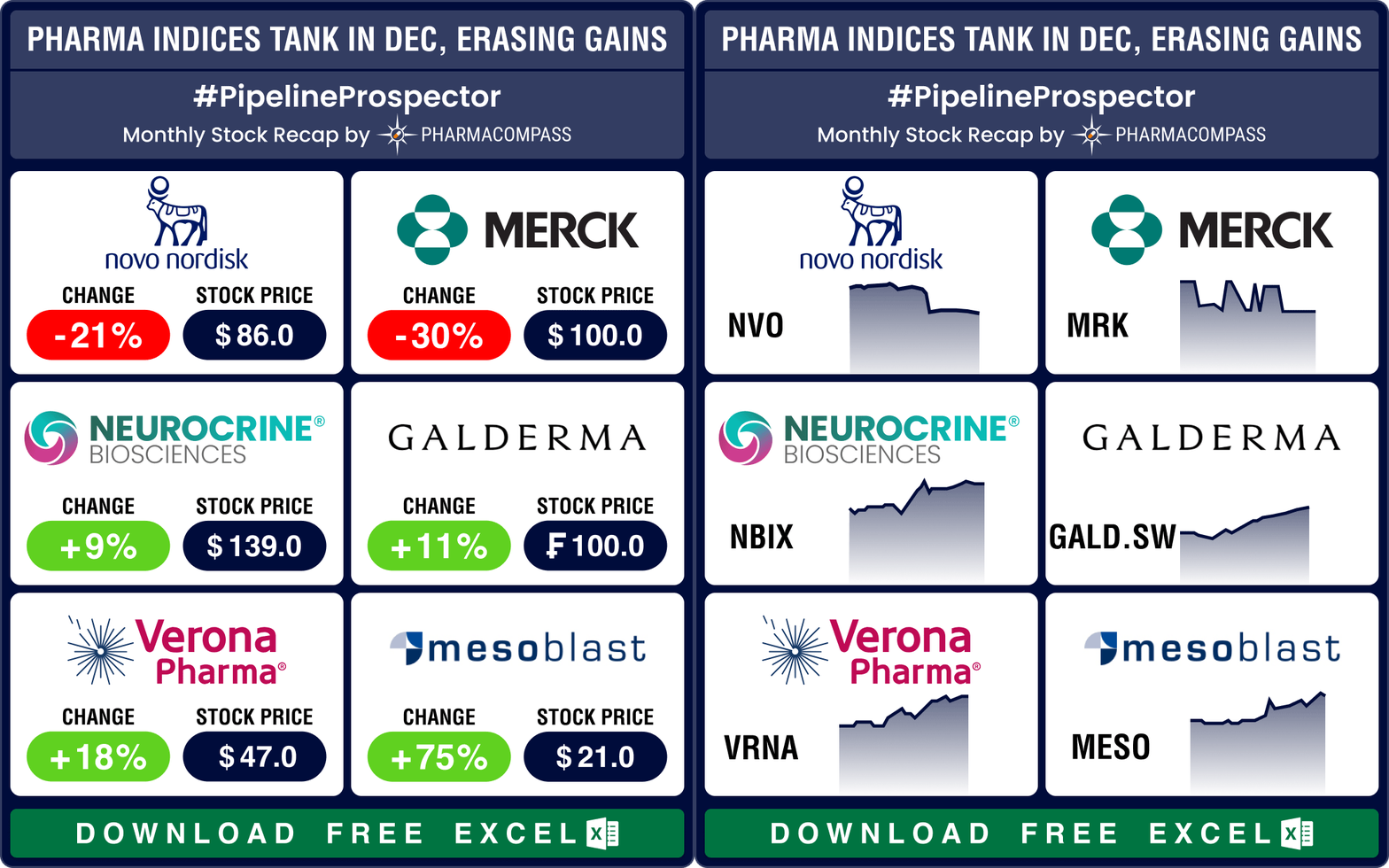
December proved to be one of the most bearish months of 2024 for the biopharma sector. The Nasdaq Biotechnology Index (NBI) sank 7.2 percent from 4,638.6 to 4,310.6. The SPDR S&P Biotech ETF (XBI) plummeted 9.6 percent (from 99.29 to 90.06) and the S&P Biotechnology Select Industry Index (SPSIBI) plunged 9.5 percent (from 7,763.7 to 7,023). This downturn in indices at the fag-end of 2024 effectively erased the gains they had made during the year. NBI was lower by 0.68 percent at the end of 2024, as opposed to 2023. XBI and SPSIBI posted modest gains of 1.84 percent and approximately 1 percent, respectively. The sector’s tepid performance stands in stark contrast to the broader market, which closed 2024 at near-record highs.  Access the Pipeline Prospector Dashboard for December 2024 Newsmakers (Free Excel) GLP-1 drugs show promise beyond obesity, diabetes; Novo Holdings completes US$ 16.5 bn Catalent buyout Glucagon-like peptide-1 (GLP-1) agonists created much news in 2024, for not just their demand and concomitant shortages, but also for their health benefits beyond weight-loss and diabetes.  December saw Lilly’s Zepbound break new ground as the first FDA-approved treatment for obstructive sleep apnea (OSA) in adults with obesity. OSA affects around 1 billion people globally. In March 2023, Novo’s Wegovy became the first obesity drug cleared by the FDA to lower the risk of cardiovascular death, heart attack, and stroke. In the same month, Novo’s blockbuster Ozempic also slashed the risk of kidney disease progression in a late-stage trial. The biggest investments in December came from Novo Nordisk and Eli Lilly — the two early entrants into the potential US$ 150 billion obesity market. Throughout 2024, the two companies kept injecting billions to boost production in order to meet the burgeoning demand. Just last month, Lilly invested US$ 3 billion to expand its recently acquired injectables plant in Wisconsin, US, to meet the soaring demand for GLP-1 drugs. And Novo invested US$ 1.2 billion to establish a new rare disease drugs plant in Odense, Denmark. After much ado, Novo Holdings completed its US$ 16.5 billion acquisition of Catalent in December, having won the greenlight from both the US Federal Trade Commission and European Commission. This was the biggest pharma deal of 2024 (announced in February). Interestingly, Lilly turned out to be the best performing pharma stock of the year (its market cap increased by a whopping US$ 163 billion in 2024) while Novo’s stock ended the year 17 percent lower than 2023. It crashed 21 percent in December after disappointing results from a late stage trial of its eagerly awaited experimental next-generation obesity drug CagriSema.  Access the Pipeline Prospector Dashboard for December 2024 Newsmakers (Free Excel)  Rise of ‘buyout-hesitant’ biotechs that bagged maiden approvals; Novartis snaps up PTC’s Huntington’s disease program Novartis has been investing in early-stage science. The Swiss drugmaker inked over 20 deals in 2024, paying over US$ 5.5 billion upfront and promising over US$ 25 billion in biobucks. In December, Novartis snapped up PTC’s Huntington’s disease program in a US$ 2.9 billion deal, including US$ 1 billion upfront. Barring the Novo-Catalent buyout, all other deals in the biopharma space last year were in the sub-US$ 5 billion range. The other major deals were Vertex’s US$ 4.9 billion acquisition of Alpine Immune, Gilead’s US$ 4.3 billion buyout of CymaBay and Lilly’s US$ 3.2 billion acquisition of Morphic Holding. The most striking trend was the emergence of a new breed of ‘buyout hesitant' biotech firms that preferred to commercialize their products independently instead of seeking Big Pharma partnerships. This shift in strategy proved successful for many, as numerous companies completed the transition from clinical-stage to commercial-stage operations. December saw several such notable commercial debuts. Ionis Pharmaceuticals secured approval of Tryngolza, the first-ever treatment for familial chylomicronemia syndrome (FCS), a rare genetic disorder. Mesoblast’s cell therapy Ryoncil gained US approval for treating post-transplant complications (graft-versus-host disease), offering a novel approach to managing immune-related adverse events. Mesoblast’s stock grew 950 percent in 2024. Similarly, Checkpoint Therapeutics (stock up 50 percent in 2024) secured FDA approval for Unloxcyt, targeting cutaneous squamous cell carcinoma in patients with locally advanced or metastatic disease where surgery and radiation are not viable options. Merus’ Bizengri brought new options to patients with hard-to-treat cancers, adding to the growing arsenal of precision oncology treatments. Merus’ stock ballooned 48 percent last year. Though the trend caught momentum in December, even the preceding months of 2024 saw significant debuts. For instance, in March, Madrigal’s Rezdiffra became the first drug approved in the US for the common fatty liver disease known as metabolic dysfunction-associated steatohepatitis (MASH). Madrigal’s stock grew 35 percent last year. Similarly, Verona brought to market Ohtuvayre (approved in June), the first new mechanism of action in over two decades for the treatment of chronic obstructive pulmonary disease. Verona’s stock soared 147 percent in 2024. And in May, PTC’s Kebilidi, a treatment for enzyme deficiency disorder, became the first FDA-approved gene therapy directly administered to the brain. PTC’s stock rose 68 percent in 2024.  Access the Pipeline Prospector Dashboard for December 2024 Newsmakers (Free Excel)  Drug approvals gain momentum in December; Vertex, Neurocrine, Astra score wins The year 2024 saw some landmark drug approvals. And as the year drew to a close, FDA began approving drugs at a feverish pace. Novo won approval for Alhemo, a once-daily subcutaneous injection that significantly reduces bleeding episodes in hemophilia patients, marking a shift from more burdensome treatment regimens.  Vertex Pharmaceuticals expanded treatment options for cystic fibrosis patients with its triple combination therapy that targets specific genetic variants of the disease. Dermatology saw two advancements with the approvals of Organon’s Vtama cream and Galderma’s Nemluvio injection, both targeting atopic dermatitis through distinct mechanisms. FDA also approved Neurocrine Biosciences’ Crenessity — the first new treatment in 70 years for classic congenital adrenal hyperplasia, a rare hormonal disorder. The oncology landscape saw Bristol Myers-Squibb enhance patient convenience with Opdivo Qvantig, an injectable formulation of its blockbuster cancer drug. And FDA expanded the approval of AstraZeneca’s Imfinzi to treat adults with limited-stage small cell lung cancer.  Access the Pipeline Prospector Dashboard for December 2024 Newsmakers (Free Excel)  Our view The industry dynamics witnessed a marked shift in 2024. The absence of mega-mergers, coupled with Novartis’ approach to buy smaller companies, suggests a more measured approach to deal-making. The emergence of companies like Madrigal, Verona, and Ionis signals a maturing biotech sector, less dependent on Big Pharma partnerships. Looking ahead, this evolution could herald a more diverse and resilient industry landscape. Access the Pipeline Prospector Dashboard for December 2024 Newsmakers (Free Excel) 

Impressions: 14630

https://www.pharmacompass.com/pipeline-prospector-blog/pipeline-prospector-2024-highlights-rise-in-new-breed-of-biotechs-with-maiden-approvals-glp-1-meds-show-promise-beyond-obesity

#PharmaFlow by PHARMACOMPASS
09 Jan 2025

WEEKLY NEWS RECAP #Phispers

read-more
read-more
FDA approves Wockhardt’s antibiotic for complicated UTIs; Pfizer inks up to US$ 10.5 billion deal with Innovent
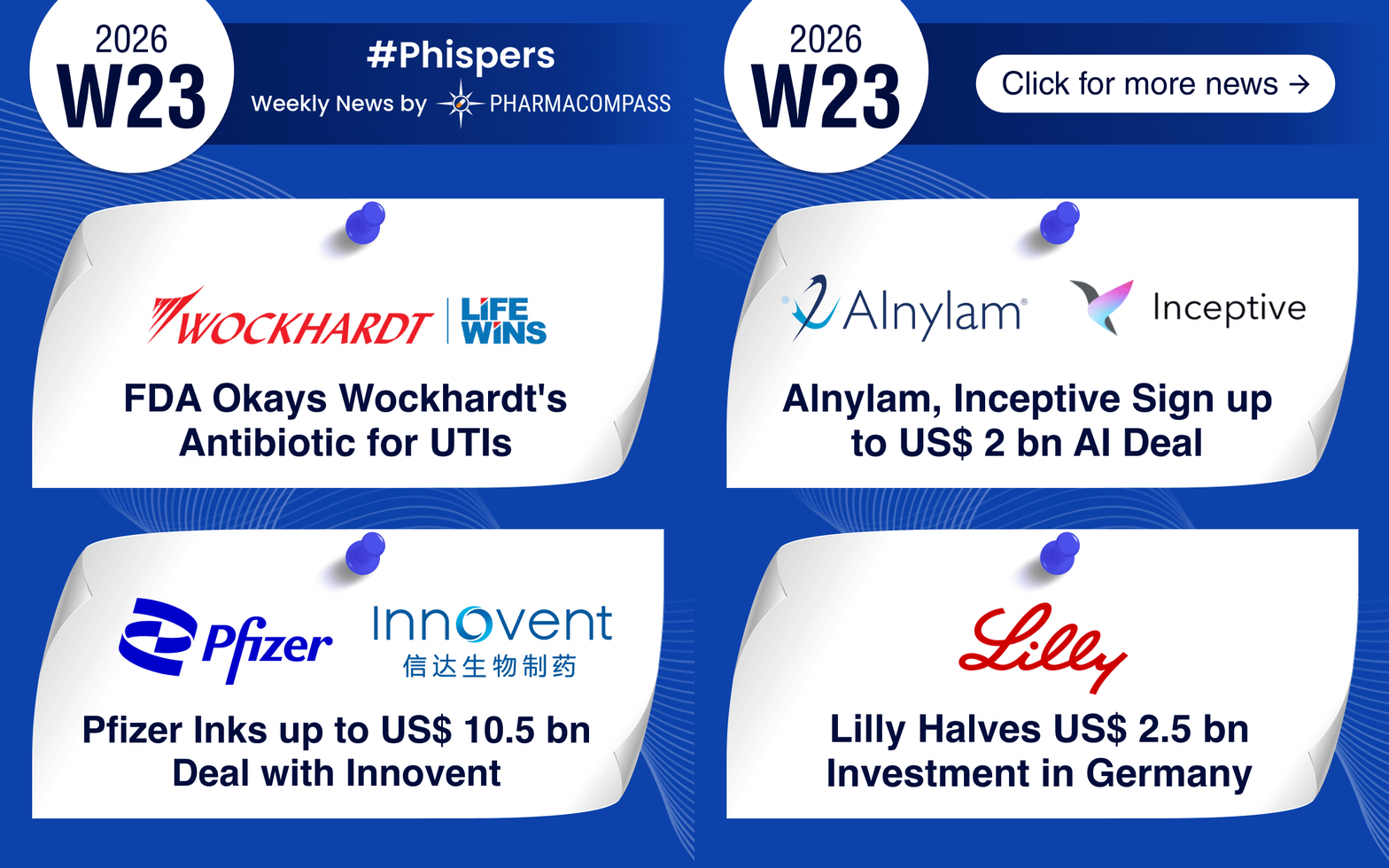
This week’s Phispers is full of news about deals and clinical trials emerging out of the recently concluded annual meeting of the American Society of Clinical Oncology.But first, the drug approvals. The US Food and Drug Administration (FDA) granted approval to Indian drugmaker Wockhardt’s novel intravenous antibiotic Zaynich (cefepime and zidebactam) that treats complicated urinary tract infections. It also approved Shionogi’s oral antiviral Xocova (ensitrelvir) for preventing Covid-19 after exposure. And AstraZeneca’s Imfinzi (durvalumab) in combination with Bacillus Calmette-Guérin (BCG) was approved for high-risk non-muscle invasive bladder cancer. This marks a second bladder cancer indication for the drug.Eli Lilly continues to be in dealmaking mode. It signed a licensing and research collaboration with China’s Haisco Pharmaceutical worth up to US$ 3 billion to develop multiple innovative therapies. It also signed a deal worth up to US$ 1.9 billion with Ascidian Therapeutics to use its RNA editing technology to develop treatments for kidney diseases. Moreover, it signed a US$ 1.2 billion deal with South Korea’s Hanmi Pharmaceutical for sonefpeglutide, a GLP-2 analog aimed at short bowel syndrome, a condition where patients cannot absorb enough nutrients.In other deals, Pfizer has struck a global licensing and collaboration agreement worth up to US$ 10.5 billion with China’s Innovent Biologics for the research and development of multiple early-stage cancer medicines. Alnylam Pharmaceuticals and Inceptive have signed a strategic collaboration worth up to US$ 2 billion to develop RNA-based medicines using artificial intelligence (AI). And Edgewise Therapeutics said it is selling its muscular dystrophy business to Servier for up to US$ 2.65 billion.In news from clinical trials, as part of a multi-drug regimen (including chemotherapy), Incyte’s Monjuvi (tafasitamab) reduced the risk of disease progression or death by 25 percent in patients with an aggressive form of non-Hodgkin lymphoma, known as diffuse large B-cell lymphoma (DLBCL). Johnson & Johnson’s Erleada (apalutamide), when used with hormone-blocking therapy six months before and after prostate surgery, improved the chances ‌of eliminating the cancer and reduced the risk of disease progression or death. And AstraZeneca Imfinzi (durvalumab) in combination with Imjudo (tremelimumab), lenvatinib, and transarterial chemoembolisation (TACE) reduced the risk of disease progression versus TACE alone for patients with a type of liver cancer in a phase 3 study.FDA approves Wockhardt’s antibiotic for complicated UTIs; okays Shionogi’s Covid preventiveIndia’s Wockhardt has secured an FDA approval for Zaynich (cefepime and zidebactam), a novel intravenous antibiotic for the treatment of adults with complicated urinary tract infections. The approval positions the drug in a global antibiotics market estimated at over US$ 9 billion. The drug has also bagged approval from India’s Central Drugs Standard Control Organization (CDSCO).Shionogi’s Covid-19 prevention drug: FDA has approved Japanese drugmaker Shionogi’s oral antiviral Xocova (ensitrelvir) for preventing Covid-19 after exposure. Unlike vaccines, the drug is taken after potential exposure to reduce infection risk. This offers an additional layer of protection, especially for high-risk individuals or those who may not respond well to vaccines.Astra’s Imfinzi okayed for bladder cancer: FDA has approved Imfinzi (durvalumab) in combination with Bacillus Calmette-Guérin (BCG) for high-risk non-muscle invasive bladder cancer. This marks a second bladder cancer indication for the drug.Lilly inks US$ 3 bn R&D pact with Haisco; gains license to Ascidian’s gene-editing techEli Lilly continued to be on a deal-making spree. It signed a licensing and research collaboration with China’s Haisco Pharmaceutical worth up to US$ 3 billion to develop multiple innovative therapies. Lilly also signed a deal worth up to US$ 1.9 billion with Ascidian Therapeutics to use its gene-editing technology to develop new therapies for rare inherited kidney diseases. Unlike traditional gene editing, Ascidian’s technology is designed to correct faulty genes without permanently altering the patient’s DNA. In addition to these two deals, Lilly entered into a licensing deal worth up to US$ 1.2 billion with South Korea’s Hanmi Pharmaceutical for sonefpeglutide, a GLP-2 analog aimed at short bowel syndrome, a condition where patients cannot absorb enough nutrients. The deal strengthens Lilly’s gastrointestinal pipeline.Halves investment in Germany: Eli Lilly plans to cut its previously announced €2.3 billion (about US$ 2.5 billion) investment in Germany by roughly half, citing changing market conditions. The move reflects growing uncertainty around manufacturing costs and the policy environment in Europe. Pfizer inks up to US$ 10.5 billion oncology deal with Innovent BiologicsPfizer has struck a global licensing and collaboration agreement worth up to US$ 10.5 billion with China’s Innovent Biologics for the research and development of 12 promising early-stage cancer medicines. The agreement includes an upfront payment of US$ 650 million and up to US$ 9.85 billion in milestone payments.Edgewise-Servier deal: Edgewise Therapeutics is selling its muscular dystrophy business to Servier for up to US$ 2.65 billion, including upfront and milestone payments. The deal, which involves an upfront payment of US$ 1.55 billion, gives Servier access to experimental therapies targeting Duchenne muscular dystrophy, a rare genetic disorder that causes progressive muscle weakness.Alnylam, Inceptive sign AI deal: Alnylam Pharmaceuticals and Inceptive have announced a strategic collaboration worth up to US$ 2 billion to develop RNA-based medicines using artificial intelligence (AI).Incyte’s drug combo shows benefit in aggressive form of non-Hodgkin lymphoma As part of a multi-drug regimen (including chemotherapy), Incyte’s Monjuvi (tafasitamab) reduced the risk of disease progression or death by 25 percent in patients with an aggressive form of non-Hodgkin lymphoma, known as diffuse large B-cell lymphoma (DLBCL). These phase 3 results suggest the regimen could improve first-line treatment outcomes.J&J’s prostate cancer drug improves survival benefit: In a late-stage trial, Johnson & Johnson's drug Erleada (apalutamide), when used along with hormone-blocking therapy six months before and after prostate surgery, improved the chances ‌of eliminating the cancer and reduced the risk of disease progression or death.The findings could reshape treatment by introducing earlier use of the drug.Astra’s Imfinzi drug combo shows benefit in liver cancer: AstraZeneca’s drug Imfinzi  (durvalumab) in combination with Imjudo (tremelimumab), lenvatinib, and transarterial chemoembolisation (TACE), reduced the risk of disease progression versus TACE alone in patients with unresectable hepatocellular carcinoma (HCC) eligible for embolisation in a phase 3 study. HCC is a type of liver cancer that cannot be treated surgically.

Impressions: 994

https://www.pharmacompass.com/radio-compass-phisper/fda-approves-wockhardt-s-antibiotic-for-complicated-utis-pfizer-inks-up-to-us-10-5-billion-deal-with-innovent

#Phispers by PHARMACOMPASS
04 Jun 2026

NEWS #PharmaBuzz

read-more
read-more

https://www.globenewswire.com/news-release/2026/06/11/3310376/0/en/theriva-biologics-announces-results-from-vcn-01-phase-1-clinical-trial-in-head-and-neck-cancer-published-in-clinical-cancer-research.html

GLOBENEWSWIRE
11 Jun 2026

https://www.globenewswire.com/news-release/2026/06/08/3308124/29489/en/aim-immunotech-reports-positive-mid-year-interim-clinical-progress-from-phase-2-study-evaluating-ampligen-rintatolimod-in-combination-with-astrazeneca-s-imfinzi-durvalumab-for-the-.html

GLOBENEWSWIRE
08 Jun 2026

https://www.globenewswire.com/news-release/2026/06/01/3304404/29489/en/aim-immunotech-completes-phase-2-duripanc-enrollment-milestone-ahead-of-schedule-advancing-ampligen-toward-critical-pancreatic-cancer-clinical-milestones.html

GLOBENEWSWIRE
01 Jun 2026

https://www.fiercepharma.com/pharma/asco-astrazenecas-imfinzi-imjudo-duo-shines-earlier-stage-liver-cancer-win

FIERCE PHARMA
01 Jun 2026

https://www.icr.ac.uk/about-us/icr-news/detail/combination-immunotherapy-significantly-reduces-kidney-cancer-recurrence-after-surgery

ICR
30 May 2026

https://www.fiercepharma.com/pharma/astrazeneca-gains-2nd-bladder-cancer-nod-key-expansion-imfinzi

FIERCE PHARMA
28 May 2026