


NEWS
- Pharma & Biotech News #PharmaBuzz
- Weekly News Recap #Phispers
- Recent Product Approvals #GreenLight
- Quality Compliance Alerts #Warning!
- All News #Library
DRUGS & DEVELOPMENTS
MARKET INTEL by PharmaCompass

Create content with us, ask us
By PharmaCompass
2026-06-04
Impressions: 731 Article || 8 Video
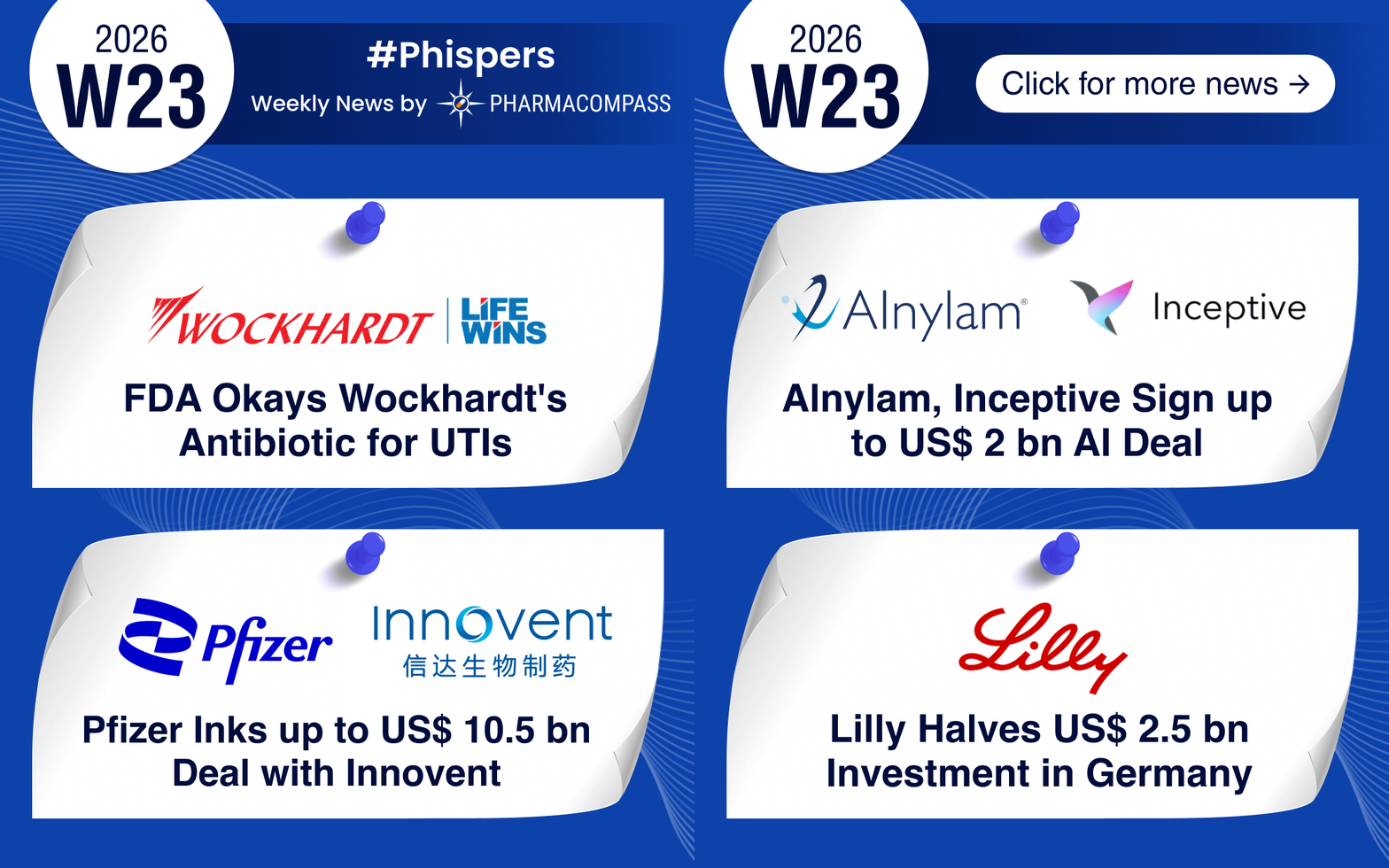
This week’s Phispers is full of news about deals and clinical trials emerging out of the recently concluded annual meeting of the American Society of Clinical Oncology.
But first, the drug approvals. The US Food and Drug Administration (FDA) granted approval to Indian drugmaker Wockhardt’s novel intravenous antibiotic Zaynich (cefepime and zidebactam) that treats complicated urinary tract infections. It also approved Shionogi’s oral antiviral Xocova (ensitrelvir) for preventing Covid-19 after exposure. And AstraZeneca’s Imfinzi (durvalumab) in combination with Bacillus Calmette-Guérin (BCG) was approved for high-risk non-muscle invasive bladder cancer. This marks a second bladder cancer indication for the drug.
Eli Lilly continues to be in dealmaking mode. It signed a licensing and research collaboration with China’s Haisco Pharmaceutical worth up to US$ 3 billion to develop multiple innovative therapies. It also signed a deal worth up to US$ 1.9 billion with Ascidian Therapeutics to use its RNA editing technology to develop treatments for kidney diseases. Moreover, it signed a US$ 1.2 billion deal with South Korea’s Hanmi Pharmaceutical for sonefpeglutide, a GLP-2 analog aimed at short bowel syndrome, a condition where patients cannot absorb enough nutrients.
In other deals, Pfizer has struck a global licensing and collaboration agreement worth up to US$ 10.5 billion with China’s Innovent Biologics for the research and development of multiple early-stage cancer medicines. Alnylam Pharmaceuticals and Inceptive have signed a strategic collaboration worth up to US$ 2 billion to develop RNA-based medicines using artificial intelligence (AI). And Edgewise Therapeutics said it is selling its muscular dystrophy business to Servier for up to US$ 2.65 billion.
In news from clinical trials, as part of a multi-drug regimen (including chemotherapy), Incyte’s Monjuvi (tafasitamab) reduced the risk of disease progression or death by 25 percent in patients with an aggressive form of non-Hodgkin lymphoma, known as diffuse large B-cell lymphoma (DLBCL). Johnson & Johnson’s Erleada (apalutamide), when used with hormone-blocking therapy six months before and after prostate surgery, improved the chances of eliminating the cancer and reduced the risk of disease progression or death. And AstraZeneca Imfinzi (durvalumab) in combination with Imjudo (tremelimumab), lenvatinib, and transarterial chemoembolisation (TACE) reduced the risk of disease progression versus TACE alone for patients with a type of liver cancer in a phase 3 study.
FDA approves Wockhardt’s antibiotic for complicated UTIs; okays Shionogi’s Covid preventive
India’s Wockhardt has secured an FDA approval for Zaynich (cefepime and zidebactam), a novel intravenous antibiotic for the treatment of adults with complicated urinary tract infections. The approval positions the drug in a global antibiotics market estimated at over US$ 9 billion. The drug has also bagged approval from India’s Central Drugs Standard Control Organization (CDSCO).
Shionogi’s Covid-19 prevention drug: FDA has approved Japanese drugmaker Shionogi’s oral antiviral Xocova (ensitrelvir) for preventing Covid-19 after exposure. Unlike vaccines, the drug is taken after potential exposure to reduce infection risk. This offers an additional layer of protection, especially for high-risk individuals or those who may not respond well to vaccines.
Astra’s Imfinzi okayed for bladder cancer: FDA has approved Imfinzi (durvalumab) in combination with Bacillus Calmette-Guérin (BCG) for high-risk non-muscle invasive bladder cancer. This marks a second bladder cancer indication for the drug.
Lilly inks US$ 3 bn R&D pact with Haisco; gains license to Ascidian’s gene-editing tech
Eli Lilly continued to be on a deal-making spree. It signed a licensing and research collaboration with China’s Haisco Pharmaceutical worth up to US$ 3 billion to develop multiple innovative therapies.
Lilly also signed a deal worth up to US$ 1.9 billion with Ascidian Therapeutics to use its gene-editing technology to develop new therapies for rare inherited kidney diseases. Unlike traditional gene editing, Ascidian’s technology is designed to correct faulty genes without permanently altering the patient’s DNA.
In addition to these two deals, Lilly entered into a licensing deal worth up to US$ 1.2 billion with South Korea’s Hanmi Pharmaceutical for sonefpeglutide, a GLP-2 analog aimed at short bowel syndrome, a condition where patients cannot absorb enough nutrients. The deal strengthens Lilly’s gastrointestinal pipeline.
Halves investment in Germany: Eli Lilly plans to cut its previously announced €2.3 billion (about US$ 2.5 billion) investment in Germany by roughly half, citing changing market conditions. The move reflects growing uncertainty around manufacturing costs and the policy environment in Europe.
Pfizer inks up to US$ 10.5 billion oncology deal with Innovent Biologics
Pfizer has struck a global licensing and collaboration agreement worth up to US$ 10.5 billion with China’s Innovent Biologics for the research and development of 12 promising early-stage cancer medicines. The agreement includes an upfront payment of US$ 650 million and up to US$ 9.85 billion in milestone payments.
Edgewise-Servier deal: Edgewise Therapeutics is selling its muscular dystrophy business to Servier for up to US$ 2.65 billion, including upfront and milestone payments. The deal, which involves an upfront payment of US$ 1.55 billion, gives Servier access to experimental therapies targeting Duchenne muscular dystrophy, a rare genetic disorder that causes progressive muscle weakness.
Alnylam, Inceptive sign AI deal: Alnylam Pharmaceuticals and Inceptive have announced a strategic collaboration worth up to US$ 2 billion to develop RNA-based medicines using artificial intelligence (AI).
Incyte’s drug combo shows benefit in aggressive form of non-Hodgkin lymphoma
As part of a multi-drug regimen (including chemotherapy), Incyte’s Monjuvi (tafasitamab) reduced the risk of disease progression or death by 25 percent in patients with an aggressive form of non-Hodgkin lymphoma, known as diffuse large B-cell lymphoma (DLBCL). These phase 3 results suggest the regimen could improve first-line treatment outcomes.
J&J’s prostate cancer drug improves survival benefit: In a late-stage trial, Johnson & Johnson's drug Erleada (apalutamide), when used along with hormone-blocking therapy six months before and after prostate surgery, improved the chances of eliminating the cancer and reduced the risk of disease progression or death.The findings could reshape treatment by introducing earlier use of the drug.
Astra’s Imfinzi drug combo shows benefit in liver cancer: AstraZeneca’s drug Imfinzi (durvalumab) in combination with Imjudo (tremelimumab), lenvatinib, and transarterial chemoembolisation (TACE), reduced the risk of disease progression versus TACE alone in patients with unresectable hepatocellular carcinoma (HCC) eligible for embolisation in a phase 3 study. HCC is a type of liver cancer that cannot be treated surgically.
The PharmaCompass Newsletter – Sign Up, Stay Ahead
Feedback, help us to improve. Click here
Image Credit : Phispers Infographic by PharmaCompass license under CC BY 2.0
“ The article is based on the information available in public and which the author believes to be true. The author is not disseminating any information, which the author believes or knows, is confidential or in conflict with the privacy of any person. The views expressed or information supplied through this article is mere opinion and observation of the author. The author does not intend to defame, insult or, cause loss or damage to anyone, in any manner, through this article.”