Please Wait
Applying Filters...
Menu
Xls

Digital Content read-more

Create Content with PharmaCompass, ask us

DATA COMPILATION #PharmaFlow

read-more
read-more
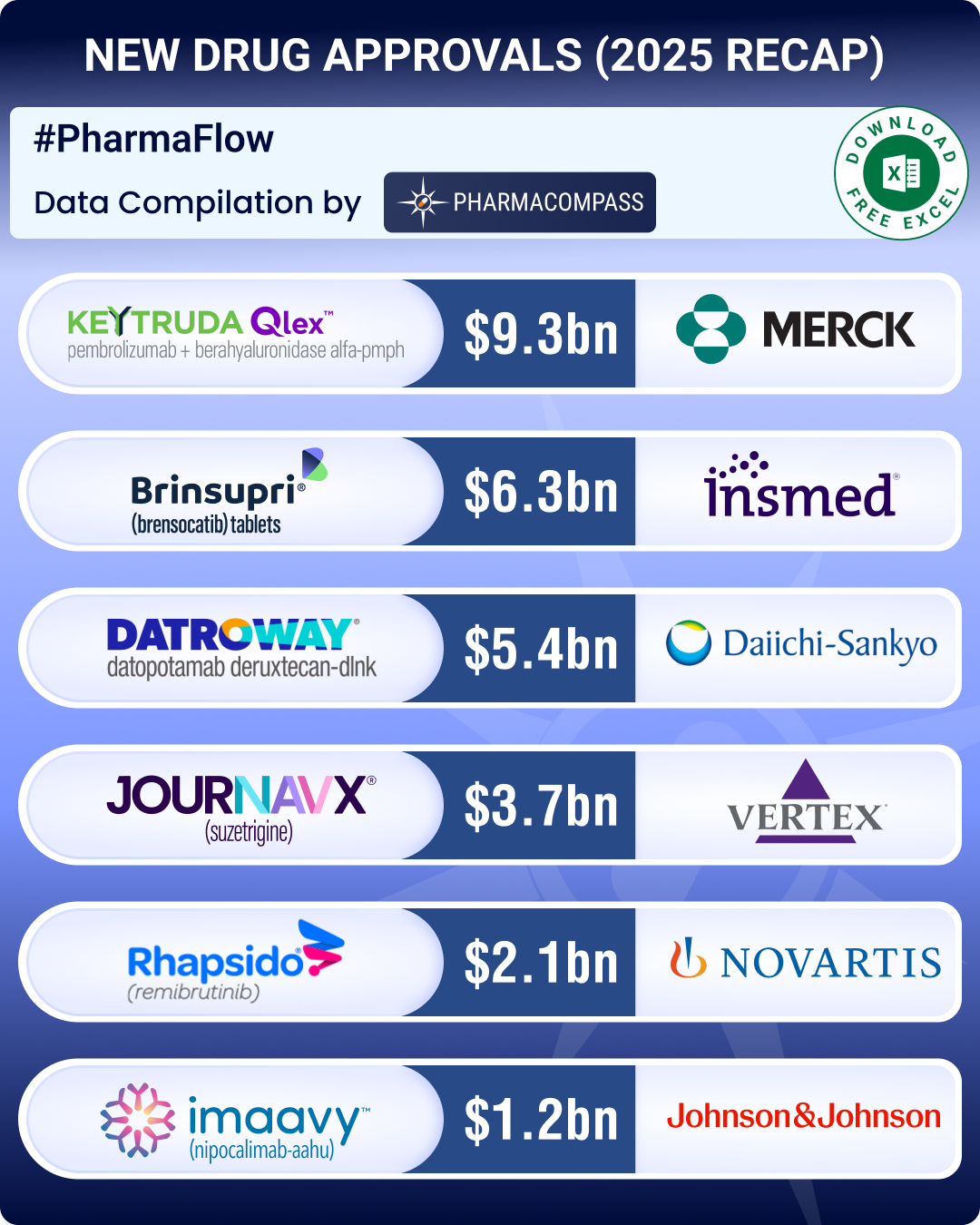
FDA approvals drop 8% in 2025, with fewer blockbusters; Brinsupri, Rhapsido make it to first-in-class list
Our update for new drug approvals by the US Food and Drug Administration (FDA) in the first half (H1) of 2025 had pointed out how upheavals at the agency had impacted its functioning, with drug approvals dropping by 24 percent.While the turbulence didn’t subside, approvals picked up considerably in the second half (H2) of 2025. FDA’s Center for Drug Evaluation and Research (CDER) approved 30 new drugs in H2 (as against 16 in H1), taking the total number of approvals for 2025 up to 46. This is an 8 percent drop compared with 50 approvals CDER had granted in 2024.During the year, CDER saw four new chiefs come and go — Jacqueline Corrigan-Curay (Jan-July 2025), George Tidmarsh (July-Nov 2025), Richard Pazdur (Nov-December 2025) and Tracy Beth Høeg (December 2025-present). In addition, the agency endured thousands of retrenchments. The US Department of Health and Human Services (HHS), under Health Secretary Robert F. Kennedy Jr., enforced funding cuts and changes in approval processes, especially for vaccines.Overall, we have been witnessing a steady drop in drug approvals by CDER — it approved 55 new drugs in 2023, 50 in 2024 and, 46 in 2025.Of the 46 new approvals in 2025, 20 were classified as first-in-class (therapies that use a new and unique mechanism of action), out of which 13 were approved in H2 2025. Overall, CDER approved 32 chemical entities and 14 biologics in 2025.In comparison, approvals by Health Canada and authorizations by the European Medicines Agency (EMA) rose in 2025. The EMA authorized 69 new therapies, up from 64 in 2024. Health Canada approved 46 new therapies in 2025, as compared with 28 in 2024.FDA’s Center for Biologics Evaluation and Research (CBER) approved 21 biologics in 2025, compared with 13 in 2024, of which eight were notable new drugs.Interestingly, both CDER and CBER rejected more drugs last year — 43 applications were rejected, including those for new drugs, supplemental filings, generics and biosimilars, as opposed to 29 in 2024. View New Drug Approvals in 2025 with Estimated Sales (Free Excel Available)Blockbuster drug approvals drop by 60%, European drugmakers score more FDA nods It wasn’t a year of blockbuster drug approvals — the agency approved a lower number of drugs that are expected to deliver sales of at least US$ 1 billion by 2030. While there were nearly 20 such drugs approved in 2024, the number dropped to just eight in 2025.Interestingly, European companies won many more approvals for new products than their counterparts in the US. GSK and Novartis achieved three approvals each, while Merck, Boehringer Ingelheim and Bayer AG won two approvals each.The first-in-class drugs approved in H2 are: Insmed's Brinsupri (brensocatib), Ionis's Dawnzera (donidalorsen), Stealth Bio's Forzinity (elamipretide), Boehringer's Jascayd (nerandomilast), UCB's Kygevvi (doxecitine and doxribtimine), Bayer's Lynkuet (elinzanetant), Chimerix's Modeyso (dordaviprone), Innoviva's Nuzolvence (zoliflodacin), Arrowhead's Redemplo (plozasiran), Novartis' Rhapsido (remibrutinib), Otsuka's Voyxact (sibeprenlimab-szsi), Sanofi's Wayrilz (rilzabrutinib) and Omeros' Yartemlea (narsoplimab-wuug). View New Drug Approvals in 2025 with Estimated Sales (Free Excel Available)Insmed’s Brinsupri approved for chronic lung disease; Novartis’ Rhapsido okayed for urticariaAs has been the trend, the field of oncology saw the maximum drug approvals (15), followed by rare diseases and disorders (7) and immunology (4). Three categories — infections and infectious diseases, respiratory diseases and cardiology/vascular diseases — saw three drug approvals each.Among the first-in-class approvals was Insmed’s Brinsupri (brensocatib), the first treatment for non-cystic fibrosis bronchiectasis, a chronic lung disease. Nature has estimated peak sales of US$ 6.3 billion for this treatment. Brinsupri was approved by the EMA in November.Another notable approval was granted to Novartis’ Rhapsido (remibrutinib), approved to treat the skin condition chronic spontaneous urticaria in adults who remain symptomatic despite treatment with antihistamines. Rhapsido is the first oral alternative to injectable treatments and has 2030 sales forecasts of US$ 2.1 billion. Novartis is also testing the drug for other immune conditions.A new drug that is estimated to bring in the maximum sales is Merck’s Keytruda Qlex, a subcutaneous formulation of pembrolizumab plus berahyaluronidase alfa approved for various solid tumors. While top-selling cancer drug Keytruda (pembrolizumab) was first approved in 2014, this is the first approval for an engineered variant of the hyaluronidase enzyme (berahyaluronidase alfa). Therefore, this combination counts as a novel approval. View New Drug Approvals in 2025 with Estimated Sales (Free Excel Available)Fondazion’s CGT okayed for Wiskott-Aldrich syndrome; three drugs approved for hereditary angioedema After a record nine new cell and gene therapy (CGT) approvals in 2024, only five CGTs were approved in 2025 (the lowest since 2022). With the exception of Novartis’ Itvisma (onasemnogene abeparvovec-brve), all other CGT approvals went to relatively lesser known companies such as Abeona, Precigen, Neurotech and Fondazione Telethon (an Italian firm that became the first nonprofit to get a CGT approval from the FDA).Fondazione Telethon’s Waskyra (etuvetidigene autotemcel) became the first gene therapy for Wiskott-Aldrich syndrome (WAS), a rare immune disorder that causes frequent infections, bleeding issues, and eczema. The one-time treatment uses patients’ own blood stem cells that are modified to restore the faulty WAS gene. Abeona’s Zevaskyntm (prademagene zamikeracel) became the first and only autologous cell sheet-based gene therapy indicated for the treatment of wounds in adult and pediatric patients with recessive dystrophic epidermolysis bullosa (a rare, genetic skin disorder).Patients with hereditary angioedema (or HAE, a genetic disorder characterized by recurrent episodes of severe swelling) gained access to three new drugs, including two first-in-class drugs — CSL Behring’s Andembry (garadacimab) and Ionis Pharma’s Dawnzera (donidalorsen). The third drug approved to treat HAE is KalVista Pharma’s Ekterly (sebetralstat). View New Drug Approvals in 2025 with Estimated Sales (Free Excel Available)Our viewThe FDA has been bringing about considerable changes to its processes. In June, it launched the Commissioner’s National Priority Vouchers (CNPV) program to cut review timelines from the usual 10 to 12 months to two months. But the recent rejection of Disc Medicine’s application for bitopertin as a treatment for a rare blood disorder under the program took four months to materialize. Not only did the rejection come in late, it was based on information already known to the FDA at the time of granting the coveted voucher, raising controversy around the program.The agency is going to bring about more changes soon. It has proposed a plausible mechanism pathway for rare and ultra-rare diseases where randomized controlled trials are not feasible. And in April, it announced plans to phase out animal toxicity testing in the development of monoclonal antibody therapies and other drugs. The agency is increasingly relying on AI, and recently  announced the deployment of agentic AI capabilities for all employees. It will be interesting to see how these changes impact drug approvals in 2026.

Impressions: 2185

https://www.pharmacompass.com/radio-compass-blog/fda-approvals-drop-8-in-2025-with-fewer-blockbusters-brinsupri-rhapsido-make-it-to-first-in-class-list

#PharmaFlow by PHARMACOMPASS
26 Feb 2026

STOCK RECAP #PipelineProspector

read-more
read-more
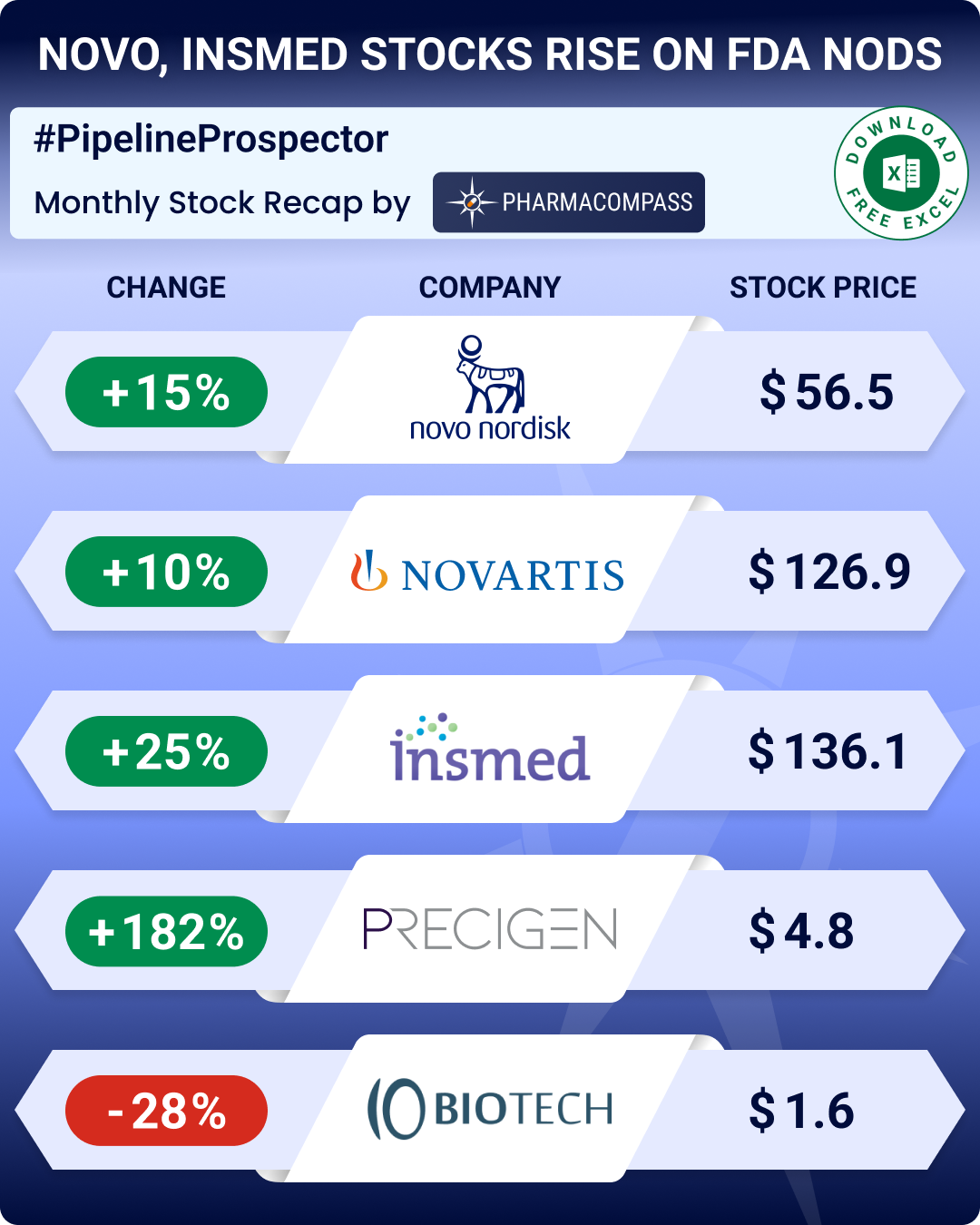
Pipeline Prospector August 2025: Novo’s Wegovy approved for MASH,  Tonix Pharma’s fibromyalgia drug okayed
In August, the global pharmaceutical industry witnessed several regulatory upheavals and policy shifts in the US. The month began with the US President Donald Trump announcing that planned tariffs on drug imports into the US may reach 250 percent within 12 to 18 months.In the last days of July, Vinay Prasad, the head of the US Food and Drug Administration’s Center for Biologics Evaluation and Research (CBER) had stepped down (reportedly under pressure). On August 12, Prasad was back at CBER as its head. Then, around the month end, the White House fired Centers For Disease Control and Prevention (CDC) director Susan Monarez after a clash with Health and Human Services (HHS) Secretary Robert F. Kennedy Jr. Four senior CDC officials resigned soon after.Despite this chaos, the pharma indices showed resilience and climbed upwards. The Nasdaq Biotechnology Index (NBI) rose 5.22 percent from 4,445.39 to 4,677.63. The SPDR S&P Biotech ETF (XBI) gained 5.92 percent from 84.83 to 89.85. And the S&P Biotechnology Select Industry Index (SPSIBI) climbed 4.9 percent from 6,671.56 to 6,998.36. Access the Pipeline Prospector Dashboard for August 2025 Newsmakers (Free Excel) Novo’s Wegovy gets approved for MASH; Precigen’s Papzimeos okayed for rare respiratory conditionThe FDA granted accelerated approval to Novo Nordisk’s Wegovy (semaglutide) for treating metabolic-associated steatohepatitis, or MASH — a progressive liver disease linked to obesity. MASH causes inflammation and scarring of the liver. This approval makes the blockbuster obesity drug the first glucagon-like peptide-1 (GLP-1) receptor agonist approved for this condition. The US regulator also granted an accelerated approval Hernexeos (zongertinib), a new drug from Boehringer Ingelheim, for adults with advanced non-small cell lung cancer (NSCLC) with specific HER2 mutations who have undergone prior treatment. In studies, the drug helped 75 percent of patients who had chemotherapy see their cancer shrink or disappear completely.Insmed (stock up 25 percent in August) secured FDA approval for its med Brinsupri (brensocatib). This is the first treatment for non-cystic fibrosis bronchiectasis, a chronic lung disease that leads to persistent cough, recurring infections, and damage to the airways.Maryland-based biotech Precigen bagged FDA approval for Papzimeos (zopapogene imadenovec-drba), making it the first treatment for recurrent respiratory papillomatosis. This is a rare condition that causes benign growths in the airway and voice box. Patients often require multiple surgeries each year to remove these growths, and until now there was no approved drug for this condition. Precigen saw its stock shoot up 182 percent during the month. Access the Pipeline Prospector Dashboard for August 2025 Newsmakers (Free Excel) Ionis’ Dawnzera becomes first RNA-targeting therapy for angioedema; Tonix’s fibromyalgia med okayedIonis Pharmaceuticals gained FDA approval for Dawnzera (donidalorsen), the first RNA-targeting preventive therapy for hereditary angioedema. This rare genetic disorder causes sudden and unpredictable swelling that can be life-threatening if it affects the airway.New Jersey-based biotech Tonix Pharmaceuticals received approval for Tonmya (cyclobenzaprine), the first new fibromyalgia treatment in over 15 years. Fibromyalgia is a chronic disorder that causes widespread pain, fatigue, sleep problems, and memory issues.Teva Pharmaceuticals won an expanded indication for Ajovy (fremanezumab) to prevent migraines in children between six and 17 years old.Jazz Pharmaceuticals reported a mix of clinical and regulatory developments. Its drug Modeyso (dordaviprone) received accelerated approval for diffuse midline glioma, a rare and aggressive brain tumor that occurs in both children and adults. Jazz also strengthened its pipeline by licensing SAN2355, an epilepsy drug candidate, from Danish biotech Saniona. Access the Pipeline Prospector Dashboard for August 2025 Newsmakers (Free Excel) Novartis’ Sjögren’s disease med posts trial win; IO Biotech’s melanoma vaccine faces phase 3 setbackNovartis reported success for its investigational monoclonal antibody ianalumab in a phase 3 study in patients with Sjögren’s disease. This is a chronic autoimmune condition in which the body’s immune system attacks its own moisture-producing glands, leading to dry eyes, dry mouth, and other complications. Similarly, Regeneron announced positive results for cemdisiran in generalized myasthenia gravis, a rare condition that causes muscle weakness.In negative news from trials, IO Biotech announced results from a late-stage trial of its experimental melanoma vaccine in combination with Merck’s Keytruda (pembrolizumab). Melanoma is a serious form of skin cancer. The vaccine’s benefits were not statistically significant. This setback dragged IO Biotech’s stock down by 28 percent over the month. The company still plans to file for FDA approval.Allogene reported a patient death in a phase 2 trial on its CAR-T cancer therapy — cemacabtagene ansegedleucel. And Agios Pharmaceuticals disclosed that four patients taking its anemia drug Pyrukynd (mitapivat) had died, according to FDA’s Adverse Event Reporting System (FAERS) database.Valneva faced a different kind of setback — FDA suspended the use of its chikungunya vaccine Ixchiq after 21 hospitalizations and three patient deaths, including one linked to encephalitis, a type of brain inflammation. With Ixchiq off the market, Bavarian Nordic’s Vimkunya is now the only chikungunya vaccine available in the US. Access the Pipeline Prospector Dashboard for August 2025 Newsmakers (Free Excel)Merck KGaA-Skyhawk in US$ 2 bn neurology deal; AbbVie acquires Gilgamesh’s psychedelic drugMerck KGaA struck a strategic research deal worth more than US$ 2 billion with Massachusetts-based Skyhawk Therapeutics to develop RNA-targeting small molecules for neurological conditions. The deal, valued at over US$2 billion, includes upfront and milestone payments as well as tiered royalties on future product sales. Under the agreement, Skyhawk will lead discovery and preclinical work, while Merck KGaA will assume development and commercialization.The month saw several sub-US$ 2 billion deals. Bayer signed a US$ 1.3 billion agreement with California-based Kumquat Biosciences to develop a cancer drug targeting KRAS mutations. These mutations are among the most common in cancer and occur in roughly 25 percent of cases. Eli Lilly entered a US$ 1.3 billion partnership with Boston-based Superluminal Medicines, an artificial intelligence firm. The collaboration aims to identify small-molecule drugs for obesity and metabolic diseases.Jazz Pharmaceuticals also licensed an epilepsy therapy from Denmark-based Saniona in a deal that could reach US$ 1 billion in value. And AbbVie acquired rights to Gilgamesh’s experimental psychedelic drug for depression for up to US$ 1.2 billion.Moreover, there were reports of Novartis planning to acquire San Diego-based Avidity Biosciences in early August. Avidity is valued at about US$ 5.8 billion. Access the Pipeline Prospector Dashboard for August 2025 Newsmakers (Free Excel) Our viewWhile it may seem like it’s business as usual in the global biopharma industry, the recent slowdown in big-ticket M&A deals suggests undercurrents of caution. Innovation and strong pipelines are keeping the momentum alive, but escalating geopolitical tensions, drastic cuts in federal funding in the US and, a rise in protectionism the world over are forcing companies to rethink their risk appetite. This conservative shift, though understandable, also signals that innovation and global collaboration may stand to suffer. Access the Pipeline Prospector Dashboard for August 2025 Newsmakers (Free Excel) 

Impressions: 6967

https://www.pharmacompass.com/pipeline-prospector-blog/pipeline-prospector-august-2025-novo-s-wegovy-approved-for-mash-tonix-pharma-s-fibromyalgia-drug-okayed

#PharmaFlow by PHARMACOMPASS
04 Sep 2025

WEEKLY NEWS RECAP #Phispers

read-more
read-more
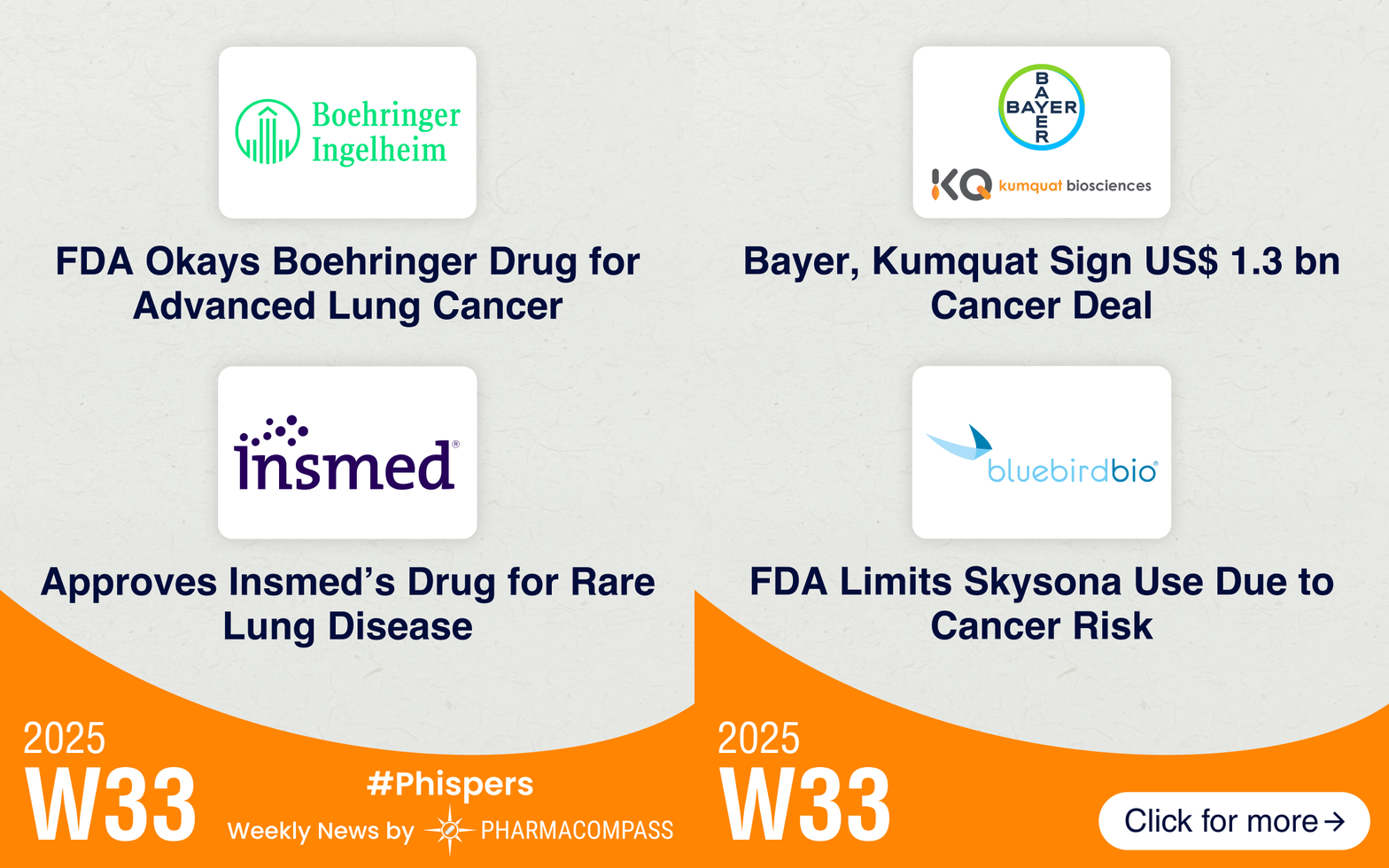
FDA grants accelerated nod to Boehringer’s lung cancer med; reinstates ousted CBER chief Vinay Prasad
The US Food and Drug Administration (FDA) has granted an accelerated approval to Boehringer Ingelheim’s Hernexeos (zongertinib) to treat adults with advanced non-small cell lung cancer (NSCLC) with specific HER2 mutations who have received prior treatment. The agency also cleared Insmed’s Brinsupri (brensocatib) as the first therapy for non-cystic fibrosis bronchiectasis, a chronic lung disease.Within two weeks of his exit, Vinay Prasad is back at the FDA to head its biologics division. The week also saw Bayer sign a US$ 1.3 billion deal with Kumquat Biosciences to develop an oncology drug that targets KRAS mutations.Meanwhile, FDA has restricted bluebird bio’s Skysona gene therapy, which was approved in 2022, due to increased risk of blood cancer. After the recent deaths of non-ambulatory teenagers, Sarepta Therapeutics has reported new safety data for its gene therapy Elevidys, which shows no deaths among ambulatory patients with Duchenne muscular dystrophy (DMD).In news from clinical trials, Novartis’ ianalumab became the first drug to show statistically significant phase 3 benefits in Sjögren’s disease, a chronic autoimmune disorder. Pfizer and Astellas’ Padcev (enfortumab vedotin) showed positive results in a phase 3 trial, when used in combination with Merck’s Keytruda (pembrolizumab) in patients with muscle-invasive bladder cancer (MIBC) who cannot receive or refuse cisplatin-based chemotherapy.Eli Lilly’s oral obesity pill orforglipron met late-stage trial goals. However, it failed to beat the weight loss effect of Novo Nordisk’s semaglutide. And IO Biotech’s melanoma vaccine narrowly missed a trial endpoint.FDA grants accelerated approval to Boehringer’s med for advanced lung cancerThe US Food and Drug Administration (FDA) has granted an accelerated approval to Hernexeos (zongertinib), a new drug from Boehringer Ingelheim, for adults with advanced non-small cell lung cancer (NSCLC) with specific HER2 mutations who have had prior treatment. In studies, the drug helped 75 percent of patients who had chemotherapy see their cancer shrink or disappear completely.Okays Insmed’s Brinsupri for chronic lung condition: FDA has approved Insmed’s Brinsupri (brensocatib) as the first treatment for non-cystic fibrosis bronchiectasis, a chronic lung disease. The oral drug blocks overactive inflammatory enzymes in white blood cells, thereby preventing airway damage. Developed after Insmed acquired rights to the drug from AstraZeneca in 2016 for US$ 160 million, the medicine could exceed US$ 4 billion in annual sales by 2031, says a Nature report.Vinay Prasad returns to FDA as top vaccine regulator after brief ousterVinay Prasad is back at the FDA’s Center for Biologics Evaluation and Research (CBER) as its head, overseeing vaccines and gene therapies, the Department of Health and Human Services (HHS) has said. Prasad was pressured to quit FDA on July 29, due to criticism over his handling of safety concerns with Sarepta Therapeutics’ gene therapy for DMD. HHS spokesperson Andrew Nixon said Prasad’s return was requested by the FDA.FDA limits Skysona use after reports of increased blood cancer riskFDA has restricted the use of bluebird bio’s gene therapy Skysona (elivaldogene autotemcel) to boys (aged four to 17 years) with the genetic disorder cerebral adrenoleukodystrophy (CALD) who lack alternative treatments or a matched stem cell donor. The change comes after rising incidence of blood cancers, including myelodysplastic syndrome (MDS) and acute myeloid leukemia (AML), were observed in patients taking the therapy. FDA now requires updated labelling, strict lifelong monitoring, and post-marketing studies to track long-term safety. At the time of its approval in 2022, 4 percent of patients being treated with Skysona developed MDS. By July 2025, that rate climbed to 15 percent, with the report of one death.Bayer, Kumquat ink US$ 1.3 bn deal to develop drug that targets KRAS mutationsBayer has agreed to pay up to US$ 1.3 billion to partner with US-based Kumquat Biosciences in order to develop a cancer drug that targets KRAS G12D mutation. Kumquat will lead initial phase trials, while Bayer will handle later development and commercialization. KRAS mutations occur in almost 25 percent of cancers. The deal gives Bayer access to a promising candidate as it seeks to strengthen its drug pipeline amid growing competition for its top sellers like Xarelto (rivaroxaban) and Eylea (aflibercept). Novartis’ drug posts encouraging phase 3 results in Sjögren’s disease trialNovartis reported positive late-stage trial results for ianalumab, a dual-action antibody that treats Sjögren’s disease. In two global studies involving 779 patients, the drug significantly reduced disease activity at 52 weeks compared to placebo, thereby meeting the primary goal. Sjögren’s disease is a serious autoimmune condition with few treatment options.Padcev-Keytruda combo boosts survival in phase 3 trial on bladder cancer patientsPfizer and Astellas have reported positive phase 3 results for their cancer therapy Padcev (enfortumab vedotin), when combined with Merck’s Keytruda (pembrolizumab) in patients with muscle-invasive bladder cancer (MIBC) who cannot receive or refuse cisplatin-based chemotherapy. The companies plan to discuss the data with global regulators. MIBC accounts for 30 percent of bladder cancer cases, yet up to half of patients are ineligible for cisplatin. The results highlight the potential of this regimen to become a new standard of care.Sarepta reports safety data on Elevidys: Sarepta Therapeutics has reported new safety data for its gene therapy Elevidys, showing no deaths among ambulatory patients with DMD. Acute liver injuries occurred in 23 percent of cases, but none in this group were fatal, unlike in non-ambulatory patients where three deaths from acute liver failure have been reported.IO Biotech’s melanoma vaccine eyes FDA approval, despite trial setbackIO Biotech’s experimental vaccine, Cylembio (imsapepimut and etimupepimut, adjuvant), combined with Merck’s Keytruda, showed promise in a late-stage study for advanced melanoma. However, the drug missed its primary endpoint. In a trial with 407 patients, the combination extended progression-free survival to 19.4 months, compared to 11 months with Keytruda alone. However, the results fell just short of being statistically significant. IO Biotech aims to submit a biologics license application by the end of 2025, seeking approval for Cylembio in treating advanced melanoma.Lilly’s orforglipron falls short of Novo’s semaglutide: Eli Lilly’s experimental oral obesity drug, orforglipron, helped patients lose 12.4 percent of body weight, on an average, over 72 weeks in a phase 3 trial. The once-daily pill met all primary  and secondary endpoints. However, its weight-loss effect was slightly lower than Novo Nordisk’s injectable semaglutide. The company plans to seek regulatory approval by the year-end.  

Impressions: 1869

https://www.pharmacompass.com/radio-compass-phisper/fda-grants-accelerated-nod-to-boehringer-s-lung-cancer-med-reinstates-ousted-cber-chief-vinay-prasad

#Phispers by PHARMACOMPASS
14 Aug 2025

NEWS #PharmaBuzz

read-more
read-more

https://www.prnewswire.com/news-releases/insmed-provides-clinical-update-on-phase-2b-cedar-study-302736190.html

PR NEWSWIRE
07 Apr 2026

https://www.fiercepharma.com/pharma/insmed-ceo-explains-its-audacious-1b-projection-2026-sales-brinsupri

FIERCE PHARMA
19 Feb 2026

https://www.prnewswire.com/news-releases/insmed-reports-fourth-quarter-and-full-year-2025-financial-results-and-provides-business-update-302691904.html

PR NEWSWIRE
19 Feb 2026

https://www.fiercepharma.com/pharma/insmed-blowout-brinsupri-sales-beat-fuels-multi-blockbuster-outlook

FIERCE PHARMA
09 Jan 2026

https://www.prnewswire.com/news-releases/insmed-provides-business-update-at-44th-annual-jp-morgan-healthcare-conference-302656742.html

PR NEWSWIRE
09 Jan 2026

https://www.fiercepharma.com/pharma/insmeds-shares-tumble-trial-failure-brinsupri

FIERCE PHARMA
18 Dec 2025