Find Tenofovir Disoproxil Fumarate manufacturers, exporters & distributors on PharmaCompass

PharmaCompass

Synopsis

Chemistry

Click the arrow to open the dropdown
read-moreClick the button for full data set
Also known as: Tenofovir disoproxil fumarate, 202138-50-9, Tenofovir df, Virea, Tenofovir disoproxil fumarate [usan], Pmpa-prodrug
Molecular Formula
C23H34N5O14P
Molecular Weight
635.5  g/mol
InChI Key
VCMJCVGFSROFHV-WZGZYPNHSA-N
FDA UNII
OTT9J7900I

Tenofovir Disoproxil Fumarate
An adenine analog REVERSE TRANSCRIPTASE INHIBITOR with antiviral activity against HIV-1 and HEPATITIS B. It is used to treat HIV INFECTIONS and CHRONIC HEPATITIS B, in combination with other ANTIVIRAL AGENTS, due to the emergence of ANTIVIRAL DRUG RESISTANCE when it is used alone.
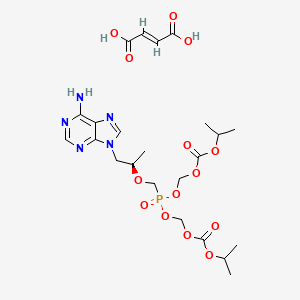
1 2D Structure

Tenofovir Disoproxil Fumarate

2 Identification
2.1 Computed Descriptors
2.1.1 IUPAC Name
[[(2R)-1-(6-aminopurin-9-yl)propan-2-yl]oxymethyl-(propan-2-yloxycarbonyloxymethoxy)phosphoryl]oxymethyl propan-2-yl carbonate;(E)-but-2-enedioic acid
2.1.2 InChI
InChI=1S/C19H30N5O10P.C4H4O4/c1-12(2)33-18(25)28-9-31-35(27,32-10-29-19(26)34-13(3)4)11-30-14(5)6-24-8-23-15-16(20)21-7-22-17(15)24;5-3(6)1-2-4(7)8/h7-8,12-14H,6,9-11H2,1-5H3,(H2,20,21,22);1-2H,(H,5,6)(H,7,8)/b;2-1+/t14-;/m1./s1
2.1.3 InChI Key
VCMJCVGFSROFHV-WZGZYPNHSA-N
2.1.4 Canonical SMILES
CC(C)OC(=O)OCOP(=O)(COC(C)CN1C=NC2=C(N=CN=C21)N)OCOC(=O)OC(C)C.C(=CC(=O)O)C(=O)O
2.1.5 Isomeric SMILES
C[C@H](CN1C=NC2=C(N=CN=C21)N)OCP(=O)(OCOC(=O)OC(C)C)OCOC(=O)OC(C)C.C(=C/C(=O)O)\C(=O)O
2.2 Other Identifiers
2.2.1 UNII
OTT9J7900I
2.3 Synonyms
2.3.1 MeSH Synonyms

1. (r)-9-(2-phosphonylmethoxypropyl)adenine

2. 9-(2-phosphonomethoxypropyl)adenine

3. 9-(2-phosphonylmethoxypropyl)adenine

4. 9-(2-phosphonylmethoxypropyl)adenine, (+-)-isomer

5. 9-(2-phosphonylmethoxypropyl)adenine, (r)-isomer - T357098

6. 9-(2-phosphonylmethoxypropyl)adenine, (s)-isomer

7. 9-pmpa (tenofovir)

8. Disoproxil Fumarate, Tenofovir

9. Disoproxil, Tenofovir

10. Fumarate, Tenofovir Disoproxil

11. Tenofovir

12. Tenofovir Disoproxil

13. Tenofovir Disoproxil Fumarate

2.3.2 Depositor-Supplied Synonyms

1. Tenofovir Disoproxil Fumarate

2. 202138-50-9

3. Tenofovir Df

4. Virea

5. Tenofovir Disoproxil Fumarate [usan]

6. Pmpa-prodrug

7. Gs-4331-05

8. Gsk548470

9. Gsk-548470

10. Ott9j7900i

11. Tenofovir Disoproxil (fumarate)

12. Tenofovir (disoproxil Fumarate)

13. Chebi:63718

14. Gs-4331-05-

15. 9-((r)-2-((bis(((isopropoxycarbonyl)oxy)methoxy)phosphinyl)methoxy)propyl)adenine Fumarate

16. (r)-(((((1-(6-amino-9h-purin-9-yl)propan-2-yl)oxy)methyl)phosphoryl)bis(oxy))bis(methylene) Diisopropyl Dicarbonate Fumarate

17. (r)-5-((2-(6-amino-9h-purin-9-yl)-1-methylethoxy)methyl)-2,4,6,8-tetraoxa-5-phosphanonanedioic Acid, Bis(1-methylethyl) Ester, 5-oxide, (e)-2-butenedioate (1:1)

18. 2,4,6,8-tetraoxa-5-phosphanonanedioic Acid, 5-[[(1r)-2-(6-amino-9h-purin-9-yl)-1-methylethoxy]methyl]-, 1,9-bis(1-methylethyl) Ester, 5-oxide, (2e)-2-butenedioate (1:1)

19. 9-((r)-2-((bis(((isopropoxycarbonyl)oxy)methoxy)phosphinyl)methoxy)propyl)adenine Fumarate (1:1)

20. Bis(hydroxymethyl) (((r)-2-(6-amino-9h-purin-9-yl)-1-methylethoxy)methyl)phosphonate, Bis(isopropyl Carbonate) (ester), Fumarate (1:1)

21. Tenofovir Disoproxil Fumarate

22. (2e)-but-2-enedioic Acid Bis({[(propan-2-yloxy)carbonyl]oxy}methyl) {[(2r)-1-(6-amino-9h-purin-9-yl)propan-2-yl]oxy}methanephosphonate

23. [[(2r)-1-(6-aminopurin-9-yl)propan-2-yl]oxymethyl-(propan-2-yloxycarbonyloxymethoxy)phosphoryl]oxymethyl Propan-2-yl Carbonate;(e)-but-2-enedioic Acid

24. Hsdb 7165

25. Tenofovirdisoproxilfumarate

26. Unii-ott9j7900i

27. Mfcd08141829

28. Gs 4331-05

29. Viread (tn)

30. Tenofovir-disoproxil-fumarate

31. Chembl1486

32. Schembl40021

33. Tenofoviri Disoproxili Fumaras

34. Mls004774141

35. Gs-1278 Disoproxil Fumarate

36. Schembl2670560

37. Dtxsid5050426

38. Ex-a590

39. S1400

40. Tenofovir Disoproxil Fumarate- Bio-x

41. Akos016340707

42. Akos025149493

43. Ccg-270300

44. Cs-1346

45. Gs-us-104-0321

46. Ks-1246

47. 9-((r)-2-((bis(((isopropoxycarbonyl)oxy)methoxy)phosphinyl)methoxy)propyl)adenine, Fumarate

48. Bt164457

49. Hy-13782

50. Smr003500786

51. Tenofovir (as Disoproxil Fumarate)

52. Tenofovir Disoproxil Fumarate (jan/usan)

53. Tenofovir Disoproxil Fumarate [mi]

54. Bcp0726000258

55. Tenofovir Disoproxil Fumarate [jan]

56. Tenofovir Disoproxil Fumarate [hsdb]

57. Am20090676

58. Tenofovir Disoproxil Fumarate [mart.]

59. Tenofovir Disoproxil Fumarate [vandf]

60. Tenofovir Disoproxil Fumarate [usp-rs]

61. Tenofovir Disoproxil Fumarate [who-dd]

62. Tenofovir Disoproxil Fumarate [who-ip]

63. D01982

64. Tenofovir Disoproxil Fumarate, >=98% (hplc)

65. Tenofovir Disoproxil Fumarate [ema Epar]

66. Tenofovir Disoproxil Fumarate [orange Book]

67. Q-201788

68. Atripla Component Tenofovir Disoproxil Fumarate

69. Eviplera Component Tenofovir Disoproxil Fumarate

70. Odefsey Component Tenofovir Disoproxil Fumarate

71. Q27132754

72. Stribild Component Tenofovir Disoproxil Fumarate

73. Temixys Component Tenofovir Disoproxil Fumarate

74. Tenofoviri Disoproxili Fumaras [who-ip Latin]

75. Truvada Component Tenofovir Disoproxil Fumarate

76. Delstrigo Component Tenofovir Disoproxil Fumarate

77. Tenofovir Disoproxil Fumarate Component Delstrigo

78. Tenofovir Disoproxil Fumarate Component Of Atripla

79. Tenofovir Disoproxil Fumarate Component Of Odefsey

80. Tenofovir Disoproxil Fumarate Component Of Temixys

81. Tenofovir Disoproxil Fumarate Component Of Truvada

82. Tenofovir Disoproxil Fumarate Component Of Eviplera

83. Tenofovir Disoproxil Fumarate Component Of Stribild

84. (r)-(((((1-(6-amino-9h-purin-9-yl)propan-2-yl)oxy)methyl)phosphoryl)bis(oxy))bis(methylene)diisopropyldicarbonatefumarate

85. [[(1r)-2-(6-aminopurin-9-yl)-1-methyl-ethoxy]methyl-(isopropoxycarbonyloxymethoxy)phosphoryl]oxymethyl Isopropyl Carbonate; Fumaric Acid

86. 9-((r)-2-((bis(((isopropoxycarbonyl)oxy)-methoxy)phosphinyl)methoxy)propyl)adenine Fumarate (1:1)

87. 9-[(r)-2[[bis[[(isopropoxycarbonyl)oxy]methoxy]phosphinyl]methoxy]propyl]adenine Fumarate (1:1)

88. Bis({[(propan-2-yloxy)carbonyl]oxy}methyl) ({[(2r)-1-(6-amino-9h-purin-9-yl)propan-2-yl]oxy}methyl)phosphonate (2e)-but-2-enedioate

89. Tenofovir Disoproxil Fumarate, Pharmaceutical Secondary Standard; Certified Reference Material

2.4 Create Date
2006-03-21
3 Chemical and Physical Properties
Molecular Weight 635.5 g/mol
Molecular Formula C23H34N5O14P
Hydrogen Bond Donor Count3
Hydrogen Bond Acceptor Count18
Rotatable Bond Count19
Exact Mass635.18398777 g/mol
Monoisotopic Mass635.18398777 g/mol
Topological Polar Surface Area260 Ų
Heavy Atom Count43
Formal Charge0
Complexity817
Isotope Atom Count0
Defined Atom Stereocenter Count1
Undefined Atom Stereocenter Count0
Defined Bond Stereocenter Count1
Undefined Bond Stereocenter Count0
Covalently Bonded Unit Count2
4 Drug and Medication Information
4.1 Drug Information
1 of 4  
Drug NameTenofovir disoproxil fumarate
PubMed HealthTenofovir (By mouth)
Drug ClassesAntiretroviral Agent
Drug LabelVIREAD is the brand name for tenofovir disoproxil fumarate (a prodrug of tenofovir) which is a fumaric acid salt of bis-isopropoxycarbonyloxymethyl ester derivative of tenofovir. In vivo tenofovir disoproxil fumarate is converted to tenofovir, an acy...
Active IngredientTenofovir disoproxil fumarate
Dosage FormTablet
Routeoral; Oral
Strength300mg
Market StatusTentative Approval
CompanyMacleods Pharma; Aurobindo Pharma; Invagen Pharms; Cipla; Matrix Labs; Teva Pharms; Strides Arcolab

2 of 4  
Drug NameViread
Drug LabelVIREAD is the brand name for tenofovir disoproxil fumarate (a prodrug of tenofovir) which is a fumaric acid salt of bis-isopropoxycarbonyloxymethyl ester derivative of tenofovir. In vivo tenofovir disoproxil fumarate is converted to tenofovir, an acy...
Active IngredientTenofovir disoproxil fumarate
Dosage FormTablet; Powder
RouteOral
Strength40mg/scoopful; 200mg; 250mg; 150mg; 300mg
Market StatusPrescription
CompanyGilead Sciences

3 of 4  
Drug NameTenofovir disoproxil fumarate
PubMed HealthTenofovir (By mouth)
Drug ClassesAntiretroviral Agent
Drug LabelVIREAD is the brand name for tenofovir disoproxil fumarate (a prodrug of tenofovir) which is a fumaric acid salt of bis-isopropoxycarbonyloxymethyl ester derivative of tenofovir. In vivo tenofovir disoproxil fumarate is converted to tenofovir, an acy...
Active IngredientTenofovir disoproxil fumarate
Dosage FormTablet
Routeoral; Oral
Strength300mg
Market StatusTentative Approval
CompanyMacleods Pharma; Aurobindo Pharma; Invagen Pharms; Cipla; Matrix Labs; Teva Pharms; Strides Arcolab

4 of 4  
Drug NameViread
Drug LabelVIREAD is the brand name for tenofovir disoproxil fumarate (a prodrug of tenofovir) which is a fumaric acid salt of bis-isopropoxycarbonyloxymethyl ester derivative of tenofovir. In vivo tenofovir disoproxil fumarate is converted to tenofovir, an acy...
Active IngredientTenofovir disoproxil fumarate
Dosage FormTablet; Powder
RouteOral
Strength40mg/scoopful; 200mg; 250mg; 150mg; 300mg
Market StatusPrescription
CompanyGilead Sciences

4.2 Therapeutic Uses

Anti-HIV Agents, Reverse Transcriptase Inhibitors

National Library of Medicine's Medical Subject Headings online file (MeSH, 2012)


Tenofovir disoproxil fumarate is used in conjunction with other antiretroviral agents for the treatment of human immunodeficiency virus type 1 (HIV-1) infections in adults. /Included in US product labeling/

American Society of Health-System Pharmacists 2012; Drug Information 2012. Bethesda, MD. 2012, p. 747


Tenofovir is used for the management of chronic hepatitis B virus (HBV) infection in adults. This indication is based on histologic, virologic, biochemical, and serologic responses in adults with hepatitis B e antigen (HBeAg)-positive or -negative chronic HBV with compensated liver function.

American Society of Health-System Pharmacists 2012; Drug Information 2012. Bethesda, MD. 2012, p. 748


Tenofovir disoproxil fumarate (TDF), emtricitabine (FTC), and efavirenz (EFV) are the three components of the once-daily, single tablet regimen (Atripla) for treatment of HIV-1 infection. Previous cell culture studies have demonstrated that the double combination of tenofovir (TFV), the parent drug of TDF, and FTC were additive to synergistic in their anti-HIV activity, which correlated with increased levels of intracellular phosphorylation of both compounds. In this study, /researchers/ demonstrated the combinations of TFV+FTC, TFV+EFV, FTC+EFV, and TFV+FTC+EFV synergistically inhibit HIV replication in cell culture and synergistically inhibit HIV-1 reverse transcriptase (RT) catalyzed DNA synthesis in biochemical assays. Several different methods were applied to define synergy including median-effect analysis, MacSynergyII and quantitative isobologram analysis. We demonstrated that the enhanced formation of dead-end complexes (DEC) by HIV-1 RT and TFV-terminated DNA in the presence of FTC-triphosphate (TP) could contribute to the synergy observed for the combination of TFV+FTC, possibly through reduced terminal NRTI excision. Furthermore, /researchers/ showed that EFV facilitated efficient formation of stable, DEC-like complexes by TFV- or FTC-monophosphate (MP)-terminated DNA and this can contribute to the synergistic inhibition of HIV-1 RT by TFV-diphosphate (DP)+EFV and FTC-TP+EFV combinations. This study demonstrated a clear correlation between the synergistic antiviral activities of TFV+FTC, TFV+EFV, FTC+EFV, and TFV+FTC+EFV combinations and synergistic HIV-1 RT inhibition at the enzymatic level. /Researchers/ propose the molecular mechanisms for the TFV+FTC+EFV synergy to be a combination of increased levels of the active metabolites TFV-DP and FTC-TP and enhanced DEC formation by a chain-terminated DNA and HIV-1 RT in the presence of the second and the third drug in the combination. This study furthers the understanding of the longstanding observations of synergistic anti-HIV-1 effects of many NRTI+NNRTI and certain NRTI+NRTI combinations in cell culture, and provides biochemical evidence that combinations of anti-HIV agents can increase the intracellular drug efficacy, without increasing the extracellular drug concentrations.

PMID:19439089 Full text: https://www.ncbi.nlm.nih.gov/pmc/articles/PMC2693498 Feng JY et al; Retrovirology 6: 44 (2009)


4.3 Drug Warning

/BOXED WARNING/ WARNING: LACTIC ACIDOSIS/SEVERE HEPATOMEGALY WITH STEATOSIS and POST TREATMENT EXACERBATION OF HEPATITIS. Lactic acidosis and severe hepatomegaly with steatosis, including fatal cases, have been reported with the use of nucleoside analogs, including Viread, in combination with other antiretrovirals. Severe acute exacerbations of hepatitis have been reported in HBV-infected patients who have discontinued anti-hepatitis B therapy, including Viread. Hepatic function should be monitored closely with both clinical and laboratory follow-up for at least several months in patients who discontinue anti-hepatitis B therapy, including Viread. If appropriate, resumption of anti-hepatitis B therapy may be warranted.

US Natl Inst Health; DailyMed. Current Medication Information for VIREAD (tenofovir disoproxil fumarate) tablet, coated VIREAD (tenofovir disoproxil fumarate) powder (November 2012). Available from, as of November 14, 2012: https://dailymed.nlm.nih.gov/dailymed/lookup.cfm?setid=33fd6418-fbdc-42ca-a50d-ce2a476a5418


Lactic acidosis and severe hepatomegaly with steatosis (sometimes fatal) have been reported rarely in patients receiving nucleoside reverse transcriptase inhibitors alone or in conjunction with other antiretroviral agents. Most reported cases have involved women; obesity and long-term therapy with a nucleoside reverse transcriptase inhibitor also may be risk factors. Caution should be observed when nucleoside analogs are used in patients with known risk factors for liver disease; however, lactic acidosis and severe hepatomegaly with steatosis have been reported in patients with no known risk factors. Tenofovir therapy should be interrupted in any patient with clinical or laboratory findings suggestive of lactic acidosis or pronounced hepatotoxicity (signs of hepatotoxicity include hepatomegaly and steatosis even in the absence of marked increases in serum aminotransferase concentrations).

American Society of Health-System Pharmacists 2012; Drug Information 2012. Bethesda, MD. 2012, p. 749


Redistribution or accumulation of body fat, including central obesity, dorsocervical fat enlargement (buffalo hump), peripheral wasting, facial wasting, breast enlargement, and general cushingoid appearance, has been reported with antiretroviral therapy.

American Society of Health-System Pharmacists 2012; Drug Information 2012. Bethesda, MD. 2012, p. 750


The most common adverse effects in HIV-infected patients receiving tenofovir disoproxil fumarate are rash, diarrhea, headache, pain, depression, asthenia, and nausea. The most common adverse effect in HIV-infected patients receiving tenofovir disoproxil fumarate is nausea.

American Society of Health-System Pharmacists 2012; Drug Information 2012. Bethesda, MD. 2012, p. 750


For more Drug Warnings (Complete) data for TENOFOVIR DISOPROXIL FUMARATE (14 total), please visit the HSDB record page.


4.4 Drug Indication

* HIV 1 infection:

Viread 123 mg film coated tablets are indicated in combination with other antiretroviral medicinal products for the treatment of HIV 1 infected paediatric patients, with NRTI resistance or toxicities precluding the use of first line agents, aged 6 to < 12 years who weigh from 17 kg to less than 22 kg.

The choice of Viread to treat antiretroviral experienced patients with HIV 1 infection should be based on individual viral resistance testing and/or treatment history of patients.

* Hepatitis B infection:

Viread 123 mg film coated tablets are indicated for the treatment of chronic hepatitis B in paediatric patients aged 6 to < 12 years who weigh from 17 kg to less than 22 kg, with

compensated liver disease and evidence of immune active disease, i. e. active viral replication and persistently elevated serum ALT levels, or histological evidence of moderate to severe inflammation and/or fibrosis. With respect to the decision to initiate treatment in paediatric patients, see sections 4. 2, 4. 4, 4. 8 and 5. 1.

* HIV 1 infection:

Viread 163 mg film coated tablets are indicated in combination with other antiretroviral medicinal products for the treatment of HIV 1 infected paediatric patients, with NRTI resistance or toxicities precluding the use of first line agents, aged 6 to < 12 years who weigh from 22 kg to less than 28 kg.

The choice of Viread to treat antiretroviral experienced patients with HIV 1 infection should be based on individual viral resistance testing and/or treatment history of patients.

* Hepatitis B infection:

Viread 163 mg film coated tablets are indicated for the treatment of chronic hepatitis B in paediatric patients aged 6 to < 12 years who weigh from 22 kg to less than 28 kg, with:

compensated liver disease and evidence of immune active disease, i. e. active viral replication and persistently elevated serum ALT levels, or histological evidence of moderate to severe inflammation and/or fibrosis. With respect to the decision to initiate treatment in paediatric patients, see sections 4. 2, 4. 4, 4. 8 and 5. 1.

* HIV 1 infection:

Viread 204 mg film coated tablets are indicated in combination with other antiretroviral medicinal products for the treatment of HIV 1 infected paediatric patients, with NRTI resistance or toxicities precluding the use of first line agents, aged 6 to < 12 years who weigh from 28 kg to less than 35 kg.

The choice of Viread to treat antiretroviral experienced patients with HIV 1 infection should be based on individual viral resistance testing and/or treatment history of patients.

* Hepatitis B infection:

Viread 204 mg film coated tablets are indicated for the treatment of chronic hepatitis B in paediatric patients aged 6 to < 12 years who weigh from 28 kg to less than 35 kg, with:

compensated liver disease and evidence of immune active disease, i. e. active viral replication and persistently elevated serum ALT levels or histological evidence of moderate to severe inflammation and/or fibrosis. With respect to the decision to initiate treatment in paediatric patients, see sections 4. 2, 4. 4, 4. 8 and 5. 1.

* HIV 1 infection:

Viread 245 mg film coated tablets are indicated in combination with other antiretroviral medicinal products for the treatment of HIV 1 infected adults.

In adults, the demonstration of the benefit of Viread in HIV 1 infection is based on results of one study in treatment nave patients, including patients with a high viral load (> 100,000 copies/ml) and studies in which Viread was added to stable background therapy (mainly tritherapy) in antiretroviral pre-treated patients experiencing early virological failure (< 10,000 copies/ml, with the majority of patients having < 5,000 copies/ml).

Viread 245 mg film coated tablets are also indicated for the treatment of HIV 1 infected adolescents, with NRTI resistance or toxicities precluding the use of first line agents, aged 12 to < 18 years.

The choice of Viread to treat antiretroviral experienced patients with HIV 1 infection should be based on individual viral resistance testing and/or treatment history of patients.

* Hepatitis B infection:

Viread 245 mg film coated tablets are indicated for the treatment of chronic hepatitis B in adults with:

compensated liver disease, with evidence of active viral replication, persistently elevated serum alanine aminotransferase (ALT) levels and histological evidence of active inflammation and/or fibrosis (see section 5. 1). evidence of lamivudine resistant hepatitis B virus (see sections 4. 8 and 5. 1). decompensated liver disease (see sections 4. 4, 4. 8 and 5. 1). Viread 245 mg film coated tablets are indicated for the treatment of chronic hepatitis B in adolescents 12 to < 18 years of age with:

compensated liver disease and evidence of immune active disease, i. e. active viral replication and persistently elevated serum ALT levels, or histological evidence of moderate to severe inflammation and/or fibrosis. With respect to the decision to initiate treatment in paediatric patients, see sections 4. 2, 4. 4, 4. 8 and 5. 1.

* HIV 1 infection:

Viread 33 mg/g granules are indicated in combination with other antiretroviral medicinal products for the treatment of HIV 1 infected paediatric patients, with NRTI resistance or toxicities precluding the use of first line agents, from 2 to < 6 years of age, and above 6 years of age for whom a solid dosage form is not appropriate.

Viread 33 mg/g granules are also indicated in combination with other antiretroviral medicinal products for the treatment of HIV 1 infected adults for whom a solid dosage form is not appropriate.

In adults, the demonstration of the benefit of Viread in HIV 1 infection is based on results of one study in treatment nave patients, including patients with a high viral load (> 100,000 copies/ml) and studies in which Viread was added to stable background therapy (mainly tritherapy) in antiretroviral pre-treated patients experiencing early virological failure (< 10,000 copies/ml, with the majority of patients having < 5,000 copies/ml).

The choice of Viread to treat antiretroviral experienced patients with HIV 1 infection should be based on individual viral resistance testing and/or treatment history of patients.

Hepatitis B infectionViread 33 mg/g granules are indicated for the treatment of chronic hepatitis B in adults for whom a solid dosage form is not appropriate with:

compensated liver disease, with evidence of active viral replication, persistently elevated serum alanine aminotransferase (ALT) levels and histological evidence of active inflammation and/or fibrosis (see section 5. 1). evidence of lamivudine resistant hepatitis B virus (see sections 4. 8 and 5. 1). decompensated liver disease (see sections 4. 4, 4. 8 and 5. 1).

Viread 33 mg/g granules are also indicated for the treatment of chronic hepatitis B in paediatric patients2 to < 18 years of age for whom a solid dosage form is not appropriate with:

compensated liver disease and evidence of immune active disease, i. e. active viral replication, and persistently elevated serum ALT levels, or histological evidence of moderate to severe inflammation and/or fibrosis. With respect to the decision to initiate treatment in paediatric patients, see sections 4. 2, 4. 4, 4. 8 and 5. 1.


5 Pharmacology and Biochemistry
5.1 MeSH Pharmacological Classification

Antiviral Agents

Agents used in the prophylaxis or therapy of VIRUS DISEASES. Some of the ways they may act include preventing viral replication by inhibiting viral DNA polymerase; binding to specific cell-surface receptors and inhibiting viral penetration or uncoating; inhibiting viral protein synthesis; or blocking late stages of virus assembly. (See all compounds classified as Antiviral Agents.)


Anti-HIV Agents

Agents used to treat AIDS and/or stop the spread of the HIV infection. These do not include drugs used to treat symptoms or opportunistic infections associated with AIDS. (See all compounds classified as Anti-HIV Agents.)


Reverse Transcriptase Inhibitors

Inhibitors of reverse transcriptase (RNA-DIRECTED DNA POLYMERASE), an enzyme that synthesizes DNA on an RNA template. (See all compounds classified as Reverse Transcriptase Inhibitors.)


5.2 FDA Pharmacological Classification
5.2.1 Pharmacological Classes
Human Immunodeficiency Virus Nucleoside Analog Reverse Transcriptase Inhibitor [EPC]; Nucleoside Reverse Transcriptase Inhibitors [MoA]; Nucleosides [CS]; Hepatitis B Virus Nucleoside Analog Reverse Transcriptase Inhibitor [EPC]
5.3 ATC Code

J05AF07


5.4 Absorption, Distribution and Excretion

Following IV administration of tenofovir, approximately 70-80% of the dose is recovered in the urine as unchanged tenofovir within 72 hours of dosing. Following single dose, oral administration of tenofovir, the terminal elimination half-life of tenofovir is approximately 17 hours. After multiple oral doses of tenofovir 300 mg once daily (under fed conditions), 32 + or - 10% of the administered dose is recovered in urine over 24 hours. Tenofovir is eliminated by a combination of glomerular filtration and active tubular secretion. There may be competition for elimination with other compounds that are also renally eliminated.

US Natl Inst Health; DailyMed. Current Medication Information for VIREAD (tenofovir disoproxil fumarate) tablet, coated VIREAD (tenofovir disoproxil fumarate) powder (November 2012). Available from, as of November 14, 2012: https://dailymed.nlm.nih.gov/dailymed/lookup.cfm?setid=33fd6418-fbdc-42ca-a50d-ce2a476a5418


In vitro binding of tenofovir to human plasma or serum proteins is less than 0.7 and 7.2%, respectively, over the tenofovir concentration range 0.01 to 25 ug/mL. The volume of distribution at steady-state is 1.3 + or - 0.6 L/kg and 1.2 + or - 0.4 L/kg, following intravenous administration of tenofovir 1.0 mg/kg and 3.0 mg/kg.

US Natl Inst Health; DailyMed. Current Medication Information for VIREAD (tenofovir disoproxil fumarate) tablet, coated VIREAD (tenofovir disoproxil fumarate) powder (November 2012). Available from, as of November 14, 2012: https://dailymed.nlm.nih.gov/dailymed/lookup.cfm?setid=33fd6418-fbdc-42ca-a50d-ce2a476a5418


Viread is a water soluble diester prodrug of the active ingredient tenofovir. The oral bioavailability of tenofovir from Viread in fasted subjects is approximately 25%. Following oral administration of a single dose of Viread 300 mg to HIV-1 infected subjects in the fasted state, maximum serum concentrations (Cmax) are achieved in 1.0 + or - 0.4 hr. Cmax and AUC values are 0.30 + or - 0.09 ug/mL and 2.29 + or - 0.69 ug hr/mL, respectively.

US Natl Inst Health; DailyMed. Current Medication Information for VIREAD (tenofovir disoproxil fumarate) tablet, coated VIREAD (tenofovir disoproxil fumarate) powder (November 2012). Available from, as of November 14, 2012: https://dailymed.nlm.nih.gov/dailymed/lookup.cfm?setid=33fd6418-fbdc-42ca-a50d-ce2a476a5418


Administration of Viread 300 mg tablets following a high-fat meal (approximately 700 to 1000 kcal containing 40 to 50% fat) increases the oral bioavailability, with an increase in tenofovir AUC of approximately 40% and an increase in Cmax of approximately 14%. However, administration of Viread with a light meal did not have a significant effect on the pharmacokinetics of tenofovir when compared to fasted administration of the drug. Food delays the time to tenofovir Cmax by approximately 1 hour. Cmax and AUC of tenofovir are 0.33 + or - 0.12 ug/mL and 3.32 + or - 1.37 ug hr/mL following multiple doses of Viread 300 mg once daily in the fed state, when meal content was not controlled.

US Natl Inst Health; DailyMed. Current Medication Information for VIREAD (tenofovir disoproxil fumarate) tablet, coated VIREAD (tenofovir disoproxil fumarate) powder (November 2012). Available from, as of November 14, 2012: https://dailymed.nlm.nih.gov/dailymed/lookup.cfm?setid=33fd6418-fbdc-42ca-a50d-ce2a476a5418


For more Absorption, Distribution and Excretion (Complete) data for TENOFOVIR DISOPROXIL FUMARATE (6 total), please visit the HSDB record page.


5.5 Metabolism/Metabolites

Tenofovir disoproxil fumarate is a prodrug and is not active until it undergoes diester hydrolysis in vivo to tenofovir and subsequently is metabolized to the active metabolite (tenofovir diphosphate).

American Society of Health-System Pharmacists 2012; Drug Information 2012. Bethesda, MD. 2012, p. 751


5.6 Biological Half-Life

Following single dose, oral administration of Viread, the terminal elimination half-life of tenofovir is approximately 17 hours.

US Natl Inst Health; DailyMed. Current Medication Information for VIREAD (tenofovir disoproxil fumarate) tablet, coated VIREAD (tenofovir disoproxil fumarate) powder (November 2012). Available from, as of November 14, 2012: https://dailymed.nlm.nih.gov/dailymed/lookup.cfm?setid=33fd6418-fbdc-42ca-a50d-ce2a476a5418


5.7 Mechanism of Action

Like nucleoside reverse transcriptase inhibitors, the antiviral activity of tenofovir depends on intracellular conversion to an active metabolite; however, tenofovir is a nucleotide containing a phosphonate group and the steps and enzymes involved in enzymatic conversion to the active metabolite differ from those involved in the conversion of nucleoside reverse transcriptase inhibitors. Tenofovir is phosphorylated by cellular nucleotide kinases to tenofovir diphosphate; tenofovir diphosphate is a structural analog of deoxyadenosine-5-triphosphate, the usual substrate for viral RNA-directed DNA polymerase. Although other mechanisms may be involved in the antiretroviral activities of the drug, tenofovir diphosphate appears to compete with deoxyadenosine-5-triphosphate for viral RNA-directed DNA polymerase and for incorporation into viral DNA. Following incorporation of tenofovir diphosphate into the viral DNA chain, DNA synthesis is prematurely terminated because the absence of the 3-hydroxy group on the drug prevents further 5 to 3 phosphodiester linkages.

American Society of Health-System Pharmacists 2012; Drug Information 2012. Bethesda, MD. 2012, p. 751


Tenofovir disoproxil fumarate, a synthetic antiretroviral agent, is a nucleotide reverse transcriptase inhibitor. Tenofovir disoproxil fumarate is a prodrug and is not active until it undergoes diester hydrolysis in vivo to tenofovir and subsequently is metabolized to the active metabolite (tenofovir diphosphate). Following conversion to the pharmacologically active metabolite, tenofovir apparently inhibits replication of retroviruses, including human immunodeficiency virus type 1 (HIV-1), by interfering with viral RNA-directed DNA polymerase (reverse transcriptase). In vitro studies indicate that tenofovir is active against HIV-1, HIV-2, and hepatitis B virus (HBV); the drug also has some activity against HIV-2.

American Society of Health-System Pharmacists 2012; Drug Information 2012. Bethesda, MD. 2012, p. 751


Tenofovir disoproxil fumarate (TDF) is an oral prodrug and acyclic nucleotide analog of adenosine monophosphate that inhibits HIV-1 (HIV) reverse transcriptase. A growing subset of TDF-treated HIV(+) individuals presented with acute renal failure, suggesting tenofovir-associated kidney-specific toxicity. ... Previous studies using an HIV transgenic mouse model (TG) demonstrated specific changes in renal proximal tubular mitochondrial DNA (mtDNA) abundance. Nucleosides are regulated in biological systems via transport and metabolism in cellular compartments. In this study, the role(s) of organic anion transporter type 1 (OAT1) and multidrug-resistant protein type 4 (MRP4) in transport and regulation of tenofovir in proximal tubules were assessed. Renal toxicity was assessed in kidney tissues from OAT1 knockout (KO) or MRP4 KO compared with wild-type (WT, C57BL/6) mice following treatment with TDF (0.11 mg/day), didanosine (ddI, a related adenosine analog, 0.14 mg/day) or vehicle (0.1 M NaOH) daily gavage for 5 weeks. Laser-capture microdissection (LCM) was used to isolate renal proximal tubules for molecular analyses. mtDNA abundance and ultrastructural pathology were analyzed. mtDNA abundance in whole kidneys from both KO and WT was unchanged regardless of treatment. Renal proximal tubular mtDNA abundance from OAT1 KO also remained unchanged, suggesting prevention of TDF toxicity due to loss of tenofovir transport into proximal tubules. In contrast, renal proximal tubules from MRP4 KO exhibited increased mtDNA abundance following TDF treatment compared with WT littermates, suggesting compensation. Renal proximal tubules from TDF-treated WT and MRP4 KO exhibited increased numbers of irregular mitochondria with sparse, fragmented cristae compared with OAT1 KO. Treatment with ddI had a compensatory effect on mtDNA abundance in OAT1 KO but not in MRP4 KO. Both OAT1 and MRP4 have a direct role in transport and efflux of tenofovir, regulating levels of tenofovir in proximal tubules. Disruption of OAT1 activity prevents tenofovir toxicity but loss of MRP4 can lead to increased renal proximal tubular toxicity. These data help to explain mechanisms of human TDF renal toxicity.

PMID:21403643 Full text: https://www.ncbi.nlm.nih.gov/pmc/articles/PMC3103636 Kohler JJ et al; Lab Invest 91 (6): 852-8 (2011)a


Tenofovir disoproxil fumarate (tenofovir DF) use has been associated with renal dysfunction and Fanconi syndrome. Tenofovir is taken up into renal tubules by anion transporters where high intracellular drug concentration may induce a functionally relevant depletion of mitochondrial DNA (mtDNA). /The researchers/ investigated if tenofovir may induce renal mtDNA depletion and respiratory chain dysfunction. Rats (n = 8) were gavaged daily with 100 mg x kg(-1) x d(-1) of tenofovir DF or didanosine. Kidneys and livers were examined after 8 weeks of treatment. The tenofovir group had significantly lower body and kidney weights than rats exposed to water or didanosine. Proximal but not distal tubules were of increased diameter and contained small lipid droplets. Tubular mitochondria were enlarged, and their crystal architecture was disrupted. Tenofovir-exposed kidneys contained low mtDNA copy numbers and impaired expression of mtDNA-encoded cytochrome c oxidase (COX) I but not nucleus-encoded COX IV subunits. Histochemistry demonstrated low tubular COX and nicotinamide adenine dinucleotide dehydrogenase (NADH-DH) activities, whereas succinate dehydrogenase activity was preserved. COX activity was preserved in the glomeruli of tenofovir-exposed rats. Didanosine did not elicit renal effects but, unlike tenofovir, depleted mtDNA in liver (by 52%). Tenofovir DF induces an organ-specific nephrotoxicity with mtDNA depletion and dysfunction of mtDNA-encoded respiratory chain subunits. The data do not support nephrotoxicity of didanosine.

PMID:19582894 Lebrecht D et al; J Acquir Immune Defic Syndr 51 (3): 258-63 (2009)


DRUG PRODUCT COMPOSITIONS

Do you need Business Intel? Ask us

DOSAGE - TABLET;ORAL - 200MG;EQ 25MG BASE;300...DOSAGE - TABLET;ORAL - 200MG;EQ 25MG BASE;300MG

USFDA APPLICATION NUMBER - 202123

read-more

DOSAGE - TABLET;ORAL - 150MG;150MG;200MG;300M...DOSAGE - TABLET;ORAL - 150MG;150MG;200MG;300MG

USFDA APPLICATION NUMBER - 203100

read-more

DOSAGE - TABLET;ORAL - 100MG;300MG;300MG

USFDA APPLICATION NUMBER - 210807

read-more

DOSAGE - TABLET;ORAL - 300MG;300MG

USFDA APPLICATION NUMBER - 211284

read-more

DOSAGE - TABLET;ORAL - 150MG

USFDA APPLICATION NUMBER - 21356

read-more

DOSAGE - TABLET;ORAL - 200MG

USFDA APPLICATION NUMBER - 21356

read-more

DOSAGE - TABLET;ORAL - 250MG

USFDA APPLICATION NUMBER - 21356

read-more

DOSAGE - TABLET;ORAL - 300MG

USFDA APPLICATION NUMBER - 21356

read-more

DOSAGE - TABLET;ORAL - 100MG;150MG

USFDA APPLICATION NUMBER - 21752

read-more

DOSAGE - TABLET;ORAL - 133MG;200MG

USFDA APPLICATION NUMBER - 21752

read-more

DOSAGE - TABLET;ORAL - 167MG;250MG

USFDA APPLICATION NUMBER - 21752

read-more

DOSAGE - TABLET;ORAL - 200MG;300MG

USFDA APPLICATION NUMBER - 21752

read-more

Related Excipient Companies

Upload your portfolio for free, ask us

Excipients by Applications

Click here to find the perfect excipient manufacturers by their capabilities

Fillers, Diluents & Binders

read-more
read-more

Coating Systems & Additives

read-more
read-more

Direct Compression

read-more
read-more

Disintegrants & Superdisintegrants

read-more
read-more

Granulation

read-more
read-more

Solubilizers

read-more
read-more

Controlled & Modified Release

read-more
read-more

Thickeners and Stabilizers

read-more
read-more

Chewable & Orodispersible Aids

read-more
read-more

Taste Masking

read-more
read-more

Parenteral

read-more
read-more

Topical

read-more
read-more

Lubricants & Glidants

read-more
read-more

Co-Processed Excipients

read-more
read-more

Film Formers & Plasticizers

read-more
read-more

Surfactant & Foaming Agents

read-more
read-more

Emulsifying Agents

read-more
read-more

API Stability Enhancers

read-more
read-more

Empty Capsules

read-more
read-more

Rheology Modifiers

read-more
read-more

Vegetarian Capsules

read-more
read-more

Coloring Agents

read-more
read-more

Digital Content read-more

Create Content with PharmaCompass, ask us

DATA COMPILATION #PharmaFlow

read-more
read-more

NEWS #PharmaBuzz

read-more
read-more

Global Sales Information

Do you need Business Intel? Ask us

Market Place

Do you need sourcing support? Ask us

Patents & EXCLUSIVITIES

Check the patents & exclusivity for this product

REF. STANDARDS & IMPURITIES

Upload your portfolio for free, ask us

ANALYTICAL

Upload your methods for free, ask us

ABOUT THIS PAGE

Looking for 202138-50-9 / Tenofovir Disoproxil Fumarate API manufacturers, exporters & distributors?

Tenofovir Disoproxil Fumarate manufacturers, exporters & distributors 1

33

PharmaCompass offers a list of Tenofovir Disoproxil Fumarate API manufacturers, exporters & distributors, which can be sorted by GMP, USDMF, JDMF, KDMF, CEP (COS), WC, Price,and more, enabling you to easily find the right Tenofovir Disoproxil Fumarate manufacturer or Tenofovir Disoproxil Fumarate supplier for your needs.

Send us enquiries for free, and we will assist you in establishing a direct connection with your preferred Tenofovir Disoproxil Fumarate manufacturer or Tenofovir Disoproxil Fumarate supplier.

PharmaCompass also assists you with knowing the Tenofovir Disoproxil Fumarate API Price utilized in the formulation of products. Tenofovir Disoproxil Fumarate API Price is not always fixed or binding as the Tenofovir Disoproxil Fumarate Price is obtained through a variety of data sources. The Tenofovir Disoproxil Fumarate Price can also vary due to multiple factors, including market conditions, regulatory modifications, or negotiated pricing deals.

API | Excipient name

Tenofovir Disoproxil Fumarate

Synonyms

202138-50-9, Tenofovir df, Virea, Tenofovir disoproxil fumarate [usan], Pmpa-prodrug, Gs-4331-05

Cas Number

202138-50-9

Unique Ingredient Identifier (UNII)

OTT9J7900I

About Tenofovir Disoproxil Fumarate

An adenine analog REVERSE TRANSCRIPTASE INHIBITOR with antiviral activity against HIV-1 and HEPATITIS B. It is used to treat HIV INFECTIONS and CHRONIC HEPATITIS B, in combination with other ANTIVIRAL AGENTS, due to the emergence of ANTIVIRAL DRUG RESISTANCE when it is used alone.

Tenofovir Disoproxil Fumarate Manufacturers

A Tenofovir Disoproxil Fumarate manufacturer is defined as any person or entity involved in the manufacture, preparation, processing, compounding or propagation of Tenofovir Disoproxil Fumarate, including repackagers and relabelers. The FDA regulates Tenofovir Disoproxil Fumarate manufacturers to ensure that their products comply with relevant laws and regulations and are safe and effective to use. Tenofovir Disoproxil Fumarate API Manufacturers are required to adhere to Good Manufacturing Practices (GMP) to ensure that their products are consistently manufactured to meet established quality criteria.

click here to find a list of Tenofovir Disoproxil Fumarate manufacturers with USDMF, JDMF, KDMF, CEP, GMP, COA and API Price related information on PhamaCompass.

Tenofovir Disoproxil Fumarate Suppliers

A Tenofovir Disoproxil Fumarate supplier is an individual or a company that provides Tenofovir Disoproxil Fumarate active pharmaceutical ingredient (API) or Tenofovir Disoproxil Fumarate finished formulations upon request. The Tenofovir Disoproxil Fumarate suppliers may include Tenofovir Disoproxil Fumarate API manufacturers, exporters, distributors and traders.

click here to find a list of Tenofovir Disoproxil Fumarate suppliers with USDMF, JDMF, KDMF, CEP, GMP, COA and API Price related information on PharmaCompass.

Tenofovir Disoproxil Fumarate USDMF

A Tenofovir Disoproxil Fumarate DMF (Drug Master File) is a document detailing the whole manufacturing process of Tenofovir Disoproxil Fumarate active pharmaceutical ingredient (API) in detail. Different forms of Tenofovir Disoproxil Fumarate DMFs exist exist since differing nations have different regulations, such as Tenofovir Disoproxil Fumarate USDMF, ASMF (EDMF), JDMF, CDMF, etc.

A Tenofovir Disoproxil Fumarate DMF submitted to regulatory agencies in the US is known as a USDMF. Tenofovir Disoproxil Fumarate USDMF includes data on Tenofovir Disoproxil Fumarate's chemical properties, information on the facilities and procedures used, and details about packaging and storage. The Tenofovir Disoproxil Fumarate USDMF is kept confidential to protect the manufacturer’s intellectual property.

click here to find a list of Tenofovir Disoproxil Fumarate suppliers with USDMF on PharmaCompass.

Tenofovir Disoproxil Fumarate KDMF

In Korea, the Ministry of Food and Drug Safety (MFDS) is in charge of regulating pharmaceutical products and services.

Pharmaceutical companies submit a Tenofovir Disoproxil Fumarate Drug Master File in Korea (Tenofovir Disoproxil Fumarate KDMF) to the MFDS, which includes comprehensive information about the production, processing, facilities, materials, packaging, and testing of Tenofovir Disoproxil Fumarate. The MFDS reviews the Tenofovir Disoproxil Fumarate KDMF as part of the drug registration process and uses the information provided in the Tenofovir Disoproxil Fumarate KDMF to evaluate the safety and efficacy of the drug.

After submitting a Tenofovir Disoproxil Fumarate KDMF to the MFDS, the registered manufacturer can provide importers or distributors with the registration number without revealing confidential information to Korean business partners. Applicants seeking to register their Tenofovir Disoproxil Fumarate API can apply through the Korea Drug Master File (KDMF).

click here to find a list of Tenofovir Disoproxil Fumarate suppliers with KDMF on PharmaCompass.

Tenofovir Disoproxil Fumarate WC

A Tenofovir Disoproxil Fumarate written confirmation (Tenofovir Disoproxil Fumarate WC) is an official document issued by a regulatory agency to a Tenofovir Disoproxil Fumarate manufacturer, verifying that the manufacturing facility of a Tenofovir Disoproxil Fumarate active pharmaceutical ingredient (API) adheres to the Good Manufacturing Practices (GMP) regulations of the importing country. When exporting Tenofovir Disoproxil Fumarate APIs or Tenofovir Disoproxil Fumarate finished pharmaceutical products to another nation, regulatory agencies frequently require a Tenofovir Disoproxil Fumarate WC (written confirmation) as part of the regulatory process.

click here to find a list of Tenofovir Disoproxil Fumarate suppliers with Written Confirmation (WC) on PharmaCompass.

Tenofovir Disoproxil Fumarate NDC

National Drug Code is a comprehensive database maintained by the FDA that contains information on all drugs marketed in the US. This directory includes information about finished drug products, unfinished drug products, and compounded drug products, including those containing Tenofovir Disoproxil Fumarate as an active pharmaceutical ingredient (API).

Finished drug products

The FDA updates the NDC directory daily. The NDC numbers for Tenofovir Disoproxil Fumarate API and other APIs are published in this directory by the FDA.

Unfinished drugs

The NDC unfinished drugs database includes product listing information submitted for all unfinished drugs, such as active pharmaceutical ingredients (APIs), drugs intended for further processing and bulk drug substances for compounding.

Pharmaceutical companies that manufacture Tenofovir Disoproxil Fumarate as an active pharmaceutical ingredient (API) must furnish the FDA with an updated record of all drugs that they produce, prepare, propagate, compound, or process for commercial distribution in the US at their facilities.

Compounded drug products

The NDC directory also contains data on finished compounded human drug products that contain Tenofovir Disoproxil Fumarate and are produced by outsourcing facilities. While these outsourcing facilities are not mandated to assign a Tenofovir Disoproxil Fumarate NDC to their finished compounded human drug products, they may choose to do so.

click here to find a list of Tenofovir Disoproxil Fumarate suppliers with NDC on PharmaCompass.

Tenofovir Disoproxil Fumarate GMP

Tenofovir Disoproxil Fumarate Active pharmaceutical ingredient (API) is produced in GMP-certified manufacturing facility.

GMP stands for Good Manufacturing Practices, which is a system used in the pharmaceutical industry to make sure that goods are regularly produced and monitored in accordance with quality standards. The FDA’s current Good Manufacturing Practices requirements are referred to as cGMP or current GMP which indicates that the company follows the most recent GMP specifications. The World Health Organization (WHO) has its own set of GMP guidelines, called the WHO GMP. Different countries can also set their own guidelines for GMP like China (Chinese GMP) or the EU (EU GMP).

PharmaCompass offers a list of Tenofovir Disoproxil Fumarate GMP manufacturers, exporters & distributors, which can be sorted by USDMF, JDMF, KDMF, CEP (COS), WC, API price, and more, enabling you to easily find the right Tenofovir Disoproxil Fumarate GMP manufacturer or Tenofovir Disoproxil Fumarate GMP API supplier for your needs.

Tenofovir Disoproxil Fumarate CoA

A Tenofovir Disoproxil Fumarate CoA (Certificate of Analysis) is a formal document that attests to Tenofovir Disoproxil Fumarate's compliance with Tenofovir Disoproxil Fumarate specifications and serves as a tool for batch-level quality control.

Tenofovir Disoproxil Fumarate CoA mostly includes findings from lab analyses of a specific batch. For each Tenofovir Disoproxil Fumarate CoA document that a company creates, the USFDA specifies specific requirements, such as supplier information, material identification, transportation data, evidence of conformity and signature data.

Tenofovir Disoproxil Fumarate may be tested according to a variety of international standards, such as European Pharmacopoeia (Tenofovir Disoproxil Fumarate EP), Tenofovir Disoproxil Fumarate JP (Japanese Pharmacopeia) and the US Pharmacopoeia (Tenofovir Disoproxil Fumarate USP).


Inform the supplier about your product requirements, specifying if you need a product with particular monograph like EP (Ph. Eur.), USP, JP, BP, or any other quality. In addition, clarify whether you need hydrochloride (HCl), anhydricum, base, micronisatum or a specific level of purity. To find reputable suppliers, utilize the filters and select those certified by GMP, FDA, or any other certification as per your requirement.
For your convenience, we have listed synonyms and CAS numbers to help you find the best supplier. The use of synonyms and CAS numbers can be helpful in identifying potential suppliers, but it is crucial to note that they might not always indicate the exact same product. It is important to confirm the product details with the supplier before making a purchase to ensure that it meets your requirements.
Ask Us for Pharmaceutical Supplier and Partner
Ask Us, Find A Supplier / Partner
No Commissions, No Strings Attached, Get Connected for FREE

What are you looking for?

How can we help you?

The request can't be empty

Please read our Privacy Policy carefully

You must agree to the privacy policy

The name can't be empty
The company can't be empty.
The email can't be empty Please enter a valid email.
The mobile can't be empty