Find Cholic Acid manufacturers, exporters & distributors on PharmaCompass

PharmaCompass

Synopsis

REF. STANDARDS OR IMPURITIES

0

EDQM

0

USP

0

JP

FINISHED DOSAGE FORMULATIONS

0

Canada

0

Australia

0

South Africa

FDF Dossiers

DRUG PRODUCT COMPOSITIONS

55RELATED EXCIPIENT COMPANIES

85EXCIPIENTS BY APPLICATIONS

PATENTS & EXCLUSIVITIES

0

US Patents

0

US Exclusivities

0

Health Canada Patents

GLOBAL SALES INFORMATION

Annual Reports

NA

Regulatory FDF Prices

NA

MARKET PLACE

0

FDF

DIGITAL CONTENT

0

Stock Recap #PipelineProspector

0

Weekly News Recap #Phispers
Chemistry

Click the arrow to open the dropdown
read-moreClick the button for full data set
Also known as: 81-25-4, Cholalic acid, Cholate, Colalin, Cholalin, Cholbam
Molecular Formula
C24H40O5
Molecular Weight
408.6  g/mol
InChI Key
BHQCQFFYRZLCQQ-OELDTZBJSA-N
FDA UNII
G1JO7801AE

Cholic Acid
A major primary bile acid produced in the liver and usually conjugated with glycine or taurine. It facilitates fat absorption and cholesterol excretion.
Cholic acid is a Bile Acid.
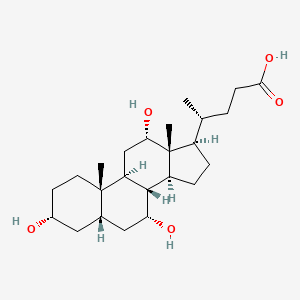
1 2D Structure

Cholic Acid

2 Identification
2.1 Computed Descriptors
2.1.1 IUPAC Name
(4R)-4-[(3R,5S,7R,8R,9S,10S,12S,13R,14S,17R)-3,7,12-trihydroxy-10,13-dimethyl-2,3,4,5,6,7,8,9,11,12,14,15,16,17-tetradecahydro-1H-cyclopenta[a]phenanthren-17-yl]pentanoic acid
2.1.2 InChI
InChI=1S/C24H40O5/c1-13(4-7-21(28)29)16-5-6-17-22-18(12-20(27)24(16,17)3)23(2)9-8-15(25)10-14(23)11-19(22)26/h13-20,22,25-27H,4-12H2,1-3H3,(H,28,29)/t13-,14+,15-,16-,17+,18+,19-,20+,22+,23+,24-/m1/s1
2.1.3 InChI Key
BHQCQFFYRZLCQQ-OELDTZBJSA-N
2.1.4 Canonical SMILES
CC(CCC(=O)O)C1CCC2C1(C(CC3C2C(CC4C3(CCC(C4)O)C)O)O)C
2.1.5 Isomeric SMILES
C[C@H](CCC(=O)O)[C@H]1CC[C@@H]2[C@@]1([C@H](C[C@H]3[C@H]2[C@@H](C[C@H]4[C@@]3(CC[C@H](C4)O)C)O)O)C
2.2 Other Identifiers
2.2.1 UNII
G1JO7801AE
2.3 Synonyms
2.3.1 MeSH Synonyms

1. Cholbam

2.3.2 Depositor-Supplied Synonyms

1. 81-25-4

2. Cholalic Acid

3. Cholate

4. Colalin

5. Cholalin

6. Cholbam

7. Cholsaeure

8. Nsc-6135

9. Kolbam

10. 3alpha,7alpha,12alpha-trihydroxy-5beta-cholanic Acid

11. Cholic Acid [usan]

12. Cholic Acid, 5beta-

13. 3,7,12-trihydroxycholanic Acid

14. 3alpha,7alpha,12alpha-trihydroxy-5beta-cholan-24-oic Acid

15. (r)-4-((3r,5s,7r,8r,9s,10s,12s,13r,14s,17r)-3,7,12-trihydroxy-10,13-dimethylhexadecahydro-1h-cyclopenta[a]phenanthren-17-yl)pentanoic Acid

16. Sodium Cholate

17. Mfcd00003672

18. Hsdb 982

19. (4r)-4-[(3r,5s,7r,8r,9s,10s,12s,13r,14s,17r)-3,7,12-trihydroxy-10,13-dimethyl-2,3,4,5,6,7,8,9,11,12,14,15,16,17-tetradecahydro-1h-cyclopenta[a]phenanthren-17-yl]pentanoic Acid

20. Cholan-24-oic Acid, 3,7,12-trihydroxy-, (3a,5b,7a,12a)-

21. Terpenes And Terpenoids

22. Chembl205596

23. G1jo7801ae

24. Chebi:16359

25. Nsc6135

26. 3alpha,7alpha,12alpha-trihydroxy-5beta-cholanate

27. Chd

28. Cholic Acid (usan)

29. Orphacol

30. 3-alpha,7-alpha,12-alpha-trihydroxy-5-beta-cholan-24-oic Acid

31. 5beta-cholan-24-oic Acid, 3alpha,7alpha,12alpha-trihydroxy-

32. C24h40o5

33. 3,7,12-trihydroxycholan-24-oic Acid, (3alpha,5beta,7alpha,12alpha)-

34. 17-beta-(1-methyl-3-carboxypropyl)etiocholane-3alpha,7alpha,12alpha-triol

35. 3,7,12-trihydroxy-cholan-24-oic Acid (3-alpha,5-beta,7-alpha,12-alpha)

36. Cholan-24-oic Acid, 3,7,12-trihydroxy-, (3alpha,5beta,7alpha,12alpha)-

37. 129874-08-4

38. 4-[(3r,7r,8r,9s,10s,12s,13r,14s,17r)-3,7,12-trihydroxy-10,13-dimethyl-2,3,4,5,6,7,8,9,11,12,14,15,16,17-tetradecahydro-1h-cyclopenta[a]phenanthren-17-yl]pentanoic Acid

39. (3alpha,5beta,7alpha,12alpha)-3,7,12-trihydroxycholan-24-oic Acid

40. (3alpha,5beta,7alpha,8x,12alpha)-3,7,12-trihydroxycholan-24-oic Acid

41. Cholan-24-oic Acid, 3,7,12-trihydroxy-, (3-alpha,5-beta,7-alpha,12-alpha)-

42. Smr000112165

43. Colalin (van)

44. Cholsaeure [german]

45. 5beta-cholanic Acid-3alpha,7alpha,12alpha-triol

46. Cholan-24-oic Acid, 3,7,12-trihydroxy-, (3.alpha.,5.beta.,7.alpha.,12.alpha.)-

47. Unii-g1jo7801ae

48. Cholalate

49. Orphacolreg

50. Cholic-acid

51. Ccris 1626

52. (3alpha,5beta,7alpha,8xi,12alpha)-3,7,12-trihydroxycholan-24-oic Acid

53. 5b-cholate

54. 5b-cholic Acid

55. Cholsa Currencyure

56. Cholbam (tn)

57. Einecs 201-337-8

58. Cholic Acid (8ci)

59. 5.beta.-cholic Acid

60. Brn 2822009

61. 361-09-1

62. Spectrum5_002005

63. Cholic Acid [mi]

64. 3alpha,7alpha,12alpha-trihydroxycholanic Acid

65. Bmse000650

66. Cholic Acid [fcc]

67. Cholic Acid [jan]

68. Ec 201-337-8

69. Cholic Acid [hsdb]

70. 3-alpha,7-alpha,12-alpha-trihydroxycholansaeure

71. Bidd:pxr0196

72. Schembl27461

73. Gtpl609

74. 3.alpha.,7.alpha.,12.alpha.-trihydroxy-5.beta.-cholanic Acid

75. 4-10-00-02072 (beilstein Handbook Reference)

76. Mls001066422

77. Mls002207051

78. Cholic Acid [usp-rs]

79. Cholic Acid [who-dd]

80. 3a,7a,12a-trihydroxycholanate

81. 3alpha,7alpha,12alpha-trihydroxy-5beta-cholanoic Acid

82. Cholic Acid [ema Epar]

83. Dtxsid6040660

84. Bdbm21680

85. 3-alpha,7-alpha,12-alpha-trihydroxycholansaeure [german]

86. Cholic Acid [ep Impurity]

87. Cholic Acid [orange Book]

88. Hms2268l18

89. 3a,7a,12a-trihydroxy-b-cholanate

90. 3a,7a,12a-trihydroxycholanic Acid

91. Hy-n0324

92. Zinc6858022

93. 3a,7a,12a-trihydroxy-5b-cholanate

94. 5b-cholanic Acid-3a,7a,12a-triol

95. Bbl029799

96. Lmst04010001

97. S3742

98. Stk801993

99. 3a,7a,12a-trihydroxy-5b-cholanoate

100. 3a,7a,12a-trihydroxy-beta-cholanate

101. Akos005622502

102. 3a,7a,12a-trihydroxy-b-cholanic Acid

103. Ccg-268746

104. Cs-6608

105. Db02659

106. 3a,7a,12a-trihydroxy-5a-cholanic Acid

107. 3a,7a,12a-trihydroxy-5b-cholanic Acid

108. Ncgc00142384-03

109. 3a,7a,12a-trihydroxy-5b-cholanoic Acid

110. 3a,7a,12a-trihydroxy-beta-cholanic Acid

111. 4-((1s,2s,7s,11s,16s,5r,9r,10r,14r,15r)-5,9,16-trihydroxy-2,15-dimethyltetracy Clo[8.7.0.0<2,7>.0<11,15>]heptadec-14-yl)pentanoic Acid

112. As-69849

113. Bp-30084

114. 3a,7a,12a-trihydroxy-5b-cholan-24-oate

115. Cholic Acid, Vetec(tm) Reagent Grade, 98%

116. N1680

117. Cholic Acid, From Ox Or Sheep Bile, >=98%

118. 3a,7a,12a-trihydroxy-5b-cholan-24-oic Acid

119. C-5900

120. C00695

121. D10699

122. A830252

123. Q287415

124. Sr-01000765698

125. 3alpha,7alpha,12alpha-trihydroxy-beta-cholanic Acid

126. Sr-01000765698-4

127. 3.alpha.,12.alpha.-trihydroxy-5.beta.-cholanic Acid

128. Ursodeoxycholic Acid Impurity B [ep Impurity]

129. 3-.alpha.,7-.alpha.,12-.alpha.-trihydroxycholansaeure

130. 3alpha, 7alpha, 12alpha-trihydroxy-5beta-cholanic Acid

131. 3alpha, 7alpha, 12alpha-trihydroxy-5beta-cholanoic Acid

132. 3-&alpha,7-&alpha,12-&alpha-trihydroxy-5-&beta-cholanate

133. Cholic Acid, British Pharmacopoeia (bp) Reference Standard

134. Cholic Acid, European Pharmacopoeia (ep) Reference Standard

135. 17b-[1-methyl-3-carboxypropyl]etiocholane-3a,7a,12a-triol

136. 5.beta.-cholan-24-oic Acid,7.alpha.,12.alpha.-trihydroxy-

137. 5beta-cholanic Acid, 3alpha,7alpha,12alpha-trihydroxy- (7ci)

138. 5beta-cholanic Acid-3alpha,7alpha,12alpha-triol 5beta-cholic Acid

139. Cholic Acid, 500 Mug/ml In Methanol, Certified Reference Material

140. Cholic Acid, United States Pharmacopeia (usp) Reference Standard

141. 17beta-[1-methyl-3-carboxypropyl]etiocholane-3alpha,7alpha,12alpha-triol

142. 3-.alpha.,7-.alpha.,12-.alpha.-trihydroxy-5-.beta.-cholan-24-oic Acid

143. 3alpha,7alpha,12alpha-trihydroxy-5beta-cholan-24-oic Acid (cholic Acid)

144. 5.beta.-cholan-24-oic Acid, 3.alpha.,7.alpha.,12.alpha.-trihydroxy-

145. (3.alpha.,5.beta.,7.alpha.,12.alpha.)-3,7,12-trihydroxycholan-24-oic Acid Sodium Salt

146. (3alpha,5beta,7alpha,8alpha,12alpha,14beta,17alpha)-3,7,12-trihydroxycholan-24-oic Acid

147. 17.beta.-(1-methyl-3-carboxypropyl)etiocholane-3.alpha.,7.alpha.,12.alpha.-triol

148. 3,7,12-trihydroxy-cholan-24-oic Acid, (3.alpha.,5.beta.,7.alpha.,12.alpha.)-

149. 3.alpha.,7.alpha.,12.alpha.-trihydroxy-5.beta.-cholan-24-oic Acid

150. Cholan-24-oic Acid, 3,7,12-trihydroxy-, (3alpha,5beta,7alpha,12alpha)- (9ci)

151. Cholan-24-oic Acid,7,12-trihydroxy-, (3.alpha.,5.beta.,7.alpha.,12.alpha.)-

152. (4r)-4-((3r,7r,8r,9s,10s,12s,13r,14s,17r)-3,7,12-trihydroxy-10,13-dimethylhexadecahydro-1h-cyclopenta[a]phenanthren-17-yl)pentanoic Acid

153. (4r)-4-[(1r,3as,3br,4r,5as,7r,9as,9bs,11s,11ar)-4,7,11-trihydroxy-9a,11a-dimethyl-hexadecahydro-1h-cyclopenta[a]phenanthren-1-yl]pentanoic Acid

154. (4r)-4-[(1s,2s,5r,7s,9r,10r,11s,14r,15r,16s)-5,9,16-trihydroxy-2,15-dimethyltetracyclo[8.7.0.0^{2,7}.0^{11,15}]heptadecan-14-yl]pentanoic Acid

155. (r)-4-((3r,5s,7r,8r,10s,12s,13r,14s,17r)-3,7,12-trihydroxy-10,13-dimethyl-hexadecahydro-1h-cyclopenta[a]phenanthren-17-yl)pentanoic Acid

156. 10321-98-9

157. Cholan-24-oic Acid, 3,7,12-trihydroxy-, (3-.alpha.,5-.beta.,7-.alpha.,12-.alpha.)-

2.4 Create Date
2004-09-16
3 Chemical and Physical Properties
Molecular Weight 408.6 g/mol
Molecular Formula C24H40O5
XLogP33.6
Hydrogen Bond Donor Count4
Hydrogen Bond Acceptor Count5
Rotatable Bond Count4
Exact Mass408.28757437 g/mol
Monoisotopic Mass408.28757437 g/mol
Topological Polar Surface Area98 Ų
Heavy Atom Count29
Formal Charge0
Complexity637
Isotope Atom Count0
Defined Atom Stereocenter Count11
Undefined Atom Stereocenter Count0
Defined Bond Stereocenter Count0
Undefined Bond Stereocenter Count0
Covalently Bonded Unit Count1
4 Drug and Medication Information
4.1 Therapeutic Uses

/CLINICAL TRIALS/ ClinicalTrials.gov is a registry and results database of publicly and privately supported clinical studies of human participants conducted around the world. The Web site is maintained by the National Library of Medicine (NLM) and the National Institutes of Health (NIH). Each ClinicalTrials.gov record presents summary information about a study protocol and includes the following: Disease or condition; Intervention (for example, the medical product, behavior, or procedure being studied); Title, description, and design of the study; Requirements for participation (eligibility criteria); Locations where the study is being conducted; Contact information for the study locations; and Links to relevant information on other health Web sites, such as NLM's MedlinePlus for patient health information and PubMed for citations and abstracts for scholarly articles in the field of medicine. Cholic acid is included in the database.

NIH/NLM; ClinicalTrials.Gov. Available from, as of July 18, 2015: https://clinicaltrials.gov/search/intervention=cholic+acid


Cholbam is indicated for the treatment of bile acid synthesis disorders due to single enzyme defects (SEDs). /Included in US product label/

NIH; DailyMed. Current Medication Information for Cholbam (Cholic Acid) Capsule (Updated: March 2015). Available from, as of May 28, 2015: https://dailymed.nlm.nih.gov/dailymed/drugInfo.cfm?setid=e5b67402-8550-4604-97a0-c7b149fbf753


Cholbam is indicated for adjunctive treatment of peroxisomal disorders (PDs) including Zellweger spectrum disorders in patients who exhibit manifestations of liver disease, steatorrhea or complications from decreased fat soluble vitamin absorption. /Included in US product label/

NIH; DailyMed. Current Medication Information for Cholbam (Cholic Acid) Capsule (Updated: March 2015). Available from, as of May 1, 2015: https://dailymed.nlm.nih.gov/dailymed/drugInfo.cfm?setid=e5b67402-8550-4604-97a0-c7b149fbf753


The safety and effectiveness of Cholbam on extrahepatic manifestations of bile acid synthesis disorders due to single enzyme defects (SEDs) or peroxisomal disorders (PDs) including Zellweger spectrum disorders have not been established.

NIH; DailyMed. Current Medication Information for Cholbam (Cholic Acid) Capsule (Updated: March 2015). Available from, as of May 1, 2015: https://dailymed.nlm.nih.gov/dailymed/drugInfo.cfm?setid=e5b67402-8550-4604-97a0-c7b149fbf753


For more Therapeutic Uses (Complete) data for CHOLIC ACID (7 total), please visit the HSDB record page.


4.2 Drug Warning

The safety and effectiveness of Cholbam has been established in pediatric patients 3 weeks of age and older for the treatment of bile acid synthesis disorders due to single enzyme defects (SEDs), and for adjunctive treatment of patients with peroxisomal disorders (PDs) including Zellweger spectrum disorders who exhibit manifestations of liver disease, steatorrhea or complications from decreased fat soluble vitamin absorption.

NIH; DailyMed. Current Medication Information for Cholbam (Cholic Acid) Capsule (Updated: March 2015). Available from, as of May 28, 2015: https://dailymed.nlm.nih.gov/dailymed/drugInfo.cfm?setid=e5b67402-8550-4604-97a0-c7b149fbf753


Monitor liver function and discontinue Cholbam in patients who develop worsening of liver function while on treatment. Concurrent elevations of serum gamma glutamyltransferase (GGT), alanine aminotransferase (ALT) may indicate Cholbam overdose. Discontinue treatment with Cholbam at any time if there are clinical or laboratory indicators of worsening liver function or cholestasis.

NIH; DailyMed. Current Medication Information for Cholbam (Cholic Acid) Capsule (Updated: March 2015). Available from, as of May 28, 2015: https://dailymed.nlm.nih.gov/dailymed/drugInfo.cfm?setid=e5b67402-8550-4604-97a0-c7b149fbf753


The developmental and health benefits of breastfeeding should be considered along with the mother's clinical need for Cholbam and any potential adverse effects on the breastfed infant from Cholbam or from the underlying maternal condition.

NIH; DailyMed. Current Medication Information for Cholbam (Cholic Acid) Capsule (Updated: March 2015). Available from, as of May 28, 2015: https://dailymed.nlm.nih.gov/dailymed/drugInfo.cfm?setid=e5b67402-8550-4604-97a0-c7b149fbf753


No studies in pregnant women or animal reproduction studies have been conducted with Cholbam. Limited published case reports discuss pregnancies in women taking cholic acid for 3beta-HSD deficiency resulting in healthy infants. These reports may not adequately inform the presence or absence of drug-associated risk with the use of Cholbam during pregnancy. The background risk of major birth defects and miscarriage for the indicated population is unknown. However, the background risk in the U.S. general population of major birth defects is 2-4% and of miscarriage is 15-20% of clinically recognized pregnancies.

NIH; DailyMed. Current Medication Information for Cholbam (Cholic Acid) Capsule (Updated: March 2015). Available from, as of May 28, 2015: https://dailymed.nlm.nih.gov/dailymed/drugInfo.cfm?setid=e5b67402-8550-4604-97a0-c7b149fbf753


For more Drug Warnings (Complete) data for CHOLIC ACID (6 total), please visit the HSDB record page.


4.3 Drug Indication

Oral cholic acid is indicated for: treatment of bile acid synthesis disorders due to single enzyme defects; and as adjunctive treatment of peroxisomal disorders including Zellweger spectrum disorders in patients who exhibit manifestations of liver disease, steatorrhea or complications from decreased fat soluble vitamin absorption.


Orphacol is indicated for the treatment of inborn errors in primary bile-acid synthesis due to 3-hydroxy-5-C27-steroid oxidoreductase deficiency or 4-3-oxosteroid-5-reductase deficiency in infants, children and adolescents aged one month to 18 years and adults.


Cholic Acid FGK is indicated for the treatment of inborn errors of primary bile acid synthesis, in infants from one month of age for continuous lifelong treatment through adulthood, encompassing the following single enzyme defects:

- sterol 27-hydroxylase (presenting as cerebrotendinous xanthomatosis, CTX) deficiency;

- 2- (or alpha-) methylacyl-CoA racemase (AMACR) deficiency;

- cholesterol 7 alpha-hydroxylase (CYP7A1) deficiency.


Treatment of other inborn errors of bile acid synthesis, Treatment of oxysterol 7a-hydrolylase deficiency and defective amida


5 Pharmacology and Biochemistry
5.1 FDA Pharmacological Classification
5.1.1 Active Moiety
CHOLIC ACID
5.1.2 FDA UNII
G1JO7801AE
5.1.3 Pharmacological Classes
Bile Acids and Salts [CS]; Bile Acid [EPC]
5.2 ATC Code

A05AA03


A05AA03


A - Alimentary tract and metabolism

A05 - Bile and liver therapy

A05A - Bile therapy

A05AA - Bile acids and derivatives

A05AA03 - Cholic acid


5.3 Absorption, Distribution and Excretion

Following ingestion, absorption of cholic acid will first be by the small intestine, and is then transported to the liver by the blood for further processing.

European Medicines Agency (EMA), Committee for Medicinal Products for Human Use (CHMP), European Public Assessment Report (EPAR): Orphacol (Cholic Acid) p.19 (2011). Available from, as of June 2, 2015: https://www.ema.europa.eu/docs/en_GB/document_library/EPAR_-_Public_assessment_report/human/001250/WC500131542.pdf


Orally administered cholic acid is subject to the same metabolic pathway as endogenous cholic acid. Cholic acid is absorbed by passive diffusion along the length of the gastrointestinal tract. Once absorbed, cholic acid enters into the body's bile acid pool and undergoes enterohepatic circulation mainly in conjugated forms. In the liver, cholic acid is conjugated with glycine or taurine by bile acid-CoA synthetase and bile acid-CoA: amino acid N-acetyltransferase. Conjugated cholic acid is actively secreted into bile mainly by the Bile Salt Efflux Pump (BSEP), and then released into the small intestine, along with other components of bile. Conjugated cholic acid is mostly re-absorbed in the ileum mainly by the apical-sodium-dependent-bile acid transporter, passed back to the liver by transporters including sodium-taurocholate cotransporting polypeptide and organic anion transport protein and enters another cycle of enterohepatic circulation. Any conjugated cholic acid not absorbed in the ileum passes into the colon where deconjugation and 7-dehydroxylation are mediated by bacteria to form cholic acid and deoxycholic acid which may be re-absorbed in the colon or excreted in the feces. The loss of cholic acid is compensated by de-novo synthesis of cholic acids from cholesterol to maintain the bile acid pool in healthy subjects.

NIH; DailyMed. Current Medication Information for Cholbam (Cholic Acid) Capsule (Updated: March 2015). Available from, as of May 28, 2015: https://dailymed.nlm.nih.gov/dailymed/drugInfo.cfm?setid=e5b67402-8550-4604-97a0-c7b149fbf753


Excretion studies in rat showed that cholic acid (CA) is almost exclusively excreted in the feces in the form of metabolite. Only minor amounts of CA were found in the unconjugated form in rat feces. Urinary excretion of bile acids is minimal and in mice fed a 1% CA diet, the excretion of bile acids was 2000-fold higher in feces than in urine

European Medicines Agency (EMA), Committee for Medicinal Products for Human Use (CHMP), European Public Assessment Report (EPAR): Orphacol (Cholic Acid) p.20 (2011). Available from, as of June 2, 2015: https://www.ema.europa.eu/docs/en_GB/document_library/EPAR_-_Public_assessment_report/human/001250/WC500131542.pdf


Cholic acid was shown to be mainly absorbed in the distal (ileal) rather than proximal segments of the small intestine in the guinea pig.

European Medicines Agency (EMA), Committee for Medicinal Products for Human Use (CHMP), European Public Assessment Report (EPAR): Orphacol (Cholic Acid) p.19 (2011). Available from, as of June 2, 2015: https://www.ema.europa.eu/docs/en_GB/document_library/EPAR_-_Public_assessment_report/human/001250/WC500131542.pdf


For more Absorption, Distribution and Excretion (Complete) data for CHOLIC ACID (9 total), please visit the HSDB record page.


5.4 Metabolism/Metabolites

The mechanism and sequence of side chain hydroxylation of cholesterol in bile acid synthesis was studied in the isolated perfused rabbit liver. A comparison was made between the importance of 26- and 25-hydroxylation in cholic acid biosynthesis in the rabbit. The formation of [G-(3)H]cholic acid was observed when the liver was perfused with 5beta-[G-(3)H]cholestane-3alpha, 7alpha-diol, 5beta-[G-(3)H]cholestane-3alpha, 7alpha-12alpha-triol, and 5beta-[G-(3)H]cholestane-3alpha, 7alpha, 26-triol. No [G-(3)H]chenodeoxycholic acid was detected in the bile. These findings indicate that potential precursors of chenodeoxycholic acid were hydroxylated at position 12alpha either subsequent to or before hydroxylation of the cholesterol side chain. In addition, no other intermediates (tetrahydroxy or pentahydroxy bile alcohols) were found in the bile when these compounds were perfused in the liver. Bile acid precursors were detected in bile when the rabbit liver was perfused with 5beta-[24-(14)C]cholestane-3alpha, 7alpha, 25-triol. The 5beta-[24-(14)C]cholestane-3alpha, 7alpha, 25-triol was hydroxylated in the liver at the 12alpha position to yield the corresponding 5beta-cholestane-3alpha, 7alpha, 12alpha, 25-tetrol. The tetrol was further metabolized to a series of pentols (5beta-cholestane-3alpha, 7alpha, 12alpha, 22, 25-pentol; 5beta-cholestane-3alpha, 7alpha, 12alpha, 23, 25-pentol; 5beta-cholestane-3alpha, 7alpha, 12alpha, 24, 25-pentol; and 5beta-cholestane-3alpha, 7alpha, 12alpha, 25, 26-pentol). The major bile acid obtained from the perfusion of the 5beta-cholestane-3alpha, 7alpha, 25-triol was cholic acid. The experiments indicated that in the rabbit liver 12alpha-hydroxylation can occur after hydroxylation of the cholesterol side chain at either C-25 (5 beta-cholestane-3alpha, 7alpha, 25-triol) or C-26 (5beta-cholestane-3alpha, 7alpha-26-triol). Apparently, the rabbit can form cholic acid via the classical 26-hydroxylation pathway as well as via 25-hydroxylated intermediates.

PMID:1262339 Cohen B et al; J Biol Chem 251 (9): 2709-15 (1976)


In classic cholic acid biosynthesis, a series of ring modifications of cholesterol precede side chain cleavage and yield 5beta-cholestane-3alpha, 7alpha, 12alpha-triol. Side chain reactions of the triol then proceed either by the mitochondrial 27-hydroxylation pathway or by the microsomal 25-hydroxylation pathway. We have developed specific and precise assay methods to measure the activities of key enzymes in both pathways, 5beta-cholestane-3alpha, 7alpha, 12alpha-triol 25- and 27-hydroxylases and 5beta-cholestane-3alpha, 7alpha, 12alpha, 25-tetrol 23R-, 24R-, 24S- and 27-hydroxylases. The extracts from either the mitochondrial or microsomal incubation mixtures were purified by means of a disposable silica cartridge column, derivatized into trimethylsilyl ethers, and quantified by gas chromatography;-mass spectrometry with selected-ion monitoring in a high resolution mode. Compared with the addition of substrates in acetone, those in 2-hydroxypropyl-beta-cyclodextrin increased mitochondrial triol 27-hydroxylase activity 132% but decreased activities of the enzymes in microsomal 25-hydroxylation pathway (triol 25-hydroxylase and 5beta-cholestane-3alpha, 7alpha, 12alpha, 25-tetrol 23R-, 24R-, 24S- and 27-hydroxylases) 13;-60% in human liver. The enzyme activities in both pathways were generally 2- to 4-times higher in mouse and rabbit livers compared with human liver. In all species, microsomal triol 25-hydroxylase activities were 4- to 11-times larger than mitochondrial triol 27-hydroxylase activities but the activities of tetrol 24S-hydroxylase were similar to triol 27-hydroxylase activities in our assay conditions. The regulation of both pathways in rabbit liver was studied after bile acid synthesis was perturbed. Cholesterol feeding up-regulated enzyme activities involved in both 25- (64;-142%) and 27- (77%) hydroxylation pathways, while bile drainage up-regulated only the enzymes in the 25-hydroxylation pathway (178;-371%). Using these new assays, we demonstrated that the 25- and 27-hydroxylation pathways for cholic acid biosynthesis are more active in mouse and rabbit than human livers and are separately regulated in rabbit liver.

PMID:10706592 Honda A et al; J Lipid Res 41 (3): 442-51 (2000)


Deoxycholic acid is the main metabolite of cholic acid. Patients with 3alpha-HSD deficiency and delta4-3-oxoR deficiency and subjects with a normal bile acid metabolism have shown that upon treatment with cholic acid, serum and bile predominantly contain cholic acid and deoxycholic acid, while chenodeoxycholic acid and its metabolites appear to be reduced. Under cholic acid treatment, patients are therefore exposed to higher than normal deoxycholic acid concentrations, although the exact quantifications of these concentrations have not been described. In single- and repeat-dose studies, deoxycholic acid showed lethal effects, gastrointestinal and hepatic toxicities at approximately half the doses needed for cholic acid to produce the same effects. It is therefore considered that deoxycholic acid is more toxic than cholic acid and may in fact be the causative agent of some of cholic acid's toxicity. Mutagenicity data from bacterial test for deoxycholic acid is ambiguous but deoxycholic acid was genotoxic in an in vitro micronucleus assay. Additionally, ... the genotoxic potential of BA (focusing on chenodeoxycholic acid and deoxycholic acid) on human colonocytes and colon tumor cells HT 29 by a comet assay /was investigated/. In both cell types a clear dose-dependent genotoxic effect induced by the two bile acids was observed, with deoxycholic acid being more genotoxic. Viability of cells appeared to be greater than 75%. Use of a nuclease III modified comet assay suggested that the DNA damage could be mediated by reactive oxygen species production but was somewhat protected by inclusion of anti-oxidants. Short term carcinogenicity studies suggest that deoxycholic acid like cholic acid has carcinogenicity promoting properties. In rat liver, deoxycholic acid (75-150 mg/kg) exerted promoting activity as evidenced by significantly increased values of alpha-glutamyl transpeptidase-positive (alpha-GT+) liver foci compared with the corresponding controls given the carcinogen, diethylnitrosamine (DEN) alone. Deoxycholic acid (20 mg/kg) enhanced the development and growth of azoxymethane (AOM)-induced aberrant crypt foci in rat colons. In a parallel study, deoxycholic acid in the absence of AOM did not significantly induce aberrant crypt foci. However, /a study/ concluded that deoxycholic acid may act not only as promoters but also initiators of the multistage process of carcinogenesis.

European Medicines Agency (EMA), Committee for Medicinal Products for Human Use (CHMP), European Public Assessment Report (EPAR): Orphacol (Cholic Acid) p.24-5 (2011). Available from, as of June 2, 2015: https://www.ema.europa.eu/docs/en_GB/document_library/EPAR_-_Public_assessment_report/human/001250/WC500131542.pdf


Cholic acid has known human metabolites that include Cholic acid glucuronide.

S73 | METXBIODB | Metabolite Reaction Database from BioTransformer | DOI:10.5281/zenodo.4056560


5.5 Mechanism of Action

Bile acids (BAs) are known to regulate BA synthesis and transport by the farnesoid X receptor in the liver (FXR-SHP) and intestine (FXR-Fgf15). However, the relative importance of individual BAs in regulating these processes is not known. Therefore, mice were fed various doses of five individual BAs, including cholic acid (CA), chenodeoxycholic acid (CDCA), deoxoycholic acid (DCA), lithocholic acid (LCA), and ursodeoxycholic acid (UDCA) in their diets at various concentrations for one week to increase the concentration of one BA in the enterohepatic circulation. The mRNA of BA synthesis and transporting genes in liver and ileum were quantified. In the liver, the mRNA of SHP, which is the prototypical target gene of FXR, increased in mice fed all concentrations of BAs. In the ileum, the mRNA of the intestinal FXR target gene Fgf15 was increased at lower doses and to a higher extent by CA and DCA than by CDCA and LCA. Cyp7a1, the rate-limiting enzyme in BA synthesis, was decreased more by CA and DCA than CDCA and LCA. Cyp8b1, the enzyme that 12-hydroxylates BAs and is thus responsible for the synthesis of CA, was decreased much more by CA and DCA than CDCA and LCA. Surprisingly, neither a decrease in the conjugated BA uptake transporter (Ntcp) nor increase in BA efflux transporter (Bsep) was observed by FXR activation, but an increase in the cholesterol efflux transporter (Abcg5/Abcg8) was observed with FXR activation. Thus in conclusion, CA and DCA are more potent FXR activators than CDCA and LCA when fed to mice, and thus they are more effective in decreasing the expression of the rate limiting gene in BA synthesis Cyp7a1 and the 12-hydroxylation of BAs Cyp8b1, and are also more effective in increasing the expression of Abcg5/Abcg8, which is responsible for biliary cholesterol excretion. However, feeding BAs do not alter the mRNA or protein levels of Ntcp or Bsep, suggesting that the uptake or efflux of BAs is not regulated by FXR at physiological and pharmacological concentrations of BAs.

PMID:25582706 Song P et al; Toxicol Appl Pharmacol 283 (1): 57-64 (2015)


Cholic acid is a primary bile acid synthesized from cholesterol in the liver. In bile acid synthesis disorders due to single enzyme defects (SEDs) in the biosynthetic pathway, and in peroxisomal disorders (PDs) including Zellweger spectrum disorders, deficiency of primary bile acids leads to unregulated accumulation of intermediate bile acids and cholestasis. Bile acids facilitate fat digestion and absorption by forming mixed micelles, and facilitate absorption of fat-soluble vitamins in the intestine. Endogenous bile acids including cholic acid enhance bile flow and provide the physiologic feedback inhibition of bile acid synthesis. The mechanism of action of cholic acid has not been fully established; however, it is known that cholic acid and its conjugates are endogenous ligands of the nuclear receptor, farnesoid X receptor (FXR). FXR regulates enzymes and transporters that are involved in bile acid synthesis and in the enterohepatic circulation to maintain bile acid homeostasis under normal physiologic conditions.

NIH; DailyMed. Current Medication Information for Cholbam (Cholic Acid) Capsule (Updated: March 2015). Available from, as of May 28, 2015: https://dailymed.nlm.nih.gov/dailymed/drugInfo.cfm?setid=e5b67402-8550-4604-97a0-c7b149fbf753


Related Excipient Companies

Upload your portfolio for free, ask us

Excipients by Applications

Click here to find the perfect excipient manufacturers by their capabilities

Fillers, Diluents & Binders

read-more
read-more

Direct Compression

read-more
read-more

Thickeners and Stabilizers

read-more
read-more

Lubricants & Glidants

read-more
read-more

Co-Processed Excipients

read-more
read-more

Granulation

read-more
read-more

Chewable & Orodispersible Aids

read-more
read-more

Disintegrants & Superdisintegrants

read-more
read-more

Controlled & Modified Release

read-more
read-more

Coating Systems & Additives

read-more
read-more

Emulsifying Agents

read-more
read-more

Taste Masking

read-more
read-more

Film Formers & Plasticizers

read-more
read-more

Rheology Modifiers

read-more
read-more

Digital Content read-more

Create Content with PharmaCompass, ask us

DATA COMPILATION #PharmaFlow

read-more
read-more

NEWS #PharmaBuzz

read-more
read-more

Global Sales Information

Do you need Business Intel? Ask us

Market Place

Do you need sourcing support? Ask us

REF. STANDARDS & IMPURITIES

Upload your portfolio for free, ask us

ABOUT THIS PAGE

Looking for 81-25-4 / Cholic Acid API manufacturers, exporters & distributors?

Cholic Acid manufacturers, exporters & distributors 1

87

PharmaCompass offers a list of Cholic Acid API manufacturers, exporters & distributors, which can be sorted by GMP, USDMF, JDMF, KDMF, CEP (COS), WC, and more, enabling you to easily find the right Cholic Acid manufacturer or Cholic Acid supplier for your needs.

Send us enquiries for free, and we will assist you in establishing a direct connection with your preferred Cholic Acid manufacturer or Cholic Acid supplier.

API | Excipient name

Cholic Acid

Synonyms

81-25-4, Cholalic acid, Cholate, Colalin, Cholalin, Cholbam

Cas Number

81-25-4

Unique Ingredient Identifier (UNII)

G1JO7801AE

About Cholic Acid

A major primary bile acid produced in the liver and usually conjugated with glycine or taurine. It facilitates fat absorption and cholesterol excretion.

Cholic Acid Manufacturers

A Cholic Acid manufacturer is defined as any person or entity involved in the manufacture, preparation, processing, compounding or propagation of Cholic Acid, including repackagers and relabelers. The FDA regulates Cholic Acid manufacturers to ensure that their products comply with relevant laws and regulations and are safe and effective to use. Cholic Acid API Manufacturers are required to adhere to Good Manufacturing Practices (GMP) to ensure that their products are consistently manufactured to meet established quality criteria.

click here to find a list of Cholic Acid manufacturers with USDMF, JDMF, KDMF, CEP, GMP, and COA related information on PhamaCompass.

Cholic Acid Suppliers

A Cholic Acid supplier is an individual or a company that provides Cholic Acid active pharmaceutical ingredient (API) or Cholic Acid finished formulations upon request. The Cholic Acid suppliers may include Cholic Acid API manufacturers, exporters, distributors and traders.

click here to find a list of Cholic Acid suppliers with USDMF, JDMF, KDMF, CEP, GMP, and COA related information on PharmaCompass.

Cholic Acid USDMF

A Cholic Acid DMF (Drug Master File) is a document detailing the whole manufacturing process of Cholic Acid active pharmaceutical ingredient (API) in detail. Different forms of Cholic Acid DMFs exist exist since differing nations have different regulations, such as Cholic Acid USDMF, ASMF (EDMF), JDMF, CDMF, etc.

A Cholic Acid DMF submitted to regulatory agencies in the US is known as a USDMF. Cholic Acid USDMF includes data on Cholic Acid's chemical properties, information on the facilities and procedures used, and details about packaging and storage. The Cholic Acid USDMF is kept confidential to protect the manufacturer’s intellectual property.

click here to find a list of Cholic Acid suppliers with USDMF on PharmaCompass.

Cholic Acid JDMF

The Pharmaceuticals and Medical Devices Agency (PMDA) established the Japan Drug Master File (JDMF), also known as the Master File (MF), to permit Japanese and foreign manufacturers of drug substances, intermediates, excipients, raw materials, and packaging materials (‘Products’) to voluntarily register confidential information about the production and management of their products in Japan.

The Cholic Acid Drug Master File in Japan (Cholic Acid JDMF) empowers Cholic Acid API manufacturers to present comprehensive information (e.g., production methods, data, etc.) to the review authority, i.e., PMDA (Pharmaceuticals & Medical Devices Agency).

PMDA reviews the Cholic Acid JDMF during the approval evaluation for pharmaceutical products. At the time of Cholic Acid JDMF registration, PMDA checks if the format is accurate, if the necessary items have been included (application), and if data has been attached.

click here to find a list of Cholic Acid suppliers with JDMF on PharmaCompass.

Cholic Acid CEP

A Cholic Acid CEP of the European Pharmacopoeia monograph is often referred to as a Cholic Acid Certificate of Suitability (COS). The purpose of a Cholic Acid CEP is to show that the European Pharmacopoeia monograph adequately controls the purity of Cholic Acid EP produced by a given manufacturer. Suppliers of raw materials can prove the suitability of Cholic Acid to their clients by showing that a Cholic Acid CEP has been issued for it. The manufacturer submits a Cholic Acid CEP (COS) as part of the market authorization procedure, and it takes on the role of a Cholic Acid CEP holder for the record. Additionally, the data presented in the Cholic Acid CEP (COS) is managed confidentially and offers a centralized system acknowledged by numerous nations, exactly like the Cholic Acid DMF.

A Cholic Acid CEP (COS) is recognised by all 36 nations that make up the European Pharmacopoeia Convention. Cholic Acid CEPs may be accepted in nations that are not members of the Ph. Eur. at the discretion of the authorities there.

click here to find a list of Cholic Acid suppliers with CEP (COS) on PharmaCompass.

Cholic Acid NDC

National Drug Code is a comprehensive database maintained by the FDA that contains information on all drugs marketed in the US. This directory includes information about finished drug products, unfinished drug products, and compounded drug products, including those containing Cholic Acid as an active pharmaceutical ingredient (API).

Finished drug products

The FDA updates the NDC directory daily. The NDC numbers for Cholic Acid API and other APIs are published in this directory by the FDA.

Unfinished drugs

The NDC unfinished drugs database includes product listing information submitted for all unfinished drugs, such as active pharmaceutical ingredients (APIs), drugs intended for further processing and bulk drug substances for compounding.

Pharmaceutical companies that manufacture Cholic Acid as an active pharmaceutical ingredient (API) must furnish the FDA with an updated record of all drugs that they produce, prepare, propagate, compound, or process for commercial distribution in the US at their facilities.

Compounded drug products

The NDC directory also contains data on finished compounded human drug products that contain Cholic Acid and are produced by outsourcing facilities. While these outsourcing facilities are not mandated to assign a Cholic Acid NDC to their finished compounded human drug products, they may choose to do so.

click here to find a list of Cholic Acid suppliers with NDC on PharmaCompass.

Cholic Acid GMP

Cholic Acid Active pharmaceutical ingredient (API) is produced in GMP-certified manufacturing facility.

GMP stands for Good Manufacturing Practices, which is a system used in the pharmaceutical industry to make sure that goods are regularly produced and monitored in accordance with quality standards. The FDA’s current Good Manufacturing Practices requirements are referred to as cGMP or current GMP which indicates that the company follows the most recent GMP specifications. The World Health Organization (WHO) has its own set of GMP guidelines, called the WHO GMP. Different countries can also set their own guidelines for GMP like China (Chinese GMP) or the EU (EU GMP).

PharmaCompass offers a list of Cholic Acid GMP manufacturers, exporters & distributors, which can be sorted by USDMF, JDMF, KDMF, CEP (COS), WC, and more, enabling you to easily find the right Cholic Acid GMP manufacturer or Cholic Acid GMP API supplier for your needs.

Cholic Acid CoA

A Cholic Acid CoA (Certificate of Analysis) is a formal document that attests to Cholic Acid's compliance with Cholic Acid specifications and serves as a tool for batch-level quality control.

Cholic Acid CoA mostly includes findings from lab analyses of a specific batch. For each Cholic Acid CoA document that a company creates, the USFDA specifies specific requirements, such as supplier information, material identification, transportation data, evidence of conformity and signature data.

Cholic Acid may be tested according to a variety of international standards, such as European Pharmacopoeia (Cholic Acid EP), Cholic Acid JP (Japanese Pharmacopeia) and the US Pharmacopoeia (Cholic Acid USP).

Inform the supplier about your product requirements, specifying if you need a product with particular monograph like EP (Ph. Eur.), USP, JP, BP, or any other quality. In addition, clarify whether you need hydrochloride (HCl), anhydricum, base, micronisatum or a specific level of purity. To find reputable suppliers, utilize the filters and select those certified by GMP, FDA, or any other certification as per your requirement.
For your convenience, we have listed synonyms and CAS numbers to help you find the best supplier. The use of synonyms and CAS numbers can be helpful in identifying potential suppliers, but it is crucial to note that they might not always indicate the exact same product. It is important to confirm the product details with the supplier before making a purchase to ensure that it meets your requirements.
Ask Us for Pharmaceutical Supplier and Partner
Ask Us, Find A Supplier / Partner
No Commissions, No Strings Attached, Get Connected for FREE

What are you looking for?

How can we help you?

The request can't be empty

Please read our Privacy Policy carefully

You must agree to the privacy policy

The name can't be empty
The company can't be empty.
The email can't be empty Please enter a valid email.
The mobile can't be empty