
Find Chlorhexidine manufacturers, exporters & distributors on PharmaCompass

PharmaCompass

Synopsis

0INTERMEDIATES

REF. STANDARDS OR IMPURITIES

0

USP

0

JP

FINISHED DOSAGE FORMULATIONS

0

FDA Orange Book

FDA (Orange Book)

0

Canada

Canada

FDF Dossiers

DRUG PRODUCT COMPOSITIONS

38RELATED EXCIPIENT COMPANIES

85EXCIPIENTS BY APPLICATIONS

PATENTS & EXCLUSIVITIES

0

US Patents

0

US Exclusivities

0

Health Canada Patents

API REF. PRICE (USD/KG)

GLOBAL SALES INFORMATION

US Medicaid

NA

Annual Reports

NA

API/FDF Prices: Book a Demo to
explore the features and consider
upgrading later

MARKET PLACE

DIGITAL CONTENT

0

Data Compilation #PharmaFlow

0

Stock Recap #PipelineProspector

0

Weekly News Recap #Phispers
Chemistry

Click the arrow to open the dropdown
read-moreClick the button for full data set
Also known as: 55-56-1, Rotersept, Fimeil, Hexadol, Soretol, Chlorhexidin
Molecular Formula
C22H30Cl2N10
Molecular Weight
505.4  g/mol
InChI Key
GHXZTYHSJHQHIJ-UHFFFAOYSA-N
FDA UNII
R4KO0DY52L

Chlorhexidine
A disinfectant and topical anti-infective agent used also as mouthwash to prevent oral plaque.
The physiologic effect of chlorhexidine is by means of Decreased Cell Wall Integrity.
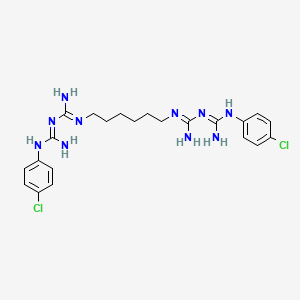
1 2D Structure

Chlorhexidine

2 Identification
2.1 Computed Descriptors
2.1.1 IUPAC Name
(1E)-2-[6-[[amino-[(E)-[amino-(4-chloroanilino)methylidene]amino]methylidene]amino]hexyl]-1-[amino-(4-chloroanilino)methylidene]guanidine
2.1.2 InChI
InChI=1S/C22H30Cl2N10/c23-15-5-9-17(10-6-15)31-21(27)33-19(25)29-13-3-1-2-4-14-30-20(26)34-22(28)32-18-11-7-16(24)8-12-18/h5-12H,1-4,13-14H2,(H5,25,27,29,31,33)(H5,26,28,30,32,34)
2.1.3 InChI Key
GHXZTYHSJHQHIJ-UHFFFAOYSA-N
2.1.4 Canonical SMILES
C1=CC(=CC=C1NC(=NC(=NCCCCCCN=C(N)N=C(N)NC2=CC=C(C=C2)Cl)N)N)Cl
2.1.5 Isomeric SMILES
C1=CC(=CC=C1N/C(=N/C(=NCCCCCCN=C(/N=C(/NC2=CC=C(C=C2)Cl)\N)N)N)/N)Cl
2.2 Other Identifiers
2.2.1 UNII
R4KO0DY52L
2.3 Synonyms
2.3.1 MeSH Synonyms

1. Acetate, Chlorhexidine

2. Chlorhexidine Acetate

3. Chlorhexidine Hydrochloride

4. Hydrochloride, Chlorhexidine

5. Mk 412a

6. Mk-412a

7. Mk412a

8. Novalsan

9. Sebidin A

10. Tubulicid

2.3.2 Depositor-Supplied Synonyms

1. 55-56-1

2. Rotersept

3. Fimeil

4. Hexadol

5. Soretol

6. Chlorhexidin

7. Chlorhexidinum

8. Cloresidina [dcit]

9. Chlorhexidin [czech]

10. Chlorhexidinum [inn-latin]

11. Clorhexidina [inn-spanish]

12. Nolvasan

13. Merfen-incolore

14. Hibistat

15. Chlorhexadine

16. Dentisept

17. 1,6-bis(p-chlorophenyldiguanido)hexane

18. 1,6-di(4'-chlorophenyldiguanido)hexane

19. 1,6-bis(5-(p-chlorophenyl)biguandino)hexane

20. Chlorohexidine

21. Tubulicid

22. Chlorhexidine (inn)

23. 1,1'-hexamethylenebis(5-(p-chlorophenyl)biguanide)

24. 1,1'-hexamethylene Bis(5-(p-chlorophenyl)biguanide)

25. 2,4,11,13-tetraazatetradecanediimidamide, N,n''-bis(4-chlorophenyl)-3,12-diimino-

26. Sterilon

27. Chembl790

28. R4ko0dy52l

29. Mls001332388

30. Chebi:3614

31. Cloresidina

32. Clorhexidina

33. 56-95-1

34. Chlorhexidine Dihydrochloride

35. Biguanide, 1,1'-hexamethylenebis(5-(p-chlorophenyl)-

36. Cas-55-56-1

37. Ncgc00016246-03

38. Smr000857146

39. Sterido

40. Savlon Babycare

41. Chlorhexidine [inn]

42. N',n'''''-hexane-1,6-diylbis[n-(4-chlorophenyl)(imidodicarbonimidic Diamide)]

43. Dsstox_cid_13314

44. Dsstox_rid_79062

45. N,n'-bis(4-chlorophenyl)-3,12-diimino-2,4,11,13-tetraazatetradecanediimidamide

46. Dsstox_gsid_33314

47. Chlorhexidine [inn:ban]

48. Mls001304094

49. 1-(4-chlorophenyl)-3-[n-[6-[[n-[n-(4-chlorophenyl)carbamimidoyl]carbamimidoyl]amino]hexyl]carbamimidoyl]guanidine

50. N-(4-chlorophenyl)-1-3-(6-{n-[3-(4-chlorophenyl)carbamimidamidomethanimidoyl]amino}hexyl)carbamimidamidomethanimidamide

51. Ccris 9230

52. Hsdb 7196

53. Merfen-incolore (tn)

54. Sr-01000799135

55. Nolvasan (*diacetate*)

56. 1,1'-hexamethylenebis[5-(p-chlorophenyl)biguanide]

57. 3697-42-5

58. Smr000718621

59. Einecs 200-238-7

60. Unii-r4ko0dy52l

61. Lisium (*dihydrochloride*)

62. Brn 2826432

63. 1,6-di(n-p-chlorophenyldiguanido)hexane

64. Dentisept [veterinary] (tn)

65. Prestwick_53

66. (1e)-2-[6-[[amino-[(e)-[amino-(4-chloroanilino)methylidene]amino]methylidene]amino]hexyl]-1-[amino-(4-chloroanilino)methylidene]guanidine

67. Chlorhexidine (1)

68. Mfcd00009673

69. Hibidil (salt/mix)

70. Hibisol (salt/mix)

71. Hibitane (salt/mix)

72. Hibiscrub (salt/mix)

73. Hibispray (salt/mix)

74. Nsc526936

75. Spectrum_000237

76. Savloclens (salt/mix)

77. Prestwick0_000143

78. Prestwick1_000143

79. Prestwick2_000143

80. Prestwick3_000143

81. Spectrum2_000135

82. Spectrum3_000339

83. Spectrum4_000277

84. Spectrum5_001322

85. Chlorhexidine [mi]

86. Hexamethylenebis(5-(4-chlorophenyl)biguanide)

87. Ec 200-238-7

88. Schembl3984

89. Chlorhexidine [hsdb]

90. Chlorhexidine [inci]

91. Chlorhexidine, >=99.5%

92. Bspbio_000246

93. Bspbio_001977

94. Chlorhexidine [vandf]

95. Kbiogr_000774

96. Kbioss_000717

97. 4-12-00-01201 (beilstein Handbook Reference)

98. Mls001332387

99. Mls002154209

100. Chlorhexidine [mart.]

101. Divk1c_000761

102. Spbio_000210

103. Spbio_002185

104. Chlorhexidine [usp-rs]

105. Chlorhexidine [who-dd]

106. Bpbio1_000272

107. Dtxsid2033314

108. Bdbm51937

109. Bdbm64773

110. Cid_9552079

111. Kbio1_000761

112. Kbio2_000717

113. Kbio2_003285

114. Kbio2_005853

115. Kbio3_001197

116. Cid_12303047

117. Ninds_000761

118. Regid_for_cid_9552079

119. Bdbm152706

120. Hms1568m08

121. Hms2095m08

122. Hms2233b16

123. Hms3712m08

124. Hy-b1248

125. Tox21_110325

126. Tox21_201404

127. Tox21_303445

128. Bdbm50170723

129. S5397

130. Stk089248

131. Akos005394319

132. Tox21_110325_1

133. Ccg-220143

134. Cs-4958

135. Db00878

136. 2,4,11,13-tetraazatetradecanediimidamide, N,n'-bis(4-chlorophenyl)-3,12-diimino-

137. Idi1_000761

138. N,n''''-hexane-1,6-diylbis[n'-(4-chlorophenyl)(imidodicarbonimidic Diamide)]

139. N,n'-bis(4-chlorophenyl)-3,12-diimino-2,4,11,13-tetraazatetradeca- Nediimidamide

140. Qtl1_000020

141. Ncgc00016246-01

142. Ncgc00016246-02

143. Ncgc00016246-04

144. Ncgc00016246-05

145. Ncgc00016246-06

146. Ncgc00016246-07

147. Ncgc00016246-09

148. Ncgc00016246-13

149. Ncgc00016246-21

150. Ncgc00091025-01

151. Ncgc00091025-02

152. Ncgc00091025-04

153. Ncgc00247766-01

154. Ncgc00257242-01

155. Ncgc00258955-01

156. (1e)-2-[6-[[amino-[(e)-[amino-(4-chloroanilino)methylene]amino]methylene]amino]hexyl]-1-[amino-(4-chloroanilino)methylene]guanidine

157. As-12648

158. 1,6-di(n-p-chlorophenylbiguanidino)hexane

159. Chlorhexidine, Purum, >=99.0% (hplc)

160. Sbi-0051301.p003

161. Ab00053427

162. C06902

163. D07668

164. Ab00053427-24

165. Ab00053427-28

166. Ab00053427_29

167. 009c673

168. A830704

169. Q-200828

170. Sr-01000799135-5

171. 1,1''-hexamethylene Bis(5-(p-chlorophenyl)biguanide)

172. Brd-k52256627-300-03-3

173. Brd-k52256627-300-05-8

174. Sr-01000799135-10

175. Sr-01000799135-11

176. Chlorhexidine, European Pharmacopoeia (ep) Reference Standard

177. Chlorhexidine, United States Pharmacopeia (usp) Reference Standard

178. 2,4,11,13-tetraazatetradecanediimidamide, N1,n14-bis(4-chlorophenyl)-3,12-diimino-

179. Chlorhexidine, Pharmaceutical Secondary Standard; Certified Reference Material

180. N'',n''''''''''-hexane-1,6-diylbis[n-(4-chlorophenyl)(imidodicarbonimidic Diamide)]

181. N,n''-bis(4-chlorophenyl)-3,12-diimino-2,4,11,13-tetraazatetradecanediimidamide

182. (1e)-2-[6-[[amino-[(e)-[amino-(4-chloroanilino)methylene]amino]methylene]amino]hexyl]-1-[amino-(4-chloroanilino)methylene]guanidine;hydrochloride

183. (1e)-2-[6-[[azanyl-[(e)-[azanyl-[(4-chlorophenyl)amino]methylidene]amino]methylidene]amino]hexyl]-1-[azanyl-[(4-chlorophenyl)amino]methylidene]guanidine

184. (1e)-2-[6-[[azanyl-[(e)-[azanyl-[(4-chlorophenyl)amino]methylidene]amino]methylidene]amino]hexyl]-1-[azanyl-[(4-chlorophenyl)amino]methylidene]guanidine;hydrochloride

185. 2-[amino-[6-[[amino-[(e)-[amino-(4-chloroanilino)methylidene]amino]methylidene]amino]hexylimino]methyl]-1-(4-chlorophenyl)guanidine

186. 2-[amino-[6-[[amino-[(e)-[amino-(4-chloroanilino)methylidene]amino]methylidene]amino]hexylimino]methyl]-1-(4-chlorophenyl)guanidine;hydrochloride

2.4 Create Date
2006-10-23
3 Chemical and Physical Properties
Molecular Weight 505.4 g/mol
Molecular Formula C22H30Cl2N10
XLogP30.1
Hydrogen Bond Donor Count6
Hydrogen Bond Acceptor Count2
Rotatable Bond Count13
Exact Mass504.2031964 g/mol
Monoisotopic Mass504.2031964 g/mol
Topological Polar Surface Area178 Ų
Heavy Atom Count34
Formal Charge0
Complexity649
Isotope Atom Count0
Defined Atom Stereocenter Count0
Undefined Atom Stereocenter Count0
Defined Bond Stereocenter Count2
Undefined Bond Stereocenter Count0
Covalently Bonded Unit Count1
4 Drug and Medication Information
4.1 Drug Information
1 of 20  
Drug NameAvagard
Active IngredientAlcohol; chlorhexidine gluconate
Dosage FormSolution
RouteTopical
Strength1%; 61%
Market StatusOver the Counter
Company3m

2 of 20  
Drug NameChlorhexidine gluconate
PubMed HealthChlorhexidine
Drug ClassesAntibacterial, Antibacterial Cleansing Agent, Wound Care Agent
Active IngredientChlorhexidine gluconate
Dosage FormCloth; Solution; Sponge
RouteDental; Topical
Strength0.12%; 2%; 4%
Market StatusOver the Counter; Prescription
CompanyLyne; Wockhardt; Sage Prods; Hi Tech Pharma; Teva; Xttrium; Becton Dickinson

3 of 20  
Drug NameCida-stat
PubMed HealthChlorhexidine
Drug ClassesAntibacterial, Antibacterial Cleansing Agent, Wound Care Agent
Drug LabelPetcoAntiseptic Spray with Chew DeterrentPETCO Antiseptic Spray with Chew Deterrent is specially formulated to help heal minor wounds caused by small cuts, flea bites and skin irritations. The chew deterrent contains bitter extracts that keep the dog...
Active IngredientChlorhexidine gluconate
Dosage FormSolution
RouteTopical
Strength2%
Market StatusOver the Counter
CompanyEcolab

4 of 20  
Drug NameDyna-hex
Active IngredientChlorhexidine gluconate
Dosage FormSolution
RouteTopical
Strength0.75%
Market StatusOver the Counter
CompanyBajaj Medical

5 of 20  
Drug NameExidine
PubMed HealthChlorhexidine
Drug ClassesAntibacterial, Antibacterial Cleansing Agent, Wound Care Agent
Active IngredientChlorhexidine gluconate
Dosage FormAerosol, metered; Solution
RouteTopical
Strength2%; 4%
Market StatusOver the Counter
CompanyXttrium

6 of 20  
Drug NameHibiclens
Active IngredientChlorhexidine gluconate
Dosage FormSolution
RouteTopical
Strength4%
Market StatusOver the Counter
CompanyMolnlycke Hlth

7 of 20  
Drug NameHibistat
Active IngredientChlorhexidine gluconate
Dosage FormSolution
RouteTopical
Strength0.5%
Market StatusOver the Counter
CompanyMolnlycke Hlth

8 of 20  
Drug NamePeridex
Active IngredientChlorhexidine gluconate
Dosage FormSolution
RouteDental
Strength0.12%
Market StatusPrescription
Company3m

9 of 20  
Drug NamePeriochip
Active IngredientChlorhexidine gluconate
Dosage FormTablet
RouteDental
Strength2.5mg
Market StatusPrescription
CompanyDexcel Pharma

10 of 20  
Drug NamePeriogard
Active IngredientChlorhexidine gluconate
Dosage FormSolution
RouteDental
Strength0.12%
Market StatusPrescription
CompanyColgate

11 of 20  
Drug NameAvagard
Active IngredientAlcohol; chlorhexidine gluconate
Dosage FormSolution
RouteTopical
Strength1%; 61%
Market StatusOver the Counter
Company3m

12 of 20  
Drug NameChlorhexidine gluconate
PubMed HealthChlorhexidine
Drug ClassesAntibacterial, Antibacterial Cleansing Agent, Wound Care Agent
Active IngredientChlorhexidine gluconate
Dosage FormCloth; Solution; Sponge
RouteDental; Topical
Strength0.12%; 2%; 4%
Market StatusOver the Counter; Prescription
CompanyLyne; Wockhardt; Sage Prods; Hi Tech Pharma; Teva; Xttrium; Becton Dickinson

13 of 20  
Drug NameCida-stat
PubMed HealthChlorhexidine
Drug ClassesAntibacterial, Antibacterial Cleansing Agent, Wound Care Agent
Drug LabelPetcoAntiseptic Spray with Chew DeterrentPETCO Antiseptic Spray with Chew Deterrent is specially formulated to help heal minor wounds caused by small cuts, flea bites and skin irritations. The chew deterrent contains bitter extracts that keep the dog...
Active IngredientChlorhexidine gluconate
Dosage FormSolution
RouteTopical
Strength2%
Market StatusOver the Counter
CompanyEcolab

14 of 20  
Drug NameDyna-hex
Active IngredientChlorhexidine gluconate
Dosage FormSolution
RouteTopical
Strength0.75%
Market StatusOver the Counter
CompanyBajaj Medical

15 of 20  
Drug NameExidine
PubMed HealthChlorhexidine
Drug ClassesAntibacterial, Antibacterial Cleansing Agent, Wound Care Agent
Active IngredientChlorhexidine gluconate
Dosage FormAerosol, metered; Solution
RouteTopical
Strength2%; 4%
Market StatusOver the Counter
CompanyXttrium

16 of 20  
Drug NameHibiclens
Active IngredientChlorhexidine gluconate
Dosage FormSolution
RouteTopical
Strength4%
Market StatusOver the Counter
CompanyMolnlycke Hlth

17 of 20  
Drug NameHibistat
Active IngredientChlorhexidine gluconate
Dosage FormSolution
RouteTopical
Strength0.5%
Market StatusOver the Counter
CompanyMolnlycke Hlth

18 of 20  
Drug NamePeridex
Active IngredientChlorhexidine gluconate
Dosage FormSolution
RouteDental
Strength0.12%
Market StatusPrescription
Company3m

19 of 20  
Drug NamePeriochip
Active IngredientChlorhexidine gluconate
Dosage FormTablet
RouteDental
Strength2.5mg
Market StatusPrescription
CompanyDexcel Pharma

20 of 20  
Drug NamePeriogard
Active IngredientChlorhexidine gluconate
Dosage FormSolution
RouteDental
Strength0.12%
Market StatusPrescription
CompanyColgate

4.2 Therapeutic Uses

Antiseptic; disinfectant. (Vet): antiseptic; disinfectant.

O'Neil, M.J. (ed.). The Merck Index - An Encyclopedia of Chemicals, Drugs, and Biologicals. Cambridge, UK: Royal Society of Chemistry, 2013., p. 371


Cleanser: As a surgical hand scrub, skin wound and general skin cleanser, health care personnel hand wash, and for preoperative skin preparation. Chlorhedine gluconate significantly reduces the number of microorganisms on the hands and forearms prior to surgery or patient care. /Chlorhexidine gluconate-topical/

Drug Facts and Comparisons 2013. Wolters Kluwer Health St. Louis, MO 2013, p. 3180


EXPL THER To determine if chlorhexidine can be used as an intervention to prolong the time to relapse of oral candidiasis. SUBJECTS AND METHODS: A double-blinded randomized clinical trial was performed in 75 HIV/AIDS subjects with oral candidiasis. Clotrimazole troche was prescribed, and the subjects were re-examined every 2 weeks until the lesions were completely eradicated. The subjects were then randomly divided into two groups; 0.12% chlorhexidine (n = 37, aged 22-52 years, mean 34 years) and 0.9% normal saline (n = 38, aged 22-55 years, mean 38 years). They were re-examined every 2 weeks until the next episode was observed. RESULTS: The time to recurrence of oral candidiasis between the chlorhexidine and the saline group was not statistically significant (P > 0.05). The following variables were significantly associated with the time of recurrence; frequency of antifungal therapy (P = 0.011), total lymphocyte (P = 0.017), alcohol consumption (P = 0.043), and candidiasis on gingiva (P = 0.048). The subjects with lower lymphocyte showed shorter oral candidiasis-free periods (P = 0.034). CONCLUSIONS: Chlorhexidine showed a small but not statistically significant effect in maintenance of oral candidiasis-free period. This lack of significance may be due to the small sample size. Further study should be performed to better assess the size of the effect, or to confirm our findings.

PMID:18627504 Full text: https://www.ncbi.nlm.nih.gov/pmc/articles/PMC3253386 Nittayananta W et al; Oral Dis. (7): 665-70 (2008)


/EXPTL Therapy:/ Rats were injected with 10 mg/kg azoxymethane sc weekly for 12 weeks to induce colorectal cancers. At 20 weeks, subtotal colectomies were performed on rats with colorectal tumors and without peritoneal implants or liver metastases. At the time of surgery, a cut portion of the tumor was placed in the abdomen for 30 minutes; the rats then randomly received peritoneal irrigation with chlorhexidine, or sterile water (control). Eight weeks postoperatively a necropsy was performed. At that time, obvious and suspected recurrences and the anastomotic area were sampled for histologic evaluation. Significant differences were seen with chlorhexidine vs. water for gross tumor (P=0.05) and microscopic tumor (P<0.05).

Stuntz M et al; Dis Colon Rectum 40 (9): 1058-8 (1997)


4.3 Drug Warning

For external use only: For external use only. Keep out of eyes, ears, and mouth. Chlorhexidine gluconate should not be used as a preoperative skin preparation of the face or head. Misuse of products containing chlorhexidine gluconate has been reported to cause serious and permanent eye injury when it has been permitted to enter and remain in the eye during surgical procedures. If chlohexidine gluconate should contact these areas, rinse out promptly and thoroughly with cold water. Avoid contact with neninges. Do not use in genital area. /Chlorhexidine gluconate-topical/

Drug Facts and Comparisons 2013. Wolters Kluwer Health St. Louis, MO 2013, p. 3180


Sensitivity: Chlorhexidine gluconate should not be used by persons who have a sensitivity to it or its components.

Drug Facts and Comparisons 2013. Wolters Kluwer Health St. Louis, MO 2013, p. 3180


Hypersensitivity reactions: Irritation, sensitization, and generalized allergic reactions have been reported with chlorhexidine-containing products, especially in the genital areas. If adverse reactions occur and last more than 72 hr, discontinue use immediately and, if severe, contact a health care provider.

Drug Facts and Comparisons 2013. Wolters Kluwer Health St. Louis, MO 2013, p. 3180


Deafness: Chlorhexidine gluconate has been reported to cause deafness when instilled in the middle ear through perforate ear drums. /Chlorhexidine gluconate-topical/

Drug Facts and Comparisons 2013. Wolters Kluwer Health St. Louis, MO 2013, p. 3180


For more Drug Warnings (Complete) data for CHLORHEXIDINE (8 total), please visit the HSDB record page.


4.4 Drug Indication

Chlorhexidine is available over-the-counter in various formulations (e.g. solution, sponge, cloth, swab) as a topical antiseptic to sanitize prior to surgeries and/or medical procedures. Dental formulations, available by prescription only, include an oral rinse indicated for the treatment of gingivitis and a slow-release "chip" which is inserted into periodontal pockets and is indicated for the reduction of pocket depth in adult patients with periodontitis as an adjunct therapy to dental scaling and root planing procedures.


FDA Label


5 Pharmacology and Biochemistry
5.1 Pharmacology

Chlorhexidine is a broad-spectrum antimicrobial with demonstrated activity against both gram-positive and gram-negative bacteria, yeasts, and viruses. Antimicrobial activity is dose-dependent - chlorhexidine is bacteriostatic at lower concentrations (0.02%-0.06%) and bactericidal at higher concentrations (>0.12%). Pharmacokinetic studies of oral chlorhexidine rinses indicate that approximately 30% of the active ingredient is retained in the mouth following rinsing, which is subsequently slowly released into oral fluids. This ability to adsorb to dentine, shared with tetracycline antibiotics such as [doxycycline], is known as "substantivity" and is the result of chlorhexidine's positive charge - it is likely that this substantivity plays at least some role in chlorhexidine's antimicrobial activity, as its persistence on surfaces such as dentine prevent microbial colonization. Dental chlorhexidine rinses may result in staining of oral surfaces, such as teeth. This effect is not ubiquitous and appears to be more significant with extended therapy (i.e. up to 6 months) - nevertheless, patients for whom oral staining is unacceptable should use chlorhexidine rinse with caution and for the shortest effective interval. Allergic reactions to chlorhexidine have been associated with the development of anaphylaxis.


5.2 MeSH Pharmacological Classification

Anti-Infective Agents, Local

Substances used on humans and other animals that destroy harmful microorganisms or inhibit their activity. They are distinguished from DISINFECTANTS, which are used on inanimate objects. (See all compounds classified as Anti-Infective Agents, Local.)


Disinfectants

Substances used on inanimate objects that destroy harmful microorganisms or inhibit their activity. Disinfectants are classed as complete, destroying SPORES as well as vegetative forms of microorganisms, or incomplete, destroying only vegetative forms of the organisms. They are distinguished from ANTISEPTICS, which are local anti-infective agents used on humans and other animals. (From Hawley's Condensed Chemical Dictionary, 11th ed) (See all compounds classified as Disinfectants.)


Mouthwashes

Solutions for rinsing the mouth, possessing cleansing, germicidal, or palliative properties. (From Boucher's Clinical Dental Terminology, 4th ed) (See all compounds classified as Mouthwashes.)


5.3 FDA Pharmacological Classification
5.3.1 Active Moiety
CHLORHEXIDINE
5.3.2 FDA UNII
R4KO0DY52L
5.3.3 Pharmacological Classes
Physiologic Effects [PE] - Decreased Cell Wall Integrity
5.4 ATC Code

A - Alimentary tract and metabolism

A01 - Stomatological preparations

A01A - Stomatological preparations

A01AB - Antiinfectives and antiseptics for local oral treatment

A01AB03 - Chlorhexidine


B - Blood and blood forming organs

B05 - Blood substitutes and perfusion solutions

B05C - Irrigating solutions

B05CA - Antiinfectives

B05CA02 - Chlorhexidine


D - Dermatologicals

D08 - Antiseptics and disinfectants

D08A - Antiseptics and disinfectants

D08AC - Biguanides and amidines

D08AC02 - Chlorhexidine


D - Dermatologicals

D09 - Medicated dressings

D09A - Medicated dressings

D09AA - Medicated dressings with antiinfectives

D09AA12 - Chlorhexidine


R - Respiratory system

R02 - Throat preparations

R02A - Throat preparations

R02AA - Antiseptics

R02AA05 - Chlorhexidine


S - Sensory organs

S01 - Ophthalmologicals

S01A - Antiinfectives

S01AX - Other antiinfectives

S01AX09 - Chlorhexidine


S - Sensory organs

S02 - Otologicals

S02A - Antiinfectives

S02AA - Antiinfectives

S02AA09 - Chlorhexidine


S - Sensory organs

S03 - Ophthalmological and otological preparations

S03A - Antiinfectives

S03AA - Antiinfectives

S03AA04 - Chlorhexidine


5.5 Absorption, Distribution and Excretion

Absorption

Topically, chlorhexidine is unlikely to undergo any degree of systemic absorption. Orally administered chlorhexidine, such as that found in oral rinses for dental purposes, is very poorly absorbed from the gastrointestinal tract - the Cmax in human subjects following an oral dose of 300mg was 0.206 g/g and occurred approximately 30 minutes after ingestion (Tmax). Following the insertion of 4 PerioChips in 18 adult patients, no detectable plasma or urine chlorhexidine levels were observed.


Route of Elimination

Excretion of chlorhexidine gluconate occurs almost exclusively via the feces, with less than 1% of an ingested dose excreted in the urine.


34 newborn infants who had been bathed in a standard manner with Hibiscrub were studied to find out whether it was absorbed percutaneously. Low levels of chlorhexidine were found in the blood of all 10 babies sampled by heel prick, and 5 of 24 from whom venous blood was taken. /Chlorhexidine gluconate/

PMID:475414 Full text: https://www.ncbi.nlm.nih.gov/pmc/articles/PMC1545570 Cowen J et al; Arch Dis Child 54 (5): 379-83 (1979)


Percutaneous absorption of the antimicrobial agent chlorhexidine (labelled with carbon-14) was studied in rats. Less than 5% of the topically applied chlorhexidine was absorbed during a 5-day period. Excretion of absorbed radioactivity occurred mainly in the feces.

Chow CP, et al; Toxicol Lett 1(4): 213-16 (1978)


The percutaneous absorption of chlorhexidine gluconate (chlorhexidine digluconate; Hibitane) through hairless rat skin with or without stratum corneum was studied. For tests carried out on whole skin, storage in cutaneous structures after 48 hr was more important than diffusion; the reverse was observed for stripped skin. When the skin was stripped, the amount absorbed was multiplied by approximately 100, and the amount stored in skin by approximately 10. The difference in chlorhexidine diffusion observed between whole and stripped skin was related to the physicochemical characteristics of chlorhexidine. /Chlorhexidine gluconate/

Lafforque C et al; Int J Pharm 147: 243-6 (1997)


To evaluate the elimination kinetics of chlorhexidine in milk when used as an intramammary infusion to stop lactation in cows. ... The study was performed in 2 phases. Three cows were studied in each phase. All cows were treated with chlorhexidine suspension by infusion into a mastitic mammary gland quarter after 2 milkings 24 hours apart. Foremilk samples (100 mL) were collected from treated and untreated (controls) mammary gland quarters of each cow. Chlorhexidine was extracted from raw milk, and residue concentrations were quantified by use of high-performance liquid chromatography. Foremilk samples from days 2, 5, and 8 were analyzed in phase I, and samples from time 0 and days 3, 7, 14, 21, 28, 35, and 42 were analyzed in phase II. In phases I and II, there was no quantifiable transference of chlorhexidine to milk in untreated mammary gland quarters. Measurable chlorhexidine residues were found in milk from treated mammary gland quarters of 2 cows throughout the 42-day sample period in phase II. Estimated mean elimination half-life for chlorhexidine in milk was 11.5 days.

PMID:12830870 Middleton JR et al; J Am Vet Med Assoc 222 (12): 1746-9 (2003)


5.6 Metabolism/Metabolites

As chlorhexidine is very poorly absorbed in the gastrointestinal tract, it is unlikely to undergo metabolic conversion to any significant extent.


5.7 Biological Half-Life

To evaluate the elimination kinetics of chlorhexidine in milk when used as an intramammary infusion to stop lactation in cows. ... The study was performed in 2 phases. Three cows were studied in each phase. All cows were treated with chlorhexidine suspension by infusion into a mastitic mammary gland quarter after 2 milkings 24 hours apart. Foremilk samples (100 mL) were collected from treated and untreated (controls) mammary gland quarters of each cow. Chlorhexidine was extracted from raw milk, and residue concentrations were quantified by use of high-performance liquid chromatography. Foremilk samples from days 2, 5, and 8 were analyzed in phase I, and samples from time 0 and days 3, 7, 14, 21, 28, 35, and 42 were analyzed in phase II. In phases I and II, there was no quantifiable transference of chlorhexidine to milk in untreated mammary gland quarters. Measurable chlorhexidine residues were found in milk from treated mammary gland quarters of 2 cows throughout the 42-day sample period in phase II. Estimated mean elimination half-life for chlorhexidine in milk was 11.5 days.

PMID:12830870 Middleton JR et al; J Am Vet Med Assoc 222 (12): 1746-9 (2003)


5.8 Mechanism of Action

Chlorhexidines broad-spectrum antimicrobial effects are due to its ability to disrupt microbial cell membranes. The positively charged chlorhexidine molecule reacts with negatively charged phosphate groups on microbial cell surfaces - this reaction both destroys the integrity of the cell, allowing leakage of intracellular material, and allows chlorhexidine to enter the cell, causing precipitation of cytoplasmic components and ultimately cell death. The specific means of cell death is dependent on the concentration of chlorhexidine - lower concentrations are bacteriostatic and result in leakage of intracellular substances such as potassium and phosphorous, whereas higher concentrations are bactericidal and cause cytoplasmic precipitation.


Related Excipient Companies

Upload your portfolio for free, ask us

Excipients by Applications

Click here to find the perfect excipient manufacturers by their capabilities

Solubilizers

read-more
read-more

Parenteral

read-more
read-more

Topical

read-more
read-more

Thickeners and Stabilizers

read-more
read-more

Surfactant & Foaming Agents

read-more
read-more

Film Formers & Plasticizers

read-more
read-more

Emulsifying Agents

read-more
read-more

Rheology Modifiers

read-more
read-more

Taste Masking

read-more
read-more

Coating Systems & Additives

read-more
read-more

Co-Processed Excipients

read-more
read-more

Direct Compression

read-more
read-more

Fillers, Diluents & Binders

read-more
read-more

API Stability Enhancers

read-more
read-more

Digital Content read-more

Create Content with PharmaCompass, ask us

NEWS #PharmaBuzz

read-more
read-more

Global Sales Information

Do you need Business Intel? Ask us

Market Place

Do you need sourcing support? Ask us

REF. STANDARDS & IMPURITIES

Upload your portfolio for free, ask us

ANALYTICAL

Upload your methods for free, ask us

Analytical Methods

read-more
read-more

ABOUT THIS PAGE

Looking for 55-56-1 / Chlorhexidine API manufacturers, exporters & distributors?

Chlorhexidine manufacturers, exporters & distributors 1

38

PharmaCompass offers a list of Chlorhexidine API manufacturers, exporters & distributors, which can be sorted by GMP, USDMF, JDMF, KDMF, CEP (COS), WC, Price,and more, enabling you to easily find the right Chlorhexidine manufacturer or Chlorhexidine supplier for your needs.

Send us enquiries for free, and we will assist you in establishing a direct connection with your preferred Chlorhexidine manufacturer or Chlorhexidine supplier.

PharmaCompass also assists you with knowing the Chlorhexidine API Price utilized in the formulation of products. Chlorhexidine API Price is not always fixed or binding as the Chlorhexidine Price is obtained through a variety of data sources. The Chlorhexidine Price can also vary due to multiple factors, including market conditions, regulatory modifications, or negotiated pricing deals.

API | Excipient name

Chlorhexidine

Synonyms

55-56-1, Rotersept, Fimeil, Hexadol, Soretol, Chlorhexidin

Cas Number

55-56-1

Unique Ingredient Identifier (UNII)

R4KO0DY52L

About Chlorhexidine

A disinfectant and topical anti-infective agent used also as mouthwash to prevent oral plaque.

Chlorhexidine Manufacturers

A Chlorhexidine manufacturer is defined as any person or entity involved in the manufacture, preparation, processing, compounding or propagation of Chlorhexidine, including repackagers and relabelers. The FDA regulates Chlorhexidine manufacturers to ensure that their products comply with relevant laws and regulations and are safe and effective to use. Chlorhexidine API Manufacturers are required to adhere to Good Manufacturing Practices (GMP) to ensure that their products are consistently manufactured to meet established quality criteria.

click here to find a list of Chlorhexidine manufacturers with USDMF, JDMF, KDMF, CEP, GMP, COA and API Price related information on PhamaCompass.

Chlorhexidine Suppliers

A Chlorhexidine supplier is an individual or a company that provides Chlorhexidine active pharmaceutical ingredient (API) or Chlorhexidine finished formulations upon request. The Chlorhexidine suppliers may include Chlorhexidine API manufacturers, exporters, distributors and traders.

click here to find a list of Chlorhexidine suppliers with USDMF, JDMF, KDMF, CEP, GMP, COA and API Price related information on PharmaCompass.

Chlorhexidine USDMF

A Chlorhexidine DMF (Drug Master File) is a document detailing the whole manufacturing process of Chlorhexidine active pharmaceutical ingredient (API) in detail. Different forms of Chlorhexidine DMFs exist exist since differing nations have different regulations, such as Chlorhexidine USDMF, ASMF (EDMF), JDMF, CDMF, etc.

A Chlorhexidine DMF submitted to regulatory agencies in the US is known as a USDMF. Chlorhexidine USDMF includes data on Chlorhexidine's chemical properties, information on the facilities and procedures used, and details about packaging and storage. The Chlorhexidine USDMF is kept confidential to protect the manufacturer’s intellectual property.

click here to find a list of Chlorhexidine suppliers with USDMF on PharmaCompass.

Chlorhexidine JDMF

The Pharmaceuticals and Medical Devices Agency (PMDA) established the Japan Drug Master File (JDMF), also known as the Master File (MF), to permit Japanese and foreign manufacturers of drug substances, intermediates, excipients, raw materials, and packaging materials (‘Products’) to voluntarily register confidential information about the production and management of their products in Japan.

The Chlorhexidine Drug Master File in Japan (Chlorhexidine JDMF) empowers Chlorhexidine API manufacturers to present comprehensive information (e.g., production methods, data, etc.) to the review authority, i.e., PMDA (Pharmaceuticals & Medical Devices Agency).

PMDA reviews the Chlorhexidine JDMF during the approval evaluation for pharmaceutical products. At the time of Chlorhexidine JDMF registration, PMDA checks if the format is accurate, if the necessary items have been included (application), and if data has been attached.

click here to find a list of Chlorhexidine suppliers with JDMF on PharmaCompass.

Chlorhexidine WC

A Chlorhexidine written confirmation (Chlorhexidine WC) is an official document issued by a regulatory agency to a Chlorhexidine manufacturer, verifying that the manufacturing facility of a Chlorhexidine active pharmaceutical ingredient (API) adheres to the Good Manufacturing Practices (GMP) regulations of the importing country. When exporting Chlorhexidine APIs or Chlorhexidine finished pharmaceutical products to another nation, regulatory agencies frequently require a Chlorhexidine WC (written confirmation) as part of the regulatory process.

click here to find a list of Chlorhexidine suppliers with Written Confirmation (WC) on PharmaCompass.

Chlorhexidine NDC

National Drug Code is a comprehensive database maintained by the FDA that contains information on all drugs marketed in the US. This directory includes information about finished drug products, unfinished drug products, and compounded drug products, including those containing Chlorhexidine as an active pharmaceutical ingredient (API).

Finished drug products

The FDA updates the NDC directory daily. The NDC numbers for Chlorhexidine API and other APIs are published in this directory by the FDA.

Unfinished drugs

The NDC unfinished drugs database includes product listing information submitted for all unfinished drugs, such as active pharmaceutical ingredients (APIs), drugs intended for further processing and bulk drug substances for compounding.

Pharmaceutical companies that manufacture Chlorhexidine as an active pharmaceutical ingredient (API) must furnish the FDA with an updated record of all drugs that they produce, prepare, propagate, compound, or process for commercial distribution in the US at their facilities.

Compounded drug products

The NDC directory also contains data on finished compounded human drug products that contain Chlorhexidine and are produced by outsourcing facilities. While these outsourcing facilities are not mandated to assign a Chlorhexidine NDC to their finished compounded human drug products, they may choose to do so.

click here to find a list of Chlorhexidine suppliers with NDC on PharmaCompass.

Chlorhexidine GMP

Chlorhexidine Active pharmaceutical ingredient (API) is produced in GMP-certified manufacturing facility.

GMP stands for Good Manufacturing Practices, which is a system used in the pharmaceutical industry to make sure that goods are regularly produced and monitored in accordance with quality standards. The FDA’s current Good Manufacturing Practices requirements are referred to as cGMP or current GMP which indicates that the company follows the most recent GMP specifications. The World Health Organization (WHO) has its own set of GMP guidelines, called the WHO GMP. Different countries can also set their own guidelines for GMP like China (Chinese GMP) or the EU (EU GMP).

PharmaCompass offers a list of Chlorhexidine GMP manufacturers, exporters & distributors, which can be sorted by USDMF, JDMF, KDMF, CEP (COS), WC, API price, and more, enabling you to easily find the right Chlorhexidine GMP manufacturer or Chlorhexidine GMP API supplier for your needs.

Chlorhexidine CoA

A Chlorhexidine CoA (Certificate of Analysis) is a formal document that attests to Chlorhexidine's compliance with Chlorhexidine specifications and serves as a tool for batch-level quality control.

Chlorhexidine CoA mostly includes findings from lab analyses of a specific batch. For each Chlorhexidine CoA document that a company creates, the USFDA specifies specific requirements, such as supplier information, material identification, transportation data, evidence of conformity and signature data.

Chlorhexidine may be tested according to a variety of international standards, such as European Pharmacopoeia (Chlorhexidine EP), Chlorhexidine JP (Japanese Pharmacopeia) and the US Pharmacopoeia (Chlorhexidine USP).


Inform the supplier about your product requirements, specifying if you need a product with particular monograph like EP (Ph. Eur.), USP, JP, BP, or any other quality. In addition, clarify whether you need hydrochloride (HCl), anhydricum, base, micronisatum or a specific level of purity. To find reputable suppliers, utilize the filters and select those certified by GMP, FDA, or any other certification as per your requirement.
For your convenience, we have listed synonyms and CAS numbers to help you find the best supplier. The use of synonyms and CAS numbers can be helpful in identifying potential suppliers, but it is crucial to note that they might not always indicate the exact same product. It is important to confirm the product details with the supplier before making a purchase to ensure that it meets your requirements.
Ask Us for Pharmaceutical Supplier and Partner
Ask Us, Find A Supplier / Partner
No Commissions, No Strings Attached, Get Connected for FREE

What are you looking for?

How can we help you?

The request can't be empty

Please read our Privacy Policy carefully

You must agree to the privacy policy

The name can't be empty
The company can't be empty.
The email can't be empty Please enter a valid email.
The mobile can't be empty