Find Pregabalin manufacturers, exporters & distributors on PharmaCompass

PharmaCompass

Synopsis

Chemistry

Click the arrow to open the dropdown
read-moreClick the button for full data set
Also known as: 148553-50-8, Lyrica, (s)-3-(aminomethyl)-5-methylhexanoic acid, 3-isobutyl gaba, (3s)-3-(aminomethyl)-5-methylhexanoic acid, Ci-1008
Molecular Formula
C8H17NO2
Molecular Weight
159.23  g/mol
InChI Key
AYXYPKUFHZROOJ-ZETCQYMHSA-N
FDA UNII
55JG375S6M

Pregabalin
A gamma-aminobutyric acid (GABA) derivative that functions as a CALCIUM CHANNEL BLOCKER and is used as an ANTICONVULSANT as well as an ANTI-ANXIETY AGENT. It is also used as an ANALGESIC in the treatment of NEUROPATHIC PAIN and FIBROMYALGIA.
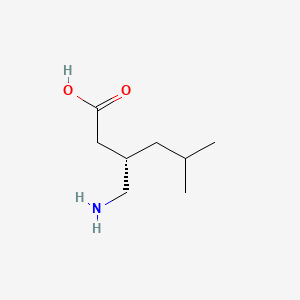
1 2D Structure

Pregabalin

2 Identification
2.1 Computed Descriptors
2.1.1 IUPAC Name
(3S)-3-(aminomethyl)-5-methylhexanoic acid
2.1.2 InChI
InChI=1S/C8H17NO2/c1-6(2)3-7(5-9)4-8(10)11/h6-7H,3-5,9H2,1-2H3,(H,10,11)/t7-/m0/s1
2.1.3 InChI Key
AYXYPKUFHZROOJ-ZETCQYMHSA-N
2.1.4 Canonical SMILES
CC(C)CC(CC(=O)O)CN
2.1.5 Isomeric SMILES
CC(C)C[C@@H](CC(=O)O)CN
2.2 Other Identifiers
2.2.1 UNII
55JG375S6M
2.3 Synonyms
2.3.1 MeSH Synonyms

1. (r-)-3-isobutyl Gaba

2. (s)-3-(aminomethyl)-5-methylhexanoic Acid

3. (s+)-3-isobutyl Gaba

4. 1008, Ci

5. 3 Isobutyl Gaba

6. 3-(aminomethyl)-5-methylhexanoic Acid

7. 3-isobutyl Gaba

8. Ci 1008

9. Ci-1008

10. Ci1008

11. Gaba, 3-isobutyl

12. Lyrica

2.3.2 Depositor-Supplied Synonyms

1. 148553-50-8

2. Lyrica

3. (s)-3-(aminomethyl)-5-methylhexanoic Acid

4. 3-isobutyl Gaba

5. (3s)-3-(aminomethyl)-5-methylhexanoic Acid

6. Ci-1008

7. (s)-pregabalin

8. Hexanoic Acid, 3-(aminomethyl)-5-methyl-, (3s)-

9. Vronogabic

10. Ci 1008

11. Pregabalin Mylan

12. Pregabalin Sandoz

13. Pd 144723

14. Pd-144723

15. Pregabalin Zentiva

16. Pregabalin Sandoz Gmbh

17. (s)-3-isobutyl Gaba

18. Chembl1059

19. Chebi:64356

20. (3s)-3-(aminomethyl)-5-methyl-hexanoic Acid

21. 55jg375s6m

22. Ynp-1807

23. Nsc-759256

24. Hexanoic Acid, 3-(aminomethyl)-5-ethyl-, (3s)-

25. (r-)-3-isobutyl Gaba

26. Pregabalin [usan]

27. Hexanoic Acid, 3-(aminomethyl)-5-methyl-, (s)-

28. Pregabalina

29. Pregabaline

30. Nervalin

31. Pregablin

32. Unii-55jg375s6m

33. Hsdb 7530

34. Pregabalin [usan:inn:ban:jan]

35. Ncgc00095186-01

36. Pregabalin- Bio-x

37. Lyrica (tn)

38. Mfcd00917044

39. Lyrica Cr

40. Pregabalin [mi]

41. (s)-3-(aminomethyl)-5-methylhexanoicacid

42. Pregabalin [inn]

43. Pregabalin [jan]

44. Pregabalin [hsdb]

45. Pregabalin [vandf]

46. Pregabalin [mart.]

47. Schembl8227

48. Dsstox_cid_25950

49. Dsstox_rid_81246

50. Pregabalin [usp-rs]

51. Pregabalin [who-dd]

52. Dsstox_gsid_45950

53. Pregabalin (jan/usan/inn)

54. Pregabalin [ema Epar]

55. Pregabalin Mylan Pharma

56. (s)-(+)-4-amino-3-(2-methylpropyl)butanoic Acid

57. Gtpl5484

58. Zinc5152

59. Dea No. 2782

60. Pregabalin, >=97% (nmr)

61. Dtxsid1045950

62. Pregabalin [orange Book]

63. Pregabalin [ep Monograph]

64. Hms3715j16

65. Pregabalin [usp Monograph]

66. Pregabalin 1.0 Mg/ml In Methanol

67. Tox21_111475

68. Bdbm50164279

69. Akos001476611

70. Akos005145504

71. Lyrica;ci-1008;pd-144723

72. Ac-1158

73. Ccg-221247

74. Cs-1247

75. Db00230

76. Ks-5378

77. Nsc 759256

78. (s)-3-aminomethyl-5-methylhexanoic Acid

79. Ncgc00346738-01

80. 121ge001

81. Bp163672

82. Hy-17414

83. (s)-3-aminomethyl-5-methyl-hexanoic Acid

84. Am20080369

85. Cas-148553-50-8

86. P2840

87. En300-92104

88. (3s)-3-(aminomethyl)-5-methyl Hexanoic Acid

89. (s)-(+)-3-aminomethyl-5-methylhexanoic Acid

90. D02716

91. Ab01563007_01

92. 553p508

93. A808784

94. Q412174

95. Sr-01000942257

96. Sr-01000942257-2

97. Pregabalin, Europepharmacopoeia (ep) Reference Standard

98. Z2757554242

99. 1414928-41-8

2.4 Create Date
2005-08-08
3 Chemical and Physical Properties
Molecular Weight 159.23 g/mol
Molecular Formula C8H17NO2
XLogP3-1.6
Hydrogen Bond Donor Count2
Hydrogen Bond Acceptor Count3
Rotatable Bond Count5
Exact Mass159.125928785 g/mol
Monoisotopic Mass159.125928785 g/mol
Topological Polar Surface Area63.3 Ų
Heavy Atom Count11
Formal Charge0
Complexity123
Isotope Atom Count0
Defined Atom Stereocenter Count1
Undefined Atom Stereocenter Count0
Defined Bond Stereocenter Count0
Undefined Bond Stereocenter Count0
Covalently Bonded Unit Count1
4 Drug and Medication Information
4.1 Drug Information
1 of 4  
Drug NameLyrica
PubMed HealthPregabalin (By mouth)
Drug ClassesAnticonvulsant, Neuropathic Pain Agent
Drug LabelPregabalin is described chemically as (S)-3-(aminomethyl)-5-methylhexanoic acid. The molecular formula is C8H17NO2 and the molecular weight is 159.23. The chemical structure of pregabalin is:Pregabalin is a white to off-white, crystalline solid with...
Active IngredientPregabalin
Dosage FormCapsule; Solution
Routeoral; Oral
Strength20mg/ml; 200mg; 25mg; 150mg; 300mg; 75mg; 100mg; 50mg; 225mg
Market StatusPrescription
CompanyPf Prism; Cp Pharms

2 of 4  
Drug NamePregabalin
PubMed HealthPregabalin (By mouth)
Drug ClassesAnticonvulsant, Neuropathic Pain Agent
Drug LabelPregabalin is described chemically as (S)-3-(aminomethyl)-5-methylhexanoic acid. The molecular formula is C8H17NO2 and the molecular weight is 159.23. The chemical structure of pregabalin is:Pregabalin is a white to off-white, crystalline solid with...
Active IngredientPregabalin
Dosage FormCapsule; Solution
Routeoral; Oral
Strength20mg/ml; 200mg; 25mg; 150mg; 300mg; 75mg; 100mg; 50mg; 225mg
Market StatusTentative Approval; Prescription
CompanyMylan Pharms; Apotex; Lupin; Sandoz; Watson Labs; Actavis Elizabeth; Teva Pharms; Wockhardt Usa

3 of 4  
Drug NameLyrica
PubMed HealthPregabalin (By mouth)
Drug ClassesAnticonvulsant, Neuropathic Pain Agent
Drug LabelPregabalin is described chemically as (S)-3-(aminomethyl)-5-methylhexanoic acid. The molecular formula is C8H17NO2 and the molecular weight is 159.23. The chemical structure of pregabalin is:Pregabalin is a white to off-white, crystalline solid with...
Active IngredientPregabalin
Dosage FormCapsule; Solution
Routeoral; Oral
Strength20mg/ml; 200mg; 25mg; 150mg; 300mg; 75mg; 100mg; 50mg; 225mg
Market StatusPrescription
CompanyPf Prism; Cp Pharms

4 of 4  
Drug NamePregabalin
PubMed HealthPregabalin (By mouth)
Drug ClassesAnticonvulsant, Neuropathic Pain Agent
Drug LabelPregabalin is described chemically as (S)-3-(aminomethyl)-5-methylhexanoic acid. The molecular formula is C8H17NO2 and the molecular weight is 159.23. The chemical structure of pregabalin is:Pregabalin is a white to off-white, crystalline solid with...
Active IngredientPregabalin
Dosage FormCapsule; Solution
Routeoral; Oral
Strength20mg/ml; 200mg; 25mg; 150mg; 300mg; 75mg; 100mg; 50mg; 225mg
Market StatusTentative Approval; Prescription
CompanyMylan Pharms; Apotex; Lupin; Sandoz; Watson Labs; Actavis Elizabeth; Teva Pharms; Wockhardt Usa

4.2 Therapeutic Uses

Pregabalin is indicated for management of post-herpetic neuralgia. /Included in US product label/

Thomson/Micromedex. Drug Information for the Health Care Professional. Volume 1, Greenwood Village, CO. 2007., p. 2412


Pregabalin is indicated for management of neuropathic pain associated with diabetic peripheral neuropathy. /Included in US product labe/

Thomson/Micromedex. Drug Information for the Health Care Professional. Volume 1, Greenwood Village, CO. 2007., p. 2412


Pregabalin is indicated as an adjunctive therapy for adult patients with partial onset seizures. /Included in US product label/

Thomson/Micromedex. Drug Information for the Health Care Professional. Volume 1, Greenwood Village, CO. 2007., p. 2412


The U.S. Food and Drug Administration ... has approved Lyrica (pregabalin), the first drug to treat fibromyalgia, a disorder characterized by pain, fatigue and sleep problems.

FDA; FDA News (P07-107). Available from, as of July 31, 2007: https://www.fda.gov/bbs/topics/NEWS/2007/NEW01656.html


4.3 Drug Warning

Known hypersensitivity to pregabalin or any ingredient in the formulation.

McEvoy, G.K. (ed.). American Hospital Formulary Service. AHFS Drug Information. American Society of Health-System Pharmacists, Bethesda, MD. 2007., p. 2247


Because of the possibility of increased seizure frequency, anticonvulsant drugs, including pregabalin, should be withdrawn gradually and dosage reduced slowly over at least 1 week. Abrupt discontinuance of pregabalin has been associated with insomnia, nausea, headache, and diarrhea.

McEvoy, G.K. (ed.). American Hospital Formulary Service. AHFS Drug Information. American Society of Health-System Pharmacists, Bethesda, MD. 2007., p. 2247


In controlled studies, blurred vision, which was reported in 6 or 2% of patients receiving pregabalin or placebo, respectively, resolved in the majority of cases with continued dosing; less than 1% of patients required discontinuance of the drug. In addition, decreased visual acuity was reported in 7 or 5% of patients receiving pregabalin or placebo, respectively, while visual field changes were detected in 13 or 12% of patients receiving the drug or placebo, respectively, and funduscopic changes were observed in 2% of patients receiving pregabalin or placebo. The clinical importance of these ophthalmologic findings has not been elucidated. If visual disturbance persists, further ocular assessment should be considered, while more frequent assessment is recommended in patients who already are monitored for ocular conditions.

McEvoy, G.K. (ed.). American Hospital Formulary Service. AHFS Drug Information. American Society of Health-System Pharmacists, Bethesda, MD. 2007., p. 2247


Weight gain, which was related to dosage and duration of exposure to pregabalin, has been reported in patients receiving pregabalin. Weight gain did not appear to be associated with baseline body mass index (BMI), gender, or age and was not limited to patients with edema.

McEvoy, G.K. (ed.). American Hospital Formulary Service. AHFS Drug Information. American Society of Health-System Pharmacists, Bethesda, MD. 2007., p. 2247


For more Drug Warnings (Complete) data for PREGABALIN (20 total), please visit the HSDB record page.


4.4 Drug Indication

Pregabalin is indicated for the management of neuropathic pain associated with diabetic peripheral neuropathy, postherpetic neuralgia, fibromyalgia, neuropathic pain associated with spinal cord injury, and as adjunctive therapy for the treatment of partial-onset seizures in patients 1 month of age and older.


FDA Label


* Neuropathic pain:

- Lyrica is indicated for the treatment of peripheral and central neuropathic pain in adults.

* Epilepsy :

- Lyrica is indicated as adjunctive therapy in adults with partial seizures with or without secondary generalisation.

* Generalised anxiety disorder:

- Lyrica is indicated for the treatment of generalised anxiety disorder (GAD) in adults.


* Epilepsy :

Pregabalin Mylan Pharma is indicated as adjunctive therapy in adults with partial seizures with or without secondary generalisation.

* Generalised Anxiety Disorder:

Pregabalin Mylan Pharma is indicated for the treatment of Generalised Anxiety Disorder (GAD) in adults.


* Neuropathic pain:

Pregabalin Mylan is indicated for the treatment of peripheral and central neuropathic pain in adults.

* Epilepsy :

Pregabalin Mylan is indicated as adjunctive therapy in adults with partial seizures with or without secondary generalisation.

* Generalised Anxiety Disorder:

Pregabalin Mylan is indicated for the treatment of Generalised Anxiety Disorder (GAD) in adults.


Neuropathic pain

- Pregabalin Pfizer is indicated for the treatment of peripheral and central neuropathic pain in adults.

Epilepsy

- Pregabalin Pfizer is indicated as adjunctive therapy in adults with partial seizures with or without secondary generalisation.

Generalised Anxiety Disorder

- Pregabalin Pfizer is indicated for the treatment of Generalised Anxiety Disorder (GAD) in adults.


* Neuropathic pain:

- Pregabalin Zentiva k. s. is indicated for the treatment of peripheral and central neuropathic pain in adults.

* Epilepsy :

- Pregabalin Zentiva k. s. is indicated as adjunctive therapy in adults with partial seizures with or without secondary generalisation.

* Generalised anxiety disorder:

- Pregabalin Zentiva k. s. is indicated for the treatment of generalised anxiety disorder (GAD) in adults.


Epilepsy

- Pregabalin Accord is indicated as adjunctive therapy in adults with partial seizures with or without secondary generalisation.

Generalised Anxiety Disorder

- Pregabalin Accord is indicated for the treatment of Generalised Anxiety Disorder (GAD) in adults.


* Neuropathic pain:

- Pregabalin Zentiva is indicated for the treatment of peripheral and central neuropathic pain in adults.

* Epilepsy :

- Pregabalin Zentiva is indicated as adjunctive therapy in adults with partial seizures with or without secondary generalisation.

* Generalised anxiety disorder:

- Pregabalin Zentiva is indicated for the treatment of generalised anxiety disorder (GAD) in adults.


* Epilepsy :

Pregabalin Sandoz GmbH is indicated as adjunctive therapy in adults with partial seizures with or without secondary generalisation.

* Generalised Anxiety Disorder:

Pregabalin Sandoz GmbH is indicated for the treatment of Generalised Anxiety Disorder (GAD) in adults.


* Neuropathic pain:

Pregabalin Sandoz is indicated for the treatment of peripheral and central neuropathic pain in adults.

* Epilepsy :

Pregabalin Sandoz is indicated as adjunctive therapy in adults with partial seizures with or without secondary generalisation.

* Generalised Anxiety Disorder:

Pregabalin Sandoz is indicated for the treatment of Generalised Anxiety Disorder (GAD) in adults.


Alleviation of acute anxiety and fear associated with transportation and veterinary visits.


5 Pharmacology and Biochemistry
5.1 Pharmacology

Although the structure of pregabalin is similar to gamma-aminobutyric acid (GABA), it does not bind to GABA receptors. Instead, it binds the alpha2-delta subunit of presynaptic voltage-gated calcium channels in the central nervous system. Pregabalin does not modulate dopamine receptors, serotonin receptors, opiate receptors, sodium channels or cyclooxygenase activity.


5.2 MeSH Pharmacological Classification

Anti-Anxiety Agents

Agents that alleviate ANXIETY, tension, and ANXIETY DISORDERS, promote sedation, and have a calming effect without affecting clarity of consciousness or neurologic conditions. ADRENERGIC BETA-ANTAGONISTS are commonly used in the symptomatic treatment of anxiety but are not included here. (See all compounds classified as Anti-Anxiety Agents.)


Analgesics

Compounds capable of relieving pain without the loss of CONSCIOUSNESS. (See all compounds classified as Analgesics.)


Calcium Channel Blockers

A class of drugs that act by selective inhibition of calcium influx through cellular membranes. (See all compounds classified as Calcium Channel Blockers.)


Anticonvulsants

Drugs used to prevent SEIZURES or reduce their severity. (See all compounds classified as Anticonvulsants.)


5.3 ATC Code

N03AX16


N03AX16


N03AX16


N03AX16


N03AX16


N03AX16


N03AX16


N03AX16


N03AX16


QN03AX16


N03AX16

S76 | LUXPHARMA | Pharmaceuticals Marketed in Luxembourg | Pharmaceuticals marketed in Luxembourg, as published by d'Gesondheetskeess (CNS, la caisse nationale de sante, www.cns.lu), mapped by name to structures using CompTox by R. Singh et al. (in prep.). List downloaded from https://cns.public.lu/en/legislations/textes-coordonnes/liste-med-comm.html. Dataset DOI:10.5281/zenodo.4587355


N - Nervous system

N03 - Antiepileptics

N03A - Antiepileptics

N03AX - Other antiepileptics

N03AX16 - Pregabalin


5.4 Absorption, Distribution and Excretion

Absorption

After oral dosing administered in the fasted state, pregabalin absorption is rapid, and extensive. Pregabalin oral bioavailability is reported to be 90% regardless of the dose. Cmax is attained within 1.5 hours after single or multiple doses, and steady state is attained within 24-48 hours with repeated administration. Both Cmax and AUC appear to be dose proportional. Food decreases the rate of pregabalin absorption and as a result, lowers the Cmax by an estimated 25-30% and increases the Tmax to approximately 3 hours. However, the effect of food does not appear to impact the total absorption of pregabalin in a way that is clinically relevant. As a result, pregabalin can be administered with or without food.


Route of Elimination

Pregabalin is almost exclusively eliminated in the urine. Further, based on preclinical studies, pregabalin does not appear to undergo racemization to the R enantiomer in the body.


Volume of Distribution

After oral administration of pregabalin, the reported apparent volume of distribution is roughly 0.5 L/kg. Although pregabalin is not very lipophilic, it is able to cross the blood brain barrier(BBB). System L transporters facilitate the transport of large amino acids across the BBB and it has been confirmed that pregabalin is a substrate. This information suggests that system L transporters are responsible for pregabalin uptake into the BBB. In rat models, pregabalin has been shown to cross the placenta.


Clearance

In young healthy subjects the mean renal clearance is estimated to be 67.0 to 80.9 mL mL/min. Given pregabalin's lack of plasma protein binding, this clearance rate suggests that renal tubular reabsorption is involved.


Pregabalin is well absorbed after oral administration ...

Physicians Desk Reference 61st ed, Thomson PDR, Montvale, NJ 2007., p. 2539


Following oral administration of pregabalin capsules under fasting conditions, peak plasma concentrations occur within 1.5 hours. Pregabalin oral bioavailability is >/=90% and is independent of dose. Following single- (25 to 300 mg) and multiple-dose (75 to 900 mg/day) administration, maximum plasma concentrations (C max ) and area under the plasma concentration-time curve (AUC) values increase linearly. Following repeated administration, steady state is achieved within 24 to 48 hours. Multiple-dose pharmacokinetics can be predicted from single-dose data.

Physicians Desk Reference 61st ed, Thomson PDR, Montvale, NJ 2007., p. 2539


The rate of pregabalin absorption is decreased when given with food, resulting in a decrease in Cmax of approximately 25% to 30% and an increase in Tmax to approximately 3 hours. However, administration of pregabalin with food has no clinically relevant effect on the total absorption of pregabalin. Therefore, pregabalin can be taken with or without food.

Physicians Desk Reference 61st ed, Thomson PDR, Montvale, NJ 2007., p. 2539


Pregabalin does not bind to plasma proteins. The apparent volume of distribution of pregabalin following oral administration is approximately 0.5 L/kg. Pregabalin is a substrate for system L transporter which is responsible for the transport of large amino acids across the blood brain barrier. Although there are no data in humans, pregabalin has been shown to cross the blood brain barrier in mice, rats, and monkeys. In addition, pregabalin has been shown to cross the placenta in rats and is present in the milk of lactating rats.

Physicians Desk Reference 61st ed, Thomson PDR, Montvale, NJ 2007., p. 2539


For more Absorption, Distribution and Excretion (Complete) data for PREGABALIN (8 total), please visit the HSDB record page.


5.5 Metabolism/Metabolites

Less than 2% of pregabalin is metabolized and it is excreted virtually unchanged in the urine.


Pregabalin undergoes negligible metabolism in humans. Following a dose of radiolabeled pregabalin, approximately 90% of the administered dose was recovered in the urine as unchanged pregabalin. The N-methylated derivative of pregabalin, the major metabolite of pregabalin found in urine, accounted for 0.9% of the dose. In preclinical studies, pregabalin (S-enantiomer) did not undergo racemization to the R-enantiomer in mice, rats, rabbits, or monkeys.

Physicians Desk Reference 61st ed, Thomson PDR, Montvale, NJ 2007., p. 2540


5.6 Biological Half-Life

The elimination half life of pregabalin is 6.3 hours.


Pregabalin is eliminated from the systemic circulation primarily by renal excretion as unchanged drug with a mean elimination half-life of 6.3 hours in subjects with normal renal function.

Physicians Desk Reference 61st ed, Thomson PDR, Montvale, NJ 2007., p. 2540


5.7 Mechanism of Action

Although the mechanism of action has not been fully elucidated, studies involving structurally related drugs suggest that presynaptic binding of pregabalin to voltage-gated calcium channels is key to the antiseizure and antinociceptive effects observed in animal models. By binding presynaptically to the alpha2-delta subunit of voltage-gated calcium channels in the central nervous system, pregabalin modulates the release of several excitatory neurotransmitters including glutamate, substance-P, norepinephrine, and calcitonin gene related peptide. In addition, pregabalin prevents the alpha2-delta subunit from being trafficked from the dorsal root ganglia to the spinal dorsal horn, which may also contribute to the mechanism of action. Although pregabalin is a structural derivative of the inhibitory neurotransmitter gamma-aminobutyric acid (GABA), it does not bind directly to GABA or benzodiazepine receptors.


Pregabalin is an anticonvulsant that is structurally related to the inhibitory CNS neurotransmitter gamma-aminobutyric acid (GABA). Pregabalin also has demonstrated analgesic activity. Although pregabalin was developed as a structural analog of GABA, the drug does not bind directly to GABA-A, GABA-B, or benzodiazepine receptors; does not augment GABA-A responses in cultured neurons; and does not alter brain concentrations of GABA in rats or affect GABA uptake or degradation. However, in cultured neurons, prolonged application of pregabalin increases the density of GABA transporter protein and increases the rate of functional GABA transport.

McEvoy, G.K. (ed.). American Hospital Formulary Service. AHFS Drug Information. American Society of Health-System Pharmacists, Bethesda, MD. 2007., p. 2248


Pregabalin binds with high affinity to the alpha2-delta site (an auxiliary subunit of voltage-gated calcium channels) in CNS tissues. ... In vitro, pregabalin reduces the calcium-dependent release of several neurotransmitters, including glutamate, norepinephrine, and substance P, possibly by modulation of calcium channel function.

McEvoy, G.K. (ed.). American Hospital Formulary Service. AHFS Drug Information. American Society of Health-System Pharmacists, Bethesda, MD. 2007., p. 2248


Pregabalin does not block sodium channels, is not active at opiate receptors, and does not alter cyclooxygenase enzyme activity. It is inactive at serotonin and dopamine receptors and does not inhibit dopamine, serotonin, or noradrenaline reuptake.

Physicians Desk Reference 61st ed, Thomson PDR, Montvale, NJ 2007., p. 2539


Pregabalin is a potent ligand for the alpha-2-delta subunit of voltage-gated calcium channels in the central nervous system that exhibits potent anticonvulsant, analgesic, and anxiolytic activity in a range of animal models. ... Potent binding to the alpha-2-delta site reduces depolarization-induced calcium influx with a consequential modulation in excitatory neurotransmitter release. Pregabalin has no demonstrated effects on GABAergic mechanisms. ...

PMID:15315511 Ben-Menachem E; Epilepsia 45 Suppl 6: 13-8 (2004)


For more Mechanism of Action (Complete) data for PREGABALIN (6 total), please visit the HSDB record page.


DRUG PRODUCT COMPOSITIONS

Do you need Business Intel? Ask us

DOSAGE - TABLET, EXTENDED RELEASE;ORAL - 165M...DOSAGE - TABLET, EXTENDED RELEASE;ORAL - 165MG

USFDA APPLICATION NUMBER - 209501

read-more

DOSAGE - TABLET, EXTENDED RELEASE;ORAL - 330M...DOSAGE - TABLET, EXTENDED RELEASE;ORAL - 330MG

USFDA APPLICATION NUMBER - 209501

read-more

DOSAGE - TABLET, EXTENDED RELEASE;ORAL - 82.5...DOSAGE - TABLET, EXTENDED RELEASE;ORAL - 82.5MG

USFDA APPLICATION NUMBER - 209501

read-more

DOSAGE - CAPSULE;ORAL - 100MG

USFDA APPLICATION NUMBER - 21446

read-more

DOSAGE - CAPSULE;ORAL - 150MG

USFDA APPLICATION NUMBER - 21446

read-more

DOSAGE - CAPSULE;ORAL - 200MG

USFDA APPLICATION NUMBER - 21446

read-more

DOSAGE - CAPSULE;ORAL - 225MG

USFDA APPLICATION NUMBER - 21446

read-more

DOSAGE - CAPSULE;ORAL - 25MG

USFDA APPLICATION NUMBER - 21446

read-more

DOSAGE - CAPSULE;ORAL - 300MG

USFDA APPLICATION NUMBER - 21446

read-more

DOSAGE - CAPSULE;ORAL - 50MG

USFDA APPLICATION NUMBER - 21446

read-more

DOSAGE - CAPSULE;ORAL - 75MG

USFDA APPLICATION NUMBER - 21446

read-more

Related Excipient Companies

Upload your portfolio for free, ask us

Excipients by Applications

Click here to find the perfect excipient manufacturers by their capabilities

Fillers, Diluents & Binders

read-more
read-more

Granulation

read-more
read-more

Direct Compression

read-more
read-more

Taste Masking

read-more
read-more

Empty Capsules

read-more
read-more

Coating Systems & Additives

read-more
read-more

Lubricants & Glidants

read-more
read-more

Co-Processed Excipients

read-more
read-more

Film Formers & Plasticizers

read-more
read-more

Topical

read-more
read-more

Disintegrants & Superdisintegrants

read-more
read-more

Parenteral

read-more
read-more

Chewable & Orodispersible Aids

read-more
read-more

Thickeners and Stabilizers

read-more
read-more

API Stability Enhancers

read-more
read-more

Solubilizers

read-more
read-more

Controlled & Modified Release

read-more
read-more

Emulsifying Agents

read-more
read-more

Surfactant & Foaming Agents

read-more
read-more

Digital Content read-more

Create Content with PharmaCompass, ask us

DATA COMPILATION #PharmaFlow

read-more
read-more

WEEKLY NEWS RECAP #Phispers

read-more
read-more
Data integrity concerns at Sun’s Halol plant; Merck’s Ebola vaccine bags FDA nod
This week, Phispers brings you news on Merck’s vaccine for the deadly Ebola virus disease (EVD) — Ervebo — as it bagged FDA approval. The US agency has warned against the use of opioids and certain other drugs in combination with popular nervous system drugs — such as Lyrica and Neurontin. In Germany, the police raided several doctors and pharmacists for allegedly taking cash from a pharma company in return for prescribing its cancer drugs. Trump administration released drafts of two policy documents that would facilitate import of cheaper drugs from other countries, including Canada. After getting a clearance from market regulators in the US and Britain for its US$ 4.3 billion takeover of Spark Therapeutics, Roche struck a deal with Sarepta to bag ex-US rights to its investigational gene therapy to treat Duchenne muscular dystrophy (DMD). And Sun Pharmaceutical got issued a Form 483 after a nine-day inspection of its Halol plant earlier this month which revealed data-integrity concerns. Data-integrity concerns emerge at Sun Pharma’s Halol facility   In June 2018, Indian drug major Sun Pharmaceutical Industries Limited had received an establishment inspection report (EIR) from the FDA for its Halol plant, situated in the state of Gujarat in India. The report paved the way for fresh approvals for its products in the United States, and ended a multi-year struggle created by a December 2015 FDA warning letter. The EIR resulted in the closure of the 2015 inspection and confirmed that issues raised in the December 2015 warning letter had been addressed. This came as a boon for Sun, for whom the US has always been a key market for expansion. But the company’s good run seems short-lived. Earlier this month, a nine-day inspection of Halol’s finished pharmaceutical manufacturing operations revealed data-integrity concerns and also questioned the compliance of drug products produced at the site with established quality standards. The Form 483 issued by the FDA following the inspection highlighted that Sun “failed to establish and implement controls which ensure data integrity” in the use of the environmental monitoring computerized system used in its microbiology laboratory for all samples including those that are used to establish a sterile manufacturing environment. The FDA investigators found a range of deficiencies in the system and highlighted that all users of the computer system had the ability to delete information to be printed on sample labels. The FDA also had repeat observations from previous inspections, such as instructions a microbiology analyst must follow during the sampling process of critical operations. In the case of Sun’s Halol plant, the instructions lacked sufficient details. This raised doubts that the sampling process was sufficiently robust and could detect potential microbiological contaminants, a critical requirement for sterile manufacturing operations. During a walkthrough of the facility, the FDA investigators also raised data integrity concerns in raw material dispensing as container labels related to a raw material dispensed for tablet manufacturing were completed by an employee ahead of time. In addition, the employee (documented as the dispenser) did not dispense the raw material and was simply the verifier of the operation. As is common with other FDA inspection observations, the source of out-of-specification (OOS) test results were not determined and manufactured batches were released to market. Merck wins FDA approval for Ebola vaccine   Last week, the US Food and Drug Administration (FDA) approved drugmaker Merck & Co’s Ebola vaccine Ervebo. This is the first FDA-authorized vaccine against the deadly virus. Though cases of the Ebola virus disease (EVD) are extremely rare in the US, the FDA nod is a big win for Merck, which is known as MSD outside the United States and Canada. Last month, Merck had received approval from the European Commission to market Ervebo. Anna Abram, FDA Deputy Commissioner for Policy, Legislation, and International Affairs termed Ervebo’s approval as “an important step” in FDA’s efforts to fight Ebola in close coordination with the US Department of Health and Human Services and the World Health Organization (WHO). The vaccine, which is administered as a single-dose injection, will help prevent EVD caused by Zaire ebolavirus in patients aged 18 years and older, the regulator said in a statement. The duration of protection conferred by Ervebo is unknown, and the vaccine also does not protect against other species of Ebola virus or Marburg virus. During 2014 to 2016, Ervebo was used by the WHO and Democratic Republic of the Congo as an investigational vaccine to help reduce EVD outbreaks in few West African countries. The Ebola virus, which causes hemorrhagic fever and spreads from person to person through direct contact with body fluids, has killed more than 2,100 people in Congo since the middle of the year, making it the second-largest Ebola outbreak in history. Trump administration unveils draft policy to import drugs from other nations   Last week, Trump administration released two highly anticipated policy documents that would facilitate the importation of cheaper drugs from abroad. However, the policies represent early first steps towards that goal. The drafts create two pathways for importation. One would let states, drug wholesalers, or pharmacies apply to import certain drugs from Canada, pending a sign-off from the Department of Health and Human Services (HHS). The second would let drugmakers import their own products sold in other countries. Both must still undergo a formal regulatory review, a process that can take months or even longer. But the administration insists it is moving as fast as the law permits. HHS Secretary Alex Azar, who had earlier expressed concerns over the policy, now insists drug importation can be done safely. “We will not take steps that would put patients, or our drug supply, at risk,” he said. The policy move is being seen as a last-ditch bid by the Trump administration, which has had to abandoned most of its other big ideas to lower drug prices. Some ideas of the administration have also been struck down in court. The idea is highly controversial and drugmakers, wholesalers, and pharmacist groups have spoken against it when it was first floated in July, saying it would put American patients at risk. Former FDA commissioner Scott Gottlieb took to Twitter to castigate the policy without making any direct reference to it. In his tweet, he wrote: “Our closed drug system doesn’t allow imports of unapproved foreign drugs for key historical reasons. We should not open up a side channel for foreign drugs.” After FTC, CMA nod for acquiring Spark, Roche strikes deal with Sarepta   Last week, Swiss drugmaker Roche said it plans to complete its US$ 4.3 billion takeover of US-based gene therapy specialist Spark Therapeutics after the Federal Trade Commission (FTC) in the US and Britain’s Competition and Markets Authority (CMA) approved the deal without demanding any sale of assets. Roche is buying Spark to expand in gene therapy and boost its hemophilia A portfolio. Following completion of the merger, Spark will become a wholly owned subsidiary of Roche. Roche’s existing drug Hemlibra will surpass US$ 1 billion sales in 2019. The regulatory authorities had feared Roche might sabotage Spark’s hemophilia program to benefit Hemlibra, but later ruled that the deal would not hurt competition in hemophilia A treatment. Hemophilia A, where patients lack a protein needed for blood clotting, has traditionally been one of the most expensive treatment areas, with traditional treatments running into millions of dollars annually. Roche is upbeat on gene therapy. Immediately after the decision on Spark, Roche announced it is paying US$ 1.15 billion upfront for the ex-US rights to Sarepta Therapeutics’ investigational gene therapy to treat Duchenne muscular dystrophy (DMD) — SRP-9001.  Roche will pay US$ 750 million in cash and US$ 400 million in equity upfront for the ex-US rights to SRP-9001 “This deal should increase confidence in Sarepta’s entire DMD gene therapy program, remove any financing overhang, and allow Sarepta to retain control and flexibility,” Cantor Fitzgerald analyst Alethia Young said in a note. DMD is a rare degenerative neuromuscular disorder, which affects about one in 3,500 to 5,000 male births worldwide, causes severe progressive muscle loss and premature death. FDA warns of breathing risks with commonly used nerve pain medicines   The FDA has warned that popular nervous system medications — known generically as gabapentin and pregabalin — can cause dangerous breathing problems when combined with opioids and certain other drugs. The agency said it received nearly 50 reports of breathing problems linked to gabapentin and pregabalin between 2012 and 2017, including 12 deaths. Drugmakers are required to report such problems to the FDA, though it is voluntary for doctors and patients to do so. The FDA said it will add new warnings to the packagings for Neurontin, Lyrica and generic versions of these medications, which are used to treat seizures, nerve pain, restless leg syndrome and other conditions. The new labels will warn doctors against prescribing the drugs with other medications that can slow breathing, including opioid painkillers. The breathing risks also apply to elderly patients and those with existing lung problems. Poison control centers have been receiving an increased number of calls involving the nerve drugs, which are often abused in combination with opioids, cocaine and marijuana. While doctors, hospitals and other healthcare providers have scaled back their use of opioids amid the opioid epidemic in the US, the number of physicians prescribing gabapentin and pregabalin has increased, and so has the misuse of these medications. Though the nerve drugs are not FDA-approved for conventional muscle and joint pain, doctors frequently prescribe them for those uses and other uses such as for the treatment of migraines and psychiatric conditions. Police raid doctors, pharmacists in Germany over cash for prescription fraud   Germany saw the largest raid of its kind last week when hundreds of police officers searched the offices of doctors and pharmacists, suspected to be fraudsters who were taking cash from a pharma company named ZytoService in return for prescribing its cancer drugs. Forty-seven properties were searched in the states of Hamburg, Schleswig-Holstein and Lower Saxony and 420 police officers and six state prosecutors took part in the raid. Investigators say 14 people — nine doctors, three pharmacists and two pharmaceutical company managers — had allegedly set up an illegal business model that involved kickback payments of more than US$ 557,000 (€500,000), as well as bribes in the form of loans that did not require repayment and the use of luxury cars. No arrest warrants have been issued so far. According to research undertaken by Die Zeit newspaper and the public broadcaster ARD, ZytoService bribed doctors to issue prescriptions for their infusions, causing significant losses for health insurers. ZytoService is a market leader for cancer drugs. As a result of this fraud, TK, one of Germany’s largest public health insurers, is reported to have lost US$ 9.5 million (€8.6 million) since 2017 through the prescriptions. Cancer treatment can cost up to US$ 110,957 (€100,000) in Germany, and doctors choose which specialist pharmacy they issue prescriptions for.  

Impressions: 3291

https://www.pharmacompass.com/radio-compass-phisper/data-integrity-concerns-at-sun-s-halol-plant-merck-s-ebola-vaccine-bags-fda-nod

#Phispers by PHARMACOMPASS
26 Dec 2019

NEWS #PharmaBuzz

read-more
read-more

Global Sales Information

Do you need Business Intel? Ask us

Market Place

Do you need sourcing support? Ask us

Patents & EXCLUSIVITIES

Check the patents & exclusivity for this product

REF. STANDARDS & IMPURITIES

Upload your portfolio for free, ask us

ANALYTICAL

Upload your methods for free, ask us

ABOUT THIS PAGE

Looking for 148553-50-8 / Pregabalin API manufacturers, exporters & distributors?

Pregabalin manufacturers, exporters & distributors 1

46

PharmaCompass offers a list of Pregabalin API manufacturers, exporters & distributors, which can be sorted by GMP, USDMF, JDMF, KDMF, CEP (COS), WC, and more, enabling you to easily find the right Pregabalin manufacturer or Pregabalin supplier for your needs.

Send us enquiries for free, and we will assist you in establishing a direct connection with your preferred Pregabalin manufacturer or Pregabalin supplier.

API | Excipient name

Pregabalin

Synonyms

148553-50-8, Lyrica, (s)-3-(aminomethyl)-5-methylhexanoic acid, 3-isobutyl gaba, (3s)-3-(aminomethyl)-5-methylhexanoic acid, Ci-1008

Cas Number

148553-50-8

Unique Ingredient Identifier (UNII)

55JG375S6M

About Pregabalin

A gamma-aminobutyric acid (GABA) derivative that functions as a CALCIUM CHANNEL BLOCKER and is used as an ANTICONVULSANT as well as an ANTI-ANXIETY AGENT. It is also used as an ANALGESIC in the treatment of NEUROPATHIC PAIN and FIBROMYALGIA.

(3S)-3-(aminomethyl)-5-methylhexanoic acid Manufacturers

A (3S)-3-(aminomethyl)-5-methylhexanoic acid manufacturer is defined as any person or entity involved in the manufacture, preparation, processing, compounding or propagation of (3S)-3-(aminomethyl)-5-methylhexanoic acid, including repackagers and relabelers. The FDA regulates (3S)-3-(aminomethyl)-5-methylhexanoic acid manufacturers to ensure that their products comply with relevant laws and regulations and are safe and effective to use. (3S)-3-(aminomethyl)-5-methylhexanoic acid API Manufacturers are required to adhere to Good Manufacturing Practices (GMP) to ensure that their products are consistently manufactured to meet established quality criteria.

click here to find a list of (3S)-3-(aminomethyl)-5-methylhexanoic acid manufacturers with USDMF, JDMF, KDMF, CEP, GMP, and COA related information on PhamaCompass.

(3S)-3-(aminomethyl)-5-methylhexanoic acid Suppliers

A (3S)-3-(aminomethyl)-5-methylhexanoic acid supplier is an individual or a company that provides (3S)-3-(aminomethyl)-5-methylhexanoic acid active pharmaceutical ingredient (API) or (3S)-3-(aminomethyl)-5-methylhexanoic acid finished formulations upon request. The (3S)-3-(aminomethyl)-5-methylhexanoic acid suppliers may include (3S)-3-(aminomethyl)-5-methylhexanoic acid API manufacturers, exporters, distributors and traders.

click here to find a list of (3S)-3-(aminomethyl)-5-methylhexanoic acid suppliers with USDMF, JDMF, KDMF, CEP, GMP, and COA related information on PharmaCompass.

(3S)-3-(aminomethyl)-5-methylhexanoic acid USDMF

A (3S)-3-(aminomethyl)-5-methylhexanoic acid DMF (Drug Master File) is a document detailing the whole manufacturing process of (3S)-3-(aminomethyl)-5-methylhexanoic acid active pharmaceutical ingredient (API) in detail. Different forms of (3S)-3-(aminomethyl)-5-methylhexanoic acid DMFs exist exist since differing nations have different regulations, such as (3S)-3-(aminomethyl)-5-methylhexanoic acid USDMF, ASMF (EDMF), JDMF, CDMF, etc.

A (3S)-3-(aminomethyl)-5-methylhexanoic acid DMF submitted to regulatory agencies in the US is known as a USDMF. (3S)-3-(aminomethyl)-5-methylhexanoic acid USDMF includes data on (3S)-3-(aminomethyl)-5-methylhexanoic acid's chemical properties, information on the facilities and procedures used, and details about packaging and storage. The (3S)-3-(aminomethyl)-5-methylhexanoic acid USDMF is kept confidential to protect the manufacturer’s intellectual property.

click here to find a list of (3S)-3-(aminomethyl)-5-methylhexanoic acid suppliers with USDMF on PharmaCompass.

(3S)-3-(aminomethyl)-5-methylhexanoic acid JDMF

The Pharmaceuticals and Medical Devices Agency (PMDA) established the Japan Drug Master File (JDMF), also known as the Master File (MF), to permit Japanese and foreign manufacturers of drug substances, intermediates, excipients, raw materials, and packaging materials (‘Products’) to voluntarily register confidential information about the production and management of their products in Japan.

The (3S)-3-(aminomethyl)-5-methylhexanoic acid Drug Master File in Japan ((3S)-3-(aminomethyl)-5-methylhexanoic acid JDMF) empowers (3S)-3-(aminomethyl)-5-methylhexanoic acid API manufacturers to present comprehensive information (e.g., production methods, data, etc.) to the review authority, i.e., PMDA (Pharmaceuticals & Medical Devices Agency).

PMDA reviews the (3S)-3-(aminomethyl)-5-methylhexanoic acid JDMF during the approval evaluation for pharmaceutical products. At the time of (3S)-3-(aminomethyl)-5-methylhexanoic acid JDMF registration, PMDA checks if the format is accurate, if the necessary items have been included (application), and if data has been attached.

click here to find a list of (3S)-3-(aminomethyl)-5-methylhexanoic acid suppliers with JDMF on PharmaCompass.

(3S)-3-(aminomethyl)-5-methylhexanoic acid KDMF

In Korea, the Ministry of Food and Drug Safety (MFDS) is in charge of regulating pharmaceutical products and services.

Pharmaceutical companies submit a (3S)-3-(aminomethyl)-5-methylhexanoic acid Drug Master File in Korea ((3S)-3-(aminomethyl)-5-methylhexanoic acid KDMF) to the MFDS, which includes comprehensive information about the production, processing, facilities, materials, packaging, and testing of (3S)-3-(aminomethyl)-5-methylhexanoic acid. The MFDS reviews the (3S)-3-(aminomethyl)-5-methylhexanoic acid KDMF as part of the drug registration process and uses the information provided in the (3S)-3-(aminomethyl)-5-methylhexanoic acid KDMF to evaluate the safety and efficacy of the drug.

After submitting a (3S)-3-(aminomethyl)-5-methylhexanoic acid KDMF to the MFDS, the registered manufacturer can provide importers or distributors with the registration number without revealing confidential information to Korean business partners. Applicants seeking to register their (3S)-3-(aminomethyl)-5-methylhexanoic acid API can apply through the Korea Drug Master File (KDMF).

click here to find a list of (3S)-3-(aminomethyl)-5-methylhexanoic acid suppliers with KDMF on PharmaCompass.

(3S)-3-(aminomethyl)-5-methylhexanoic acid CEP

A (3S)-3-(aminomethyl)-5-methylhexanoic acid CEP of the European Pharmacopoeia monograph is often referred to as a (3S)-3-(aminomethyl)-5-methylhexanoic acid Certificate of Suitability (COS). The purpose of a (3S)-3-(aminomethyl)-5-methylhexanoic acid CEP is to show that the European Pharmacopoeia monograph adequately controls the purity of (3S)-3-(aminomethyl)-5-methylhexanoic acid EP produced by a given manufacturer. Suppliers of raw materials can prove the suitability of (3S)-3-(aminomethyl)-5-methylhexanoic acid to their clients by showing that a (3S)-3-(aminomethyl)-5-methylhexanoic acid CEP has been issued for it. The manufacturer submits a (3S)-3-(aminomethyl)-5-methylhexanoic acid CEP (COS) as part of the market authorization procedure, and it takes on the role of a (3S)-3-(aminomethyl)-5-methylhexanoic acid CEP holder for the record. Additionally, the data presented in the (3S)-3-(aminomethyl)-5-methylhexanoic acid CEP (COS) is managed confidentially and offers a centralized system acknowledged by numerous nations, exactly like the (3S)-3-(aminomethyl)-5-methylhexanoic acid DMF.

A (3S)-3-(aminomethyl)-5-methylhexanoic acid CEP (COS) is recognised by all 36 nations that make up the European Pharmacopoeia Convention. (3S)-3-(aminomethyl)-5-methylhexanoic acid CEPs may be accepted in nations that are not members of the Ph. Eur. at the discretion of the authorities there.

click here to find a list of (3S)-3-(aminomethyl)-5-methylhexanoic acid suppliers with CEP (COS) on PharmaCompass.

(3S)-3-(aminomethyl)-5-methylhexanoic acid WC

A (3S)-3-(aminomethyl)-5-methylhexanoic acid written confirmation ((3S)-3-(aminomethyl)-5-methylhexanoic acid WC) is an official document issued by a regulatory agency to a (3S)-3-(aminomethyl)-5-methylhexanoic acid manufacturer, verifying that the manufacturing facility of a (3S)-3-(aminomethyl)-5-methylhexanoic acid active pharmaceutical ingredient (API) adheres to the Good Manufacturing Practices (GMP) regulations of the importing country. When exporting (3S)-3-(aminomethyl)-5-methylhexanoic acid APIs or (3S)-3-(aminomethyl)-5-methylhexanoic acid finished pharmaceutical products to another nation, regulatory agencies frequently require a (3S)-3-(aminomethyl)-5-methylhexanoic acid WC (written confirmation) as part of the regulatory process.

click here to find a list of (3S)-3-(aminomethyl)-5-methylhexanoic acid suppliers with Written Confirmation (WC) on PharmaCompass.

(3S)-3-(aminomethyl)-5-methylhexanoic acid NDC

National Drug Code is a comprehensive database maintained by the FDA that contains information on all drugs marketed in the US. This directory includes information about finished drug products, unfinished drug products, and compounded drug products, including those containing (3S)-3-(aminomethyl)-5-methylhexanoic acid as an active pharmaceutical ingredient (API).

Finished drug products

The FDA updates the NDC directory daily. The NDC numbers for (3S)-3-(aminomethyl)-5-methylhexanoic acid API and other APIs are published in this directory by the FDA.

Unfinished drugs

The NDC unfinished drugs database includes product listing information submitted for all unfinished drugs, such as active pharmaceutical ingredients (APIs), drugs intended for further processing and bulk drug substances for compounding.

Pharmaceutical companies that manufacture (3S)-3-(aminomethyl)-5-methylhexanoic acid as an active pharmaceutical ingredient (API) must furnish the FDA with an updated record of all drugs that they produce, prepare, propagate, compound, or process for commercial distribution in the US at their facilities.

Compounded drug products

The NDC directory also contains data on finished compounded human drug products that contain (3S)-3-(aminomethyl)-5-methylhexanoic acid and are produced by outsourcing facilities. While these outsourcing facilities are not mandated to assign a (3S)-3-(aminomethyl)-5-methylhexanoic acid NDC to their finished compounded human drug products, they may choose to do so.

click here to find a list of (3S)-3-(aminomethyl)-5-methylhexanoic acid suppliers with NDC on PharmaCompass.

(3S)-3-(aminomethyl)-5-methylhexanoic acid GMP

(3S)-3-(aminomethyl)-5-methylhexanoic acid Active pharmaceutical ingredient (API) is produced in GMP-certified manufacturing facility.

GMP stands for Good Manufacturing Practices, which is a system used in the pharmaceutical industry to make sure that goods are regularly produced and monitored in accordance with quality standards. The FDA’s current Good Manufacturing Practices requirements are referred to as cGMP or current GMP which indicates that the company follows the most recent GMP specifications. The World Health Organization (WHO) has its own set of GMP guidelines, called the WHO GMP. Different countries can also set their own guidelines for GMP like China (Chinese GMP) or the EU (EU GMP).

PharmaCompass offers a list of (3S)-3-(aminomethyl)-5-methylhexanoic acid GMP manufacturers, exporters & distributors, which can be sorted by USDMF, JDMF, KDMF, CEP (COS), WC, and more, enabling you to easily find the right (3S)-3-(aminomethyl)-5-methylhexanoic acid GMP manufacturer or (3S)-3-(aminomethyl)-5-methylhexanoic acid GMP API supplier for your needs.

(3S)-3-(aminomethyl)-5-methylhexanoic acid CoA

A (3S)-3-(aminomethyl)-5-methylhexanoic acid CoA (Certificate of Analysis) is a formal document that attests to (3S)-3-(aminomethyl)-5-methylhexanoic acid's compliance with (3S)-3-(aminomethyl)-5-methylhexanoic acid specifications and serves as a tool for batch-level quality control.

(3S)-3-(aminomethyl)-5-methylhexanoic acid CoA mostly includes findings from lab analyses of a specific batch. For each (3S)-3-(aminomethyl)-5-methylhexanoic acid CoA document that a company creates, the USFDA specifies specific requirements, such as supplier information, material identification, transportation data, evidence of conformity and signature data.

(3S)-3-(aminomethyl)-5-methylhexanoic acid may be tested according to a variety of international standards, such as European Pharmacopoeia ((3S)-3-(aminomethyl)-5-methylhexanoic acid EP), (3S)-3-(aminomethyl)-5-methylhexanoic acid JP (Japanese Pharmacopeia) and the US Pharmacopoeia ((3S)-3-(aminomethyl)-5-methylhexanoic acid USP).


Inform the supplier about your product requirements, specifying if you need a product with particular monograph like EP (Ph. Eur.), USP, JP, BP, or any other quality. In addition, clarify whether you need hydrochloride (HCl), anhydricum, base, micronisatum or a specific level of purity. To find reputable suppliers, utilize the filters and select those certified by GMP, FDA, or any other certification as per your requirement.
For your convenience, we have listed synonyms and CAS numbers to help you find the best supplier. The use of synonyms and CAS numbers can be helpful in identifying potential suppliers, but it is crucial to note that they might not always indicate the exact same product. It is important to confirm the product details with the supplier before making a purchase to ensure that it meets your requirements.
Ask Us for Pharmaceutical Supplier and Partner
Ask Us, Find A Supplier / Partner
No Commissions, No Strings Attached, Get Connected for FREE

What are you looking for?

How can we help you?

The request can't be empty

Please read our Privacy Policy carefully

You must agree to the privacy policy

The name can't be empty
The company can't be empty.
The email can't be empty Please enter a valid email.
The mobile can't be empty