




NEWS
- Pharma & Biotech News #PharmaBuzz
- Weekly News Recap #Phispers
- Recent Product Approvals #GreenLight
- Quality Compliance Alerts #Warning!
- All News #Library
DRUGS & DEVELOPMENTS
MARKET INTEL by PharmaCompass

Create content with us, ask us

Phispers On Air
Click & Listen
By PharmaCompass
2026-05-21
Impressions: 1,717 Article || 8 Video || 4 Listen
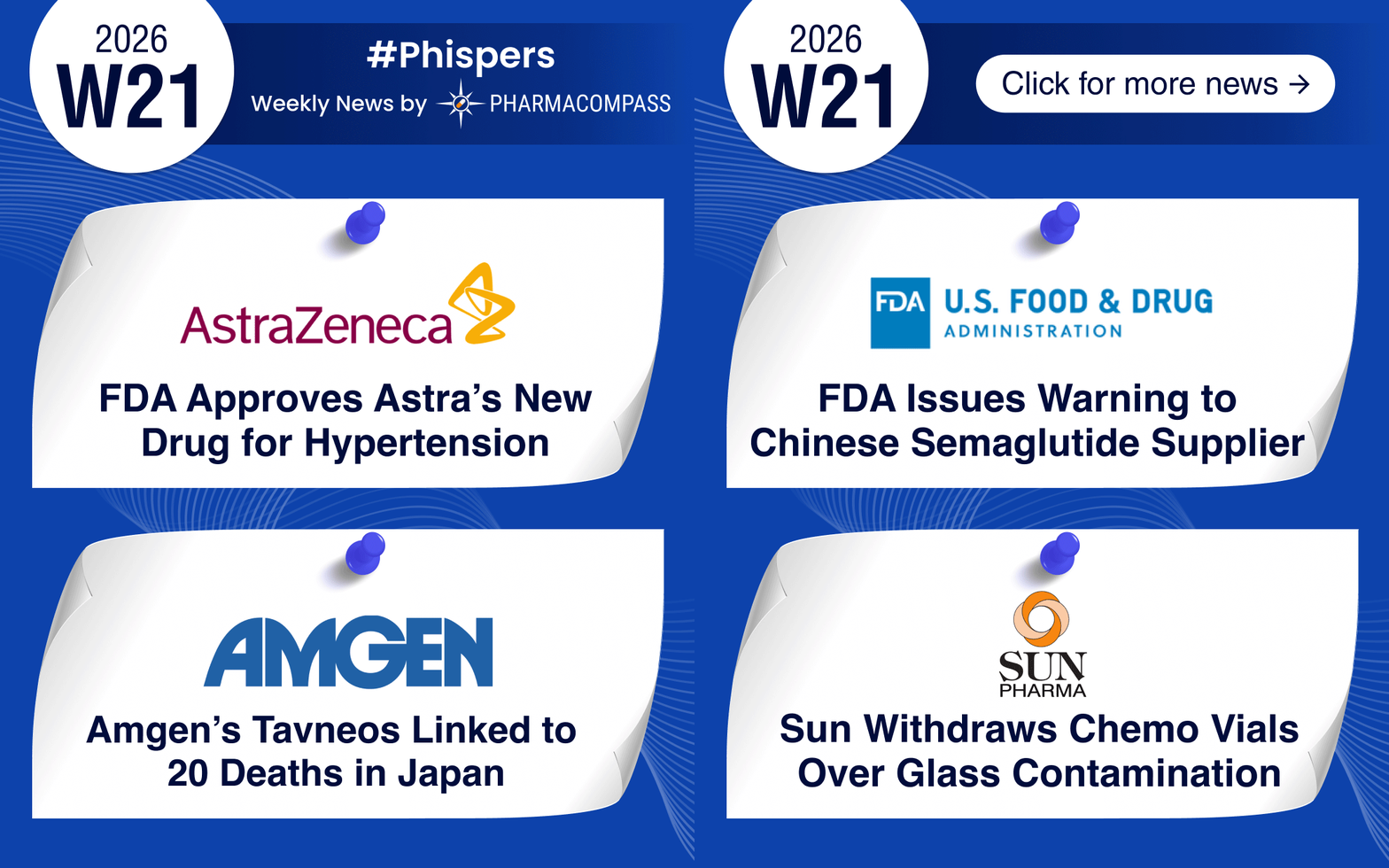
In Phispers this week, the US Food and Drug Administration (FDA) approved AstraZeneca’s first-in-class treatment for hypertension Baxfendy (baxdrostat). The agency also granted two new approvals to AstraZeneca-Daiichi Sankyo’s Enhertu (trastuzumab deruxtecan) for treating early-stage HER2-positive breast cancer.
In regulatory news, FDA issued a warning letter to Harbin Jixianglong Biotech, a Chinese manufacturer of semaglutide, the active pharmaceutical ingredient (API) used in GLP-1 drugs Ozempic and Wegovy, for violating current good manufacturing practices (CGMP) and import rules.
Amgen’s rare disease drug Tavneos has been linked to 20 deaths in Japan, since its launch in 2022. Indian drugmaker Sun Pharmaceutical is recalling 675 vials of the intravenous chemotherapy drug — doxorubicin hydrochloride liposome — from the US market after glass particles were found in some vials.
In news from clinical trials, Merck’s experimental drug sacituzumab tirumotecan, developed in collaboration with China’s Kelun-Biotech, has shown positive results in a late-stage trial in certain patients with advanced or recurrent uterine cancer. UCB’s Bimzelx (bimekizumab) has outperformed AbbVie’s Skyrizi (risankizumab) in a first head-to-head study comparing the two drugs in active psoriatic arthritis. And Regeneron’s fianlimab, in combination with its approved drug Libtayo (cemiplimab), failed to beat Merck’s Keytruda (pembrolizumab) in treating metastatic melanoma (a type of skin cancer).
Meanwhile, Bristol Myers Squibb (BMS) has signed a strategic agreement with Anthropic to deploy Claude Enterprise across its global operations.
FDA approves AstraZeneca’s new treatment for hypertension
FDA has approved AstraZeneca’s Baxfendy (baxdrostat), a first-in-class treatment for hypertension to be used in combination with other antihypertensive medications, to lower blood pressure in adults who are not adequately controlled. The drug works by blocking aldosterone, a hormone that raises blood pressure. Astra has named Baxfendy as one of the key product launches that would help the company achieve its goal of reaching US$ 80 billion in revenue by 2030.
New approvals for Astra-Daiichi’s Enhertu: FDA has granted two new approvals to AstraZeneca and Daiichi Sankyo’s Enhertu (trastuzumab deruxtecan) for treating early-stage HER2-positive breast cancer. The drug has now been approved for use before surgery (to shrink tumors) and after surgery (to reduce risk of recurrence). Enhertu is already approved for treating advanced breast cancer, and these approvals expand its use to earlier stages, potentially improving long-term outcomes for patients.
FDA issues warning letter to Chinese supplier of semaglutide
FDA has issued a warning letter to Harbin Jixianglong Biotech, a Chinese manufacturer of semaglutide, the API used in diabetes drug Ozempic and weight management drug Wegovy, for violating current good manufacturing practices (CGMP) and import rules.
Though Jixianglong was on FDA’s approved “green list” of GLP-1 suppliers, inspectors found it had purchased semaglutide from a factory not on that list, relabeled it as its own, and shipped it to the US. The green list was created by the FDA in 2025 to keep potentially unsafe ingredients out of the booming compounded weight-loss drug market. The batches were eventually recalled.
Sun Pharma recalls chemo vials: Indian drugmaker Sun Pharmaceutical is recalling 675 vials of the intravenous chemotherapy drug doxorubicin hydrochloride liposome from the US market after glass particles were found in some vials. The recalled drug treats AIDS-related cancers, multiple myeloma, and ovarian cancer. The affected batch was manufactured at Sun’s Halol facility in India — a plant with a long history of FDA quality and compliance issues.
TrumpRx platform expands list: The US government has expanded its TrumpRx platform by including 600 generic medicines as part of its efforts to lower drug prices.
Merck’s experimental uterine cancer drug shows benefit in late-stage trial
Merck’s experimental drug sacituzumab tirumotecan, developed in collaboration with China’s Kelun-Biotech, has shown positive results in a late-stage trial in certain patients with advanced or recurrent endometrial cancer, a type of uterine cancer. The treatment, which is an antibody-drug conjugate, helped patients live longer and delayed disease progression compared to standard therapies. As of today, treatment options for advanced endometrial cancer are limited.
Bimzelx beats Skyrizi in psoriatic arthritis trial: UCB’s Bimzelx (bimekizumab) has outperformed AbbVie’s Skyrizi (risankizumab) in the first head-to-head study comparing the two drugs in active psoriatic arthritis (a condition that causes both joint inflammation and skin plaques.) In the late stage study, more patients on Bimzelx achieved the benchmark joint improvement response than those on Skyrizi.
Regeneron’s drug combo fails to beat Keytruda in late-stage skin cancer trial
In a key phase 3 trial, Regeneron’s fianlimab, in combination with its approved drug Libtayo (cemiplimab), failed to beat Merck’s Keytruda (pembrolizumab) in treating metastatic melanoma (a type of skin cancer). The combination failed to significantly delay disease progression compared to Keytruda in patients with advanced melanoma.
Teams up with Parabilis Medicines: Hours after its melanoma trial miss, Regeneron struck a strategic research collaboration with biotech Parabilis Medicines worth up to US$ 2.3 billion. The collaboration will focus on “antibody-helicon conjugates,” a novel class of therapeutics designed to target challenging and historically “undruggable” targets.
Amgen’s rare disease drug Tavneos linked to 20 deaths in Japan
Since its 2022 launch in Japan, around 20 deaths have been reported that are linked to serious liver dysfunction in patients treated with Amgen’s Tavneos (avacopan), according to a safety notice issued by Kissei Pharmaceutical, a company that sells the rare immune-disease drug in the country. Thirteen deaths were attributed to a condition known as vanishing bile duct syndrome. Additionally, at least 22 have developed a potentially fatal liver injury. Kissei is urging doctors not to prescribe the drug to new patients.
BMS taps Anthropic’s Claude for enterprise-wide AI adoption
Bristol Myers Squibb (BMS) has signed a strategic agreement with Anthropic to deploy Claude Enterprise across its entire global operations — covering drug research, clinical trials, manufacturing, and commercial and other medical affairs. BMS is embedding Claude’s agentic capabilities into core workflows. More than 30,000 BMS employees are expected to use Claude to speed up drug discovery and operations.
Plans US$ 1 bn manufacturing plant in Houston: BMS plans to build a US$ 1 billion pharmaceutical manufacturing facility in the Sheldon area of Houston, Texas. The plant would expand BMS’ manufacturing footprint and create hundreds of jobs in the US.
The PharmaCompass Newsletter – Sign Up, Stay Ahead
Feedback, help us to improve. Click here
Image Credit : Phispers Infographic by PharmaCompass license under CC BY 2.0
“ The article is based on the information available in public and which the author believes to be true. The author is not disseminating any information, which the author believes or knows, is confidential or in conflict with the privacy of any person. The views expressed or information supplied through this article is mere opinion and observation of the author. The author does not intend to defame, insult or, cause loss or damage to anyone, in any manner, through this article.”