



NEWS
- Pharma & Biotech News #PharmaBuzz
- Weekly News Recap #Phispers
- Recent Product Approvals #GreenLight
- Quality Compliance Alerts #Warning!
- All News #Library
DRUGS & DEVELOPMENTS
MARKET INTEL by PharmaCompass

Create content with us, ask us

Phispers On Air
Click & Listen
By PharmaCompass
2026-01-01
Impressions: 1,629 Article || 149 Video || 2 Listen
PharmaCompass wishes its readers a very Happy New Year and brings news from the last two weeks in this double-dose edition of Phispers.
US President Donald Trump announced agreements with major drugmakers to lower medicine prices for the Medicaid program and cash-pay patients, with discounts tied to the lowest levels paid by other developed nations.
On December 19, BioMarin agreed to buy rare disease specialist Amicus Therapeutics for US$ 4.8 billion, adding Fabry and Pompe disease drugs to its portfolio. AstraZeneca signed a deal worth up to US$ 2 billion with China-based Jacobio Pharma for an early-stage pan-KRAS cancer drug. Japan’s Shionogi moved to strengthen its rare disease focus with a US$ 2.5 billion acquisition of Tanabe Pharma’s Radicava ALS business. And Sanofi announced the acquisition of US biotech Dynavax Technologies for around US$ 2.2 billion (€ 1.9 billion).
On the regulatory front, the US Food and Drug Administration (FDA) approved a pill version of Novo Nordisk’s Wegovy for weight management, cleared Cytokinetics’ Myqorzo for a rare obstructive heart condition and approved Omeros’ Yartemlea to treat a transplant-associated complication. It also gave a nod to Vanda’s drug for motion sickness in more than 40 years, and expanded Agios’ drug as the first oral treatment for anemia.
And the agency placed a partial clinical hold on Merck and Daiichi Sankyo’s late-stage lung cancer trial due to safety concerns. Separately, Ultragenyx’s drug missed a key trial goal in rare bone disorder.
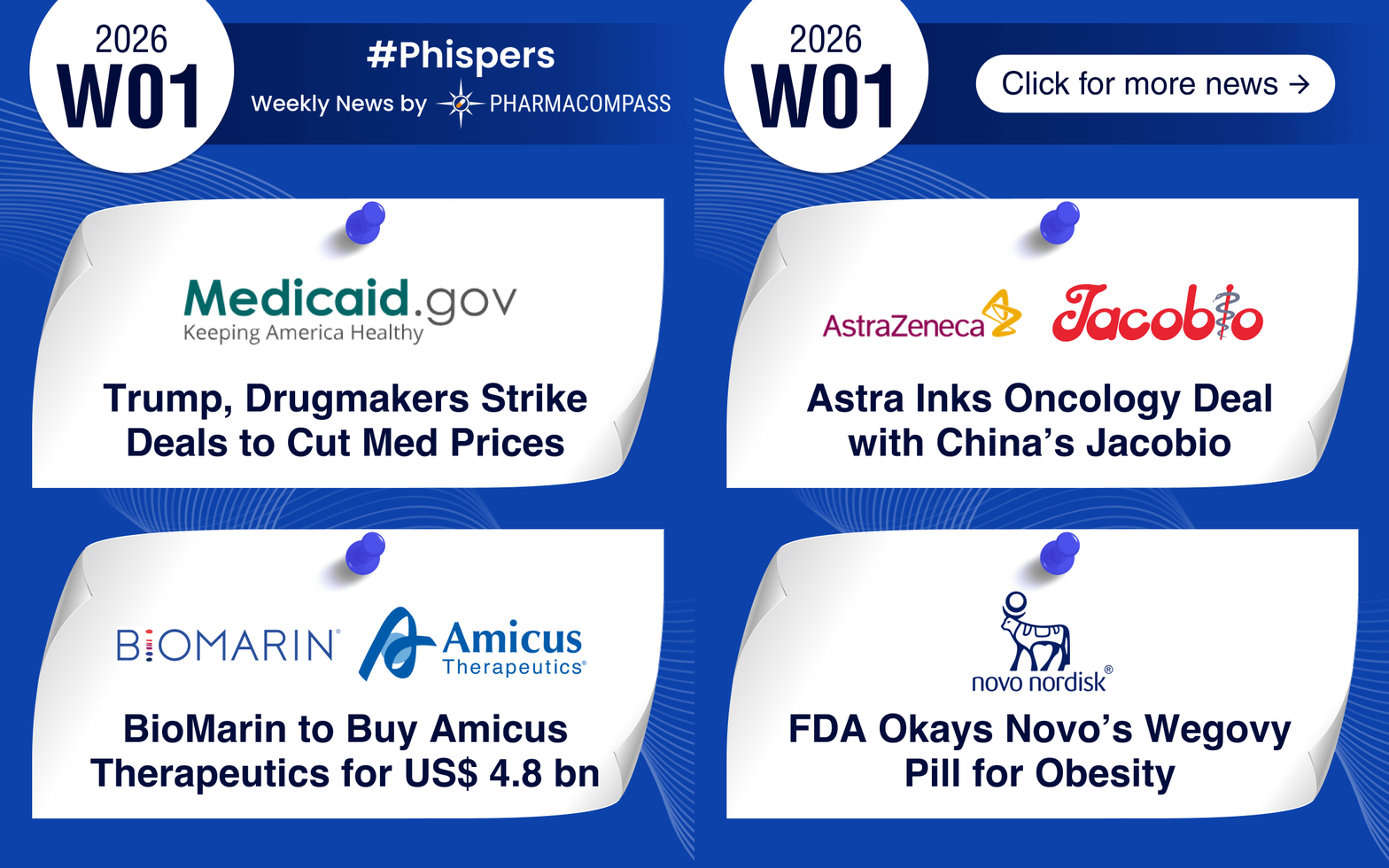
Trump, drugmakers strike deals to cut medicine prices for Medicaid program
US President Donald Trump and nine major drugmakers have announced agreements to lower prescription drug prices for the government’s Medicaid program and for cash payers. These prices will be in line with the lowest prices paid by other developed nations (known as ‘most-favored-nation’ pricing).
Companies that signed the deals with the Trump administration include Bristol Myers Squibb, Gilead Sciences, Merck, Genentech, Novartis, Amgen, Boehringer Ingelheim, Sanofi, and GSK. These companies pledged to invest over US$ 150 billion in the US. However, it was not clear if this included their earlier commitments.
Under the agreements, discounts could reach up to 70 percent of the list prices, and will be offered potentially through the TrumpRx website, expected to be launched this year.
BioMarin to buy Amicus Therapeutics for US$ 4.8 bn in rare disease deal
BioMarin has agreed to acquire Amicus Therapeutics in an all-cash transaction valued at approximately US$ 4.8 billion. This is the largest deal signed by BioMarin in its 28-year history.
The deal adds two approved and fast-growing rare disease medicines to BioMarin’s portfolio: Galafold (migalastat) for Fabry disease and, Pombiliti-Opfolda (cipaglucosidase alfa-atga + miglustat), a combination treatment for Pompe disease. BioMarin will also gain US rights to DMX-200, an experimental kidney disease drug.
Fabry disease is caused by a lack of an enzyme that breaks down fats, causing fat buildup in blood vessels and tissues. Pompe disease involves a buildup of glycogen in cells, leading to muscle weakness and other symptoms.
Astra inks oncology deal with China’s Jacobio: AstraZeneca has signed a deal with China-based Jacobio Pharma to develop an early-stage cancer drug that targets multiple KRAS mutations. Under the agreement, AstraZeneca will pay US$ 100 million upfront and could provide up to about US$ 2 billion more in milestone payments, along with royalties.
Shionogi to buy Tanabe’s ALS business for US$ 2.5 bn: Japanese drugmaker Shionogi has agreed to acquire Tanabe Pharma’s ALS (amyotrophic lateral sclerosis) business for US$ 2.5 billion, including both the oral formulation of Radicava (edaravone) and its intravenous version. As part of the deal, Tanabe Pharma will set up a new company to hold the rights to Radicava (an FDA-approved ALS treatment), which Shionogi will then acquire outright.
Sanofi to buy Dynavax: Sanofi has announced the acquisition of US biotech Dynavax Technologies for around US$ 2.2 billion (€ 1.9 billion). The deal will add an adult hepatitis B vaccine and a promising experimental shingles shot to Sanofi’s portfolio.
FDA okays pill version of Novo’s Wegovy, Cytokinetics med for rare heart condition
Novo Nordisk has got a leg up against its competitors in the fast-growing obesity treatment market with the FDA approving the pill version of Wegovy (semaglutide) for weight management and reduction of cardiovascular risk in overweight/obese patients. The drug can be given at a maintenance dose of up to 25 mg.
Approves Cytokinetics’ Myqorzo for rare obstructive heart condition: FDA has approved Cytokinetics’ oral drug Myqorzo (aficamten) to treat obstructive hypertrophic cardiomyopathy, a rare heart condition in which the heart muscle becomes abnormally thick, making it harder for the heart to pump blood. The disease can cause symptoms such as shortness of breath, chest pain and dizziness. Myqorzo is Cytokinetics’ first FDA-approved product and only the second drug in its class to be approved in the US. The FDA approval includes a boxed warning about the risk of heart failure.
Okays Omeros’ drug to treat transplant associated complication: FDA has approved Omeros’ drug — Yartemlea (narsoplimab-wuug) — for a dangerous transplant complication, known as transplant-associated thrombotic microangiopathy (TA-TMA). This serious complication develops after stem cell transplants.
Clears Agios’ Aqvesme as first oral treatment for anemia: The FDA approved an expanded use of Agios Pharmaceuticals’ drug mitapivat, sold under the brand name Aqvesme, to treat anemia in adults with alpha- or beta-thalassemia. The approval makes Aqvesme the first oral treatment for anemia in both transfusion-dependent and non-transfusion-dependent thalassemia patients.
Gives nod to Vanda’s drug for motion-induced vomiting: Vanda Pharmaceuticals said the FDA has approved its drug Nereus (tradipitant) for the prevention of motion-induced vomiting, marking the first FDA approval for this condition in more than 40 years. Existing options for motion sickness include patches and over-the-counter medicines, but no new treatment had been approved in decades.
Partial hold on Merck-Daiichi’s lung cancer trial: FDA has placed a partial clinical hold on a late-stage trial of ifinatamab deruxtecan (I-DXd), an experimental cancer drug being developed by Merck and Daiichi Sankyo. The decision follows reports of a higher-than-expected number of patient deaths linked to a serious lung condition.
Ultragenyx’s drug misses key trial goal in rare bone disorder
Ultragenyx Pharmaceutical said late-stage trials of its experimental drug setrusumab failed to meet their main goal, causing the company’s shares to plunge more than 43 percent to a record low on the day. The drug was being tested in children and young adults with osteogenesis imperfecta, a rare genetic bone disease that makes bones fragile and prone to fractures. Ultragenyx ran the studies with partner Mereo BioPharma.
The PharmaCompass Newsletter – Sign Up, Stay Ahead
Feedback, help us to improve. Click here
Image Credit : Phispers Infographic by PharmaCompass license under CC BY 2.0
“ The article is based on the information available in public and which the author believes to be true. The author is not disseminating any information, which the author believes or knows, is confidential or in conflict with the privacy of any person. The views expressed or information supplied through this article is mere opinion and observation of the author. The author does not intend to defame, insult or, cause loss or damage to anyone, in any manner, through this article.”