Company profile for Aspen Pharmacare Holdings

PharmaCompass
Related CompaniesRelated Companies

About

South African-based Aspen is a supplier of branded and generic pharmaceuticals in more than 150 countries across the world and of consumer and nutritional products in selected territories. Aspen is represented in South Africa, Australia, Hong Kong, Malaysia, Philippines, Taiwan, Japan, Kenya, Nigeria, Tanzania, Uganda, Ireland, United Arab Emirates, France, Germany, the Netherlands, Mauritius, Brazil, Mexico, Venezuela and the United States of America. Acquisitions announced in 2013 will further extend the Group’s emerging market presence to the Commonwealth of Independent States, comprising Russia and the former Soviet Republics.

CONTACT DETAILS

Click the arrow to open the dropdown
Country
Country
South Africa
Address
Address
Aspen House, Aspen Park 98 Armstrong Avenue La Lucia Ridge, Durban
Telephone
Telephone
+27 315808600
youtube
YouTube
Contact Info
Others

Events

Webinars & Exhibitions

PEGS Boston Summit

PEGS Boston Summit

Not Confirmed

envelop Contact Supplier

PEGS Boston Summit

Post an Enquiry

Meeting

Digital content read-more

Explore the latest content creation from this company

DATA COMPILATION #PharmaFlow

read-more
read-more
CEP Q1 2026 Update: CEP 2.0, EDQM’s new guidelines strengthen ecosystem; Indian firms top list of CEPs issued
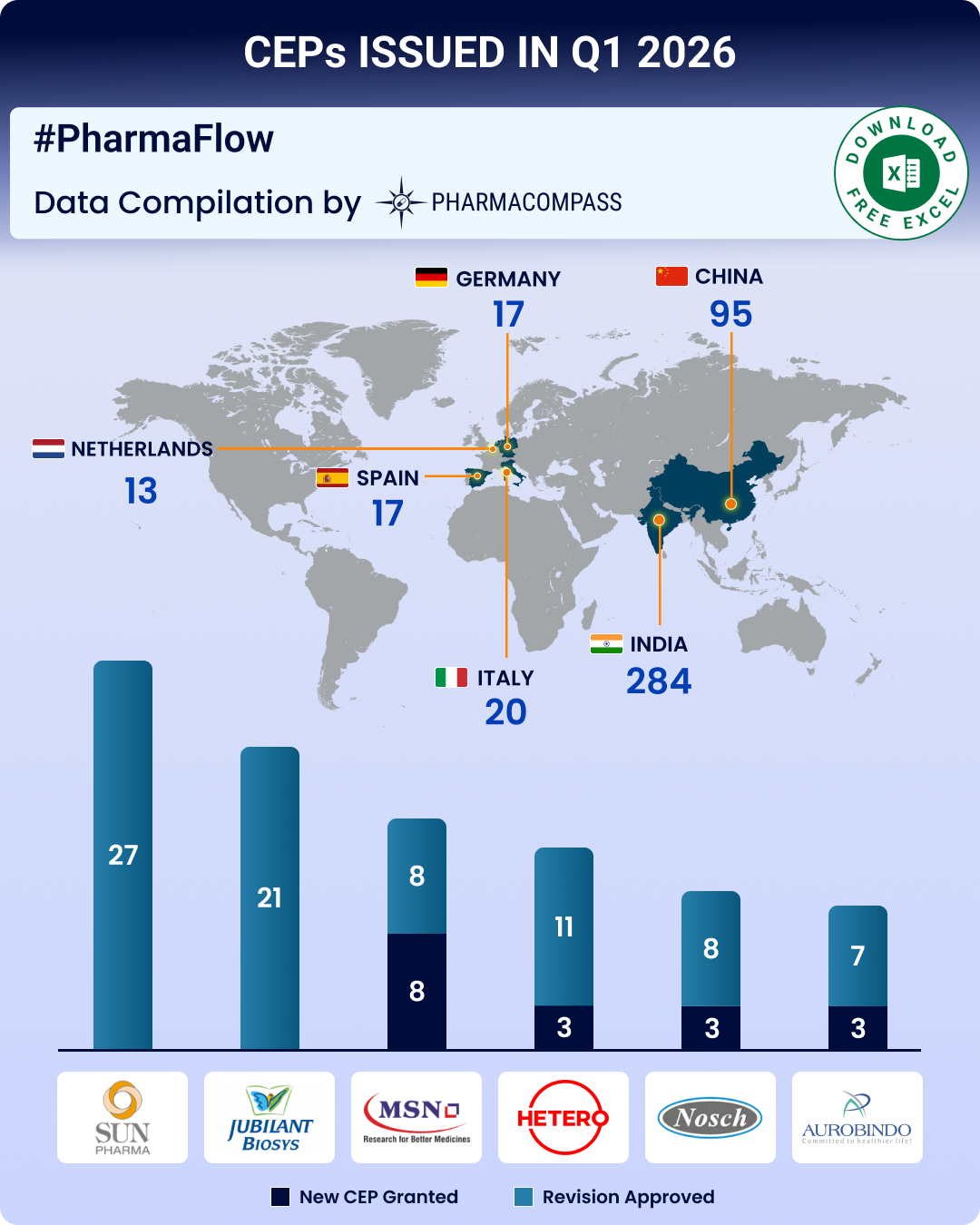
PharmaCompass is introducing a new regulatory update that tracks developments in Certificates of Suitability to the Monographs of the European Pharmacopoeia, referred to as CEPs. These certificates are a critical regulatory instrument in the global pharmaceutical supply chain.Also known as a Certification of Suitability (COS), CEPs are issued by the European Directorate for the Quality of Medicines and HealthCare (EDQM), with or without inspection of the manufacturing site. A CEP must be renewed every five years from its original issue date to remain valid, regardless of any revisions made during the interim period. However, a CEP does not replace Good Manufacturing Practice certification.CEPs are recognized as a trusted reference for API quality, thereby simplifying global registration strategies. Apart from Europe, the CEP system is widely used by many regulatory authorities, including those in Canada, Australia, Brazil, Singapore and South Africa. View CEPs Issued in Q1 2026 (Power BI Dashboard, Free Excel Available)CEP 2.0 enhances regulatory clarity, brings efficiency, global interoperability There are several types of CEPs, depending on the nature of the substance and evaluation. The most common type is the Chemical CEP, which confirms that a chemically synthesized API meets standards for purity and impurity control. Then there are Herbal CEPs for herbal substances and preparations.Another key category is the TSE CEP, which addresses risks associated with transmissible spongiform encephalopathies in animal-derived materials. In addition, there are Combined CEPs that may cover multiple aspects, such as chemical quality, TSE risk, and sterility. However, biological products such as vaccines and blood products fall outside the scope of the CEP framework.In 2023, the CEP system underwent a major transformation with the introduction of CEP 2.0, which marks a shift from a largely document-based system to a more structured, transparent, and digitally aligned model. This makes it easier for companies to manage compliance while improving trust among global regulators.While increasing data and compliance requirements for API manufacturers, CEP 2.0 enables better regulatory clarity, streamlined dossier integration, and stronger global acceptance. Overall, CEP 2.0 is designed to enhance regulatory clarity while making the system more efficient and globally interoperable. View CEPs Issued in Q1 2026 (Power BI Dashboard, Free Excel Available)Indian firms issued maximum CEPs; Sun Pharma and its subsidiaries, Jubilant Biosys top listIndia topped the charts for CEPs issued, both in terms of new CEPs and revisions in the first quarter (Q1) of 2026. Indian companies were issued 81 new CEPs in Q1 2026 (as against 40 in Q1 2025) and 203 revisions (as against 129 in Q1 2025). In comparison, Chinese companies were issued 42 new CEPs in Q1 2026 (against 25 in Q1 2025) and 53 revisions (against 67 in Q1 2025). Italy came a distant third, followed by Germany and Spain.India’s Sun Pharmaceuticals and its subsidiaries topped the list of companies with the maximum number of CEPs issued— while no new CEP was issued, 27 CEPs were revised in Q1 2026. At second place was Jubilant Biosys — 21 CEPs were revised in Q1 2026.In terms of products, the maximum CEPs were issued for amlodipine besylate (a calcium channel blocker used for treating hypertension), followed by sitagliptin phosphate (a type 2 diabetes medicine) and pregabalin (a drug used to treat neuropathic pain, fibromyalgia, seizures, and generalized anxiety disorder). Both amlodipine besylate and sitagliptin phosphate had not been issued new CEPs or revisions in Q1 2025. View CEPs Issued in Q1 2026 (Power BI Dashboard, Free Excel Available)EDQM introduces new guidelines to accelerate CEP assessments The EDQM charges fees for various services related to CEPs that depend on the type of request or regulatory activity involved. In general, fees apply to handling CEP applications, revisions or renewals and for offering technical advice (where applicants seek scientific or regulatory guidance).In March 2026, the EDQM introduced two new guidelines aimed at accelerating CEP assessments. The first is a reliance-based assessment pathway, which allows regulators to leverage prior approvals from trusted authorities, such as those in the EU, UK, Australia, Canada, and the WHO pre-qualification program. The second is a fast-track assessment route designed to expedite reviews in situations such as medicine shortages and to support initiatives like the EU Critical Medicines Act.Timelines have been significantly compressed under these new pathways. Initial evaluations are completed within 46 working days, compared to up to 115 days under the standard procedure. Applicants are given 30 calendar days to respond to queries, after which regulators complete the final assessment within 23 working days.Another important regulatory update relates to electronic submissions. From April 1, 2026, the EDQM will reject non-compliant CEP applications at the point of submission. All applications must include a validated electronic Common Technical Document (eCTD) dossier along with a proper validation report, submitted in line with the updated Common European Submission Portal (CESP) guidelines. Taken together, these developments signal a more rigorous yet efficient CEP ecosystem. View CEPs Issued in Q1 2026 (Power BI Dashboard, Free Excel Available)Our viewThe shift to CEP 2.0 signals a move toward greater transparency, digitalization, and global regulatory alignment. Though enhanced disclosure and stricter e-submission requirements may increase the compliance burden, especially for smaller manufacturers, the long-term gains are expected to be significant. Going forward, companies that invest in data quality and regulatory readiness stand to gain from these changes.

Impressions: 2505

https://www.pharmacompass.com/radio-compass-blog/cep-q1-2026-update-cep-2-0-edqm-s-new-guidelines-strengthen-ecosystem-indian-firms-top-list-of-ceps-issued

#PharmaFlow by PHARMACOMPASS
09 Apr 2026
US drug shortages reduce 16% YoY in Q1 2025; CNS drugs, antimicrobials face highest scarcities
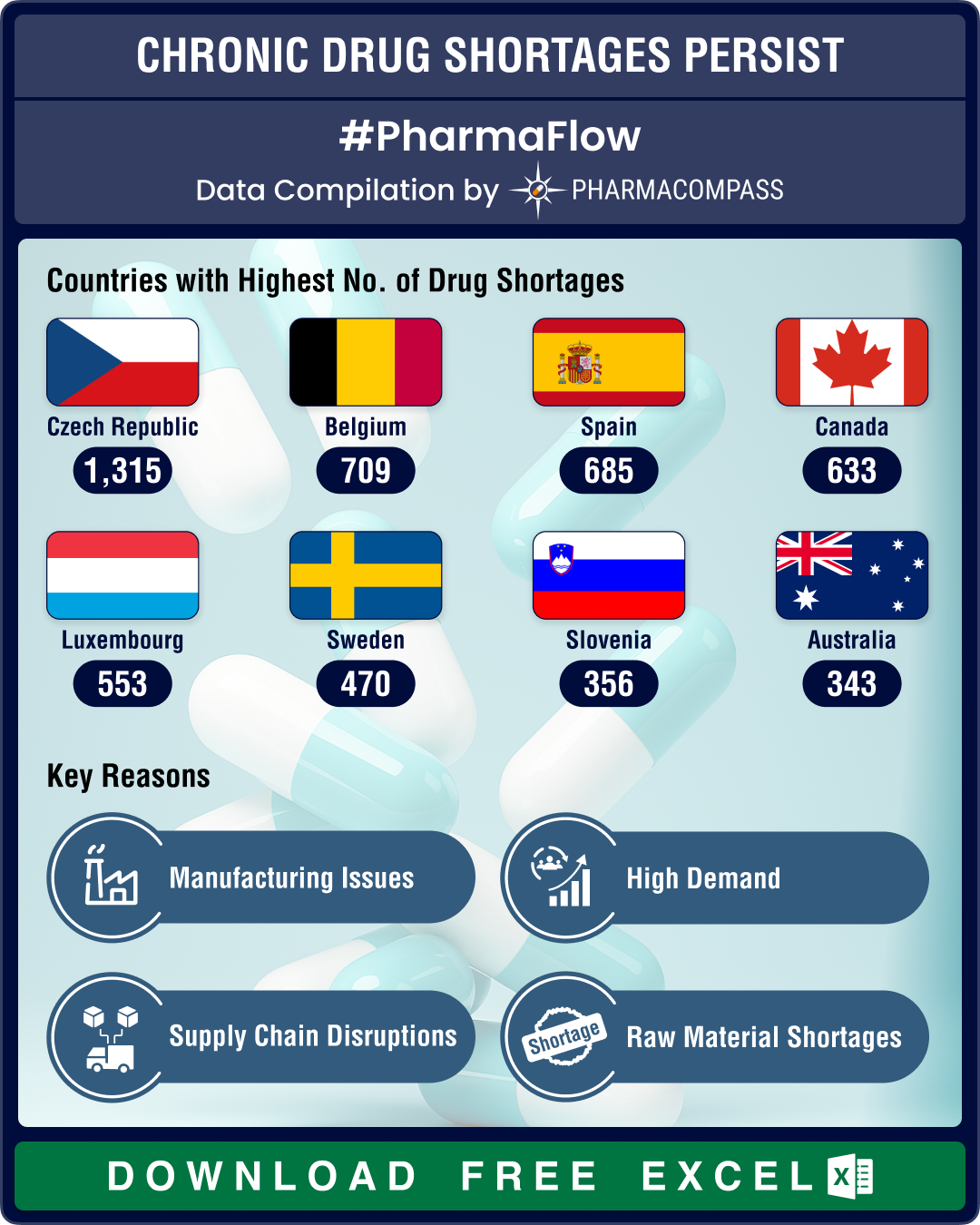
The pharmaceutical industry in the United States continued to grapple with drug shortages during the first quarter (Q1) of 2025. According to the American Society of Health‑System Pharmacists (ASHP), the total number of active shortages stood at 270 as of March 31, 2025 — only slightly below the 277 reported in September 2024, but down 16.4 percent from an all‑time high of 323 reported in Q1 2024.These numbers imply that while dramatic surges in drug shortages may have subsided, underlying vulnerabilities in manufacturing, supply chains, and raw‑material sourcing continue to frustrate efforts towards a durable resolution.A deeper analysis of these drug scarcities reveals that 41 percent of the 270 active shortages first emerged in 2022 or earlier. This implies that many of the current disruptions have become chronic in nature and are exerting pressure on pharmacy operations. View Our Interactive Dashboard on Drug Shortages So Far in 2025 (Free Excel Available)CNS drugs dominate with 49 meds in short supply; antimicrobials face shortage of 39 drugsClass‑specific analysis reveals that central nervous system (CNS) agents remained the most disrupted category, with 49 distinct CNS drugs having faced scarcities during Q1. This group spans anxiolytics (anti-anxiety drugs) such as clonazepam and flurazepam, sedatives like lorazepam and midazolam, and stimulants such as methylphenidate and lisdexamfetamine. These shortages pose two challenges — controlling seizures and managing sedation in acute care settings. After CNS agents, antimicrobials was the second‑largest category, with shortages affecting 39 drugs. Key antibacterial and anti-fungal agents such as cefotaxime sodium powder for injection, clindamycin phosphate, rifampin, and metronidazole find themselves on ASHP’s active‑shortage roster, threatening both routine hospital protocols and emergency sepsis management.Fluids and electrolytes occupied the third spot, with 29 items facing shortage in Q1 2025. Hormone agents, including insulin analogs, ranked fourth with 24 drugs in short supply.Chemotherapy medications rounded out the top five categories, with 23 antineoplastic agents (a broad class of medications used to treat cancer) flagged as actively constrained in Q1 2025. Notable shortages included azacitidine, carboplatin, methotrexate, and streptozocin. View Our Interactive Dashboard on Drug Shortages So Far in 2025 (Free Excel Available) US faces 26 new shortages; Pharmacopeia list warns of 100 vulnerable medicationsThe first quarter saw the emergence of 26 new shortage declarations, emphasizing that even drugs previously deemed reliably sourced can fall into scarcity. The US has been facing a shortage of attention deficit hyperactivity disorder (ADHD) drugs since 2022. The new shortages included ADHD transdermal patch methylphenidate, peginterferon alfa‑2a (Pegasys) used in chronic hepatitis B and C, and bacitracin ophthalmic ointment.The fragility of the pharmaceutical supply chains has been particularly evident in the aftermath of natural disasters. Hurricane Helene’s flooding at Baxter’s Marion, North Carolina, facility deeply affected IV‑solution supply lines. Baxter supplies roughly 60 percent of the US’ IV fluids and the ASHP report listed “hurricane” as the reason behind nine percent of drug shortages, as of January 2025.Regulatory and policy interventions continue to evolve. The US Pharmacopeia’s inaugural Vulnerable Medicines List, launched in 2025, identifies 100 drugs at the highest risk of future shortages, with a particular focus on injectables (comprising 71 percent of the list) and essential hospital care.Antibiotics, medications for pain management and oncology are the other drugs on the list. Although 61 percent of these vulnerable medicines were not in active shortage at the time of listing, their inclusion is intended to galvanize manufacturers and purchasing organizations to bolster inventories.Meanwhile, the Government Accountability Office in the US has called on the Department of Health and Human Services (HHS) to establish a formal coordination mechanism, warning that elimination of the HHS supply‑chain coordinator role in May 2025 risks fragmenting federal response efforts. View Our Interactive Dashboard on Drug Shortages So Far in 2025 (Free Excel Available) Global shortages mirror US patterns; Europe launches monitoring platform Globally, we notice comparable trends. For instance, Europe has rolled out the European Shortages Monitoring Platform (ESMP) this year in order to centralize shortage reporting across member states. Critical‑medicine shortages in the EU — in areas such as oncology, ADHD, and critical care analgesics — mirror US patterns. The European Medicines Agency’s shortage list currently holds 37 human drugs.According to Health Canada’s May 12, 2025 update, its Tier 3 list had 18 drug shortages that are considered to have the greatest impact on Canada’s drug supply and health‑care system. Tier 3 designation is based on medical necessity and minimal availability of alternatives.In hematology and oncology, scarcity of essential drugs like Oncaspar for acute lymphoblastic leukemia, idarubicin and lomustine for leukemias and brain tumors, anagrelide for thrombocythemia, and preservative‑free methotrexate for various malignancies underscore the impact these drug shortages can have on treatment. View Our Interactive Dashboard on Drug Shortages So Far in 2025 (Free Excel Available) Our viewThe global pharma supply chain is dealing with a fresh wave of uncertainties, especially with the likelihood of tariffs on drugs imported into the US. Analysts warn that the proposed pharmaceutical tariffs could exacerbate supply issues.Over 50 percent of drugs used in the US are manufactured abroad. Generic sterile injectable drugs — like chemotherapy medications and IV saline — are particularly vulnerable due to their complex manufacturing processes and low profit margins. Generic drugs (which account for 90 percent of prescriptions filled in the US) could face increased pressure, as many rely on raw materials from China and India. This could result in more severe drug shortages in the future. 

Impressions: 5294

https://www.pharmacompass.com/radio-compass-blog/us-drug-shortages-reduce-16-yoy-in-q1-2025-cns-drugs-antimicrobials-face-highest-scarcities

#PharmaFlow by PHARMACOMPASS
22 May 2025

NEWS #PharmaBuzz

read-more
read-more

https://africacdc.org/news-item/africa-cdc-and-aspen-advance-long-term-vaccine-supply-partnership-for-africa/

PRESS RELEASE
13 May 2026

https://www.aspenpharma.com/proposed-divestment-of-aspen-asia-pacific-excluding-china-for-r26-5-billion/

PRESS RELEASE
29 Dec 2025

https://www.aspenpharma.com/stephen-saad-aabla-2025/

PRESS RELEASE
13 Nov 2025

https://www.aspenpharma.com/aspen-wdd-2025/

PRESS RELEASE
13 Nov 2025

https://www.reuters.com/sustainability/boards-policy-regulation/aspen-wins-approval-market-lillys-mounjaro-weight-loss-south-africa-2025-10-13/

REUTERS
13 Oct 2025

https://www.reuters.com/business/healthcare-pharmaceuticals/south-africas-aspen-aims-profit-turnaround-with-insulin-glp-1-drugs-2025-09-03/

REUTERS
04 Sep 2025

Inspections and registrations

Check the inspections & registration from this company
Aspen Pharmacare Holdings

ABOUT THIS PAGE

Ask Us for Pharmaceutical Supplier and Partner
Ask Us, Find A Supplier / Partner
No Commissions, No Strings Attached, Get Connected for FREE

What are you looking for?

How can we help you?

The request can't be empty

Please read our Privacy Policy carefully

You must agree to the privacy policy

The name can't be empty
The company can't be empty.
The email can't be empty Please enter a valid email.
The mobile can't be empty