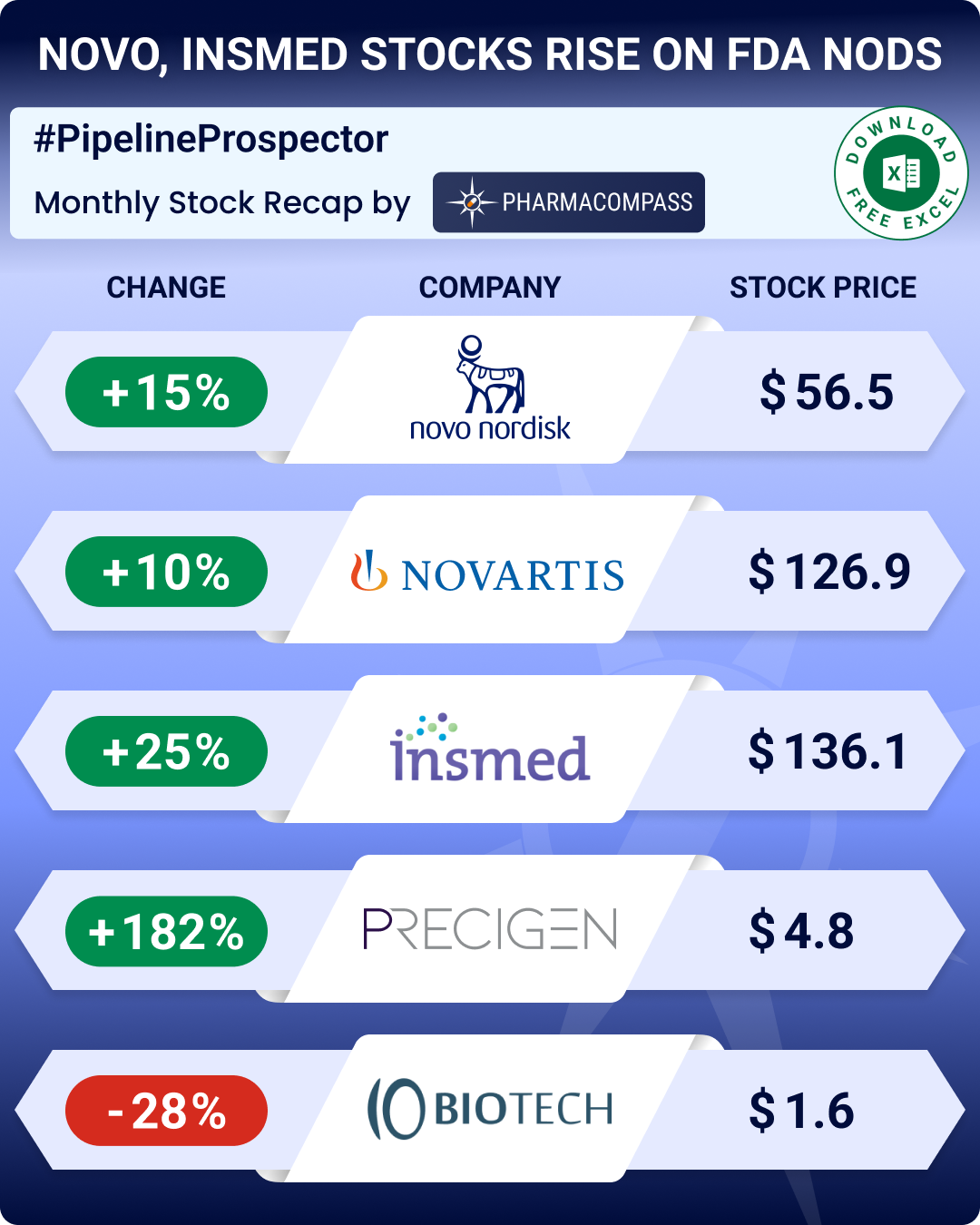
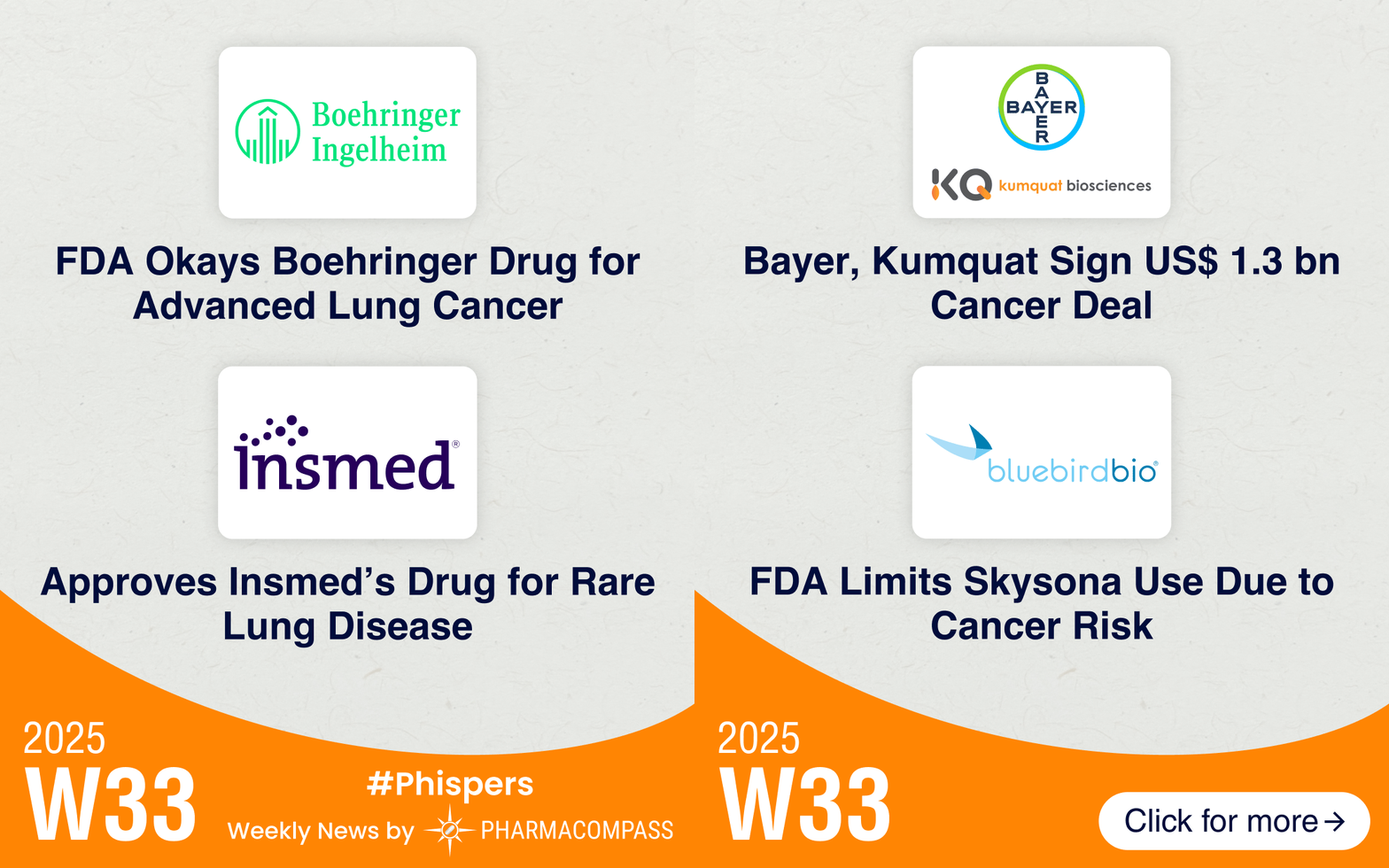
The US Food and Drug Administration (FDA) has granted an accelerated approval to Boehringer Ingelheim’s Hernexeos (zongertinib) to treat adults with advanced non-small cell lung cancer (NSCLC) with specific HER2 mutations who have received prior treatment. The agency also cleared Insmed’s Brinsupri (brensocatib) as the first therapy for non-cystic fibrosis bronchiectasis, a chronic lung disease.Within two weeks of his exit, Vinay Prasad is back at the
FDA to head its biologics division. The week also saw Bayer sign a US$ 1.3
billion deal with Kumquat Biosciences to develop an oncology drug that targets
KRAS mutations.Meanwhile, FDA has restricted bluebird bio’s Skysona gene therapy, which was approved in 2022, due to increased risk of blood cancer. After the recent deaths of non-ambulatory teenagers, Sarepta Therapeutics has reported new safety data for its gene therapy Elevidys, which shows no deaths among ambulatory patients with Duchenne muscular dystrophy (DMD).In news from clinical trials, Novartis’ ianalumab became the first drug to show statistically significant phase 3 benefits in Sjögren’s disease, a chronic autoimmune disorder. Pfizer and Astellas’ Padcev (enfortumab vedotin) showed positive results in a phase 3 trial, when used in combination with Merck’s Keytruda (pembrolizumab) in patients with muscle-invasive bladder cancer (MIBC) who cannot receive or refuse cisplatin-based chemotherapy.Eli Lilly’s oral obesity pill orforglipron met late-stage trial goals. However, it failed to beat the weight loss effect of Novo Nordisk’s semaglutide. And IO Biotech’s melanoma vaccine narrowly missed a trial endpoint.FDA grants accelerated approval to Boehringer’s med for advanced lung cancerThe
US Food and Drug Administration (FDA) has granted an accelerated approval to Hernexeos (zongertinib), a new drug from Boehringer Ingelheim, for adults with advanced
non-small cell lung cancer (NSCLC) with specific HER2 mutations who have had
prior treatment. In studies, the drug helped 75 percent of patients who had chemotherapy see their cancer shrink or disappear completely.Okays Insmed’s Brinsupri for chronic lung condition: FDA has approved Insmed’s Brinsupri (brensocatib) as the first treatment for non-cystic
fibrosis bronchiectasis, a chronic lung disease. The oral drug
blocks overactive inflammatory enzymes in white blood cells, thereby preventing
airway damage. Developed after Insmed acquired rights to the drug
from AstraZeneca in 2016 for US$ 160 million, the medicine could exceed
US$ 4 billion in annual sales by 2031, says a Nature report.Vinay Prasad returns to FDA
as top vaccine regulator after brief ousterVinay Prasad is back at the FDA’s Center for Biologics Evaluation and Research (CBER) as its head, overseeing vaccines and gene therapies, the Department of Health and Human Services (HHS) has said. Prasad was pressured to quit FDA on July 29, due to criticism over his handling
of safety concerns with Sarepta Therapeutics’ gene therapy for DMD. HHS spokesperson Andrew Nixon said Prasad’s return was requested by the FDA.FDA limits Skysona use after
reports of increased blood cancer riskFDA
has restricted the use of bluebird bio’s gene therapy Skysona (elivaldogene autotemcel) to
boys (aged four to 17 years) with the genetic disorder cerebral
adrenoleukodystrophy (CALD) who lack alternative treatments or a matched stem
cell donor. The change comes after rising incidence of blood cancers, including
myelodysplastic syndrome (MDS) and acute myeloid leukemia (AML), were observed
in patients taking the therapy. FDA now requires updated labelling, strict
lifelong monitoring, and post-marketing studies to track long-term safety. At
the time of its approval in 2022, 4 percent of patients being treated with
Skysona developed MDS. By July 2025, that rate climbed to 15 percent, with the
report of one death.Bayer, Kumquat ink US$ 1.3 bn
deal to develop drug that targets KRAS mutationsBayer has agreed to pay up to US$ 1.3 billion to partner with US-based Kumquat Biosciences in order to develop a cancer drug that targets KRAS G12D
mutation. Kumquat will lead initial phase trials, while
Bayer will handle later development and commercialization. KRAS mutations occur in almost 25 percent of cancers. The deal gives Bayer access to a promising candidate as it seeks to strengthen its drug pipeline amid growing
competition for its top sellers like Xarelto (rivaroxaban) and Eylea (aflibercept).
Novartis’ drug posts encouraging phase 3 results in Sjögren’s disease trialNovartis reported positive late-stage trial results for ianalumab, a dual-action antibody that treats Sjögren’s disease. In two global studies involving 779 patients, the drug significantly reduced disease activity at 52 weeks compared to placebo, thereby meeting the primary goal. Sjögren’s disease is a serious autoimmune condition with few treatment options.Padcev-Keytruda combo boosts
survival in phase 3 trial on bladder cancer patientsPfizer and Astellas have reported positive phase 3 results for their cancer therapy Padcev (enfortumab vedotin), when combined with Merck’s Keytruda (pembrolizumab) in patients with
muscle-invasive bladder cancer (MIBC) who cannot receive or refuse cisplatin-based chemotherapy. The companies plan to discuss the data with global regulators. MIBC
accounts for 30 percent of bladder cancer cases, yet up to half of patients are
ineligible for cisplatin. The results highlight the
potential of this regimen to become a new standard of care.Sarepta reports safety data on Elevidys: Sarepta Therapeutics has reported new safety data
for its gene therapy Elevidys, showing no deaths among ambulatory patients with DMD. Acute
liver injuries occurred in 23 percent of cases, but none
in this group were fatal, unlike in non-ambulatory patients where three deaths
from acute liver failure have been reported.IO Biotech’s melanoma vaccine eyes FDA approval, despite trial setbackIO Biotech’s experimental vaccine, Cylembio
(imsapepimut and etimupepimut, adjuvant), combined
with Merck’s Keytruda, showed promise in a late-stage study for
advanced melanoma. However, the drug missed its primary endpoint. In a trial
with 407 patients, the combination extended progression-free survival to 19.4
months, compared to 11 months with Keytruda alone. However, the results fell just short of being statistically
significant. IO Biotech aims to submit a biologics license application by the end of 2025, seeking approval for Cylembio in treating
advanced melanoma.Lilly’s orforglipron falls short of Novo’s semaglutide: Eli Lilly’s experimental oral obesity drug, orforglipron, helped patients lose 12.4
percent of body weight, on an average, over 72 weeks in a phase 3 trial. The
once-daily pill met all primary and secondary endpoints. However, its
weight-loss effect was slightly lower than Novo Nordisk’s injectable semaglutide. The company plans to seek regulatory approval by the year-end.













 Share
Share