Soon after
US President Donald Trump revealed his new drug pricing plan, the FDA took a
tough stand by releasing a list of drugmakers who tricked the system to delay
the launch of generic versions of their drugs. The FDA also lashed out at IQVIA
over its erroneous data pertaining to opioid sales. Meanwhile, Roche’s Hemlibra is on track to become a US$ 5 billion drug; while a study on its other drug — Herceptin — shows it is equally effective if used for half the duration. In other news, Amgen’s migraine drug bagged FDA approval; J&J scrapped trials for its Alzheimer’s drug; and Astra’s shareholders rebelled against its CEO’s pay.
FDA embarks
on program to shame drugmakers who tricked system to delay generics
Last week, Phispers had reported on US President Donald Trump’s much
awaited speech on
curtailing drug prices, that was followed by the remarks of the Health and
Human Services (HHS) Secretary Alex Michael Azar II on the new drug policy blueprint.
Late last week,
the Trump administration lived up to its promise of naming and shaming the
drugmakers who tricked the system. The US Food and Drug Administration (FDA)
released a list of drugmakers and accused them of unfairly withholding reference
samples of their drugs in order to block generic competition. Without sample drugs, generic companies cannot conduct bioequivalence studies — a fundamental part of any Abbreviated New Drug Application (ANDA).
“FDA has received numerous inquiries from prospective generic applicants indicating that they would like to develop a generic version of a marketed drug, but are unable to obtain the necessary samples of the reference listed drug (RLD) – typically referred to as the brand drug – because the RLD is subject to limited distribution,” an FDA statement said.
“To help address this issue and to provide transparency regarding these inquiries, FDA is posting a list identifying all drug products for which FDA has received an RLD access inquiry related to limited distribution of the marketed RLD, with details regarding, among other things, the RLD sponsor, the drug product, and the number of inquiries we have received,” it added.
The list, with 52 RLDs, details the names and developers of
each one, alongside the number of access inquiries the agency has received in
relation to them. Access inquiries are submitted when a company expressing an
intent to develop a generic drug is unable to obtain necessary samples of the
original.
On top of the
list, with 14 access inquiries, is the drug Tracleer from Actelion. This pulmonary artery hypertension drug
now belongs to J&J. The list has other big names, such as Celgene (for Revlimid, Pomalyst and Thalomid), GlaxoSmithKline (Promacta),
Roche (Accutane) and Teva (Claravis).
According to industry group PhRMA, the list lacks “proper context” and “conflates” several issues. In an email to STAT, a PhRMA spokesperson said: “Additional context is essential and we believe the Agency should give innovator companies the opportunity to submit their appropriately redacted response to the recipient of a safety determination letter.”
FDA spots mistakes in opioid sales data provided by pharma’s gold standard IQVIA
In the US, the FDA
has found mistakes in opioid sales data
provided by IQVIA, a leading global provider of advanced analytics,
technology solutions, and contract research services to the life sciences
industry. It also provides a select set of services to the FDA and other
agencies.
IQVIA’s mistakes led to an overestimation of the amount of prescription fentanyl (an opioid) being used in the US. In addition, the FDA said it found data quality issues with information about prescription opioids — oxymorphone and hydrocodone. The FDA used that data to make
recommendations for quotas to the Drug Enforcement Administration.
“These additional errors raise serious concerns about systemic issues with IQVIA’s data and quality control procedures,” the FDA said in a statement.
The FDA Commissioner
Scott Gottlieb has asked
IQVIA to hire a third-party auditor to review its quality control.
This high profile lash out
against a specific vendor is an unusual move by the FDA and comes at a time
when the US Congress is considering legislations to tackle the
ongoing opioid crisis.
IQVIA, however,
said in a statement that it had already identified the error, and notified clients
in April. The company said the methodology issue doesn't affect its other market
research services.
“We stand behind our data methodologies,” IQVIA said.
Meanwhile, the
opioid crisis has affected Indian drug companies
that were chasing the restricted business of opioid-based drugs in the US.
For
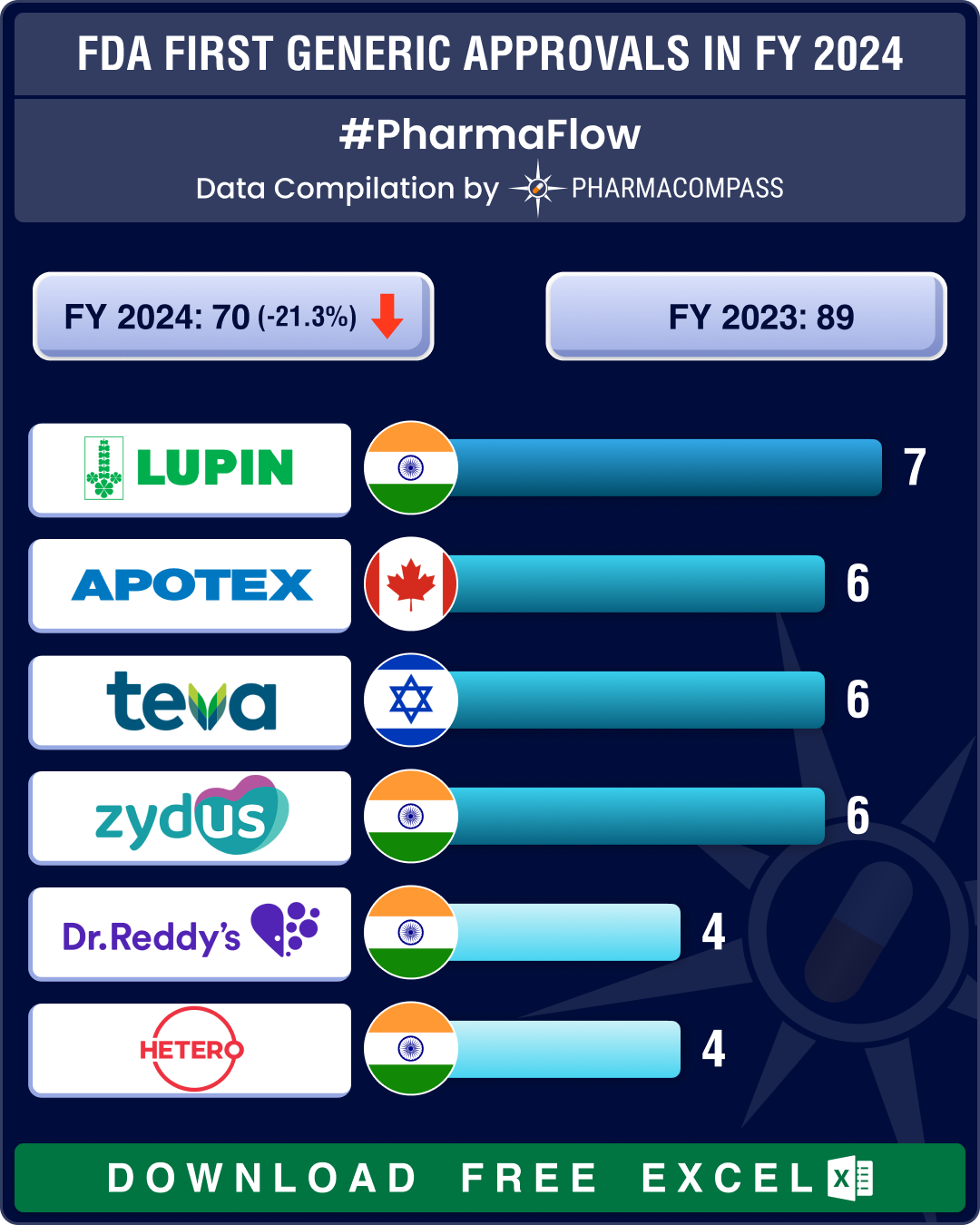
instance, Lupin made an impairment
provision of US 204.62 million (Rs 14 billion) for Gavis Pharma, a company it had
bought for US$ 880 million three years ago for its portfolio of controlled
drugs. Lupin found its business profitability to not be as strong as it once believed
it to be.
According
to a report in The Economic Times, other Indian pharma players may be
coming to the same conclusion after rushing to acquire companies in this space,
after a sharp rise in prescriptions a few years ago.
Lupin
is amongst the few companies in India that continue to have a big portfolio of
opioid-based drugs. Companies like Sun Pharma and Aurobindo Pharma have significantly reduced their exposure to opioid drugs
over the past few years although, this week, news of Aurobindo eyeing Mallinckrodt’s opioid business has
started doing the rounds again.
Amgen’s migraine drug gets approved; J&J abandons its Alzheimer’s drug study
People suffering
from frequent migraines now have a drug that can spare them a few headaches
each month. The FDA approved Amgen’s drug, called Aimovig,
last week. Amgen has priced the drug at US$ 6,900 a year.
In clinical trials, patients who took Amgen’s drug experienced about two fewer migraines per month compared to those who were on a placebo. Aimovig is meant for patients who experience at least four
migraines per month. Doctors have described the effect as modest.
According to
estimates, there are roughly 24 million patients in the US who are likely to go
for this treatment. Amgen
has partnered with Novartis on the drug. They are also launching an injectable version of this medicine that would cost US$ 575 a month — a price that does not reflect rebates and discounts.
Analysts are of
the view that Aimovig is cheaper than expected. They had expected Amgen to
charge around US$ 10,000 a year for the medication.
According to a
Wall Street analyst, Aimovig could become a US$ 1 billion to US$ 2 billion business over the next five years. “That’s a 10 percent move to Amgen’s revenue,” Michael Yee, managing director at Jefferies, an investment banking firm, told CNBC.
Meanwhile, Johnson & Johnson has joined the ranks of other pharmaceutical companies — such as Pfizer and Merck — that have abandoned their treatments for Alzheimer’s disease.
J&J scrapped mid-stage trials for its Alzheimer’s drug — atabecestat — after observing safety issues. Atabecestat belongs to a class of experimental Alzheimer’s drugs called BACE inhibitors that block an enzyme involved in the production of a protein that creates brain plaques, considered to be a major cause for the disease.
While testing
atabecestat, some trial participants showed serious elevations of liver
enzymes. The company said the benefit-risk ratio offered by the drug no longer
supported its development.
Roche’s Hemlibra on track to become a US$ 5 billion drug
Swiss drugmaker Roche has released fresh set of data that
reiterates the fact that its hemophilia drug Hemlibra
has disturbed the future of
one of Shire’s big therapeutic franchises.
Roche and Shire
are fighting an ongoing case in
the US, in which Shire contends that Roche infringed on a key patent to develop
Hemlibra, approved in November 2017 by the FDA.
Results from two
clinical trials show that Hemlibra dramatically-reduced bleeding in a
broad population of hemophilia patients. Hemlibra cut the incidence of treated
bleeds in hemophilia A patients by 96 percent who did not get preventive
treatment. In patients who did get preventive treatment in the form of clotting
factors, Hemlibra reduced bleeding by 68 percent.
The positive results from the two trials — known as HAVEN 3 and 4 — included the so-called non-inhibitor patients.
Hemlibra’s initial success was in patients with inhibitors, which are antibodies that cause resistance to replacement clotting factors. Hemlibra’s regulatory approval is only for these inhibitor patients. However, Roche plans to submit the latest findings to authorities around the world to widen its usage.
If approved for
this indication, this would
mark a major market opportunity for Hemlibra. Analysts have estimated peak
sales of Hemlibra at US$
5 billion, making it a potential blockbuster.
Hemlibra will shake up the market and pose a threat to established players reliant on factor replacement therapies, such as Shire, which recently agreed to be acquired by Japan’s Takeda Pharmaceutical for US$ 62 billion. The other players that Roche’s Hemlibra will challenge are Bayer, CSL and Novo Nordisk, and Sanofi, which bought US hemophilia specialist Bioverativ earlier this year.
Herceptin study
shows it is equally effective if used for half the duration: There is more news from Roche, and its
breast cancer drug Herceptin. Researchers who conducted a large
clinical trial said treating early stage breast cancer patients for just six months with Roche’s Herceptin works as well as the current 12-month regimen.
Herceptin, first
approved in 2005, is used to treat cancer patients whose tumors generate a
protein called HER2, which accounts for about 25 percent of breast cancer
cases.
Herceptin costs
around US$ 76,700 a year in the US, and generated worldwide sales of more than
US$ 7 billion for Roche in 2017. If a shorter treatment duration is widely
adopted, its sales would be significantly reduced.
In an emailed
statement, Roche said other studies have not shown that short duration
treatment works as well as the 12 month one. The company emphasized that use of
Herceptin for one year is the only FDA-approved indication for HER2-positive
early breast cancer.
Astra’s shareholders rebel against CEO’s pay; its twice rejected drug gets FDA nod
At AstraZeneca, shareholders rebelled against the pay
package proposed for its CEO Pascal Soriot. This is one of the biggest
shareholder revolts over executive pay this year.
More than 37 percent of the shareholders voted against or abstained from voting at the company’s annual shareholder meet held in London last week.
The shareholders opposed a US$ 12.51 million (£9.4 million) pay package for Soriot, even though this was a drop from the US$ 19.03 million (£14.3 million) a year earlier, when the company suffered votes against its pay policy and warnings from shareholder advisory groups over its bonus plans.
Meanwhile, there
was some good news from AstraZeneca. The FDA finally approved its much-delayed excess potassium drug — Lokelma. Formerly known as ZS-9, the FDA had turned down the drug twice before due to
concerns over its manufacturing of the drug.
At a time when Astra
is striving to offset declining sales of its older products, this FDA nod has boosted AstraZeneca’s portfolio. AstraZeneca is banking on a range of new drugs to return the company to sales growth in 2018.

















 Share
Share