This week, US President Donald Trump
announced a deal with Pfizer to sell medicines through a new federal website,
TrumpRx.gov, offering substantial discounts for patients not using insurance.
Separately, Trump signed an executive order to boost AI research for childhood
cancers with US$ 50 million in grants. In another major deal, Genmab announced
an US$ 8 billion acquisition of Dutch biotech Merus, strengthening its
late-stage cancer pipeline.Meanwhile, Asian pharmaceutical
markets faced pressure as 100 percent US tariffs on branded and patented drugs
took effect on October 1. In approvals, the FDA cleared multiple drugs, including Eli Lilly’s oral breast cancer drug, Crinetics’ pill for a rare hormonal disorder, and Regeneron’s shot for young children with a rare genetic disorder. Novartis also secured FDA approval for an oral pill to treat adults with a chronic skin condition.In clinical trials, MoonLake’s sonelokimab faced a setback in phase 3 studies for an inflammatory skin condition, while Merck’s Winrevair showed strong efficacy in pulmonary arterial hypertension.Trump announces deal with Pfizer to sell drugs directly to patients
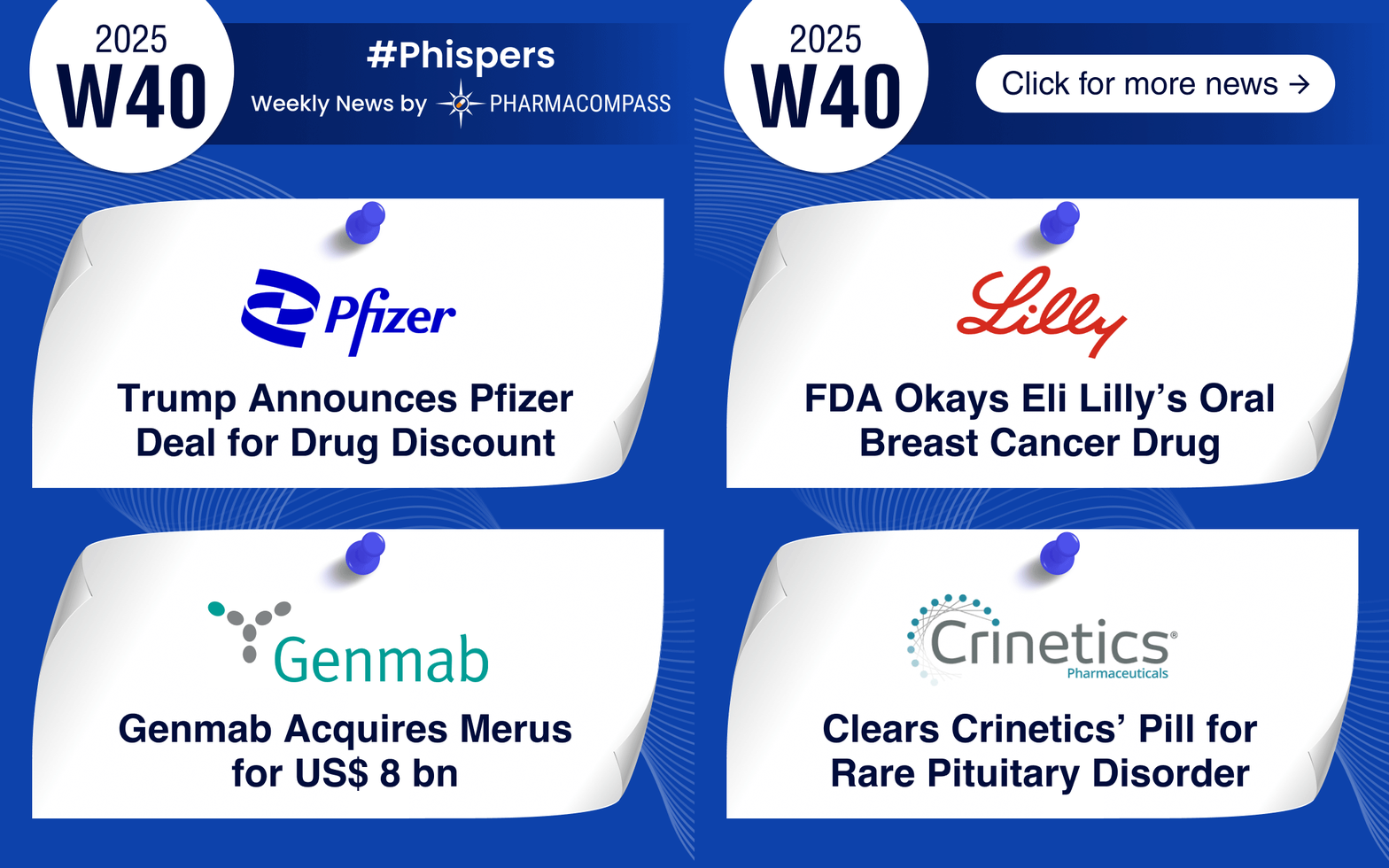
at lower pricesPresident Trump announced a deal with Pfizer to sell medicines through a federal website,
TrumpRx.gov, offering discounts averaging about 50 percent and reaching as high as 85 percent
for patients not using insurance. Pfizer also agreed to launch new drugs at the
same price in the US as in other developed countries and to offer
most-favored-nation pricing for Medicaid, the government program providing
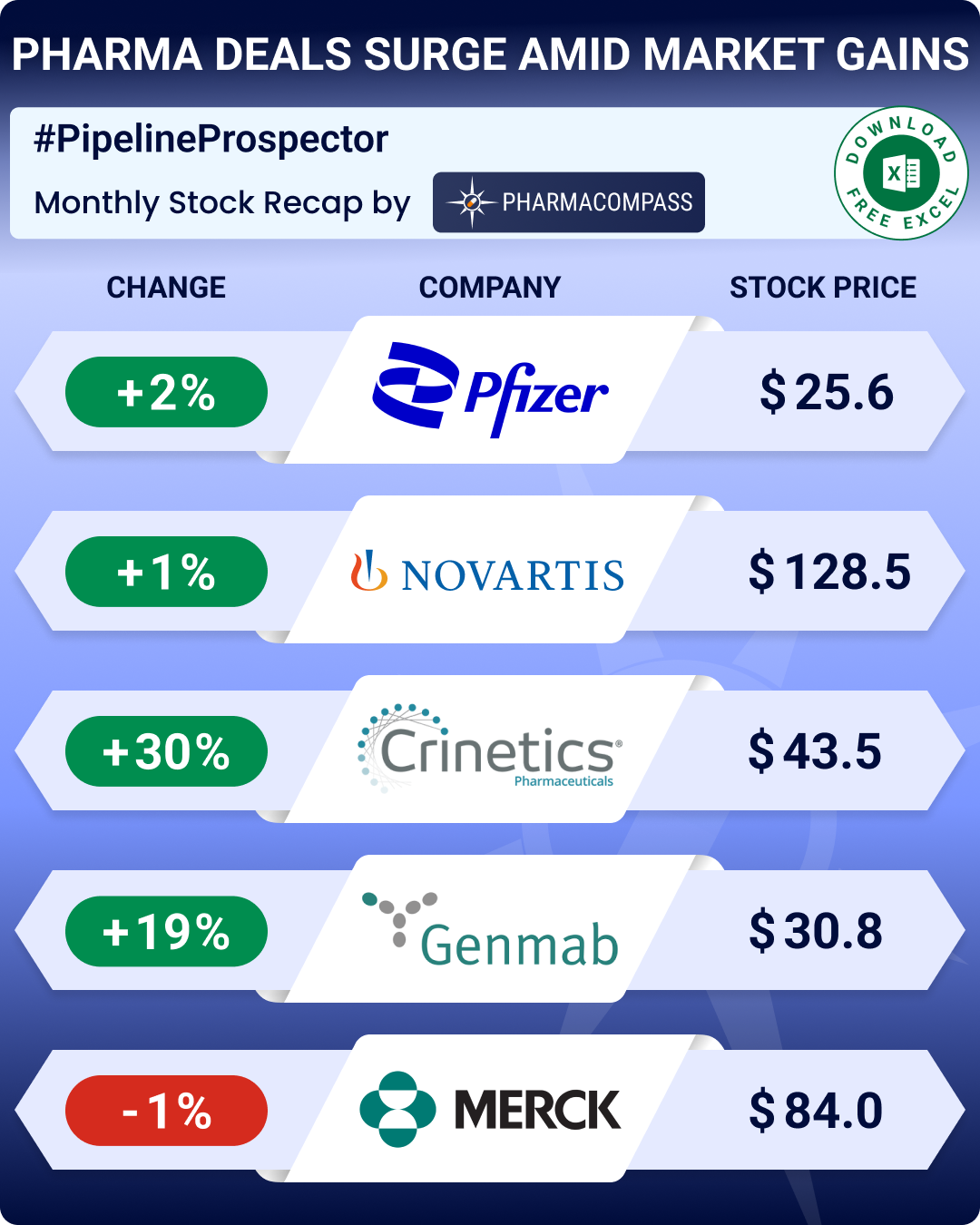
health coverage for low-income Americans. The deal includes a US$ 70 billion investment by Pfizer to reshore US drug manufacturing and a three-year tariff grace period. Pfizer’s shares increased by more than six percent on the day of the announcement.Separately, Trump signed an executive order to boost AI research for
childhood cancers, providing US$ 50 million in grants to improve clinical
trials, treatments, and prevention strategies. Meanwhile, PhRMA, a US
pharmaceutical lobby group, has announced it will launch
AmericasMedicines.com in January, letting drugmakers sell medicines directly to patients
and connect them with programs offering lower prices.Healthcare stocks in US & Europe surge on Pfizer deal: US and European healthcare stocks rallied after the Trump-Pfizer deal. Europe’s healthcare sector index rose 5.3 percent a day
after the announcement of the deal, its biggest one-day gain since 2008. The
agreement, seen as less harsh than expected, offers drugmakers clarity after
months of pressure over high US medicine costs.Genmab buys Merus for US$ 8 bn to boost cancer drug pipelineGenmab has announced an US$ 8 billion acquisition of Dutch biotech Merus, strengthening its pipeline of late-stage cancer therapies. The all-cash deal
is expected to close in early Q1 2026. The acquisition gives Genmab full control of
petosemtamab, a potential first- and best-in-class bispecific antibody for
recurrent/metastatic head and neck cancer. Genmab hopes to bring the drug to
market in 2027 if ongoing phase 3 trials succeed and projects US$1 billion in annual
sales by 2029.FDA approves Eli Lilly’s oral drug for advanced breast cancerThe FDA has approved Eli Lilly’s Inluriyo (imlunestrant), an oral drug for adults with advanced breast
cancer who have received prior therapy. In a phase 3 trial, Inluriyo cut the risk of the disease getting worse or
causing death by 38 percent compared with current hormone therapies. Inluriyo,
taken as a once-daily pill, blocks estrogen receptors that drive tumor growth.Okays Crinetics’ pill for rare pituitary disorder: The FDA has approved Crinetics’ Palsonify (paltusotine), the first once-daily oral treatment for adults
with acromegaly. This rare hormonal disorder is caused by pituitary tumors that trigger excess
growth hormone. Notably, this is the first FDA approval for the
California-based company.Clears Regeneron’s Evkeeza shot for children: The FDA has approved Regeneron’s Evkeeza (evinacumab-dgnb) for children aged 1 to under 5 with homozygous familial hypercholesterolemia (HoFH), a rare genetic disorder causing dangerously high cholesterol from birth. Evkeeza was initially approved in 2021 for adults and adolescents aged 12 years and older. It was then approved for children aged 5 to 11 in 2023.Grants approval to Novartis’ Rhapsido for chronic hives: The FDA has approved Novartis’ oral pill Rhapsido (remibrutinib) for adults with symptoms of chronic
spontaneous urticaria (a skin condition) despite standard therapies. The
twice-daily pill, Rhapsido offers a convenient oral alternative to injectable
therapies. Novartis is also testing the drug for other immune conditions.Asian pharma markets take a hit as 100% US tariffs on branded drugs
kick inAsian pharmaceutical markets,
including India, witnessed pressure as 100 percent US tariffs on imported branded drugs, announced earlier by Trump, took effect on October 1. Regardless, analysts say the impact may be limited, as India’s exports mainly consist of generic medicines, which are unlikely to face
the tariffs. On the other hand, European and US pharma shares have remained
largely steady. The tariffs target branded and patented medicines and aim to
encourage drug production within the US.Roche, Novartis say Trump’s 100% US tariffs unlikely to hit them: Swiss pharmaceutical giants Roche and Novartis said Trump’s 100 percent tariffs on imported branded and
patented drugs, which took effect on October 1, are unlikely to impact them. Both companies are
investing heavily in US manufacturing, which may be deemed sufficient for
exemptions. Roche has begun building a Genentech facility in North Carolina and
pledged US$ 50 billion for US manufacturing and R&D, while Novartis
announced US$ 23 billion in US investments and plans to start five new sites by
year-end.MoonLake’s drug for skin condition hits speed bump in phase 3 trials; Merck’s therapy shows promiseMoonLake’s drug sonelokimab showed mixed results in phase 3 trials for hidradenitis suppurativa,
an inflammatory skin condition. One trial met its main goals, while the other missed
them due to a stronger-than-expected placebo response. MoonLake plans to
discuss the results with regulators. Significantly, Merck & Co. made a nonbinding offer
earlier this year valuing MoonLake at over US$ 3 billion. The bid, however, was rejected.Merck’s Winrevair cuts risk of pulmonary hypertension worsening: Merck’s Winrevair (sotatercept-csrk), a first-in-class therapy
for pulmonary arterial hypertension (PAH), was approved by the FDA in 2024 for
adults with this rare, progressive lung disease to improve exercise ability and slow disease worsening. Now, new
results from the phase 3 study show that Winrevair, when added
to standard PAH treatments, reduced the risk of disease worsening by 76 percent in patients who were recently
diagnosed.














 Share
Share