Please Wait
Applying Filters...
Menu
Xls

Digital Content read-more

Create Content with PharmaCompass, ask us

DATA COMPILATION #PharmaFlow

read-more
read-more
FDA’s December 2025 OPOE list features 784 prescription drugs, 73 OTC drugs
This week, PharmaCompass brings you key highlights of the US Food and Drug Administration’s December 2025 list of Off-Patent, Off-Exclusivity Drugs (OPOE) without an approved generic. The OPOE list gets updated every six months.This list highlights drug products that have lost patent protection and regulatory exclusivity, but remain without approved generic competition in the US market. With this list, the FDA hopes to bolster competitiveness in the generics market, improve transparency and encourage the development and submission of abbreviated new drug applications (ANDAs) in markets with little competition.Since December 2021, FDA has been publishing two versions of the OPOE list — one for prescription (Rx) drug products and the other for over-the-counter (OTC) drug products that are approved and marketed under a new drug approval (NDA).  Access the Interactive Dashboard on FDA's December 2025 List of OPOE Drugs (Free Excel)Injectables continue to dominate FDA’s OPOE Rx list; 73 OTC drugs figure in Dec listFDA’s December 2025 OPOE Rx list includes 784 drug products that currently have no approved generics. Out of these, 296 are injectables and 126 are oral solid dosage forms (such as tablets, capsules and modified release forms). In June 2025, the OPOE Rx list had 765 drug products without an approved generic, out of which 304 were injectables, while 109 were oral solid drug forms. The increase in drug products from 765 to 784 from June 2025 to December 2025 was due to the inclusion of additional dosage strengths in the OPOE Rx list. Otherwise, no new drugs were added to the December 2025 OPOE Rx list.The December 2025 OPOE list has 73 OTC drugs, slightly higher than the 69 drugs in the June 2025 list. Among the 73, 21 are oral solid dosage forms.Among the OTC drugs on the December 2025 OPOE list are ibuprofen and ibuprofen sodium (for pain and inflammation), pseudoephedrine hydrochloride and phenylephrine hydrochloride (nasal decongestants), nizatidine and famotidine (for gastroesophageal reflux disease), loratadine, cetirizine hydrochloride and chlorpheniramine maleate (for allergy relief), loperamide hydrochloride (anti-diarrheal), and orlistat (for weight management). Access the Interactive Dashboard on FDA's December 2025 List of OPOE Drugs (Free Excel)FDA fast-tracks initiatives to accelerate market entry of generics, biosimilarsFDA has launched several regulatory initiatives designed to accelerate the market entry of generics and biosimilars. In October 2025, the agency announced a new pilot prioritization program for the review of ANDAs that aims to encourage and reward investment in drug manufacturing, research and development and strengthen the pharmaceutical supply chain in the United States.Separately, FDA has also come out with a new draft guidance that seeks to simplify biosimilarity studies and reduce unnecessary clinical testing. Through a separate initiative, the agency also plans to make it easier for biosimilars to be developed as interchangeable with brand-name biologics, thereby helping patients and pharmacists choose lower-cost options. Access the Interactive Dashboard on FDA's December 2025 List of OPOE Drugs (Free Excel) Our viewThe global generic drugs market was valued at US$ 445.62 billion in 2024 and is projected to reach US$ 728.64 billion by 2034, growing at a compound annual growth rate of 5.04 percent from 2025 to 2034. With several diabetes, immunology, oncology and cardiology drugs slated to face patent expirations this year, and continued pressure on drugmakers to improve affordability, we believe the generic market could grow at an even faster rate in the near term.

Impressions: 3335

https://www.pharmacompass.com/radio-compass-blog/fda-s-december-2025-opoe-list-features-784-prescription-drugs-73-otc-drugs

#PharmaFlow by PHARMACOMPASS
22 Jan 2026

STOCK RECAP #PipelineProspector

read-more
read-more
Pipeline Prospector Aug 2024: Otsuka buys Jnana, Lilly’s market cap gains by over US$ 108 bn post new guidance
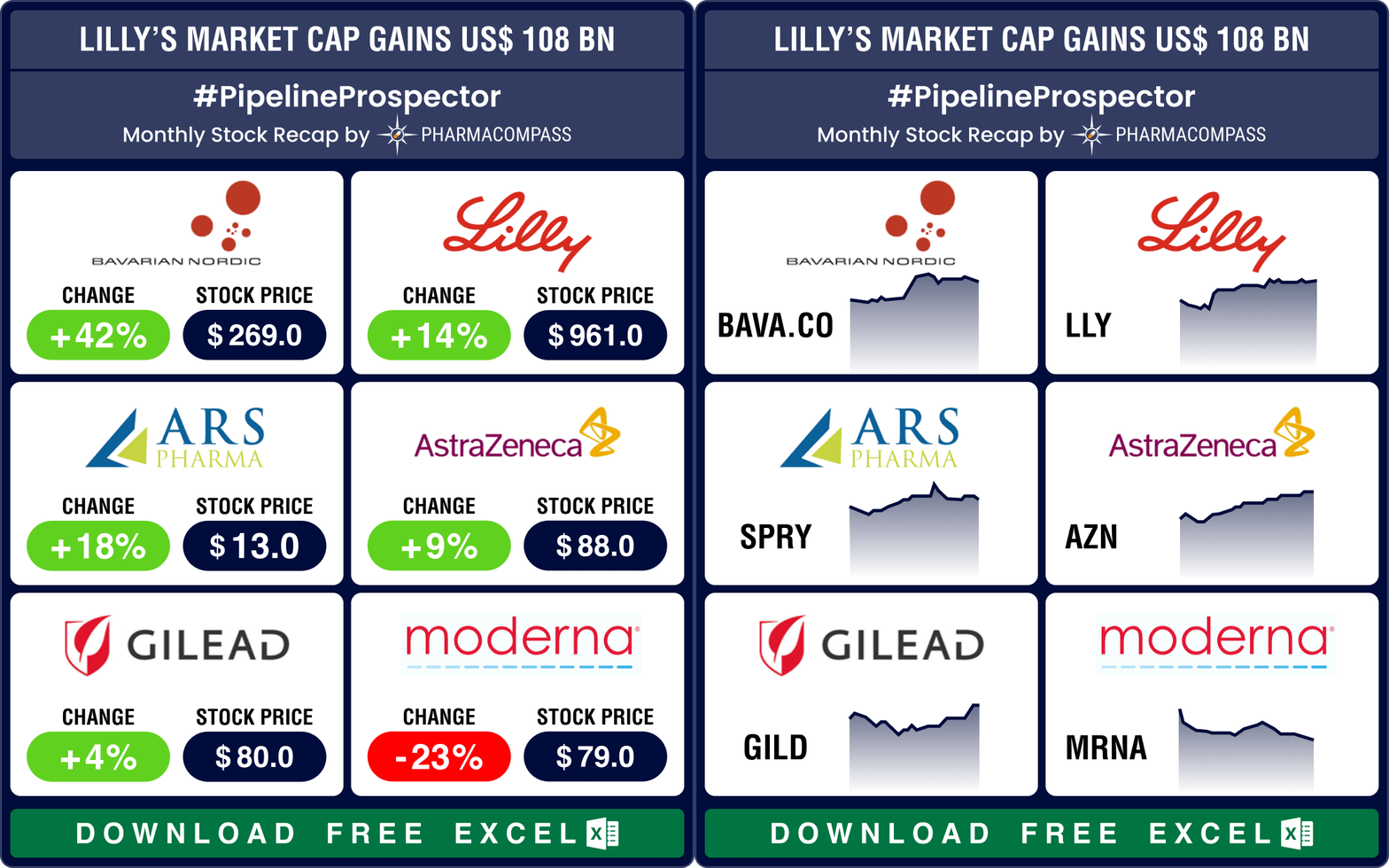
As summer draws to a close, pharma and biotech indices posted their fourth consecutive month in the green. The Nasdaq Biotechnology Index (NBI) rose 1.3 percent from 4,821.49 to 4,882 in August and the SPDR S&P Biotech ETF (XBI) index gained 1.7 percent from 99.53 to 101.26. The S&P Biotechnology Select Industry Index (SPSIBI) saw a 2.3 percent increase to 7,897.85 from 7,717 posted in July-end. Over the last four months, NBI, XBI, and SPSIBI have rallied 17 percent, 19 percent, and 20 percent, respectively.Amongst the notable negative news, the US Food and Drug Administration (FDA) declined to approve an application of MDMA, commonly known as ecstasy, to treat post-traumatic stress disorder (PTSD). Lykos Therapeutics, the company behind this application, received a complete response letter citing concerns about the trial. Access the Pipeline Prospector Dashboard for August 2024 Newsmakers (Free Excel)Otsuka buys Jnana for up to US$ 1.1 bn; Merck inks US$ 1.3 bn deal with China’s CuronAugust saw several acquisitions and deals. Japan’s Otsuka Pharmaceutical said it is acquiring clinical-stage biotech Jnana Therapeutics through a potential US$ 1.1 billion deal. This includes a payment of US$ 800 million to Jnana’s shareholders on completion of the acquisition, and an additional US$ 325 million in milestone payments. Merck has evinced interest in the growing field of bispecific antibodies by paying China-based Curon US$ 700 million upfront, with an additional US$ 600 million in milestone payments, for the rights to CN201, an experimental cancer med in early-stage trials for treating non-Hodgkin’s lymphoma and B-cell acute lymphocytic leukemia.Roche, via its subsidiary Genentech, has secured exclusive rights to molecules from Sangamo Therapeutics designed to repress the gene that makes “tau,” a protein many scientists believe is a driver of Alzheimer’s disease. The potential US$ 1.95 billion deal comprises other novel genomic medicines for neurodegenerative diseases.Denmark’s Adcendo acquired global rights (excluding Greater China) to Multitude Therapeutics' first-in-class antibody-drug-conjugate (ADC) candidate for up to US$ 1 billion. The ADC targets tissue factor (TF) highly expressed in various cancers including lung, colorectal, cervical, esophageal, head and neck, bladder, and some gastrointestinal cancers, but limited in normal tissues. The candidate, ADCE-T02, is a highly differentiated anti-TF ADC.In other deals, Instil Bio agreed to pay up to US$ 2 billion to China’s ImmuneOnco Biopharmaceuticals for two clinical-stage cancer candidates. Similarly, Eisai inked a deal with SEED Therapeutics worth up to US$ 1.5 billion to develop novel drugs for neurodegenerative diseases and cancer. Access the Pipeline Prospector Dashboard for August 2024 Newsmakers (Free Excel) Gilead’s US$ 4.3bn CymaBay bet pays off; Adaptimmune’s Tecelra becomes first-ever TCR gene therapyThe month also saw several significant drug approvals. Gilead’s Livdelzi gained FDA’s accelerated approval for primary biliary cholangitis (PBC), an inflammatory liver disease. This approval validates Gilead’s US$ 4.3 billion acquisition of CymaBay and positions the once-daily pill as a potential challenger to the current PBC standard of care.Novartis’ Fabhalta also gained accelerated approval for reducing excess protein in the urine of patients with primary immunoglobulin A nephropathy (IgAN), addressing an important aspect of kidney disease management.Adaptimmune’s Tecelra received accelerated approval from the FDA as the first-ever T cell receptor (TCR) gene therapy. It was greenlit for a rare type of cancer — synovial sarcoma — that often affects young people.J&J’s high hopes for Rybrevant got validated when FDA approved it for use in combination with its new drug Lazcluze to treat a kind of non-small cell lung cancer (NSCLC). This is the only chemotherapy-free regimen that has shown superior progression-free survival as compared to AstraZeneca’s Tagrisso, the current standard of care in the first-line setting.Meanwhile, Astra’s other blockbuster cancer drug Imfinzi received FDA’s approval as an additional treatment after surgery for a type of NSCLC, expanding its use in the treatment paradigm.Servier’s Voranigo became the first and only treatment in the US for a certain kind of brain tumor, offering a once-daily pill option for patients with grade 2 IDH-mutant glioma. Additionally in oncology, GSK’s Jemperli received a broad US label expansion for first-line treatment of endometrial cancer. Citius’ Lymphir received FDA approval for relapsed or refractory cutaneous T-cell lymphoma.ARS Pharmaceuticals’ EURneffy and Neffy became the first nasal spray alternatives to EpiPen for severe allergic reactions in Europe and the US, respectively. This represents a new era in needle-free emergency allergy treatment.To deal with a surge in Covid cases in the US, FDA approved updated versions of Pfizer and BioNTech’s Comirnaty, Moderna’s Spikevax and Novavax's jab that target a strain called KP.2.that target a strain called KP.2. Access the Pipeline Prospector Dashboard for August 2024 Newsmakers (Free Excel) Lilly’s market cap surges US$ 108 bn post Q2 results; Bavarian Nordic’s stock jumps 42%Eli Lilly announced its second-quarter results last month. Its Q2 revenue increased 36 percent year-on-year due to its diabetes and obesity meds Mounjaro and Zepbound and breast cancer med Verzenio. It prompted Lilly to raise its 2024 revenue guidance by US$ 3 billion. Lilly now expects between US$ 45.4 billion and US$ 46.6 billion in 2024 revenue. The news led to a 14 percent rise in its stock, as it gained over US$ 108 billion in market capitalization. The stock hit an all-time high of US$ 972.53 on August 22. Lilly said tirzepatide (Zepbound and Mounjaro) slashed the risk of developing type 2 diabetes in overweight or obese adults with pre-diabetes by 94 percent. One in three adults in the US, or around 98 million Americans, have pre-diabetes. A late-stage trial also showed tirzepatide reduced the risk of hospitalization or death due to heart failure by 38 percent.The stock of Bavarian Nordic, which makes the monkey pox vaccine Jynneos, gained 42 percent in August after the World Health Organization declared a global health emergency over the mpox outbreak in Africa. As the month drew to a close, FDA granted expanded approval to Emergent BioSolutions’ smallpox vaccine — ACAM2000 — for use in people at high risk of mpox infection. This makes Emergent’s shot the second approved vaccine against mpox in the US after Jynneos.In trials, Bayer posted a key win with Kerendia showing it can reduce the risk of cardiovascular death, and first and recurrent heart failure events in a phase 3 trial. Access the Pipeline Prospector Dashboard for August 2024 Newsmakers (Free Excel) Our viewDuring August, the pharmaceutical industry’s resilience was on full display. A surge in Lilly’s market cap by US$ 108 billion underscores the commercial potential of cutting-edge therapies. And we hope to see more of such successes on the bourses in the coming months. Access the Pipeline Prospector Dashboard for August 2024 Newsmakers (Free Excel) 

Impressions: 3788

https://www.pharmacompass.com/pipeline-prospector-blog/pipeline-prospector-aug-2024-otsuka-buys-jnana-lilly-s-market-cap-gains-by-over-us-108-bn-post-new-guidance

#PharmaFlow by PHARMACOMPASS
05 Sep 2024

WEEKLY NEWS RECAP #Phispers

read-more
read-more
FDA rejects first MDMA therapy to treat PTSD; Merck, Curon ink up to US$ 1.3 bn deal for next-gen bispecific antibody
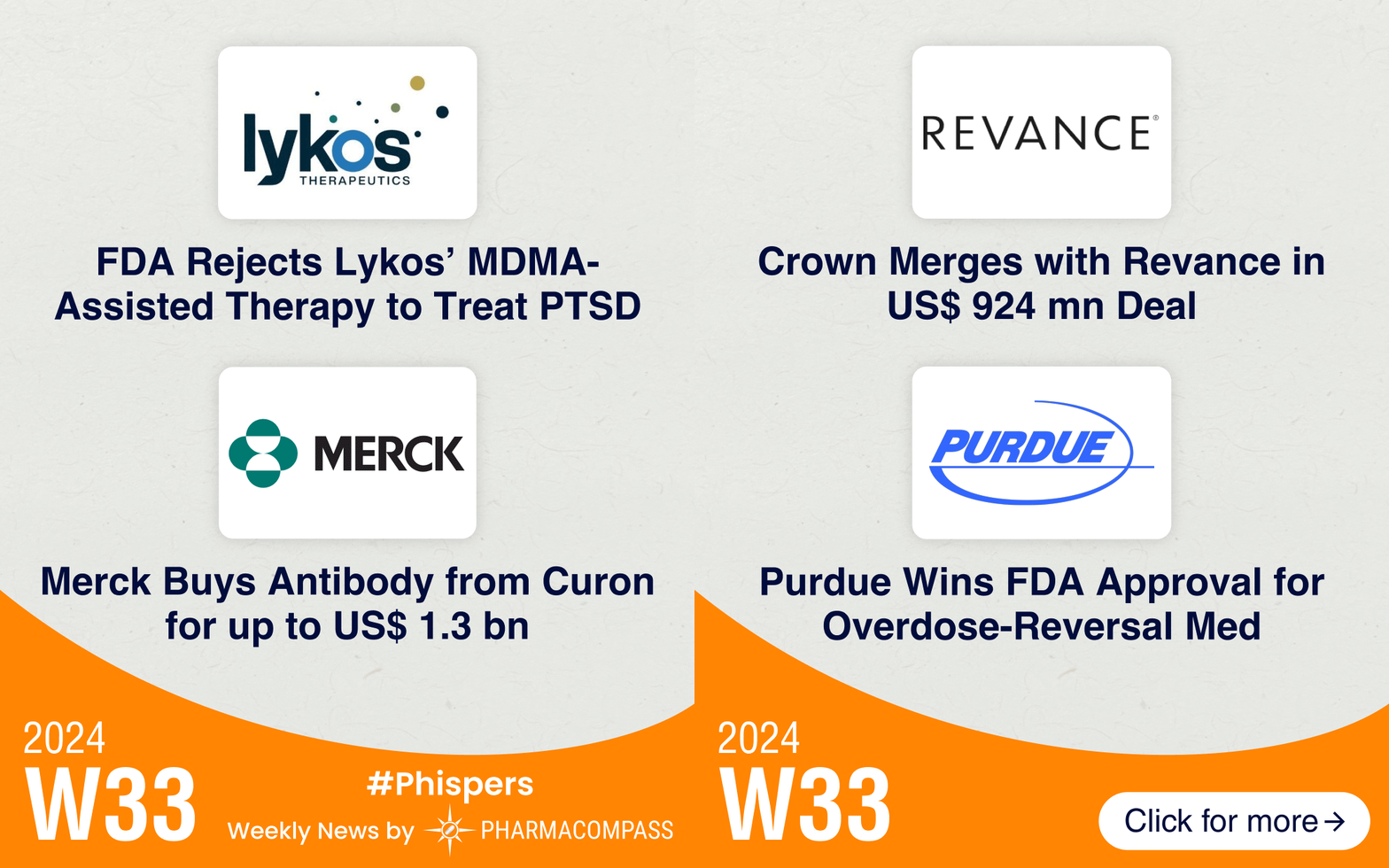
The US Food and Drug Administration (FDA) has declined to approve an MDMA-assisted therapy from Lykos Therapeutics to treat post-traumatic stress disorder (PTSD). Alongside this, the journal Psychopharmacology has retracted three papers on the MDMA-assisted therapy citing “unethical conduct” at one of the study sites.In deals, Merck has signed an up to US$ 1.3 billion deal with China’s Curon Biopharmaceutical for a next-generation bispecific antibody. And skincare company Crown Laboratories is paying US$ 924 million to merge with Botox rival Revance.While FDA rejected Lykos’ MDMA therapy, it approved Purdue Pharma’s auto-injector for the emergency treatment of known or suspected opioid overdose. Purdue Pharma had allegedly fueled the opioid crisis in the US.The agency also greenlit ARS Pharmaceuticals’ Neffy, the first nasal spray alternative to EpiPen approved for severe allergic reactions like anaphylaxis. FDA has also handed Citius Pharmaceuticals its maiden approval for lymphoma, after rejecting the therapy a year back. And Ascendis’ hormone disorder therapy finally got the go-ahead to treat adult patients with hypoparathyroidism.FDA rejects first MDMA-assisted therapy to treat PTSD, issues CRL to LykosDespite intense political pressure, FDA has declined to approve MDMA, commonly known as ecstasy or molly, to treat PTSD, Lykos Therapeutics said after it received a complete response letter (CRL). The agency had previously cited a “striking lack of abuse-related adverse events”, faulty trial design and the need for more evidence. FDA’s expert panel in June had voted 10 against one, saying the benefits of using the party drug to treat PTSD do not outweigh the risks. Last week, 80 members of Congress from both sides of the aisle had urged President Joe Biden and the FDA to consider further studies on the MDMA-assisted therapy.Scientific journal retracts three studies over ‘unethical conduct’: The journal Psychopharmacology has retracted three papers on MDMA-assisted therapy citing “unethical conduct” at one of the study sites. Many of the papers’ authors were affiliated with Lykos. However, the drugmaker said those papers weren’t part of its FDA application. The authors confirmed they were aware of violations at the time of submission, but chose not to disclose it to the journal or remove data generated by this site from their analysis. That includes a widely reported case of sexual assault by an unlicensed therapist on a trial participant.Merck buys next-gen bispecific antibody from Curon in potential US$ 1.3 bn dealBispecific antibodies, or antibodies that can bind to two different antigens at the same time, have been drawing interest as a treatment of cancer. Merck is paying China-based biotech Curon US$ 700 million upfront and an additional US$ 600 million in milestone payments for the rights to CN201, a next generation T cell engager that targets both the CD3 and CD19 proteins. It is currently being evaluated in early-stage trials for the treatment of patients with relapsed or refractory non-Hodgkin’s lymphoma and relapsed or refractory B-cell acute lymphocytic leukemia.Meanwhile, Merck has discontinued a trial on its experimental drug vibostolimab when used in combination with Keytruda in patients with a type of lung cancer after an interim analysis showed the drug was unlikely to succeed.Crown to take Botox rival Revance private in US$ 924 mn deal: Revance Therapeutics has agreed to go private and merge with Crown Laboratories in a deal valued at US$ 924 million. Crown has multiple aesthetics and skincare products. Revance’s Daxxify (daxibotulinumtoxinA) competes with AbbVie’s Botox (onabotulinumtoxinA).Meanwhile, Recursion Pharmaceuticals has agreed to buy its rival Exscientia for US$ 688 million in an all-stock deal. Recursion is a biotech firm that uses artificial intelligence to discover new drug candidates.Lilly opens its center for genetic medicines: Eli Lilly has announced the opening of its 346,000 square foot R&D facility in Boston Seaport. The center will accommodate around 700 Lilly scientists and researchers. It will advance Lilly’s efforts in RNA and DNA-based therapies as well as in discovering new drug targets to create life-changing medicines across several diseases.After allegedly fueling opioid crisis, Purdue wins FDA nod for overdose-reversal medFDA has approved Purdue Pharma’s Zurnai, the first nalmefene hydrochloride auto-injector for the emergency treatment of known or suspected opioid overdose in adults and pediatric patients 12 years of age and older. Purdue is infamous for its misleading marketing of the painkiller OxyContin that allegedly fueled the opioid crisis in America around the late 1990s. Drug overdose persists as a major public health issue in the country, with over 107,000 reported fatal overdoses occurring in 2023, primarily driven by synthetic opioids like illicit fentanyl. According to STAT News, many in the addiction advocacy community don’t look favorably at Purdue’s attempts to address a crisis that it ostensibly helped create.Citius’ immunotherapy for lymphoma bags FDA nod: FDA has okayed Citius Pharmaceuticals’ Lymphir (denileukin diftitox-cxdl) immunotherapy for the treatment of adults with relapsed or refractory cutaneous T-cell lymphoma (r/r CTCL), a group of rare blood cancers that affect the skin. A year back, the agency had rejected this therapy. This renders Lymphir the first novel targeted systemic therapy approved by the agency for r/r CTCL since 2018. Citius had bought Lymphir from India’s Dr Reddy’s Laboratories for US$ 40 million upfront in 2021 and an additional US$ 40 million on FDA approval. This is the first FDA approval for Citius.First nasal spray alternative to EpiPen okayed: FDA has approved ARS Pharmaceuticals’ Neffy, the first nasal spray to treat severe allergic reactions. This makes Neffy the only needle-free emergency option for possibly fatal allergic reactions. Seen as an alternative to EpiPen, Neffy (epinephrine) was greenlit to treat reactions like life-threatening anaphylaxis in adult and pediatric patients who weigh at least 30 kilograms (about 66 pounds). “Some people, particularly children, may delay or avoid treatment due to fear of injections,” FDA said, adding that the important treatment option addresses an unmet need.Ascendis’ hormone disorder therapy gets approved: FDA has approved Ascendis Pharma’s therapy — Yorvipath (palopegteriparatide) — to treat adult patients with the hormone disorder hypoparathyroidism. This makes Yorvipath the only approved treatment for the condition in the US after rival Takeda stops making its Natpara (parathyroid hormone) injection by the end of the year due to supply issues, a Reuters news report said.

Impressions: 1816

https://www.pharmacompass.com/radio-compass-phisper/fda-rejects-first-mdma-therapy-to-treat-ptsd-merck-curon-ink-up-to-us-1-3-bn-deal-for-next-gen-bispecific-antibody

#Phispers by PHARMACOMPASS
15 Aug 2024

NEWS #PharmaBuzz

read-more
read-more

https://www.globenewswire.com/news-release/2026/06/04/3306529/0/en/alk-will-present-data-on-real-world-use-of-nasal-adrenaline-and-key-learnings-from-20-years-with-slit-tablets-at-eaaci-2026.html

GLOBENEWSWIRE
04 Jun 2026

https://www.globenewswire.com/news-release/2026/06/04/3306695/0/en/drew-brees-collaborates-with-ars-pharmaceuticals-to-raise-awareness-about-living-life-with-severe-allergies.html

GLOBENEWSWIRE
04 Jun 2026

https://www.globenewswire.com/news-release/2026/05/15/3295658/0/en/ars-pharmaceuticals-reports-first-quarter-2026-financial-results-and-corporate-update.html

GLOBENEWSWIRE
15 May 2026

https://www.pharmacompass.com/pdf/news/enforcement-report-week-of-april-22-2026-72558.pdf

FDA
22 Apr 2026

https://www.globenewswire.com/news-release/2026/04/15/3274242/0/en/neffy-epinephrine-nasal-spray-Approved-in-Canada-as-the-First-and-Only-Needle-Free-Emergency-Treatment-of-Allergic-Reactions-anaphylaxis.html

GLOBENEWSWIRE
15 Apr 2026

https://www.globenewswire.com/news-release/2026/03/31/3265184/0/en/EURneffy-1-mg-approved-across-the-EU-as-the-first-and-only-needle-free-adrenaline-treatment-for-young-children-15-kg-at-risk-of-anaphylaxis.html

GLOBENEWSWIRE
31 Mar 2026