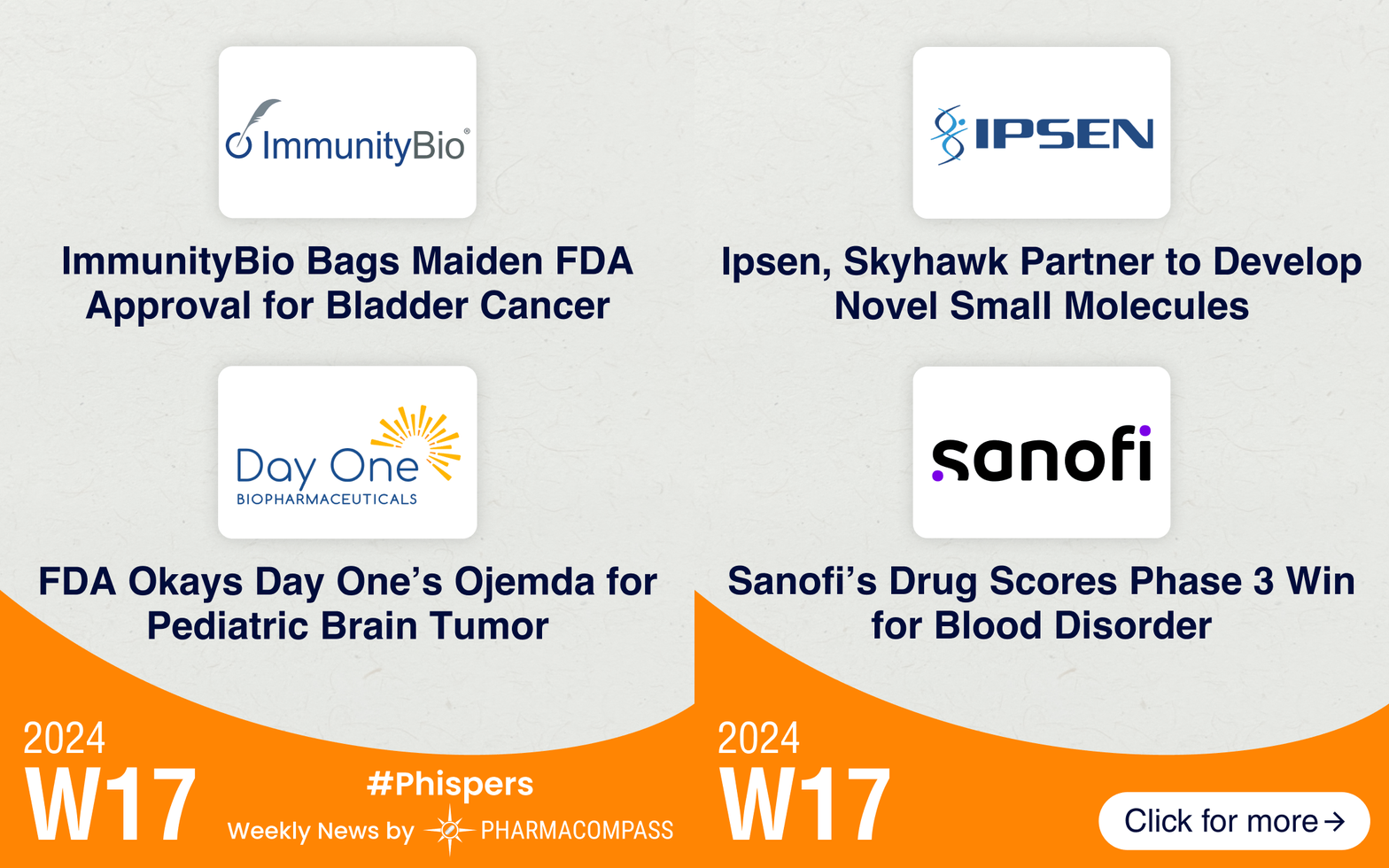
This week’s Phispers comes packed with news about drug approvals by the US Food and Drug Administration (FDA). The agency approved three drugs for cancer and one for Crohn’s disease. Amongst these was ImmunityBio that bagged its maiden FDA approval for its bladder cancer drug Anktiva. The agency also granted accelerated approval to Day One’s Ojemda to treat the most common form of childhood brain tumor. Roche’s Alecensa secured FDA approval to become the first adjuvant treatment for early-stage lung cancer after surgery, and Takeda’s self-administered version of Entyvio got FDA’s nod for Crohn’s disease.The week also saw two deals in the RNA space. Ipsen and
Skyhawk Therapeutics inked a potential US$ 1.8 billion deal to discover and
develop RNA-targeting small molecules for rare neurological diseases.
Boehringer Ingelheim and Ochre Bio also signed a deal to develop regenerative
therapies for liver diseases. Besides these, Incyte agreed to buy Escient
Pharmaceuticals for US$ 750 million, including two candidates that have shown
potential in treating inflammatory skin conditions.In trials, Sanofi’s rilzabrutinib saw a late-stage win in treating a blood disorder known as immune thrombocytopenia, and Neurocrine’s Takeda-partnered experimental drug NBI-1065845 showed promise in a depression study.ImmunityBio bags maiden FDA
nod for bladder cancer med AnktivaIn what marks the first approval for ImmunityBio, FDA has greenlit Anktiva
(nogapendekin alfa inbakicept-pmln) as part of a combination therapy to treat a type of bladder cancer. Anktiva was okayed alongside the Bacillus Calmette-Guérin (BCG) vaccine to treat patients with BCG-unresponsive non-muscle invasive bladder cancer (NMIBC) with carcinoma in situ (CIS). Anktiva is a first-in-class IL-15 agonist, a next-generation immunotherapy beyond checkpoint inhibitors. It creates long-term immunity by activating the so-called natural killer (NK) cells and T-cells. It will compete with Merck’s Keytruda. The approval is a shot in
the arm for ImmunityBio, given that it had reiterated doubts about its ability to stay in
business only last month.Day One’s Ojemda bags accelerated approval: Day One Biopharmaceuticals’ Ojemda (tovorafenib) has been granted FDA’s accelerated approval to treat certain types of
pediatric brain cancer. The pan-RAF kinase inhibitor has been okayed for patients six months of age and older with relapsed or
refractory pediatric low-grade glioma (LGG) harboring a BRAF fusion or
rearrangement, or BRAF V600 mutation. This is the first FDA approval of a
systemic therapy for treating what is the most common form of childhood brain
tumor, including fusions.Genentech’s Alecensa okayed for early-stage lung cancer: FDA has approved Genentech’s Alecensa (alectinib) as an adjuvant treatment
following tumor removal in patients with anaplastic lymphoma kinase
(ALK)-positive non-small cell lung cancer (NSCLC). The approval helps address
an urgent unmet need, with about half of the
people living with early-stage NSCLC experiencing disease recurrence following
surgery, despite adjuvant chemotherapy. The decision comes over a month ahead of Alecensa’s PDUFA date of May 22.Takeda’s Entyvio approved for Crohn’s disease: FDA has approved Entyvio (vedolizumab) subcutaneous administration
as a maintenance therapy in adults with moderately to severely active Crohn’s disease (CD) after induction therapy with intravenous Entyvio. A phase 3 trial showed a significant finding — 48 percent of patients who received subcutaneous
Entyvio achieved long-term clinical remission.Ipsen, Skyhawk ink potential
US$ 1.8 bn deal for rare neurological diseasesSkyhawk Therapeutics has swooped in on a deal to discover and develop novel small molecules that
modulate RNA for rare neurological diseases. Skyhawk’s unique platform accelerates building RNA-targeting small molecules across several therapeutic areas, including rare neurological diseases. The promising technology allows for the exploration of previously unmet needs. Ipsen has committed up to US$ 1.8 billion but didn’t go into details.Boehringer, Ochre Bio sign potential US$
1 bn deal to develop liver therapiesBoehringer Ingelheim and Ochre Bio have struck a deal potentially worth over US$ 1 billion to collaborate on therapies for liver diseases, such as metabolic dysfunction-associated steatohepatitis
(MASH) cirrhosis. Liver is the only organ that can regenerate itself. Ochre Bio will seek to develop drugs that aim to harness the organ’s capacity to regenerate. Ochre Bio will utilize its proprietary discovery
platform combining machine learning with human big data, including
advanced imaging and deep genomic phenotyping, as well as in-house RNA
chemistry.Incyte to buy Escient Pharma: Incyte has agreed to buy Escient Pharmaceuticals for US$ 750 million, which gives the former
ownership over a couple of candidates that have shown potential in treating inflammatory skin conditions and itching related to kidney and liver diseases.Lilly buys Nexus’ Wisconsin plant: Eli Lilly has bought a manufacturing
facility in Wisconsin that produces injectables from Nexus Pharmaceuticals for an undisclosed sum. A surge in demand for glucagon-like peptide-1
(GLP-1) agonists, a class of medications highly effective in treating both
diabetes and obesity, has resulted in supply constraints for companies like
Lilly and Novo Nordisk. Lilly expects to begin
production at the site at the end of 2025.Sanofi’s rilzabrutinib triumphs in late-stage trial for blood disorderData from a late-stage study of Sanofi’s BTK inhibitor rilzabrutinib has shown that it led to durable platelet
response in treating immune thrombocytopenia (ITP). Having met the primary
endpoint in a phase 3 study, Sanofi plans on filing regulatory submissions in
the US and Europe this year. Sanofi had acquired rilzabrutinib through its US$ 3.68 billion acquisition of
Principia Biopharma. ITP is a serious, acquired autoimmune blood disorder
characterized by autoantibody-mediated platelet destruction and impaired
platelet production, leading to thrombocytopenia and an increased risk of
life-threatening bleeding episodes.Neurocrine’s experimental drug shows promise in depression: Neurocrine Biosciences said its experimental drug NBI-1065845 significantly reduced depression severity in adults with major depressive disorder in a phase 2
study that had enrolled 183 patients (who had previously shown inadequate
response to antidepressants). Neurocrine is developing NBI-1065845 in
partnership with Takeda. If approved, the drug could
become the first of its kind.Leqembi sales treble: Despite reports of physician skepticism, Biogen’s Leqembi (lecanemab) reported nearly three-fold increase in sales of the Alzheimer’s drug — at US$ 19 million in the first quarter of
2024 as compared to the previous quarter sales of US$ 7 million.

















 Share
Share