
Find Hydroquinone manufacturers, exporters & distributors on PharmaCompass

PharmaCompass

Synopsis

Related ProductsRelated Products

Synopsis

0INTERMEDIATES

REF. STANDARDS OR IMPURITIES

0

EDQM

0

USP

0

JP

FINISHED DOSAGE FORMULATIONS

0

Australia

0

South Africa

FDF Dossiers

DRUG PRODUCT COMPOSITIONS

177RELATED EXCIPIENT COMPANIES

324EXCIPIENTS BY APPLICATIONS

PATENTS & EXCLUSIVITIES

0

US Patents

0

US Exclusivities

0

Health Canada Patents

GLOBAL SALES INFORMATION

US Medicaid

NA

Annual Reports

NA

Regulatory FDF Prices

NA

MARKET PLACE

DIGITAL CONTENT

0

Stock Recap #PipelineProspector

0

Weekly News Recap #Phispers
Chemistry

Click the arrow to open the dropdown
read-moreClick the button for full data set
Also known as: Benzene-1,4-diol, 1,4-benzenediol, 123-31-9, Quinol, 1,4-dihydroxybenzene, P-benzenediol
Molecular Formula
C6H6O2
Molecular Weight
110.11  g/mol
InChI Key
QIGBRXMKCJKVMJ-UHFFFAOYSA-N
FDA UNII
XV74C1N1AE

Hydroquinone
Hydroquinone is a metabolite found in the aging mouse brain.
Hydroquinone is a Melanin Synthesis Inhibitor. The mechanism of action of hydroquinone is as a Melanin Synthesis Inhibitor. The physiologic effect of hydroquinone is by means of Depigmenting Activity.
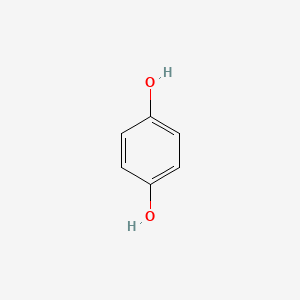
1 2D Structure

Hydroquinone

2 Identification
2.1 Computed Descriptors
2.1.1 IUPAC Name
benzene-1,4-diol
2.1.2 InChI
InChI=1S/C6H6O2/c7-5-1-2-6(8)4-3-5/h1-4,7-8H
2.1.3 InChI Key
QIGBRXMKCJKVMJ-UHFFFAOYSA-N
2.1.4 Canonical SMILES
C1=CC(=CC=C1O)O
2.2 Other Identifiers
2.2.1 UNII
XV74C1N1AE
2.3 Synonyms
2.3.1 MeSH Synonyms

1. 1,4-benzenediol

2. 1,4-dihydroxybenzene

3. Artra

4. Beta-quinol

5. Eldopaque

6. Eldoquin

7. Esoterica

8. Hidroquilaude

9. Hidroquin

10. Hidroquinona Isdin

11. Hydroquinone, Copper (1+) Salt

12. Hydroquinone, Lead (2+) Salt (2:1)

13. Hydroquinone, Monocopper (2+) Salt

14. Licostrata

15. Lustra

16. Melanasa

17. Melanex

18. Melpaque

19. Melquin

20. Neostrata Hq

21. P-benzenediol

22. Phiaquin

23. Solaquin

24. Ultraquin

2.3.2 Depositor-Supplied Synonyms

1. Benzene-1,4-diol

2. 1,4-benzenediol

3. 123-31-9

4. Quinol

5. 1,4-dihydroxybenzene

6. P-benzenediol

7. P-hydroquinone

8. P-hydroxyphenol

9. 4-hydroxyphenol

10. P-dihydroxybenzene

11. Benzoquinol

12. Eldoquin

13. Hydroquinol

14. Eldopaque

15. Phiaquin

16. P-dioxybenzene

17. Solaquin Forte

18. Dihydroquinone

19. Hydroquinole

20. Idrochinone

21. Tecquinol

22. Benzohydroquinone

23. Arctuvin

24. Hidroquinone

25. Tequinol

26. Dihydroxybenzene

27. Eldopaque Forte

28. Eldoquin Forte

29. Derma-blanch

30. Tenox Hq

31. Hydrochinon

32. Hydrochinone

33. Artra

34. Diak 5

35. Benzene, P-dihydroxy-

36. 1,4-dihydroxy-benzol

37. Usaf Ek-356

38. 1,4-diidrobenzene

39. Nci-c55834

40. P-dioxobenzene

41. 1,4-dihydroxybenzen

42. Black And White Bleaching Cream

43. Para-dioxybenzene

44. Para-hydroquinone

45. Pyrogentistic Acid

46. 1,4-dihydroxy-benzeen

47. He 5

48. Para-dihydroxybenzene

49. Melanex

50. Idrochinone [italian]

51. Hydrochinon [czech, Polish]

52. 1,4-dihydroxybenzen [czech]

53. 1,4-diidrobenzene [italian]

54. 1,4-dihydroxy-benzeen [dutch]

55. 1,4-dihydroxy-benzol [german]

56. Chebi:17594

57. Nsc 9247

58. Un2662

59. Hydroquinone [usp]

60. Ai3-00072

61. Nsc-9247

62. Mfcd00002339

63. Hq

64. Chembl537

65. Xv74c1n1ae

66. 1,4-benzenediol, Homopolymer

67. Dtxsid7020716

68. Hydroquinone [un2662] [poison]

69. Hydroquinone (usp)

70. Ncgc00015523-02

71. Beta-quinol

72. Dsstox_cid_716

73. Para-hydroxyphenol

74. Dsstox_rid_75754

75. Dsstox_gsid_20716

76. Eldopacque

77. Hydroquinone (benzene-1,4-diol)

78. Epiquin

79. Sunvanish

80. P Benzendiol

81. P-dihydroquinone

82. Alpha-hydroquinone

83. 26982-52-5

84. Cas-123-31-9

85. Smr000059154

86. Ccris 714

87. 1,4-hydroxybenzene

88. Hsdb 577

89. Sr-01000075920

90. 4-dihydroxybenzene

91. Einecs 204-617-8

92. Unii-xv74c1n1ae

93. Hydroquinon

94. Hydroquinoue

95. Hydroq Uinone

96. Hydroquinone Gr

97. A-hydroquinone

98. Black & White Bleaching Cream

99. P-hydroxybenzene

100. B-quinol

101. 4-benzenediol

102. Hydroquinone, Hq

103. .beta.-quinol

104. 1,4 Benzenediol

105. Hydroquinone,(s)

106. P-dihydroxy Benzene

107. Hqe

108. Hydroquinone Polymer

109. Plq

110. Artra (salt/mix)

111. 1, 4-benzenediol

112. Hydrop

113. .alpha.-hydroquinone

114. Phenol Derivative, 4

115. 4-hydroxyphenyl Alcohol

116. Spectrum_001757

117. 4e3h

118. Specplus_000769

119. 1,4-dihydrobenzoquinone

120. Eldoquin (tn)

121. Hydroquinone For Synthesis

122. Spectrum2_001672

123. Spectrum3_000656

124. Spectrum4_000633

125. Spectrum5_001430

126. Hydroquinone [mi]

127. Lopac-h-9003

128. Wln: Qr Dq

129. Bmse000293

130. Epitope Id:116206

131. Ec 204-617-8

132. Hydroquinone [hsdb]

133. Hydroquinone [iarc]

134. Hydroquinone [inci]

135. Hydroquinone [vandf]

136. 1,4-dihydroxybenzene Quinol

137. Lopac0_000577

138. Schembl15516

139. Bspbio_002291

140. Hydroquinone [mart.]

141. Kbiogr_001246

142. Kbioss_002237

143. 1,4-dihydroxybenzene, Xiii

144. Mls000069815

145. Mls001074911

146. Bidd:er0340

147. Divk1c_006865

148. Hydroquinone [usp-rs]

149. Hydroquinone [who-dd]

150. Hydroquinone, Lr, >=99%

151. Spectrum1504237

152. Hydrochinon(czech, Polish)

153. Spbio_001883

154. Bdbm26190

155. Hydroquinone, Puriss., 99.0%

156. Kbio1_001809

157. Kbio2_002237

158. Kbio2_004805

159. Kbio2_007373

160. Kbio3_001511

161. Nsc9247

162. Benzene-1,4-diol (hydroquinone)

163. Hms1922h15

164. Hms2093e08

165. Hms3261d16

166. Hydroquinone [orange Book]

167. Pharmakon1600-01504237

168. Hy-b0951

169. Zinc5133378

170. Hydroquinone [usp Monograph]

171. Tox21_110169

172. Tox21_202345

173. Tox21_300015

174. Tox21_500577

175. Ccg-39082

176. Nsc758707

177. S4580

178. Stk397446

179. Akos000119003

180. Tox21_110169_1

181. Tri-luma Component Hydroquinone

182. Am10548

183. Db09526

184. Lp00577

185. Nsc-758707

186. Sdccgsbi-0050559.p003

187. Un 2662

188. Hydroquinone 100 Microg/ml In Methanol

189. Hydroquinone, Reagentplus(r), >=99%

190. Hydroquinone, Usp, 99.0-100.5%

191. Ncgc00015523-01

192. Ncgc00015523-03

193. Ncgc00015523-04

194. Ncgc00015523-05

195. Ncgc00015523-06

196. Ncgc00015523-07

197. Ncgc00015523-08

198. Ncgc00015523-09

199. Ncgc00015523-10

200. Ncgc00015523-11

201. Ncgc00015523-12

202. Ncgc00015523-13

203. Ncgc00015523-19

204. Ncgc00090880-01

205. Ncgc00090880-02

206. Ncgc00090880-03

207. Ncgc00090880-04

208. Ncgc00090880-05

209. Ncgc00254037-01

210. Ncgc00259894-01

211. Ncgc00261262-01

212. Bp-21160

213. Da-33570

214. Hydroquinone Component Of Tri-luma

215. Hydroquinone, Reagentplus(r), >=99.5%

216. Sbi-0050559.p002

217. Hydroquinone, Saj First Grade, >=99.0%

218. Eu-0100577

219. Ft-0606877

220. H0186

221. Hydroquinone, Saj Special Grade, >=99.0%

222. Hydroquinone, Meets Usp Testing Specifications

223. C00530

224. D00073

225. H 9003

226. Ab00053361_08

227. Quinol; 1,4-benzenediol; 1,4-dihydroxybenzene

228. Q419164

229. Butylhydroxyanisole Impurity A [ep Impurity]

230. J-004910

231. J-521469

232. Sr-01000075920-1

233. Sr-01000075920-4

234. Q27102742

235. Z57127551

236. 094caddb-59bf-4edf-b278-59791b203ea2

237. F1908-0167

238. Hydroquinone, Certified Reference Material, Tracecert(r)

239. Hydroquinone, United States Pharmacopeia (usp) Reference Standard

240. Hydroquinone, Pharmaceutical Secondary Standard; Certified Reference Material

2.4 Create Date
2004-09-16
3 Chemical and Physical Properties
Molecular Weight 110.11 g/mol
Molecular Formula C6H6O2
XLogP30.6
Hydrogen Bond Donor Count2
Hydrogen Bond Acceptor Count2
Rotatable Bond Count0
Exact Mass110.036779430 g/mol
Monoisotopic Mass110.036779430 g/mol
Topological Polar Surface Area40.5 Ų
Heavy Atom Count8
Formal Charge0
Complexity54.9
Isotope Atom Count0
Defined Atom Stereocenter Count0
Undefined Atom Stereocenter Count0
Defined Bond Stereocenter Count0
Undefined Bond Stereocenter Count0
Covalently Bonded Unit Count1
4 Drug and Medication Information
4.1 Therapeutic Uses

For the gradual temporary bleaching of hyperpigmented skin conditions such as chloasma, melasma, freckles, senile lentigines, and other unwanted areas of melanin hyperpigmentation.

Drug Facts and Comparisons 2013. Wolters Kluwer Health St. Louis, MO 2013, p. 3264


TRI-LUMA Cream is a combination of fluocinolone acetonide (a corticosteroid), hydroquinone (a melanin synthesis inhibitor), and tretinoin (a retinoid) that is indicated for the short-term treatment of moderate to severe melasma of the face, in the presence of measures for sun avoidance, including the use of sunscreens. /Included in US product label/

US Natl Inst Health; DailyMed. Current Medication Information for Tri-Luma (fluocinolone acetonide, hydroquinone, and tretinoin) (April 2014). Available from, as of November 12, 2014: https://dailymed.nlm.nih.gov/dailymed/drugInfo.cfm?id=8729


4.2 Drug Warning

This medication is for external use only. A mild transient stinging may occur in people with sensitive skin. Do not use on broken or irritated skin. Discontinue use if irritation or rush occurs. Avoid contact with eyes and mucous membranes. In case of contact, rinse thoroughly with water.

Drug Facts and Comparisons 2013. Wolters Kluwer Health St. Louis, MO 2013, p. 3265


To evaluate possible susceptibility to irritation, or sensitivity, each patient should begin with applying the medication to a small portion of unbroken skin at or near the pigmented area (approx 1 sq cm) over a period of several days. If no irritation occurs within 24 hr, begin treatment. Minor redness is not necessarily a contraindication, but treatment should be discontinued if itching, excessive inflammation, or vesicle formation occurs. Use of hydroquinone products in paranasal and infraorbital areas increase the chance of irritation. If no improvement is seen after 2 mo of treatment, use of this product should be discontinued.

Drug Facts and Comparisons 2013. Wolters Kluwer Health St. Louis, MO 2013, p. 3265


Sunscreen use is an essential aspect of hydroquinone therapy since even minimal sunlight exposure stimulates melanocyte activity. The sunscreens in some hydroquinone products provide the necessary sun protection during skin bleaching activity. During the depigmentation maintenance treatment subsequent to the intensive depigmentation therapy, sun exposure of the bleached skin should be avoided to prevent repigmentation.

Drug Facts and Comparisons 2013. Wolters Kluwer Health St. Louis, MO 2013, p. 3265


Concurent use of peroxide may result in transient dark staining of skin ares due to oxidation of hydroquinone. Staining can be removed by discontinuing concurrent use and by normal soap cleansing.

Drug Facts and Comparisons 2013. Wolters Kluwer Health St. Louis, MO 2013, p. 3265


For more Drug Warnings (Complete) data for HYDROQUINONE (9 total), please visit the HSDB record page.


4.3 Minimum/Potential Fatal Human Dose

Fatal cases have been reported after ingestion of 5 to 12 g.

Clayton, G. D. and F. E. Clayton (eds.). Patty's Industrial Hygiene and Toxicology: Volume 2A, 2B, 2C: Toxicology. 3rd ed. New York: John Wiley Sons, 1981-1982., p. 2591


4.4 Drug Indication

Hydroquinone is used as an OTC topical lightening agent for disorders of hyperpigmentation including melasma, post-inflammatory hyperpigmention, sunspots and freckles.


FDA Label


5 Pharmacology and Biochemistry
5.1 MeSH Pharmacological Classification

Antioxidants

Naturally occurring or synthetic substances that inhibit or retard oxidation reactions. They counteract the damaging effects of oxidation in animal tissues. (See all compounds classified as Antioxidants.)


Mutagens

Chemical agents that increase the rate of genetic mutation by interfering with the function of nucleic acids. A clastogen is a specific mutagen that causes breaks in chromosomes. (See all compounds classified as Mutagens.)


Radiation-Protective Agents

Drugs used to protect against ionizing radiation. They are usually of interest for use in radiation therapy but have been considered for other purposes, e.g. military. (See all compounds classified as Radiation-Protective Agents.)


5.2 FDA Pharmacological Classification
5.2.1 Active Moiety
HYDROQUINONE
5.2.2 FDA UNII
XV74C1N1AE
5.2.3 Pharmacological Classes
Melanin Synthesis Inhibitor [EPC]; Melanin Synthesis Inhibitors [MoA]; Depigmenting Activity [PE]
5.3 ATC Code

D - Dermatologicals

D11 - Other dermatological preparations

D11A - Other dermatological preparations

D11AX - Other dermatologicals

D11AX11 - Hydroquinone


5.4 Absorption, Distribution and Excretion

A toxicology review of hydroquinone noted several reports indicating relatively rapid absorption of hydroquinone via the oral route, including a study involving rats that ingested 3% hydroquinone in developer solution. In addition, in CD and F344 rats dosed with 350 mg/kg, >90% absorption was measured in blood levels, with peak levels observed within 1 hr.[DHHS/NTP: Nomination Profile Hydroquinone

123-31-9]. Supporting Information for Toxicological Evaluation by the National Toxicology Program. p.10 (2009). Available from, as of November 12, 2014: https://ntp-server.niehs.nih.gov


Following intravenous (iv) administration of radiolabeled hydroquinone, radioactivity (either hydroquinone or a metabolite) was detected within 2 hr in bone marrow and thymus of rats given 1.2-12 mg/kg. Radioactivity was also detected in the liver and bone marrow of these rats up to 24 hr. Whether given in single or repeated oral doses, radioactivity was found in various rat tissues, with the highest concentrations in the liver and kidneys. Following i.v. administration of radiolabeled hydroquinone in dogs, radioactivity was found in the skin, liver, and intestine. When mice were administered 75 mg/kg radiolabeled hydroquinone by intraperitoneal (ip) injection, radioactivity was detected covalently bound to proteins in the liver, kidneys, blood, and bone marrow, with 10-fold higher specific activity in the liver than in the bone marrow...[DHHS/NTP: Nomination Profile Hydroquinone

123-31-9]. Supporting Information for Toxicological Evaluation by the National Toxicology Program. p.12 (2009). Available from, as of November 12, 2014: https://ntp-server.niehs.nih.gov


When 2% [(14)C]-hydroquinone was administered to human forearms (n = 4 males) in an unspecified cream, hydroquinone moved rapidly and continuously into the stratum corneum and radiolabel was detected in plasma samples within 0.5 hr. Over an 8 hr plasma sampling period, hydroquinone levels peaked at 4 hr (0.04 equivalents/ mL). Following application of the 2% cream on the foreheads of 6 male volunteers for 24 hr, the recovery of hydroquinone in urine was 45.3% (SD = 11.2%).[DHHS/NTP: Nomination Profile Hydroquinone

123-31-9]. Supporting Information for Toxicological Evaluation by the National Toxicology Program. p.11 (2009). Available from, as of November 12, 2014: https://ntp-server.niehs.nih.gov


Human absorption of hydroquinone upon topical application is less efficient than with oral administration. When absorption was measured as elimination 10 of hydroquinone via urine following application (2.0% in alcohol) to the foreheads of human volunteers (6 males per preparation) for 24 hr, the average percutaneous absorption reported was 57% (SD = 11%) with peak elimination within 12 hr and complete elimination by 5 days. The addition of a sunscreen (3.0% Escalol 507) significantly decreased the absorption (26%, SD = 14%), and the addition of a penetration enhancer (0.5% Azone) did not significantly increase absorption in the presence or absence of the sunscreen (35%, SD = 17% and 66%, SD = 13%, respectively).[DHHS/NTP: Nomination Profile Hydroquinone

123-31-9]. Supporting Information for Toxicological Evaluation by the National Toxicology Program. p.10-11 (2009). Available from, as of November 12, 2014: https://ntp-server.niehs.nih.gov


For more Absorption, Distribution and Excretion (Complete) data for HYDROQUINONE (17 total), please visit the HSDB record page.


5.5 Metabolism/Metabolites

Hydroquinone is absorbed through the skin and metabolized primarily to sulfate and glucuronide conjugates, which are excreted in the urine.[DHHS/NTP: Nomination Profile Hydroquinone

123-31-9]. Supporting Information for Toxicological Evaluation by the National Toxicology Program. p.2 (2009). Available from, as of November 12, 2014: https://ntp-server.niehs.nih.gov


Absolute recovery of approximately 45 ng (18%) of hydroquinone as microsomal metabolite of benzene was determined.

ROSTON DA, KISSINGER PT; ANAL CHEM 54 (11): 1798 (1982)


/This study/ investigated the metabolism of hydroquinone in naive and hydroquinone pretreated male Sprague-Dawley rats. (14)C hydroquinone was administered by gavage in single doses of 5, 30, or 200 mg/kg to naive rats. Hydroquinone was given repeatedly by gavage to male rats at 200 mg/kg for 4 consecutive days followed by a single dose with 200 mg/kg of (14)C hydroquinone. In separate studies rats were fed 5.6% unlabeled hydroquinone in the diet for 2 days or were dosed by gavage with 311 mg/kg (14)C hydroquinone. The excretion patterns of (14)C hydroquinone and its metabolites were similar for rats dosed singly or repeatedly. Rats given a single dose of 200 mg/kg of (14)C hydroquinone excreted 91.9% of the dose in the urine within 2-4 days; 3.8% was excreted in the feces, about 0.4% was excreted in expired air, and 1.2% remained in the carcass. Radioactivity was widely distributed throughout the tissues with higher concentrations in the liver and kidneys. A decrease in (14)C tissue concentrations occurred from 48 to 96 hr. The only radiolabeled compounds in the urine were hydroquinone (1.1-8.6% of the dose), hydroquinone monosulfate (25-42%), and hydroquinone monoglucuronide (56-66%). Similar findings were observed for rats given hydroquinone in the feed. There were no significant increases from controls for absolute or relative liver weights, liver microsomal protein concentrations, cytochrome b-5, cytochrome P450 or cytochrome c reductase activity in rats dosed repeatedly with 200 mg/kg hydroquinone. Cytochrome P450 values were slightly but significantly decreased in rats dosed repeatedly with hydroquinone compared with controls.

Divincenzo GD et al; Toxicol 33 (1): 9-18 (1984)


The metabolite 2-(S-glutathionyl)hydroquinone is formed when a microsomal incubation mixture containing either benzene or phenol is supplemented with glutathione. This metabolite is derived from the conjugation of benzoquinone, an oxidation product of hydroquinone. However, neither the glutathione conjugate or its mercapturate, N-acetyl-S-(2,5-dihydroxyphenyl)-L-cysteine, have been identified as metabolites resulting from in vivo metabolism of benzene, phenol, or hydroquinone. To determine if a hydroxylated mercapturate is produced in vivo, we treated male Sprague-Dawley rats with either benzene (600 mg/kg), phenol (75 mg/kg), or hydroquinone (75 mg/kg) and collected the urine for 24 hr. HPLC coupled with electrochemical detection confirmed the presence of a metabolite that was chromatographically and electrochemically identical to N-acetyl-S-(2,5-dihydroxyphenyl)-L-cysteine. The metabolite was isolated from the urine samples and treated with diazomethane to form the N-acetyl-S-(2,5-dimethoxyphenyl)-L-cysteine methyl ester derivative. The mass spectra obtained from these samples were identical to that of an authentic sample of the derivative. The results of these experiments indicate that benzene, phenol, and hydroquinone are metabolized in vivo to benzoquinone and excreted as the mercapturate, N-acetyl-S-(2,5-dihydroxyphenyl)-L- cysteine.

PMID:1981544 Nerland DE, Pierce WM Jr; Drug Metab Dispos 18 (6): 958-61 (1990)


For more Metabolism/Metabolites (Complete) data for HYDROQUINONE (14 total), please visit the HSDB record page.


Hydroquinone is a known human metabolite of phenol.

S73 | METXBIODB | Metabolite Reaction Database from BioTransformer | DOI:10.5281/zenodo.4056560


5.6 Biological Half-Life

/Hydroquinone was administered alone and in combination with phenol at 75 mg/kg each to B6C3F1 mice/. The half-life of hydroquinone was increased from 9 +/- 2 to 15 +/- 3 min /when phenol was administered in combination with hydroquinone/.

PMID:8291054 Legathe A et al; Toxicol Appl Pharmacol 124 (1): 131-8 (1994)


5.7 Mechanism of Action

Hydroquinone reduces melanin pigment production through inhibition of the tyrosinase enzyme, which is involved in the initial step of the melanin pigment biosynthesis pathway. Hydroquinone takes several months to take effect.


Benzene is a well-established human carcinogen. Benzene metabolites hydroquinone (HQ) and benzoquinone (BQ) are highly reactive molecules capable of producing reactive oxygen species and causing oxidative stress. /This study/ investigated the role of the Nrf2, a key nuclear transcription factor that regulates antioxidant response element (ARE)-containing genes, in defense against HQ- and BQ-induced cytotoxicity in cultured human lung epithelial cells (Beas-2B). When the cells were exposed to HQ or BQ the activity of an ARE reporter was induced in a dose-dependent manner, meanwhile Nrf2 protein levels were elevated and accumulated in the nucleus. Increased expression of well-known Nrf2-dependent proteins including NQO1, GCLM, GSS and HMOX was also observed in the HQ/BQ-treated cells. Moreover, transient overexpression of Nrf2 conferred protection against HQ- and BQ-induced cell death, whereas knockdown of Nrf2 by small interfering RNA resulted in increased apoptosis. /This study/ also found that the increased susceptibility of Nrf2-knockdown cells to HQ and BQ was associated with reduced glutathione levels and loss of inducibility of ARE-driven genes, suggesting that deficiency of Nrf2 impairs cellular redox capacity to counteract oxidative damage. Altogether, these results suggest that Nrf2-ARE pathway is essential for protection against HQ- and BQ-induced toxicity.

PMID:21059386 Rubio V et al; Toxicol In Vitro. 25(2):521-9. (2011).


Related Excipient Companies

Upload your portfolio for free, ask us

Excipients by Applications

Click here to find the perfect excipient manufacturers by their capabilities

Topical

read-more
read-more

Solubilizers

read-more
read-more

Parenteral

read-more
read-more

Thickeners and Stabilizers

read-more
read-more

Emulsifying Agents

read-more
read-more

Surfactant & Foaming Agents

read-more
read-more

Film Formers & Plasticizers

read-more
read-more

Coating Systems & Additives

read-more
read-more

API Stability Enhancers

read-more
read-more

Lubricants & Glidants

read-more
read-more

Controlled & Modified Release

read-more
read-more

Fillers, Diluents & Binders

read-more
read-more

Granulation

read-more
read-more

Direct Compression

read-more
read-more

Taste Masking

read-more
read-more

Rheology Modifiers

read-more
read-more

Co-Processed Excipients

read-more
read-more

Disintegrants & Superdisintegrants

read-more
read-more

Digital Content read-more

Create Content with PharmaCompass, ask us

DATA COMPILATION #PharmaFlow

read-more
read-more

NEWS #PharmaBuzz

read-more
read-more

Market Place

Do you need sourcing support? Ask us

REF. STANDARDS & IMPURITIES

Upload your portfolio for free, ask us

ANALYTICAL

Upload your methods for free, ask us

Analytical Methods

read-more
read-more

ABOUT THIS PAGE

Looking for 123-31-9 / Hydroquinone API manufacturers, exporters & distributors?

Hydroquinone manufacturers, exporters & distributors 1

98

PharmaCompass offers a list of Hydroquinone API manufacturers, exporters & distributors, which can be sorted by GMP, USDMF, JDMF, KDMF, CEP (COS), WC, Price,and more, enabling you to easily find the right Hydroquinone manufacturer or Hydroquinone supplier for your needs.

Send us enquiries for free, and we will assist you in establishing a direct connection with your preferred Hydroquinone manufacturer or Hydroquinone supplier.

PharmaCompass also assists you with knowing the Hydroquinone API Price utilized in the formulation of products. Hydroquinone API Price is not always fixed or binding as the Hydroquinone Price is obtained through a variety of data sources. The Hydroquinone Price can also vary due to multiple factors, including market conditions, regulatory modifications, or negotiated pricing deals.

API | Excipient name

Hydroquinone

Synonyms

Benzene-1,4-diol, 1,4-benzenediol, 123-31-9, Quinol, 1,4-dihydroxybenzene, P-benzenediol

Cas Number

123-31-9

Unique Ingredient Identifier (UNII)

XV74C1N1AE

About Hydroquinone

Hydroquinone is a metabolite found in the aging mouse brain.

p-Hydroxyphenol Manufacturers

A p-Hydroxyphenol manufacturer is defined as any person or entity involved in the manufacture, preparation, processing, compounding or propagation of p-Hydroxyphenol, including repackagers and relabelers. The FDA regulates p-Hydroxyphenol manufacturers to ensure that their products comply with relevant laws and regulations and are safe and effective to use. p-Hydroxyphenol API Manufacturers are required to adhere to Good Manufacturing Practices (GMP) to ensure that their products are consistently manufactured to meet established quality criteria.

click here to find a list of p-Hydroxyphenol manufacturers with USDMF, JDMF, KDMF, CEP, GMP, COA and API Price related information on PhamaCompass.

p-Hydroxyphenol Suppliers

A p-Hydroxyphenol supplier is an individual or a company that provides p-Hydroxyphenol active pharmaceutical ingredient (API) or p-Hydroxyphenol finished formulations upon request. The p-Hydroxyphenol suppliers may include p-Hydroxyphenol API manufacturers, exporters, distributors and traders.

click here to find a list of p-Hydroxyphenol suppliers with USDMF, JDMF, KDMF, CEP, GMP, COA and API Price related information on PharmaCompass.

p-Hydroxyphenol USDMF

A p-Hydroxyphenol DMF (Drug Master File) is a document detailing the whole manufacturing process of p-Hydroxyphenol active pharmaceutical ingredient (API) in detail. Different forms of p-Hydroxyphenol DMFs exist exist since differing nations have different regulations, such as p-Hydroxyphenol USDMF, ASMF (EDMF), JDMF, CDMF, etc.

A p-Hydroxyphenol DMF submitted to regulatory agencies in the US is known as a USDMF. p-Hydroxyphenol USDMF includes data on p-Hydroxyphenol's chemical properties, information on the facilities and procedures used, and details about packaging and storage. The p-Hydroxyphenol USDMF is kept confidential to protect the manufacturer’s intellectual property.

click here to find a list of p-Hydroxyphenol suppliers with USDMF on PharmaCompass.

p-Hydroxyphenol KDMF

In Korea, the Ministry of Food and Drug Safety (MFDS) is in charge of regulating pharmaceutical products and services.

Pharmaceutical companies submit a p-Hydroxyphenol Drug Master File in Korea (p-Hydroxyphenol KDMF) to the MFDS, which includes comprehensive information about the production, processing, facilities, materials, packaging, and testing of p-Hydroxyphenol. The MFDS reviews the p-Hydroxyphenol KDMF as part of the drug registration process and uses the information provided in the p-Hydroxyphenol KDMF to evaluate the safety and efficacy of the drug.

After submitting a p-Hydroxyphenol KDMF to the MFDS, the registered manufacturer can provide importers or distributors with the registration number without revealing confidential information to Korean business partners. Applicants seeking to register their p-Hydroxyphenol API can apply through the Korea Drug Master File (KDMF).

click here to find a list of p-Hydroxyphenol suppliers with KDMF on PharmaCompass.

p-Hydroxyphenol WC

A p-Hydroxyphenol written confirmation (p-Hydroxyphenol WC) is an official document issued by a regulatory agency to a p-Hydroxyphenol manufacturer, verifying that the manufacturing facility of a p-Hydroxyphenol active pharmaceutical ingredient (API) adheres to the Good Manufacturing Practices (GMP) regulations of the importing country. When exporting p-Hydroxyphenol APIs or p-Hydroxyphenol finished pharmaceutical products to another nation, regulatory agencies frequently require a p-Hydroxyphenol WC (written confirmation) as part of the regulatory process.

click here to find a list of p-Hydroxyphenol suppliers with Written Confirmation (WC) on PharmaCompass.

p-Hydroxyphenol NDC

National Drug Code is a comprehensive database maintained by the FDA that contains information on all drugs marketed in the US. This directory includes information about finished drug products, unfinished drug products, and compounded drug products, including those containing p-Hydroxyphenol as an active pharmaceutical ingredient (API).

Finished drug products

The FDA updates the NDC directory daily. The NDC numbers for p-Hydroxyphenol API and other APIs are published in this directory by the FDA.

Unfinished drugs

The NDC unfinished drugs database includes product listing information submitted for all unfinished drugs, such as active pharmaceutical ingredients (APIs), drugs intended for further processing and bulk drug substances for compounding.

Pharmaceutical companies that manufacture p-Hydroxyphenol as an active pharmaceutical ingredient (API) must furnish the FDA with an updated record of all drugs that they produce, prepare, propagate, compound, or process for commercial distribution in the US at their facilities.

Compounded drug products

The NDC directory also contains data on finished compounded human drug products that contain p-Hydroxyphenol and are produced by outsourcing facilities. While these outsourcing facilities are not mandated to assign a p-Hydroxyphenol NDC to their finished compounded human drug products, they may choose to do so.

click here to find a list of p-Hydroxyphenol suppliers with NDC on PharmaCompass.

p-Hydroxyphenol GMP

p-Hydroxyphenol Active pharmaceutical ingredient (API) is produced in GMP-certified manufacturing facility.

GMP stands for Good Manufacturing Practices, which is a system used in the pharmaceutical industry to make sure that goods are regularly produced and monitored in accordance with quality standards. The FDA’s current Good Manufacturing Practices requirements are referred to as cGMP or current GMP which indicates that the company follows the most recent GMP specifications. The World Health Organization (WHO) has its own set of GMP guidelines, called the WHO GMP. Different countries can also set their own guidelines for GMP like China (Chinese GMP) or the EU (EU GMP).

PharmaCompass offers a list of p-Hydroxyphenol GMP manufacturers, exporters & distributors, which can be sorted by USDMF, JDMF, KDMF, CEP (COS), WC, API price, and more, enabling you to easily find the right p-Hydroxyphenol GMP manufacturer or p-Hydroxyphenol GMP API supplier for your needs.

p-Hydroxyphenol CoA

A p-Hydroxyphenol CoA (Certificate of Analysis) is a formal document that attests to p-Hydroxyphenol's compliance with p-Hydroxyphenol specifications and serves as a tool for batch-level quality control.

p-Hydroxyphenol CoA mostly includes findings from lab analyses of a specific batch. For each p-Hydroxyphenol CoA document that a company creates, the USFDA specifies specific requirements, such as supplier information, material identification, transportation data, evidence of conformity and signature data.

p-Hydroxyphenol may be tested according to a variety of international standards, such as European Pharmacopoeia (p-Hydroxyphenol EP), p-Hydroxyphenol JP (Japanese Pharmacopeia) and the US Pharmacopoeia (p-Hydroxyphenol USP).


Inform the supplier about your product requirements, specifying if you need a product with particular monograph like EP (Ph. Eur.), USP, JP, BP, or any other quality. In addition, clarify whether you need hydrochloride (HCl), anhydricum, base, micronisatum or a specific level of purity. To find reputable suppliers, utilize the filters and select those certified by GMP, FDA, or any other certification as per your requirement.
For your convenience, we have listed synonyms and CAS numbers to help you find the best supplier. The use of synonyms and CAS numbers can be helpful in identifying potential suppliers, but it is crucial to note that they might not always indicate the exact same product. It is important to confirm the product details with the supplier before making a purchase to ensure that it meets your requirements.
Ask Us for Pharmaceutical Supplier and Partner
Ask Us, Find A Supplier / Partner
No Commissions, No Strings Attached, Get Connected for FREE

What are you looking for?

How can we help you?

The request can't be empty

Please read our Privacy Policy carefully

You must agree to the privacy policy

The name can't be empty
The company can't be empty.
The email can't be empty Please enter a valid email.
The mobile can't be empty