



NEWS
- Pharma & Biotech News #PharmaBuzz
- Weekly News Recap #Phispers
- Recent Product Approvals #GreenLight
- Quality Compliance Alerts #Warning!
- All News #Library
DRUGS & DEVELOPMENTS
MARKET INTEL by PharmaCompass

Create content with us, ask us

Phispers On Air
Click & Listen
By PharmaCompass
2026-03-05
Impressions: 1,028 Article || 107 Video || 4 Listen
Over the past week, tensions in the Middle East have escalated sharply after the US and Israel launched military strikes on Iran. The war has rattled global markets. Businesses are adopting a “wait-and-watch” approach, which is why we are noticing a slowdown in dealmaking in this week’s Phispers.
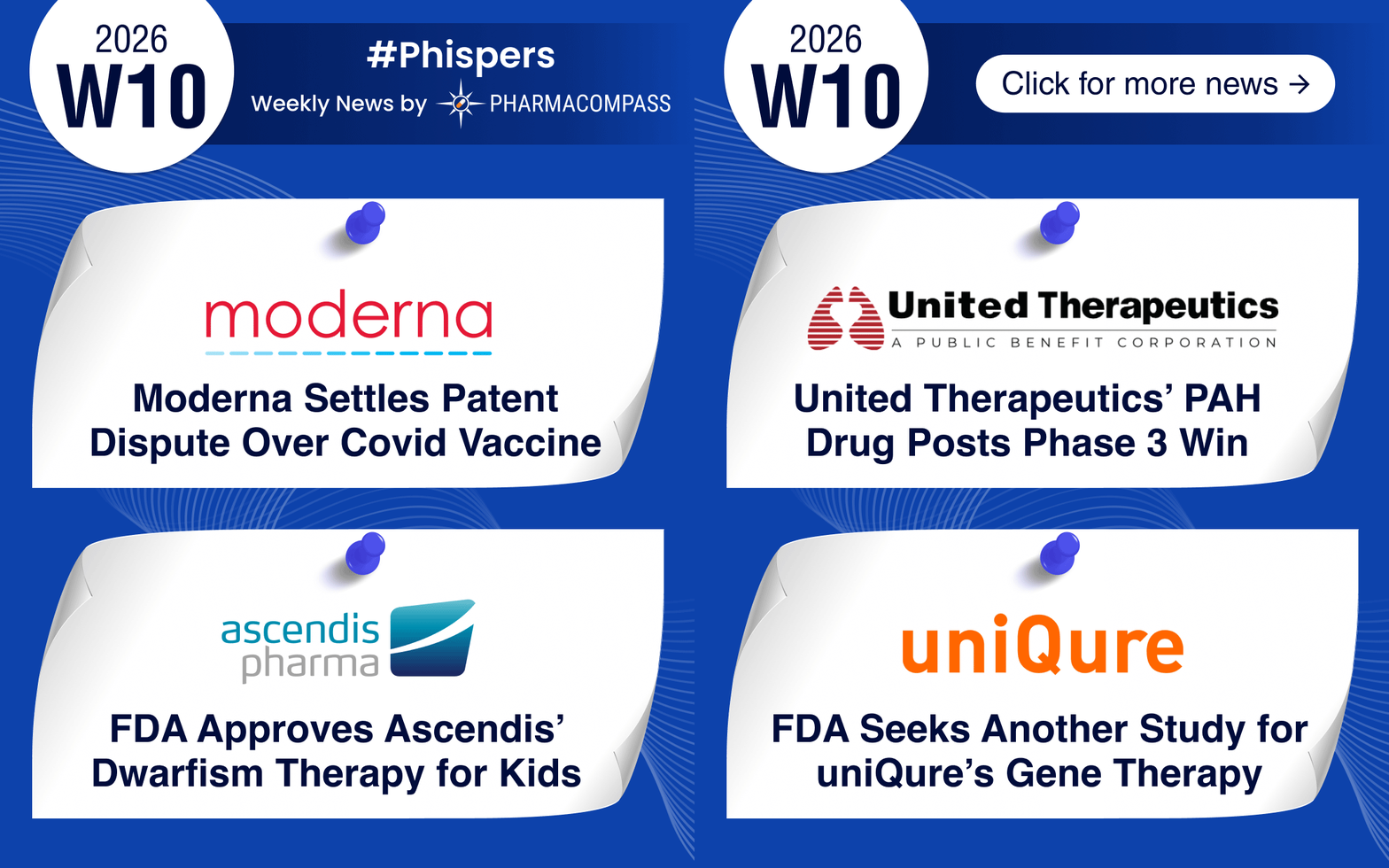
In an attempt to resolve a patent dispute over its Covid-19 vaccine, Moderna has agreed to pay Genevant Sciences and Arbutus Biopharma up to US$ 2.25 billion.
The US Food and Drug Administration (FDA) has granted accelerated approval to Ascendis Pharma’s Yuviwel (navepegritide) for children with a rare genetic disorder that causes dwarfism. The agency also expanded the approval of Novo Nordisk’s Sogroya (somapacitan-beco), which is now approved for three additional pediatric growth disorders.
In news from clinical trials, Pfizer and Astellas’ Padcev (enfortumab vedotin) in combination with Merck’s Keytruda (pembrolizumab) significantly improved outcomes in a phase 3 trial in patients with a type of bladder cancer. United Therapeutics’ experimental drug to treat pulmonary arterial hypertension (PAH) and Roche’s experimental drug to treat multiple sclerosis met their primary endpoints in late-stage trials.
In deals, Sanofi signed an exclusive global licensing deal worth up to US$ 1.53 billion with a subsidiary of Sino Biopharmaceutical for an experimental therapy targeting a type of blood cancer. And Belgium-based UCB struck a deal worth up to US$ 1.1 billion with Antengene to develop and commercialize the Chinese biotech’s experimental autoimmune disease therapy.
Moderna to pay up to US$ 2.25 bn to resolve vaccine patent dispute with Roivant, Arbutus
Moderna has agreed to pay Genevant Sciences, a subsidiary of Roivant, and Arbutus Biopharma up to US$ 2.25 billion to settle a legal dispute over the technology used in its Covid-19 vaccine — Spikevax. The agreement includes an upfront payment of US$ 950 million (to be paid in July 2026), with an additional payment of US$ 1.3 billion that depends on the outcome of another legal appeal. Genevant and Arbutus had accused Moderna of using their lipid nanoparticle delivery technology without their permission in Spikevax. In a press statement, Moderna said it would not owe the companies any royalties for the LNP technology in its future vaccines under the agreement. Genevant and Arbutus had filed a similar lawsuit against Pfizer and BioNTech in 2023. That lawsuit has not yet been settled.
Ascendis’ dwarfism therapy for children wins FDA’s accelerated approval
FDA has granted accelerated approval to Ascendis Pharma’s Yuviwel (navepegritide), a once-weekly injection for children aged two and older with achondroplasia, a rare genetic disorder that causes dwarfism. Achondroplasia is caused by a genetic mutation that affects a protein in the body called fibroblast growth factor receptor 3.
Okays Novo’s Sogroya for three growth disorders: FDA has approved Novo Nordisk’s Sogroya (somapacitan-beco) for three additional pediatric growth disorders. Sogroya is now approved for children with SGA (born small for gestational age), idiopathic short stature (ISS) and Noonan syndrome (NS). Sogroya was first approved in 2020 for the treatment of growth hormone deficiency in adults.
Padcev-Keytruda combo shows strong results in bladder cancer trial
Pfizer and Astellas have said the combination of Padcev (enfortumab vedotin) and Merck’s Keytruda (pembrolizumab) significantly improved outcomes in a phase 3 trial in patients with muscle-invasive bladder cancer eligible for cisplatin-based chemotherapy. In the trial, the regimen cut the risk of recurrence, progression or death by 47 percent compared with chemotherapy and surgery.
United Therapeutics posts phase 3 win for its pulmonary arterial hypertension drug
United Therapeutics has said its experimental drug to treat pulmonary arterial hypertension (PAH) — ralinepag — met its primary endpoint in a phase 3 trial, cutting the risk of the disease worsening by 55 percent as compared with placebo. PAH is a chronic, progressive form of high blood pressure in the lung arteries that forces the right side of the heart to overwork. The company plans to submit a new drug application to the FDA in the second half of 2026. If approved, ralinepag could compete with existing PAH therapies, including Johnson & Johnson’s Uptravi (selexipag).
Roche’s MS drug scores late-stage win even as safety concerns persist
Roche has said its drug candidate for multiple sclerosis — fenebrutinib — met the primary endpoint in a phase 3 trial for the most common form of the disease (i.e. relapsing multiple sclerosis). Roche plans to submit results from this study and a prior study together with a third trial to regulators. However, eight patients who received fenebrutinib died during the trials for various reasons and at different stages of treatment. Therefore, regulators are likely to scrutinize the drug’s safety when Roche files for approval.
FDA seeks additional study on uniQure’s Huntington’s gene therapy
FDA has told uniQure that existing data for its gene therapy for Huntington’s disease — AMT-130 — are insufficient to support an approval filing and has asked for additional clinical evidence. Huntington’s disease is a fatal, inherited neurodegenerative disorder that causes the progressive breakdown of nerve cells in the brain. AMT‑130 is administered directly into the brain’s striatum. According to an FDA official, the agency “has historically rejected studies that are not randomized and placebo-controlled when considering how to approve potential Huntington's disease treatments,” a Reuters news report said.
Lifts hold on Intellia gene therapy trial: FDA has lifted the clinical hold placed on Intellia Therapeutics’ gene therapy for transthyretin amyloidosis with cardiomyopathy (ATTR-CM), a fatal heart condition. The clinical holds on two trials of nexiguran ziclumeran (nex-z) were imposed by the FDA in October after a patient developed severe liver complications.
Sino Biopharm’s unit licenses blood cancer drug to Sanofi for up to US$ 1.53 billion
Sanofi has signed an exclusive global licensing deal worth up to US$ 1.53 billion with a subsidiary of Sino Biopharmaceutical for an experimental therapy — rovadicitinib — that targets a type of blood cancer. Rovadicitinib won regulatory approval in China last month. The company, Chia Tai Tianqing Pharmaceutical Group, will receive an upfront payment of US$ 135 million, and will grant Sanofi an exclusive worldwide license to develop, manufacture and commercialize rovadicitinib. The company is also eligible for milestone payments of up to US$ 1.40 billion.
UCB strikes deal with Antengene: Belgium’s UCB has struck a deal worth up to US$ 1.1 billion with Antengene to develop and commercialize the Chinese biotech’s experimental autoimmune disease therapy — ATG-201. Under the agreement, UCB will pay US$ 60 million upfront, US$ 20 million in additional near-term milestones, and over US$ 1.1 billion in milestone payments.
The PharmaCompass Newsletter – Sign Up, Stay Ahead
Feedback, help us to improve. Click here
Image Credit : Phispers Infographic by PharmaCompass license under CC BY 2.0
“ The article is based on the information available in public and which the author believes to be true. The author is not disseminating any information, which the author believes or knows, is confidential or in conflict with the privacy of any person. The views expressed or information supplied through this article is mere opinion and observation of the author. The author does not intend to defame, insult or, cause loss or damage to anyone, in any manner, through this article.”