



NEWS
- Pharma & Biotech News #PharmaBuzz
- Weekly News Recap #Phispers
- Recent Product Approvals #GreenLight
- Quality Compliance Alerts #Warning!
- All News #Library
DRUGS & DEVELOPMENTS
MARKET INTEL by PharmaCompass

Create content with us, ask us

Phispers On Air
Click & Listen
By PharmaCompass
2026-04-23
Impressions: 1,593 Article || 108 Video
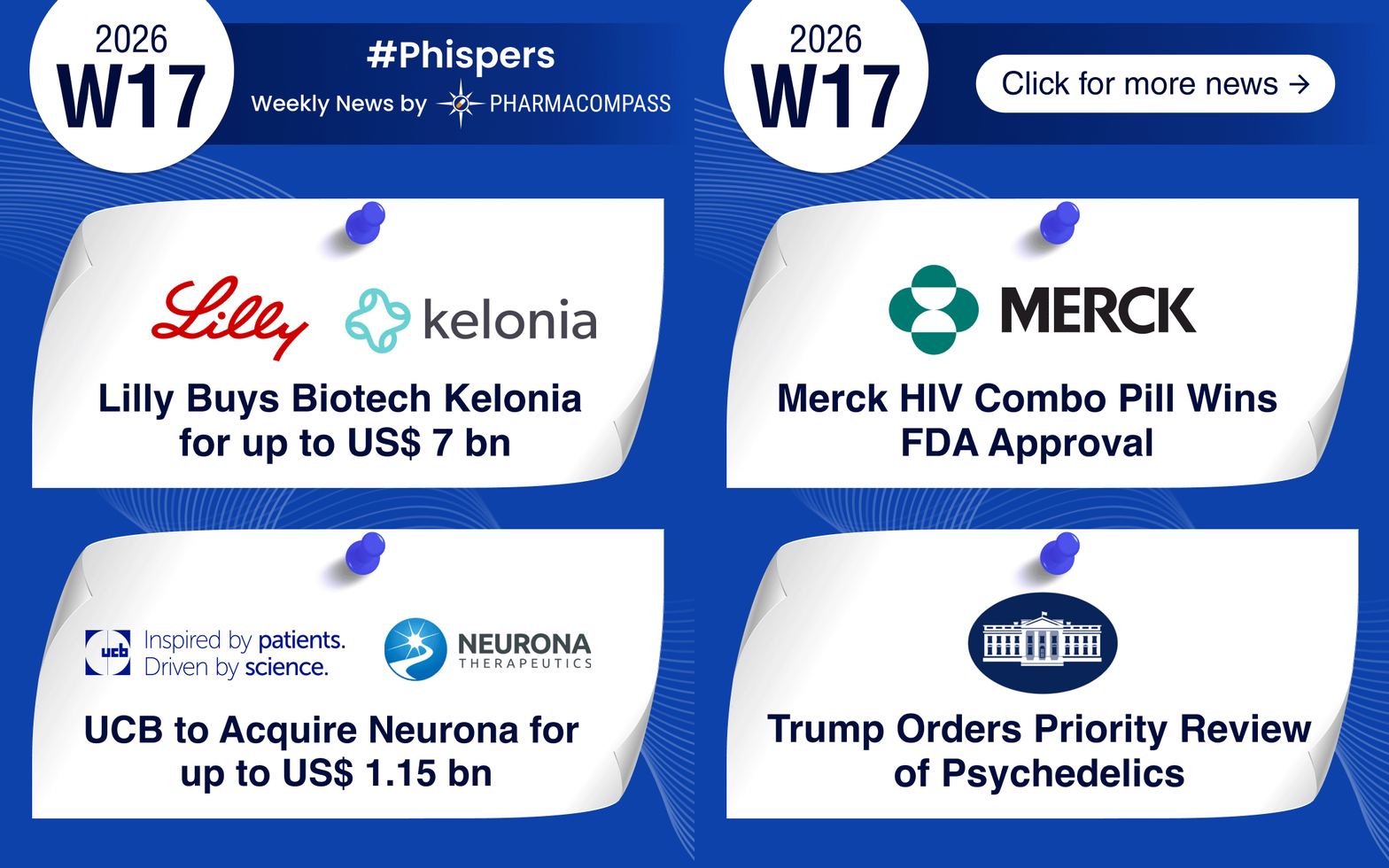
Eli Lilly has been on an acquisition spree this year. After buying Ventyx Biosciences, Orna Therapeutics, CrossBridge Bio, and Centessa Pharmaceuticals, it bought Kelonia Therapeutics this week for up to US$ 7 billion. In other deals, Amneal Pharmaceuticals acquired Kashiv BioSciences for up to US$ 1.1 billion, and UCB bought US-based Neurona Therapeutics for up to US$ 1.15 billion.
The US President, Donald Trump, signed an executive order to enable priority review of appropriate psychedelic drugs. The order could usher in psychedelics as the next wave of mental health therapies.
The US Food and Drug Administration (FDA) has approved Merck’s Idyvnso, a two-drug single-tablet regimen for treating HIV-1 infections. The agency issued a warning letter to New Life Pharma after the drugmaker refused to grant its inspectors access to sections of its GLP-1 manufacturing facility during an inspection.
AstraZeneca’s experimental treatment tozorakimab showed benefit in reducing moderate-to-severe exacerbations of chronic obstructive pulmonary disease (COPD) in a late-stage trial. In another late-stage trial, Astra’s rare blood disorder drug Ultomiris (ravulizumab) reduced protein in the urine of patients with a rare kidney disease known as IgA nephropathy (IgAN). And Novo Nordisk’s experimental oral drug etavopivat showed benefit in sickle cell disease in a pivotal late-stage trial.
Meanwhile, drugmakers continued to leverage artificial intelligence — while Merck partnered Google Cloud to enhance its digital backbone as an AI-enabled enterprise, AbbVie announced an investment of US$ 1.4 billion to build a 185-acre campus in Durham, North Carolina. The campus will integrate advanced manufacturing and laboratory technologies with AI to support the production of AbbVie’s immunology, neuroscience, and oncology medicines.
Eli Lilly boosts oncology portfolio with up to US$ 7 billion buyout of Kelonia
Eli Lilly is acquiring clinical-stage biotech, Kelonia Therapeutics, for up to US$ 7 billion. Privately-held Kelonia is pioneering cancer treatments such as in vivo gene delivery. It has a pipeline of CAR-T therapies, which modify a patient’s immune cells to target and kill cancer cells. This is the fifth over-US$ 1-billion acquisition made by Lilly this year.
Amneal Pharma to buy Kashiv BioSciences: Amneal Pharmaceuticals is acquiring Kashiv BioSciences in a cash-and-stock deal worth up to US$ 1.1 billion that will expand the drugmaker’s biosimilars business.
FDA approves Merck’s pill combo to treat HIV-1 infections in adults
FDA has approved Merck’s Idyvnso, a new, two-drug single-tablet regimen of doravirine and islatravir, for treating HIV-1 infections in adults. HIV-1 is the most common strain of the retrovirus that causes acquired immunodeficiency syndrome (AIDS). The combo’s debut is specifically targeted at patients who are switching from other HIV treatments.
Partners with Google Cloud for agentic AI platform: Merck has partnered with Google Cloud to enhance its digital backbone as an AI-enabled enterprise. This multi-year investment, valued at up to US$ 1 billion, will deploy an agentic AI platform across Merck’s R&D, manufacturing, commercial, and corporate functions.
Trump signs executive order to perform review of psychedelic drugs
The US President, Donald Trump, signed an executive order over the weekend to enable priority review of psychedelic drugs and expand access to medical research based on psychedelic drugs. The executive order tasks the FDA with giving Commissioner’s National Priority Vouchers “to appropriate psychedelic drugs” with breakthrough therapy designations. The order could usher in psychedelics as the “key next wave” of mental health therapies, analysts have said.
FDA issues warning to GLP-1 drugmaker that refused access to its inspectors
FDA has issued a warning letter to New Life Pharma after the drugmaker refused to grant its inspectors access to sections of its GLP-1 manufacturing facility. The incident happened in February, when FDA inspectors visited the company’s New Jersey facility. During the inspection, New Life denied the FDA inspectors access to two areas of the production suite. New Life told the inspectors they did not have authority to enter the areas. In the letter, FDA has identified violations of several sections of the Federal Food, Drug, and Cosmetic Act by New Life.
UCB to acquire Neurona for up to US$ 1.15 bn to strengthen epilepsy portfolio
Brussels-headquartered UCB is acquiring US-based Neurona Therapeutics for up to US$ 1.15 billion. Neurona is a privately-held, clinical-stage biotherapeutics company focused on advancing regenerative cell therapies for epilepsies and other disorders of the nervous system. UCB will shell out US$ 650 million upfront and up to US$ 500 million in milestone payments.
AbbVie to invest US$ 1.4 bn in North Carolina: AbbVie has announced an investment of US$ 1.4 billion to build a 185-acre pharmaceutical manufacturing campus in Durham, North Carolina. The campus will integrate advanced manufacturing and laboratory technologies with AI to support the production of AbbVie’s immunology, neuroscience and oncology medicines.
Astra’s tozorakimab shows benefit in reducing COPD exacerbations in late-stage trial
AstraZeneca’s experimental treatment tozorakimab showed benefit in reducing moderate-to-severe exacerbations of chronic obstructive pulmonary disease (COPD) in a late-stage trial. This is the third phase 3 win for Astra’s COPD drug candidate this year. During the trial, tozorakimab was generally well tolerated, with a favorable safety profile consistent with previous studies.
Ultomiris shows benefit in rare kidney disease: AstraZeneca’s rare blood disorder drug Ultomiris (ravulizumab) has met the main goal of a late-stage trial, showing a reduction in protein in the urine of patients with a rare kidney disease known as IgA nephropathy (IgAN), who are at risk of disease progression. Ultomiris is already approved to treat four rare conditions. AstraZeneca plans to seek accelerated approval for the indication in key markets while continuing the trial.
Novo’s etavopivat shows benefit in sickle cell disease in pivotal late-stage trial
Novo Nordisk’s experimental oral drug etavopivat successfully met two co-primary endpoints in a pivotal late-stage trial on adults and adolescents with sickle cell disease, a debilitating, life-threatening, and life-shortening disease. Etavopivat demonstrated superior reduction in vaso-occlusive crises and an improvement in haemoglobin response compared to placebo. The company plans to commence marketing submissions in the second half of 2026.
Genentech’s Enspryng shows benefit in rare disease: Genentech, a Roche group company, has shared data from a late-stage trial wherein its drug Enspryng (satralizumab) reduced the risk of a new relapse by 68 percent compared to placebo in adults and adolescents with myelin oligodendrocyte glycoprotein antibody-associated disease. Also known as MOGAD, this rare autoimmune disease can attack the optic nerves, brain, and spinal cord and cause severe and unpredictable relapses, resulting in accumulating neurological damage, vision loss, and disability.
The PharmaCompass Newsletter – Sign Up, Stay Ahead
Feedback, help us to improve. Click here
Image Credit : Phispers Infographic by PharmaCompass license under CC BY 2.0
“ The article is based on the information available in public and which the author believes to be true. The author is not disseminating any information, which the author believes or knows, is confidential or in conflict with the privacy of any person. The views expressed or information supplied through this article is mere opinion and observation of the author. The author does not intend to defame, insult or, cause loss or damage to anyone, in any manner, through this article.”