



NEWS
- Pharma & Biotech News #PharmaBuzz
- Weekly News Recap #Phispers
- Recent Product Approvals #GreenLight
- Quality Compliance Alerts #Warning!
- All News #Library
DRUGS & DEVELOPMENTS
MARKET INTEL by PharmaCompass

Create content with us, ask us
By PharmaCompass
2019-01-31
Impressions: 90 Article
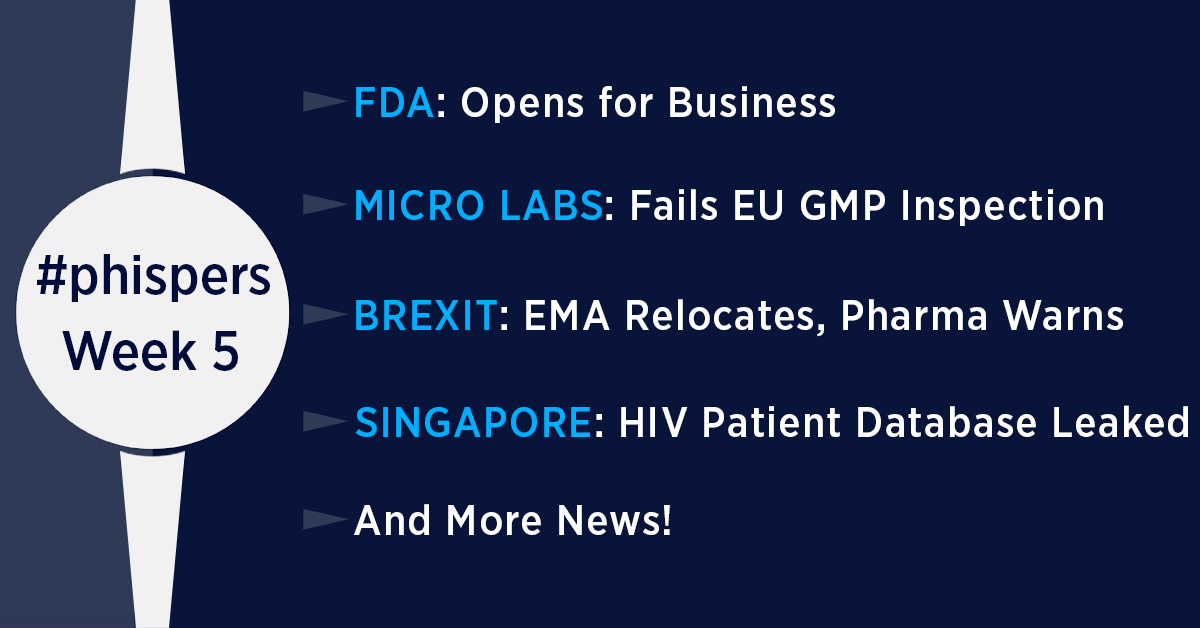
Regulators in both the US and UK have lots to contend with in the day to come. In the US, President Trump agreed to reopen the federal government last week for three weeks (until February 15), after a 35-day partial shutdown — the longest government shutdown in the country.
The USFDA is expected to accept new drug applications again. The agency is likely to meet PDUFA goals for new drug applications (NDAs) and biologic license applications (BLAs) that are filed next week.
However, the experience of previous shutdowns tells us that it could take five or six months for FDA employees to catch up with work that was not performed during the funding lapse. The backlog includes routine inspections of drug manufacturing facilities, policy development and processing generic drug applications.
In the UK, biopharma companies are gearing up for the prospect of the country departing from the EU without a deal. Companies are preparing with different precautions costing upward of US$ 100 million per company. Novartis has raised alarm about the implications of a no-deal Brexit.
“Following Parliament’s vote, the risk of UK exiting the EU without a deal is increased and this will be hugely impactful for patients, particularly around the supply and safety of medicines,” Novartis said.
The company also said it is stockpiling medicines “to ensure continuity of supply to UK patients of the over 120 million packs of medicines we import to the UK from Europe each year.” Novartis has also urged Britain’s lawmakers to come up with a sustainable way to preserve the pharmaceutical supply chain. It has also sought clarity over customs arrangements, both to and from Europe.
In an SEC filing, Pfizer said its Brexit preparations are set to cost about US$ 100 million, and the company generated about 2 percent of its worldwide revenues from the UK in 2017.
GlaxoSmithKline (GSK) said it’s taking a risk-based approach and has been implementing its contingency plans since January 2018, with an immediate focus on its supply chain. Companies like Roche and Gilead have said they are actively preparing for Brexit.
A chaotic no-deal departure could be catastrophic for UK patients, as 73 percent of pharmaceutical imports come in from the EU, according to a House of Commons report published last year.
Meanwhile, the European Medicines Agency (EMA) staff lowered the 28 EU flags and symbolically said goodbye to their London offices. Its executive director Guido Rasi expressed his thanks to the UK for having been a gracious host since 1995. The agency announced further details on its move from current London headquarters to Amsterdam, which will begin on March 1 and see staff working in its new offices on March 11.
The PharmaCompass Newsletter – Sign Up, Stay Ahead
Feedback, help us to improve. Click here
Image Credit : #Phisper Infographic by SCORR MARKETING & PharmaCompass is licensed under CC BY 2.0
“ The article is based on the information available in public and which the author believes to be true. The author is not disseminating any information, which the author believes or knows, is confidential or in conflict with the privacy of any person. The views expressed or information supplied through this article is mere opinion and observation of the author. The author does not intend to defame, insult or, cause loss or damage to anyone, in any manner, through this article.”