


NEWS
- Pharma & Biotech News #PharmaBuzz
- Weekly News Recap #Phispers
- Recent Product Approvals #GreenLight
- Quality Compliance Alerts #Warning!
- All News #Library
DRUGS & DEVELOPMENTS
MARKET INTEL by PharmaCompass

Create content with us, ask us
By PharmaCompass
2019-05-02
Impressions: 132 Article
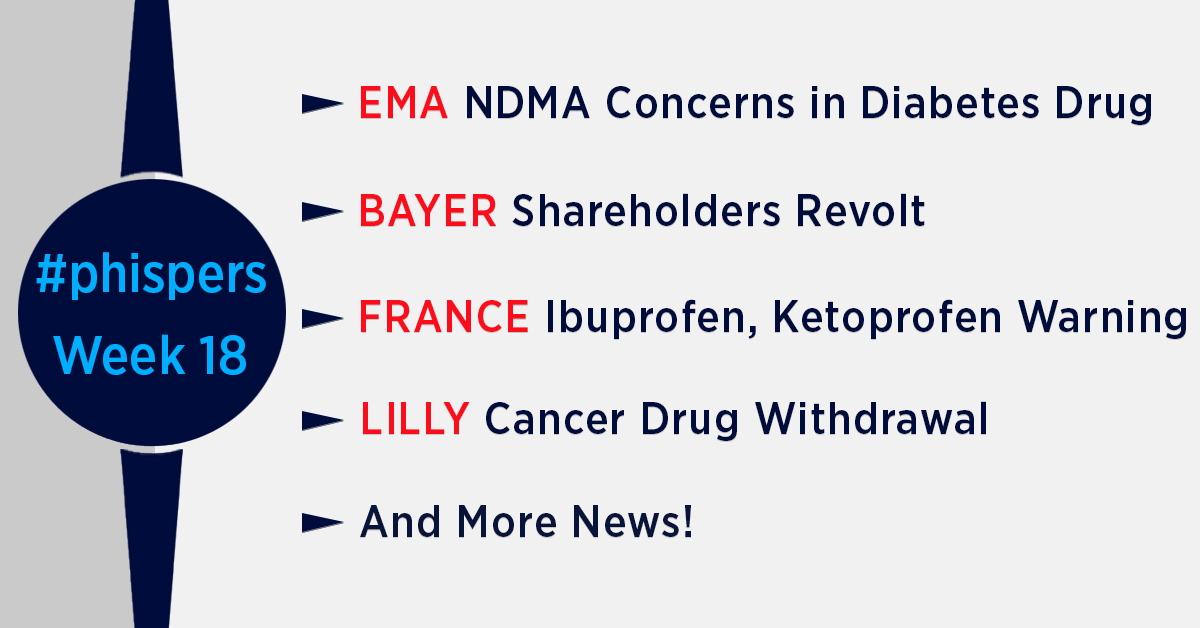
Eli Lilly announced it has withdrawn Lartruvo (olaratumab) from the market for the treatment of advanced soft tissue sarcoma (STS). The company is establishing an Access Program for patients currently receiving the drug who may wish to continue.
Lilly’s announcement came after EMA brought out results of its ANNOUNCE study last week. EMA concluded that Lartruvo (olaratumab) with doxorubicin does not prolong the lives of patients with soft tissue cancer more than doxorubicin alone. “The Agency is therefore recommending that the marketing authorization of the medicine be revoked,” an EMA statement said.
In January 2019, when preliminary results of the ANNOUNCE study became available, the Agency recommended that no new patients should start treatment with the medicine. Having now assessed the full data from the study, the Agency has concluded that the benefit of Lartruvo in combination with doxorubicin is not confirmed. Regarding safety, the data did not show any new safety concerns.
Lartruvo was authorized in November 2016 to treat advanced soft tissue sarcoma, a rare and difficult-to-treat cancer. At the time of its approval, data on the effects of Lartruvo were limited because of the small number of patients included in the main study which supported its authorization. Therefore, Lartruvo was approved on the condition that the company carried out a study to confirm its benefits.
There is more bad news from Lilly. This week, the American drugmaker also dumped two mid-stage oncology drugs from its pipeline operations — CHK1 drug prexasertib (LY2606368) and its Phase II PI3k/mTOR inhibitor, LY3023414. Lilly plans to concentrate its oncology R&D on seven key programs that had better prospects.
The PharmaCompass Newsletter – Sign Up, Stay Ahead
Feedback, help us to improve. Click here
Image Credit : #Phisper Infographic by SCORR MARKETING & PharmaCompass is licensed under CC BY 2.0
“ The article is based on the information available in public and which the author believes to be true. The author is not disseminating any information, which the author believes or knows, is confidential or in conflict with the privacy of any person. The views expressed or information supplied through this article is mere opinion and observation of the author. The author does not intend to defame, insult or, cause loss or damage to anyone, in any manner, through this article.”