

NEWS
- Pharma & Biotech News #PharmaBuzz
- Weekly News Recap #Phispers
- Recent Product Approvals #GreenLight
- Quality Compliance Alerts #Warning!
- All News #Library
DRUGS & DEVELOPMENTS
MARKET INTEL by PharmaCompass

Create content with us, ask us
By PharmaCompass
2019-01-10
Impressions: 147 Article
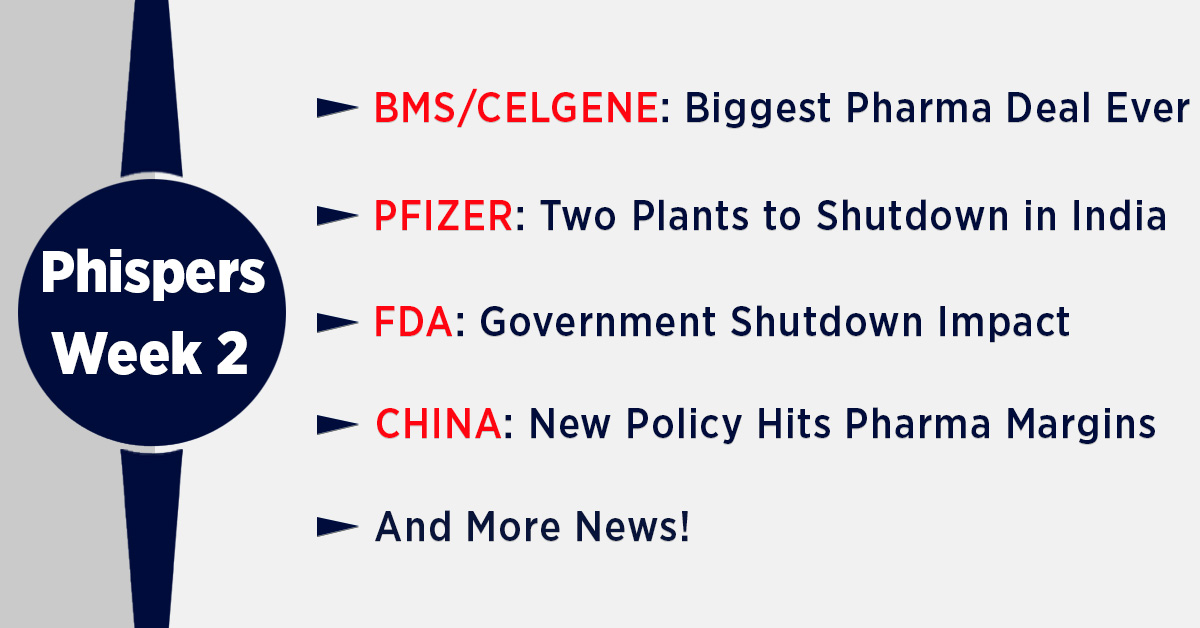
In China, drugmakers didn’t have a great start to the New Year. For years, China’s largest drugmakers have sold low-cost generic medicines at gross margins of 80 to 90 percent,
According to Bloomberg, among the top 100 generic drugmakers, Chinese firms had a 74 percent gross margin and an 18 percent profit margin in the third quarter of 2018, compared with a global average of 55 percent and 9.5 percent, respectively.
But now, the scenario is all set to change. China has embarked on a pilot program in which major cities bulk-buy certain drugs together, forcing companies to bid for contracts, thereby driving down prices of drugs by an average of 52 percent.
Starting this year, governments of 11 cities will take over procurement of drugs for their hospitals. They will give at least 60 to 70 percent of orders for 31 specified, mostly generic treatments to the lowest and best-stocked bidder.
China’s rapidly aging population and rising cases of cancer (it reports 4 million new cancer patients each year) is the main reason behind this centralized bulk procurement program. The state’s basic medical insurance program is burdened with ballooning expenses and is estimated to run into deficit as early as 2020.
As a result of this program, the average tender price in the 11 pilot cities is substantially lower than the price in the previous auction. For instance, Sino Biopharmaceutical slashed the price of its hepatitis treatment entecavir by more than 90 percent to beat out Bristol-Myers Squibb and two local competitors. The drug has accounted for 16 percent of Sino Biopharm’s sales in 2018.
Authorities in China are also opening the door to foreign drug giants through a fast-track approval system. Under a guideline published in July, generic drugs that have passed bio-equivalence studies overseas will be able to submit an abbreviated application in China.
In this new landscape, drug companies in China will have to invest more into research and development. That’s the only means of earning high profits, until the time the new drug is covered by a patent, and balancing out the loss of revenue from the fall in generic drug prices.
The PharmaCompass Newsletter – Sign Up, Stay Ahead
Feedback, help us to improve. Click here
Image Credit : #Phisper Infographic by SCORR MARKETING & PharmaCompass is licensed under CC BY 2.0
“ The article is based on the information available in public and which the author believes to be true. The author is not disseminating any information, which the author believes or knows, is confidential or in conflict with the privacy of any person. The views expressed or information supplied through this article is mere opinion and observation of the author. The author does not intend to defame, insult or, cause loss or damage to anyone, in any manner, through this article.”