

NEWS
- Pharma & Biotech News #PharmaBuzz
- Weekly News Recap #Phispers
- Recent Product Approvals #GreenLight
- Quality Compliance Alerts #Warning!
- All News #Library
DRUGS & DEVELOPMENTS
MARKET INTEL by PharmaCompass

Create content with us, ask us
By PharmaCompass
2019-05-17
Impressions: 86 Article
AbbVie Inc and Boehringer Ingelheim GmbH have resolved their US patent dispute over a biosimilar to AbbVie’s Humira (adalimumab), the world’s largest-selling drug.
AbbVie said it would grant Boehringer Ingelheim (BI) a non-exclusive license to its Humira-related intellectual property in the US, permitting it to begin selling its Humira biosimilar — Cyltezo — in the US from July 2023.
“Boehringer will pay royalties to AbbVie for licensing its Humira patents and acknowledges the validity and enforceability of the licensed patents. AbbVie will make no payments of any form to BI,” an AbbVie statement said.
“We are pleased by this favorable decision from the PTO (Patent and Trademark Office), as it represents an important step towards our goal of providing an adalimumab biosimilar to the many patients who rely on this medication,” Boehringer said in a statement.
Biosimilars are near-copies of biologic drugs that are made from living cells and are analogous to generic copies of traditional pill-form medicines.
Humira, a drug used to treat diseases like rheumatoid arthritis and gut disorders, had nearly US$ 20 billion in global sales in 2018, accounting for about 61 percent of AbbVie’s total revenue. But AbbVie saw a 5.6 percent decline in Humira revenue in the first quarter this year, as competition from biosimilars led to a nearly 28 percent drop in sales overseas.
Sales of Humira biosimilars began in Europe late last year after a key AbbVie European patent expired. In the US, a group of US patents built up by AbbVie has prevented its launch.
The PharmaCompass Newsletter – Sign Up, Stay Ahead
Feedback, help us to improve. Click here
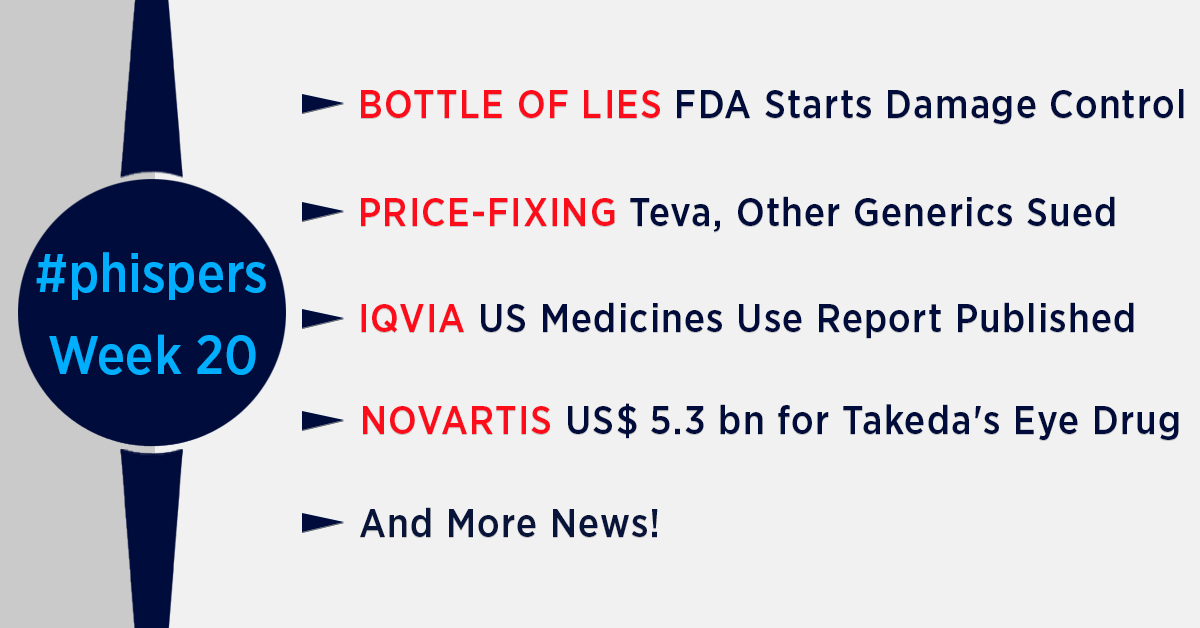
Image Credit : #Phisper Infographic by SCORR MARKETING & PharmaCompass is licensed under CC BY 2.0
“ The article is based on the information available in public and which the author believes to be true. The author is not disseminating any information, which the author believes or knows, is confidential or in conflict with the privacy of any person. The views expressed or information supplied through this article is mere opinion and observation of the author. The author does not intend to defame, insult or, cause loss or damage to anyone, in any manner, through this article.”