Please Wait
Applying Filters...
Menu
Xls

Digital Content read-more

Create Content with PharmaCompass, ask us

DATA COMPILATION #PharmaFlow

read-more
read-more
CEP Q1 2026 Update: CEP 2.0, EDQM’s new guidelines strengthen ecosystem; Indian firms top list of CEPs issued
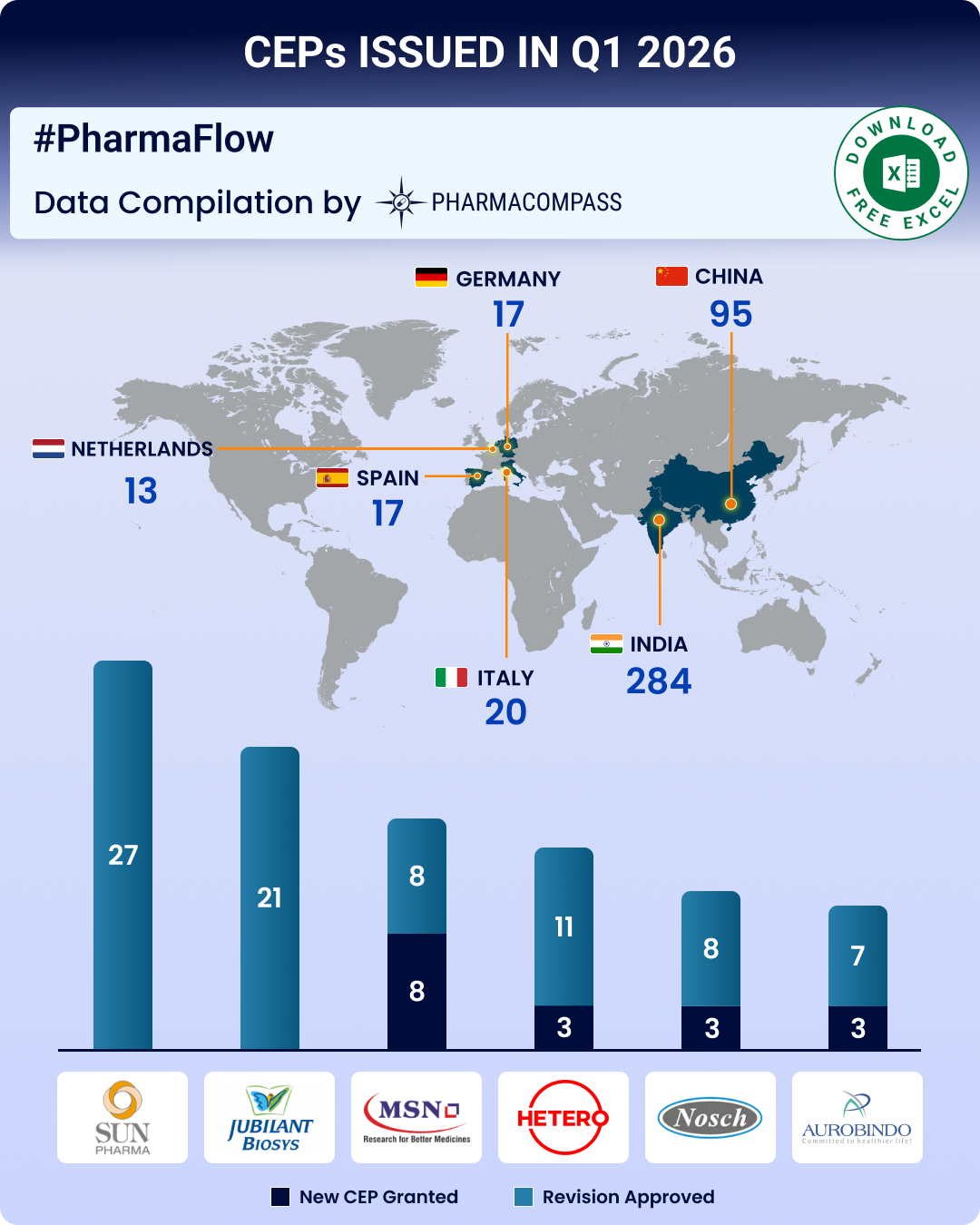
PharmaCompass is introducing a new regulatory update that tracks developments in Certificates of Suitability to the Monographs of the European Pharmacopoeia, referred to as CEPs. These certificates are a critical regulatory instrument in the global pharmaceutical supply chain.Also known as a Certification of Suitability (COS), CEPs are issued by the European Directorate for the Quality of Medicines and HealthCare (EDQM), with or without inspection of the manufacturing site. A CEP must be renewed every five years from its original issue date to remain valid, regardless of any revisions made during the interim period. However, a CEP does not replace Good Manufacturing Practice certification.CEPs are recognized as a trusted reference for API quality, thereby simplifying global registration strategies. Apart from Europe, the CEP system is widely used by many regulatory authorities, including those in Canada, Australia, Brazil, Singapore and South Africa. View CEPs Issued in Q1 2026 (Power BI Dashboard, Free Excel Available)CEP 2.0 enhances regulatory clarity, brings efficiency, global interoperability There are several types of CEPs, depending on the nature of the substance and evaluation. The most common type is the Chemical CEP, which confirms that a chemically synthesized API meets standards for purity and impurity control. Then there are Herbal CEPs for herbal substances and preparations.Another key category is the TSE CEP, which addresses risks associated with transmissible spongiform encephalopathies in animal-derived materials. In addition, there are Combined CEPs that may cover multiple aspects, such as chemical quality, TSE risk, and sterility. However, biological products such as vaccines and blood products fall outside the scope of the CEP framework.In 2023, the CEP system underwent a major transformation with the introduction of CEP 2.0, which marks a shift from a largely document-based system to a more structured, transparent, and digitally aligned model. This makes it easier for companies to manage compliance while improving trust among global regulators.While increasing data and compliance requirements for API manufacturers, CEP 2.0 enables better regulatory clarity, streamlined dossier integration, and stronger global acceptance. Overall, CEP 2.0 is designed to enhance regulatory clarity while making the system more efficient and globally interoperable. View CEPs Issued in Q1 2026 (Power BI Dashboard, Free Excel Available)Indian firms issued maximum CEPs; Sun Pharma and its subsidiaries, Jubilant Biosys top listIndia topped the charts for CEPs issued, both in terms of new CEPs and revisions in the first quarter (Q1) of 2026. Indian companies were issued 81 new CEPs in Q1 2026 (as against 40 in Q1 2025) and 203 revisions (as against 129 in Q1 2025). In comparison, Chinese companies were issued 42 new CEPs in Q1 2026 (against 25 in Q1 2025) and 53 revisions (against 67 in Q1 2025). Italy came a distant third, followed by Germany and Spain.India’s Sun Pharmaceuticals and its subsidiaries topped the list of companies with the maximum number of CEPs issued— while no new CEP was issued, 27 CEPs were revised in Q1 2026. At second place was Jubilant Biosys — 21 CEPs were revised in Q1 2026.In terms of products, the maximum CEPs were issued for amlodipine besylate (a calcium channel blocker used for treating hypertension), followed by sitagliptin phosphate (a type 2 diabetes medicine) and pregabalin (a drug used to treat neuropathic pain, fibromyalgia, seizures, and generalized anxiety disorder). Both amlodipine besylate and sitagliptin phosphate had not been issued new CEPs or revisions in Q1 2025. View CEPs Issued in Q1 2026 (Power BI Dashboard, Free Excel Available)EDQM introduces new guidelines to accelerate CEP assessments The EDQM charges fees for various services related to CEPs that depend on the type of request or regulatory activity involved. In general, fees apply to handling CEP applications, revisions or renewals and for offering technical advice (where applicants seek scientific or regulatory guidance).In March 2026, the EDQM introduced two new guidelines aimed at accelerating CEP assessments. The first is a reliance-based assessment pathway, which allows regulators to leverage prior approvals from trusted authorities, such as those in the EU, UK, Australia, Canada, and the WHO pre-qualification program. The second is a fast-track assessment route designed to expedite reviews in situations such as medicine shortages and to support initiatives like the EU Critical Medicines Act.Timelines have been significantly compressed under these new pathways. Initial evaluations are completed within 46 working days, compared to up to 115 days under the standard procedure. Applicants are given 30 calendar days to respond to queries, after which regulators complete the final assessment within 23 working days.Another important regulatory update relates to electronic submissions. From April 1, 2026, the EDQM will reject non-compliant CEP applications at the point of submission. All applications must include a validated electronic Common Technical Document (eCTD) dossier along with a proper validation report, submitted in line with the updated Common European Submission Portal (CESP) guidelines. Taken together, these developments signal a more rigorous yet efficient CEP ecosystem. View CEPs Issued in Q1 2026 (Power BI Dashboard, Free Excel Available)Our viewThe shift to CEP 2.0 signals a move toward greater transparency, digitalization, and global regulatory alignment. Though enhanced disclosure and stricter e-submission requirements may increase the compliance burden, especially for smaller manufacturers, the long-term gains are expected to be significant. Going forward, companies that invest in data quality and regulatory readiness stand to gain from these changes.

Impressions: 2610

https://www.pharmacompass.com/radio-compass-blog/cep-q1-2026-update-cep-2-0-edqm-s-new-guidelines-strengthen-ecosystem-indian-firms-top-list-of-ceps-issued

#PharmaFlow by PHARMACOMPASS
09 Apr 2026

STOCK RECAP #PipelineProspector

read-more
read-more
Pipeline Prospector April 2025: Merck KGaA buys SpringWorks for US$ 3.9 bn; Swiss giants lead pharma migration to US soil
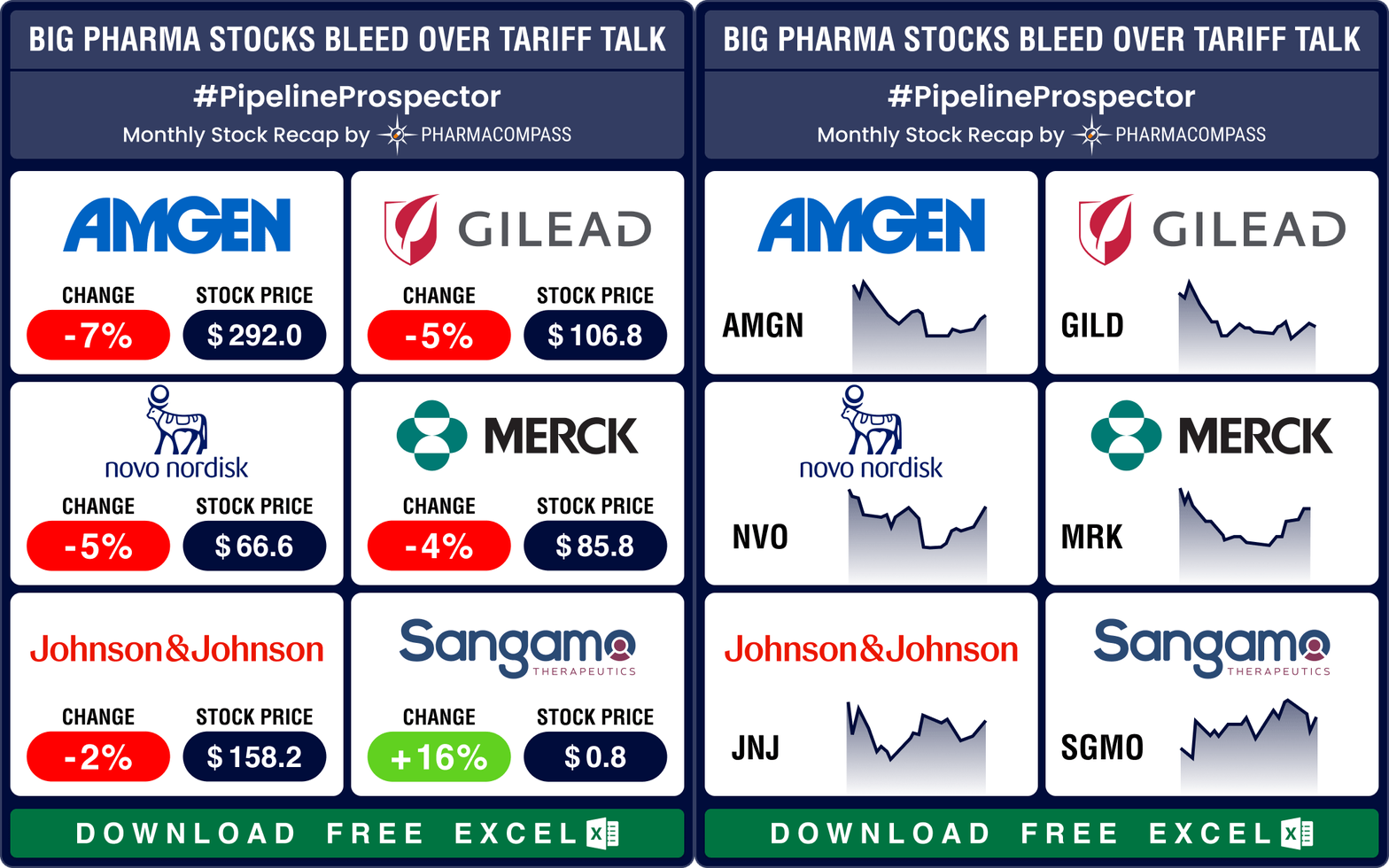
April witnessed considerable volatility in pharmaceutical stocks as the US President Donald Trump’s administration signaled major shifts in drug pricing policies and import regulations. These include Trump’s proposed international reference pricing to align US drug prices with lower costs in other developed countries, a national security investigation into pharmaceutical imports that could lead to tariffs of 25 percent or more on foreign-made drugs and, a sweeping executive order to reshape Medicare drug pricing. However, as the month drew to a close, key pharmaceutical indices rebounded and were back in the black. The Nasdaq Biotechnology Index (NBI) rose 0.44 percent from 4,241.91 to 4,260.42. The SPDR S&P Biotech ETF (XBI) rose 2.58 percent — from 80.86 to 82.95. And the S&P Biotechnology Select Industry Index (SPSIBI) increased 0.91 percent — from 6,319.47 to 6,376.95. However, stocks of most drugmakers ended the month in the red.  Access the Pipeline Prospector Dashboard for April 2025 Newsmakers (Free Excel) Trump’s tariff threats prompt drug majors to announce investments in US The unrest created by Trump’s tariff threat on drug imports was palpable across the world. In Europe, CEOs of nearly three dozen global drugmakers, including Pfizer, Eli Lilly, and AstraZeneca, warned European Commission President Ursula von der Leyen that without "rapid, radical policy change", over US$ 100 billion in pharma R&D and manufacturing could leave the European Union. These drugmakers are pushing for abandonment of price controls to match US pricing levels.  Global players are also rapidly reorienting their manufacturing strategies towards the US soil in order to avoid imminent tariffs on imported medicines. For instance, Swiss pharmaceutical giant Roche has announced a massive US$ 50 billion investment in the US over the next five years. Another Swiss drugmaker, Novartis, has committed US$ 23 billion to expand its US operations over the next five years. Meanwhile, AstraZeneca has said it will be shifting the production of some drugs sold in America from Europe to the US in order to avoid Trump’s tariffs. Even American drugmaker AbbVie plans to invest US$ 10 billion in US manufacturing over the next decade to avoid tariffs. Regeneron Pharmaceuticals has taken a different approach by announcing an investment exceeding US$ 3 billion through a 10-year strategic partnership with Fujifilm Diosynth Biotechnologies. This collaboration aims to nearly double Regeneron’s US production capacity for biologic medicines.  Access the Pipeline Prospector Dashboard for April 2025 Newsmakers (Free Excel)  Merck buys SpringWorks for US$ 3.9 bn; GSK inks US$ 2.7 bn deal with ABL Bio This was going to be a year of mergers and acquisitions. But with the imminent policy changes in America’s healthcare sector, M&A activity appears to have slowed down. However, the last days of April saw two M&A announcements — Merck KGaA entered into a deal to buy US biotech company SpringWorks Therapeutics for US$ 3.9 billion, and Novartis announced the acquisition of Regulus Therapeutics for up to US$ 1.7 billion. The month saw several licensing deals. GSK signed a licensing agreement valued at approximately £ 2.08 billion (US$ 2.66 billion) with South Korea’s ABL Bio for exclusive access to ABL’s innovative Grabody-B brain delivery platform, a technology designed to enhance the penetration of therapeutic antibodies across the notoriously selective blood-brain barrier (BBB). The BBB acts as the body’s natural defense to protect the brain from toxins and pathogens. Similarly, Eli Lilly inked a US$ 1.4 billion licensing agreement with Sangamo Therapeutics to gain access to Sangamo’s proprietary neurotropic adeno-associated virus (AAV) capsid, STAC-BBB, which has shown remarkable potential in crossing the BBB. In the autoimmune and immunology space, Sanofi signed an exclusive licensing agreement with US biotech Earendil Labs valued at up to US$ 1.8 billion. The agreement centers on two next-generation bispecific antibodies, HXN-1002 and HXN-1003, discovered through Earendil's AI-driven high-throughput protein modeling platform.  Access the Pipeline Prospector Dashboard for April 2025 Newsmakers (Free Excel)  Lilly’s obesity pill matches Ozempic in trial; Novo seeks FDA nod for semaglutide pill In the market for obesity meds, Eli Lilly’s experimental weight-loss pill, orforglipron, demonstrated efficacy that was comparable to its rival Novo Nordisk’s injectable Ozempic. Analysts view orforglipron pill as a potential game-changer in obesity treatment. Meanwhile, Novo Nordisk has sought FDA approval for a 25-mg pill version of its weight loss medication semaglutide. And Rhythm Pharmaceuticals’ drug, Imcivree (setmelanotide), achieved primary endpoint in a late-stage trial for acquired hypothalamic obesity, a rare condition resulting from damage to the brain’s hypothalamus. Meanwhile, in a high profile trial failure, Pfizer discontinued development of its experimental oral weight-loss pill, danuglipron, following a case of potential drug-induced liver injury in a clinical trial participant. Another significant disappointment came from BMS’ investigational schizophrenia drug, Cobenfy (xanomeline and trospium chloride) — it failed to meet the primary endpoint in a pivotal late-stage trial evaluating its use as an adjunctive treatment for patients who no longer respond to standard antipsychotics. Adding to the month’s disappointments, FDA declined to approve Aldeyra Therapeutics’ dry eye disease treatment, reproxalap, for the second time.  Access the Pipeline Prospector Dashboard for April 2025 Newsmakers (Free Excel)  Amgen’s Uplizna, Sanofi’s Dupixent among noteworthy FDA approvals Amgen received a groundbreaking approval for Uplizna (inebilizumab-cdon) as the first and only treatment for immunoglobulin G4-related disease (IgG4-RD), a rare and chronic immune-mediated inflammatory condition. Analysts estimate that Uplizna could generate global annual sales of US$ 1.3 billion by 2030 for the IgG4-RD indication alone.  Sanofi and Regeneron received FDA approval for Dupixent (dupilumab) to treat chronic spontaneous urticaria (CSU) in patients aged 12 and older who remain symptomatic despite antihistamine therapy. Sanofi’s bestselling drug is now FDA-approved for seven indications. As the month drew to a close, FDA approved Abeona Therapeutics’ gene therapy — Zevaskyn (prademagene zamikeracel) — for a rare skin disorder known as recessive dystrophic epidermolysis bullosa. It also approved Johnson & Johnson’s Imaavy (nipocalimab-aahu), a drug that treats patients aged 12 years and older with a form of generalized myasthenia gravis (gMG) — an immunity-related disorder that weakens the skeletal muscles, especially those in the eyes, mouth, throat and limbs.  Access the Pipeline Prospector Dashboard for April 2025 Newsmakers (Free Excel)  Our view The US economy contracted by 0.3 percent during the first quarter of 2025, as businesses panicked and imported goods to avoid higher costs. The US dollar has been weakening, and has hit a fresh low against the euro, Japanese yen and the Swiss franc. This will reduce the profit of foreign companies from their US divisions once they remit their earnings back to their home country. A study undertaken by Ernst & Young has predicted that a 25 percent US tariff on drug imports would increase drug cost by nearly US$ 51 billion annually, thereby boosting drug prices in America by 12.9 percent. These and other cues only point to the fact that Trump administration’s policies will hurt the US. As of today, a rollback or a softening of stand looks like a distant possibility. Access the Pipeline Prospector Dashboard for April 2025 Newsmakers (Free Excel)  

Impressions: 6067

https://www.pharmacompass.com/pipeline-prospector-blog/pipeline-prospector-april-2025-merck-kgaa-buys-springwork-for-us-3-9-bn-swiss-giants-lead-pharma-migration-to-us-soil

#PharmaFlow by PHARMACOMPASS
01 May 2025

WEEKLY NEWS RECAP #Phispers

read-more
read-more
Roche announces US$ 50 bn investment in US to avoid tariffs; Regeneron signs US$ 3 bn onshoring deal with Fujifilm
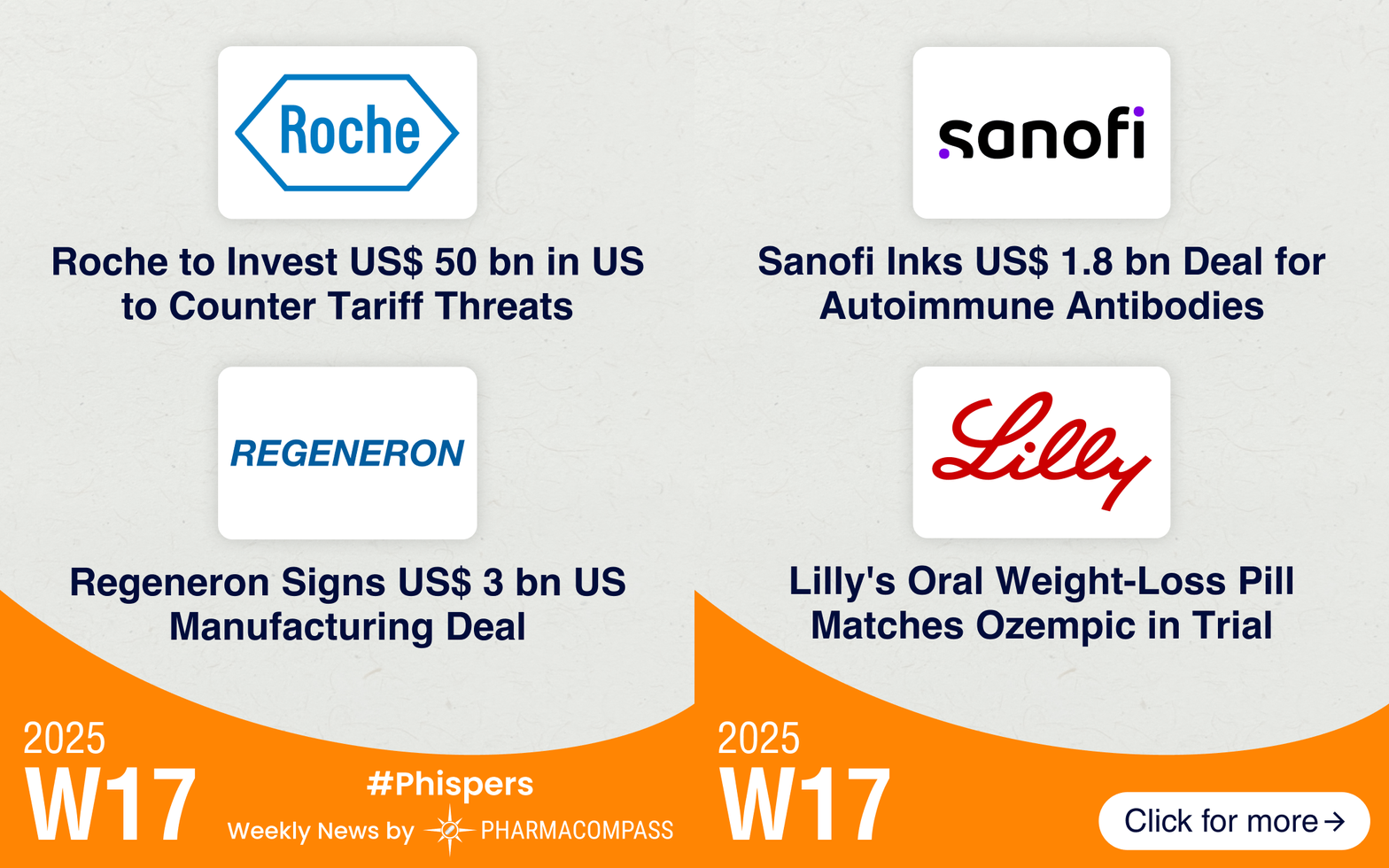
After Eli Lilly, Johnson & Johnson and Novartis, Roche has announced plans to manufacture in the US to avoid tariffs. The Swiss drugmaker plans to invest US$ 50 billion in the US over the next five years. Similarly, Regeneron Pharmaceuticals is significantly boosting its US manufacturing capacity through a US$ 3 billion, 10-year agreement with Fujifilm Diosynth Biotechnologies. Fujifilm will produce biologic medicines at its North Carolina facility.Sanofi has signed an exclusive licensing agreement worth up to US$ 1.8 billion with Earendil Labs for two next-generation AI-discovered bispecific antibodies targeting autoimmune conditions.Sanofi and Regeneron’s Dupixent has received yet another FDA approval —  to treat chronic spontaneous urticaria in patients aged 12 and older who remain symptomatic despite antihistamine therapy. This marks the drug’s seventh approved indication.Bristol Myers Squibb’s schizophrenia drug — Cobenfy — failed to meet primary endpoints in a pivotal trial for adjunctive treatment.The pharmaceutical industry is on high alert as the US President Donald Trump considers implementing international reference pricing to align US drug prices with lower costs in other developed countries. European pharma CEOs, on the other hand, have urged the EU to raise drug prices to US levels.Eli Lilly’s experimental weight-loss pill orforglipron has demonstrated impressive results in a late-stage trial, positioning it as a convenient alternative to injectable treatments like Ozempic. Meanwhile, Novo Nordisk has submitted its 25-mg semaglutide weight loss pill for FDA approval.Roche announces massive US$ 50 bn investment in US to counter tariff threatsSwiss pharmaceutical leader Roche has unveiled plans to invest US$ 50 billion in the US over the next five years — a move designed to bolster domestic manufacturing and mitigate potential impacts from the proposed US tariffs on pharmaceutical imports. The investment is expected to generate over 12,000 jobs, including approximately 6,500 construction positions and 1,000 roles at new and expanded facilities.The investment includes establishment of a gene therapy manufacturing facility in Pennsylvania, a plant in Indiana for continuous glucose monitoring devices, and a 900,000-square-foot facility dedicated to next-generation weight-loss drugs at an undisclosed location. Additionally, Roche plans to open a research and development center in Massachusetts focused on artificial intelligence applications in cardiovascular, renal, and metabolic disease research.Regeneron signs US$ 3 bn manufacturing deal with Fujifilm, to double US capacityRegeneron Pharmaceuticals has announced an investment exceeding US$ 3 billion through a 10-year agreement with Fujifilm Diosynth Biotechnologies to enhance its US manufacturing capabilities. This partnership aims to nearly double Regeneron’s domestic production capacity for biologic medicines. Under the terms of the agreement, Fujifilm will manufacture and supply drug products for Regeneron’s biologic therapies at its new large-scale biopharmaceutical facility in Holly Springs, North Carolina.Sanofi inks US$ 1.8 bn deal with Earendil for antibodies discovered by AISanofi has signed an exclusive licensing agreement with US biotech Earendil Labs, valued at up to US$ 1.8 billion, to acquire two next-generation bispecific antibodies targeting autoimmune and immunology indications. The upfront and near-term fees total US$ 175 million. Sanofi will shell out up to US$ 1.72 billion in development and commercial milestones.The candidates, HXN-1002 and HXN-1003, were discovered via Earendil’s AI-driven high-throughput protein modeling platform. HXN-1002 is being developed to treat moderate-to-severe ulcerative colitis and Crohn’s disease, while HXN-1003 focuses on treating colitis and skin inflammation.Dupixent wins FDA approval for chronic hives: Sanofi and Regeneron have received FDA approval for Dupixent (dupilumab) to treat chronic spontaneous urticaria (CSU) in patients aged 12 and older who remain symptomatic despite antihistamine therapy. This marks the first new targeted therapy for CSU in over a decade. With this new indication, Dupixent now has seven FDA-approved uses, in the treatments of asthma, eczema, chronic rhinosinusitis with nasal polyps, eosinophilic esophagitis, prurigo nodularis, and chronic obstructive pulmonary disease (COPD).Trump mulls using international reference pricing to lower drug costs in USThe US President Donald Trump is reportedly considering a significant policy shift to reduce US drug prices by aligning them with the lower costs prevalent in other developed countries, a strategy known as international reference pricing. This initiative, viewed by the pharmaceutical industry as a substantial threat, could impact innovation and healthcare markets.Pharma CEOs urge EU to abandon price controls: In a related development, CEOs of major European pharmaceutical companies — Novartis and Sanofi — have urged the European Union to raise drug prices to levels comparable with the United States. They argue that the current European price controls diminish the region's appeal to investors, especially amid increasing tariffs and global trade uncertainties.Lilly’s obesity med matches Ozempic in trial; Novo seeks FDA nod for semaglutide pillEli Lilly’s experimental weight-loss pill, orforglipron, has demonstrated efficacy comparable to the injectable Ozempic from rival Novo Nordisk. In a phase 3 trial, patients with type 2 diabetes taking orforglipron lost an average of 16 pounds (7.9 percent of body weight) over 40 weeks, alongside significant improvements in blood sugar control.The pill’s once-daily oral administration, without food or water restrictions, offers a convenient alternative to injections, potentially enhancing patient adherence. Analysts view orforglipron as a potential game-changer in obesity treatment, expanding access for those hesitant about injections. Eli Lilly plans to seek regulatory approval for weight management in late 2025 and for type 2 diabetes in 2026.David Ricks, CEO of Eli Lilly, has said the drugmaker would produce orforglipron in the US. The move will help it save on tariffs.Meanwhile, Novo Nordisk has sought FDA approval for 25-mg pill version of its weight loss med semaglutide. The FDA submission was made earlier this year. The Danish drugmaker certainly took its time, having announced late-stage results in May 2023.BMS’ schizophrenia drug Cobenfy fails pivotal late-stage trialBristol Myers Squibb’s investigational schizophrenia drug, Cobenfy (also known as KarXT), has failed to meet the primary endpoint in a pivotal late-stage trial evaluating its use as an adjunctive treatment for patients who no longer respond to standard antipsychotics. In a six-week study, Cobenfy achieved only a two-point reduction in symptom severity compared to placebo, falling short of the mid-single-digit improvement analysts had anticipated.BMS had acquired Cobenfy through its US$ 14 billion purchase of Karuna Therapeutics in December 2023. It is a combination of xanomeline and trospium chloride. Unlike traditional antipsychotics that target dopamine receptors, Cobenfy acts on muscarinic receptors (a novel approach in schizophrenia treatment). 

Impressions: 1464

https://www.pharmacompass.com/radio-compass-phisper/roche-announces-us-50-bn-investment-in-us-to-avoid-tariffs-regeneron-signs-us-3-bn-onshoring-deal-with-fujifilm

#Phispers by PHARMACOMPASS
24 Apr 2025

NEWS #PharmaBuzz

read-more
read-more

https://www.pharmiweb.com/press-release/2026-03-28/open-label-outpatient-switch-study-demonstrates-symptom-stability-during-transition-from-oral-atypic

PHARMIWEB
28 Mar 2026

https://www.biospace.com/business/bms-beats-again-despite-eliquis-and-cobenfy-disappointments

BIOSPACE
05 Feb 2026

https://www.businesswire.com/news/home/20251223179134/en/Zai-Lab-Announces-Approval-of-COBENFY-xanomeline-and-trospium-chloride-in-China-a-First-in-Class-Therapy-for-Schizophrenia

BUSINESSWIRE
23 Dec 2025

https://www.fiercepharma.com/marketing/bms-cobenfy-tv-ad-latest-target-fda-untitled-letter-spree

FIERCE PHARMA
19 Dec 2025

https://www.pharmiweb.com/press-release/2025-12-03/bristol-myers-squibb-announces-continuation-of-adept-2-phase-3-study-in-psychosis-associated-with-al

PHARMIWEB
03 Dec 2025

https://www.fiercepharma.com/pharma/cobenfy-delivers-ok-debut-year-bms-works-ease-nerves-alzheimers-psychosis-trial

FIERCE PHARMA
30 Oct 2025