Please Wait
Applying Filters...
Menu
Xls

Digital Content read-more

Create Content with PharmaCompass, ask us

DATA COMPILATION #PharmaFlow

read-more
read-more
FDA approves record eight biosimilars in H1 2024; okays first interchangeable biosimilars for Eylea
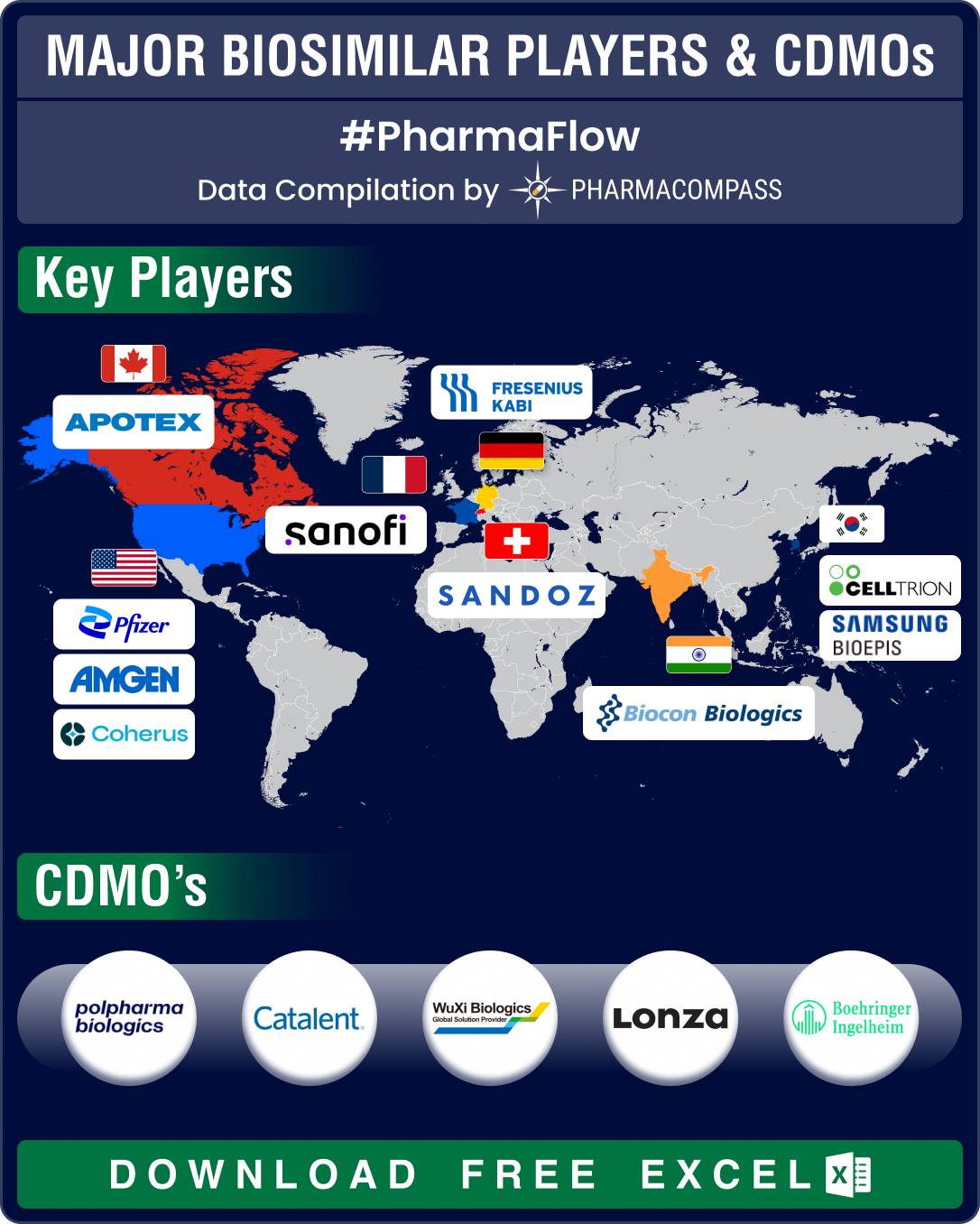
Biologics, or complex drugs that are derived from living organisms, have revolutionized treatment of various conditions such as cancer, autoimmune diseases, and chronic illnesses. In 2023, eight out of 10 of the world’s top-selling drugs were biologics, including Merck’s Keytruda, AbbVie’s Humira, and Sanofi’s Dupixent.Due to their high costs, accessibility of biologics has been a challenge. That’s why biosimilars, or game-changing copycats of biologics that provide highly similar yet more affordable alternatives to established biologics, are becoming popular.The first biosimilar — Sandoz’ Zarxio — was approved by the US Food and Drug Administration (FDA) in 2015. Its reference biologic was Amgen’s Neupogen (filgrastim).  Since then, the global market for biosimilars has been growing at an impressive pace — between 2015 and 2020, it grew at a whopping compounded annual growth rate (CAGR) of 78 percent, touching US$ 17.9 billion in size. It is expected to continue growing at a CAGR of 15 percent and reach a size of about US$ 75 billion by 2030.Major biosimilar players include Amgen, Sandoz, Samsung Bioepis, Pfizer, Biocon Biologics, Celltrion, Stada Arzneimittel, Accord Healthcare, Fresenius Kabi, Coherus Biosciences, Apotex, and Sanofi. The increasing demand for biosimilars has propelled growth in contract manufacturing. Some of the leading contract manufacturing organizations (CMOs) and contract development and manufacturing organizations (CDMOs) that manufacture biosimilars are Polpharma Biologics, Catalent, Pfizer CentreOne, Lonza, Boehringer Ingelheim BioXcellence, Thermo Fisher Scientific, WuXi Biologics, and FUJIFILM Diosynth Biotechnologies.Access the Interactive Dashboard for Biosimilar Developments (Free Excel)Amgen, Sandoz top list of ‘approved biosimilars’; FDA okays 8 copycats in H1 2024Over the recent years, regulatory agencies like the FDA and the European Medicines Agency (EMA) have established rigorous approval pathways for biosimilars.Since 2015,  FDA has approved 53 biosimilars, while the EMA has approved 86 biosimilars. Among the US, European and Canadian markets, Amgen and Sandoz are tied in the first place with 13 approved biosimilars each. Samsung Biologics has nine approved biosimilars, followed by Pfizer with eight and Biocon Biologics with seven. In the first half of this year, FDA set a record by approving eight biosimilars — the highest for H1 of any year. EMA has okayed six biosimilars so far in 2024.In 2023, five biosimilars were approved by the FDA with just one being okayed in the first half. The year marked the end of exclusivity for Humira after 20 years, in which it netted a total of US$ 200 billion in sales. AbbVie’s flagship autoimmune drug has a record 10 biosimilars.Johnson & Johnson’s Stelara also lost exclusivity in 2023 and as many as 11 drugmakers hope to bring its biosimilars to the market. Amgen’s Wezlana was the first biosimilar to Stelara, and it was approved as interchangeable by FDA in October last year.Access the Interactive Dashboard for Biosimilar Developments (Free Excel) FDA approves first interchangeable biosimilar for Eylea, cuts regulatory feeDeveloping a biosimilar costs both money and time. According to Pfizer, developing a biosimilar can take five to nine years and cost over US$ 100 million, not including regulatory fees.In October 2023, FDA slashed its fees with the program fee at US$ 177,397, down from US$ 304,162. The application fees for products that require clinical data has been set at US$ 1,018,753, down from US$ 1,746,745. The application fee for products that don’t require clinical data has been set lower — at US$ 509,377 —  down from US$ 873,373 set earlier. This reduction in application fee has propelled demand for contract manufacturing of biosimilars.There has also been a rise in approvals of interchangeable biosimilars this year. Interchangeable biosimilars meet additional requirements and may be substituted for its reference product by a pharmacist without consulting the prescriber. This year saw FDA approve the first interchangeable biosimilars for bone cancer drug denosumab (Prolia and Xgeva) in Jubbonti and Wyost as well as for eculizumab (Soliris) in Bkemv.In May, FDA approved the first interchangeable biosimilars for eye drug aflibercept (Eylea) in Opuviz and Yesafili. Other biosimilars approved in 2024 include Simlandi for adalimumab (Humira), Tyenne for tocilizumab (Actemra), Selarsdi for ustekinumab (Stelara), and Hercessi for trastuzumab (Herceptin).Access the Interactive Dashboard for Biosimilar Developments (Free Excel) Merck’s Keytruda, BMS’ Opdivo, Novartis’ Cosentyx brace for biosimilar competitionHealthcare spending in the US is projected to rise from US$ 4.5 trillion in 2022 to US$ 6 trillion by 2027. While biologics involve just two percent of prescriptions, they account for 46 percent of all pharmaceutical spending. In 2022, US$ 252 billion was spent on biologics.Biosimilar-related savings in 2023 were estimated to be US$ 9.4 billion in the US and € 10 billion (US$ 10.68 billion) in Europe. With expensive and widely used drugs like AbbVie’s Humira, J&J’s Stelara, and Regeneron’s Eylea coming under competition, US savings are projected to reach US$ 181 billion through 2027. Between 2026 and 2032, about 39 blockbusters are set to lose exclusivity in the US and Europe. Merck’s Keytruda (pembrolizumab) was the world’s top-selling drug last year, generating US$ 25 billion in sales. Its patent is set to expire in 2028 with sales expected to drop 19 percent to US$ 27.4 billion in 2029 from US$ 33.7 billion the previous year. Samsung Bioepis and Amgen initiated phase 3 trials of pembrolizumab in April and May of this year, respectively.Opdivo (nivolumab), belonging to the same class of drugs, competes with Keytruda and is also set to lose patent protection in 2028. It hauled in US$ 10 billion in total global sales in 2023 for Bristol Myers Squibb. The key patents of Novartis’ Cosentyx (secukinumab) are set to expire between 2025 and 2026. Cosentyx saw sales of US$ 5 billion in 2023. Taizhou Mabtech Pharmaceutical and Bio-Thera Solutions are conducting phase 3 trials of secukinumab.Access the Interactive Dashboard for Biosimilar Developments (Free Excel) Our viewWith over 2 billion people worldwide unable to access life-saving medicines, biosimilars hold the key to healthcare accessibility. In 2023, a record 13 biosimilars were launched in the market — the highest for a single year. And this included nine much-anticipated biosimilars to AbbVie’s Humira.  In April this year, FDA announced a Biosimilars Action Plan to streamline the development of biosimilars. With a sharp focus on biosimilars, we expect more records to be broken in the near term. New launches of biosimilars to drugs like J&J’s Stelara, Regeneron’s Eylea and Merck’s Keytruda will surely help in creating new records.


Impressions: 4511

https://www.pharmacompass.com/radio-compass-blog/fda-approves-record-eight-biosimilars-in-h1-2024-okays-first-interchangeable-biosimilars-for-eylea

#PharmaFlow by PHARMACOMPASS
27 Jun 2024

WEEKLY NEWS RECAP #Phispers

read-more
read-more
Merck buys Verona for US$ 10 bn, gains its COPD med; Summit, Astra reportedly in talks for US$ 15 bn cancer drug deal
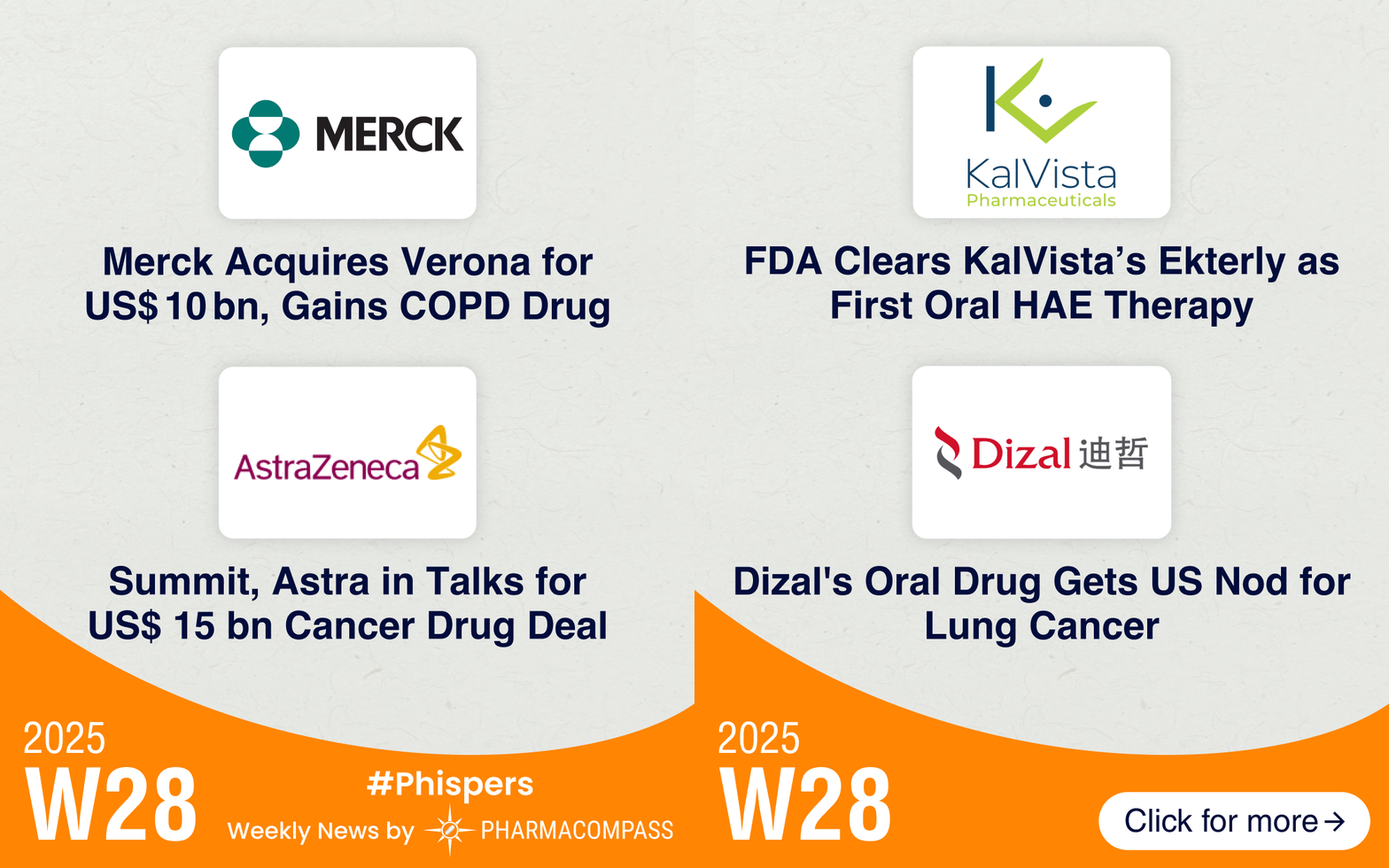
The world of pharmaceuticals continued to witness large deals. Merck announced a US$ 10 billion acquisition of Verona Pharma, gaining access to a US-approved inhaled chronic obstructive pulmonary disease (COPD) drug, Ohtuvayre.  Summit Therapeutics and AstraZeneca are reportedly negotiating a licensing deal worth up to US$ 15 billion for the former’s promising bispecific lung cancer drug. And Chugai Pharmaceutical has struck a potential US$ 1 billion collaboration with AI-driven biotech Gero to discover new therapies for age-related diseases.Dizal Pharmaceutical received accelerated approval from the US Food and Drug Administration (FDA) for Zegfrovy, the first pill that targets a rare and tough-to-treat mutation in lung cancer (known as EGFR exon 20 insertion mutations), giving new hope to patients.KalVista Pharmaceuticals won FDA approval for Ekterly, the first oral, on-demand treatment for hereditary angioedema, offering patients a convenient, fast-acting alternative to injectable therapies.After threatening to impose tariffs on imported drugs back in February, US President Donald Trump is now giving drugmakers over a year to “get their act together”. Post that, imported drugs could face 200 percent taxes, he said.Novartis faced setback as its blockbuster Cosentyx failed a phase 3 trial in giant cell arteritis. However, the Swiss drugmaker notched a regulatory win in its homeland with the approval of Coartem Baby, the first antimalarial therapy specifically designed for newborns. And Taiho Pharmaceutical’s experimental treatment for Duchenne muscular dystrophy (DMD) fell short in a late-stage trial.Merck set to acquire Verona for US$ 10 bn, to gain its FDA-approved COPD drugAmerican pharmaceutical giant Merck is set to acquire London‑based Verona Pharma for approximately US$ 10 billion. Verona’s flagship product, Ohtuvayre (ensifentrine), an FDA-approved, inhalable, non-steroid maintenance treatment for COPD, generated over 96 percent of the company’s revenue (US$ 76 million) in the first quarter of this year. Analysts estimate it could reach peak annual sales of nearly US$ 4 billion by the mid‑2030s.The acquisition aligns with Merck’s strategy to diversify ahead of the 2028 patent expiration of its cancer blockbuster, Keytruda (pembrolizumab), which earned nearly US$ 30 billion in 2024. This will be Merck’s largest acquisition since its US$ 10.8 billion Prometheus Biosciences deal in 2023.Astra reportedly in talks for US$ 15 bn licensing deal with Summit for its cancer drugSummit Therapeutics and AstraZeneca are reportedly in discussions for a licensing agreement concerning ivonescimab, an experimental lung cancer drug, potentially valued at up to US$ 15 billion. The deal structure under consideration includes an upfront payment of several billion dollars to Summit, with additional milestone-based payments contingent upon regulatory approvals, commercialization, and sales targets.Meanwhile, Japanese drugmaker JCR Pharmaceuticals has entered into a license agreement with AstraZeneca’s rare disease unit Alexion for JCR’s adeno-associated virus (AAV) capsids. Under the terms of the agreement, Alexion may use the licensed capsids in up to five of Alexion's genomic medicines programs. The deal is potentially worth up to US$ 825 million.Dizal’s oral therapy okayed for hard-to-treat lung cancer: FDA has granted accelerated approval to Zegfrovy (sunvozertinib), developed by Dizal Pharmaceutical, for the treatment of adults with locally advanced or metastatic non-small cell lung cancer (NSCLC) harboring EGFR exon 20 insertion mutations. This approval is specifically for patients whose disease has progressed on or after platinum-based chemotherapy. Zegfrovy is the only FDA-approved targeted oral therapy for NSCLC patients with EGFR exon 20 insertion mutations.FDA okays KalVista’s oral drug for fatal swelling disorder after missing target dateKalVista Pharmaceuticals has secured FDA approval for Ekterly (sebetralstat), marking the first-ever oral, on‑demand treatment for hereditary angioedema (HAE), a rare and potentially fatal swelling disorder. The agency’s green light followed a month‑long review delay, attributed to “heavy workloads and limited resources” at the FDA. Ekterly offers a substantial improvement over bulky injectables, with analysts describing it as transformative for HAE care.Label update for Lilly’s Kinsula: FDA has approved a label update for Eli Lilly’s Kisunla (donanemab) to allow a more gradual dosing of this Alzheimer’s drug, thereby lowering the risk of a potentially dangerous type of brain swelling. Kisunla, given as a monthly infusion, was approved by the FDA in July 2024 for adults with early-stage Alzheimer’s disease.Chugai inks deal with AI-driven biotech Gero for age-related disease targetsRoche‑backed Chugai Pharmaceutical and Singapore‑based AI‑driven biotech Gero have launched a joint research and licensing agreement targeting age‑related diseases in a deal valued at up to US$ 1 billion. The partnership harnesses Gero’s machine learning platform — trained on large-scale human datasets — to uncover novel therapeutic targets. Chugai will provide an undisclosed upfront payment followed by up to US$ 250 million in milestone payments tied to development and sales achievements.Trump hints at 200 percent tariffs on imported drugs after 18 monthsAfter threatening to impose tariffs on imported drugs back in February, the US President Donald Trump is now open to giving drugmakers some time to “get their act together”.  Post that, imported pharma products could face 200 percent taxes. “We’re going to give people about a year, a year and a half to come in and, after that, they’re going to be tariffed…they’re going to be tariffed at a very, very high rate, like 200 percent,” Trump warned. Novartis’ blockbuster antibody fails late-stage trial for artery diseaseNovartis’ blockbuster drug Cosentyx (secukinumab) has failed to meet the primary endpoint in its phase 3 trial for treating giant cell arteritis (GCA), a serious inflammatory condition affecting arteries primarily in individuals over the age of 50. The trial did not demonstrate a statistically significant improvement in achieving sustained remission at week 52 for patients with newly diagnosed or relapsing GCA when compared to placebo.Swissmedic okays antimalarial med for newborns: Switzerland’s medical regulator, Swissmedic, has granted approval to Coartem Baby (artemether-lumefantrine), also known as Riamet Baby, making it the first antimalarial therapy designed specifically for infants weighing between 2 kg and 5 kg. The therapy has been developed by Novartis and Medicines for Malaria Venture.Taiho’s DMD candidate fails in phase 3 trial: Taiho Pharmaceutical’s investigational therapy for Duchenne muscular dystrophy (DMD), known as TAS-205 or pizuglanstat, did not meet its primary endpoint in a late-stage trial conducted in Japan. The study aimed to assess the efficacy of TAS-205 in improving motor function.  

Impressions: 1005

https://www.pharmacompass.com/radio-compass-phisper/merck-buys-verona-for-us-10-bn-gains-its-copd-med-summit-astra-reportedly-in-talks-for-us-15-bn-cancer-drug-deal

#Phispers by PHARMACOMPASS
10 Jul 2025

NEWS #PharmaBuzz

read-more
read-more

https://www.globenewswire.com/news-release/2026/06/03/3306252/0/en/novartis-cosentyx-pmr-data-in-new-england-journal-of-medicine-showed-sustained-remission-vs-placebo-in-twice-as-many-patients.html

GLOBENEWSWIRE
03 Jun 2026

https://www.globenewswire.com/news-release/2026/06/01/3304002/0/en/novartis-data-at-eular-2026-demonstrates-momentum-for-broad-immunology-portfolio-for-complex-high-unmet-need-diseases.html

GLOBENEWSWIRE
01 Jun 2026

https://www.globenewswire.com/news-release/2026/03/23/3260120/0/en/Novartis-presents-new-data-on-early-symptom-relief-and-long-term-control-in-complex-skin-diseases-at-AAD-2026.html

GLOBENEWSWIRE
23 Mar 2026

https://www.globenewswire.com/news-release/2026/03/13/3255738/0/en/Novartis-Cosentyx-receives-FDA-approval-for-pediatric-patients-aged-12-with-moderate-to-severe-hidradenitis-suppurativa.html

GLOBENEWSWIRE
14 Mar 2026

https://www.globenewswire.com/news-release/2026/02/04/3231748/0/en/Novartis-delivered-high-single-digit-sales-growth-achieved-40-core-margin-and-further-advanced-the-pipeline-in-2025.html

GLOBENEWSWIRE
04 Feb 2026

https://www.globenewswire.com/news-release/2025/10/22/3170800/0/en/Novartis-Cosentyx-meets-primary-and-all-secondary-endpoints-in-Phase-III-trial-in-patients-with-polymyalgia-rheumatica-PMR.html

GLOBENEWSWIRE
22 Oct 2025