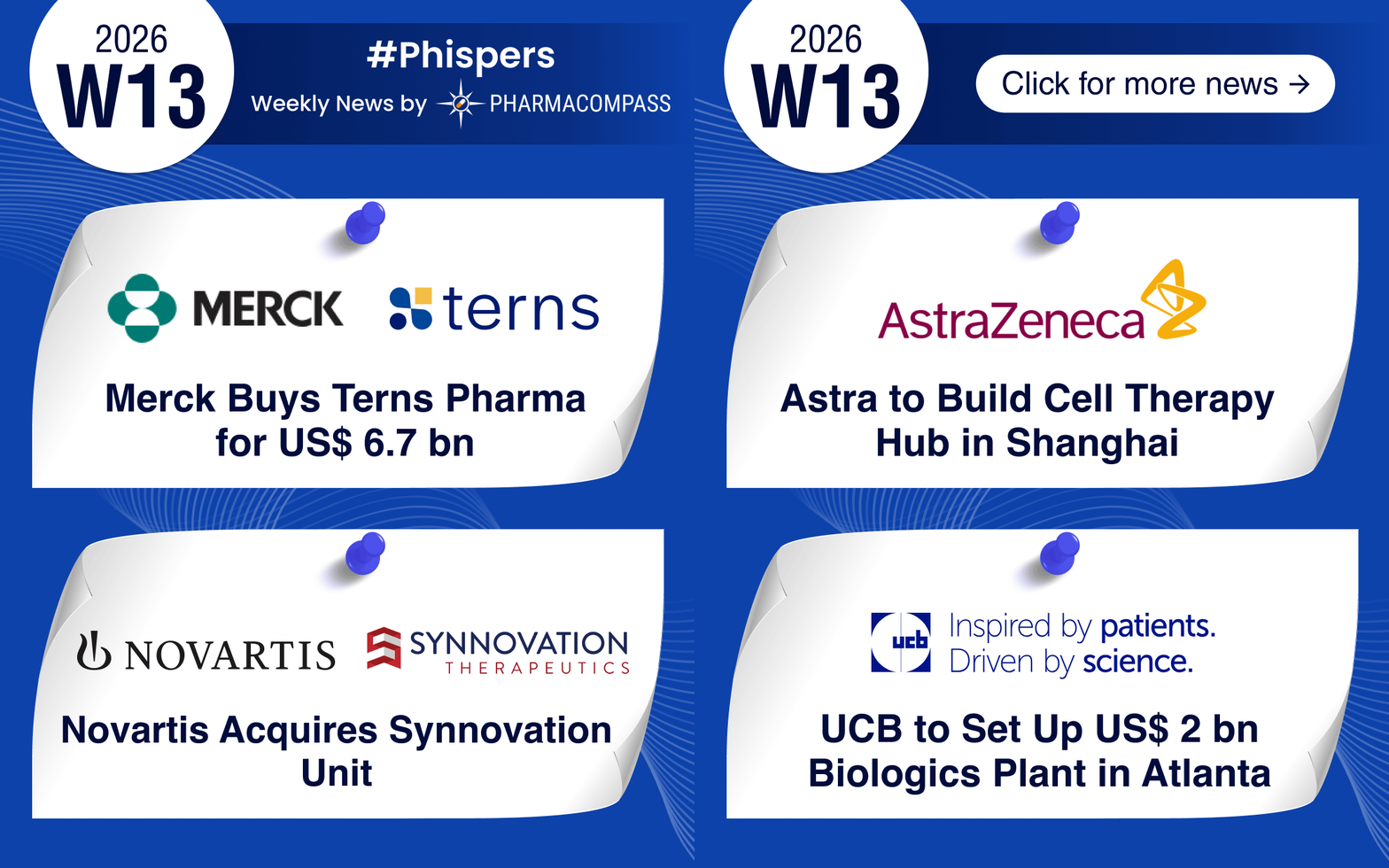
This week’s Phispers is packed with news of drug approvals and M&As. Merck is preparing for its future post-Keytruda patent cliff. It made its third multi-billion-dollar acquisition in recent months by acquiring Terns Pharma for US$ 6.7 billion to bolster its cancer portfolio.
Novartis has acquired
Pikavation, a subsidiary of US biotech firm Synnovation Therapeutics, along with its portfolio of PI3Kα inhibitor programs. Sanofi has entered into a licensing
agreement with biotech Kali Therapeutics to develop its experimental treatment
for multiple autoimmune diseases. Gilead, meanwhile, has acquired privately
held Ouro Medicines to expand its pipeline of autoimmune therapies.In drug approvals, the US
Food and Drug Administration (FDA) has approved Bristol Myers Squibb’s Opdivo (nivolumab) for two new classical Hodgkin lymphoma indications in the US and Europe. Denali Therapeutics has secured its first FDA accelerated approval for a therapy targeting Hunter syndrome, a rare genetic disorder. The agency also approved GSK’s Lynavoy (linerixibat) for cholestatic pruritus, a severe itching condition associated with primary biliary cholangitis (PBC). FDA has also expanded the use of Rhythm Pharmaceuticals’ Imcivree (setmelanotide) to treat acquired hypothalamic obesity.In investments, AstraZeneca has said it plans to establish a cell
therapy manufacturing and supply base, along with an innovation centre, in
Shanghai. And UCB is setting up a new biologics manufacturing facility in
Atlanta.Meanwhile, FDA has asked manufacturers of certain Parkinson’s disease treatments — levodopa and carbidopa — to update prescribing information with a new warning about a potential risk of seizures.Merck snaps up Terns Pharma
for US$ 6.7 billion to boost cancer portfolioMerck is acquiring American biotech Terns Pharmaceuticals for US$ 6.7 billion. The clinical-stage biopharma is
developing treatments for a rare form of blood and bone cancer. The deal is likely to close in the second quarter
of this year and is expected to bolster Merck’s cancer pipeline ahead of the patent expiry of its blockbuster cancer drug Keytruda (pembrolizumab) later this decade. This is the third multi-billion-dollar acquisition
for Merck in recent months.
Novartis buys Synnovation
subsidiary and its oncology programs for up to US$ 3 bnNovartis has acquired
Pikavation Therapeutics, a subsidiary of US biotech firm Synnovation Therapeutics, and its portfolio of PI3Kα inhibitor programs, including an experimental breast cancer drug candidate — SNV4818 — for up to US$ 3 billion. The company will pay Synnovation US$ 2 billion upfront and up to US$ 1 billion contingent on further development achievements.Sanofi in licensing deal with Kali Therapeutics: Sanofi has entered into a licensing agreement with biotech Kali Therapeutics to develop the firm’s experimental treatment for autoimmune diseases. Under the deal, Sanofi will
obtain global rights to KT501, a tri-specific antibody, which is currently
being tested in rheumatoid arthritis. Kali Therapeutics will receive US$ 180
million in upfront and near-term payments and is eligible for up to US$ 1.05
billion in development and commercial milestone payments.Gilead to buy Ouro Medicines: Gilead Sciences is acquiring Ouro Medicines, a privately held biotechnology
company, for US$ 2.18 billion to expand its pipeline of therapies for autoimmune diseases. Gilead will pay US$ 1.68 billion in cash upfront to buy Ouro, and an additional US$ 500 million upon meeting certain milestones. Ouro’s experimental antibody drug, OM336, is in early-stage trials to treat autoimmune conditions, including hemolytic anemia and Sjogren’s disease.US, Europe okay BMS’ Opdivo combo to treat two Hodgkin’s lymphoma indicationsBristol Myers Squibb’s Opdivo (nivolumab) has received approval for two new classical Hodgkin lymphoma indications
in the US and Europe. In the
US, FDA has approved Opdivo in combination with doxorubicin, vinblastine and dacarbazine as treatment for
adults and adolescents aged 12 and older with previously untreated stage 3 or 4 classical Hodgkin’s lymphoma, the most common cancer diagnosed in adolescents aged 15 to 19, the company said.Additionally,
the European Commission has approved Opdivo, in combination with brentuximab vedotin, for the treatment of
children five years of age and older, adolescents, and adults up to 30 years of
age with relapsed or refractory Hodgkin’s lymphoma after one prior line of therapy.Opdivo is already approved to treat
various advanced or metastatic cancers, including melanoma, non-small cell lung
cancer, and kidney cancer.Denali’s therapy for Hunter syndrome okayed: Denali Therapeutics has received its first FDA approval. Its therapy Avlayah (tividenofusp alfa-eknm) was granted an accelerated approved to
treat children with Hunter syndrome, a rare genetic disorder caused by the buildup of certain
sugar molecules in the brain and body. It leads to developmental delays,
cognitive decline and behavioral abnormalities. However, the agency has asked
for a confirmatory trial for continuation of the approval.Rhythm’s therapy to treat hypothalamic obesity: FDA has expanded the use of Rhythm Pharmaceuticals’ Imcivree (setmelanotide) to treat patients living with acquired hypothalamic obesity (HO), a rare disease characterized by accelerated
and sustained weight gain caused by an injury to the hypothalamus.FDA approves GSK’s drug for treating liver disease-related itchingFDA has approved GSK’s Lynavoy (linerixibat) for cholestatic
pruritus, or severe itching experienced by patients living with a liver
disease known as primary biliary cholangitis (PBC). Lynavoy is the first
medicine approved in the US for this condition. Earlier this month, GSK had
announced it has struck a licensing agreement under which Alfasigma will acquire
worldwide exclusive rights to develop, manufacture, and commercialize
linerixibat.Flags seizure risk with certain Parkinson’s drugs: FDA has notified manufacturers of certain Parkinson’s disease treatments — levodopa and carbidopa — to update their prescribing information with a new warning about a potential risk of seizures. These drugs should state that they can cause vitamin B6 deficiency and
seizures associated with it.Astra to build cell therapy
base, innovation centre in Shanghai; UCB invests US$ 2 bn in AtlantaAstraZeneca announced it will build a cell therapy manufacturing and supply base
and an innovation centre in
Shanghai. This will make AstraZeneca the first global drugmaker with end-to-end cell therapy capabilities in China. The facility will make and supply CAR‑T cell therapies for China and other Asian markets, and is part of the US$ 15 billion investment pledge made by AstraZeneca earlier this year.UCB’s biologics plant: Belgian pharmaceutical company UCB has selected Gwinnett
County, Georgia as the location for setting up its new US biologics manufacturing
facility. It will be built on an investment of US$ 2 billion.
















 Share
Share