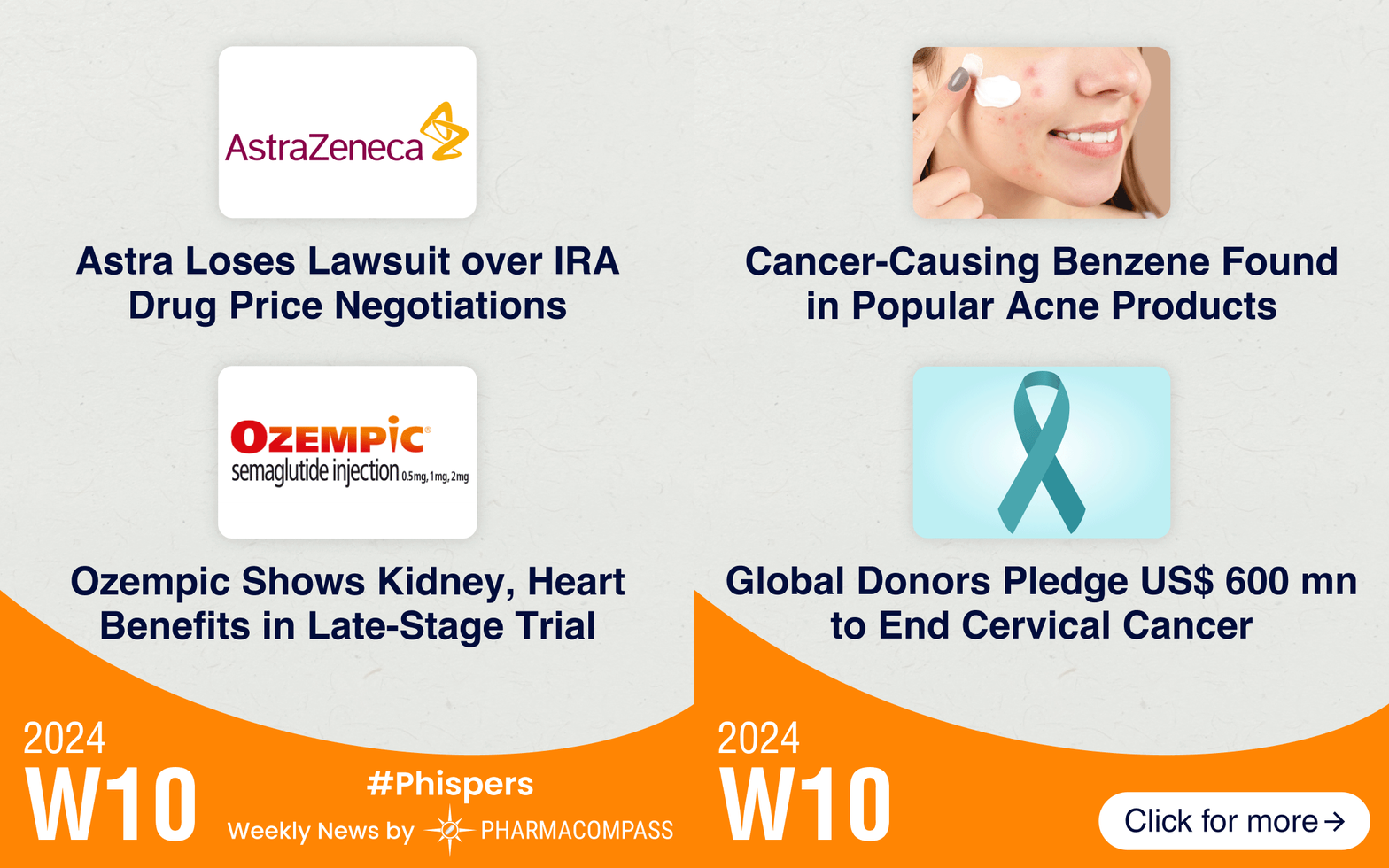
This week’s Phispers brings updates on the Inflation Regulation Act (IRA) in the US. A federal district court judge rejected AstraZeneca’s claims that the drug price negotiations under IRA violate the Fifth Amendment of the US Constitution. The negotiation program currently foresees adding 10 to 20 drugs a year through 2029, and Biden plans to increase this to 50.Novo Nordisk’s diabetes med Ozempic reduced the risk of kidney disease progression and death from cardiovascular or kidney complications by 24 percent in diabetic patients with chronic kidney disease (CKD). Additionally, in the first clinical trial of Ozempic in people with HIV and a type of liver condition, participants (on average) experienced a 31 percent reduction in liver fat.The World Bank, UN and the Gates Foundation have come together and pledged nearly US$ 600 million to eradicate cervical cancer. Cancer-causing benzene has now been found in acne products. And, the WHO has warned of growing resistance to GSK’s HIV drug — dolutegravir.Judge rejects Astra’s lawsuit calling Medicare price talks unconstitutionalA federal judge has rejected AstraZeneca’s claims that the Inflation Reduction Act’s (IRA) drug price negotiations are
unconstitutional. The Anglo-Swedish drugmaker’s blockbuster drug Farxiga (dapagliflozin) for CKD, type 2 diabetes,
and heart failure was among the 10 treatments chosen for price negotiations.The US Medicare health insurance program covers 66 million
Americans mostly over 65 years. Last August, the Biden government had allowed
Medicare to negotiate the prices of 10 drugs with their manufacturers, via the
IRA. The list included drugs like Stelara, Farxiga, Imbruvica, Eliquis, and Entresto. Astra had contended that
this violated the Fifth Amendment of the US Constitution, which states private property shall not “be taken for public use, without just compensation.”Drugmakers respond with counter offers: All the manufacturers of the
10 drugs have responded with counter offers after the United States
Department of Health and Human Service (HHS) sent them initial offers on February 1. With negotiations now underway, the HHS was “glad the drug companies are coming to the table.”‘Medicare should negotiate for at least 50 drugs’: The US President Joe Biden will call on Congress to
expand the number of drugs subject to annual
Medicare price negotiations. The program currently foresees adding 10 to 20
drugs a year through 2029, and Biden will propose increasing this to at least 50, a White House
press statement said.Ozempic cuts risk of CKD
progression, cardiac death in late-stage trialNovo Nordisk’s broadly used blockbuster diabetes drug
Ozempic (semaglutide) slashed the risk of kidney disease
progression and death from cardiovascular or kidney complications by 24 percent in diabetic patients with CKD. About 40 percent of people with type 2 diabetes have CKD. Confident about the efficacy, the drugmaker has decided to stop the trial a year ahead of schedule. Novo will file for expanded approvals for Ozempic in the US and EU this year.Reduces severity of liver disease in
people with HIV: Ozempic also showed benefits in HIV. The drug was found to be safe and it reduced the amount of fat in the
liver by 31 percent in people with HIV and a liver disease, known as metabolic
dysfunction-associated steatotic liver disease (MASLD). In the first clinical trial of semaglutide in people with HIV for MASLD, participants experienced a 31 percent reduction in liver fat on average, with 29 percent of participants experiencing a complete resolution of MASLD (i.e. their liver fat decreased to 5 percent or less).Akero’s drug shows promising long-term benefits for MASH patientsAkero Therapeutics’ experimental drug efruxifermin significantly reduced scarring after 96 weeks
while treating patients with metabolic dysfunction-associated steatohepatitis
(MASH), a liver disease. MASH causes histologic liver damage and occurs in
patients who are not alcoholics and are often obese or have type 2 diabetes. In
fact, the condition is the next target of obesity drugs. In the mid-stage study, biopsies showed 75 percent
of the patients experienced a reduction in liver scarring by at least one stage
on the higher dose and 46 percent did so on the lower dose. The condition has no approved drugs in the US and affects over
17 million people in the country.Cancer-causing benzene now
found in acne products like Clearasil, ProactivHigh levels of benzene, a known carcinogen, have now been found in
topical acne treatments, Valisure said. The Connecticut-based company has issued a citizen petition calling on the FDA to “recall and suspend sales of benzoyl peroxide from the US market.” Unacceptably high levels of benzene were found in acne products including popular household brands like Clearasil, Proactiv, and PanOxyl, as well as products from Estée Lauder, Walmart, Target, Walgreens, and Clinique. According to Valisure, this was because benzoyl peroxide decomposed into benzene over time when used with substances in acne medication.WHO warns of growing resistance to GSK’s HIV drug — dolutegravirThe World Health Organization (WHO) had recommended GSK’s Tivicay (dolutegravir) back in 2018 as a preferred treatment for the virus. But now, the
organization has cited surveys from four countries to suggest that resistance to the GSK drug has exceeded
levels observed in clinical trials.Meanwhile, GSK has said a new investigational
formulation of cabotegravir, known as cabotegravir
ultra long-acting (CAB-ULA), can be administered at intervals of at least four
months, based on results from a phase 1 trial. The current version of the HIV
prevention and treatment drug (cabotegravir) requires dosing every two months. The British drugmaker’s HIV-focused unit, ViiV Healthcare, plans to conduct
large-scale trials later in 2024.World Bank, Gates Foundation,
UN pledge US US$ 600 mn to end cervical cancerAt
the first-ever meet of the Global Cervical Cancer Elimination Forum in
Colombia, global health donors have pledged nearly US$ 600 million to rid the world of cervical cancer. Those donors included the World Bank (US$ 400 million), the Bill & Melinda Gates Foundation (US$ 180 million), and the UN children's agency UNICEF (US$ 10 million).


















 Share
Share