Please Wait
Applying Filters...
Menu
Xls

Digital Content read-more

Create Content with PharmaCompass, ask us

DATA COMPILATION #PharmaFlow

read-more
read-more
FDA approves record eight biosimilars in H1 2024; okays first interchangeable biosimilars for Eylea
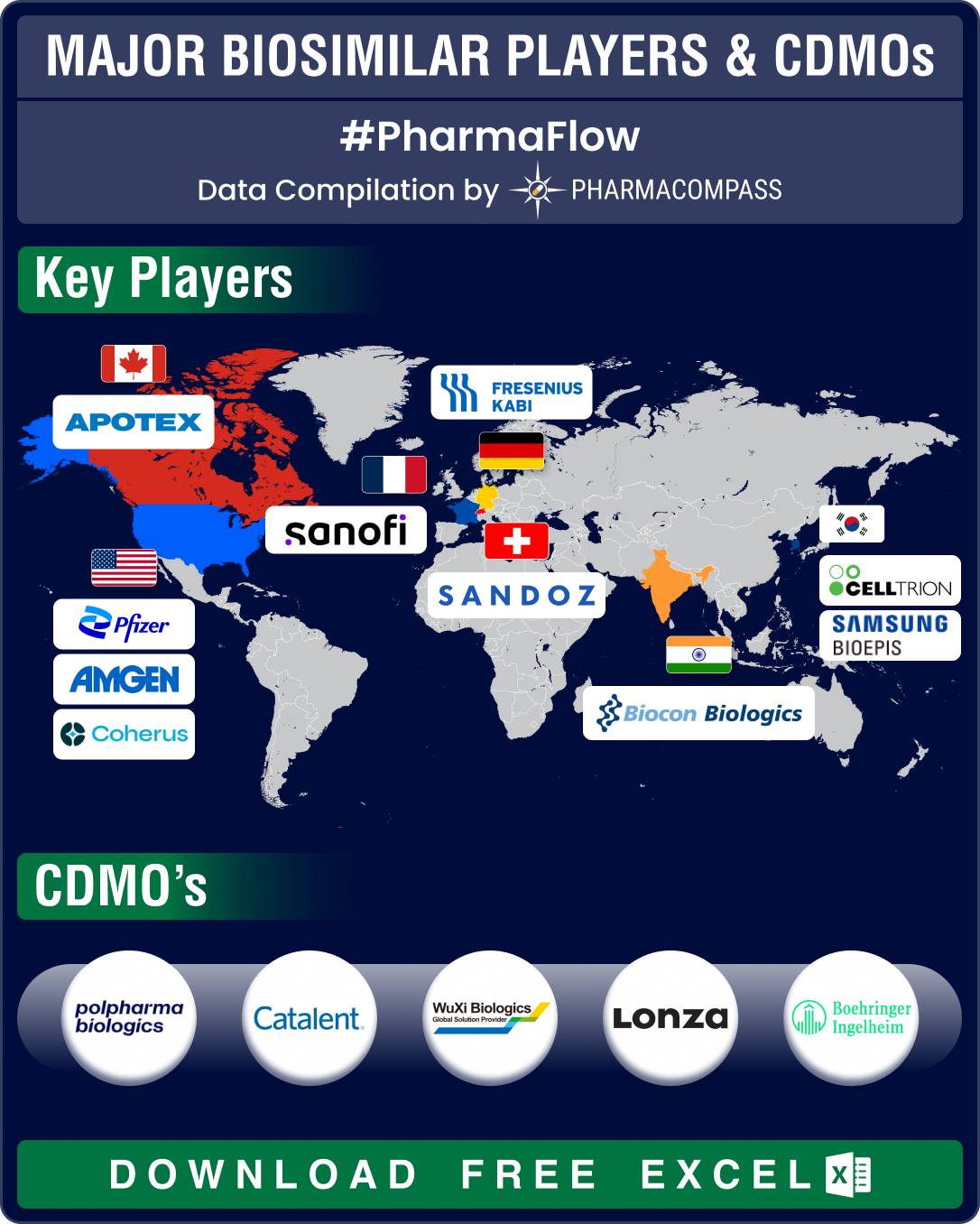
Biologics, or complex drugs that are derived from living organisms, have revolutionized treatment of various conditions such as cancer, autoimmune diseases, and chronic illnesses. In 2023, eight out of 10 of the world’s top-selling drugs were biologics, including Merck’s Keytruda, AbbVie’s Humira, and Sanofi’s Dupixent.Due to their high costs, accessibility of biologics has been a challenge. That’s why biosimilars, or game-changing copycats of biologics that provide highly similar yet more affordable alternatives to established biologics, are becoming popular.The first biosimilar — Sandoz’ Zarxio — was approved by the US Food and Drug Administration (FDA) in 2015. Its reference biologic was Amgen’s Neupogen (filgrastim).  Since then, the global market for biosimilars has been growing at an impressive pace — between 2015 and 2020, it grew at a whopping compounded annual growth rate (CAGR) of 78 percent, touching US$ 17.9 billion in size. It is expected to continue growing at a CAGR of 15 percent and reach a size of about US$ 75 billion by 2030.Major biosimilar players include Amgen, Sandoz, Samsung Bioepis, Pfizer, Biocon Biologics, Celltrion, Stada Arzneimittel, Accord Healthcare, Fresenius Kabi, Coherus Biosciences, Apotex, and Sanofi. The increasing demand for biosimilars has propelled growth in contract manufacturing. Some of the leading contract manufacturing organizations (CMOs) and contract development and manufacturing organizations (CDMOs) that manufacture biosimilars are Polpharma Biologics, Catalent, Pfizer CentreOne, Lonza, Boehringer Ingelheim BioXcellence, Thermo Fisher Scientific, WuXi Biologics, and FUJIFILM Diosynth Biotechnologies.Access the Interactive Dashboard for Biosimilar Developments (Free Excel)Amgen, Sandoz top list of ‘approved biosimilars’; FDA okays 8 copycats in H1 2024Over the recent years, regulatory agencies like the FDA and the European Medicines Agency (EMA) have established rigorous approval pathways for biosimilars.Since 2015,  FDA has approved 53 biosimilars, while the EMA has approved 86 biosimilars. Among the US, European and Canadian markets, Amgen and Sandoz are tied in the first place with 13 approved biosimilars each. Samsung Biologics has nine approved biosimilars, followed by Pfizer with eight and Biocon Biologics with seven. In the first half of this year, FDA set a record by approving eight biosimilars — the highest for H1 of any year. EMA has okayed six biosimilars so far in 2024.In 2023, five biosimilars were approved by the FDA with just one being okayed in the first half. The year marked the end of exclusivity for Humira after 20 years, in which it netted a total of US$ 200 billion in sales. AbbVie’s flagship autoimmune drug has a record 10 biosimilars.Johnson & Johnson’s Stelara also lost exclusivity in 2023 and as many as 11 drugmakers hope to bring its biosimilars to the market. Amgen’s Wezlana was the first biosimilar to Stelara, and it was approved as interchangeable by FDA in October last year.Access the Interactive Dashboard for Biosimilar Developments (Free Excel) FDA approves first interchangeable biosimilar for Eylea, cuts regulatory feeDeveloping a biosimilar costs both money and time. According to Pfizer, developing a biosimilar can take five to nine years and cost over US$ 100 million, not including regulatory fees.In October 2023, FDA slashed its fees with the program fee at US$ 177,397, down from US$ 304,162. The application fees for products that require clinical data has been set at US$ 1,018,753, down from US$ 1,746,745. The application fee for products that don’t require clinical data has been set lower — at US$ 509,377 —  down from US$ 873,373 set earlier. This reduction in application fee has propelled demand for contract manufacturing of biosimilars.There has also been a rise in approvals of interchangeable biosimilars this year. Interchangeable biosimilars meet additional requirements and may be substituted for its reference product by a pharmacist without consulting the prescriber. This year saw FDA approve the first interchangeable biosimilars for bone cancer drug denosumab (Prolia and Xgeva) in Jubbonti and Wyost as well as for eculizumab (Soliris) in Bkemv.In May, FDA approved the first interchangeable biosimilars for eye drug aflibercept (Eylea) in Opuviz and Yesafili. Other biosimilars approved in 2024 include Simlandi for adalimumab (Humira), Tyenne for tocilizumab (Actemra), Selarsdi for ustekinumab (Stelara), and Hercessi for trastuzumab (Herceptin).Access the Interactive Dashboard for Biosimilar Developments (Free Excel) Merck’s Keytruda, BMS’ Opdivo, Novartis’ Cosentyx brace for biosimilar competitionHealthcare spending in the US is projected to rise from US$ 4.5 trillion in 2022 to US$ 6 trillion by 2027. While biologics involve just two percent of prescriptions, they account for 46 percent of all pharmaceutical spending. In 2022, US$ 252 billion was spent on biologics.Biosimilar-related savings in 2023 were estimated to be US$ 9.4 billion in the US and € 10 billion (US$ 10.68 billion) in Europe. With expensive and widely used drugs like AbbVie’s Humira, J&J’s Stelara, and Regeneron’s Eylea coming under competition, US savings are projected to reach US$ 181 billion through 2027. Between 2026 and 2032, about 39 blockbusters are set to lose exclusivity in the US and Europe. Merck’s Keytruda (pembrolizumab) was the world’s top-selling drug last year, generating US$ 25 billion in sales. Its patent is set to expire in 2028 with sales expected to drop 19 percent to US$ 27.4 billion in 2029 from US$ 33.7 billion the previous year. Samsung Bioepis and Amgen initiated phase 3 trials of pembrolizumab in April and May of this year, respectively.Opdivo (nivolumab), belonging to the same class of drugs, competes with Keytruda and is also set to lose patent protection in 2028. It hauled in US$ 10 billion in total global sales in 2023 for Bristol Myers Squibb. The key patents of Novartis’ Cosentyx (secukinumab) are set to expire between 2025 and 2026. Cosentyx saw sales of US$ 5 billion in 2023. Taizhou Mabtech Pharmaceutical and Bio-Thera Solutions are conducting phase 3 trials of secukinumab.Access the Interactive Dashboard for Biosimilar Developments (Free Excel) Our viewWith over 2 billion people worldwide unable to access life-saving medicines, biosimilars hold the key to healthcare accessibility. In 2023, a record 13 biosimilars were launched in the market — the highest for a single year. And this included nine much-anticipated biosimilars to AbbVie’s Humira.  In April this year, FDA announced a Biosimilars Action Plan to streamline the development of biosimilars. With a sharp focus on biosimilars, we expect more records to be broken in the near term. New launches of biosimilars to drugs like J&J’s Stelara, Regeneron’s Eylea and Merck’s Keytruda will surely help in creating new records.

Impressions: 4494

https://www.pharmacompass.com/radio-compass-blog/fda-approves-record-eight-biosimilars-in-h1-2024-okays-first-interchangeable-biosimilars-for-eylea

#PharmaFlow by PHARMACOMPASS
27 Jun 2024

WEEKLY NEWS RECAP #Phispers

read-more
read-more
AbbVie inks US$ 5.6 bn oncology deal with China’s RemeGen; Astra buys Modella AI to speed up cancer drug research
This week’s Phispers is packed with news from the ongoing JP Morgan Healthcare Conference (JPM26). Notably, AbbVie said it is partnering with China-based RemeGen to develop and commercialize an experimental cancer therapy that is designed to treat multiple advanced solid tumors. Novartis entered a worldwide licensing and collaboration deal with SciNeuro Pharmaceuticals to develop a next-generation antibody therapy for Alzheimer’s disease.Artificial intelligence (AI) appeared to be a key focus area at JPM26.  AstraZeneca announced the acquisition of Boston-based AI firm Modella AI, and Nvidia and Eli Lilly expanded their existing collaboration. They have announced a US$ 1 billion five-year investment to set up a joint AI research lab in the San Francisco Bay Area.Meanwhile, Johnson & Johnson and AbbVie struck agreements with the Trump administration to cut drug prices for Americans while expanding US-based manufacturing and R&D investments.The US Food and Drug Administration (FDA) approved Zycubo (copper histidinate), the first US therapy for rare Menkes disease. The agency also asked drugmakers to remove suicidal risk warnings from GLP-1 weight-loss drugs.In news from clinical trials, Eli Lilly said combining Zepbound (tirzepatide) with Taltz (ixekizumab) improved psoriatic arthritis outcomes in a late-stage trial. Bristol Myers Squibb’s Camzyos (mavacamten) met phase 3 goals in adolescents with obstructive hypertrophic cardiomyopathy (oHCM).And, a US judge temporarily blocked the Trump administration from freezing over US$ 10 billion in child welfare funds to five states.J&J, AbbVie strike deals with Trump admin to cut drug prices; AbbVie commits US$ 100 bn in US investmentsAfter the Trump administration signed agreements with 11 large drugmakers in December, Johnson & Johnson and AbbVie have also reached similar agreements.J&J has agreed to lower drug prices for Americans in return for exemptions from US tariffs on its pharmaceutical products. Under the agreement, J&J will participate in the TrumpRx.gov website (yet to be launched). J&J also reaffirmed its US$ 55 billion US investment plan.Similarly, AbbVie entered into a three-year agreement with the Trump administration to reduce prices of select medicines in the US, while committing to invest US$ 100 billion over the next decade in domestic research, development and manufacturing. AbbVie also agreed to expand direct-to-patient sales through the TrumpRx.gov. In return, it will receive tariff exemptions.Meanwhile, AbbVie has agreed to acquire a drug delivery device manufacturing facility and related intellectual property from West Pharmaceutical Services in Tempe, Arizona, as part of its broader push to expand US-based manufacturing.Deals@JPM26: AbbVie inks US$ 5.6 bn oncology deal with China’s RemeGen; Novartis ties up with SciNeuroAbbVie has partnered with China-based RemeGen to develop and commercialize an experimental cancer therapy, RC148, as it looks to strengthen its oncology pipeline. The drug is designed to treat multiple advanced solid tumors, including non-small cell lung cancer and colorectal cancer, where treatment options remain limited. Under the deal, AbbVie will gain rights to develop, manufacture and sell RC148 outside Greater China. RemeGen will receive US$ 650 million upfront and could earn up to US$ 4.95 billion in milestone payments, along with double-digit royalties if the drug reaches the market.Similarly, Novartis has entered a worldwide licensing and collaboration deal with SciNeuro Pharmaceuticals to develop a next-generation antibody therapy for Alzheimer’s disease. SciNeuro will receive US$ 165 million upfront and is eligible for up to US$ 1.5 billion in milestone payments, along with tiered royalties.AI Deals@JPM26: Nvidia, Lilly to invest US$ 1 bn in AI drug research labs; Astra acquires Modella AIAstraZeneca has agreed to acquire Boston-based AI firm Modella AI. This is “the first acquisition of an AI firm by a big pharmaceutical company,” Astra said. Modella’s “foundation models” and AI agents will be integrated into AstraZeneca’s oncology R&D, supporting clinical development, biomarker discovery, and quantitative pathology.Additionally, Nvidia and Eli Lilly have announced a US$ 1 billion five-year investment to set up a joint AI research lab in the San Francisco Bay Area, expanding an existing collaboration between the chipmaker and the drugmaker. The partnership builds on Lilly’s growing use of AI in drug discovery.FDA orders removal of suicidal risk warning from GLP-1 drugs; okays first US drug for Menkes diseaseFDA has asked drugmakers to remove warning about potential suicidal thoughts from GLP-1 weight-loss medications, including Novo Nordisk’s Wegovy (semaglutide) and Saxenda (liraglutide), and Eli Lilly’s Zepbound (tirzepatide). The move follows a review of 91 placebo-controlled clinical trials involving over 107,910 patients, which found no evidence linking GLP-1 receptor agonists to increased risk of suicidal thoughts, behavior, or other psychiatric side effects.Approves Zycubo for rare disease: FDA has approved Zycubo (copper histidinate), a drug developed by Fortress Biotech and Sentynl Therapeutics (a US-based biopharma owned by Zydus Lifesciences), to treat Menkes disease, a rare genetic disorder that prevents children from absorbing copper. This makes Zycubo the first FDA-approved therapy for the condition in the US.Lilly’s Zepbound-Taltz combo improves psoriatic arthritis outcomes in phase 3 trialEli Lilly has said a late-stage study showed that using its weight-loss drug Zepbound (tirzepatide) together with its psoriatic arthritis treatment Taltz (ixekizumab) improved arthritis symptoms and led to greater weight loss than Taltz alone. The trial included overweight or obese adults with psoriatic arthritis, a condition that causes joint pain and is commonly linked to obesity.Amgen’s MariTide helped patients maintain weight loss: Amgen’s experimental obesity drug MariTide (maridebart cafraglutide) helped patients maintain weight loss when given at a lower dose or less frequently, according to a study presented at JPM26. The drug differs from weekly-injection weight-loss treatments, with potential for long-term weight management.BMS’ Camzyos meets phase 3 goals in adolescents with heart disease: Bristol Myers Squibb reported positive topline results from its phase 3 trial of Camzyos (mavacamten) in adolescents aged 12 to under 18 with symptomatic obstructive hypertrophic cardiomyopathy (oHCM). In 2022, Camzyos was granted FDA approval for treating oHCM in adults.US judge blocks Trump admin from freezing US$ 10 bn in child welfare fundsA US federal judge has temporarily blocked the Trump administration from freezing more than US$ 10 billion in childcare and family assistance funds to five Democratic-led states. The restraining order came after California, Colorado, Illinois, Minnesota and New York sued the administration over the funding freeze due to concerns of fraud and misuse of benefits.

Impressions: 1620

https://www.pharmacompass.com/radio-compass-phisper/abbvie-inks-us-5-6-bn-oncology-deal-with-china-s-remegen-astra-buys-modella-ai-to-speed-up-cancer-drug-research

#Phispers by PHARMACOMPASS
15 Jan 2026

NEWS #PharmaBuzz

read-more
read-more

https://www.pharmacompass.com/pdf/news/enforcement-report-week-of-may-27-2026-50222.pdf

FDA
27 May 2026

https://www.fda.gov/news-events/press-announcements/fda-proposes-exclude-semaglutide-tirzepatide-and-liraglutide-503b-bulks-list

FDA
30 Apr 2026

https://www.accessdata.fda.gov/scripts/cder/daf/index.cfm?event=overview.process&ApplNo=215245

FDA
11 Mar 2026

https://www.prnewswire.com/news-releases/cipla-strengthens-us-portfolio-with-the-launch-of-generic-saxenda-liraglutide-injection-for-weight-management-therapy-302699768.html

PR NEWSWIRE
27 Feb 2026

https://www.expresspharma.in/biocon-receives-us-fda-approval-for-liraglutide-injection-gsaxenda/

EXPRESSPHARMA
25 Feb 2026

https://www.accessdata.fda.gov/scripts/cder/daf/index.cfm?event=overview.process&ApplNo=217063

FDA
24 Feb 2026