In
this week’s Phispers, we bring you news on several M&As and tie-ups along with updates on Covid-19 medications and vaccines.
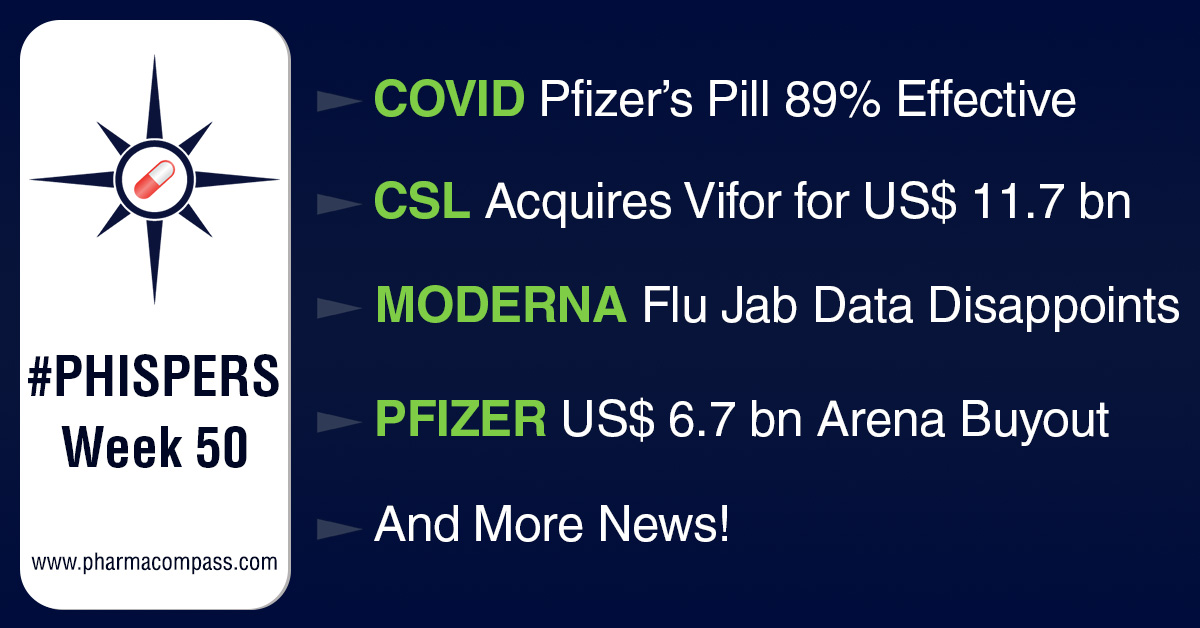
Pfizer's antiviral pill — Paxlovid — has retained its score of 89 percent efficacy against the coronavirus in the final results from the trial. Paxlovid has also been found to be effective against the Omicron variant.
Moderna came out with results from an
early-stage trial of its experimental mRNA flu shot, which has shown efficacy against
several common influenza strains. However, it comes with side effects,
and has also failed to fare better than two of Sanofi’s existing flu
vaccines.
In the largest biopharma deal of the year, Australia’s CSL acquired Swiss drugmaker Vifor for US$ 11.7 billion. Another large deal announced was Pfizer’s decision to buy California-based Arena Pharmaceuticals for US$ 6.7 billion in order to strengthen its portfolio of gastroenterology and anti-inflammatory drugs.
Among
tie-ups of the week, BMS signed a US$ 920 million deal with German biotech
Immatics for a promising cancer drug. And Eli Lilly signed two billion-dollar
biobucks deals with Foghorn and Chinese firm Regor for cancer and metabolic
disorder drugs, respectively. Meanwhile, Biocon and Viatris are reportedly in
talks to merge their biosimilar businesses into a US$ 10 billion entity.
Pfizer’s
Covid pill retains its efficacy estimate in final results; works against Omicron
Antiviral Covid-19 pills are being seen as game changers in the world’s fight against the raging pandemic. While molnupiravir, Merck and Ridgeback Biotherapeutics’ oral antiviral med targeting Covid, saw its efficacy at preventing hospitalization drop from 50 to 30 percent between the interim and final results, Pfizer’s Paxlovid has retained its efficacy
estimates.
According
to Pfizer, Paxlovid retained its 89 percent efficacy
rate in preventing hospitalizations and deaths in high-risk Covid-19 patients.
Last month, the New York-based drugmaker had said its pill was effective when
administered within three days of the onset of Covid-19, based on a study on
1,219 patients. None of the trial patients who received the Pfizer treatment
died. The final analysis of the study on 2,246 high-risk patients confirmed the
earlier results.
The oral
pill also retains its effectiveness against the Omicron variant, the company added, citing recent lab
data.
The data
have been submitted to the US Food and Drug Administration (FDA) as part of a
rolling submission for an emergency use authorization
(EUA). Pfizer’s chief scientific officer Mikael
Dolsten said he expects an EUA for use in high-risk patients from the FDA and
other regulatory agencies sometime soon.
Pfizer also released interim results from an ongoing second study on standard-risk adults. While Paxlovid reduced hospitalizations by 70 percent and no deaths were recorded, it did not meet its primary endpoint in alleviation of all symptoms of the disease in four days. The company said it will release the final data later.
Pfizer
said it can manufacture 180,000 courses this year and at least another 80
million in 2022. The US government has already secured 10 million courses of
the pill for US$ 5.29 billion.
Meanwhile,
rival Merck has also asked the FDA to authorize its antiviral pill
molnupiravir. Scientists have raised safety concerns about potential birth
defects as well as worries that it could cause the virus to mutate.
Booster
shots help neutralize Omicron, says US study: All three Covid-19 vaccines authorized in the US — i.e. Pfizer-BioNTech, Moderna and J&J — are significantly less protective against Omicron in laboratory
testing, but a booster dose restores most of the protection, a study undertaken
by researchers at the Massachusetts General Hospital, Harvard and MIT has
found.
The
researchers found “low to absent” antibody neutralization of the new coronavirus variant from the
regular regimens, but blood from recent recipients of an additional booster
dose exhibited potent neutralization of the variant.
The
results are in line with another study undertaken by the University of Oxford, which found that the
two-dose Pfizer and AstraZeneca vaccine regimens were unable
to produce enough neutralizing antibodies against Omicron.
Early-stage
data from Moderna’s mRNA flu shot disappoints experts, stock tumbles 14 percent
Pharma
majors such as Moderna, Pfizer-BioNTech, Translate Bio (a Sanofi subsidiary) and GSK-CureVac are spending millions of
dollars on the idea that mRNA vaccines can replace existing flu shots. Last
week, Moderna was
first off the block in publishing early-stage trial data of its mRNA vaccine candidate. Though the drugmaker said the vaccine holds promise and may prove effective against several common influenza strains, analysts and investors didn’t seem to concur. As a result, the stock tumbled 14 percent, as several
investors began selling the stock.
Releasing
the data, the drugmaker said a 50-microgram dose of the vaccine, dubbed mRNA-1010, increased antibodies against four
influenza strains manifold in younger and older adults without “significant safety findings.” Safety data were almost the same as its
Covid-19 vaccine, with fatigue, muscle ache and headache being the most common
side effects. This was far more than the side-effects seen in protein-based or
live virus vaccines already available in the market.
Experts
said the efficacy did not seem to be significantly higher in older adults when
compared with vaccines that have already been approved. And the company’s own data on antibodies comparing the
shot to Sanofi’s
approved protein-based flu vaccine Fluzone found that the results were largely
similar.
“On one hand, the antibodies increased to good levels, but on the other hand, the levels aren't necessarily seen as high or necessarily better than some high-efficacy vaccines such as Flublok or Fluzone HD,” Jefferies analyst Michael Yee said.
The company’s shares tumbled 14 percent after the
drugmaker made the results public. Moderna had to call on the investors to wait for
more data following the sharp sell-off. Moderna
president Stephen Hoge also
cautioned against making comparisons between shots before head-to-head trials
came out.
The
early-stage study, testing the vaccine in 180 subjects, is ongoing and a
mid-stage study that is testing it against an already approved flu vaccine is
fully enrolled with 500 participants, the company said. An interim analysis is
expected in early 2022.
Australian biopharma CSL acquires Swiss drugmaker Vifor for US$ 11.7 billion
In the
largest biopharma deal of the year, Australian giant CSL has acquired 88-year-old Swiss drugmaker Vifor for US$ 11.7 billion (about 10.9 billion
Swiss francs) in an all-cash deal as part of its plan to diversify beyond its
blood plasma collection business that has been hit by the Covid-19 pandemic.
CSL offered Vifor US$ 179.25 per share, a 61
percent premium over its closing market price on December 1. The deal would
give the biopharma, heavily dependent on vaccines and blood plasma products,
access to Vifor’s
treatments for iron deficiency, kidney and cardio-renal diseases, along with
its production sites in Switzerland and Portugal. Following the acquisition,
CSL's pipeline of products will increase to 37 in the development phase – a 32 percent increase over its existing suite of drugs in the pipeline.
The offer
was unanimously recommended by Vifor Pharma’s
board. Its largest shareholder
Patinex AG, which holds 23.2 percent shares, has also agreed to tender its
shares. The deal, which is expected to commence in January and get completed by
the middle of next year, is subject to a minimum acceptance rate of 80 percent of all Vifor
Pharma shares and further customary offer conditions, including regulatory
approvals.
Iron supplement Ferinject, Vifor’s best-selling product,
accounts for 30 percent of the firm’s
sales and will face generic competition between 2024 and 2026.
Pfizer
buys Arena for US$ 6.7 billion to strengthen its gastroenterology portfolio
Pfizer announced it is acquiring
California-based Arena Pharmaceuticals for US$ 6.7 billion in cash
to help strengthen its portfolio of
gastroenterology and inflammatory drugs. The New York-based pharma giant has
agreed to pay US$ 100 per share, twice that of Arena’s
trading price at the close of the market last Friday. Following the
announcement, Arena’s
shares surged by over 80 percent.
The deal
will help Pfizer gain access to Arena’s lead candidate — etrasimod — which is undergoing a late-stage trial in ulcerative colitis and a mid-to-late-stage study in Crohn’s disease. Both are inflammatory bowel
diseases that cause ulcers in the digestive tract. If approved, the drug would
help Pfizer challenge Bristol Myers Squibb’s ulcerative colitis drug — Zeposia (ozanimod) — which received FDA approval earlier this
year.
Jones
Trading analyst Prakhar Agrawal said etrasimod’s
strong show in a mid-stage trial looked
better than Zeposia. “(Etrasimod)
… could be a multi-billion blockbuster drug in just Crohn's and ulcerative colitis and we forecast risk adjusted revenue of US$ 3.8 billion.”
As part of
the deal, Pfizer will also get access to two other cardiovascular drugs – phase 2 drug APD418 and mid-stage candidate temanogrel. The Pfizer-Arena deal is expected to close in the first half of 2022.
Novo
invests US$ 2.6 billion in Denmark; BMS inks oncology deal with Immatics
Novo Nordisk, the world’s largest producer of diabetes drugs, will invest US$ 2.58 billion (17 billion
Danish crowns) to increase production capacity in Denmark. The Danish drugmaker
will build three new manufacturing plants as well as expand its existing
facility at its sprawling site in Kalundborg. These new facilities will mainly produce active pharmaceutical
ingredients (APIs), while a smaller segment will focus on assembly and
packaging of oral and injectable products. The company expects to complete the
project in 2027 and generate 400 jobs at its Kalundborg site.
Meanwhile,
Bristol Myers Squibb (BMS) will spend up to US$ 920 million for
global exclusive rights to an experimental immunotherapy developed by German
biotech company Immatics NV.
Under the deal, Immatics will receive an upfront payment of US$ 150 million and up to US$ 770 million in milestone payments along with royalties to license, develop and commercialize the experimental cancer drug — IMA401. The German biopharma retains the option to co-fund the drug’s US development in return for enhanced
US royalty payments and co-promotion of the medicine.
The drug, currently in the pre-clinical stage, aims to activate T-cells – a part of the body’s immune
system – against cancer cells. Immatics had asked the German regulators last month to approve a clinical trial of the drug in various solid tumors. The trial is slated to begin in the first half of 2022. Immatics also has a cell therapy partnership with BMS through a deal with Celgene that dates back to 2019.
Biocon,
Viatris in talks to merge biosimilar businesses; to create US$ 10 billion
entity
Indian
biopharmaceutical company Biocon is in advanced talks with US-headquartered Viatris to merge their biosimilar
businesses in order to form a standalone company that could be valued at US$ 10
billion, a report by financial news website Moneycontrol said.
Biocon is considering buying out Viatris’ stake to own a majority in the new entity, the report said.
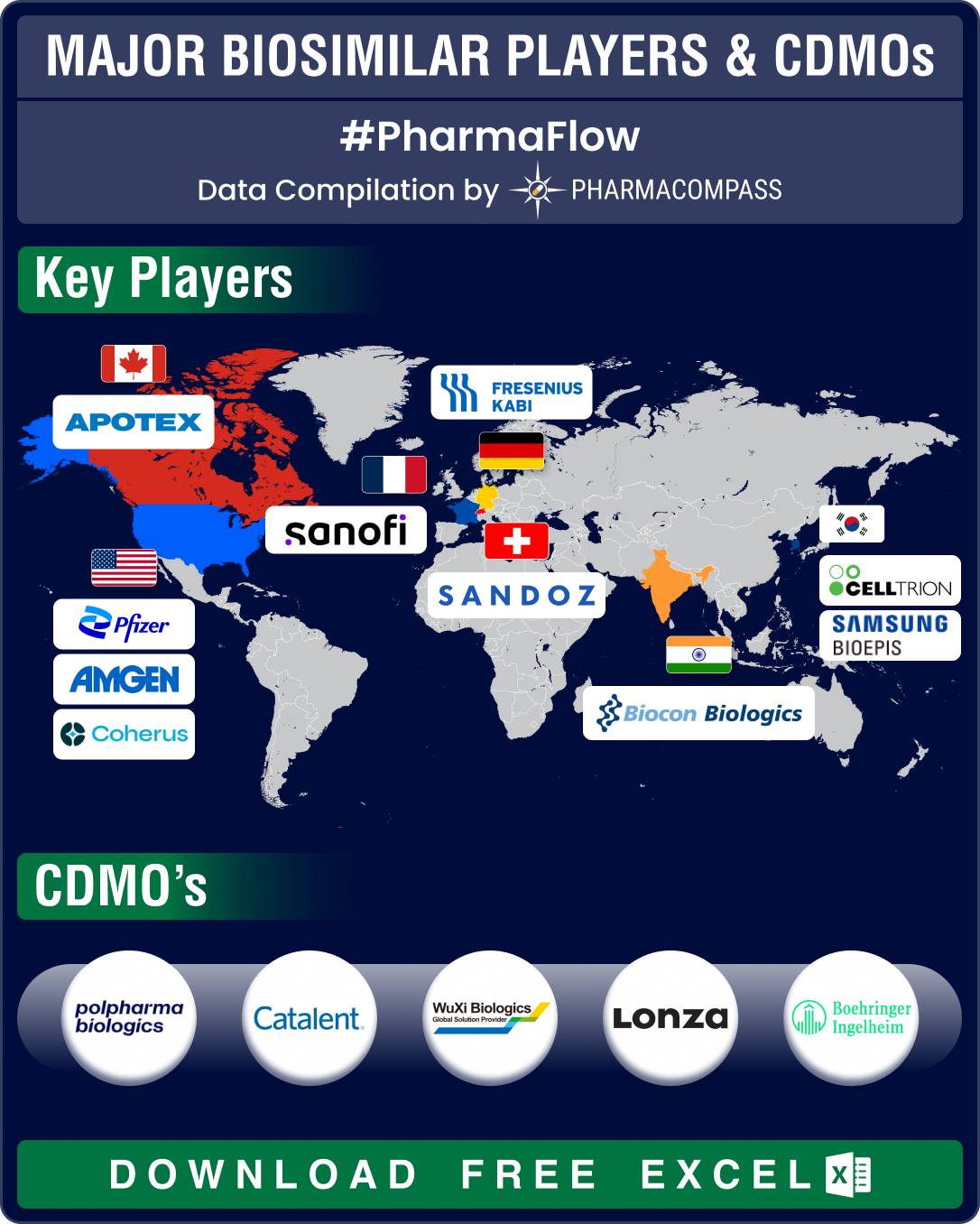
Biocon’s biosimilar business — Biocon
Biologics — and Viatris are already collaborating to develop, manufacture and commercialize biosimilar and diabetes drugs. Earlier this year, the two companies won their first interchangeability designation for the biosimilar Semglee, an insulin that’s interchangeable with Sanofi’s Lantus.
The
companies are also partnering
on developing biosimilars to AbbVie’s Humira, Roche’s Herceptin
and Avastin, Amgen’s Neulasta. Viatris has exclusive commercialization rights for
the biosimilars in the US, Canada, Australia, New Zealand, the EU and European
Free Trade Association countries. Biocon Biologics has exclusive
commercialization rights for Japan and certain emerging markets, along with
co-exclusive commercialization rights in the rest of the world. Both companies
have refused to comment on the possible merger.
Lilly signs two over US$ 1 billion biobucks deals with Foghorn, China’s Regor
Eli Lilly has signed two biobucks deals
worth over US$ 1 billion. First, Eli Lilly’s
research and development subsidiary Loxo Oncology has entered into a US$ 380
million collaboration with Foghorn Therapeutics to develop new cancer treatments by
using the latter’s
Gene Traffic Control platform. As part of the deal, Loxo will pay Foghorn US$ 300 million in cash and
invest another US$ 80 million in equity at US$ 20 per share.
The two
firms will jointly develop and commercialize
Foghorn’s BRM oncology program along
with an additional undisclosed oncology target. The collaboration also includes
three additional discovery programs, for which Foghorn may receive up to US$
1.3 billion in development and commercialization milestones along with
royalties.
Second, Lilly reached a deal with Chinese biotech Regor Therapeutics to discover and develop new medicines for metabolic
disorders such as diabetes and obesity. Lilly will also buy an equity stake in
the company for an undisclosed amount. The Chinese firm could receive up to US$
1.5 billion from Lilly in milestone payments. Lilly will gain access to the
biotech’s so-called CARD
(Computer Accelerated Rational Discovery) platform and also get license to select Regor research and be responsible for any subsequent clinical testing, manufacturing and commercialization, except in China, Macau, Hong Kong and Taiwan.

















 Share
Share