Please Wait
Applying Filters...
Menu
Xls

Digital Content read-more

Create Content with PharmaCompass, ask us

STOCK RECAP #PipelineProspector

read-more
read-more
Pipeline Prospector July 2024: Indices continue to climb; Lilly buys Morphic for US$ 3.2 bn, Kisunla bags FDA nod
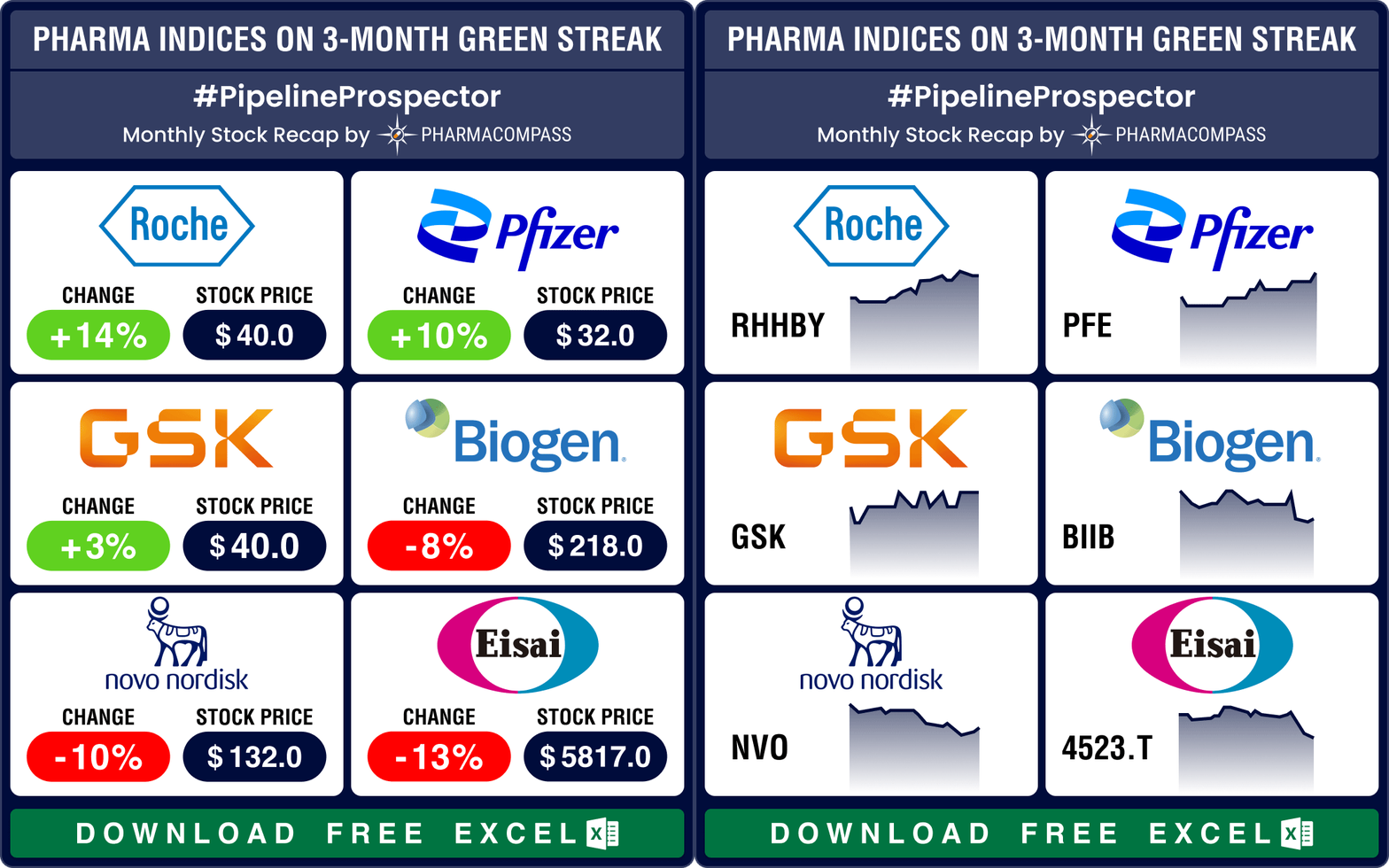
The biotechnology sector ended in the green for the third month in a row in July, significantly outperforming the broader market. The Nasdaq Biotechnology Index (NBI) climbed by a robust 6.6 percent, closing at 4,843.6, up from a close of 4,545.28 in June. Similarly, the SPDR S&P Biotech ETF (XBI) index surged by 6.8 percent, reaching 99.06, up from June’s closing of 92.71. The S&P Biotechnology Select Industry Index (SPSIBI) followed suit, jumping 6.8 percent to 7,716.95 compared to a 4.25 percent rise in June, when it closed at 7,225.07.The month saw a few significant deals. Eli Lilly announced the acquisition of Massachusetts-based Morphic Holding for approximately US$ 3.2 billion in cash, bolstering its presence in the US$ 26.65 billion inflammatory bowel disease (IBD) market. Lilly also signed a strategic deal with radiopharmaceutical company Radionetics Oncology for US$ 140 million, with an option to purchase the entire company for US$ 1 billion. As the month drew to a close, Boehringer Ingelheim said it is acquiring Nerio Therapeutics for up to US$ 1.3 billion, in order to expand its immuno-oncology portfolio. Access the Pipeline Prospector Dashboard for July 2024 Newsmakers (Free Excel)Lilly’s donanemab finally gets approved; Dupixent okayed as add-on therapy for COPDWith the Alzheimer's Association International Conference (AAIC) taking place in Philadelphia (in the US), the spotlight was firmly on Alzheimer’s disease. In the last week of July, the US Food and Drug Administration (FDA) approved Alpha Cognition’s Zunveyl (benzgalantamine) to treat mild-to-moderate Alzheimer’s disease. In early July, and weeks prior to the conference, the FDA had granted a long-awaited approval to Eli Lilly’s donanemab, to be marketed as Kisunla, for the treatment of early symptomatic Alzheimer’s disease.In other approvals, European regulators became the first in the world to approve Sanofi and Regeneron’s Dupixent as an add-on therapy for chronic obstructive pulmonary disease (COPD) patients with high levels of certain white blood cells.In May, FDA had extended its target action date of its priority review of Dupixent as an add-on maintenance treatment for COPD by three months. The revised target action date is now September 27, 2024. Access the Pipeline Prospector Dashboard for July 2024 Newsmakers (Free Excel)Merck’s RSV jab shows efficacy in infants; GSK’s Dovato measures up to Gilead’s BiktarvyMerck said its monoclonal antibody jab to protect infants against RSV-related infections has met the main goals of a mid-to-late-stage trial. Clesrovimab reduced medically attended lower respiratory infections caused by RSV through day 150. Merck plans to submit the data to global regulators. Currently, Sanofi and Astra’s Beyfortus is approved by the FDA to prevent RSV in children up to 24 months.In the largest study of its kind, GSK’s HIV drug Dovato was found to be non-inferior to Gilead Sciences’ Biktarvy, which is seen as the benchmark for HIV treatment. Significantly, Dovato did so with lesser weight gain in a 48-week head-to-head study of virologically suppressed HIV-1 patients. Both Dovato and Biktarvy are single pill treatments for HIV given once a day. Biktarvy raked in US$ 11.9 billion in 2023.Pfizer’s gene therapy for hemophilia A, giroctocogene fitelparvovec, showed promising results in a late-stage trial by significantly reducing the number of annual bleeding episodes. This brings Pfizer closer to securing FDA approval, competing with BioMarin’s Roctavian. Pfizer also said it is moving ahead to mid-stage trials with a once-daily version of its glucagon-like peptide 1 (GLP-1) drug danuglipron for weight loss. In December, Pfizer had discontinued a twice-daily version of danuglipron on account of side effects. Pfizer’s stock also benefited from its healthy second quarter (Q2) results.Swiss drugmaker Roche is reintroducing Susvimo in the US after voluntarily recalling it in October 2022. The implant used to treat patients with neovascular age-related macular degeneration (wet AMD) requires a one-time surgery to be inserted into the eye.Roche also revealed that a second drug candidate from its up to US$ 3.1 billion buyout of Carmot Therapeutics — an obesity drug —  has delivered promising results in an early-stage trial. This once-daily weight-loss pill CT-996 reduced on average 6.1 percent of participants’ starting weight after four weeks. CT-996 works in a similar manner as other blockbuster weight loss drugs, such as Wegovy and Zepbound. Access the Pipeline Prospector Dashboard for July 2024 Newsmakers (Free Excel)Biogen-Sage’s essential tremor drug rejected; Novo’s weekly insulin hit with FDA’s CRL Several drugmakers faced setbacks last month. Novo Nordisk received a complete response letter (CRL) from the FDA, declining approval for its weekly insulin Awiqli. The agency requested additional information related to the manufacturing process, as well as on the type 1 diabetes indication. In May, an FDA panel had voted seven to four against the benefits of Awiqli outweighing its risks. Sage and Biogen’s partnership experienced another setback after the failure of their drug SAGE-324 in a phase 2 trial for essential tremor, a disorder that causes uncontrollable shaking of hands, arms and other parts of the body. This follows the previous failure of Zurzuvae to secure an FDA approval for clinical depression.Meanwhile, Eisai and Biogen’s Alzheimer’s drug Leqembi, faced a setback in Europe when the EU drugs regulator rejected its approval. The European Medicines Agency said the drug’s meager benefit on slowing cognitive decline in early Alzheimer’s did not outweigh the risk it brings of serious brain swelling. Leqembi is approved in the US market, where it has a new competitor — Lilly’s Kisunla.Also, BMS walked away from its rights to the ADC farletuzumab ecteribulin after having paid Japanese drugmaker Eisai US$ 650 million. As part of its portfolio reprioritization, BMS decided to end the co-development agreement. Access the Pipeline Prospector Dashboard for July 2024 Newsmakers (Free Excel) Our viewAs July drew to a close, several pharma majors announced their second quarter (Q2) earnings, including Pfizer, Merck, AbbVie and, AstraZeneca. Most of these drugmakers ended up beating Wall Street expectations. For instance, Pfizer saw revenue growth in Q2 after shrinking for five quarters. It posted revenues of US$ 13.3 billion in the second quarter of 2024, compared to US$ 13 billion in the corresponding quarter last year. It has subsequently raised its 2024 guidance by US$ 1 billion. This means it’s not just the indices and share prices, but even the brass tacks — the top line and the bottomline of drugmakers — are looking up. And that may bring more cheer to the markets in August. Access the Pipeline Prospector Dashboard for July 2024 Newsmakers (Free Excel) 

Impressions: 3312

https://www.pharmacompass.com/pipeline-prospector-blog/indices-continue-to-climb-lilly-buys-morphic-for-us-3-2-bn-its-alzheimer-s-drug-finally-bags-fda-nod

#PharmaFlow by PHARMACOMPASS
01 Aug 2024

WEEKLY NEWS RECAP #Phispers

read-more
read-more
Pfizer buys Metsera for up to US$ 7.3 bn, Roche acquires 89bio; FDA okays injectable version of Merck’s Keytruda
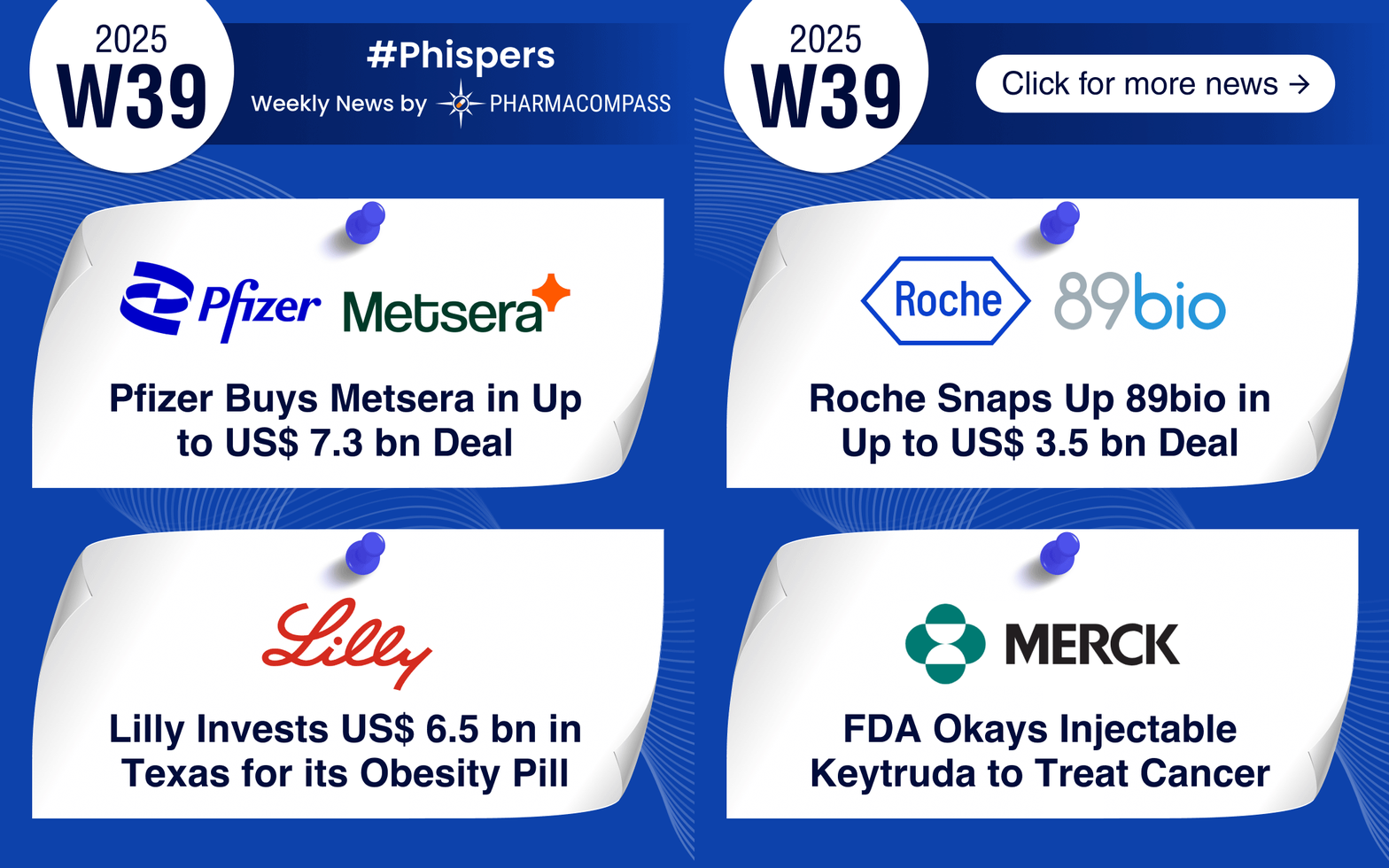
In this week’s Phispers, Pfizer announced the acquisition of New York-based biotech Metsera for up to US$ 7.3 billion, marking its biggest push into the fast-growing obesity market. Roche is acquiring San Francisco-based 89bio for up to US$ 3.5 billion to strengthen its metabolic diseases portfolio. And Amsterdam-based VectorY Therapeutics struck a US$ 1.2 billion deal with Shape Therapeutics to explore brain-targeted gene therapies for neurodegenerative diseases.Meanwhile, Eli Lilly said it will invest US$ 6.5 billion in a Texas plant to manufacture its next-generation, investigational weight-loss pill orforglipron. Moderna opened a vaccine plant in the UK, just when other drugmakers such as Merck, Eli Lilly, Sanofi and AstraZeneca said they are pausing or scrapping major UK investments due to tougher drug pricing rules.In drug approvals, the US Food and Drug Administration (FDA) approved Merck’s Keytruda Qlex, an injectable version of the blockbuster drug, to speed up cancer treatment. The agency also expanded the approval Incyte’s Opzelura cream to treat eczema in children. And Stealth Biotherapeutics’ Forzinity was approved by the FDA as the first therapy for a rare, life-threatening genetic disorder known as Barth syndrome.FDA issued a warning letter to a Janssen Vaccines’ plant in South Korea. The agency rejected Biogen’s application for a higher-dose version of Spinraza (nusinersen), its treatment for spinal muscular atrophy (SMA), a rare genetic disorder that causes progressive muscle weakness, and Scholar Rock’s experimental drug apitegromab, aimed at treating SMA and preserving muscle.In news from trials, Ionis Pharmaceutical’s experimental drug Zilganersen helped patients with the rare Alexander disease improve their ability to walk in an early-to-late-stage study.Pfizer bets on obesity drugs with up to US$ 7.3 bn Metsera buy; Roche acquires 89bioPfizer said it will acquire Metsera in a deal worth up to US$ 7.3 billion, marking its biggest push yet into the fast-growing obesity market. The deal comes after Pfizer scrapped its own obesity pill, danuglipron, due to safety issues. New York-based Metsera brings a pipeline of experimental obesity drugs, including GLP-1 and amylin-based injectables designed for monthly dosing.Roche to buy 89bio: Roche has agreed to acquire San Francisco-based 89bio for up to US$ 3.5 billion, expanding its presence in liver and metabolic diseases linked to obesity. At the center of the buyout is pegozafermin, 89bio’s late-stage experimental therapy for metabolic dysfunction-associated steatohepatitis (MASH), a severe form of fatty liver disease often seen in obese patients.VectorY inks deal with Shape Therapeutics: Amsterdam-based VectorY Therapeutics has entered into an option-and-license agreement with Seattle-based Shape Therapeutics that could be worth up to US$ 1.2 billion. Under the deal, VectorY will test Shape’s engineered SHP-DB1 capsid (protein shell of a virus), designed to carry gene therapies deep into the brain.Eli Lilly to manufacture next-gen weight-loss pill at its US$ 6.5 bn Texas facilityEli Lilly will invest US$ 6.5 billion in a new plant in Houston, Texas, to produce orforglipron, its investigational, once-daily weight-loss pill being studied for the treatment of type 2 diabetes and obesity. Lilly plans to file for regulatory review of orforglipron later this year. The site will also make ingredients for cancer and autoimmune drugs.Moderna opens vaccine plant in UK: Just when drugmakers like Merck, Eli Lilly, Sanofi and AstraZeneca are pausing or scrapping major UK investments, citing tougher drug pricing rules, Moderna has opened a new £150 million (approximately US$ 190 million) manufacturing and research facility at the Harwell science campus in Oxfordshire. This is Moderna’s first UK site to produce mRNA vaccines.FDA approves injectable version of Merck’s Keytruda to speed up cancer treatmentFDA has approved Merck’s Keytruda Qlex (pembrolizumab/berahyaluronidase alfa-pmph), a new formulation of its blockbuster immunotherapy Keytruda that can be given as a quick under-the-skin injection. Unlike the intravenous version, which takes about 30 minutes, the new shot can be administered in just one to two minutes, depending on the dose.Expands label of Incyte’s eczema cream: FDA has expanded the label for Incyte’s Opzelura (ruxolitinib) cream to treat mild-to-moderate atopic dermatitis, commonly known as eczema, in children aged two and older. This makes it the first topical JAK inhibitor approved in the US for pediatric eczema.Approves Stealth’s med for Barth syndrome: FDA has approved Stealth Biotherapeutics’ Forzinity (elamipretide) injection as the first therapy for Barth syndrome, a rare genetic disease that primarily affects males. Patients often face severe heart failure in infancy, and those who survive into adolescence can experience fatigue, poor stamina, and difficulty exercising. Forzinity, given once daily under the skin, works by improving the structure and function of the mitochondria, cell organelles responsible for producing energy.FDA issues warning letter to Janssen plant in South Korea over quality lapsesFDA has issued a warning letter to Janssen Vaccines, a subsidiary of Johnson & Johnson, after inspectors flagged serious quality issues at its plant in Incheon, South Korea. The inspection took place between November 11 and 19, 2024. According to the letter, dated July 18, Janssen failed to properly investigate product complaints and did not consistently follow required quality-control procedures. A key problem was with vial stoppers, which could potentially affect product quality. FDA has now asked Janssen to conduct a three-year review of past complaints, strengthen its quality systems, and provide a corrective action plan.FDA rejects Biogen’s application for high-dose Spinraza to treat SMAFDA has rejected Biogen’s application for a higher-dose version of Spinraza (nusinersen), its treatment for spinal muscular atrophy (SMA), a rare genetic disorder that causes progressive muscle weakness. The agency issued a complete response letter asking for updated manufacturing and technical information, but did not raise concerns about the clinical data supporting the regimen. The higher-dose version has already been cleared in Japan and is under review in Europe.Rejects Scholar Rock’s SMA drug: Scholar Rock’s experimental drug apitegromab, aimed at treating SMA and preserving muscle, hit a roadblock as the FDA cited issues at a third-party manufacturing facility in Indiana.Ionis’ zilganersen improves mobility in patients with rare Alexander diseaseIonis Pharmaceutical’s experimental drug zilganersen helped patients with the Alexander disease (a rare and often fatal neurological disorder) improve their ability to walk in an early-to-late-stage study.  The therapy works by stopping the buildup of a harmful protein in the brain that causes the disease. Ionis plans to apply for FDA approval in early 2026. 

Impressions: 1807

https://www.pharmacompass.com/radio-compass-phisper/pfizer-buys-metsera-for-up-to-us-7-3-bn-roche-acquires-89bio-fda-okays-injectable-version-of-merck-s-keytruda

#Phispers by PHARMACOMPASS
25 Sep 2025

NEWS #PharmaBuzz

read-more
read-more

https://www.biospace.com/drug-development/lilly-ends-two-mid-stage-trials-for-second-obesity-pill

BIOSPACE
02 Sep 2025

https://www.reuters.com/business/healthcare-pharmaceuticals/pfizer-ends-development-weight-loss-pill-danuglipron-2025-04-14/

REUTERS
15 Apr 2025
Pfizer moves forward with once-daily weight-loss pill

12 Jul 2024

// Michael Erman REUTERS

https://www.reuters.com/business/healthcare-pharmaceuticals/pfizer-moves-forward-with-once-daily-weight-loss-drug-2024-07-11/

Michael Erman REUTERS
12 Jul 2024

https://www.businesswire.com/news/home/20240710971928/en

BUSINESSWIRE
11 Jul 2024

https://www.businesswire.com/news/home/20231130108413/en

BUSINESSWIRE
02 Dec 2023