1. Bromine 79
2. Bromine-79
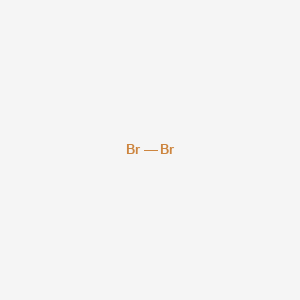
1. Dibromine
2. 7726-95-6
3. Molecular Bromine
4. Brom
5. Brome
6. Bromo
7. Broom
8. Caswell No. 112
9. Sbv4xy874g
10. Bromium
11. Hsdb 514
12. Einecs 231-778-1
13. Unii-sbv4xy874g
14. Epa Pesticide Chemical Code 008701
15. Br2
16. Dtxsid1035238
17. Chebi:29224
18. Bromine (mart.)
19. Bromine [mart.]
20. Ec 231-778-1
21. Bromine 79
22. Total Bromine
23. Bromium 6c
24. Bromium 30c
25. Dtxcid9015238
26. Usepa/opp Pesticide Code: 008701
27. 231-778-1
28. Br
29. Bromine (acgih:osha)
30. Chebi:33117
31. D-149
32. Mfcd00010896
33. Bromo [italian]
34. Bromo [spanish]
35. Brome [french]
36. Brom [german]
37. Broom [dutch]
38. Dibromane
39. Bromoniumbromid
40. Bromine-bromide
41. Bromine Liquid
42. Bromo-
43. Bromine Water, Cp
44. Un1744
45. Bromine, Reagent Grade
46. Bromine [hsdb]
47. Bromium [hpus]
48. Bromine [mi]
49. Bromine [who-dd]
50. Bromine, Lr, >=99%
51. Bromine, P.a., 99.5%
52. Bromine Number - 2 G/100 G
53. Bromine Index - 10 Mg/100 G
54. Bromine Number - 10 G/100 G
55. Bcp26202
56. Bromine Index - 100 Mg/100 G
57. Bromine, Acs Reagent, >=99.5%
58. Br1014
59. Bromine Index - 1000 Mg/100 G
60. Akos015897100
61. Un 1744
62. Bromine, Saj First Grade, >=97.0%
63. Bromine, >=99.99% Trace Metals Basis
64. Bromine, Jis Special Grade, >=99.0%
65. Bp-24346
66. B2414
67. Bromine, Puriss. P.a., >=99.0% (rt)
68. Ns00075687
69. Q2685750
| Molecular Weight | 159.81 g/mol |
|---|---|
| Molecular Formula | Br2 |
| XLogP3 | 1.9 |
| Hydrogen Bond Donor Count | 0 |
| Hydrogen Bond Acceptor Count | 0 |
| Rotatable Bond Count | 0 |
| Exact Mass | Da |
| Monoisotopic Mass | Da |
| Topological Polar Surface Area | 0 |
| Heavy Atom Count | 2 |
| Formal Charge | 0 |
| Complexity | 0 |
| Isotope Atom Count | 0 |
| Defined Atom Stereocenter Count | 0 |
| Undefined Atom Stereocenter Count | 0 |
| Defined Bond Stereocenter Count | 0 |
| Undefined Bond Stereocenter Count | 0 |
| Covalently Bonded Unit Count | 1 |
An oral dose of 1 mL is regarded as lethal in adults.
European Commission/European Chemical Substances Information System (ESIS); IUCLID Dataset, Bromine (7726-95-6) p. 40 (2000). Available from, as of October 2, 2014: https://esis.jrc.ec.europa.eu/
Concentration of 11-23 mg/cu m produces severe choking ... 30-60 mg/cu m is extremely dangerous ... 200 mg/cu m would prove fatal in very short time ... vapors can cause acute as well as chronic poisoning .. it has cumulative properties ..
European Commission/European Chemical Substances Information System (ESIS); IUCLID Dataset, Bromine (7726-95-6) p. 37 (2000). Available from, as of October 2, 2014: https://esis.jrc.ec.europa.eu/
Bromine vapors enter body by respiratory system, skin and digestive system. It has cumulative properties, being deposited in tissues as bromides.
European Commission/European Chemical Substances Information System (ESIS); IUCLID Dataset, Bromine (7726-95-6) p. 35 (2000). Available from, as of October 2, 2014: https://esis.jrc.ec.europa.eu/
In water, and living organisms, bromine forms bromide.
USEPA/Office of Pesticide Programs; Reregistration Eligibility Decision Document - Bromine p. 6-10. EPA-738-F-93-023 (December 1998) Available from, as of June 7, 2007: https://www.epa.gov/pesticides/reregistration/status.htm
Bromine is mainly absorbed via inhalation, but may also enter the body through dermal contact. Bromine salts can be ingested. Due to its reactivity, bromine quickly forms bromide and may be deposited in the tissues, displacing other halogens. (L626)
Biological half-lives of bromine in 15 different organs and tissues of the rat, in addition to the whole-body half-life, were determined by measuring the radioactive concentration of 82Br-bromide in samples of tissues collected at the time intervals of 12-396 hr from animals that continuously (up to 17 d) received 82Br-labeled bromide in their drinking water. The half-life values, calculated from the experimental data by the method of gradual estimates of the parameters in question with the SPSS statistical program, ranged from 94.3 + or - 14.6 hr in the thyroid gland to 235.0 + or - 88.9 hr in liver. In most of the studied tissues, the biological half-lives of bromine were shorter than in the whole body, in which it equaled 197.8 + or - 22.2 hr. Significant correlation between the values of the steady-state concentration of bromide and of the biological half-life was found for most tissues (except for liver). ...
PMID:10999430 Pavelka S et al; Biol Trace Elem Res. 76 (1): 57-66 (2000)
The biological half-life for bromide through ingestion is 12 to 30 days.
IPCS INCHEM; Poisons Information Monographs, Bromine (PIM 080). Available from, as of June 25, 2007: https://www.inchem.org/pages/pims.html
Bromide has a half-life of about 12 days in the human body.
USEPA/Office of Pesticide Programs; Reregistration Eligibility Decision Document - Bromine p. 6-10. EPA-738-F-93-023 (December 1998) Available from, as of June 7th, 2007: https://www.epa.gov/pesticides/reregistration/status.htm
10.5 days and in an average clearance of 0.68 mL/min.
Seiler, H.G., H. Sigel and A. Sigel (eds.). Handbook on the Toxicity of Inorganic Compounds. New York, NY: Marcel Dekker, Inc. 1988., p. 147
Due to its potent oxidatizing action, bromine liberates nascent oxygen or oxygen free radicals from the water present in mucous membranes. Nascent oxygen is a potent oxidizer, capable of producing tissue damage. The extent of the damage is dependent on the dose of bromine and the availability of water to react with it. In addition, the formation of hydrobromic and bromic acids will result in secondary irritation during the reaction.
IPCS INCHEM; Poisons Information Monographs, Bromine (PIM 080). Available from, as of June 25, 2007: https://www.inchem.org/pages/pims.html