Find Pentoxifylline manufacturers, exporters & distributors on PharmaCompass

PharmaCompass

Synopsis

Synopsis

FDF Dossiers

DRUG PRODUCT COMPOSITIONS

136RELATED EXCIPIENT COMPANIES

214EXCIPIENTS BY APPLICATIONS

PATENTS & EXCLUSIVITIES

0

US Patents

0

US Exclusivities

0

Health Canada Patents

GLOBAL SALES INFORMATION

Annual Reports

NA

MARKET PLACE

DIGITAL CONTENT

0

Data Compilation #PharmaFlow

0

Stock Recap #PipelineProspector

0

Weekly News Recap #Phispers
Chemistry

Click the arrow to open the dropdown
read-moreClick the button for full data set
Also known as: Trental, 6493-05-6, Oxpentifylline, Pentoxifyllin, Torental, Pentoxyphylline
Molecular Formula
C13H18N4O3
Molecular Weight
278.31  g/mol
InChI Key
BYPFEZZEUUWMEJ-UHFFFAOYSA-N
FDA UNII
SD6QCT3TSU

Pentoxifylline
A METHYLXANTHINE derivative that inhibits phosphodiesterase and affects blood rheology. It improves blood flow by increasing erythrocyte and leukocyte flexibility. It also inhibits platelet aggregation. Pentoxifylline modulates immunologic activity by stimulating cytokine production.
Pentoxifylline is a Blood Viscosity Reducer. The physiologic effect of pentoxifylline is by means of Hematologic Activity Alteration.
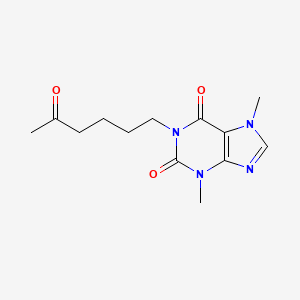
1 2D Structure

Pentoxifylline

2 Identification
2.1 Computed Descriptors
2.1.1 IUPAC Name
3,7-dimethyl-1-(5-oxohexyl)purine-2,6-dione
2.1.2 InChI
InChI=1S/C13H18N4O3/c1-9(18)6-4-5-7-17-12(19)10-11(14-8-15(10)2)16(3)13(17)20/h8H,4-7H2,1-3H3
2.1.3 InChI Key
BYPFEZZEUUWMEJ-UHFFFAOYSA-N
2.1.4 Canonical SMILES
CC(=O)CCCCN1C(=O)C2=C(N=CN2C)N(C1=O)C
2.2 Other Identifiers
2.2.1 UNII
SD6QCT3TSU
2.3 Synonyms
2.3.1 MeSH Synonyms

1. Agapurin

2. Bl 191

3. Bl-191

4. Bl191

5. Oxpentifylline

6. Pentoxil

7. Torental

8. Trental

2.3.2 Depositor-Supplied Synonyms

1. Trental

2. 6493-05-6

3. Oxpentifylline

4. Pentoxifyllin

5. Torental

6. Pentoxyphylline

7. Dimethyloxohexylxanthine

8. Pentoxiphyllium

9. Vazofirin

10. 3,7-dimethyl-1-(5-oxohexyl)xanthine

11. Pentoxiphyllin

12. Pentoxiphylline

13. Rentylin

14. 1-(5-oxohexyl)theobromine

15. Bl 191

16. Bl-191

17. 1h-purine-2,6-dione, 3,7-dihydro-3,7-dimethyl-1-(5-oxohexyl)-

18. 3,7-dimethyl-1-(5-oxohexyl)purine-2,6-dione

19. Pentoxyphyllin

20. 3,7-dihydro-3,7-dimethyl-1-(5-oxohexyl)-1h-purine-2,6-dione

21. 3,7-dimethyl-1-(5-oxohexyl)-3,7-dihydro-1h-purine-2,6-dione

22. Oxypentifylline

23. Pentoxyfilline

24. 1-(5-oxohexyl)-3,7-dimethylxanthine

25. Theobromine, 1-(5-oxohexyl)-

26. C04ad03

27. Sd6qct3tsu

28. 3,7-dimethyl-1-(5-oxohexyl)-1h-purine-2,6(3h,7h)-dione

29. Nsc637086

30. Chembl628

31. Nsc 637086

32. Nsc-637086

33. Nsc-758481

34. 3,7-dimethyl-1-(5-oxohexyl)-1h,3h-purin-2,6-dione

35. Mls000079026

36. Chebi:7986

37. Pentoxyfylline

38. Azupentat

39. 1,2,3,6-tetrahydro-3,7-dimethyl-1-(5-oxohexyl)-2,6-purindion

40. 3,7-dimethyl-1-(5-oxohexyl)-2,3,6,7-tetrahydro-1h-purine-2,6-dione

41. Eht 0202

42. Ncgc00015801-02

43. Durapental

44. Smr000035998

45. Dsstox_cid_3437

46. Dsstox_rid_77028

47. Dsstox_gsid_23437

48. Pnx

49. Pentoxifyllinum

50. Pentoxifilina

51. Hemovas

52. Ralofect

53. Vasofirin

54. Ikomio

55. Agapurin Retard

56. Pentoxifilina [inn-spanish]

57. Pentoxifyllinum [inn-latin]

58. Pentoxil (tn)

59. Trental (tn)

60. Cas-6493-05-6

61. Eht0201

62. Sr-01000075641

63. Mfcd00063379

64. 3,7-dimethyl-1-(5-oxohexyl)xantine

65. 3,7-dimethyl-1-(5-oxohexyl) Xantine

66. Pentoxyifylline

67. Pentopak

68. Ccris 6832

69. Pentoxifylline (jan/usp/inn)

70. 3arr

71. 3aru

72. 3tvx

73. Eht-201

74. Ptx;oxpentifylline

75. Eht-0201

76. Prestwick_608

77. Einecs 229-374-5

78. Pentoxifylline,(s)

79. Brn 0558929

80. Spectrum_001444

81. 2a3c

82. Unii-sd6qct3tsu

83. Opera_id_1800

84. Prestwick0_000196

85. Prestwick1_000196

86. Prestwick2_000196

87. Prestwick3_000196

88. Spectrum2_001181

89. Spectrum3_001820

90. Spectrum4_000227

91. Spectrum5_001161

92. Lopac-p-1784

93. P 1784

94. Pentoxifylline [mi]

95. Pentoxifylline [inn]

96. Pentoxifylline [jan]

97. Lopac0_000936

98. Schembl34039

99. Bspbio_000151

100. Bspbio_003439

101. Kbiogr_000893

102. Kbioss_001924

103. Pentoxifylline [usan]

104. Mls000758298

105. Mls001201764

106. Mls001424051

107. Bidd:gt0174

108. Divk1c_000729

109. Pentoxifylline [vandf]

110. Spectrum1503611

111. Spbio_001221

112. Spbio_002072

113. Pentoxifylline [mart.]

114. Bpbio1_000167

115. Gtpl7095

116. 1-(3-carboxypropyl)-3,7-

117. Pentoxifylline [usp-rs]

118. Pentoxifylline [who-dd]

119. Dtxsid7023437

120. Bdbm10850

121. Hms502e11

122. Kbio1_000729

123. Kbio2_001924

124. Kbio2_004492

125. Kbio2_007060

126. Kbio3_002942

127. Ninds_000729

128. Hms1568h13

129. Hms1922e16

130. Hms2051n06

131. Hms2090h13

132. Hms2093g21

133. Hms2095h13

134. Hms2235c16

135. Hms3262l14

136. Hms3370d09

137. Hms3393n06

138. Hms3712h13

139. Pharmakon1600-01503611

140. Bcp29306

141. Hy-b0715

142. Zinc1530776

143. Pentoxifylline [orange Book]

144. Tox21_110223

145. Tox21_500936

146. Bbl016497

147. Ccg-36382

148. Nsc758481

149. Pdsp1_001015

150. Pdsp2_000999

151. Pentoxifylline [ep Monograph]

152. Stk177321

153. Pentoxifylline [usp Monograph]

154. Akos000541484

155. Tox21_110223_1

156. Ac-8381

157. Db00806

158. Lp00936

159. Nc00255

160. Sdccgsbi-0050910.p004

161. 3,7-dimethyl-1-(5-oxohexyl)-xanthine

162. Cas-1677687

163. Idi1_000729

164. Ncgc00015801-01

165. Ncgc00015801-03

166. Ncgc00015801-04

167. Ncgc00015801-05

168. Ncgc00015801-06

169. Ncgc00015801-07

170. Ncgc00015801-08

171. Ncgc00015801-09

172. Ncgc00015801-10

173. Ncgc00015801-12

174. Ncgc00015801-17

175. Ncgc00015801-21

176. Ncgc00067069-02

177. Ncgc00067069-03

178. Ncgc00067069-04

179. Ncgc00067069-05

180. Ncgc00178062-01

181. Ncgc00178062-02

182. Ncgc00261621-01

183. As-13662

184. Pentoxifylline [usan:usp:inn:ban:jan]

185. Sbi-0050910.p003

186. 1-(5-oxohexyl)theobromine (pentoxifylline)

187. Ab00052363

188. Eu-0100936

189. Ft-0603570

190. Ft-0657886

191. Ft-0673610

192. P2050

193. S4345

194. Sw196777-4

195. C07424

196. D00501

197. D70138

198. Ab00052363-17

199. Ab00052363_18

200. Ab00052363_21

201. 5-26-14-00081 (beilstein Handbook Reference)

202. Q416331

203. 3,7-dimethyl-1-(5-oxohexyl)-1h-purine-2,6-dione

204. Ptx; Oxpentifylline; Bl191; Bl 191; Bl-191

205. Sr-01000075641-1

206. Sr-01000075641-4

207. Sr-01000075641-7

208. Sr-01000075641-9

209. Brd-k57569181-001-05-1

210. Brd-k57569181-001-16-8

211. 3,7-dimethyl-1-(5-oxohexyl)-3,7-dihydropurine-2,6-dione

212. 3,7-dimethyl-1-(5-oxohexyl)-3,7-dihydro-1h-purine-2,6-dione #

213. Px

2.4 Create Date
2005-03-25
3 Chemical and Physical Properties
Molecular Weight 278.31 g/mol
Molecular Formula C13H18N4O3
XLogP30.3
Hydrogen Bond Donor Count0
Hydrogen Bond Acceptor Count4
Rotatable Bond Count5
Exact Mass278.13789045 g/mol
Monoisotopic Mass278.13789045 g/mol
Topological Polar Surface Area75.5 Ų
Heavy Atom Count20
Formal Charge0
Complexity426
Isotope Atom Count0
Defined Atom Stereocenter Count0
Undefined Atom Stereocenter Count0
Defined Bond Stereocenter Count0
Undefined Bond Stereocenter Count0
Covalently Bonded Unit Count1
4 Drug and Medication Information
4.1 Drug Information
1 of 4  
Drug NamePentoxifylline
PubMed HealthPentoxifylline (By mouth)
Drug ClassesHemorheologic
Drug LabelEach extended-release tablet, for oral administration, contains 400 mg of pentoxifylline and the following inactive ingredients: D&C Red #30 Aluminum Lake, FD&C Blue #2 Aluminum Lake, FD&C Yellow #6 Aluminum Lake, hydroxyethyl cellulose, hypro
Active IngredientPentoxifylline
Dosage FormTablet, extended release
RouteOral
Strength400mg
Market StatusPrescription
CompanyApotex; Valeant Bermuda; Pliva; Mylan; Impax Labs

2 of 4  
Drug NamePentoxil
Drug LabelPentoxil (Pentoxifylline Extended-release Tablets, USP) for oral administration contain 400 mg of the active drug and the following inactive ingredients: D&C Red No. 27 Aluminum Lake, FD&C Blue No. 1 Aluminum Lake, hypromellose USP, magnesium stea
Active IngredientPentoxifylline
Dosage FormTablet, extended release
RouteOral
Strength400mg
Market StatusPrescription
CompanyUpsher Smith

3 of 4  
Drug NamePentoxifylline
PubMed HealthPentoxifylline (By mouth)
Drug ClassesHemorheologic
Drug LabelEach extended-release tablet, for oral administration, contains 400 mg of pentoxifylline and the following inactive ingredients: D&C Red #30 Aluminum Lake, FD&C Blue #2 Aluminum Lake, FD&C Yellow #6 Aluminum Lake, hydroxyethyl cellulose, hypro
Active IngredientPentoxifylline
Dosage FormTablet, extended release
RouteOral
Strength400mg
Market StatusPrescription
CompanyApotex; Valeant Bermuda; Pliva; Mylan; Impax Labs

4 of 4  
Drug NamePentoxil
Drug LabelPentoxil (Pentoxifylline Extended-release Tablets, USP) for oral administration contain 400 mg of the active drug and the following inactive ingredients: D&C Red No. 27 Aluminum Lake, FD&C Blue No. 1 Aluminum Lake, hypromellose USP, magnesium stea
Active IngredientPentoxifylline
Dosage FormTablet, extended release
RouteOral
Strength400mg
Market StatusPrescription
CompanyUpsher Smith

4.2 Drug Indication

Pentoxifylline is indicated for the treatment of intermittent claudication in patients with chronic occlusive arterial disease. Pentoxifylline may improve limb function and reduce symptoms but cannot replace other therapies such as surgical bypass or removal of vascular obstructions.


FDA Label


Investigated for use/treatment in alzheimer's disease and neurologic disorders.


5 Pharmacology and Biochemistry
5.1 Pharmacology

Pentoxifylline, a synthetic dimethylxanthine derivative structurally related to [theophylline] and [caffeine], exhibits hemorheological, anti-oxidative, and anti-inflammatory properties and is traditionally indicated in the treatment of peripheral arterial disease (PAD). In PAD patients with concurrent cerebrovascular and coronary artery diseases, pentoxifylline treatment has occasionally been associated with angina, arrhythmia, and hypotension. Concurrent use with [warfarin] should be associated with more frequent monitoring of prothrombin times. Also, patients with risk factors complicated by hemorrhages, such as retinal bleeding, peptic ulceration, and recent surgery, should be monitored periodically for bleeding signs.


5.2 MeSH Pharmacological Classification

Phosphodiesterase Inhibitors

Compounds which inhibit or antagonize the biosynthesis or actions of phosphodiesterases. (See all compounds classified as Phosphodiesterase Inhibitors.)


Platelet Aggregation Inhibitors

Drugs or agents which antagonize or impair any mechanism leading to blood platelet aggregation, whether during the phases of activation and shape change or following the dense-granule release reaction and stimulation of the prostaglandin-thromboxane system. (See all compounds classified as Platelet Aggregation Inhibitors.)


Free Radical Scavengers

Substances that eliminate free radicals. Among other effects, they protect PANCREATIC ISLETS against damage by CYTOKINES and prevent myocardial and pulmonary REPERFUSION INJURY. (See all compounds classified as Free Radical Scavengers.)


Vasodilator Agents

Drugs used to cause dilation of the blood vessels. (See all compounds classified as Vasodilator Agents.)


Radiation-Protective Agents

Drugs used to protect against ionizing radiation. They are usually of interest for use in radiation therapy but have been considered for other purposes, e.g. military. (See all compounds classified as Radiation-Protective Agents.)


5.3 FDA Pharmacological Classification
5.3.1 Active Moiety
PENTOXIFYLLINE
5.3.2 FDA UNII
SD6QCT3TSU
5.3.3 Pharmacological Classes
Hematologic Activity Alteration [PE]; Blood Viscosity Reducer [EPC]
5.4 ATC Code

C04AD03

S76 | LUXPHARMA | Pharmaceuticals Marketed in Luxembourg | Pharmaceuticals marketed in Luxembourg, as published by d'Gesondheetskeess (CNS, la caisse nationale de sante, www.cns.lu), mapped by name to structures using CompTox by R. Singh et al. (in prep.). List downloaded from https://cns.public.lu/en/legislations/textes-coordonnes/liste-med-comm.html. Dataset DOI:10.5281/zenodo.4587355


C - Cardiovascular system

C04 - Peripheral vasodilators

C04A - Peripheral vasodilators

C04AD - Purine derivatives

C04AD03 - Pentoxifylline


5.5 Absorption, Distribution and Excretion

Absorption

Oral pentoxifylline (PTX) is almost completely absorbed but has low bioavailability of 20-30% due to extensive first-pass metabolism; three of the seven known metabolites, M1, M4, and M5 are present in plasma and appear soon after dosing. Single oral doses of 100, 200, and 400 mg of pentoxifylline in healthy males produced a mean tmax of 0.29-0.41 h, a mean Cmax of 272-1607 ng/mL, and a mean AUC0- of 193-1229 ng\*h/mL; corresponding ranges for metabolites 1, 4, and 5 were 0.72-1.15, 114-2753, and 189-7057. Single administration of a 400 mg extended-release tablet resulted in a heightened tmax of 2.08 1.16 h, lowered Cmax of 55.33 22.04 ng/mL, and a comparable AUC0-t of 516 165 ng\*h/mL; all these parameters were increased in cirrhotic patients. Smoking was associated with a decrease in the Cmax and AUCsteady-state of metabolite M1 but did not dramatically affect the pharmacokinetic parameters of pentoxifylline or other measured metabolites. Renal impairment increases the mean Cmax, AUC, and ratio to parent compound AUC of metabolites M4 and M5, but has no significant effect on PTX or M1 pharmacokinetics. Finally, similar to cirrhotic patients, the Cmax and tmax of PTX and its metabolites are increased in patients with varying degrees of chronic heart failure. Overall, metabolites M1 and M5 exhibit plasma concentrations roughly five and eight times greater than PTX, respectively. PTX and M1 pharmacokinetics are approximately dose-dependent, while those of M5 are not. Food intake before PTX ingestion delays time to peak plasma concentrations but not overall absorption. Extended-release forms of PTX extend the tmax to between two and four hours but also serves to ameliorate peaks and troughs in plasma concentration over time.


Route of Elimination

Pentoxifylline is eliminated almost entirely in the urine and predominantly as M5, which accounts for between 57 and 65 percent of the administered dose. Smaller amounts of M4 are recovered, while M1 and the parent compound account for less than 1% of the recovered dose. The fecal route accounts for less than 4% of the administered dose.


Volume of Distribution

Pentoxifylline has a volume of distribution of 4.15 0.85 following a single intravenous 100 mg dose in healthy subjects.


Clearance

Pentoxifylline given as a single 100 mg intravenous infusion has a clearance of 3.62 0.75 L/h/kg in healthy subjects, which decreased to 1.44 0.46 L/h/kg in cirrhotic patients. In another study, the apparent clearance of either 300 or 600 mg of pentoxifylline given intravenously (median and range) was 4.2 (2.8-6.3) and 4.1 (2.3-4.6) L/min, respectively. It is important to note that, due to the reversible extra-hepatic metabolism of the parent compound and metabolite 1, the true clearance of pentoxifylline may be even higher than the measured values.


5.6 Metabolism/Metabolites

Pentoxifylline (PTX) metabolism is incompletely understood. There are seven known metabolites (M1 through M7), although only M1, M4, and M5 are detected in plasma at appreciable levels, following the general pattern M5 > M1 > PTX > M4. As PTX apparent clearance is higher than hepatic blood flow and the AUC ratio of M1 to PTX is not appreciably different in cirrhotic patients, it is clear that erythrocytes are the main site of PTX-M1 interconversion. However, the reaction likely occurs in the liver as well. PTX is reduced in an NADPH-dependent manner by unknown an unidentified carbonyl reductase to form either [lisofylline] (the (R)-M1 enantiomer) or (S)-M1; the reaction is stereoselective, producing (S)-M1 exclusively in liver cytosol, 85% (S)-M1 in liver microsomes, and a ratio of 0.010-0.025 R:S-M1 after IV or oral dosing in humans. Although both (R)- and (S)-M1 can be oxidized back into PTX, (R)-M1 can also give rise to M2 and M3 in liver microsomes. _In vitro_ studies suggest that CYP1A2 is at least partly responsible for the conversion of [lisofylline] ((R)-M1) back into PTX. Unlike the reversible oxidation/reduction of PTX and its M1 metabolites, M4 and M5 are formed via irreversible oxidation of PTX in the liver. Studies in mice recapitulating the PTX-ciprofloxacin drug reaction suggest that CYP1A2 is responsible for the formation of M6 from PTX and of M7 from M1, both through de-methylation at position 7. In general, metabolites M2, M3, and M6 are formed at very low levels in mammals.


Pentoxifylline is a known human metabolite of lisofylline.

S73 | METXBIODB | Metabolite Reaction Database from BioTransformer | DOI:10.5281/zenodo.4056560


5.7 Biological Half-Life

Overall, pentoxifylline has an elimination half-life of between 0.39 and 0.84 hours, while its primary metabolites have elimination half-lives of between 0.96 and 1.61 hours.


5.8 Mechanism of Action

Patients with peripheral arterial disease (PAD) may suffer from intermittent claudication, exertional leg pain that resolves upon rest, which is underscored by a complex etiology including vascular dysfunction (reduced limb perfusion, angiogenesis, and microcirculatory flow), systemic inflammation, and skeletal muscle dysfunction. Pentoxifylline (PTX), (3,7-dimethyl-1-(5-oxohexyl)-3,7-dihydro-1H-purine-2,6-dione) or 1-(5-oxohexyl)-3,7-dimethylxanthine, is a methyl-xanthine derivative that acts to lower blood viscosity by increasing erythrocyte flexibility, reducing plasma fibrinogen, inhibiting neutrophil activation, and suppressing erythrocyte/platelet aggregation; it also has antioxidant and anti-inflammatory effects. Although the precise mechanism of action has yet to be elucidated, numerous studies have suggested several effects of PTX. The classical interpretation of PTX's broad effects is due to its ability to act, _in vitro_, as a non-specific cyclic-3',5'-phosphodiesterase (PDE) inhibitor at millimolar concentrations; specifically, it has been proposed that inhibition of PDE type III and IV isozymes leads to elevated cyclic adenosine monophosphate (cAMP) levels, which mediate diverse downstream effects. This view has been challenged, specifically by observing those plasma concentrations of PTX in routine clinical use are typically only around 1M, far lower than those used to inhibit PDEs _in vitro_. Instead, several studies have suggested that PTX can modulate adenosine receptor function, specifically the G-coupled A2A receptor (A2AR). Whether PTX acts directly as an A2AR agonist is unclear, although it can clearly increase the response of A2AR to adenosine. A2AR activation activates adenylyl cyclase, which increases intracellular cAMP levels; this observation may explain PTX's ability to increase intracellular cAMP in a PDE-independent fashion. Elevated cAMP levels have numerous downstream effects. cAMP-mediated activation of protein kinase A (PKA) suppresses nuclear translocation of NF-B, which suppresses transcription of pro-inflammatory cytokines such as tumour necrosis factor (TNF-), interleukin-1 (IL-1), and IL-6 as well as TNF-induced molecules such as adhesion molecules (ICAM1 and VCAM1) and the C-reactive protein (CRP). PTX has also been shown to prevent the downstream phosphorylation of p38 MAPK and ERK, which are responsible for assembling the NADPH oxidase involved in the neutrophil oxidative burst. This effect is due to a PKA-independent decrease in Akt phosphorylation and a PKA-dependent decrease in phosphorylation of p38 MAPK and ERK. This transcriptional regulation at least partially explains the anti-inflammatory and anti-oxidative properties of PTX. Also, activated PKA can activate the cAMP response element-binding protein (CREB), which itself blocks SMAD-driven gene transcription, effectively disrupting transforming growth factor (TGF-1) signalling. This results in lower levels of fibrinogenic molecules such as collagens, fibronectin, connective tissue growth factor, and alpha-smooth muscle actin. Hence, disruption of TGF-1 signalling may explain the anti-fibrotic effects of PTX, including at least some of the decrease in blood viscosity. The picture is complicated by the observation that PTX metabolites M1, M4, and M5 have been shown to inhibit C5 Des Arg- and formyl-methionylleucylphenylalanine-induced superoxide production in neutrophils and M1 and M5 significantly contribute to PTX's observed hemorheological effects. Overall, PTX administration is associated with decreased pro-inflammatory molecules, an increase in anti-inflammatory molecules such as IL-10, and decreased production of fibrinogenic and cellular adhesion molecules.


EHT 0202 was discovered to play a role in protecting neurons in pharmacological models of neuronal cell death. ExonHit identified RNA isoforms produced by alterations of splicing specifically taking place in neurodegenerative disease models. These isoforms were identified using DATAS(TM), ExonHit's proprietary gene profiling technology. DATAS(TM), stands for Differential Analysis of Transcripts with Alternative Splicing.


Related Excipient Companies

Upload your portfolio for free, ask us

Excipients by Applications

Click here to find the perfect excipient manufacturers by their capabilities

Coating Systems & Additives

read-more
read-more

Fillers, Diluents & Binders

read-more
read-more

Controlled & Modified Release

read-more
read-more

Thickeners and Stabilizers

read-more
read-more

Granulation

read-more
read-more

Lubricants & Glidants

read-more
read-more

Direct Compression

read-more
read-more

Solubilizers

read-more
read-more

Film Formers & Plasticizers

read-more
read-more

Co-Processed Excipients

read-more
read-more

Topical

read-more
read-more

Disintegrants & Superdisintegrants

read-more
read-more

Empty Capsules

read-more
read-more

Chewable & Orodispersible Aids

read-more
read-more

Vegetarian Capsules

read-more
read-more

API Stability Enhancers

read-more
read-more

Taste Masking

read-more
read-more

Emulsifying Agents

read-more
read-more

Parenteral

read-more
read-more

Coloring Agents

read-more
read-more

Rheology Modifiers

read-more
read-more

Digital Content read-more

Create Content with PharmaCompass, ask us

NEWS #PharmaBuzz

read-more
read-more

Global Sales Information

Do you need Business Intel? Ask us

Market Place

Do you need sourcing support? Ask us

REF. STANDARDS & IMPURITIES

Upload your portfolio for free, ask us

ANALYTICAL

Upload your methods for free, ask us

ABOUT THIS PAGE

Looking for 6493-05-6 / Pentoxifylline API manufacturers, exporters & distributors?

Pentoxifylline manufacturers, exporters & distributors 1

14

PharmaCompass offers a list of Pentoxifylline API manufacturers, exporters & distributors, which can be sorted by GMP, USDMF, JDMF, KDMF, CEP (COS), WC, and more, enabling you to easily find the right Pentoxifylline manufacturer or Pentoxifylline supplier for your needs.

Send us enquiries for free, and we will assist you in establishing a direct connection with your preferred Pentoxifylline manufacturer or Pentoxifylline supplier.

API | Excipient name

Pentoxifylline

Synonyms

Trental, 6493-05-6, Oxpentifylline, Pentoxifyllin, Torental, Pentoxyphylline

Cas Number

6493-05-6

Unique Ingredient Identifier (UNII)

SD6QCT3TSU

About Pentoxifylline

A METHYLXANTHINE derivative that inhibits phosphodiesterase and affects blood rheology. It improves blood flow by increasing erythrocyte and leukocyte flexibility. It also inhibits platelet aggregation. Pentoxifylline modulates immunologic activity by stimulating cytokine production.

Pentoxil Manufacturers

A Pentoxil manufacturer is defined as any person or entity involved in the manufacture, preparation, processing, compounding or propagation of Pentoxil, including repackagers and relabelers. The FDA regulates Pentoxil manufacturers to ensure that their products comply with relevant laws and regulations and are safe and effective to use. Pentoxil API Manufacturers are required to adhere to Good Manufacturing Practices (GMP) to ensure that their products are consistently manufactured to meet established quality criteria.

click here to find a list of Pentoxil manufacturers with USDMF, JDMF, KDMF, CEP, GMP, and COA related information on PhamaCompass.

Pentoxil Suppliers

A Pentoxil supplier is an individual or a company that provides Pentoxil active pharmaceutical ingredient (API) or Pentoxil finished formulations upon request. The Pentoxil suppliers may include Pentoxil API manufacturers, exporters, distributors and traders.

click here to find a list of Pentoxil suppliers with USDMF, JDMF, KDMF, CEP, GMP, and COA related information on PharmaCompass.

Pentoxil USDMF

A Pentoxil DMF (Drug Master File) is a document detailing the whole manufacturing process of Pentoxil active pharmaceutical ingredient (API) in detail. Different forms of Pentoxil DMFs exist exist since differing nations have different regulations, such as Pentoxil USDMF, ASMF (EDMF), JDMF, CDMF, etc.

A Pentoxil DMF submitted to regulatory agencies in the US is known as a USDMF. Pentoxil USDMF includes data on Pentoxil's chemical properties, information on the facilities and procedures used, and details about packaging and storage. The Pentoxil USDMF is kept confidential to protect the manufacturer’s intellectual property.

click here to find a list of Pentoxil suppliers with USDMF on PharmaCompass.

Pentoxil KDMF

In Korea, the Ministry of Food and Drug Safety (MFDS) is in charge of regulating pharmaceutical products and services.

Pharmaceutical companies submit a Pentoxil Drug Master File in Korea (Pentoxil KDMF) to the MFDS, which includes comprehensive information about the production, processing, facilities, materials, packaging, and testing of Pentoxil. The MFDS reviews the Pentoxil KDMF as part of the drug registration process and uses the information provided in the Pentoxil KDMF to evaluate the safety and efficacy of the drug.

After submitting a Pentoxil KDMF to the MFDS, the registered manufacturer can provide importers or distributors with the registration number without revealing confidential information to Korean business partners. Applicants seeking to register their Pentoxil API can apply through the Korea Drug Master File (KDMF).

click here to find a list of Pentoxil suppliers with KDMF on PharmaCompass.

Pentoxil CEP

A Pentoxil CEP of the European Pharmacopoeia monograph is often referred to as a Pentoxil Certificate of Suitability (COS). The purpose of a Pentoxil CEP is to show that the European Pharmacopoeia monograph adequately controls the purity of Pentoxil EP produced by a given manufacturer. Suppliers of raw materials can prove the suitability of Pentoxil to their clients by showing that a Pentoxil CEP has been issued for it. The manufacturer submits a Pentoxil CEP (COS) as part of the market authorization procedure, and it takes on the role of a Pentoxil CEP holder for the record. Additionally, the data presented in the Pentoxil CEP (COS) is managed confidentially and offers a centralized system acknowledged by numerous nations, exactly like the Pentoxil DMF.

A Pentoxil CEP (COS) is recognised by all 36 nations that make up the European Pharmacopoeia Convention. Pentoxil CEPs may be accepted in nations that are not members of the Ph. Eur. at the discretion of the authorities there.

click here to find a list of Pentoxil suppliers with CEP (COS) on PharmaCompass.

Pentoxil WC

A Pentoxil written confirmation (Pentoxil WC) is an official document issued by a regulatory agency to a Pentoxil manufacturer, verifying that the manufacturing facility of a Pentoxil active pharmaceutical ingredient (API) adheres to the Good Manufacturing Practices (GMP) regulations of the importing country. When exporting Pentoxil APIs or Pentoxil finished pharmaceutical products to another nation, regulatory agencies frequently require a Pentoxil WC (written confirmation) as part of the regulatory process.

click here to find a list of Pentoxil suppliers with Written Confirmation (WC) on PharmaCompass.

Pentoxil NDC

National Drug Code is a comprehensive database maintained by the FDA that contains information on all drugs marketed in the US. This directory includes information about finished drug products, unfinished drug products, and compounded drug products, including those containing Pentoxil as an active pharmaceutical ingredient (API).

Finished drug products

The FDA updates the NDC directory daily. The NDC numbers for Pentoxil API and other APIs are published in this directory by the FDA.

Unfinished drugs

The NDC unfinished drugs database includes product listing information submitted for all unfinished drugs, such as active pharmaceutical ingredients (APIs), drugs intended for further processing and bulk drug substances for compounding.

Pharmaceutical companies that manufacture Pentoxil as an active pharmaceutical ingredient (API) must furnish the FDA with an updated record of all drugs that they produce, prepare, propagate, compound, or process for commercial distribution in the US at their facilities.

Compounded drug products

The NDC directory also contains data on finished compounded human drug products that contain Pentoxil and are produced by outsourcing facilities. While these outsourcing facilities are not mandated to assign a Pentoxil NDC to their finished compounded human drug products, they may choose to do so.

click here to find a list of Pentoxil suppliers with NDC on PharmaCompass.

Pentoxil GMP

Pentoxil Active pharmaceutical ingredient (API) is produced in GMP-certified manufacturing facility.

GMP stands for Good Manufacturing Practices, which is a system used in the pharmaceutical industry to make sure that goods are regularly produced and monitored in accordance with quality standards. The FDA’s current Good Manufacturing Practices requirements are referred to as cGMP or current GMP which indicates that the company follows the most recent GMP specifications. The World Health Organization (WHO) has its own set of GMP guidelines, called the WHO GMP. Different countries can also set their own guidelines for GMP like China (Chinese GMP) or the EU (EU GMP).

PharmaCompass offers a list of Pentoxil GMP manufacturers, exporters & distributors, which can be sorted by USDMF, JDMF, KDMF, CEP (COS), WC, and more, enabling you to easily find the right Pentoxil GMP manufacturer or Pentoxil GMP API supplier for your needs.

Pentoxil CoA

A Pentoxil CoA (Certificate of Analysis) is a formal document that attests to Pentoxil's compliance with Pentoxil specifications and serves as a tool for batch-level quality control.

Pentoxil CoA mostly includes findings from lab analyses of a specific batch. For each Pentoxil CoA document that a company creates, the USFDA specifies specific requirements, such as supplier information, material identification, transportation data, evidence of conformity and signature data.

Pentoxil may be tested according to a variety of international standards, such as European Pharmacopoeia (Pentoxil EP), Pentoxil JP (Japanese Pharmacopeia) and the US Pharmacopoeia (Pentoxil USP).


Inform the supplier about your product requirements, specifying if you need a product with particular monograph like EP (Ph. Eur.), USP, JP, BP, or any other quality. In addition, clarify whether you need hydrochloride (HCl), anhydricum, base, micronisatum or a specific level of purity. To find reputable suppliers, utilize the filters and select those certified by GMP, FDA, or any other certification as per your requirement.
For your convenience, we have listed synonyms and CAS numbers to help you find the best supplier. The use of synonyms and CAS numbers can be helpful in identifying potential suppliers, but it is crucial to note that they might not always indicate the exact same product. It is important to confirm the product details with the supplier before making a purchase to ensure that it meets your requirements.
Ask Us for Pharmaceutical Supplier and Partner
Ask Us, Find A Supplier / Partner
No Commissions, No Strings Attached, Get Connected for FREE

What are you looking for?

How can we help you?

The request can't be empty

Please read our Privacy Policy carefully

You must agree to the privacy policy

The name can't be empty
The company can't be empty.
The email can't be empty Please enter a valid email.
The mobile can't be empty