Find Arbutin manufacturers, exporters & distributors on PharmaCompass

PharmaCompass

Synopsis

Synopsis

ACTIVE PHARMA INGREDIENTS

0

USDMF

0

CEP/COS

0

JDMF

0

EU WC

0

KDMF

0

NDC API

0

VMF

0INTERMEDIATES

REF. STANDARDS OR IMPURITIES

0

USP

0

JP

0

Others

FINISHED DOSAGE FORMULATIONS

0

FDF Dossiers

0

FDA Orange Book

0

Europe

0

Canada

0

Australia

0

South Africa

0

Listed Dossiers

FDF Dossiers

DRUG PRODUCT COMPOSITIONS

137RELATED EXCIPIENT COMPANIES

241EXCIPIENTS BY APPLICATIONS

PATENTS & EXCLUSIVITIES

0

US Patents

0

US Exclusivities

0

Health Canada Patents

GLOBAL SALES INFORMATION

US Medicaid

NA

Annual Reports

NA

Regulatory FDF Prices

NA

MARKET PLACE

0

API

0

FDF

DIGITAL CONTENT

0

Data Compilation #PharmaFlow

0

Stock Recap #PipelineProspector

0

Weekly News Recap #Phispers

0

News #PharmaBuzz
Chemistry

Click the arrow to open the dropdown
read-moreClick the button for full data set
Also known as: 497-76-7, Arbutoside, Ursin, Uvasol, P-arbutin, Beta-arbutin
Molecular Formula
C12H16O7
Molecular Weight
272.25  g/mol
InChI Key
BJRNKVDFDLYUGJ-RMPHRYRLSA-N
FDA UNII
C5INA23HXF

Arbutin
-arbutin is a natural product found in Grevillea robusta, Halocarpus biformis, and other organisms with data available.
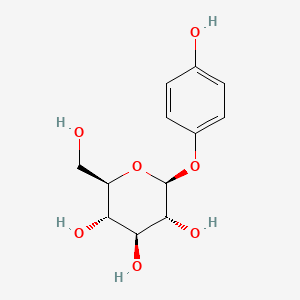
1 2D Structure

Arbutin

2 Identification
2.1 Computed Descriptors
2.1.1 IUPAC Name
(2R,3S,4S,5R,6S)-2-(hydroxymethyl)-6-(4-hydroxyphenoxy)oxane-3,4,5-triol
2.1.2 InChI
InChI=1S/C12H16O7/c13-5-8-9(15)10(16)11(17)12(19-8)18-7-3-1-6(14)2-4-7/h1-4,8-17H,5H2/t8-,9-,10+,11-,12-/m1/s1
2.1.3 InChI Key
BJRNKVDFDLYUGJ-RMPHRYRLSA-N
2.1.4 Canonical SMILES
C1=CC(=CC=C1O)OC2C(C(C(C(O2)CO)O)O)O
2.1.5 Isomeric SMILES
C1=CC(=CC=C1O)O[C@H]2[C@@H]([C@H]([C@@H]([C@H](O2)CO)O)O)O
2.2 Other Identifiers
2.2.1 UNII
C5INA23HXF
2.3 Synonyms
2.3.1 Depositor-Supplied Synonyms

1. 497-76-7

2. Arbutoside

3. Ursin

4. Uvasol

5. P-arbutin

6. Beta-arbutin

7. 4-hydroxyphenyl Beta-d-glucopyranoside

8. P-hydroxyphenyl Beta-d-glucoside

9. 4-hydroxyphenyl-beta-d-glucopyranoside

10. Arbutinum

11. P-hydroxyphenyl Beta-d-glucopyranoside

12. Ursi

13. Hydroquinone-o-beta-d-glucopyranoside

14. Hydroquinone Beta-d-glucopyranoside

15. Ericolin

16. Hydroquinone O-beta-d-glucopyranoside

17. Hydroquinone-glucose

18. Hydroquinone

19. A-d-glucopyranoside

20. (2r,3s,4s,5r,6s)-2-(hydroxymethyl)-6-(4-hydroxyphenoxy)oxane-3,4,5-triol

21. (2r,3s,4s,5r,6s)-2-(hydroxymethyl)-6-(4-hydroxyphenoxy)tetrahydro-2h-pyran-3,4,5-triol

22. C5ina23hxf

23. 4-hydroxyphenyl-.beta.-d-glucopyranoside

24. Chembl232202

25. Chebi:18305

26. Hydroquinone Glucose

27. Nsc-4036

28. Arbutine

29. Arbutyne

30. Hydroquinone-beta-d-glucopyranoside

31. Dsstox_cid_20152

32. Dsstox_rid_79450

33. Dsstox_gsid_40152

34. Nsc 4036

35. Mfcd00016915

36. (2r,3s,4s,5r,6s)-2-(hydroxymethyl)-6-(4-hydroxyphenoxy)tetrahydropyran-3,4,5-triol

37. (2r,3s,4s,5r,6s)-2-(hydroxymethyl)-6-(4-oxidanylphenoxy)oxane-3,4,5-triol

38. Cas-497-76-7

39. Sr-05000002157

40. Unii-c5ina23hxf

41. Ccris 9273

42. B-arbutin

43. Hsdb 7661

44. Uva,p-arbutin

45. Ncgc00095599-01

46. Einecs 207-850-3

47. Beta-d-glucopyranoside, 4-hydroxyphenyl

48. Brn 0089673

49. Spectrum_000786

50. Specplus_000314

51. Arbutin [hsdb]

52. Arbutin [inci]

53. Arbutin, >=98%

54. Arbutin [mi]

55. Arbutinum [hpus]

56. Arbutin [mart.]

57. Prestwick3_001026

58. Spectrum2_000662

59. Spectrum3_001233

60. Spectrum4_001474

61. Spectrum5_000147

62. Arbutin [who-dd]

63. Bmse000365

64. Arbutin (uva, P-arbutin)

65. Arbutin, Analytical Standard

66. Schembl36351

67. Arbutin - Uva - P-arbutin

68. Bspbio_001211

69. Bspbio_002706

70. Hydroquinone-beta-d-glucoside

71. Kbiogr_002047

72. Kbioss_001266

73. Spectrum300539

74. 5-17-07-00110 (beilstein Handbook Reference)

75. Mls002207046

76. Divk1c_006410

77. Spbio_000723

78. Bpbio1_001333

79. Megxp0_001504

80. Dtxsid7040152

81. Kbio1_001354

82. Kbio2_001266

83. Kbio2_003834

84. Kbio2_006402

85. Kbio3_002206

86. Hydroquinone O--d-glucopyranoside

87. Hms2098m13

88. Hms3715m13

89. P-hydroxyphenyl Beta -d-glucoside

90. Zinc518554

91. Hy-n0192

92. 4-hydroxyphenyl-beta-glucopyranoside

93. Hydroquinone Beta -d-glucopyranoside

94. Tox21_111509

95. Tox21_302428

96. B-d-glucopyranoside, 4-hydroxyphenyl

97. Bdbm50219502

98. Ccg-38565

99. S2263

100. Akos015965305

101. Tox21_111509_1

102. Db11217

103. Ks-5252

104. Sdccgmls-0066538.p001

105. P-hydroxyphenyl Beta -d-glucopyranoside

106. Smp1_000028

107. Ncgc00166076-02

108. Ncgc00166076-03

109. Ncgc00166076-04

110. Ncgc00166076-07

111. Ncgc00166076-09

112. Ncgc00255705-01

113. Ac-20183

114. Beta -d-glucopyranoside, 4-hydroxyphenyl

115. Beta-d-glucopyranoside, 4-hydroxyphenyl-

116. I(2)-d-glucopyranoside, 4-hydroxyphenyl

117. Smr001233417

118. A0522

119. Ab00443586

120. Hydroquinone-.beta.-d-glucopyranoside

121. N1714

122. Sw199492-2

123. C06186

124. 4-hydroxyphenyl B-d-glucopyranoside, 9ci, 8ci

125. 497a767

126. A827849

127. Arbutin, Primary Pharmaceutical Reference Standard

128. Q416446

129. Sr-05000002157-2

130. Sr-05000002157-4

131. Alpha-arbutin; 4-hydroquinone-alpha-d-glucopyranoside

132. Arbutin, European Pharmacopoeia (ep) Reference Standard

133. 4e19b706-2013-4401-a1fc-a154dadf42b4

134. (2s,3r,4s,5s,6r)-2-(4-hydroxyphenoxy)-6-methylol-tetrahydropyran-3,4,5-triol

135. 7oq

2.4 Create Date
2005-06-24
3 Chemical and Physical Properties
Molecular Weight 272.25 g/mol
Molecular Formula C12H16O7
XLogP3-0.7
Hydrogen Bond Donor Count5
Hydrogen Bond Acceptor Count7
Rotatable Bond Count3
Exact Mass272.08960285 g/mol
Monoisotopic Mass272.08960285 g/mol
Topological Polar Surface Area120 Ų
Heavy Atom Count19
Formal Charge0
Complexity279
Isotope Atom Count0
Defined Atom Stereocenter Count5
Undefined Atom Stereocenter Count0
Defined Bond Stereocenter Count0
Undefined Bond Stereocenter Count0
Covalently Bonded Unit Count1
4 Drug and Medication Information
4.1 Therapeutic Uses

/EXPL THER/ Although the toxicogenomics of A375 human malignant melanoma cells treated with arbutin have been elucidated using DNA microarray, the proteomics of the cellular response to this compound are still poorly understood. ...This study ... performed proteomic analyses to investigate the anticancer effect of arbutin on the protein expression profile in A375 cells. After treatment with arbutin (8 ug/mL) for 24, 48 and 72 hr, the proteomic profiles of control and arbutin-treated A375 cells were compared, and 26 differentially expressed proteins (7 upregulated and 19 downregulated proteins) were identified by MALDI-Q-TOF MS and MS/MS. Among these proteins, 13 isoforms of six identical proteins were observed. Bioinformatic tools were used to search for protein function and to predict protein interactions. The interaction network of 14 differentially expressed proteins was found to be correlated with the downstream regulation of p53 tumor suppressor and cell apoptosis. In addition, three upregulated proteins (14-3-3G, VDAC-1 and p53) and five downregulated proteins (ENPL, ENOA, IMDH2, PRDX1 and VIME) in arbutin-treated A375 cells were validated by RT-PCR analysis. These proteins were found to play important roles in the suppression of cancer development.

PMID:18996230 Nawarak J et al; Biochim Biophys Acta Oct 18 (Epub ahead of print) (2008)


4.2 Drug Indication

Indicated for over-the-counter use for epidermal hyperpigmentation in various skin conditions, such as melasma, freckles, and senile lentigines.


5 Pharmacology and Biochemistry
5.1 Pharmacology

At non-toxic concentrations, arbutin inhibited the activity of tyrosinase in cultured human keratinocytes, while having minimal effect on the expression of tyrosinase mRNA or the synthesis of the enzyme. -Arbutin produced a concentration-dependent inhibition of melanin synthesis of human melanoma cells, HMV-II. No inhibitory effect on HMV-II cell growth was seen at concentrations lower than 1.0 mM. At concentrations of 0.5 mM of arbutin, tyrosinase activity was reduced to 60% of that in non-treated cells. The addition of arbutin blocked and inhibited -MSH-stimulated melanogenesis in B16 melanoma cells, brownish guinea pig, and human skin tissue. In a pilot study of healthy male adults exposed to UV B irradiation, topical administration of arbutin inhibited UV-induced nuclear factor-kappaB activation in human keratinocytes. In mouse skin, arbutin counteracted oxidative stress induced by 12-O-tetradecanoylphorbol-13-acetate.


5.2 Absorption, Distribution and Excretion

Absorption

Arbutin was found to be extensively absorbed from the gastrointestinal tract where it is primarily converted to hydroquinone.


Route of Elimination

During the first 4 hours following ingestion of a single dose of 210 mg arbutin in healthy volunteers, 224.5 mol/L hydroquinone glucuronide and 182 mol/L of hydroquinone sulfate were recovered in the urine.


Volume of Distribution

No pharmacokinetic data available.


Clearance

No pharmacokinetic data available.


The urinary excretion of arbutin metabolites was examined in a randomized crossover design in 16 healthy volunteers after the application of a single oral dose of bearberry leaves dry extract (BLDE). There were two groups of application using either film-coated tablets (FCT) or aqueous solution (AS). The urine sample analysis was performed by a validated HPLC coolarray method (hydroquinone) and a validated capillary electrophoresis method (hydroquinone-glucuronide, hydroquinone-sulfate). The total amounts of hydroquinone equivalents excreted in the urine from BLDE were similar in both groups. With FCT, 64.8% of the arbutin dose administered was excreted; with AS, 66.7% was excreted (p = 0.61). The maximum mean urinary concentration of hydroquinone equivalents was a little higher and peaked earlier in the AS group versus the FCT group, although this did not reach statistical significance (Cur max = 1.6893 umol/mL vs. 1.1250 umol/mL, p = 0.13; tmax (t midpoint) = 3.60 h vs. 4.40 hr, p = 0.38). The relative bioavailability of FCT compared to AS was 103.3% for total hydroquinone equivalents. There was substantial intersubject variability. No significant differences between the two groups were found in the metabolite patterns detected (hydroquinone, hydroquinone-glucuronide, and hydroquinone-sulfate).

PMID:12162475 Schindler G et al; J Clin Pharmacol 42 (8): 920-7 (2002)


To study the effects of aloesin and arbutin on normal cultured human melanocytes in synergetic method. Building up the system of cultured human melanocytes. The cultured melanocytes in vitro were treated with the mixture of aloesin and arbutin. The cell viability and tyrosinase activity was measured by MTT assay, utilization of L-Dopa as the substrate respectively; melanin content was measured by image analysis system. Furthermore, the effects of the mixture on melanocytes were compared with that of aloesin and arbutin. The mixture of aloesin and arbutin showed an inhibition on tyrosinase activity of human melanocytes and reduced significantly melanin content. Between the mixture and the single use of aloesin or arbutin, there is significant difference (P<0.05). On the other hand, the mixture has little influence on melanocytes viability and there is negative significance. The mixture of aloesin and arbutin can significantly inhibit the tyrosinase activity and melanogenesis of cultured human melanocytes. It showed the effects of aloesin and arbutin in a synergistic manner.

PMID:15623110 Yang ZQ et al; Zhonghua Zheng Xing Wai Ke Za Zhi 20 (5): 369-71 (2004)


5.3 Metabolism/Metabolites

Arbutin is readily susceptible to hydrolysis in dilute acids to yield D-glucose and hydroquinone. It is expected that orally administered arbutin is easily hydrolyzed to free hydroquinone molecules by stomach acid. Hydroquinone is further metabolized into the main metabolites, hydroquinone glucuronide and hydroquinone sulfate.


5.4 Biological Half-Life

No pharmacokinetic data available.


5.5 Mechanism of Action

Arbutin is a hydroquinone glycoside, however the hydroquinone moiety is not solely responsible for the de-pigmentating actions of arbutin. It acts as a competitive inhibitor of tyrosinase enzyme by acting on the L-tyrosine binding site to suppress melanogenesis and mediate its de-pigmenting actions on human skin. Tyrosinase is an enzyme involved in the regulation of rate-limiting steps during the synthesis of melanin; it regulates the conversion of L-tyrosine into L-dopa, and subsequent conversion of L-dopa to L-dopaquinone. Via inhibition of tyrosinase activity in a concentration-dependent manner, arbutin attenuates the production of melanin in melanocytes. While most studies suggest that arbutin has negligible effect on the tyrosinase mRNA expression, a study assessing the effect of arbutin on melanocyte differentiation inducement system using ES cells propose that arbutin may also downregulate the expression of tyrosinase in addition to its inhibitory action on the enzyme. The contradictory findings across studies may be due to previous studies using terminally-differentiated melanocytes and melanoma cells.


...This study ... presents evidence that cotreatment of aloesin and arbutin inhibits tyrosinase activity in a synergistic manner by acting through a different action mechanism. Aloesin or arbutin similarly inhibited enzyme activity of human- and mushroom-tyrosinases with an IC50 value of 0.1 or 0.04 mM, respectively. Lineweaver-Burk plots of the enzyme kinetics data showed that aloesin inhibited tyrosinase activity noncompetitively with a Ki value of 5.3 mM, whereas arbutin did it competitively (Maeda, 1996). We then examined whether cotreatment of these agents inhibits the tyrosinase activity in a synergistic manner. The results showed that 0.01 mM aloesin in the presence of 0.03 mM arbutin inhibited activity of mushroom by 80% of the control value and the reverse was also true. The inhibitory effects were calculated to be synergistic according to the Burgi method. Taken together, we suggest that aloesin along with arbutin inhibits in synergy melanin production by combined mechanisms of noncompetitive and competitive inhibitions of tyrosinase activity.

PMID:10403123 Jin YH et al; Arch Pharm Res 22 (3): 232-6 (1999)


Related Excipient Companies

Upload your portfolio for free, ask us

Excipients by Applications

Click here to find the perfect excipient manufacturers by their capabilities

Topical

read-more
read-more

Thickeners and Stabilizers

read-more
read-more

Solubilizers

read-more
read-more

Emulsifying Agents

read-more
read-more

Parenteral

read-more
read-more

Lubricants & Glidants

read-more
read-more

Surfactant & Foaming Agents

read-more
read-more

Film Formers & Plasticizers

read-more
read-more

Coating Systems & Additives

read-more
read-more

Fillers, Diluents & Binders

read-more
read-more

Controlled & Modified Release

read-more
read-more

Empty Capsules

read-more
read-more

Co-Processed Excipients

read-more
read-more

Granulation

read-more
read-more

Direct Compression

read-more
read-more

Taste Masking

read-more
read-more

API Stability Enhancers

read-more
read-more

Rheology Modifiers

read-more
read-more

Chewable & Orodispersible Aids

read-more
read-more

REF. STANDARDS & IMPURITIES

Upload your portfolio for free, ask us

ABOUT THIS PAGE

Looking for 497-76-7 / Arbutin API manufacturers, exporters & distributors?

Arbutin manufacturers, exporters & distributors 1

38

PharmaCompass offers a list of Arbutin API manufacturers, exporters & distributors, which can be sorted by GMP, USDMF, JDMF, KDMF, CEP (COS), WC, and more, enabling you to easily find the right Arbutin manufacturer or Arbutin supplier for your needs.

Send us enquiries for free, and we will assist you in establishing a direct connection with your preferred Arbutin manufacturer or Arbutin supplier.

API | Excipient name

Arbutin

Synonyms

497-76-7, Arbutoside, Ursin, Uvasol, P-arbutin, Beta-arbutin

Cas Number

497-76-7

Unique Ingredient Identifier (UNII)

C5INA23HXF

About Arbutin

-arbutin is a natural product found in Grevillea robusta, Halocarpus biformis, and other organisms with data available.

Arbutin Manufacturers

A Arbutin manufacturer is defined as any person or entity involved in the manufacture, preparation, processing, compounding or propagation of Arbutin, including repackagers and relabelers. The FDA regulates Arbutin manufacturers to ensure that their products comply with relevant laws and regulations and are safe and effective to use. Arbutin API Manufacturers are required to adhere to Good Manufacturing Practices (GMP) to ensure that their products are consistently manufactured to meet established quality criteria.

click here to find a list of Arbutin manufacturers with USDMF, JDMF, KDMF, CEP, GMP, and COA related information on PhamaCompass.

Arbutin Suppliers

A Arbutin supplier is an individual or a company that provides Arbutin active pharmaceutical ingredient (API) or Arbutin finished formulations upon request. The Arbutin suppliers may include Arbutin API manufacturers, exporters, distributors and traders.

click here to find a list of Arbutin suppliers with USDMF, JDMF, KDMF, CEP, GMP, and COA related information on PharmaCompass.

Arbutin GMP

Arbutin Active pharmaceutical ingredient (API) is produced in GMP-certified manufacturing facility.

GMP stands for Good Manufacturing Practices, which is a system used in the pharmaceutical industry to make sure that goods are regularly produced and monitored in accordance with quality standards. The FDA’s current Good Manufacturing Practices requirements are referred to as cGMP or current GMP which indicates that the company follows the most recent GMP specifications. The World Health Organization (WHO) has its own set of GMP guidelines, called the WHO GMP. Different countries can also set their own guidelines for GMP like China (Chinese GMP) or the EU (EU GMP).

PharmaCompass offers a list of Arbutin GMP manufacturers, exporters & distributors, which can be sorted by USDMF, JDMF, KDMF, CEP (COS), WC, and more, enabling you to easily find the right Arbutin GMP manufacturer or Arbutin GMP API supplier for your needs.

Arbutin CoA

A Arbutin CoA (Certificate of Analysis) is a formal document that attests to Arbutin's compliance with Arbutin specifications and serves as a tool for batch-level quality control.

Arbutin CoA mostly includes findings from lab analyses of a specific batch. For each Arbutin CoA document that a company creates, the USFDA specifies specific requirements, such as supplier information, material identification, transportation data, evidence of conformity and signature data.

Arbutin may be tested according to a variety of international standards, such as European Pharmacopoeia (Arbutin EP), Arbutin JP (Japanese Pharmacopeia) and the US Pharmacopoeia (Arbutin USP).


Inform the supplier about your product requirements, specifying if you need a product with particular monograph like EP (Ph. Eur.), USP, JP, BP, or any other quality. In addition, clarify whether you need hydrochloride (HCl), anhydricum, base, micronisatum or a specific level of purity. To find reputable suppliers, utilize the filters and select those certified by GMP, FDA, or any other certification as per your requirement.
For your convenience, we have listed synonyms and CAS numbers to help you find the best supplier. The use of synonyms and CAS numbers can be helpful in identifying potential suppliers, but it is crucial to note that they might not always indicate the exact same product. It is important to confirm the product details with the supplier before making a purchase to ensure that it meets your requirements.
Ask Us for Pharmaceutical Supplier and Partner
Ask Us, Find A Supplier / Partner
No Commissions, No Strings Attached, Get Connected for FREE

What are you looking for?

How can we help you?

The request can't be empty

Please read our Privacy Policy carefully

You must agree to the privacy policy

The name can't be empty
The company can't be empty.
The email can't be empty Please enter a valid email.
The mobile can't be empty