
Synopsis
Synopsis
0
CEP/COS
0
EU WC
0
KDMF
0
NDC API
0
VMF
0
FDA Orange Book
0
Canada
0
Australia
0
South Africa

DRUG PRODUCT COMPOSITIONS
0
US Patents
0
US Exclusivities
0
Health Canada Patents
US Medicaid
NA
Annual Reports
NA
Regulatory FDF Prices
NA
0
FDF
0
Stock Recap #PipelineProspector
0
Weekly News Recap #Phispers
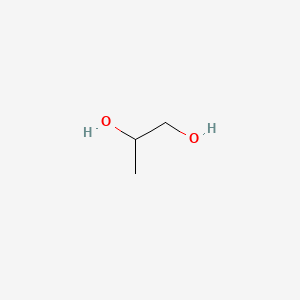
1. 1,2 Propanediol
2. 1,2-propanediol
3. Glycol, Propylene
4. Monohydrate, Propylene Glycol
5. Propan-1,2-diol
6. Propylene Glycol Monohydrate
7. Propylene Glycol Sodium Salt
8. Propylene Glycol, (+-)-isomer
9. Propylene Glycol, (r)-isomer
10. Propylene Glycol, (s)-isomer
1. 1,2-propanediol
2. Propane-1,2-diol
3. 57-55-6
4. 1,2-propylene Glycol
5. 1,2-dihydroxypropane
6. 2-hydroxypropanol
7. Isopropylene Glycol
8. Methylethyl Glycol
9. Methylethylene Glycol
10. Monopropylene Glycol
11. Dowfrost
12. Sirlene
13. Trimethyl Glycol
14. Alpha-propyleneglycol
15. Propylene Glycol Usp
16. 2,3-propanediol
17. Solargard P
18. Solar Winter Ban
19. Methyl Glycol
20. Dl-propylene Glycol
21. Dl-1,2-propanediol
22. Ucar 35
23. Sentry Propylene Glycol
24. 1,2-propylenglykol
25. (rs)-1,2-propanediol
26. Fema No. 2940
27. (+-)-1,2-propanediol
28. Pg 12
29. (+-)-propylene Glycol
30. Caswell No. 713
31. Kilfrost Abc-s
32. (+/-)-1,2-propanediol
33. Alpha-propylene Glycol
34. 1,2-propylenglykol [german]
35. Ccris 5929
36. Hsdb 174
37. Kollisolv Pg
38. .alpha.-propylene Glycol
39. Ai3-01898
40. 1,2-propandiol
41. Propylenglycol
42. Nsc 69860
43. Sdm No. 27
44. 1,2-propane-diol
45. Epa Pesticide Chemical Code 068603
46. L-1,2-propanediol
47. Chebi:16997
48. Hoch2ch(oh)me
49. Mech(oh)ch2oh
50. S-(+)-propylene Glycol
51. 1000pg
52. Ch3ch(oh)ch2oh
53. Hoch2ch(oh)ch3
54. Mfcd00064272
55. Nsc-69860
56. 1,2-(rs)-propanediol
57. Ins No.1520
58. Propylene Glycol (solvent)
59. Ins-1520
60. 1,2-propanediol (8ci,9ci)
61. 6dc9q167v3
62. 1, 2-propanediol
63. 123120-98-9
64. Ncgc00090739-02
65. Dsstox_cid_1206
66. ( Inverted Exclamation Marka)-1,2-propanediol
67. E-1520
68. Dsstox_rid_76010
69. Dsstox_gsid_21206
70. Prolugen
71. Propylene-glycol
72. Ilexan P
73. General Lube
74. 1,2-(rs)-propanediol; 1,2-dihydroxypropane; 1,2-propylene Glycol
75. Propylene Glycol (propane-1,2-diol)
76. Cas-57-55-6
77. 1,2 Propanediol
78. 1,2-propane Diol
79. All Purpose Lubricant
80. Einecs 200-338-0
81. Brn 1340498
82. Propyleneglycol
83. Propylene Glycol [usp:jan]
84. Unii-6dc9q167v3
85. Propyleneglycolum
86. Mfcd00004539
87. Mfcd00066248
88. Propylene Glycerol
89. 1-2-propanediol
90. 1.2-propanediol
91. 1,2 -propanediol
92. 1,2-propyleneglycol
93. Ls-1391
94. Propanediol-
95. Propylene Glycol (tn)
96. Racemic Propylene Glycol
97. Propylene Glycol Dl-form
98. Racemic 1,2-propanediol
99. Jeffcool P150
100. Propylene Glycol 50/50
101. Bmse000302
102. Epitope Id:161748
103. Ec 200-338-0
104. Propylene Glycol Cefatrizine
105. Dsstox_rid_78594
106. Propylene Glycol, Fcc, Fg
107. Dsstox_gsid_27863
108. 3-01-00-02142 (beilstein Handbook Reference)
109. 4254-16-4
110. Mls001055394
111. Propylene Glycol [ii]
112. Propylene Glycol [mi]
113. Wln: Qy1&1q
114. Propylene Glycol Reagent Grade
115. Propylene Glycol [fcc]
116. Propylene Glycol [jan]
117. Chembl286398
118. Propylene Glycol (jp17/usp)
119. 1,2-propanediol, Acs Reagent
120. Glycol, Polypropylene (p400)
121. Glycol, Polypropylene (p750)
122. Propylene Glycol [fhfi]
123. Propylene Glycol [hsdb]
124. Propylene Glycol [inci]
125. Dtxsid0021206
126. Propylene Glycol [vandf]
127. (.+/-.)-1,2-propanediol
128. 1,2-pdo
129. Glycol, Polypropylene (p1200)
130. Propylene Glycol [mart.]
131. Poly(propyleneglycol)averagemw400
132. Propylene Glycol [usp-rs]
133. Propylene Glycol [who-dd]
134. Propylene Glycol [who-ip]
135. Hms3039o11
136. Propylene Glycol (fragrance Grade)
137. Propylene Glycol, Industrial Grade
138. (2rs)-propane-1,2-diol
139. 1,2-propanediol, Lr, >=99%
140. Bcp23677
141. Crb71005
142. Hy-y0921
143. Nsc35747
144. Nsc35748
145. Nsc35749
146. Nsc69860
147. Tox21_111003
148. Tox21_201812
149. Tox21_300006
150. Tox21_301441
151. 1,2-propanediol, Usp, 99.5%
152. Bbl011472
153. Nsc-35747
154. Nsc-35748
155. Nsc-35749
156. Stl146584
157. 1,2-propanediol, Analytical Standard
158. 1,2-propanediol, Puriss., 99.5%
159. Akos000121049
160. Akos016355793
161. Propylene Glycol Dl-form [mi]
162. Db01839
163. Propylene Glycol [ep Monograph]
164. Sb44656
165. Sb44657
166. Poly(propylene Glycol) Average Mw 400
167. Propylene Glycol [usp Monograph]
168. Propyleneglycolum [who-ip Latin]
169. Ncgc00090739-01
170. Ncgc00090739-03
171. Ncgc00090739-04
172. Ncgc00254159-01
173. Ncgc00255183-01
174. Ncgc00259361-01
175. Poly(propylene Glycol) Average Mw 1000
176. Poly(propylene Glycol) Average Mw 2000
177. Poly(propylene Glycol) Average Mw 3000
178. 1,2-propanediol, Reagentplus(r), 99%
179. Bp-21014
180. E490
181. Glycerol Impurity C [ep Impurity]
182. Smr000677948
183. Sy003769
184. Sy003770
185. Cas-25322-69-4
186. Db-013280
187. Propylene Glycol (solvent) [vandf]
188. 1,2-propanediol 100 Microg/ml In Methanol
189. 1,2-propanediol, Acs Reagent, >=99.5%
190. 1,2-propanediol, Reagentplus(r), >=99%
191. Cs-0015917
192. E1520
193. Ft-0605030
194. Ft-0605236
195. Ft-0606483
196. P0485
197. S6258
198. 1,2-propanediol 10000 Microg/ml In Ethanol
199. 1,2-propanediol, Analytical Reference Material
200. 1,2-propanediol, Tested According To Ph.eur.
201. C00583
202. D00078
203. 1,2-propanediol 100 Microg/ml In Acetonitrile
204. 1,2-propanediol, P.a., Acs Reagent, 99.5%
205. 1,2-propanediol, Saj First Grade, >=99.0%
206. 1,2-propanediol, Saj Special Grade, >=99.0%
207. 1,2-propanediol, Vetec(tm) Reagent Grade, 98%
208. Propylene Glycol, Meets Usp Testing Specifications
209. Q161495
210. J-502273
211. F1908-0071
212. Z1939437503
213. 1,2-propanediol, Puriss. P.a., Acs Reagent, >=99.5% (gc)
214. Propylene Glycol, British Pharmacopoeia (bp) Reference Standard
215. Poly[oxy(methyl-1,2-ethanediyl)], .alpha.-hydro-.omega.-hydroxy-
216. Propylene Glycol, European Pharmacopoeia (ep) Reference Standard
217. Propylene Glycol, United States Pharmacopeia (usp) Reference Standard
218. 1,2-propanediol, Meets Analytical Specification Of Ph. Eur., Bp, Usp, >=99.5%
219. Propylene Glycol, Pharmaceutical Secondary Standard; Certified Reference Material
220. Soybean Oil,polymer With Benzoic Acid,pentaerythritol,phthalic Anhydride And Propylene Glycol
| Molecular Weight | 76.09 g/mol |
|---|---|
| Molecular Formula | C3H8O2 |
| XLogP3 | -0.9 |
| Hydrogen Bond Donor Count | 2 |
| Hydrogen Bond Acceptor Count | 2 |
| Rotatable Bond Count | 1 |
| Exact Mass | 76.052429494 g/mol |
| Monoisotopic Mass | 76.052429494 g/mol |
| Topological Polar Surface Area | 40.5 Ų |
| Heavy Atom Count | 5 |
| Formal Charge | 0 |
| Complexity | 20.9 |
| Isotope Atom Count | 0 |
| Defined Atom Stereocenter Count | 0 |
| Undefined Atom Stereocenter Count | 1 |
| Defined Bond Stereocenter Count | 0 |
| Undefined Bond Stereocenter Count | 0 |
| Covalently Bonded Unit Count | 1 |
Propylene glycol is used as a vehicle for IV administration of drugs such as lorazepam, etomidate, phenytoin, diazepam, digoxin, hydralazine, esmolol, chlordiazepoxide, multivitamins, nitroglycerin, pentobarbital sodium, phenobarbital sodium, and trimethoprim-sulfamethoxazole.
DHHS/NTP-CERHR; NTP-CERHR Monograph on the Potential Human Reproductive and Developmental Effects of Propylene Glycol (March 2004) NIH Pub No. 04-4482 p.II-30 . Available from, as of January 11, 2010: https://cerhr.niehs.nih.gov/evals/egpg/propylene/PG_Monograph.pdf
As an antiseptic it is similar to ethanol, and against molds it is similar to glycerin and only slightly less effective than ethanol.
Rowe, R.C., Sheskey, P.J., Quinn, M.E.; (Eds.), Handbook of Pharmaceutical Excipients 6th edition Pharmaceutical Press, London, England 2009, p. 592
Hydroscopic agents (eg, propylene glycol...) are added /to respiratory inhalants/ to reduce viscosity of bronchial secretions.
American Medical Association, AMA Department of Drugs, AMA Drug Evaluations. 3rd ed. Littleton, Massachusetts: PSG Publishing Co., Inc., 1977., p. 656
Ointment containing approx 70% propylene glycol has been used as osmotic agent with good results in treatment of edema of cornea.
Grant, W. M. Toxicology of the Eye. 2nd ed. Springfield, Illinois: Charles C. Thomas, 1974., p. 862
For more Therapeutic Uses (Complete) data for Propylene glycol (9 total), please visit the HSDB record page.
Hyperosmolality has been induced by propylene glycol (PG) in a number of clinical settings ..., particularly in intensive care unit patients during the administration of nitroglycerin solutions that contain PG ...
Cosmetic Ingredient Review Expert Panel; J Am Coll Toxicol 13 (6): 437-91 (1994)
Formulations containing 35% propylene glycol can cause hemolysis in humans.
Rowe, R.C., Sheskey, P.J., Quinn, M.E.; (Eds.), Handbook of Pharmaceutical Excipients 6th edition Pharmaceutical Press, London, England 2009, p. 593
Hemolysis, CNS depression, hyperosmolality, and lactic acidosis have been reported after IV administration of propylene glycol.
DHHS/NTP-CERHR; NTP-CERHR Monograph on the Potential Human Reproductive and Developmental Effects of Propylene Glycol (March 2004) NIH Pub No. 04-4482 p.II-30 . Available from, as of January 11, 2010: https://cerhr.niehs.nih.gov/evals/egpg/propylene/PG_Monograph.pdf
Propylene glycol is a commonly used solvent for oral, intravenous, and topical pharmaceutical preparations. Although it is considered safe, large intravenous doses given over a short period of time can be toxic. Underlying renal insufficiency and hepatic dysfunction raise risk for toxicity. Toxic effects include hyperosmolality, increased anion gap metabolic acidosis (due to lactic acidosis), acute kidney injury, and sepsis-like syndrome. Treatment of toxicity includes hemodialysis to effectively remove propylene glycol. Prevention is best achieved by limiting the dose of propylene glycol infused.
Zar T et al; Seminars in Dialysis 20 (3): 217-9 (2007). Available from, as of February 23, 2010: https://www.ncbi.nlm.nih.gov/entrez/query.fcgi?cmd=Retrieve&db=pubmed&dopt=Abstract&list_uids=17555487
For more Drug Warnings (Complete) data for Propylene glycol (41 total), please visit the HSDB record page.
1 = practically nontoxic: probable oral lethal dose (human) is above 15 g/kg; for 70 kg person (150 lb), more than 1 qt (2.2 lb).
Gosselin, R.E., H.C. Hodge, R.P. Smith, and M.N. Gleason. Clinical Toxicology of Commercial Products. 4th ed. Baltimore: Williams and Wilkins, 1976., p. II-120
Solvents
Liquids that dissolve other substances (solutes), generally solids, without any change in chemical composition, as, water containing sugar. (Grant and Hackh's Chemical Dictionary, 5th ed) (See all compounds classified as Solvents.)
Pharmaceutical Vehicles
A carrier or inert medium used as a solvent (or diluent) in which the medicinally active agent is formulated and or administered. (Dictionary of Pharmacy, 1986) (See all compounds classified as Pharmaceutical Vehicles.)
Absorption of orally administered propylene glycol from the gastrointestinal tract, and its removal from the body, follow first order kinetics. Clearance from blood is rapid in humans, with a mean half-life of approx. 2 hr. Its metabolism is inhibited by pyrazole, indicating a role for alcohol dehydrogenase in this process. Once absorbed it is readily converted into lactic and pyruvic acids, which then enter the general metabolic pool.
Organization for Economic Cooperation and Development; Screening Information Data Set for 1,2-Dihydroxypropane (57-55-6) p.20 (2001). Available from, as of December 31, 2009: https://www.chem.unep.ch/irptc/sids/OECDSIDS/sidspub.html
Propylene glycol is readily absorbed from the GI tract and distributed throughout total body water. Propylene glycol accumulation is reported to differ significantly among people maintained on a repetitive oral dosing schedule, due to intersubject variability in clearance.
Klaassen, C.D. (ed). Casarett and Doull's Toxicology. The Basic Science of Poisons. 6th ed. New York, NY: McGraw-Hill, 2001., p. 897
The uptake of propylene glycol mist by humans was studied using 10% solution in labeled deionized water nebulized into a mist tent. Less than 5% of the mist entered the body, and of this 90% lodged in the nasopharynx and rapidly disappeared into the stomach. Very little was found in the lungs.
Cavender FL, Sowinski EJ; Patty's Toxicology CD-ROM (2005). NY, NY: John Wiley & Sons; Glycols. Online Posting Date: April 16, 2001
Intravenous administration of propylene glycol in amounts of 3-15 g/sq m is followed by plasma concentration of 60 to 425 ug/mL, respectively, with ... a volume of distribution of 0.51 to 0.88 L/kg, and a clearance rate of about 300 mL/min/1.73 sq m. Cerebrospinal fluid concentrations are as high as 85% of the serum concentrations.
Ellenhorn, M.J., S. Schonwald, G. Ordog, J. Wasserberger. Ellenhorn's Medical Toxicology: Diagnosis and Treatment of Human Poisoning. 2nd ed. Baltimore, MD: Williams and Wilkins, 1997., p. 1156
For more Absorption, Distribution and Excretion (Complete) data for Propylene glycol (20 total), please visit the HSDB record page.
Propylene glycol undergoes metabolic oxidation to pyruvic acid, acetic acid, lactic acid, and propionaldehyde.
IPCS; Poisons Information Monograph 443: Propylene glycol (May 1994). Available from, as of January 4, 2009: https://www.inchem.org/documents/pims/chemical/pim443.htm
In what is considered to be the main pathway of propylene glycol metabolism in mammals, propylene glycol is oxidized by alcohol dehydrogenase to lactaldehyde, then to lactate by aldehyde dehydrogenase. The lactate is further metabolized to pyruvate, carbon dioxide, and water. Lactate also contributes to glucose formation through gluconeogenic pathways. Lactate, via phosphoenol pyruvate, can be detoxified into glucose and stored as glycogen ... Excess production of lactic acid resulting from very large exposures to propylene glycol can produce a metabolic anion gap [anion gap = (Na+) - (Cl - + total CO2)] and metabolic acidosis. Serum levels of >180 mg/L [2.37mM] can result in toxicity.
DHHS/NTP-CERHR; NTP-CERHR Monograph on the Potential Human Reproductive and Developmental Effects of Propylene Glycol (March 2004) NIH Pub No. 04-4482 p.II-15 . Available from, as of January 11, 2010: https://cerhr.niehs.nih.gov/evals/egpg/propylene/PG_Monograph.pdf
Synthesis of propylene glycol results in a 1:1 ratio of D and L stereoisomer forms. There is some, although incomplete, information in the literature about stereospecificity of the enzymes in the propylene glycol metabolic pathways ... In the main metabolic pathway, D and L forms of lactaldehyde and lactate are formed. In the horse and rabbit, ADH will oxidize the L form of propylene glycol and lactaldehyde more efficiently than the D form. L-lactic acidosis has been observed in both humans and animals following exposure to propylene glycol). The conversion of lactaldehyde to methylglyoxal by ADH and then to D-lactate by glyoxalase and reduced glutathione is thought to be an alternate route of metabolism ... D-lactate is cleared more slowly than L-lactate and is considered a poor substrate for gluconeogenesis. Methylglyoxal synthetase can convert the substrate, dihydroxyacetone phosphate, to methylglyoxal. However, in conditions where ketone levels are high, such as diabetes or starvation, methylglyoxal synthetase activity is increased, producing more methylglyoxal and D-lactate. Excessive production of D-lactate may result in its accumulation, especially in the brain, which has a low level of catabolizing enzymes. Therefore, in cases of ketosis, excess levels of D-lactate may be exacerbated by propylene glycol. In a third possible metabolic pathway, propylene glycol can be phosphorylated, converted to acetol phosphate, lactaldehyde phosphate, lactyl phosphate, and lactic acid ... Metabolism of D and L forms of propylene glycol in this pathway is species-specific. The rabbit converts the L form of phosphorylated propylene glycol to lactic acid, whereas the rat and mouse can convert both forms. /D and L isomers/
DHHS/NTP-CERHR; NTP-CERHR Monograph on the Potential Human Reproductive and Developmental Effects of Propylene Glycol (March 2004) NIH Pub No. 04-4482 pp.II-17-18 . Available from, as of January 11, 2010: https://cerhr.niehs.nih.gov/evals/egpg/propylene/PG_Monograph.pdf
Studies in humans and rodents suggest that the placenta has extremely limited capacity to metabolize propylene glycol. Class III ADH /was isolated/ from full term human placenta and found /to have/ low activity for ethanol and a Km value for octanol that was 100-times higher than the Class I ADH enzyme found in human liver ... ALDH from full-term human placentas had a lower activity and Vmax, and a higher Km value than ALDH isoenzymes from liver. In rats, placenta was found to have no ADH activity and ALDH activity in placenta was found to be 4-7% of liver activity
DHHS/NTP-CERHR; NTP-CERHR Monograph on the Potential Human Reproductive and Developmental Effects of Propylene Glycol (March 2004) NIH Pub No. 04-4482 p.II-23 . Available from, as of January 11, 2010: https://cerhr.niehs.nih.gov/evals/egpg/propylene/PG_Monograph.pdf
For more Metabolism/Metabolites (Complete) data for Propylene glycol (12 total), please visit the HSDB record page.
Whole body: 1.4-30.5 hours (longer in infants and shorter in adults); [TDR, p. 1056]
TDR - Ryan RP, Terry CE, Leffingwell SS (eds). Toxicology Desk Reference: The Toxic Exposure and Medical Monitoring Index, 5th Ed. Washington DC: Taylor & Francis, 1999., p. 1056
Intravenous administration of propylene glycol in amounts of 3-15 g/sq m is followed by plasma concentration of 60 to 425 ug/mL, respectively, with a half-life of 1.8 to 3.3 hours ...
Ellenhorn, M.J., S. Schonwald, G. Ordog, J. Wasserberger. Ellenhorn's Medical Toxicology: Diagnosis and Treatment of Human Poisoning. 2nd ed. Baltimore, MD: Williams and Wilkins, 1997., p. 1156
/Infant, premature/ Oral: Mean half-life in premature infants was 19.3 hours (range 108-30.5).
IPCS; Poisons Information Monograph 443: Propylene glycol (May 1994). Available from, as of January 4, 2009: https://www.inchem.org/documents/pims/chemical/pim443.htm
/Infant/ Dermal: 16.9 hours in an 8-month-old infant.
IPCS; Poisons Information Monograph 443: Propylene glycol (May 1994). Available from, as of January 4, 2009: https://www.inchem.org/documents/pims/chemical/pim443.htm
Parenteral: 2.4 - 5.2 hr, 1.4 - 3.3 hr (mean 2.3 +/- 0.7 hr).
IPCS; Poisons Information Monograph 443: Propylene glycol (May 1994). Available from, as of January 4, 2009: https://www.inchem.org/documents/pims/chemical/pim443.htm
For more Biological Half-Life (Complete) data for Propylene glycol (7 total), please visit the HSDB record page.
API SUPPLIERS

 FULL SCREEN VIEW Click here to open all results in a new tab [this preview display 10 results]
Drugs in Development
FULL SCREEN VIEW Click here to open all results in a new tab [this preview display 10 results]FDF Dossiers
FULL SCREEN VIEW Click here to open all results in a new tab [this preview display 10 results]Digital Content

DATA COMPILATION #PharmaFlow
NEWS #PharmaBuzz
Market Place
REF. STANDARDS & IMPURITIES
ABOUT THIS PAGE
74
PharmaCompass offers a list of Mono Propylene Glycol API manufacturers, exporters & distributors, which can be sorted by GMP, USDMF, JDMF, KDMF, CEP (COS), WC, and more, enabling you to easily find the right Mono Propylene Glycol manufacturer or Mono Propylene Glycol supplier for your needs.
Send us enquiries for free, and we will assist you in establishing a direct connection with your preferred Mono Propylene Glycol manufacturer or Mono Propylene Glycol supplier.
A 1,2-propane-diol manufacturer is defined as any person or entity involved in the manufacture, preparation, processing, compounding or propagation of 1,2-propane-diol, including repackagers and relabelers. The FDA regulates 1,2-propane-diol manufacturers to ensure that their products comply with relevant laws and regulations and are safe and effective to use. 1,2-propane-diol API Manufacturers are required to adhere to Good Manufacturing Practices (GMP) to ensure that their products are consistently manufactured to meet established quality criteria.
click here to find a list of 1,2-propane-diol manufacturers with USDMF, JDMF, KDMF, CEP, GMP, and COA related information on PhamaCompass.
A 1,2-propane-diol supplier is an individual or a company that provides 1,2-propane-diol active pharmaceutical ingredient (API) or 1,2-propane-diol finished formulations upon request. The 1,2-propane-diol suppliers may include 1,2-propane-diol API manufacturers, exporters, distributors and traders.
click here to find a list of 1,2-propane-diol suppliers with USDMF, JDMF, KDMF, CEP, GMP, and COA related information on PharmaCompass.
A 1,2-propane-diol DMF (Drug Master File) is a document detailing the whole manufacturing process of 1,2-propane-diol active pharmaceutical ingredient (API) in detail. Different forms of 1,2-propane-diol DMFs exist exist since differing nations have different regulations, such as 1,2-propane-diol USDMF, ASMF (EDMF), JDMF, CDMF, etc.
A 1,2-propane-diol DMF submitted to regulatory agencies in the US is known as a USDMF. 1,2-propane-diol USDMF includes data on 1,2-propane-diol's chemical properties, information on the facilities and procedures used, and details about packaging and storage. The 1,2-propane-diol USDMF is kept confidential to protect the manufacturer’s intellectual property.
click here to find a list of 1,2-propane-diol suppliers with USDMF on PharmaCompass.
The Pharmaceuticals and Medical Devices Agency (PMDA) established the Japan Drug Master File (JDMF), also known as the Master File (MF), to permit Japanese and foreign manufacturers of drug substances, intermediates, excipients, raw materials, and packaging materials (‘Products’) to voluntarily register confidential information about the production and management of their products in Japan.
The 1,2-propane-diol Drug Master File in Japan (1,2-propane-diol JDMF) empowers 1,2-propane-diol API manufacturers to present comprehensive information (e.g., production methods, data, etc.) to the review authority, i.e., PMDA (Pharmaceuticals & Medical Devices Agency).
PMDA reviews the 1,2-propane-diol JDMF during the approval evaluation for pharmaceutical products. At the time of 1,2-propane-diol JDMF registration, PMDA checks if the format is accurate, if the necessary items have been included (application), and if data has been attached.
click here to find a list of 1,2-propane-diol suppliers with JDMF on PharmaCompass.
1,2-propane-diol Active pharmaceutical ingredient (API) is produced in GMP-certified manufacturing facility.
GMP stands for Good Manufacturing Practices, which is a system used in the pharmaceutical industry to make sure that goods are regularly produced and monitored in accordance with quality standards. The FDA’s current Good Manufacturing Practices requirements are referred to as cGMP or current GMP which indicates that the company follows the most recent GMP specifications. The World Health Organization (WHO) has its own set of GMP guidelines, called the WHO GMP. Different countries can also set their own guidelines for GMP like China (Chinese GMP) or the EU (EU GMP).
PharmaCompass offers a list of 1,2-propane-diol GMP manufacturers, exporters & distributors, which can be sorted by USDMF, JDMF, KDMF, CEP (COS), WC, and more, enabling you to easily find the right 1,2-propane-diol GMP manufacturer or 1,2-propane-diol GMP API supplier for your needs.
A 1,2-propane-diol CoA (Certificate of Analysis) is a formal document that attests to 1,2-propane-diol's compliance with 1,2-propane-diol specifications and serves as a tool for batch-level quality control.
1,2-propane-diol CoA mostly includes findings from lab analyses of a specific batch. For each 1,2-propane-diol CoA document that a company creates, the USFDA specifies specific requirements, such as supplier information, material identification, transportation data, evidence of conformity and signature data.
1,2-propane-diol may be tested according to a variety of international standards, such as European Pharmacopoeia (1,2-propane-diol EP), 1,2-propane-diol JP (Japanese Pharmacopeia) and the US Pharmacopoeia (1,2-propane-diol USP).