



NEWS
- Pharma & Biotech News #PharmaBuzz
- Weekly News Recap #Phispers
- Recent Product Approvals #GreenLight
- Quality Compliance Alerts #Warning!
- All News #Library
DRUGS & DEVELOPMENTS
MARKET INTEL by PharmaCompass

Create content with us, ask us
By PharmaCompass
2019-01-24
Impressions: 120 Article
Vasant (Vas) Narasimhan, who took charge as the CEO of Novartis AG last year, has a penchant for reimagining medicine. Before being elevated to the corner office, Narasimhan was the global head of drug development and the chief medical officer at Novartis.
One year on, as the CEO of the Swiss drugmaker, Narasimhan posted a blog on LinkedIn where he discussed digital healthcare. “This is an incredible moment in time for medicine. We’ve reached a tipping point in the convergence of biomedical and digital innovation.”
According to Narasimhan, “computing power has expanded, and data architecture and quality has reached a place where we can extract meaningful insights to impact human health.”
“Researchers and doctors have access to increasingly sophisticated forms of artificial intelligence and machine learning that have augmented their ability to decode disease. And a proliferation of mobile devices and sensors is increasing patient’s ability to gather and share information about their health,” he blogged.
However, according to him, “the adoption of technologies in the discovery and development of medicines comes with a lot of complex challenges. But that shouldn’t deter us from pursuing bold ideas.” One way to speed up the digital revolution is through stronger collaborations with emerging health tech innovators, he said.
While last year, the company had launched Novartis Biome, a digital innovation lab and a series of open innovation challenges, known as the HealthX World Series, this year the drugmaker has struck a five-year research alliance with University of Oxford’s Big Data Institute (BDI) that would use artificial intelligence and advanced analytics to understand complex diseases and improve drug development.
“The alliance will make use of anonymized data from approximately 5 million patients from the UK and international partner organizations, together with anonymized data captured from relevant Novartis clinical trials. Using the BDI’s latest statistical machine learning technology and experience in data analysis, combined with Novartis’ wealth of clinical expertise and clinical trial data, the alliance expects to predict how patients will respond to existing and new medicines,” a statement said.
A Forbes article said Narasimhan has also been drawing attention to the industry’s miserable attrition rate — of the 20 drugs that enter clinical studies, only one makes it. Worse, this rate apparently hasn’t moved in the last 15 years, while costs have continued to increase.
The PharmaCompass Newsletter – Sign Up, Stay Ahead
Feedback, help us to improve. Click here
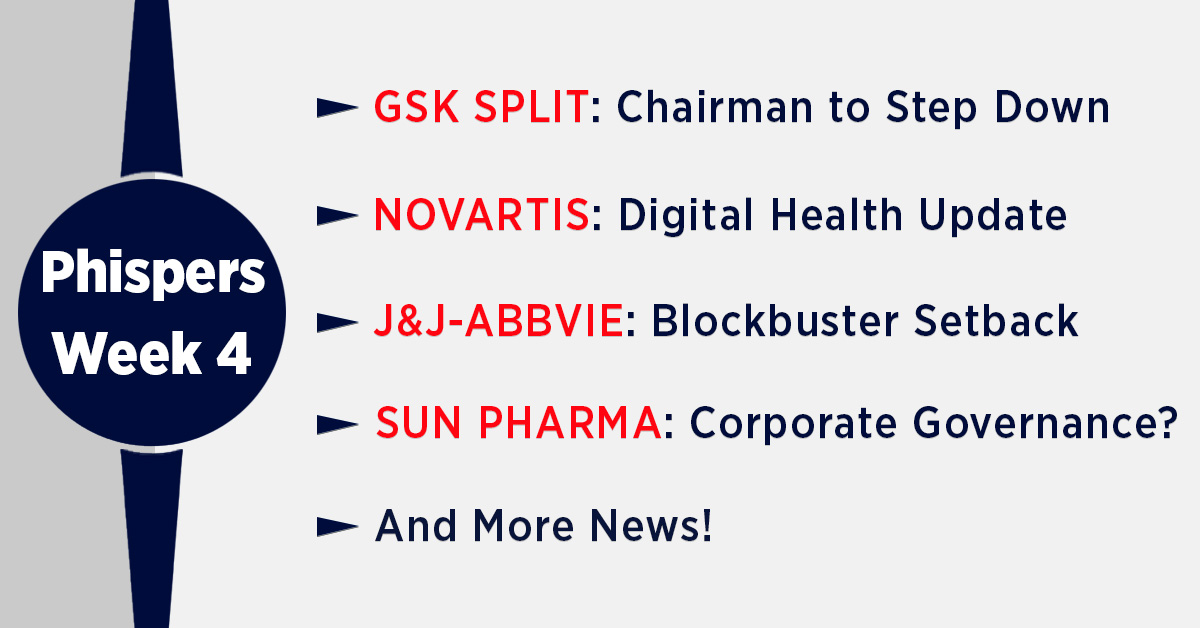
Image Credit : #Phisper Infographic by SCORR MARKETING & PharmaCompass is licensed under CC BY 2.0
“ The article is based on the information available in public and which the author believes to be true. The author is not disseminating any information, which the author believes or knows, is confidential or in conflict with the privacy of any person. The views expressed or information supplied through this article is mere opinion and observation of the author. The author does not intend to defame, insult or, cause loss or damage to anyone, in any manner, through this article.”